Results by title
151 books match the query 'Liberalism' and 10 start with m
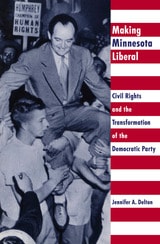
Making Minnesota Liberal
Civil Rights And The Transformation Of The Democratic PartyJennifer A. Delton
University of Minnesota Press, 2002
Making Sense of American Liberalism
Edited by Jonathan Bell and Timothy Stanley
University of Illinois Press, 2012
Mastery and Drift
Professional-Class Liberals since the 1960sEdited by Brent Cebul and Lily Geismer
University of Chicago Press, 2025
Since the 1960s, American liberalism and the Democratic Party have been remade along professional class lines, widening liberalism’s impact but narrowing its social and political vision. In Mastery and Drift, historians Brent Cebul and Lily Geismer have assembled a group of scholars to address the formation of “professional-class liberalism” and its central role in remaking electoral politics and the practice of governance. Across subjects as varied as philanthropy, consulting, health care, welfare, race, immigration, economics, and foreign conflicts, the authors examine not only the gaps between liberals’ egalitarian aspirations and their approaches to policymaking but also how the intricacies of contemporary governance have tended to bolster professional-class liberals’ power.
The contributors to Mastery and Drift all came of age amid the development of professional-class liberalism, giving them distinctive and important perspectives in understanding its internal limitations and its relationship to neoliberalism and the Right. With never-ending disputes over the meaning of liberalism, the content of its governance, and its relationship to a resurgent Left, now is the time to consider modern liberalism’s place in contemporary American life.
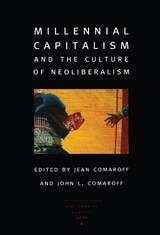
Millennial Capitalism and the Culture of Neoliberalism
Jean Comaroff and John L. Comaroff, eds.
Duke University Press, 2001
In exploring the material and cultural dimensions of the Age of Millennial Capitalism, the contributors interrogate the so-called crisis of the nation-state, how the triumph of the free market obscures rising tides of violence and cultures of exclusion, and the growth of new forms of identity politics. The collection also investigates the tendency of neoliberal capitalism to produce a world of increasing differences in wealth, environmental catastrophes, heightened flows of people and value across space and time, moral panics and social impossibilities, bitter generational antagonisms and gender conflicts, invisible class distinction, and “pariah” forms of economic activity. In the process, the volume opens up an empirically grounded, conceptual discussion about the world-at-large at a particularly momentous historical time—when the social sciences and humanities are in danger of ceding intellectual initiative to the masters of the market and the media.
In addition to its crossdisciplinary essays, Millennial Capitalism and the Culture of Neoliberalism—originally the third installment of the journal Public Culture’s “Millennial Quartet”—features several photographic essays. The book will interest anthropologists, political geographers, economists, sociologists, and political theorists.
Contributors. Scott Bradwell, Jean Comaroff, John L. Comaroff, Fernando Coronil, Peter Geschiere, David Harvey, Luiz Paulo Lima, Caitrin Lynch, Rosalind C. Morris, David G. Nicholls, Francis Nyamnjoh, Elizabeth A. Povinelli, Paul Ryer, Allan Sekula, Irene Stengs, Michael Storper, Seamus Walsh, Robert P. Weller, Hylton White, Melissa W. Wright, Jeffrey A. Zimmerman

Montesquieu's Philosophy of Liberalism
A Commentary on The Spirit of the LawsThomas L. Pangle
University of Chicago Press, 1973
Moral Politics
How Liberals and Conservatives Think, Second EditionGeorge Lakoff
University of Chicago Press, 2002
Moral Politics
How Liberals and Conservatives Think, Third EditionGeorge Lakoff
University of Chicago Press, 2016
Lakoff reveals radically different but remarkably consistent conceptions of morality on both the left and right. Moral worldviews, like most deep ways of understanding the world, are unconscious—part of our “hard-wired” brain circuitry. When confronted with facts that don’t fit our moral worldview, our brains work automatically and unconsciously to ignore or reject these facts, and it takes extraordinary openness and awareness of this phenomenon to pay critical attention to the vast number of facts we are presented with each day. For this new edition, Lakoff has added a new preface and afterword, extending his observations to major ideological conflicts since the book's original publication, from the Affordable Care Act to the wars in Iraq and Afghanistan, the recent financial crisis, and the effects of global warming. One might have hoped such massive changes would bring people together, but the reverse has actually happened; the divide between liberals and conservatives has become stronger and more virulent.
To have any hope of bringing mutual respect to the current social and political divide, we need to clearly understand the problem and make it part of our contemporary public discourse. Moral Politics offers a much-needed wake-up call to both the left and the right.
Moral Politics
What Conservatives Know That Liberals Don'tGeorge Lakoff
University of Chicago Press, 1996
Movement and the Ordering of Freedom
On Liberal Governances of MobilityHagar Kotef
Duke University Press, 2015
Muslim Reformers in Iran and Turkey
The Paradox of ModerationBy Güneş Murat Tezcür
University of Texas Press, 2010
Moderation theory describes the process through which radical political actors develop commitments to electoral competition, political pluralism, human rights, and rule of law and come to prefer negotiation, reconciliation, and electoral politics over provocation, confrontation, and contentious action. Revisiting this theory through an examination of two of the most prominent moderate Islamic political forces in recent history, Muslim Reformers in Iran and Turkey analyzes the gains made and methods implemented by the Reform Front in the Islamic Republic of Iran and the Justice and Development Party in Turkey.
Both of these groups represent Muslim reformers who came into continual conflict with unelected adversaries who attempted to block their reformist agendas. Based on extensive field research in both locales, Muslim Reformers in Iran and Turkey argues that behavioral moderation as practiced by these groups may actually inhibit democratic progress. Political scientist Güneş Murat Tezcür observes that the ability to implement conciliatory tactics, organize electoral parties, and make political compromises impeded democracy when pursued by the Reform Front and the Justice and Development Party. Challenging conventional wisdom, Tezcür's findings have broad implications for the dynamics of democratic progress.