Results by title
133 books match the query 'Mammals' and 23 start with m
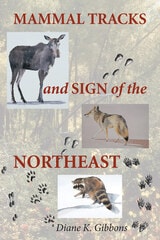
Mammal Tracks and Sign of the Northeast
Diane K. Gibbons
University Press of New England, 2003
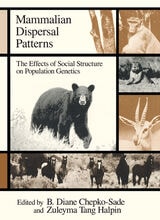
Mammalian Dispersal Patterns
The Effects of Social Structure on Population GeneticsEdited by B. Diane Chepko-Sade and Zuleyma Tang Halpin
University of Chicago Press, 1987
Theoretical work in population genetics indicates that such social factors as skewed sex ratios, restrictive mating patterns, and delayed age of first reproduction will lower the reproductive variability of a population by reducing the number of genotypes passed from one generation to the next. Field studies have shown that many mammalian species do exhibit many such social characteristics. Among horses, elephant seals, and a number of primates, the majority of females are inseminated by only a fraction of the males. In pacts of wolves and mongooses, usually only the highest-ranking male and female breed in a given season. Although socially restricted mating tends to lower genetic variability in isolated populations, it actually tends to increase genetic variability in subdivided populations with low rates of migration between subunits. Among some species there is little dispersal and thus little gene flow between subpopulations; other species travel far afield before mating.
The contributors to this volume examine actual data from populations of mammals, the way patterns of dispersal correlate with the genetic structure of individuals and populations, and mathematical models of population structure. This interdisciplinary approach has an important bearing on work in conservation of both wildlife and zoo populations, for it shows that the home range and the population size needed to maintain genetic variability can differ greatly from one species to the next. The volume also offers a fruitful model for future research.

Mammalian Reproductive Biology
F. H. Bronson
University of Chicago Press, 1990
Each chapter presents a wealth of issues and questions, summarizing the current consensus on interpretations as well as viable alternatives under debate. The book is principally concerned with how environmental factors regulate reproduction. Bronson proposes that a mammal's reproductive performance routinely reflects simultaneous regulation by several environmental factors that interact in fascinatingly complex ways. Environment is defined broadly, and the chapters give equal weight to ecological and physiological factors when considering how variables such as food availability, ambient temperature, photoperiod, and social cues interact to regulate a mammal's reproduction. Particular attention is given to seasonal breeding, and a taxonomically arranged chapter underscores the importance of comparative and evolutionary biology to an understanding of mammalian reproduction.
Mammalian Reproductive Biology is a powerful argument for the value and importance of interdisciplinary approaches to research. Its almost 1,500 references constitute the most comprehensive bibliography to date on this topic. Bronson also gives detailed consideration to promising areas for future research. Well organized, carefully planned, and clearly written, this book will become standard reading for scientists concerned with any aspect of mammalian biology.
Mammals Of Nevada
E. Raymond Hall
University of Nevada Press, 1995
First published in 1946, Mammals of Nevada is a monumental work. Hall and a team of more than sixty scientists, graduate students, and staff members of the Museum of Vertebrate Zoology in Kansas spent innumerable hours trapping, preparing, studying, and documenting thousands of specimens found within the state. This long out-of-print reference contains extensive examinations of the topography, climate, life zones, and floral and faunal areas. Hundreds of illustrations enhance the work. This updated edition features a new foreword and updated taxonomy by Timothy Lawlor.
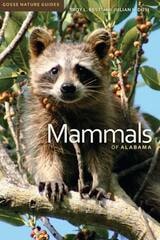
Mammals of Alabama
Troy L. Best and Julian L. Dusi
University of Alabama Press, 2014
Beautifully designed and sturdily bound for rugged field use, Mammals of Alabama is the first and only exhaustive guidebook to Alabama’s diverse and fascinating mammalian fauna.
European and American naturalists visited the territory that would become Alabama as early as the late eighteenth century and marveled at the breadth and variety of its flora and fauna. Yet until today scientists, scholars, and nature enthusiasts had no systematic guide to the state’s mammals. Mammals of Alabama fills the gap.
Naturally occurring in the state are nine orders, twenty-two families, fifty-one genera, and seventy-two species of living mammals. Best and Dusi offer an engaging entry for each as well as additional species that have become extinct through natural processes or human extirpation.
Illustrated with maps and photos, each entry includes:
• Identification notes • Dental formula
• Size and weight • Distribution
• Ecology • Life History
• Behavior • Parasites and Diseases
• Conservation Status • Notes and References
Ideal for backyards, hikes, libraries, and classrooms, Mammals of Alabama includes hundreds of professional, close-up color specimen photographs of both living animals in their natural habitats and skull plates, making identification of animals easy.
Best also offers fascinating and fun facts about Alabama mammals that will delight nature lovers of all ages, such as the surprising and excellent tree-climbing skills of the gray fox, the use in the past of mole skins to apply cosmetics, and the litters of identical quadruplets common to the nine-banded armadillo.
Published in cooperation with the Alabama Wildlife Federation
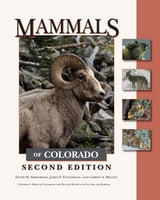
Mammals of Colorado, Second Edition
David M. Armstrong
University Press of Colorado, 2010
An introductory chapter on Colorado's environments, a discussion of the development of the fauna over geologic time, and a brief history of human knowledge of Coloradan mammals provide ecological and evolutionary context. The most recent records of the state's diverse species, rich illustrations (including detailed maps, skull drawings, and photographs), and an extensive bibliography make this book a must-have reference.
Amateur and professional naturalists, students, vertebrate biologists, and ecologists as well as those involved in conservation and wildlife management in Colorado will find value in this comprehensive volume. Co-published with the Denver Museum of Nature & Science
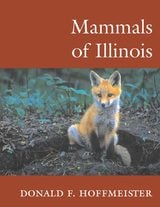
Mammals of Illinois
Donald F. Hoffmeister
University of Illinois Press, 2002
Outlining how human activities such as hunting and farming have altered the state's terrain and affected numerous species, Hoffmeister discusses which species have been wiped out, which are endangered or threatened, which no longer live in Illinois but survive elsewhere, and which might inhabit the region in the future.
In this comprehensive study, now available for the first time in paperback, Hoffmeister briefly characterizes the climate, soils, and vegetation of Illinois, particularly as they affect mammals. In addition to detailing mammals known to be present in the area during the Pleistocene and Holocene eras, Hoffmeister identifies each order and family of mammals present in Illinois since 1900. Within each family, each species is characterized by habit, habitat, food, reproduction, population, and variation. These entries are supplemented by tables, anatomical drawings, photographs, and Illinois and United States distribution maps.
Enhanced by sixty color photographs, more than one hundred line drawings, and a glossary of scientific terms, Mammals of Illinois is an indispensable resource for students, teachers, biologists, and nature enthusiasts.
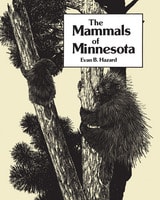
Mammals of Minnesota
Evan Hazard
University of Minnesota Press, 1982
A handbook of classification, identification, distribution, and ecology of 81 species of mammals now or once found wild in Minnesota.
Minnesota has been the home of 81 species of mammals. This book is a comprehensive identification guide, also providing information on classification, distribution and ecology of these species. Each mammal is described in terms of size, color of fur, social and reproductive behavior, and interaction with people.
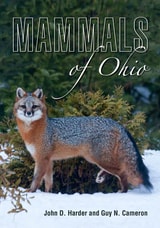
Mammals of Ohio
John D. Harder
Ohio University Press, 2022
An updated, informative review of the status and biology of the fifty-five species of mammals living wild in Ohio, richly illustrated with photographs, maps, drawings, and original artwork.
This comprehensive reference illustrates how species within each of the seven orders of mammals in Ohio share modes of reproduction, locomotion, and nutrition, providing a framework for understanding the fascinating world of mammalian biology. Presentations of natural history in each account of the various species are enhanced with descriptions of intriguing adaptations for avoiding demise from predators, food shortages, and the frigid conditions of Ohio winters. The book is richly illustrated with range maps, exquisite skull drawings, beautiful photography, and engaging artwork.
Challenges to wildlife conservation are considerable in Ohio, with its vast industrialized urban centers distributed across a largely agricultural landscape. With frequent citations of scientific reports and conservation efforts of the Ohio Division of Wildlife and of other public and private entities, this book instills an appreciation for the rich mammalian fauna of Ohio, as well as knowledge on how to join efforts to protect it.
Covering all of the state’s mammals, from tiny, obscure shrews to the magnificent white-tailed deer, Mammals of Ohio is a definitive resource for professional biologists and students. The narrative style throughout the book is accessible, providing the general reader with an appreciation for the full scope of the rich mammalian diversity in the state.
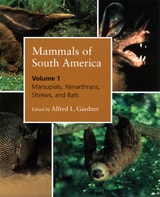
Mammals of South America, Volume 1
Marsupials, Xenarthrans, Shrews, and BatsEdited by Alfred L. Gardner
University of Chicago Press, 2008
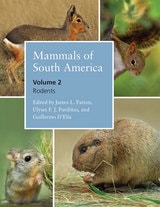
Mammals of South America, Volume 2
RodentsEdited by James L. Patton, Ulyses F. J. Pardiñas, and Guillermo D’Elía
University of Chicago Press, 2015
From spiny mice and guinea pigs to the oversized capybara, this book covers all native rodents of South America, the continental islands of Trinidad and Tobago, and the Caribbean Netherlands off the Venezuelan coast. It includes identification keys and descriptions of all genera and species; comments on distribution; maps of localities; discussions of subspecies; and summaries of natural, taxonomic, and nomenclatural history. Rodents also contains a detailed list of cited literature and a separate gazetteer based on confirmed identifications from museum vouchers and the published literature.
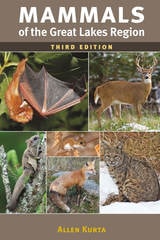
Mammals of the Great Lakes Region, 3rd Ed.
Allen Kurta
University of Michigan Press, 2017
A thorough introduction outlines the environmental factors that affect the distribution and abundance of mammals in Great Lakes ecosystems and discusses the impacts of current human activities, including introduction of diseases and climate change. There is also a section on preparing captured specimens for research or teaching, as well as user-friendly keys and quick reference tables to physical measurements and life history data. Brand new in this edition, the book also features detailed illustrations of the tracks of commonly found mammals to assist with year-round identification. Providing the most up-to-date information on mammals in the Great Lakes basin, this book belongs on the shelves of teachers, students, naturalists, and professional biologists throughout the region.
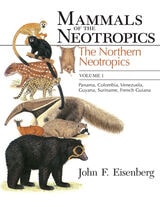
Mammals of the Neotropics, Volume 1
The Northern Neotropics: Panama, Colombia, Venezuela, Guyana, Suriname, French GuianaJohn F. Eisenberg
University of Chicago Press, 1989
John Eisenberg, a leading researcher of Neotropical fauna, begins the volume with a discussion of historical biogeography and contemporary habitats of the northern Neotropics. Each of the chapters that follow presents a mammalian order, with data for all indigenous species. Eisenberg has provided physical descriptions and summaries of range and habitat for nearly 450 species. For those species that have been studied in the field or in captivity, additional notes on natural history are included. For the larger taxa, field keys to help to identify the specimens. Range maps, line drawings, and color plates supplement the text, further aiding identification.
Throughout the book, Eisenberg provides a larger context for the species descriptions. He comments on the diversity of forms within each order, places the Neotropical species in a worldwide geographical perspective, and reviews taxonomic questions and controversies. At the end of each chapter, an extensive bibliography directs readers to related articles on systematics, behavior, ecology, and evolution. Eisenberg concludes with chapters on speciation events and mammalian community ecology.
No comparable account of South and Central American mammals has ever been published in any language. This volume of Mammals of the Neotropics and the forthcoming companion volumes will be an invaluable reference for students and professionals and will help further the research that is so vital to conservation efforts.
Mammals of the Neotropics, Volume 2
The Southern Cone: Chile, Argentina, Uruguay, ParaguayKent H. Redford and John F. Eisenberg
University of Chicago Press, 1992
This second of a projected three volumes covers southern South America. The authors discuss the historical biogeography and contemporary habitats of the region and then
provide individual accounts for nearly 360 indigenous species, including information on size, appearance, ecology, behavior, and life history. Range maps, line drawings, and color plates supplement the text. To place the species accounts in a broader context, the authors consider the diversity of animals within each taxonomic group, examine the Neotropical species from a worldwide geographical perspective, and review taxonomic questions and
controversies. Two final chapters deal with the community ecology of mammals and the effects humans have had on the mammalian fauna of the southern cone.
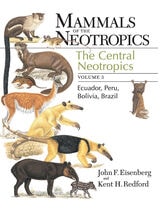
Mammals of the Neotropics, Volume 3
Ecuador, Bolivia, BrazilJohn F. Eisenberg and Kent H. Redford
University of Chicago Press, 2000
Third in a series that reviewers have described as "state of the art" (Journal of Biogeography) and "invaluable to anyone interested in the mammalian fauna of the Neotropics" (Quarterly Review of Biology), this volume follows the format of its acclaimed predecessors. Chapters present not only up-to-date taxonomic information but also ecological and behavioral characteristics, conservation status, and distribution maps for most species. Numerous illustrations are provided to assist in field and laboratory identification, including exquisite color and black-and-white plates by Fiona Reid. New to this volume are chapters contributed by experts on the mammalian fossil record of this region and on its current biodiversity and biogeography. An appendix summarizes changes to the nomenclature that have altered the scientific names used in the first two volumes.
Volumes 1 and 2 of Mammals of the Neotropics, which are also available, describe the mammals of Panama, Colombia, Venezuela, Guyana, Suriname, and French Guiana (volume 1) and Chile, Argentina, Uruguay, and Paraguay (volume 2). The fourth and final volume of this series will cover the mammals of Mexico and Central America.

Mammals of the Pacific Northwest
From the Coast to the High CascadesChis Maser
Oregon State University Press, 1998
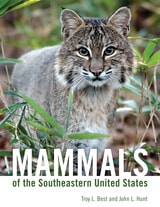
Mammals of the Southeastern United States
Troy L. Best and John L. Hunt
University of Alabama Press, 2020
First comprehensive account of the mammals of the entire southeastern US
The southeastern United States is home to a remarkable and diverse mammalian fauna that is a significant part of the region’s rich natural heritage. Mammals of the Southeastern United States presents accounts of 137 species that currently or previously occurred in the Southeast. Although accessible and useful for the generalist, this book provides an up-to-date compilation of basic knowledge about native and nonnative mammals of the region that is suitable for students of all ages and for professional mammalogists and biologists alike.
This volume profiles common species like the eastern gray squirrel, the white-tailed deer, and the Virginia opossum, but also includes among its accounts many extant species, such as the jaguar and porcupine, that once occurred in the region; native species, like the Caribbean monk seal, that are now extinct; native species that have been extirpated, or wiped out, from all or part of the region, such as the red wolf, cougar, American bison, and elk; and many introduced species, including the Mexican mouse opossum, common squirrel monkey, and capybara.
Each species account includes full-color images of the animal, plates featuring at least three views of its skull, color distribution maps of its approximate geographic range in the Southeast and in North America, and an up-to-date synthesis of several aspects of its biology, including habitat, diet, predators, parasites, diseases, and behaviors. An introductory chapter on conservation summarizes the current status of mammalian populations in the region and provides insight into some of the threats mammals now encounter in the Southeast.
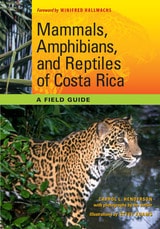
Mammals, Amphibians, and Reptiles of Costa Rica
A Field GuideBy Carrol L. Henderson
University of Texas Press, 2010
To help visitors, as well as local residents, identify and enjoy the wildlife of Costa Rica, Carrol L. Henderson published Field Guide to the Wildlife of Costa Rica in 2002, and it instantly became the indispensable guide. Now Henderson has created a field guide dedicated to the monkeys, sloths, treefrogs, lizards, crocodiles, and other animals that travelers are most likely to see while exploring the wild lands of Costa Rica. He includes fascinating information on their natural history, ecology, identification, and behavior gleaned from his forty years of travels, studies, and wildlife viewing in Costa Rica, as well as details on where to see these remarkable and beautiful creatures. The mammals, amphibians, and reptiles are illustrated by stunning and colorful photographs—most of which were taken in the wild by Henderson. A detailed and invaluable appendix that identifies many of Costa Rica's best wildlife-watching destinations, lodges, and contact information for trip-planning purposes completes the volume.
Maternal Effects in Mammals
Edited by Dario Maestripieri and Jill M. Mateo
University of Chicago Press, 2009
Evolutionary maternal effects occur whenever a mother’s phenotypic traits directly affect her offspring’s phenotype, independent of the offspring’s genotype. Some of the phenotypic traits that result in maternal effects have a genetic basis, whereas others are environmentally determined. For example, the size of a litter produced by a mammalian mother—a trait with a strong genetic basis—can affect the growth rate of her offspring, while a mother’s dominance rank—an environmentally determined trait—can affect the dominance rank of her offspring.
The first volume published on the subject in more than a decade, Maternal Effects in Mammals reflects advances in genomic, ecological, and behavioral research, as well new understandings of the evolutionary interplay between mothers and their offspring. Dario Maestripieri and Jill M. Mateo bring together a learned group of contributors to synthesize the vast literature on a range of species, highlight evolutionary processes that were previously overlooked, and propose new avenues of research. Maternal Effects in Mammals will serve as the most comprehensive compendium on and stimulus for interdisciplinary treatments of mammalian maternal effects.
Michigan mammals
Rollin H. Baker
Michigan State University Press, 1983
Model Behavior
Animal Experiments, Complexity, and the Genetics of Psychiatric DisordersNicole C. Nelson
University of Chicago Press, 2018
Behavior genetics is a particularly challenging field for making a clear-cut case that mouse experiments work, because researchers believe that both the phenomena they are studying and the animal models they are using are complex. These assumptions of complexity change the nature of what laboratory work produces. Whereas historical and ethnographic studies traditionally portray the laboratory as a place where scientists control, simplify, and stabilize nature in the service of producing durable facts, the laboratory that emerges from Nelson’s extensive interviews and fieldwork is a place where stable findings are always just out of reach. The ongoing work of managing precarious experimental systems means that researchers learn as much—if not more—about the impact of the environment on behavior as they do about genetics. Model Behavior offers a compelling portrait of life in a twenty-first-century laboratory, where partial, provisional answers to complex scientific questions are increasingly the norm.
Mountain Sheep of North America
Raul Valdez
University of Arizona Press, 1999
This book is a major reference on the natural history, ecology, and management of wild sheep in North America. Written by wildlife biologists who have devoted years of study to the animals, it covers Dall's and Stone's sheep and Rocky Mountain, California, and desert bighorn and examines a variety of factors pertinent to their life histories: habitat, diet, activity, social organization, reproduction, and population dynamics. Additional chapters consider distribution and abundance, adaptive strategies, and management guidelines. Discussions on diseases of wild sheep present a wealth of information that will be of particular use to wildlife biologists, including detailed clinical descriptions of conditions that threaten sheep populations, from pasteurellosis to capture myopathy. An appendix reviews the cytogenetics and genetics of wild sheep.
North American wild sheep may face extinction in many areas unless critical questions concerning their management are answered soon. Prior to the publication of this book, there was no single reference available in which one could find such a synthesis of information. Mountain Sheep of North America provides that source and points toward the preservation of these magnificent wild creatures.

My Life with Kangaroos
A Deaf Woman’s Remarkable StoryDoris Herrmann
Gallaudet University Press, 2013
Doris Herrmann was born deaf in 1933 in Basel, Switzerland, and from the age of three, she possessed a mystical attraction to kangaroos. She recalls seeing them at that age for the first time at the Basel Zoo, and spending every spare moment visiting them from then on. Eventually, her fascination grew into passionate study of their behavior. Her dedication caught the attention of the zookeepers who provided her greater access to these extraordinary animals. Despite her challenges with communication, Herrmann wrote a scientific paper about the kangaroo’s pouch hygiene when raising a joey. Soon, experts from around the world came to visit this precocious deaf girl who knew about kangaroos.
Herrmann appreciated the opportunities opening up to her, but her real dream was to travel to Australia to study kangaroos in the wild. For years she worked and yearned, until Dr. Karl H. Winkelsträter a renowned authority on kangaroos, suggested an independent study in Australia at a place called Pebbly Beach. In 1969, at the age of 35, Herrmann finally traveled to the native land of kangaroos. During the next four decades, she would make many more trips to observe and write about kangaroos.
My Life with Kangaroos explores every facet of Herrmann’s connection to these engaging marsupials. Her single-minded devotion not only made her a leading self-made scholar on kangaroos, it transformed her own personality and her relationships with others. As she forged bonds with kangaroos named Dora, Jacqueline, Manuela, and many others, she engendered great affection and respect in the people around her, truly a remarkable story of success.