Results by title
167 books match the query 'Masculinity' and 31 start with m

MANHOOD, CITIZENSHIP, AND THE NATIONAL GUARD
ILLINOIS, 1870–1917ELEANOR L HANNAH
The Ohio State University Press, 2007
MEN AND VIOLENCE
GENDER, HONOR, AND RITUALS IN MODERN EUROPE AND AMERICAPieter Spierenburg
The Ohio State University Press, 1998
The essays focus on the United States and western Europe from the seventeenth to the twentieth centuries. The contributors are Ute Frevert, Steven Hughes, Robert Nye, Daniele Boschi, Amy Sophia Greenberg, Martin J. Wiener, Stephen Kantrowitz, and Terence Finnegan. Men and Violence will be welcomed and widely used by a broad range of scholars and students.
Making Men, Making Class
The YMCA and Workingmen, 1877-1920Thomas Winter
University of Chicago Press, 2002
Starting in the 1870s, the leaders ("secretaries") of the YMCA sought to reduce political radicalism and labor unrest by instilling new ideals of manliness among workers. By involving workingmen in a range of activities on the job and off, the YMCA hoped to foster team spirit, moral conduct, and new standards of manhood that would avoid conflict and instead encourage cooperation along the lines of a Christian, pious manliness. In their efforts to make better men, the secretaries of the YMCA also crafted new ideals of middle-class manliness for themselves that involved a sense of mission and social purpose. In doing so, they ended up "making" class, too, as they began to speak a language of manhood structured by class differences.
Making War and Minting Christians
Masculinity, Religion, and Colonialism in Early New EnglandR. Todd Romero
University of Massachusetts Press, 2011
In this book, R. Todd Romero traces the interaction of notions of gender, the practice of religion, and the conduct of warfare in colonial America. He shows how Native and Anglo-American ideas of manhood developed in counterpoint, in the context of Christian evangelization, colonial expansion, and recurrent armed conflict.
For the English, the cultivation of manliness became an important aspect of missionary efforts. Conversion demanded that the English “make men” of the Indians before they could “make them Christians,” a process that involved reshaping Native masculinity according to English patriarchal ideals that the colonists themselves rarely matched. For their part, Native Americans held on to older ways of understanding the divine and defining gender even as they entered English “praying towns” and negotiated the steep demands of the missionaries.
Evolving ideas of masculinity resonated with religious significance and shaped the meaning of warfare for Natives and colonists alike. Just as the English believed that their territorial expansion was divinely sanctioned, Indians attributed a string of victories in King Philip's War to “the Great God” and the perception that their enemies “were like women.” Trusting that war and manliness were necessarily linked, both groups engaged in ritual preparations for battle, believed deeply in the efficacy of the supernatural to affect the outcome of combat, and comprehended the meaning of war in distinctly religious ways.
Male Delivery
Reproduction, Effeminacy, and Pregnant Men in Early Modern SpainSherry Velasco
Vanderbilt University Press, 2006
Men were increasingly taking over medical duties--especially surrounding childbirth--usually left to women and, as their medical knowledge increased, they became aware of bodies and behaviors--both male and female--that transgressed gender norms. The anxieties about men who acted in ways seen as increasingly womanly (from acting effeminately to participating in homosexual activity) played out in the character of pregnant Juan Rana.
Then, Velasco turns to Hollywood and asks if we might not use the lessons of Juan Rana to help explain why contemporary America is also fascinated by the idea of male pregnancy--think Arnold Schwarzenegger in Junior--and our increasing anxiety over the changing face of masculinity in our own culture.

Male Matters
Masculinity, Anxiety, and the Male Body on the LineCalvin Thomas
University of Illinois Press, 1996
reveals the act and production of writing as a bodily, material process
that transgresses the boundaries of gender. Wise and quirky, sophisticated
and coarse, serious and hilarious, this look at male identity and creativity
and dislocation at the end of the twentieth century definitely will not
assuage male anxiety!
"An excellent and important
book. . . . By mixing high and low, by speaking candidly about what we
usually keep in the (water) closet, while simultaneously engaging the
'highest' philosophies of language and culture, Thomas calls the entire
enterprise of criticism into question." -- Jeremy Earp, Journal
of Gay, Lesbian, and Bisexual Identity
"A brave, indispensable
exercise in writing the male body, and a tour de force of theoretically
informed close reading." -- Kevin Floyd, Journal of the Midwest
Modern Language Association
"Both analyzes and performs
our anxieties about masculinity. . . . This experiment in criticism transgresses
boundaries of theory, gender, and academic taste in ways sure to delight
and infuriate its readers." -- Gregory Jay, author of America
the Scrivener: Deconstruction and the Subject of Literary History
"Calvin Thomas is able
to hint at a way out of the prison-house, as he puts it, of straight male
identity." -- Kathy Acker, author of In Memoriam to Identity
Manhood Impossible
Men's Struggles to Control and Transform Their Bodies and WorkMelzer, Scott
Rutgers University Press, 2018
Manliness and Civilization
A Cultural History of Gender and Race in the United States, 1880-1917Gail Bederman
University of Chicago Press, 1995
In turn-of-the-century America, cultural ideals of manhood changed profoundly, as Victorian notions of self-restrained, moral manliness were challenged by ideals of an aggressive, overtly sexualized masculinity. Bederman traces this shift in values and shows how it brought together two seemingly contradictory ideals: the unfettered virility of racially "primitive" men and the refined superiority of "civilized" white men. Focusing on the lives and works of four very different Americans—Theodore Roosevelt, educator G. Stanley Hall, Ida B. Wells, and Charlotte Perkins Gilman—she illuminates the ideological, cultural, and social interests these ideals came to serve.
Manly Arts
Masculinity and Nation in Early American CinemaDavid A. Gerstner
Duke University Press, 2006
Gerstner provides in-depth readings of several early American films, illuminating their connections to a wide range of artistic traditions and cultural developments, including dance, poetry, cubism, realism, romanticism, and urbanization. He shows how J. Stuart Blackton and Theodore Roosevelt developed The Battle Cry of Peace (1915) to disclose cinema’s nationalist possibilities during the era of the new twentieth-century urban frontier; how Paul Strand and Charles Sheeler positioned a national avant-garde through the fusion of “American Cubism” and industrialization in their film, Manhatta (1921); and how Oscar Micheaux drew on slave narratives and other African American artistic traditions as he grappled with the ideological terms of African American and white American manhood in his movie Within Our Gates (1920). Turning to Vincente Minnelli’s Cabin in the Sky (1943), Gerstner points to the emergence of an aesthetic of cultural excess that brought together white and African American cultural producers—many of them queer—and troubled the equation of national arts with masculinity.
Manly Writing
Gender, Rhetoric and the Rise of CompostionMiriam Brody
Southern Illinois University Press, 1993
In this critical history of the gendered politics of rhetoric and the rise of composition, Miriam Brody argues that nothing about words or their arrangement is innately gendered. Yet since the English Enlightenment, teachers have encouraged their students to admire and imitate "manly" writing, writing that is plain, forceful, cogent, and true. Similarly, students have been enjoined to avoid so-called effeminate or feminine writing—writing characterized as vague, unorganized, ornate, and deceitful.
Such advice, part of what Brody terms the hidden curriculum, has served the interests of discourse communities as various as the early Enlightenment Royal Society in seventeenth-century London (by urging a clear and masculine style for the work of science) and the land-grant universities of nineteenth-century America (by claiming that the work of writing was similar to clearing the land and pushing back the frontier). Brody’s discussion in fact becomes a social history of canonical rhetorical essays and important late Enlightenment, nineteenth-century, and early modern school texts. She points out that in their advice to writers even the Strunks and Whites and Peter Elbows of more recent times have extolled masculine virtues and urged control over invasive and problematic feminine qualities.
Brody’s book not only clarifies rhetoric’s inheritance and transformation of the classical ideal of manliness, it also is the first critical work to explore the ideological significance of gendered imagery and to interpret in light of this imagery rhetorical essays and hard-to-locate early composition texts against a background of previously unpublished archival materials.
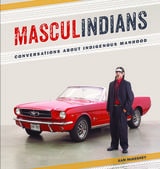
Masculindians
Conversations about Indigenous ManhoodSam McKegney
Michigan State University Press, 2014
Contributors: Taiaiake Alfred, Kim Anderson, Joanne Arnott, Joseph Boyden, Alison Calder, Warren Cariou, Jessica Danforth, Louise Halfe, Tomson Highway, Daniel Heath Justice, Janice C. Hill Kanonhsyonni, Lee Maracle, Neal McLeod, Daniel David Moses, Gregory Scofield, Thomas Kimeksum Thrasher, and Richard Van Camp.
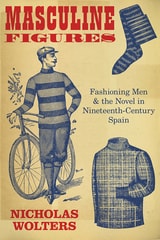
Masculine Figures
Fashioning Men and the Novel in Nineteenth-Century SpainNicholas Wolters
Vanderbilt University Press, 2022
Fictional masculinity performs a symbolic role in representing and negotiating the contradictions male novelists often encountered in their attempts to professionalize not only as writers, but also as businessmen, professors, lawyers, and politicians. Through specific and recurring figures like the student, the priest, the businessman, and the heir, male novelists portray and represent an increasingly middle-class world at odds with the values and virtues it inherited from an imperial Spanish past, and those it imported from more industrialized nations like England and France. The visual culture of the time and place marks the material turn in middle-class masculinity and sets the stage for discussions of race and sexuality.
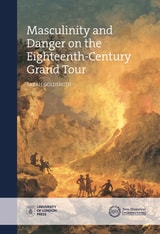
Masculinity and Danger on the Eighteenth-Century Grand Tour
Sarah Goldsmith
University of London Press, 2020
Goldsmith demonstrates that the Grand Tour was a means of constructing Britain’s next generation of leaders. Influenced by aristocratic concepts of honor and inspired by military-style leadership, elite society viewed experiences of danger and hardship as powerfully transformative and therefore as central to constructing masculinity. Scaling mountains, volcanoes, and glaciers, and even encountering war and disease, Grand Tourists willingly tackled a variety of perils. Through her study of these dangers, Goldsmith offers a bold revision of eighteenth-century elite masculine culture and the critical role the Grand Tour played within it.
Masculinity and Femininity in the MMPI-2 and MMPI-A
Hale Martin
University of Minnesota Press, 2010
Martin and Finn consider the factor structure and correlates of masculinity and femininity in the MMPI in multiple samples. Through their analyses, they are able to address such questions as: Is there such a thing as masculinity/femininity? If so, are masculinity and femininity separate constructs, or are they opposite ends of a bipolar dimension? What are the core aspects of masculinity and femininity? Are they the same for men and women? Do the meanings of masculinity and femininity vary across the human life span and in different cultures? To what extent are masculinity and femininity biologically or socially determined? Can masculinity and femininity be adequately measured by the MMPI-2 and MMPI-A?
This insightful work uses solid empirical methods to clarify significant constructs. It will be an essential resource for researchers in the areas of personality, psychological assessment, and gender studies, as well as for clinicians working with clients who have nontraditional gender identities.
Masculinity and Femininity
Their Psychological Dimensions, Correlates, and AntecedentsBy Janet T. Spence and Robert L. Helmreich
University of Texas Press, 1978
Many societies assign sharply distinguished roles to men and women. Personality differences, as well as physical differences, between men and women are used to justify these different sex roles, and women are seen as more emotionally and interpersonally sensitive than men, while men are said to be more competent, achievement oriented, and assertive than women. A widely held view is that not only do men and women differ but that possession of "masculine" characteristics precludes possession of "feminine" characteristics. This bipolar conception has led to the definition of masculinity and femininity as opposites. Acceptance of this idea has caused social scientists and laypersons to consider men and women who possess cross-sex personality characteristics as less emotionally healthy and socially adjusted than those with sex-appropriate traits. Previous research by the authors and others, done almost exclusively with college students, has shown, however, that masculinity and femininity do not relate negatively to each other, thus supporting a dualistic rather than a bipolar conception of these two psychological dimensions.
Spence and Helmreich present data showing that the dualistic conception holds for a large number of groups, varying widely in age, geographical location, socioeconomic status, and patterns of interest, whose psychological masculinity and femininity were measured with an objective instrument, the Personality Attributes Questionnaire, devised by the authors. Many individuals are shown to be appropriately sex-typed; that is, men tend to be high in masculinity and low in femininity and women the reverse. However, a substantial number of men and women are androgynous—high in both masculine and feminine characteristics—while some are not high in either. Importantly, the authors find that androgynous individuals display more self-esteem, social competence, and achievement orientation than individuals who are strong in either masculinity or femininity or are not strong in either.
One of the major contributions of the work is the development of a new, multifaceted measure of achievement motivation (the Work and Family Orientation Questionnaire), which can be used successfully to predict behavior in both males and females and is related to masculinity and femininity in both sexes.
In addition to investigating the correlates of masculinity and femininity, the authors attempt to isolate parental factors that contribute to the development of these characteristics and achievement motivation. The book includes analyses of data from students on their perception of their parents, which enable the authors to examine the influence of parental masculinity and femininity and parental behaviors and child-rearing attitudes on the development of masculinity and femininity and achievement motivation characteristics in their children. The important implications of these findings for theories of sex roles, personality development, and achievement motivation are examined.
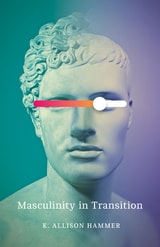
Masculinity in Transition
K. Allison Hammer
University of Minnesota Press, 2023
Locating the roots of toxic masculinity and finding its displacement in unruly culture
Masculinity in Transition analyzes shifting relationships to masculinity in canonical works of twentieth-century literature and film, as well as in twenty-first-century media, performance, and transgender poetics. Focusing on “toxic masculinity,” which has assumed new valence since 2016, K. Allison Hammer traces its roots to a complex set of ideologies embedded in the histories of settler colonialism, racial capitalism, and political fraternity, and finds that while toxic strains of masculinity are mainly associated with straight, white men, trans and queer masculinities can be implicated in these systems of power.
Hammer argues, however, that these malignant forms of masculinity are not fixed and can be displaced by “unruly alliances”—texts and relationships that reject the nationalisms and gender politics of white male hegemony and perform an urgently needed reimagining of what it means to be masculine. Locating these unruly alliances in the writings, performances, and films of butch lesbians, gay men, cisgender femmes, and trans and nonbinary individuals, Masculinity in Transition works through an archive of works of performance art, trans poetics, Western films and streaming media, global creative responses to HIV/AIDS, and working-class and “white trash” fictions about labor and unionization.
Masculinity in Transition moves the study of masculinity away from an overriding preoccupation with cisnormativity, whiteness, and heteronormativity, and toward a wider and more generative range of embodiments, identifications, and ideologies. Hammer’s bold rethinking of masculinity and its potentially toxic effects lays bare the underlying fragility of normative masculinity.
Retail e-book files for this title are screen-reader friendly with images accompanied by short alt text and/or extended descriptions.
Masculinity, Motherhood, and Mockery
Psychoanalyzing Culture and the Iatmul Naven Rite in New GuineaEric Kline Silverman
University of Michigan Press, 2001
Throughout this work, Eric Silverman details the dialogics of mothering and manhood throughout Eastern Iatmul culture, including in his analysis cosmology and myth; food- and childraising; architecture and canoes; ethnophysiology and sexuality; shame and hygiene; marriage and kinship; and perhaps most significantly, a ceremonial locus classicus in anthropology: the famous Iatmul naven rite. This book provides the first sustained examination of naven since Bateson, presenting new data and interpretations that are based entirely on original, first-hand ethnographic research.
The sustained engagement with anthropological and psychoanalytic theory coupled with a refreshing examination of a famous and still-enigmatic ritual is sure to make multiple contributions to pressing debates in contemporary anthropology and social theory.
Eric Silverman is Associate Professor of Anthropology, DePauw University.

Mask Off
Masculinity RedefinedJJ Bola
Pluto Press, 2019
From Blurred Lines to gang signs, how does society cause toxic masculinity? How do we define masculinity today? Dominating the world around us, seen in deadly gun violence, higher male suicide rates, and the incels on Reddit, masculinity is perceived to be “toxic,” “fragile,” and “in crisis.” What does that mean for society, and how can we understand it?
In Mask Off, JJ Bola exposes masculinity as a performance that men are socially conditioned into. Using examples of non-Western cultural traditions, music, and sport, he shines light on historical narratives around manhood, debunking popular myths along the way. He explores how LGBTQ men, men of color, and male refugees experience masculinity in diverse ways, revealing its fluidity, how it's strengthened and weakened by different political contexts, such as the patriarchy or the far-right, and perceived differently by those around them. Chapters include:
*Real men: Myths of masculinity
*What’s love got to do with it? Love, sex and consent
*This is a man’s world: The politics of masculinity, the masculinity of politics
*If I were a boy: Gender equality and feminism
*Slamdunk at the funk: masculinity and sport
At the heart of love and sex, the political stage, competitive sports, gang culture, and mental health issues, lies masculinity: Mask Off is an urgent call to unravel masculinity and redefine it. "What do our own perceptions of masculinity and the wider cultural norms around it mean for young boys growing up into manhood? What do they mean for young men and older men grappling with a society that encourages them to hold on to the anger that destroys the lives of women as well as the lives of many men?" Those questions and more offer food for thought for every man.

Maturing Masculinities
Aging, Chronic Illness, and Viagra in MexicoEmily A. Wentzell
Duke University Press, 2013
Erectile dysfunction treatments like Viagra are popular in Mexico, where stereotypes of men as sex-obsessed "machos" persist. However, most of the men Wentzell interviewed saw erectile difficulty as a chance to demonstrate difference from this stereotype. Rather than using drugs to continue youthful sex lives, many collaborated with wives and physicians to frame erectile difficulty as a prompt to embody age-appropriate, mature masculinities.
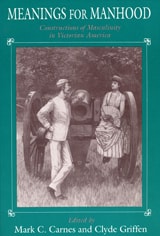
Meanings for Manhood
Edited by Mark C. Carnes and Clyde Griffen
University of Chicago Press, 1990
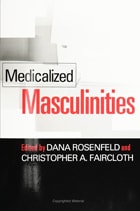
Medicalized Masculinities
edited by Dana Rosenfeld and Christopher A. Faircloth
Temple University Press, 2006
Medicalized Masculinities considers how these threads in scholarship failed to consider the male body adequately and presents cutting-edge research into the definition and regulation of masculinity by medicine. Renowned health and gender studies experts examine medicalized conditions such as balding, aging, and other dimensions of the life cycle in the tradition of the sociology of health and gender.
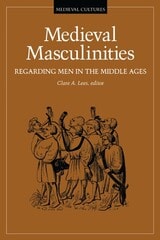
Medieval Masculinities
Regarding Men in the Middle AgesClare A. Lees
University of Minnesota Press, 1994
"Ranging from questions of epic violence and heroic embodiments of manhood to constructions of bachelorhood, husbandry, and sainthood, Medieval Masculinities is the first synthesis of medieval and gender studies to focus on masculinities."
Harry Brod, editor of The Making of Masculinities"We should not be working [exclusively] on the subjected sex any more than a historian of class can focus exclusively on peasants."-Natalie Zemon Davis, 1975 In the years since Natalie Davis made this remark, men's studies, and gender studies along with it, has earned its place in scholarship. What is often missing from such studies, however, is the insight that the concept of gender in general, and that of masculinity in particular, can be understood only in relation to individual societies, examined at specific historical and cultural moments. A brilliant application of this insight, Medieval Masculinities is the first full-length collection to explore the issues of men's studies and contemporary theories of gender within the context of the Middle Ages. Interdisciplinary and multicultural, the essays range from matrimony in medieval Italy to bachelorhood in Renaissance Venice, from friars and saints to the male animal in the fables of Marie de France, from manhood in Sir Gawain and the Green Knight, Beowulf, and the Roman d'Eneas to men as "other," whether Muslim or Jew, in medieval Castilian epic and ballad. The authors are especially concerned with cultural manifestations of masculinity that transcend this particular historical period-idealized gender roles, political and economic factors in structuring social institutions, and the impact of masculinist ideology in fostering and maintaining power. Together, their essays constitute an important reassessment of traditional assumptions within medieval studies as well as a major contribution to the evolving study of gender.ContributorsChristopher Baswell, Barnard CollegeVern L. Bullough, SUNY, BuffaloStanley Chojnacki, Michigan State UniversityJohn Coakley, New Brunswick Theological SeminaryThelma Fenster, Fordham UniversityClare Kinney, University of VirginiaClare A. Lees, University of PennsylvaniaJo Ann McNamara, Hunter CollegeLouise Mirrer, Fordham UniversityHarriet Spiegel, California State University, ChicoSusan Mosher Stuard, Haverford College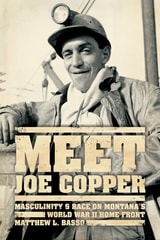
Meet Joe Copper
Masculinity and Race on Montana's World War II Home FrontMatthew L. Basso
University of Chicago Press, 2013
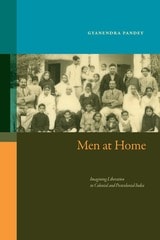
Men at Home
Imagining Liberation in Colonial and Postcolonial IndiaGyanendra Pandey
Duke University Press, 2025
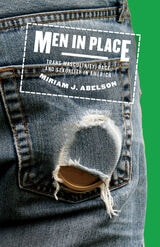
Men in Place
Trans Masculinity, Race, and Sexuality in AmericaMiriam J. Abelson
University of Minnesota Press, 2019
Daring new theories of masculinity, built from a large and geographically diverse interview study of transgender men
American masculinity is being critiqued, questioned, and reinterpreted for a new era. In Men in Place Miriam J. Abelson makes an original contribution to this conversation through in-depth interviews with trans men in the U.S. West, Southeast, and Midwest, showing how the places and spaces men inhabit are fundamental to their experiences of race, sexuality, and gender.
Men in Place explores the shifting meanings of being a man across cities and in rural areas. Here Abelson develops the insight that individual men do not have one way to be masculine—rather, their ways of being men shift between different spaces and places. She reveals a widespread version of masculinity that might be summed up as “strong when I need to be, soft when I need to be,” using the experiences of trans men to highlight the fundamental construction of manhood for all men.
With an eye to how societal institutions promote homophobia, transphobia, and racism, Men in Place argues that race and sexuality fundamentally shape safety for men, particularly in rural spaces, and helps us to better understand the ways that gender is created and enforced.
Men in the Middle
Searching for Masculinity in the 1950sJames Gilbert
University of Chicago Press, 2005
In Men in the Middle, James Gilbert uncovers a fascinating and extensive body of literature that confronts the problems and possibilities of expressing masculinity in the 1950s. Drawing on the biographies of men who explored manhood either in their writings or in their public personas, Gilbert examines the stories of several of the most important figures of the day-revivalist Billy Graham, playwright Tennessee Williams, sociologist David Riesman, sex researcher Alfred Kinsey, Playboy literary editor Auguste Comte Spectorsky, and TV-sitcom dad Ozzie Nelson-and allows us to see beyond the inherited stereotypes of the time. Each of these stories, in Gilbert's hands, adds crucial dimensions to our understanding of masculinity the 1950s. No longer will this era be seen solely in terms of the conformist man in the gray flannel suit or the Marlboro Man.
Men without Women
Masculinity and Revolution in Russian Fiction, 1917–1929Eliot Borenstein
Duke University Press, 2001
In such works as Red Cavalry by Isaac Babel, Envy by Yuri Olesha, and Chevengur by Andrei Platonov women are either absent or transformed into bodiless abstractions. Their absence, claims Borenstein, reflects the masculine values that are hallmarks of the post-revolutionary era: production rather than reproduction, participation in history rather than domestic ahistoricity, heavy industry, construction, and struggle. He identifies in this literature groups of “men without women” replacing the family, even while the metaphor of family is used as an organizing feature of their recurring revolutionary missions. With the passage of time, these characters’ relationships—just as those in the Soviet culture of the time—begin to resemble the family structure that was originally rejected and destroyed, with one important exception: the new “families” had no place for women. According to Borenstein, this masculinist myth found its most congenial audience during the early period of communism, but its hostility to women and family ties could not survive into the Stalinist era when women, home, and family were no longer seen as antithetical to socialism.
Drawing on the theory and writings of Levi-Strauss, Girard, Sedgwick, and others, Men Without Women will be of interest to students and scholars of Slavic literature and history as well as specialists in literary theory and gender studies.
Misframing Men
The Politics of Contemporary MasculinitiesKimmel, Michael
Rutgers University Press, 2010
This past decade has witnessed an extraordinary transformation in men's lives. For years, wave after wave of the women's movement, a movement that reshaped every aspect of American life, produced nary a ripple among men. But suddenly men are in the spotlight.
Yet, the public discussions often seem strained, silly, and sometimes flat-out wrong. The spotlight itself seems to obscure as much as it illuminates. Old tired clichTs about men's resistance to romantic commitment or reluctance to be led to the marriage altar seem perennially recyclable in advice books and on TV talk shows, but these days the laughter feels more forced, the defensiveness more pronounced. Pop biologists avoid careful confrontation with serious scientific research in their quest to find anatomical or evolutionary bases for promiscuity or porn addiction, hoping that by fiat, one can pronounce that "boys will be boys" and render it more than a flaccid tautology. And political pundits wring their hands about the feminization of American manhood, as if gender equality has neutered these formerly proud studs. Misframing Men, a collection of Michael Kimmel's commentaries on contemporary debates about masculinity, argues that the media have largely misframed this debate.
Kimmel, among the world's best-known scholars in gender studies, discusses political moments such as the Virginia Military Institute and Citadel cases that reached the Supreme Court (he participated as expert witness for the Justice Department) along with Promise Keepers rallies, mythopoetic gatherings, and white supremacists. He takes on antifeminists as the real male bashers, questions the unsubstantiated assertions that men suffer from domestic violence to the same degree as women, and examines the claims made by those who want to rescue boys from the "misandrous" reforms initiated by feminism.
In writings both solidly grounded and forcefully argued, Kimmel pushes the boundaries of today's modern conversation about men and masculinity.
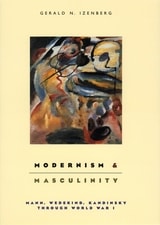
Modernism and Masculinity
Mann, Wedekind, Kandinsky through World War IGerald Izenberg
University of Chicago Press, 2000
But their critique of masculinity created enormous challenges: How could they appropriate a feminine aesthetic while retaining their own masculine idenitites? How did appropiating the feminine affect their personal relationships or their political views? Modernism and Masculinity seeks to answer these questions. In this absorbing combination of biography and formal critique, Izenberg reconsiders the works of Mann, Wedekind, Kandinsky and semonstrates how the cirses of masculinity they endure are found not just within the images and forms of their art, but in the distinct and very personal impulses that inspired it.

Murder and Masculinity
Violent Fictions of Twentieth-Century Latin AmericaRebecca E. Biron
Vanderbilt University Press, 2000
The introduction to this study deftly situates Biron's work in relation to previous theoretical arguments on the social and political dimensions of Latin American writing. The five subsequent chapters offer superb analyses of the individual texts. Like their male protagonists who experiment with the psychological and legal extremes of gender division, these narratives risk nonconformity to the laws of genre in their quest for liberation from violent social and literary conventions. In combining elements of detective stories, crime narratives, psychological case studies, and magical or grotesque realism, they offer metafictional commentary on a network of discourses that confuses images of masculinity, national identity, and political autonomy in postcolonial Latin America.
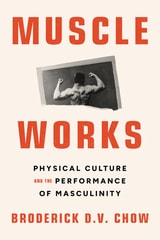
Muscle Works
Physical Culture and the Performance of MasculinityBroderick D. V. Chow
Northwestern University Press, 2024
This book recounts the story of fitness culture from its beginnings as spectacles of strongmen, weightlifters, acrobats, and wrestlers to its legitimization in the twentieth-century in the form of competitive sports and health and wellness practices. Broderick D. V. Chow shows how these modes of display contribute to the construction and deconstruction of definitions of masculinity.
Attending to its theatrical origins, Chow argues for a more nuanced understanding of fitness culture, one informed by the legacies of self-described Strongest Man in the World Eugen Sandow and the history of fakery in strongman performance; the philosophy of weightlifter George Hackenschmidt and the performances of martial artist Bruce Lee; and the intersections of fatigue, resistance training, and whiteness. Muscle Works: Physical Culture and the Performance of Masculinity moves beyond the gym and across the archive, working out techniques, poses, and performances to consider how, as gendered subjects, we inhabit and make worlds through our bodies.