Results by title
237 books match the query 'Medicine' and 33 start with m

MAKING MIDWIVES LEGAL
Childbirth, Medicine, and the Law, Second EditionRaymond G. DeVries
The Ohio State University Press, 1996
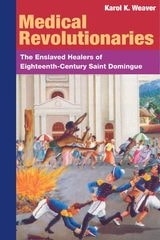
MEDICAL REVOLUTIONARIES
The Enslaved Healers of Eighteenth-Century Saint DomingueKarol K. Weaver
University of Illinois Press, 2006
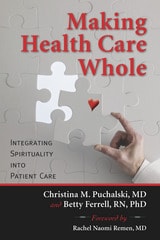
Making Health Care Whole
Integrating Spirituality into Patient CareChristina Puchalski
Templeton Press, 2021
In the last fifteen years, the field of palliative care has experienced a surge in interest in spirituality as an important aspect of caring for seriously ill and dying patients. While spirituality has been generally recognized as an essential dimension of palliative care, uniformity of spiritual care practice has been lacking across health care settings due to factors like varying understandings and definitions of spirituality, lack of resources and practical tools, and limited professional education and training in spiritual care.

Manitoba Medicine
A Brief HistoryIan Carr
University of Manitoba Press, 1999
Manual for (Relatively) Painless Medical Spanish
A Self-Teaching CourseBy Ana Malinow Rajkovic
University of Texas Press, 1992
Spanish-speaking patients are no rarity in United States hospitals and clinics, as many English-speaking health care providers have discovered. To help these providers better communicate with the patients they serve, Ana Malinow Rajkovic has prepared the Manual for (Relatively) Painless Medical Spanish, a lively and innovative self-teaching guide to the grammar, pronunciation, and medical vocabulary of Spanish.
Presented in a systematic and highly entertaining fashion, twelve lessons cover some of the most commonly encountered situations. These include the family clinic, the emergency room, appendicitis, the social chat, pregnancy, family planning, pelvic inflammatory disease and urinary tract infection, depression, children with asthma, patients with angina, explaining a venipuncture and a spinal tap, and patients with shortness of breath. Each lesson closes with a bilingual interview that includes vocabulary and grammar introduced in that lesson. A guide to the medical history and physical examination appears in English and Spanish in the appendix.
Excellent in the classroom or for independent learning, the Manual will enable health care providers better to understand and supply the needs of Spanish-speaking patients.
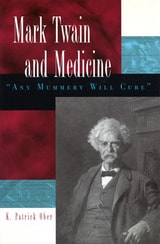
Mark Twain and Medicine
"Any Mummery Will Cure"K. Patrick Ober
University of Missouri Press, 2003
Mark Twain has always been America’s spokesman, and his comments on a wide range of topics continue to be accurate, valid, and frequently amusing. His opinions on the medical field are no exception. While Twain’s works, including his popular novels about Tom Sawyer and Huckleberry Finn, are rich in medical imagery and medical themes derived from his personal experiences, his interactions with the medical profession and his comments about health, illness, and physicians have largely been overlooked.
In Mark Twain and Medicine, K. Patrick Ober remedies this omission. The nineteenth century was a critical time in the development of American medicine, with much competition among the different systems of health care, both traditional and alternative. Not surprisingly, Mark Twain was right in the middle of it all. He experimented with many of the alternative care systems that were available in his day—in part because of his frustration with traditional medicine and in part because he hoped to find the “perfect” system that would bring health to his family.
Twain’s commentary provides a unique perspective on American medicine and the revolution in medical systems that he experienced firsthand. Ober explores Twain’s personal perspective in this area, as he expressed it in fiction, speeches, and letters. As a medical educator, Ober explains in sufficient detail and with clarity all medical and scientific terms, making this volume accessible to the general reader.
Ober demonstrates that many of Twain’s observations are still relevant to today’s health care issues, including the use of alternative or complementary medicine in dealing with illness, the utility of placebo therapies, and the role of hope in the healing process.
Twain’s evaluation of the medical practices of his era provides a fresh, humanistic, and personalized view of the dramatic changes that occurred in medicine through the nineteenth century and into the first decade of the twentieth. Twain scholars, general readers, and medical professionals will all find this unique look at his work appealing.
Markets and Medicine
The Politics of Health Care Reform in Britain, Germany, and the United StatesSusan Giaimo
University of Michigan Press, 2002
Maya Bonesetters
Manual Healers in a Changing GuatemalaBy Servando Z. Hinojosa; Illustrations by Servando G. Hinojosa
University of Texas Press, 2020
Scholarship on Maya healing traditions has focused primarily on the roles of midwives, shamans, herbalists, and diviners. Bonesetters, on the other hand, have been largely excluded from conversations about traditional health practitioners and community health resources. Maya Bonesetters is the first book-length study of bonesetting in Guatemala and situates the manual healing tradition within the current cultural context—one in which a changing medical landscape potentially threatens bonesetters’ work yet presents an opportunity to strengthen its relevance.
Drawing on extensive field research in highland Guatemala, Servando Z. Hinojosa introduces readers to a seldom documented, though nonetheless widespread, variety of healer. This book examines the work of Kaqchikel and Tz’utujiil Maya bonesetters, analyzes how they diagnose and treat injuries, and contrasts the empirical and sacred approaches of various healers. Hinojosa shows how bonesetters are carefully adapting certain biomedical technologies to meet local expectations for care and concludes that, despite pressures and criticisms from the biomedical community, bonesetting remains culturally meaningful and vital to Maya people, even if its future remains uncertain.
Measuring the Gains from Medical Research
An Economic ApproachEdited by Kevin M. Murphy and Robert H. Topel
University of Chicago Press, 2003
From an economic perspective, they find, the answer is a resounding "yes": in fact, considering the extraordinary value of improvements to health, we may even be spending too little on medical research. The evidence these papers present and the conclusions they reach are both surprising and convincing: that growth in longevity since 1950 has been as valuable as growth in all other forms of consumption combined; that medical advances producing 10% reductions in mortality from cancer and heart disease alone would add roughly $10 trillion-a year's GDP-to the national wealth; or that the average new drug approved by the FDA yields benefits worth many times its cost of development.
The papers in this book are packed with these and many other surprising revelations, their sophisticated analysis persuasively demonstrating the massive economic benefits we can gain from investments in medical research. For anyone concerned about the cost and the value of such research-from policy makers to health care professionals and economists-this will be a landmark book.
Medical Encounters
Knowledge and Identity in Early American LiteraturesKelly Wisecup
University of Massachusetts Press, 2013
Against the prevailing view that colonial texts provide insight only into their writers' perspectives, Wisecup demonstrates that Europeans, Natives, and Africans held certain medical ideas in common, including a conception of disease as both a spiritual and a physical entity, and a belief in the power of special rituals or prayers to restore health. As a consequence, medical knowledge and practices operated as a shared form of communication on which everyone drew in order to adapt to a world of devastating new maladies and unfamiliar cures.
By signaling one's relation to supernatural forces, to the natural world, and to other people, medicine became an effective means of communicating a variety of messages about power and identity as well as bodies and minds. Native Americans in Virginia and New England, for example, responded to the nearly simultaneous arrival of mysterious epidemics and peoples by incorporating colonists into explanations of disease, while British American colonists emphasized to their audiences back home the value of medical knowledge drawn from cross-cultural encounters in the New World.
Medical Lives and Scientific Medicine at Michigan, 1891-1969
Joel D. Howell, Editor
University of Michigan Press, 1993

Medical Misinformation in Early Modern Germany
Christopher Hutchinson
University of Delaware Press, 2026
Medical Misinformation in Early Modern Germany examines how doctors, writers, and printers in sixteenth-century Germany responded to the rapid expansion of print and its implications for medical knowledge. The spread of printed texts generated widespread suspicion about print’s reliability as a conduit of information and led writers to reflect on questions of audience, vernacularity, and medical authority in their responses to disease. The book investigates literary texts alongside popular vernacular medical pamphlets on the major epidemic diseases of the period––plague, syphilis, and the English sweating sickness––to reveal a widespread concern with the impact of printed texts on public health. During the 1529 outbreak of the English sweating sickness, this concern culminated in writers’ use of a “rhetoric of virality,” explicitly comparing the circulation of texts to the spread of disease, as they confronted the parallel contagions of disease and information.
Medical Professionalism in the New Information Age
Edited and with an Introduction by David J. Rothman and David Blumenthal
Rutgers University Press, 2011
Medical Readers' Theater
A Guide and ScriptsTodd L. Savitt
University of Iowa Press, 2002
Medicinal Plants of Native America, Vols. 1 and 2
Daniel E. Moerman
University of Michigan Press, 1987
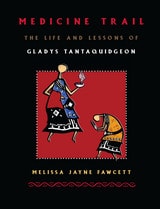
Medicine Trail
The Life and Lessons of Gladys TantaquidgeonMelissa Jayne Fawcett
University of Arizona Press, 2000
Contrary to the fictional account of James Fenimore Cooper, the Mohegan/Mohican nation did not vanish with the death of Chief Uncas more than three hundred years ago. In the remarkable life story of one of its most beloved matriarchs—100-year-old medicine woman Gladys Tantaquidgeon—Medicine Trail tells of the Mohegans' survival into this century.
Blending autobiography and history, with traditional knowledge and ways of life, Medicine Trail presents a collage of events in Tantaquidgeon's life. We see her childhood spent learning Mohegan ceremonies and healing methods at the hands of her tribal grandmothers, and her Ivy League education and career in the white male-dominated field of anthropology. We also witness her travels to other Indian communities, acting as both an ambassador of her own tribe and an employee of the federal government's Bureau of Indian Affairs. Finally we see Tantaquidgeon's return to her beloved Mohegan Hill, where she cofounded America's oldest Indian-run museum, carrying on her life's commitment to good medicine and the cultural continuance and renewal of all Indian nations.
Written in the Mohegan oral tradition, this book offers a unique insider's understanding of Mohegan and other Native American cultures while discussing the major policies and trends that have affected people throughout Indian Country in the twentieth century. A significant departure from traditional anthropological "as told to" American Indian autobiography, Medicine Trail represents a major contribution to anthropology, history, theology, women's studies, and Native American studies.

Medicine and American Growth, 1800–1860
James H. Cassedy
University of Wisconsin Press, 1986
“A work of great breadth, originality, and distinction. Rarely do we see such a successful marriage between historical demography and the history of medicine. The interconnections between population increase, migration and immigration on the one hand, and disease and the development of medicine on the other in antebellum America are brilliantly presented.”—Irvine Loudon, Bulletin of the History of Medicine
Medicine and Health in Africa
Multidisciplinary PerspectivesPaula Viterbo
Michigan State University Press, 2011
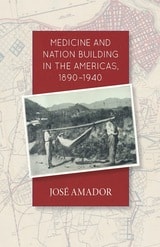
Medicine and Nation Building in the Americas, 1890-1940
Jose Amador
Vanderbilt University Press, 2015
Drawing on sources in Cuba, Puerto Rico, Brazil, and the United States, Amador shows that initiatives launched in colonial settings laid the foundation for the rise of public health programs in the hemisphere and transformed debates about the formation of national culture. Writers rethought theories of environmental and racial danger, while Cuban reformers invoked the yellow fever campaign to exclude nonwhite immigrants. Puerto Rican peasants flooded hookworm treatment stations, and Brazilian sanitarians embraced regionalist and imperialist ideologies. Together, these groups illustrated that public health campaigns developed in the shadow of empire propelled new conflicts and conversations about achieving modernity and progress in the tropics.
This book is a recipient of the annual Norman L. and Roselea J. Goldberg Prize for the best project in the area of medicine.
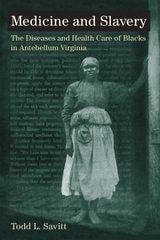
Medicine and Slavery
The Diseases and Health Care of Blacks in Antebellum VirginiaTodd L. Savitt
University of Illinois Press, 2002
In Medicine and Slavery, Todd L. Savitt evaluates the diet, hygiene, clothing, and living and working conditions of antebellum African Americans, slave and free, and analyzes the diseases and health conditions that afflicted them in urban areas, at industrial sites, and on plantations.
Medicine and Western Civilization
Edited by David J Rothman, Steven Marcus, and Stephanie A. Kiceluk
Rutgers University Press, 1995
Medicine and the Management of Living
Taming the Last Great BeastWilliam Ray Arney and Bernard J. Bergen
University of Chicago Press, 1984
Medicine and the Management of Living questions how it has been possible for the patient to change from a silenced specimen observed in the clinic to a person whose subjective experience of illness is important to medical practice and discourse. Arney and Bergen ask, What incited the demand that medicine take the whole person, including the patient's presentation of his or her illness, into consideration? And in whose terms are patients speaking about themselves? The authors argue that the inclusion of patients' experiences in medical discourse that has come about since the 1950s is not so much a result of a "patient rebellion" as an activity preciptated by the medical establishment itself. Drawing inspiration from the work of Michel Foucault, Arney and Bergen examine the structure of medical power, contending that new social technologies like support groups make the patient's subjectivity available for medical evaluation, judgment, and manipulation.
Throughout this sensitively written discussion, the authors vivify the issues they raise with excerpts from many sources—the writings of a poet dying of cancer, the comments of doctors pondering their own fatal illnesses, and excerpts from popular magazines, medical journals, and sociological studies. They examine the changing role of the medical profession through history, using a modern advertising image and woodcuts from Vesalius's Renaissance anatomy text to show the symbolic portrayal of health and medicine. Their wide-ranging concerns lead the reader through such topics as teenage pregnancy; the historical treatment of medical anomalies like hermaphrodites and the "elephant man" (John Merrick); and literary representations of illness in Sartre, Chekhov, and Brian Clark's recent Broadway drama, "Whose Life Is It Anyway?"
In a provocative yet thoughtful way, Medicine and the Management of Living points the way for a radical reassessment of medical power and the medical establishment.
Medicine and the Saints
Science, Islam, and the Colonial Encounter in Morocco, 1877-1956By Ellen J. Amster
University of Texas Press, 2013
The colonial encounter between France and Morocco took place not only in the political realm but also in the realm of medicine. Because the body politic and the physical body are intimately linked, French efforts to colonize Morocco took place in and through the body. Starting from this original premise, Medicine and the Saints traces a history of colonial embodiment in Morocco through a series of medical encounters between the Islamic sultanate of Morocco and the Republic of France from 1877 to 1956.
Drawing on a wealth of primary sources in both French and Arabic, Ellen Amster investigates the positivist ambitions of French colonial doctors, sociologists, philologists, and historians; the social history of the encounters and transformations occasioned by French medical interventions; and the ways in which Moroccan nationalists ultimately appropriated a French model of modernity to invent the independent nation-state. Each chapter of the book addresses a different problem in the history of medicine: international espionage and a doctor’s murder; disease and revolt in Moroccan cities; a battle for authority between doctors and Muslim midwives; and the search for national identity in the welfare state. This research reveals how Moroccans ingested and digested French science and used it to create a nationalist movement and Islamist politics, and to understand disease and health. In the colonial encounter, the Muslim body became a seat of subjectivity, the place from which individuals contested and redefined the political.
Medicine in Mexico
From Aztec Herbs to BetatronsBy Gordon Schendel
University of Texas Press, 1968
A witch doctor casting an evil spell in a steaming jungle village; a young medical-school graduate cleaning a machete wound in a rat-infested thatched hut; a world-renowned scientist doing research in Mexico City—all were part of the mid-twentieth century medical scene in Mexico, a country of great cultural, socioeconomic, and geographical contrasts.
Gordon Schendel, in collaboration with Dr. José Alvarez Amézquita and Dr. Miguel E. Bustamante, relates the history of medicine and public health and welfare in Mexico. This absorbing story begins with a great indigenous culture; continues with Spanish Colonial rule, the unproductive first century of independence from Spain, and the years of revolution; then concentrates on the modern nation.
The Aztec civilization evidenced a knowledge of pharmacology and the fundamentals of health far in advance of contemporary European societies. And almost one hundred years before the Pilgrims landed on Plymouth Rock, New Spain boasted a comprehensive "Public Health Administration" and a hospital system that served all classes. However, throughout Mexico's three centuries as a Spanish colony and its first century of independence, millions of its citizens suffered abysmal poverty. Thus when the Republic of Mexico entered its post-Revolutionary era, the majority of its citizens were plagued by superstition, illiteracy, malnutrition, and the other "diseases of the poor."
The principal part of this story tells how Mexico attacked these problems, and how in a few short years it became a leader and a model for all Latin America in the fields of medicine and public health and welfare. The book is based on Mr. Schendel's research and observations and on his many interviews with doctors and govemment officials. It will be of interest to the medical profession and to concerned laymen of all nationalities, for it illustrates how a dynamic nation met challenges that all countries of the world, developed and underdeveloped, must face.
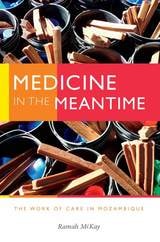
Medicine in the Meantime
The Work of Care in MozambiqueRamah McKay
Duke University Press, 2018
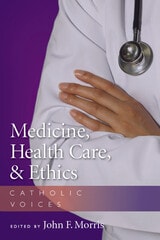
Medicine, Health Care, & Ethics
Catholic VoicesJohn F. Morris
Catholic University of America Press, 2007
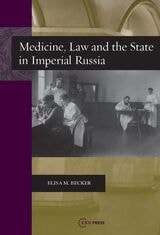
Medicine, Law, and the State in Imperial Russia
Elisa M. Becker
Central European University Press, 2011
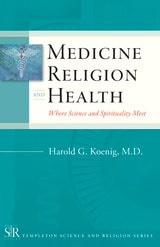
Medicine, Religion, and Health
Where Science and Spirituality MeetHarold G Koenig
Templeton Press, 2008
Medicine, Religion, and Health: Where Science and Spirituality Meet will be the first title published in the new Templeton Science and Religion Series, in which scientists from a wide range of fields distill their experience and knowledge into brief tours of their respective specialties. In this, the series' maiden volume, Dr. Harold G. Koenig, provides an overview of the relationship between health care and religion that manages to be comprehensive yet concise, factual yet inspirational, and technical yet easily accessible to nonspecialists and general readers.
Mesoamerican Healers
Edited by Brad R. Huber and Alan R. Sandstrom
University of Texas Press, 2001
Healing practices in Mesoamerica span a wide range, from traditional folk medicine with roots reaching back into the prehispanic era to westernized biomedicine. These sometimes cooperating, sometimes competing practices have attracted attention from researchers and the public alike, as interest in alternative medicine and holistic healing continues to grow.
Responding to this interest, the essays in this book offer a comprehensive, state-of-the-art survey of Mesoamerican healers and medical practices in Mexico and Guatemala. The first two essays describe the work of prehispanic and colonial healers and show how their roles changed over time. The remaining essays look at contemporary healers, including bonesetters, curers, midwives, nurses, physicians, social workers, and spiritualists. Using a variety of theoretical approaches, the authors examine such topics as the intersection of gender and curing, the recruitment of healers and their training, healers' compensation and workload, types of illnesses treated and recommended treatments, conceptual models used in diagnosis and treatment, and the relationships among healers and between indigenous healers and medical and political authorities.

Metamorphoses
Memoirs of a Life in MedicineWilliam G. Anlyan, M. D.
Duke University Press, 2004
Born in Alexandria, Egypt, in 1925, and schooled in the British tradition, Anlyan attended Yale University as an undergraduate and medical student before coming to the relatively unknown medical school at Duke University in 1949 for an internship in general and thoracic surgery. He stayed on, first as a resident, then as a staff surgeon. By 1961, he was a full professor of surgery. In 1964, Anlyan was named dean of the medical school, the first in a series of administrative posts at the medical school and hospital. Anlyan’s role in the transformation of the Duke University Medical Center into an internationally renowned health system is manifest: he restructured the medical school and hospital and supervised the addition of almost four million square feet of new or renovated space. He hired outstanding administrators and directed a staff that instituted innovative programs and groundbreaking research centers, such as the Cancer Center and the Physician’s Assistant Program.
Anlyan describes a series of metamorphoses in his own life, in the world of medicine, in Durham, and at Duke. At the time of his prep school upbringing in Egypt, medicine was a matter of controlling infectious diseases like tuberculosis and polio. As he became an immigrant medical student and then a young surgeon, he observed vast advances in medical practice and changes in the financing of medical care. During his tenure at Duke, Durham was transformed from a sleepy mill and tobacco town into the “City of Medicine,” a place where patients routinely travel for open-heart surgery and cutting-edge treatments for cancer and other diseases.
Anyone interested in health care, medical education, and the history of Duke University will find Anlyan’s memoir of interest.
Missions for Science
U.S. Technology and Medicine in America's African WorldMcBride, David
Rutgers University Press, 2002
--What specific technologies and medical resources were transferred by U.S. institutions to black populations centers and why?
--How did the professed aims of U.S. technical projects, public health, and military activities differ from their actual effects and consequences?
--Did the U.S. technical transfer amount to a form of political hegemony?
--What lessons can we learn from the history of technology and medicine in these key geographic regions?
Missions for Science is the first book to explain how modern industrial and scientific advances shaped black Atlantic population centers. McBride is the first to provide a historical analysis of how shifting environmental factors and disease-control aid from the United States affected the collective development of these populations. He also discusses how independent black Atlantic republics with close historical links to the United States independently envisioned and attempted to use science and technology to build their nations.
Mothers and Medicine
A Social History of Infant Feeding, 1890–1950Rima D. Apple
University of Wisconsin Press, 1987
In the nineteenth century, infants were commonly breast-fed; by the middle of the twentieth century, women typically bottle-fed their babies on the advice of their doctors. In this book, Rima D. Apple discloses and analyzes the complex interactions of science, medicine, economics, and culture that underlie this dramatic shift in infant-care practices and women’s lives.
As infant feeding became the keystone of the emerging specialty of pediatrics in the twentieth century, the manufacture of infant food became a lucrative industry. More and more mothers reported difficulty in nursing their babies. While physicians were establishing themselves and the scientific experts and the infant-food industry was hawking the scientific bases of their products, women embraced “scientific motherhood,” believing that science could shape child care practices. The commercialization and medicalization of infant care established an environment that made bottle feeding not only less feared by many mothers, but indeed “natural” and “necessary.” Focusing on the history of infant feeding, this book clarifies the major elements involved in the complex and sometimes contradictory interaction between women and the medical profession, revealing much about the changing roles of mothers and physicians in American society.
“The strength of Apple’s book is her ability to indicate how the mutual interests of mothers, doctors, and manufacturers led to the transformation of infant feeding. . . . Historians of science will be impressed with the way she probes the connections between the medical profession and the manufacturers and with her ability to demonstrate how medical theories were translated into medical practice.”—Janet Golden, Isis

My Life in Medicine
A Hong Kong JourneyKwok-Yung Yuen
Hong Kong University Press, 2024
From humble beginnings in Hong Kong, Yuen Kwok-Yung rose to international prominence as a doctor, surgeon, academic, and microbiologist. As an advisor to governments, he and colleagues made discoveries that helped the world cope with unprecedented threats to public health, including the COVID-19 pandemic. In this compelling memoir, Dr. Yuen weaves personal stories with those from his extraordinary medical career to take readers on an inspiring journey about perseverance, courage, faith, and the ongoing peril of infectious diseases.