Results by title
1106 books match the query 'Memoirs' and 88 start with m
MAKING STORIES, MAKING SELVES
FEMINIST REFLECTIONS ON THE HOLOCAUSTR. Ruth Linden
The Ohio State University Press, 1995
Urged forward by these silences, Linden, a feminist and sociologist, began to interview Jewish Holocaust survivors in 1983. As Linden interprets survivors' accounts of the death camps and the resistance, she reveals complex ways in which selves are constructed through storytelling. The stories that unfold are continuously fashioned and refashioned—never stripped of context or frozen in time. What emerges is an unexpectedly elegant montage in which interviewee, interviewer, and author are intertwined.
Linden's meetings with survivors and her encounters with their stories transformed her as a feminist, a Jew, and a social scientist. Her analysis reveals the intimate connections between an ethnographer's lived experience and her interpretations of others'. Linden's reflections on the process of ethnography belie the rhetoric of positivism in the social sciences. They will inspire other scholars to break free of research and writing practices in their own disciplines that efface the ineluctable bond between knower and known. All readers will be challenged to reexamine the Holocaust in an intensely personal light and to reconsider the meanings of survival in our own time.
Cutting across the boundaries of ethnography and autobiography to create a new kind of text, Making Stories, Making Selves offers a significant contribution to interpretive social science and the literature of the Holocaust. Linden's original and courageous work is vital reading for Holocaust scholars, students of modern Jewish life, sociologists, feminist theorists, and all readers seeking to understand their own relationship to the Holocaust.
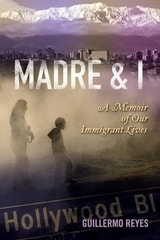
Madre and I
A Memoir of Our Immigrant LivesGuillermo Reyes
University of Wisconsin Press, 2010
In one memorable scene, after realizing that her friend Carmen is cleaning the house of one of the producers of Annie Hall, María recruits her to take her picture as she poses dramatically with Mr. Joffe’s Oscar in hand. It is María’s defiant yet determined attitude amidst her sacrifices that allows for Guillermo’s spirited coming of age and coming out.
Their common ground is the drama of their encounters with discovery, heartbreak, and passion—the explosive emotions that light up the stage of their two-actor theater.

Making History / Making Blintzes
How Two Red Diaper Babies Found Each Other and Discovered AmericaFlacks, Mickey
Rutgers University Press, 2018
Throughout this memoir, the couple demonstrates that their lifelong commitment to making history through social activism cannot be understood without returning to the deeply personal context of their family history—of growing up “Red Diaper babies” in 1950s New York City, using folk music as self-expression as adolescents in the 1960s, and of making blintzes for their own family through the 1970s and 1980s. As the children of immigrants and first generation Jews, Dick and Mickey crafted their own religious identity as secular Jews, created a critical space for American progressive activism through SDS, and ultimately, found themselves raising an “American” family.
Maldito Cáncer
Testimonios of Latinx Solidarity, Love, and ResistanceNatalia Deeb-Sossa
University of Arizona Press, 2027
This poignant collection brings together powerful testimonios from Chicanx and Latinx patients, family members, caregivers, and community advocates who have faced el maldito cáncer. Authors share first-person narratives of illness, fear, love, solidarity, and resilience, illuminating how Latinx communities navigate cancer journeys within a complex and often inequitable health-care system.
The contributors—ranging from students and community members to renowned scholars and artists—offer their stories through essays, creative nonfiction, poetry, bilingual chapters, and drawings.
These testimonios honor the diverse ways Latinxs process and communicate the emotional, physical, and cultural realities of cancer. Each section is framed by a short editor introduction that highlights key themes and invites readers to reflect on the resonant insights each story brings. Across four sections—patient voices, family members, community perspectives, and closing reflections—the book reveals how individuals confront illness with courage and how families and communities create networks of care grounded in culture, love, and collective strength.
Exposing physical and emotional vulnerabilities, instances of pain, suffering, worry, and anguish, Maldito Cáncer also opens a space for healing and connection. It offers a new lens to understanding cancer through culturally informed, justice-centered narratives. These acts of testimoniando offer a gift to us: resistance, connection, and hope.
Contributors
Alfonso Aranda
Cathy Arellano
Estela Mara Bensimon
Cindy Camacho-Gutierrez
Daniela A. Carreon
Angie Chabram
Natalia Deeb-Sossa
Yvette G. Flores
Fran García Vásquez
Jennifer Gottlieb
Osa Hidalgo de la Riva
Ekta Kandhway
Skye Kelty
Jorge Antonio Losoya
Dalia Magaña
Maribel Martínez
Pedro Noguera
Lorraine Ramos
Mónica Torreiro-Casal
Rita E. Urquijo-Ruiz
Patricia Zavella
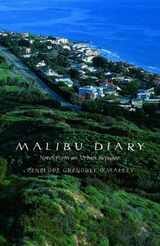
Malibu Diary
Notes From An Urban RefugeePenelope O'Malley
University of Nevada Press, 2004
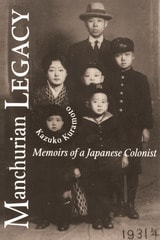
Manchurian Legacy
Memoirs of a Japanese ColonistKazuko Kuramoto
Michigan State University Press, 1999
Kazuko Kuramoto was born and raised in Dairen, Manchuria, in 1927, at the peak of Japanese expansionism in Asia. Dairen and the neighboring Port Arthur were important colonial outposts on the Liaotung Peninsula; the train lines established by Russia and taken over by the Japanese, ended there. When Kuramoto's grandfather arrived in Dairen as a member of the Japanese police force shortly after the end of the Russo-Japanese War in 1905, the family's belief in Japanese supremacy and its "divine" mission to "save" Asia from Western imperialists was firmly in place. As a third-generation colonist, the seventeen-year-old Kuramoto readily joined the Red Cross Nurse Corps in 1944 to aid in the war effort and in her country's sacred cause. A year later, her family listened to the emperor's radio broadcast ". . . we shall have to endure the unendurable, to suffer the insufferable." Japan surrendered unconditionally.
Manchurian Legacy is the story of the family's life in Dairen, their survival as a forgotten people during the battle to reclaim Manchuria waged by Russia, Nationalist China, and Communist China, and their subsequent repatriation to a devastated Japan. Kuramoto describes a culture based on the unthinking oppression of the colonized by the colonizer. And, because Manchuria was, in essence, a Japanese frontier, her family lived a freer and more luxurious life than they would have in Japan—one relatively unscathed by the war until after the surrender.
As a commentator Kuramoto explores her culture both from the inside, subjectively, and from the outside, objectively. Her memoirs describe her coming of age in a colonial society, her family's experiences in war-torn Manchuria, and her "homecoming" to Japan—where she had never been—just as Japan is engaged in its own cultural upheaval.
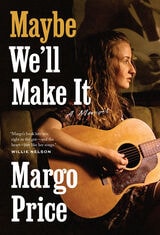
Maybe We'll Make It
A MemoirMargo Price
University of Texas Press, 2022
An October 2022 IndieNext pick
”[An] engaging and beautifully narrated quest for personal fulfillment and musical recognition...This is a fast-paced tale in which music and love always take center stage...A truly gifted musician, Price writes about her journey with refreshing candor.”—Kirkus, starred review
”Brutally honest…a vivid and poignant memoir.”—The Guardian
Country music star Margo Price shares the story of her struggle to make it in an industry that preys on its ingenues while trying to move on from devastating personal tragedies.
When Margo Price was nineteen years old, she dropped out of college and moved to Nashville to become a musician. She busked on the street, played open mics, and even threw out her TV so that she would do nothing but write songs. She met Jeremy Ivey, a fellow musician who would become her closest collaborator and her husband. But after working on their craft for more than a decade, Price and Ivey had no label, no band, and plenty of heartache.
Maybe We’ll Make It is a memoir of loss, motherhood, and the search for artistic freedom in the midst of the agony experienced by so many aspiring musicians: bad gigs and long tours, rejection and sexual harassment, too much drinking and barely enough money to live on. Price, though, refused to break, and turned her lowest moments into the classic country songs that eventually comprised the debut album that launched her career. In the authentic voice hailed by Pitchfork for tackling "Steinbeck-sized issues with no-bullshit humility," Price shares the stories that became songs, and the small acts of love and camaraderie it takes to survive in a music industry that is often unkind to women. Now an award-winning artist with a global fanbase, Price tells a love story of music, collaboration, and the struggle to build a career while trying to maintain her singular voice and style.
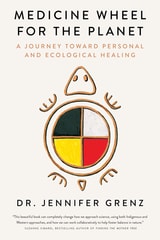
Medicine Wheel for the Planet
A Journey Toward Personal and Ecological HealingJennifer Grenz
University of Minnesota Press, 2024
A personal journey of bringing together Western science and Indigenous ecology to transform our understanding of the human role in healing our planet
I used to be an ecologist. . . . Now, I am a community gatherer, working to help bring healing beyond just the land. I am a story-listener. I am a storyteller. I am a shaper of ecosystems. I work on bringing communities together, in circle, to listen to each other.
A farm kid at heart, and a Nlaka’pamux woman of mixed ancestry, Dr. Jennifer Grenz always felt a deep connection to the land. However, after nearly two decades of working as a restoration ecologist in the Pacific Northwest, she became frustrated that despite the best efforts of her colleagues and numerous volunteers, they weren’t making the meaningful change needed for plant, animal, and human communities to adapt to a warming climate. Restoration ecology is grounded in an idea that we must return the natural world to an untouched, pristine state, placing humans in a godlike role—a notion at odds with Indigenous histories of purposeful, reciprocal interaction with the environment. This disconnect sent Dr. Grenz on a personal journey of joining her head (Western science) and her heart (Indigenous worldview) to find a truer path toward ecological healing.
In Medicine Wheel for the Planet, building on sacred stories, field observations, and her own journey, Dr. Grenz invites readers to share in the teachings of the four directions of the medicine wheel: the North, which draws upon the knowledge and wisdom of elders; the East, where we let go of colonial narratives and see with fresh eyes; the South, where we apply new-old worldviews to envision a way forward; and the West, where a relational approach to land reconciliation is realized.
Eloquent, inspiring, and disruptive, Medicine Wheel for the Planet circles around an argument that we need more than a singular worldview to protect the planet and make the significant changes we are running out of time for.
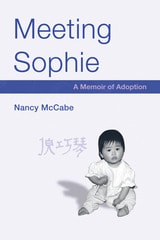
Meeting Sophie
A Memoir of AdoptionNancy McCabe
University of Missouri Press, 2003
The baby is screaming again. My baby. I hoist her off the narrow hotel bed--again--and try to cradle her as I rock my torso back and forth in an uncomfortable straight-backed chair.
This baby does not cradle. She doesn't know how to cuddle, to be soothed in anyone's arms. She howls and arches away, squirms and flops, a sixteen-pound fish out of water. I'm not used to holding babies, and she's not used to be being held, but when I try to put her down, she wails. My arms feel chafed, raw, and my wrists ache from the hours of straining to hang on to her.
Huge tears pool in her eyes. These tears could break my heart. These screams could break my eardrums.
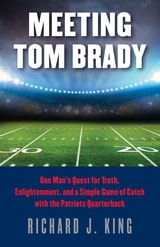
Meeting Tom Brady
One Man's Quest for Truth, Enlightenment, and a Simple Game of Catch with the Patriots QuarterbackRichard J. King
University Press of New England, 2015
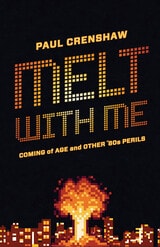
Melt with Me
Coming of Age and Other ’80s PerilsPaul Crenshaw
The Ohio State University Press, 2023
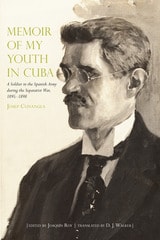
Memoir of My Youth in Cuba
A Soldier in the Spanish Army during the Separatist War, 1895–1898Dolores J. Walker
University of Alabama Press, 2017
A historically significant memoir offering a firsthand perspective on life, identity, and cultural transformation in nineteenth-century Cuba.
Memoir of My Youth in Cuba: A Soldier in the Spanish Army during the Separatist War, 1895–1898 is a translation of the memoir Memorias de mi juventud en Cuba: Un soldado del ejército español en la guerra separatista (1895–1898) by Josep Conangla. The English edition is based on the Spanish version edited by Joaquín Roy, who found the memoir and was given access to the Conangla family archives. Conangla’s memoir, now available in English, is an important addition to the accounts of Spanish and Cuban soldiers who served in Cuba’s second War of Independence.
Spaniard Josep Conangla was conscripted at the age of twenty and sent to Cuba. In the course of his time there, he reaffirmed his pacifism and support of Cuban independence. The young man was a believer who unfailingly connected his view of events to the Christian humanitarianism on which he prided himself. Conangla’s advanced education and the influence of well-placed friends facilitated his assignment to safe bureaucratic positions during the war, ensuring that he would not see combat. From his privileged position, he was a keen observer of his surroundings. He described some of the decisions he made—which at times put him at odds with the military bureaucracy he served—along with what he saw as the consequences of General Valeriano Weyler’s decree mandating the reconcentración, an early version of concentration camps. What Conangla saw fueled his revulsion at the collusion of the Spanish state and its state-sponsored religion in that policy. “Red Mass,” published six years after the War of Independence and included in his memoir, is a vivid expression in verse of his abhorrence.
Conangla’s recollections of the contacts between Spaniards and Cubans in the areas to which he was assigned reveal his ability to forge friendships even with Creole opponents of the insurrection. As an aspiring poet and writer, Conangla included material on fellow writers, Cuban and Spanish, who managed to meet and exchange ideas despite their circumstances. His accounts of the Spanish defeat, the scene in Havana around the end of the war, along with his return to Spain, are stirring.
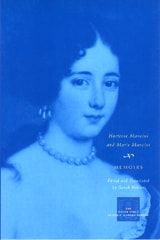
Memoirs
Marie Mancini and Hortense Mancini
University of Chicago Press, 2008
Through their writings, the Mancinis sought to rehabilitate their reputations and reclaim the right to define their public images themselves, rather than leave the stories of their lives to the intrigues of the court—and to their disgruntled ex-husbands. First translated in 1676 and 1678 and credited largely to male redactors, the two memoirs reemerge here in an accessible English translation that chronicles the beginnings of women’s rights to personal independence within the confines of an otherwise circumscribed early modern aristocratic society.
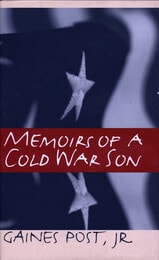
Memoirs Of A Cold War Son
Post, Gaines, Jr.
University of Iowa Press, 2000
In 1951 Gaines Post was a gangly, bespectacled, introspective teenager preparing to spend a year in Paris with his professorial father and older brother; his mother, who suffered from extreme depression, had been absent from the family for some time. Ten years later, now less gangly but no less introspective, he was finishing a two-year stint in the army in West Germany and heading toward Oxford on a Rhodes scholarship, having narrowly escaped combat in the Berlin crisis of 1961. His quietly intense coming-of-age story is both self-revealing and reflective of an entire generation of young men who came to adulthood before the Cuban Missile Crisis and the Vietnam War.
Post's experiences in high school in Madison, Wisconsin, and Paris, his Camus-influenced undergraduate years at Cornell University, and his army service in Germany are set very effectively against the events of the Cold War. McCarthyism and American crackdowns on dissidents, American foreign and military policy in Western Europe in the nuclear age, French and German life and culture, crises in Paris and Berlin that nearly bring the West to war and the Post family to dissolution—these are the larger scenes and subjects of his self-disclosure as a contemplative, conflicted "Cold War agnostic."
His intelligent, talented mother and her fragile health hover over Post's narrative, informing his hesitant relationships with women and his acutely questioning sense of self-worth. His story is strongly academic and historical as well as political and military; his perceptions and judgments lean toward no ideological extreme but remain true to the heroic ideals of his boyhood during the Second World War.

Memoirs and Letters
Oscar W. Firkins
University of Minnesota Press, 1934
Memoirs and Letters was first published in 1934. Minnesota Archive Editions uses digital technology to make long-unavailable books once again accessible, and are published unaltered from the original University of Minnesota Press editions.
This volume, the last in a set of four containing posthumous works of Oscar W. Firkins, consists mainly of some two hundred personal letters, which reveal many delightful facets of a unique character.
Oscar W. Firkins—critic, biographer, playwright, lecturer, and teacher—was regarded as a recluse, living in a world peopled largely by "poets dead and gone" and the creatures of their imagination and his own. That he enjoyed warm friendships with men and women of his time is brought to light in these miscellaneous letters: letters to clergymen and children, to editors and club women, to students and poets, to actors and college deans.
Many brilliantly epigrammatic comments from Firkins' famous classroom lectures are included in the section of this book entitled "From Oscar Firkins' Notebooks." The "Estimate and Appreciation" with which the volume opens is by Dr. Richard Burton, for many years a colleague of Professor Firkins at the University of Minnesota. "Oscar Firkins as a Teacher" is contributed by a former student. A complete bibliography, compiled by Ina Ten Eyck Firkins, concludes the volume.
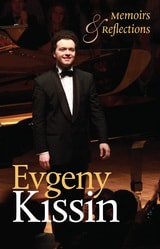
Memoirs and Reflections
Evgeny Kissin
University Press of New England, 2018
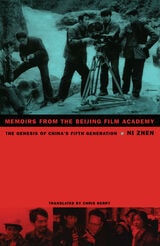
Memoirs from the Beijing Film Academy
The Genesis of China's Fifth GenerationZhen Ni
Duke University Press, 2002
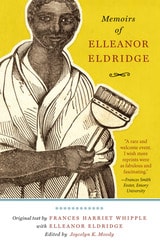
Memoirs of Elleanor Eldridge
Frances H. Whipple
West Virginia University Press, 2013
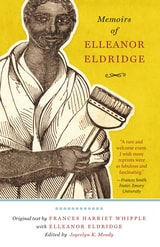
Memoirs of Elleanor Eldridge
Joycelyn K. Moody
University of Delaware Press, 0
Elleanor Eldridge, born of African and US indigenous descent in 1794, operated a lucrative domestic services business in nineteenth century Providence, Rhode Island. In defiance of her gender and racial background, she purchased land and built rental property from the wealth she gained as a business owner. In the 1830s, Eldridge was defrauded of her property by a white lender. In a series of common court cases as defendant and plaintiff, she managed to recover it through the Rhode Island judicial system. In order to raise funds to carry out this litigation, her memoir, which includes statements from employers endorsing her respectable character, was published in 1838. Frances Harriet Whipple, an aspiring white writer in Rhode Island, narrated and co-authored Eldridge’s story, expressing a proto-feminist outrage at the male “extortioners” who caused Eldridge’s loss and distress.
With the rarity of Eldridge’s material achievements aside, Memoirs of Elleanor Eldridge forms an exceptional antebellum biography, chronicling Eldridge’s life from her birth. Because of Eldridge’s exceptional life as a freeborn woman of color entrepreneur, it constitutes a counter-narrative to slave narratives of early nineteenth-century New England, changing the literary landscape of conventional American Renaissance studies and interpretations of American Transcendentalism.
With an introduction by Joycelyn K. Moody, this new edition contextualizes the extraordinary life of Elleanor Eldridge—from her acquisition of wealth and property to the publication of her biography and her legal struggles to regain stolen property. Because of her mixed-race identity, relative wealth, local and regional renown, and efficacy in establishing a collective of white women patrons, this biography challenges typical African and Indigenous women’s literary production of the early national period and resituates Elleanor Eldridge as an important cultural and historical figure of the nineteenth century.
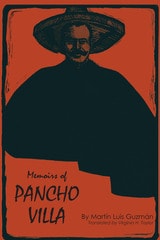
Memoirs of Pancho Villa
By Martín Luis Guzmán
University of Texas Press, 1965
This is a tale that might be told around a campfire, night after night in the midst of a military campaign. The kinetic and garrulous Pancho Villa talking on and on about battles and men; bursting out with hearty, masculine laughter; weeping unashamed for fallen comrades; casually mentioning his hotheadedness—"one of my violent outbursts"—which sent one, two, or a dozen men before the firing squad; recounting amours; and always, always protesting dedication to the Revolutionary cause and the interests of "the people."
Villa saw himself as the champion, eventually almost the sole champion, of the Mexican people. He fought for them, he said, and opponents who called him bandit and murderer were hypocrites.
This is his story, his account of how it all began when as a peasant boy of sixteen he shot a rich landowner threatening the honor of his sister. This lone, starved refugee hiding out in the mountains became the scourge of the Mexican Revolution, the leader of thousands of men, and the hero of the masses of the poor.
Great battles of the Revolution are described, sometimes as broad sweeps of strategy, sometimes as they developed half hour by half hour. Long, dusty horseback forays and cold nights spent pinned down under enemy fire on a mountainside are made vivid and gripping. The assault on Ciudad Juárez in 1911, the battles of Tierra Blanca, of Torreón, of Zacatecas, of Celaya, all are here, told with a feeling of great immediacy. This volume ends as Villa and Obregón prepare to engage each other in the war between victorious generals into which the Revolution degenerated before it finally ended.
Martín Luis Guzmán, eminent historian of Mexico, knew and traveled with Pancho Villa at various times during the Revolution. General Villa offered young Martín Luis a position as his secretary, but he declined. When many years later some of Villa's private papers, records, and what was apparently the beginning of an autobiography came into Guzmán's hands, he was ideally suited to blend all these into an authentic account of the Revolution as Pancho Villa saw it, and of the General's life as known only to Villa himself.
The Memoirs were first published in Mexico in 1951, where they were extremely popular; this volume was the first English publication. Virginia H. Taylor, translator in the Spanish Archives of the State of Texas Land Office, has accurately captured in English the flavor of the narrative.
Memoirs of Waldo Frank
Alan Trachtenberg
University of Massachusetts Press, 1973
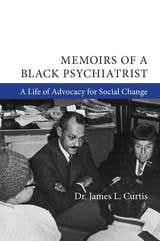
Memoirs of a Black Psychiatrist
A Life of Advocacy for Social ChangeDr. James L. Curtis
Michigan Publishing Services, 2017
In his two previous books, Dr. Curtis illustrated the leadership role he played in changing how medicine is practiced for the better. His first book, Blacks, Medical Schools and Society (University of Michigan Press, 1971), was written when he was an associate dean of the Cornell University Medical College. As dean in the beginning years of Affirmative Action in Medicine, Dr. Curtis took action in this movement by desegregating medical school admissions not only at Cornell, but also in all US medical schools. After his retirement, his second book, Affirmative Action in Medicine: Improving Health Care for All (University of Michigan Press, 2003), was published: a twenty-five-year progress report on the social benefit of these programs in the American practice of medicine.
Dr. Curtis retired in 2000 as Clinical Professor of Psychiatry of Columbia University College of Physicians and Surgeons, having been a faculty member for eighteen years. During his tenure at Columbia he was also Director of Psychiatry at Harlem Hospital Center, serving one of the most economically deprived neighborhoods of New York City. Since 2003, he has lived in his hometown of Albion, Michigan, one of the formerly vibrant and prosperous cities devastated by the collapse of the automobile industry. With a small group of others, he is developing new social service programs to benefit Albion.
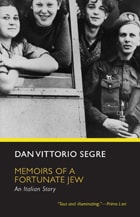
Memoirs of a Fortunate Jew
An Italian StoryDan Vittorio Segre
University of Chicago Press, 2008
“Taut and illuminating . . . memorable . . . written with the humility of he who confesses himself and with the honesty of he who bore witness.”—Primo Levi
“The writing of memoirs is a difficult art that Dan Segre fully possesses. Under his pen, history and psychology merge in one captivating narrative which illuminates the turmoils, fears and triumphs of his generation.”—Elie Wiesel
“Beautifully written. . . . [A] labyrinthine, spell-binding autobiography, full of passionate tenderness.”—New York Review of Books
“An unusually attractive book—attractive in its irony, its energy and its moral insight. Mr. Segre had some rich material to work with, and he has done it justice.”—New York Times
Memoirs of a Palestinian Communist
The Secret Life of Najati SidqiNajati Sidqi; translated by Margaret Litvin, Gideon Gordon, and Anas Farhan
University of Texas Press, 2025
The secret life of a Palestinian Communist activist during the leadup to World War II.
In the public eye, Najati Sidqi was known as a journalist and writer, a translator of Russian classics, and an outspoken opponent of Nazism. However, Sidqi concealed a critical component of his life from the world and his family. He was an underground activist for the Palestinian Communist Party, a risky and influential pursuitthat took him to early Bolshevik Moscow, British courts and prison cells in Palestine, Nazi Germany, intrigue-heavy interwar Paris, and Civil War Spain, Morocco, and Algeria. Throughout his journey, Sidqi continued to write, even as he faced fascism, intense surveillance, active warzones, the death of friends, and exile.
Memoirs of a Palestinian Communist brings Sidqi’s incredible life and work to light, wryly narrating his international travels, his work as an activist, and his political dealings at a crucial moment for Palestine and the international fight against fascism. Translated from Arabic into English for the first time, it is a riveting firsthand account of an often-overlooked aspect of the history of the global left. Generous supplementary materials make the memoir accessible to students and non-specialist scholars: a preface by Sidqi’s grandson, a foreword by renowned historian Joel Beinin, a translators’ introduction that presents new research on Sidqi’s family history, a map of his travels, and a timeline, as well as a bibliographic essay offering pointers for further research.
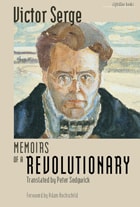
Memoirs of a Revolutionary
Victor Serge
University of Iowa Press, 2002

Memoirs of an Early Arab Feminist
The Life and Activism of Anbara Salam KhalidiAnbara Salam Khalidi
Pluto Press, 2013
Memoirs of an Early Arab Feminist is the first English translation of the memoirs of Anbara Salam Khalidi, the iconic Arab feminist. At a time when women are playing a leading role in the Arab Spring, this book brings to life an earlier period of social turmoil and women's activism through one remarkable life.
Anbara Salam was born in 1897 to a notable Sunni Muslim family of Beirut. She grew up in 'Greater Syria', in which unhindered travel between Beirut, Jerusalem and Damascus was possible, and wrote a series of newspaper articles calling on women to fight for their rights within the Ottoman Empire. In 1927 she caused a public scandal by removing her veil during a lecture at the American University of Beirut.
Later she translated Homer and Virgil into Arabic and fled from Jerusalem to Beirut following the establishment of Israel in 1948. She died in Beirut in 1986. These memoirs have long been acclaimed by Middle East historians as an essential resource for the social history of Beirut and the larger Arab world in the 19th and 20th centuries.

Memoirs of an Indo Woman
Twentieth Century Life in the East Indies and AbroadMarguérite Schenkhuizen
Ohio University Press, 1993
The memoirs of Marguérite Schenkhuizen provide an overview of practically the whole of the twentieth century as experienced by persons of mixed Dutch and Indonesian ancestry who lived in the former Dutch East Indies. The memoirs provide vignettes of Indonesian life, both rural and urban, as seen through the eyes of the author first as a girl, then as a wife separated from her husband during the Japanese occupation, finally as an immigrant to the United States after World War II.
This self-portrait gives glimpses of the life of Indos from inside their society, glimpses that are valuable for their descendents as well as for outsiders. Written with humor and a positive town, Schenkhuizen’s story sets aside the myth that Indos were denied access to the upper layers of Dutch colonial society or were otherwise disadvantaged. Instead, her life story provides an authentic view of a vital Indo culture and experience that has been unavailable to the general reader of English.
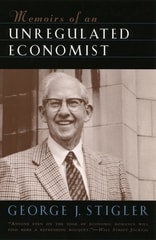
Memoirs of an Unregulated Economist
George J. Stigler
University of Chicago Press, 2003
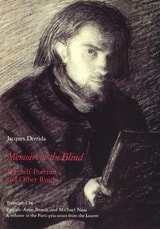
Memoirs of the Blind
The Self-Portrait and Other RuinsJacques Derrida
University of Chicago Press, 1993
vision, blindness, self-representation, and their relation to
drawing, while offering detailed readings of an extraordinary
collection of images. Selected by Derrida from the prints
and drawings department of the Louvre, the works depict
blindness—fictional, historical, and biblical. From Old
and New Testament scenes to the myth of Perseus and the
Gorgon and the blinding of Polyphemus, Derrida uncovers in
these images rich, provocative layers of interpretation.
For Derrida drawing is itself blind; as an act rooted in
memory and anticipation, drawing necessarily replaces one
kind of seeing (direct) with another (mediated). Ultimately,
he explains, the very lines which compose any drawing are
themselves never fully visible to the viewer since they exist
only in a tenuous state of multiple identities: as marks on
a page, as indicators of a contour. Lacking a "pure"
identity, the lines of a drawing summon the supplement of the
word, of verbal discourse, and, in doing so, obscure the
visual experience. Consequently, Derrida demonstrates, the
very act of depicting a blind person undertakes multiple
enactments and statements of blindness and sight.
Memoirs of the Blind is both a sophisticated
philosophical argument and a series of detailed readings.
Derrida provides compelling insights into famous and lesser
known works, interweaving analyses of texts—including
Diderot's Lettres sur les aveugles, the notion of
mnemonic art in Baudelaire's The Painter of Modern
Life, and Merleau-Ponty's The Visible and the
Invisible. Along with engaging meditations on the history
and philosophy of art, Derrida reveals the ways viewers
approach philosophical ideas through art, and the ways art
enriches philosophical reflection.
An exploration of sight, representation, and art,
Memoirs of the Blind extends and deepens the
meditation on vision and painting presented in Truth and
Painting. Readers of Derrida, both new and familiar, will
profit from this powerful contribution to the study of the
visual arts.
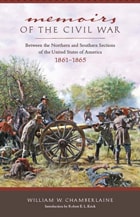
Memoirs of the Civil War
Between the Northern and Southern Sections of the United States of America 1861 to 1865William W. Chamberlaine
University of Alabama Press, 2011
Memoirs of the Civil War, though relatively little known because of its rarity in the original edition, contains much valuable information and engaging narrative passages. A Virginian whose Confederate career included service in an infantry regiment early in the war, Chamberlaine’s most important military service was as a staff officer attached to Brigadier General Reuben Lindsay Walker, who commanded the Third Corps artillery in the Army of Northern Virginia.
Includes excellent material on the duties of staff officers, operation of Confederate conscription, and the role of artillery in Lee’s campaigns. He is especially eloquent and revealing about a number of famous battles: the Seven Days; Antietam, where Chamberlaine distinguished himself and was wounded; and the Wilderness, where he had a memorable encounter with Lee.
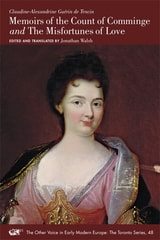
Memoirs of the Count of Comminge and The Misfortunes of Love
Claudine-Alexandrine Guérin de Tencin
Iter Press, 2016
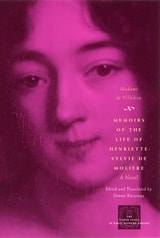
Memoirs of the Life of Henriette-Sylvie de Moliere
A NovelMadame de Villedieu
University of Chicago Press, 2004
Memoirs of the Life of Henriette-Sylvie de Molière, a semi autobiographical novel, portrays an enterprising woman who writes the story of her life, a complex tale that runs counter to social expectations and novelistic conventions. A striking work, the story skillfully mixes real events from the author's life with fictional adventures. At a time when few women published, Villedieu's Memoirs is a significant achievement in creating a voice for the early modern woman writer. Produced while the French novel form was still in its infancy, it should be welcomed by any scholar of women's writing or the early development of the novel.
Memoirs of the Life, Religious Experience, Ministerial Travels, and Labours of Mrs. Elaw
Zilpha Elaw
West Virginia University Press, 2021
As a young Black orphan indentured to a Quaker family in Bristol, Pennsylvania, Zilpha Elaw (c. 1793–1873) decided to join the upstart Methodists in 1808. She preached her first sermon a decade later, ignoring her husband and the many church leaders, clergy, and laity who tried to silence her. Elaw’s memoir chronicles the first twenty years of her forty-year itinerant ministry during massive Protestant revivalism in the United States and England.
Elaw preached from Maine to Virginia, attracting multiracial and multidenominational audiences that included powerful men, wealthy White women, poor families, and enslaved communities. She moved from Bristol to Burlington, New Jersey, then to Nantucket, Massachusetts, and finally, in 1840, to London’s East End. In England, Elaw’s celebrity expanded, and at least twice she drew crowds so large they caused human stampedes and multiple injuries.
Blockett’s introduction and extensive annotations draw on newly unearthed information about the entirety of Elaw’s evangelism to provide context for this remarkable story of an antebellum Black woman’s personal and professional mobility.
Memoirs of the Life, Religious Experience, Ministerial Travels, and Labours of Mrs. Elaw
Kimberly D. Blockett
University of Delaware Press, 0
Elaw preached from Maine to Virginia, attracting multiracial and multidenominational audiences that included powerful men, wealthy White women, poor families, and enslaved communities. She moved from Bristol to Burlington, New Jersey, then to Nantucket, Massachusetts, and finally, in 1840, to London’s East End. In England, Elaw’s celebrity expanded, and at least twice she drew crowds so large they caused human stampedes and multiple injuries.
Kimberly D. Blockett’s introduction and extensive annotations draw on newly unearthed information about the entirety of Elaw’s evangelism to provide context for this remarkable story of an antebellum Black woman’s personal and professional mobility.
Memoirs
Hans JonasHans Jonas
Brandeis University Press, 2021
When Hans Jonas died in 1993, he was revered among American scholars specializing in European philosophy, but his thought had not yet made great inroads among a wider public. In Germany, conversely, during the 1980s, when Jonas himself was an octogenarian, he became a veritable intellectual celebrity, owing to the runaway success of his 1979 book The Imperative of Responsibility. In the 1920s, Jonas studied philosophy with Edmund Husserl and Martin Heidegger, but the Nazi regime forced him to leave Germany for London in 1933. He later emigrated to Palestine and eventually enlisted in the British Army’s Jewish Brigade to fight against Hitler. Following the Israeli War of Independence, he emigrated to the United States and took a position at the New School for Social Research in New York. He became part of a circle of friends around Hannah Arendt and Heinrich Blucher, which included Adolph Lowe and Paul Tillich.
This memoir, a diverse collection of previously unpublished materials—diaries, letters, interviews, and public statements—has been organized by Christian Wiese, whose afterword links the Jewish dimensions of Jonas’s life and philosophy. Because Jonas’s life spanned the entire twentieth century, this memoir provides nuanced pictures of German Jewry during the Weimar Republic, of German Zionism, of the Jewish emigrants in Palestine during the 1930s and 1940s, and of German Jewish émigré intellectuals in New York. Since Memoirs was first published in 2008, interest in the work of Hans Jonas has grown among American academics in recent years.
Memories of Two Generations
A Yiddish Life in Russia and TexasAlexander Z. Gurwitz, Edited and Introduced by Bryan Edward Stone
University of Alabama Press, 2022
The 1935 autobiography of Alexander Ziskind Gurwitz, an Orthodox Jew whose lively recounting of his life in Tsarist Russia and his immigration to San Antonio, Texas, in 1910 captures turbulent changes in early twentieth-century Jewish history
In 1910, at the age of fifty-one, Alexander Ziskind Gurwitz made the bold decision to emigrate with his wife and four children from southeastern Ukraine in Tsarist Russia to begin a new life in Texas. In 1935, in his seventies, Gurwitz composed a retrospective autobiography, Memories of Two Generations, that recounts his personal story both of the rich history of the lost Jewish world of Eastern Europe and of the rambunctious development of frontier Jewish communities in the United States.
In both Europe and America, Gurwitz inhabited an almost exclusively Jewish world. As a boy, he studied in traditional yeshivas and earned a living as a Hebrew language teacher and kosher butcher. Widely travelled, Gurwitz recalls with wit and insight daily life in European shtetls, providing perceptive and informative comments about Jewish religion, history, politics, and social customs. Among the book’s most notable features is his first-hand, insider’s account of the yearly Jewish holiday cycle as it was observed in the nineteenth century, described as he experienced it as a child.
Gurwitz’s account of his arrival in Texas forms a cornerstone record of the Galveston Immigration Movement; this memoir represents the only complete narrative of that migration from an immigrant’s point of view. Gurwitz’s descriptions about the development of a thriving Orthodox community in San Antonio provide an important and unique primary source about a facet of American Jewish life that is not widely known.
Gurwitz wrote his memoir in his preferred Yiddish, and this translation into English by Rabbi Amram Prero captures the lyrical style of the original. Scholar and author Bryan Edward Stone’s special introduction and illuminating footnotes round out a superb edition that offers much to experts and general readers alike.
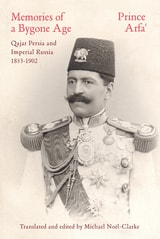
Memories of a Bygone Age
Qajar Persia and Imperial Russia 1853-1902Prince Arfa
Gingko, 2016
Prince Arfa writes with arresting wit about the deadly intrigues of the Qajar court. Lamentingly, but resolutely, he chronicles the decline of Iran from a once great empire to an almost bankrupt, lawless state, in which social unrest is channelled and exploited by the clergy. He describes the complex interactions between Iran and Europe, including an account of Naser-od-Din Shah’s profligate visits to Britain and France; the splendor and eccentricities of the doomed Tsar Nicholas II’s court; the Tsar’s omen-laden coronation; and his own favor with the Tsarina, who would grant him concessions on matters of vital importance to his country. The result is a memoir of extraordinary political intrigue.
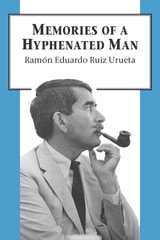
Memories of a Hyphenated Man
Ramón Eduardo Ruiz Urueta
University of Arizona Press, 2003
Historian, author, and intellectual, Ruiz has established himself through such books as Triumphs and Tragedy: A History of the Mexican People and Cuba: The Making of a Revolution, and in 1998 he was awarded the National Humanities Medal by President Clinton. Now he turns his pen on his own life to offer a personal look at what it really means to be American by birth but Mexican by culture.
Little has been written by or about persons of Mexican origin who have achieved the academic stature of Ruiz, and his memoir provides insights not found in the more common biographies of labor leaders and civil rights activists. His early life straddled the social worlds of his parent's Mexico and semi-rural America, where his father's success as an entrepreneur and property owner set his family's experiences apart from those of most other Mexican Americans at the time. His parents reinforced in their children an identity as mexicanos, and that connection with his ancestral roots was for Ruiz a lifejacket in the days of acute bigotry in America.
In making an early, self-conscious commitment to a life of the mind, Ruiz became aware of his unique nature, and while not immune to prejudice he was able to make a name for himself in several endeavors. As a student, he attended college when few Mexican Americans were given that opportunity, and he was one of the first of his generation to earn a Ph.D. As an Army Air Force officer during World War II, he served as a pilot in the Pacific theatre. And as an intellectual, he navigated the currents of the historical profession and charted new directions in Latin American research through his prolific writing.
Ruiz's career teaching took him to Mexico, Massachusetts, Texas, Oregon—often as the lone "Mexican professor," and ultimately back to his native California. While teaching at Smith, he exulted in being "free to interpret Spanish American life and culture to my heart's content," and at the University of California, San Diego, he saw the era of campus racial barrier give way to the birth of affirmative action. While at UCSD, he taught hundreds of Chicanos and trained one of the largest groups of Chicano Ph.D's.
Memories of a Hyphenated Man is the story of a unique individual who, while shaped by his upbringing and drawing on deep cultural roots, steadfastly followed his own compass in life. It tells of a singular man who beat the odds as it poignantly addresses the ambiguities associated with race, class, citizenship, and nationality for Mexicans and Mexican Americans.

Memory Care
Essays on ForgettingJennifer C. Nash
Duke University Press, 2027
Memory of Trees
A Daughter’s Story of a Family FarmGayla Marty
University of Minnesota Press, 2013
Memory of Trees is a multigenerational story of Gayla Marty’s family farm near Rush City, Minnesota. Cleared from woodlands by her great-grandfather Jacob in the 1880s, the farm passed to her father, Gordon, and his brother, Gaylon. Hewing to a conservative Swedish Baptist faith, the two brothers worked the farm, raising their families in side-by-side houses.
As the years go by, the families grow—and slowly grow apart. Uncle Gaylon, more doctrinaire in his faith, rails against the permissiveness of Gayla’s parents. Financial tensions arise as well when the farm economy weakens and none of the children is willing or able to take over. Gayla is encouraged to leave for college, international travel, and city life, but the farm remains essential to her sense of self, even after the family decides to sell the land.
When Gaylon has an accident on a tractor, Gayla becomes driven to reconnect with him and to find out why she and her uncle—once so close but now estranged—were the only two members of the family who had resisted selling the land. Guided by vivid images of the farm’s many beautiful trees, she pores over sacred and classical works as well as layers of her own memory to understand the forces that have transformed the American landscape and culture in the last half of the twentieth century. Beneath the belief in land as a giver of life and blessing, she discovers a powerful anxiety born of human uprootedness and loss. Movingly written, Memory of Trees will resonate for many with attachments to small towns or farms, whether they continue to work the land or, like so many, have left for a different life.
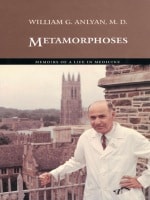
Metamorphoses
Memoirs of a Life in MedicineWilliam G. Anlyan, M. D.
Duke University Press, 2004
Born in Alexandria, Egypt, in 1925, and schooled in the British tradition, Anlyan attended Yale University as an undergraduate and medical student before coming to the relatively unknown medical school at Duke University in 1949 for an internship in general and thoracic surgery. He stayed on, first as a resident, then as a staff surgeon. By 1961, he was a full professor of surgery. In 1964, Anlyan was named dean of the medical school, the first in a series of administrative posts at the medical school and hospital. Anlyan’s role in the transformation of the Duke University Medical Center into an internationally renowned health system is manifest: he restructured the medical school and hospital and supervised the addition of almost four million square feet of new or renovated space. He hired outstanding administrators and directed a staff that instituted innovative programs and groundbreaking research centers, such as the Cancer Center and the Physician’s Assistant Program.
Anlyan describes a series of metamorphoses in his own life, in the world of medicine, in Durham, and at Duke. At the time of his prep school upbringing in Egypt, medicine was a matter of controlling infectious diseases like tuberculosis and polio. As he became an immigrant medical student and then a young surgeon, he observed vast advances in medical practice and changes in the financing of medical care. During his tenure at Duke, Durham was transformed from a sleepy mill and tobacco town into the “City of Medicine,” a place where patients routinely travel for open-heart surgery and cutting-edge treatments for cancer and other diseases.
Anyone interested in health care, medical education, and the history of Duke University will find Anlyan’s memoir of interest.
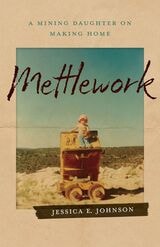
Mettlework
A Mining Daughter on Making HomeJessica E. Johnson
Acre Books, 2024
In the weeks after her first child is born, Jessica E. Johnson receives an email from her mother that contains artifacts of the author’s early childhood: scans of Polaroids and letters her mother wrote in mountain west mining camps and ghost towns—places without running water, companions, or help. Awash in love and restlessness, Johnson begins to see how the bedrock images of her isolated upbringing have stayed with her, even when she believed she was removing herself from their logic.
As she copes with the swirling pressures of parenting, teaching at an urban community college, and a partnership shaped by chronic illness, Johnson starts digging through her mother’s keepsakes and the histories of the places her family passed through, uncovering the linked misogyny and disconnection that characterized her childhood world—a world with uncomfortable echoes in the present and even in the act of writing itself. The resulting journey encompasses Johnson’s early memories, the story of the earth told in the language of geology, bits of vivid correspondence, a mothering manual from the early twentieth century, and the daily challenges of personal and collective care in a lonesome-crowded Pacific wonderland. Mettlework traces intergenerational failures of homemaking, traveling toward presence and relationship amid the remains of extractive industry and unsustainable notions of family.
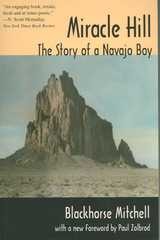
Miracle Hill
The Story of a Navajo BoyBlackhorse Mitchell
University of Arizona Press, 2004
In Miracle Hill, Blackhorse Mitchell presents the unforgettable account of a boy’s struggle to learn—which would be for him a miracle—in the face of handicaps most people would call insurmountable. Under the guidance of a teacher determined to help him pursue that miracle, he records his life from birth to the dawn of manhood: herding family sheep, living at a boarding school, encountering whites for the first time, journeying home, and finally enrolling in the Institute of American Indian Arts in Santa Fe, where his talent was encouraged.
Miracle Hill is written in a distinctively personal style, without strict adherence to orthodox grammar that would have robbed Mitchell of his true voice. Filled with unforgettable characters and brimming with insights into Navajo ways and family relationships, it is a book that crosses cultural barriers and speaks to the miracle-seeker in us all.
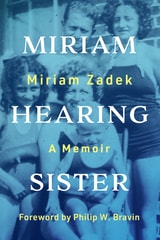
Miriam Hearing Sister
A MemoirMiriam Zadek
Gallaudet University Press, 2022
The prevailing ideological movements of the time permeate her family life. Zadek reveals the traumatic impact of eugenics and the fears surrounding the genetic transmission of deafness. She considers the effects of adhering to the oral method of communication in her home when sign language could have given her family the ability to interact with each other more fully. In this environment, Zadek became an astute communicator and learned to adapt to both the hearing and the deaf world, where she was known as “Miriam Hearing Sister.” Her memoir is an elegant literary work that offers an understanding of how biases and stigmas resonate and evolve, and it showcases her loving family of strong women who pushed against stereotypes and have thrived across generations.
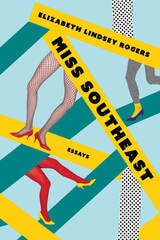
Miss Southeast
EssaysElizabeth Lindsey Rogers
Northwestern University Press, 2024
A collection of narrative essays on femininity, sexuality, community, and belonging
Miss Southeast explores the strange, often contradictory cultural circumstances of being queer and female in the American South and beyond. Born and raised in North Carolina, the youngest in a family of precocious daughters, Rogers spends her teenage years as a half-closeted lesbian desperate to escape the South, convinced the rest of the United States must be “more enlightened than our cow-dotted corner of the county.”
Adulthood takes Rogers to Ohio, New York, Louisiana, Arkansas, Washington, DC, and China, but each essay finds her reckoning with participation in and resistance to rigid cultural institutions—whether a coming-out story set at a high school beauty pageant or a meditation on swimming pools as emblems of racial divides across the South. In lyric prose enlivened by a poet’s sense of musicality, Miss Southeast considers how both place and our layered identities shape our sense of belonging.
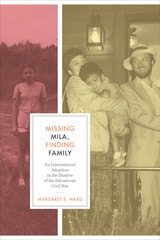
Missing Mila, Finding Family
An International Adoption in the Shadow of the Salvadoran Civil WarBy Margaret E. Ward
University of Texas Press, 2011
In the spring of 1983, a North American couple who were hoping to adopt a child internationally received word that if they acted quickly, they could become the parents of a boy in an orphanage in Honduras. Layers of red tape dissolved as the American Embassy there smoothed the way for the adoption. Within a few weeks, Margaret Ward and Thomas de Witt were the parents of a toddler they named Nelson—an adorable boy whose prior life seemed as mysterious as the fact that government officials in two countries had inexplicably expedited his adoption.
In Missing Mila, Finding Family, Margaret Ward tells the poignant and compelling story of this international adoption and the astonishing revelations that emerged when Nelson's birth family finally relocated him in 1997. After recounting their early years together, during which she and Tom welcomed the birth of a second son, Derek, and created a family with both boys, Ward vividly recalls the upheaval that occurred when members of Nelson's birth family contacted them and sought a reunion with the boy they knew as Roberto. She describes how their sense of family expanded to include Nelson's Central American relatives, who helped her piece together the lives of her son's birth parents and their clandestine activities as guerrillas in El Salvador's civil war. In particular, Ward develops an internal dialogue with Nelson's deceased mother Mila, an elusive figure whose life and motivations she tries to understand.
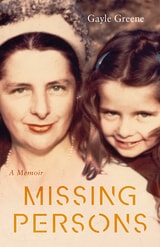
Missing Persons
A MemoirGayle Greene
University of Nevada Press, 2017
The memoir is structured as an account of her mother's and aunt’s final days and the year that follows, a year in which she reconstructs her life. This is a powerful story about family, what it means to have one, to lose one, never to have made one, and what, if anything, might take its place. It’s the story of a vexed mother-daughter relationship that mellows with age. It is also a search for home, as the very landscape shifts around her and the vast orchards are dug up and paved over for tract housing, strip malls, freeways, and the Santa Clara Valley, once known as the Valley of Heart’s Delight, is transformed to “Silicon.”
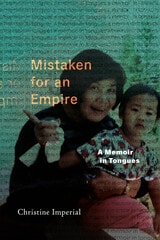
Mistaken for an Empire
A Memoir in TonguesChristine Imperial
The Ohio State University Press, 2023
Modern Jungles
A Hmong Refugee's Childhood Story of SurvivalPao Lor
Wisconsin Historical Society Press, 2023
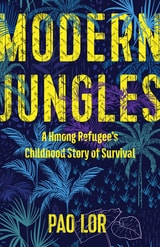
Born in a small farming village, Pao was destined to be a Hmong clan leader, wedding negotiator, or shaman. But the course of his life changed dramatically in the 1970s, when the Hmong faced persecution for their role in helping US forces fighting communism in the region. After more than two years in Thai refugee camps, Pao and his surviving family members boarded the belly of an “iron eagle” bound for the United States, where he pictured a new life of comfort and happiness. Instead, Pao found himself navigating a frightening and unfamiliar world, adjusting to a string of new schools and living situations while struggling to fulfill the hopes his parents had once held for his future. Now in Modern Jungles, Pao Lor shares his inspiring coming-of-age tale about perseverance, grit, and hope.
Included are discussion questions for use by book clubs, in classrooms, or around the dinner table.
Modern Jungles
A Hmong Refugee’s Childhood Story of SurvivalPao Lor
Wisconsin Historical Society Press, 2021
Born in a small farming village, Pao was destined to be a Hmong clan leader, wedding negotiator, or shaman. But the course of his life changed dramatically in the 1970s, when the Hmong faced persecution for their role in helping US forces fighting communism in the region. After more than two years in Thai refugee camps, Pao and his surviving family members boarded the belly of an “iron eagle” bound for the United States, where he pictured a new life of comfort and happiness. Instead, Pao found himself navigating a frightening and unfamiliar world, adjusting to a string of new schools and living situations while struggling to fulfill the hopes his parents had once held for his future. Now in Modern Jungles, Pao Lor shares his inspiring coming-of-age tale about perseverance, grit, and hope.
Included are discussion questions for use by book clubs, in classrooms, or around the dinner table.