Results by title
85 books match the query 'Men's Studies' and 20 start with m

Making American Boys
Boyology and the Feral TaleKenneth B. Kidd
University of Minnesota Press, 2005

Man Food
Recipes from the Iron TradeKaren R. Sloss Furnaces Historical Landmark
University of Alabama Press, 2007
The secret history of manly eating in the Heart of Dixie
Man Food: Recipes from the Iron Trade is a flavorful tribute to Alabama’s industrial soul and culinary heart. Born from the legendary Sloss Furnaces in Birmingham—once the beating heart of the Magic City’s iron industry—this cookbook blends Southern tradition, foundry grit, and backyard hospitality into one unforgettable volume.
Collected from the pages of Pig Iron Rough Notes, a magazine once circulated among Alabama’s ironworkers, these recipes reflect the lives of men who forged metal by day and cooked with cast iron by night. Inside, you’ll find dishes like Brunswick Stew, Catfish Chowder, and Bean Hole Beans—hearty meals rooted in Alabama’s outdoors, work camps, and family kitchens.
With colorful stories, vintage illustrations, and a deep appreciation for cast-iron cooking, Man Food celebrates the “Gentlemen Cooks” of the South—men who knew that good food and good company were just as important as hard work. Whether you're a native Alabamian, a history buff, or a lover of Southern foodways, this book offers a delicious slice of Alabama culture.
Fire up your skillet, pour a cup of camp coffee, and taste the legacy of the Iron Trade—Alabama style.
Manhood Impossible
Men's Struggles to Control and Transform Their Bodies and WorkMelzer, Scott
Rutgers University Press, 2018
Manhood in Hollywood from Bush to Bush
By David Greven
University of Texas Press, 2009
A struggle between narcissistic and masochistic modes of manhood defined Hollywood masculinity in the period between the presidencies of George H. W. Bush and George W. Bush. David Greven's contention is that a profound shift in representation occurred during the early 1990s when Hollywood was transformed by an explosion of films that foregrounded non-normative gendered identity and sexualities. In the years that have followed, popular cinema has either emulated or evaded the representational strategies of this era, especially in terms of gender and sexuality.
One major focus of this study is that, in a great deal of the criticism in both the fields of film theory and queer theory, masochism has been positively cast as a form of male sexuality that resists the structures of normative power, while narcissism has been negatively cast as either a regressive sexuality or the bastion of white male privilege. Greven argues that narcissism is a potentially radical mode of male sexuality that can defy normative codes and categories of gender, whereas masochism, far from being radical, has emerged as the default mode of a traditional normative masculinity. This study combines approaches from a variety of disciplines—psychoanalysis, queer theory, American studies, men's studies, and film theory—as it offers fresh readings of several important films of the past twenty years, including Casualties of War, The Silence of the Lambs, Fight Club, The Passion of the Christ, Auto Focus, and Brokeback Mountain.
Manhood on the Line
Working-Class Masculinities in the American HeartlandStephen Meyer
University of Illinois Press, 2016
Manly Arts
Masculinity and Nation in Early American CinemaDavid A. Gerstner
Duke University Press, 2006
Gerstner provides in-depth readings of several early American films, illuminating their connections to a wide range of artistic traditions and cultural developments, including dance, poetry, cubism, realism, romanticism, and urbanization. He shows how J. Stuart Blackton and Theodore Roosevelt developed The Battle Cry of Peace (1915) to disclose cinema’s nationalist possibilities during the era of the new twentieth-century urban frontier; how Paul Strand and Charles Sheeler positioned a national avant-garde through the fusion of “American Cubism” and industrialization in their film, Manhatta (1921); and how Oscar Micheaux drew on slave narratives and other African American artistic traditions as he grappled with the ideological terms of African American and white American manhood in his movie Within Our Gates (1920). Turning to Vincente Minnelli’s Cabin in the Sky (1943), Gerstner points to the emergence of an aesthetic of cultural excess that brought together white and African American cultural producers—many of them queer—and troubled the equation of national arts with masculinity.
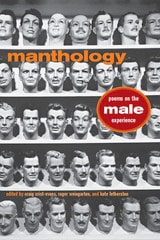
Manthology
Poems on the Male ExperienceCraig Crist-Evans
University of Iowa Press, 2006
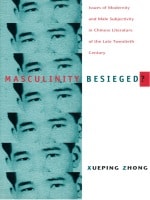
Masculinity Besieged?
Issues of Modernity and Male Subjectivity in Chinese Literature of the Late Twentieth CenturyXueping Zhong
Duke University Press, 2000
Before the 1990s onslaught of popular culture decentered the role of intellectuals within the nation, they had come to embody Chinese masculinity during the previous decade. The focus on masculinity in literature had become unprecedented in scale and the desire for “real men” began to permeate Chinese popular culture, making icons out of Rambo and Takakura Ken. Stories by Zhang Xianliang and Liu Heng portraying male anxiety about masculine sexuality are employed by Zhong to show how “marginal” males negotiate their sexual identities in relation to both women and the state. Looking at writers popular among not only the well-educated but also the working and middle classes, she discusses works by Han Shaogong, Yu Hua, and Wang Shuo and examines instances of self-loathing male voices, particularly as they are articulated in Mo Yan’s well-known work Red Sorghum. In her last chapter Zhong examines “roots literature,” which speaks of the desire to create strong men as a part of the effort to create a geopolitically strong Chinese nation. In an afterword, Zhong situates her study in the context of the 1990s.
This book will be welcomed by scholars of Chinese cultural studies, as well as in literary and gender studies.

Mask Off
Masculinity RedefinedJJ Bola
Pluto Press, 2019
From Blurred Lines to gang signs, how does society cause toxic masculinity? How do we define masculinity today? Dominating the world around us, seen in deadly gun violence, higher male suicide rates, and the incels on Reddit, masculinity is perceived to be “toxic,” “fragile,” and “in crisis.” What does that mean for society, and how can we understand it?
In Mask Off, JJ Bola exposes masculinity as a performance that men are socially conditioned into. Using examples of non-Western cultural traditions, music, and sport, he shines light on historical narratives around manhood, debunking popular myths along the way. He explores how LGBTQ men, men of color, and male refugees experience masculinity in diverse ways, revealing its fluidity, how it's strengthened and weakened by different political contexts, such as the patriarchy or the far-right, and perceived differently by those around them. Chapters include:
*Real men: Myths of masculinity
*What’s love got to do with it? Love, sex and consent
*This is a man’s world: The politics of masculinity, the masculinity of politics
*If I were a boy: Gender equality and feminism
*Slamdunk at the funk: masculinity and sport
At the heart of love and sex, the political stage, competitive sports, gang culture, and mental health issues, lies masculinity: Mask Off is an urgent call to unravel masculinity and redefine it. "What do our own perceptions of masculinity and the wider cultural norms around it mean for young boys growing up into manhood? What do they mean for young men and older men grappling with a society that encourages them to hold on to the anger that destroys the lives of women as well as the lives of many men?" Those questions and more offer food for thought for every man.
Medicalized Masculinities
edited by Dana Rosenfeld and Christopher A. Faircloth
Temple University Press, 2006
Medicalized Masculinities considers how these threads in scholarship failed to consider the male body adequately and presents cutting-edge research into the definition and regulation of masculinity by medicine. Renowned health and gender studies experts examine medicalized conditions such as balding, aging, and other dimensions of the life cycle in the tradition of the sociology of health and gender.
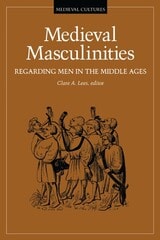
Medieval Masculinities
Regarding Men in the Middle AgesClare A. Lees
University of Minnesota Press, 1994
"Ranging from questions of epic violence and heroic embodiments of manhood to constructions of bachelorhood, husbandry, and sainthood, Medieval Masculinities is the first synthesis of medieval and gender studies to focus on masculinities."
Harry Brod, editor of The Making of Masculinities"We should not be working [exclusively] on the subjected sex any more than a historian of class can focus exclusively on peasants."-Natalie Zemon Davis, 1975 In the years since Natalie Davis made this remark, men's studies, and gender studies along with it, has earned its place in scholarship. What is often missing from such studies, however, is the insight that the concept of gender in general, and that of masculinity in particular, can be understood only in relation to individual societies, examined at specific historical and cultural moments. A brilliant application of this insight, Medieval Masculinities is the first full-length collection to explore the issues of men's studies and contemporary theories of gender within the context of the Middle Ages. Interdisciplinary and multicultural, the essays range from matrimony in medieval Italy to bachelorhood in Renaissance Venice, from friars and saints to the male animal in the fables of Marie de France, from manhood in Sir Gawain and the Green Knight, Beowulf, and the Roman d'Eneas to men as "other," whether Muslim or Jew, in medieval Castilian epic and ballad. The authors are especially concerned with cultural manifestations of masculinity that transcend this particular historical period-idealized gender roles, political and economic factors in structuring social institutions, and the impact of masculinist ideology in fostering and maintaining power. Together, their essays constitute an important reassessment of traditional assumptions within medieval studies as well as a major contribution to the evolving study of gender.ContributorsChristopher Baswell, Barnard CollegeVern L. Bullough, SUNY, BuffaloStanley Chojnacki, Michigan State UniversityJohn Coakley, New Brunswick Theological SeminaryThelma Fenster, Fordham UniversityClare Kinney, University of VirginiaClare A. Lees, University of PennsylvaniaJo Ann McNamara, Hunter CollegeLouise Mirrer, Fordham UniversityHarriet Spiegel, California State University, ChicoSusan Mosher Stuard, Haverford College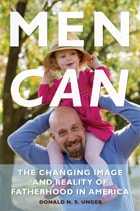
Men Can
The Changing Image and Reality of Fatherhood in AmericaDonald N.S. Unger
Temple University Press, 2010
Fatherhood is evolving in America. Stay at home dads are becoming more commonplace; men are becoming more visible in domestic, caregiving activities. In Men Can, writer, teacher, and father Donald Unger uses his personal experiences, stories of real-life families, as well as representations of fathers in film, on television, and in advertising, to illuminate the role of men in the increasingly fluid domestic sphere.
In thoughtful interviews, Don Unger tells the stories of a half dozen families—of varied ethnicities, geographical locations, and philosophical orientations—in which fathers are either primary or equally sharing parents, personalizing what is changing in how Americans care for their children. These stories are complemented by a discussion of how the language of parenting has evolved and how media representations of fathers have shifted over several decades.
Men Can shows how real change can take place when families divide up domestic labor on a gender-neutral basis. The families whose stories he tells offer insights into the struggles of—and opportunities for—men caring for children. When it comes to taking up the responsibility of parenting, his argument, ultimately, is in favor of respecting personal choices and individual differences, crediting and supporting functional families, rather than trying to force every household into a one-size-fits-all mold.

Men and Popular Music in Algeria
The Social Significance of RaïBy Marc Schade-Poulsen
University of Texas Press, 1999
Raï music is often called the voice of the voiceless in Algeria, a society currently swept by tragic conflict. Raï is the voice of Algerian men, young men caught between generations and classes, in political strife, and in economic inequality. In a ground-breaking study, anthropologist Marc Schade-Poulsen uses this popular music genre as a lens through which he views Algerian society, particularly male society. He situates raï within Algerian family life, moral codes, and broader power relations.
Schade-Poulsen did his research in the 1990s, in clubs, recording studios, at weddings, and with street musicians. He describes the history of raï, which emerged in the late 1970s and spread throughout North Africa at the same time the Islamist movement was growing to become the most potent socio-political movement in Algeria.
Outsiders consider raï to be Western in origin, but Schade-Poulsen shows its Islamic roots as well. The musicians do use Western instruments, but the music itself mixes Algerian popular songs and rhythms with the beat of American disco, Egyptian modalities, Moroccan wedding tunes, and the songs of Julio Iglesias. The lyrics deal with male-female relationships but also with generational relationships and the problems of youth, as they struggle to find a place in a conflicted society.
The study, in its innovative approach to music as a template of society, helps the reader understand the two major movements among today's Algerian youth: one toward the mosque and the other toward the West.
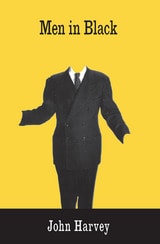
Men in Black
John Harvey
University of Chicago Press, 1995
"Why can't we pick out our own color?"
Joe:
"I tried that once, it don't work. You get four guys fighting over who's gonna be Mr. Black."
—Quentin Tarantino, Reservoir Dogs
Men's clothes went black in the nineteenth century. Dickens, Ruskin and Baudelaire all asked why it was, in an age of supreme wealth and power, that men wanted to dress as if going to a funeral. The answer is in this history of the color black. Over the last 1000 years there have been successive expansions in the wearing of black—from the Church to the Court, from the Court to the merchant class. Though black as fashion was often smart and elegant, its growth as a cultural marker was fed by several currents in Europe's history—in politics, asceticism, religious warfare. Only in the nineteenth century, however, did black fully come into its own as fashion, the most telling witnesses constantly saw connections between the taste for black and the forms of constraint with which European society regimented itself.
Concentrating on the general shift away from color that began around 1800, Harvey traces the transition to black from the court of Burgundy in the 15th century, through 16th-century Venice, 17th-century Spain and the Netherlands. He uses paintings from Van Eyck and Degas to Francis Bacon, religious art, period lithographs, wood engravings, costume books, newsphotos, movie stills and related sources in his compelling study of the meaning of color and clothes.
Although in the twentieth century tastes have moved toward new colors, black has retained its authority as well as its associations with strength and cruelty. At the same time black is still smart, and fashion keeps returning to black. It is, perhaps, the color that has come to acquire the greatest, most significant range of meaning in history.
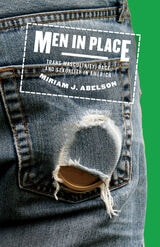
Men in Place
Trans Masculinity, Race, and Sexuality in AmericaMiriam J. Abelson
University of Minnesota Press, 2019
Daring new theories of masculinity, built from a large and geographically diverse interview study of transgender men
American masculinity is being critiqued, questioned, and reinterpreted for a new era. In Men in Place Miriam J. Abelson makes an original contribution to this conversation through in-depth interviews with trans men in the U.S. West, Southeast, and Midwest, showing how the places and spaces men inhabit are fundamental to their experiences of race, sexuality, and gender.
Men in Place explores the shifting meanings of being a man across cities and in rural areas. Here Abelson develops the insight that individual men do not have one way to be masculine—rather, their ways of being men shift between different spaces and places. She reveals a widespread version of masculinity that might be summed up as “strong when I need to be, soft when I need to be,” using the experiences of trans men to highlight the fundamental construction of manhood for all men.
With an eye to how societal institutions promote homophobia, transphobia, and racism, Men in Place argues that race and sexuality fundamentally shape safety for men, particularly in rural spaces, and helps us to better understand the ways that gender is created and enforced.
Men in a Developing Society
Geographic and Social Mobility in Monterrey, MexicoBy Jorge Balán, Harley L. Browning, and Elizabeth Jelin
University of Texas Press, 1973
The central objective of Men in a Developing Society is to show, as concretely as possible, how men experience a period of rapid economic development, particularly in the areas of migration, occupational mobility, and status attainment. It is based mainly on a sample of 1,640 men in Monterrey, Mexico, a large and rapidly growing manufacturing metropolis in northern Mexico with much in-migration, and a sample of 380 men in Cedral, San Luis Potosí, a small, economically depressed community with high rates of out-migration, much of it to Monterrey.
The study of men in Monterrey is perhaps the most thorough one yet conducted of geographic and social mobility in a Latin American city. In part, this was possible because of the innovation of collecting complete life histories that record what each man was doing for any given year in the lay areas of residence, education, family formation, and work. These data permit the effective use of the concepts of life cycle and cohort analysis in the interpretation of the men's geographic and occupational mobility.
The experience of the Monterrey men in adapting to the varied changes required by their mobility was not found to be as difficult as is often indicated in the social science literature on the consequences of economic development. In part this may be because Monterrey, in comparison with most other Latin American cities, has been unusually successful in its economic growth. The impact of migration also was lessened because most of the men had visited the city prior to moving there and many had friends or relatives in the city.
The age of the migrants upon arrival in Monterrey made a significant difference in subsequent occupational mobility; those of nonfarm background who arrived before age 25 fared better than natives of the city. Although it appears that status inheritance in Monterrey is somewhat higher than in industrialized countries, a considerable proportion of men do move up the occupational ladder. And perhaps as important, the Monterrey men, whether or not they themselves are moving up, perceive the society as an open one.
The very success of Monterrey's development created conditions that would bring about changes in the educational, economic, and cultural expectations of its inhabitants. Thus, paradoxically, the general satisfaction and the lack of group and class conflict in Monterrey over the previous decades may well have given rise to future dissatisfaction and conflict.
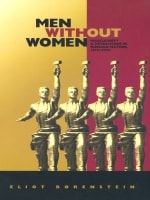
Men without Women
Masculinity and Revolution in Russian Fiction, 1917–1929Eliot Borenstein
Duke University Press, 2001
In such works as Red Cavalry by Isaac Babel, Envy by Yuri Olesha, and Chevengur by Andrei Platonov women are either absent or transformed into bodiless abstractions. Their absence, claims Borenstein, reflects the masculine values that are hallmarks of the post-revolutionary era: production rather than reproduction, participation in history rather than domestic ahistoricity, heavy industry, construction, and struggle. He identifies in this literature groups of “men without women” replacing the family, even while the metaphor of family is used as an organizing feature of their recurring revolutionary missions. With the passage of time, these characters’ relationships—just as those in the Soviet culture of the time—begin to resemble the family structure that was originally rejected and destroyed, with one important exception: the new “families” had no place for women. According to Borenstein, this masculinist myth found its most congenial audience during the early period of communism, but its hostility to women and family ties could not survive into the Stalinist era when women, home, and family were no longer seen as antithetical to socialism.
Drawing on the theory and writings of Levi-Strauss, Girard, Sedgwick, and others, Men Without Women will be of interest to students and scholars of Slavic literature and history as well as specialists in literary theory and gender studies.
Misframing Men
The Politics of Contemporary MasculinitiesKimmel, Michael
Rutgers University Press, 2010
This past decade has witnessed an extraordinary transformation in men's lives. For years, wave after wave of the women's movement, a movement that reshaped every aspect of American life, produced nary a ripple among men. But suddenly men are in the spotlight.
Yet, the public discussions often seem strained, silly, and sometimes flat-out wrong. The spotlight itself seems to obscure as much as it illuminates. Old tired clichTs about men's resistance to romantic commitment or reluctance to be led to the marriage altar seem perennially recyclable in advice books and on TV talk shows, but these days the laughter feels more forced, the defensiveness more pronounced. Pop biologists avoid careful confrontation with serious scientific research in their quest to find anatomical or evolutionary bases for promiscuity or porn addiction, hoping that by fiat, one can pronounce that "boys will be boys" and render it more than a flaccid tautology. And political pundits wring their hands about the feminization of American manhood, as if gender equality has neutered these formerly proud studs. Misframing Men, a collection of Michael Kimmel's commentaries on contemporary debates about masculinity, argues that the media have largely misframed this debate.
Kimmel, among the world's best-known scholars in gender studies, discusses political moments such as the Virginia Military Institute and Citadel cases that reached the Supreme Court (he participated as expert witness for the Justice Department) along with Promise Keepers rallies, mythopoetic gatherings, and white supremacists. He takes on antifeminists as the real male bashers, questions the unsubstantiated assertions that men suffer from domestic violence to the same degree as women, and examines the claims made by those who want to rescue boys from the "misandrous" reforms initiated by feminism.
In writings both solidly grounded and forcefully argued, Kimmel pushes the boundaries of today's modern conversation about men and masculinity.
Modelwork
The Material Culture of Making and KnowingMartin Brückner
University of Minnesota Press, 2021
How making models allows us to recall what was and to discover what still might be
Whether looking inward to the intricacies of human anatomy or outward to the furthest recesses of the universe, expanding the boundaries of human inquiry depends to a surprisingly large degree on the making of models. In this wide-ranging volume, scholars from diverse fields examine the interrelationships between a model’s material foundations and the otherwise invisible things it gestures toward, underscoring the pivotal role of models in understanding and shaping the world around us. Whether in the form of reproductions, interpretive processes, or constitutive tools, models may bridge the gap between the tangible and the abstract.
By focusing on the material aspects of models, including the digital ones that would seem to displace their analogue forebears, these insightful essays ground modeling as a tactile and emphatically humanistic endeavor. With contributions from scholars in the history of science and technology, visual studies, musicology, literary studies, and material culture, this book demonstrates that models serve as invaluable tools across every field of cultural development, both historically and in the present day.
Modelwork is unique in calling attention to modeling’s duality, a dynamic exchange between imagination and matter. This singular publication shows us how models shape our ability to ascertain the surrounding world and to find new ways to transform it.
Contributors: Hilary Bryon, Virginia Tech; Johanna Drucker, UCLA; Seher Erdoğan Ford, Temple U; Peter Galison, Harvard U; Lisa Gitelman, New York U; Reed Gochberg, Harvard U; Catherine Newman Howe, Williams College; Christopher J. Lukasik, Purdue U; Martin Scherzinger, New York U; Juliet S. Sperling, U of Washington; Annabel Jane Wharton, Duke U.
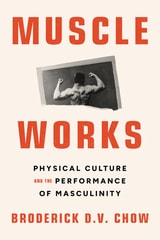
Muscle Works
Physical Culture and the Performance of MasculinityBroderick D. V. Chow
Northwestern University Press, 2024
This book recounts the story of fitness culture from its beginnings as spectacles of strongmen, weightlifters, acrobats, and wrestlers to its legitimization in the twentieth-century in the form of competitive sports and health and wellness practices. Broderick D. V. Chow shows how these modes of display contribute to the construction and deconstruction of definitions of masculinity.
Attending to its theatrical origins, Chow argues for a more nuanced understanding of fitness culture, one informed by the legacies of self-described Strongest Man in the World Eugen Sandow and the history of fakery in strongman performance; the philosophy of weightlifter George Hackenschmidt and the performances of martial artist Bruce Lee; and the intersections of fatigue, resistance training, and whiteness. Muscle Works: Physical Culture and the Performance of Masculinity moves beyond the gym and across the archive, working out techniques, poses, and performances to consider how, as gendered subjects, we inhabit and make worlds through our bodies.