Results by title
140 books match the query 'Mental Health' and 13 start with m
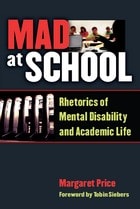
Mad at School
Rhetorics of Mental Disability and Academic LifeMargaret Price
University of Michigan Press, 2011
"A very important study that will appeal to a disability studies audience as well as scholars in social movements, social justice, critical pedagogy, literacy education, professional development for disability and learning specialists in access centers and student counseling centers, as well as the broader domains of sociology and education."
---Melanie Panitch, Ryerson University
"Ableism is alive and well in higher education. We do not know how to abandon the myth of the 'pure (ivory) tower that props up and is propped up by ableist ideology.' . . . Mad at School is thoroughly researched and pathbreaking. . . . The author's presentation of her own experience with mental illness is woven throughout the text with candor and eloquence."
---Linda Ware, State University of New York at Geneseo
Mad at School explores the contested boundaries between disability, illness, and mental illness in the setting of U.S. higher education. Much of the research and teaching within disability studies assumes a disabled body but a rational and energetic (an "agile") mind. In Mad at School, scholar and disabilities activist Margaret Price asks: How might our education practices change if we understood disability to incorporate the disabled mind?
Mental disability (more often called "mental illness") is a topic of fast-growing interest in all spheres of American culture, including popular, governmental, aesthetic, and academic. Mad at School is a close study of the ways that mental disabilities impact academic culture. Investigating spaces including classrooms, faculty meeting rooms, and job searches, Price challenges her readers to reconsider long-held values of academic life, including productivity, participation, security, and independence. Ultimately, she argues that academic discourse both produces and is produced by a tacitly privileged "able mind," and that U.S. higher education would benefit from practices that create a more accessible academic world.
Mad at School is the first book to use a disability-studies perspective to focus specifically on the ways that mental disabilities impact academic culture at institutions of higher education. Individual chapters examine the language used to denote mental disability; the role of "participation" and "presence" in student learning; the role of "collegiality" in faculty work; the controversy over "security" and free speech that has arisen in the wake of recent school shootings; and the marginalized status of independent scholars with mental disabilities.
Margaret Price is Associate Professor of English at Spelman College.

Madness and Enterprise
Psychiatry, Economic Reason, and the Emergence of Pathological ValueNima Bassiri
University of Chicago Press, 2024
Madness and Enterprise reveals the economic norms embedded within psychiatric thinking about mental illness in the North Atlantic world. Over the course of the nineteenth century, various forms of madness were subjected to a style of psychiatric reasoning that was preoccupied with money. Psychiatrists across Western Europe and the United States attributed financial and even moral value to an array of pathological conditions, such that some mental disorders were seen as financial assets and others as economic liabilities. By turning to economic conduct and asking whether potential patients appeared capable of managing their financial affairs or even generating wealth, psychiatrists could often bypass diagnostic uncertainties about a person’s mental state.
Through an exploration of the intertwined histories of psychiatry and economic thought, Nima Bassiri shows how this relationship transformed the very idea of value in the modern North Atlantic, as the most common forms of social valuation—moral value, medical value, and economic value—were rendered equivalent and interchangeable. If what was good and what was healthy were increasingly conflated with what was remunerative (and vice versa), then a conceptual space opened through which madness itself could be converted into an economic form and subsequently redeemed—and even revered.
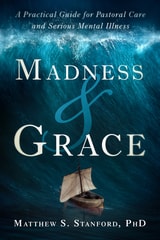
Madness and Grace
A Practical Guide for Pastoral Care and Serious Mental IllnessMatthew Stanford
Templeton Press, 2021
Research tells us that when most people suffer from a mental health crisis, the first person they turn to for help is not a physician, a psychiatrist, or a social worker, but a pastor, a priest, or a minister. In other words, a leader in their church. Unfortunately, many church leaders are not trained to recognize mental illness and don’t know when to refer someone to a mental health professional. The consequence—unintended yet tragic—is continued and unnecessary suffering.
Madness and Grace is a comprehensive guide for church ministry to alleviate this situation. Written by Dr. Matthew Stanford, the book is carefully constructed to help build competency in detecting a wide spectrum of mental disorders, such as knowing when a person is contemplating suicide based on telltale patterns of speech. It also explodes common discriminatory myths that stigmatize people with mental illness, such as the myth that they are more prone to violence than others.
Dr. Stanford has treated clients throughout his career who were afflicted with all manner of mental disorders. In Madness and Grace, he takes the full extent of his experience and makes it accessible and actionable for the lay reader. He begins by explaining what constitutes a mental illness and how these disorders are classified according to science. He next teaches how to notice the presence of a mental illness by listening carefully to phraseology, observing behavior, and asking discerning questions. He goes on to discuss methods of treatment, common religious concerns about mental health, and ways church communities can support people on the road to recovery.
As a Christian, Dr. Stanford wants his fellow believers to know that acknowledging and seeking help for a mental illness is not a sign of weak faith. That’s why, in addition to sharing his medical expertise with church leaders, he commends pertinent biblical passages that underscore God’s concern for our mental wellbeing. These passages provide strength and comfort as complements to clinically-derived treatment and are essential to Dr. Stanford’s approach. “When working with those in severe psychological distress,” he writes, “compassion and grace are always the first line of pastoral care.”
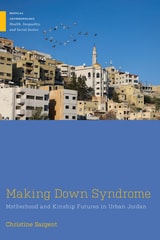
Making Down Syndrome
Motherhood and Kinship Futures in Urban JordanChristine Sargent
Rutgers University Press, 2026
Making Down Syndrome: Motherhood and Kinship Futures in Urban Jordan draws on ethnographic research conducted primarily in Jordan’s capital city of Amman to explore how the label and identity of Down syndrome is gaining increasing cohesiveness. Focused on the experiences of mothers, who serve as an entry point for understanding broader family dynamics and choices, the book argues that practices and ideologies of care play a central role in making Down syndrome’s embodied and political realities. They do so through the momentum of kinship futures, or futures imagined through the prism of kinship roles and relations, which shape how families organize and distribute care between and beyond kinship networks and under conditions of economic and political uncertainty. By approaching everyday life in Jordan through the lens of disability, Making Down Syndrome offers new insights into how people navigate structures of family, gender, power, inequality, and precarity, all while trying to maintain hope for and cultivate better futures.

Making Love with the Land
EssaysJoshua Whitehead
University of Minnesota Press, 2024
A moving and deeply personal excavation of Indigenous beauty and passion in a suffering world
The novel Jonny Appleseed established Joshua Whitehead as one of the most exciting and important new literary voices on Turtle Island, winning both a Lambda Literary Award and Canada Reads 2021. In Making Love with the Land, his first nonfiction book, Whitehead explores the relationships between body, language, and land through creative essay, memoir, and confession.
In prose that is evocative and sensual, unabashedly queer and visceral, raw and autobiographical, Whitehead writes of an Indigenous body in pain, coping with trauma. Deeply rooted within, he reaches across the anguish to create a new form of storytelling he calls “biostory”—beyond genre, and entirely sovereign. Through this narrative perspective, Making Love with the Land recasts mental health struggles and our complex emotional landscapes from a nefarious parasite on his (and our) well-being to kin, even a relation, no matter what difficulties they present to us. Whitehead ruminates on loss and pain without shame or ridicule but rather highlights waypoints for personal transformation. Written in the aftermath of heartbreak, before and during the pandemic, Making Love with the Land illuminates this present moment in which both Indigenous and non-Indigenous people are rediscovering old ways and creating new ones about connection with and responsibility toward each other and the land.
Intellectually audacious and emotionally compelling, Whitehead shares his devotion to the world in which we live and brilliantly—even joyfully—maps his experience on the land that has shaped stories, histories, and bodies from time immemorial.
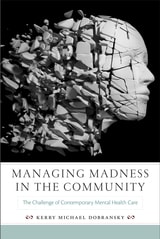
Managing Madness in the Community
The Challenge of Contemporary Mental Health CareKerry Michael Dobransky
Rutgers University Press, 0
In the wake of movies like One Flew Over the Cuckoo’s Nest and Shutter Island, most people picture the severely or chronically mentally ill being treated in cold, remote, and forbidding facilities. But the reality is very different. Today the majority of deeply troubled mental patients get treatment in nonprofit community organizations. And it is to two such organizations in the Midwest that this study looks for answers. Drawing upon a wealth of unique evidence—fifteen months of ethnographic observations, 91 interviews with clients and workers, and a range of documents—Managing Madness in the Community lays bare the sometimes disturbing nature and effects of our overly complex and disconnected mental health system.
Kerry Michael Dobransky examines the practical strategies organizations and their clients use to manage the often-conflicting demands of a host of constituencies, laws, and regulations. Bringing to light the challenges confronting patients and staff of the community-based institutions that bear the brunt of caring for the mentally ill, his book provides a useful broad framework that will help researchers and policymakers understand the key forces influencing the mental health services system today.

Mantle of Mercy
Islamic Chaplaincy in North AmericaMuhammad A. Ali
Templeton Press, 2022
Working in a variety of settings—including hospitals, prisons, universities, and the armed forces—Muslim chaplains encounter unique challenges on a daily basis, requiring them to call upon the resources of their Islamic faith with wisdom and tenderness. The contributors to this volume explore these circumstances vividly and honestly. Their personal stories are instructive of how Islamic principles can be employed with spiritual insight to bring strength and comfort to the sick and suffering.
Mark, Mutuality, and Mental Health
Encounters with JesusSimon Mainwaring
SBL Press, 2014
An incitement to re-assess how society relates to persons with poor mental health
Mainwaring explores the societal contexts of those who suffer poor mental health, and in particular the relational dynamics of how identity, agency, and dialogue are negotiated in personal encounters. This work seeks to serve as an experiment, such that interested readers might better understand the dynamics of relational power that pervade encounters with persons with poor mental health.
Features:
- Foucauldian analysis of the relational dynamics of poor mental health used to re-imagine hegemonic relational dynamics
- Close readings of encounters between individual characters to evaluate how mutuality operates in those encounters
- Study of mutuality as it has emerged in mental health literature, feminist theologies, and theologies of disability

Mary Lincoln's Insanity Case
A Documentary HistoryJason Emerson
University of Illinois Press, 2012
In 1875 Mary Lincoln, the widow of a revered president, was committed to an insane asylum by her son, Robert. The trial that preceded her internment was a subject of keen national interest. The focus of public attention since Abraham Lincoln's election in 1860, Mary Lincoln had attracted plentiful criticism and visible scorn from much of the public, who perceived her as spoiled, a spendthrift, and even too much of a Southern sympathizer. Widespread scrutiny only increased following her husband's assassination in 1865 and her son Tad's death six years later, after which her overwhelming grief led to the increasingly erratic behavior that led to her being committed to a sanitarium. A second trial a year later resulted in her release, but the stigma of insanity stuck. In the years since, questions emerged with new force, as the populace and historians debated whether she had been truly insane and subsequently cured, or if she was the victim of family maneuvering.
In this volume, noted Lincoln scholar Jason Emerson provides a documentary history of Mary Lincoln's mental illness and insanity case, evenhandedly presenting every possible primary source on the subject to enable a clearer view of the facts. Beginning with documents from the immediate aftermath of her husband's assassination and ending with reminiscences by friends and family in the mid-twentieth century, Mary Lincoln's Insanity Case: A Documentary History compiles more than one hundred letters, dozens of newspaper articles, editorials, and legal documents, and the daily patient progress reports from Bellevue Place Sanitarium during Mary Lincoln's incarceration. Including many materials that have never been previously published, Emerson also collects multiple reminiscences, interviews, and diaries of people who knew Mary Lincoln or were involved in the case, including the first-hand recollection of one of the jurors in the 1875 insanity trial.
Suggesting neither accusation nor exoneration of the embattled First Lady, Mary Lincoln's Insanity Case: A Documentary History gives scholars and history enthusiasts incomparable access to the documents and information crucial to understanding this vexing chapter in American history.
Medicine over Mind
Mental Health Practice in the Biomedical EraDena T. Smith
Rutgers University Press, 2019
Mental Health Services for Deaf People
Treatment Advances, Opportunities, and ChallengesBenito Estrada Aranda
Gallaudet University Press, 2015
Volume editors Benito Estrada Aranda and Ines Sleeboom-van Raaij have divided the book into three parts—Mental Health Issues and Treatment, Deaf Populations, and Deaf Children and Their Families. In the first part, the contributors provide in-depth analysis of specific challenges and treatment modalities ranging from the provision of mental healthcare as a basic human right to psychopharmacological treatment, the challenges in developing mental health services for deaf and hard of hearing people in countries where none exist, and new treatment therapies.
Part two looks at issues of self-esteem and cultural identity among deaf and hard of hearing adults in Greece and Cyprus, the services for deaf people at a public health clinic in Austria, and the quality of life among Latino Deaf bilinguals in the United States. In the last part, the contributors focus on mental health issues found in deaf children and adolescents and on the relationships between deaf teenagers and their hearing mothers. The volume concludes with a case study of a prelingually deaf child diagnosed as autistic. Taken all together, these cutting-edge articles explore the important issues within the specialized area of mental health and deafness.

Mental Traveler
A Father, a Son, and a Journey through SchizophreniaW. J. T. Mitchell
University of Chicago Press, 2020
Gabriel Mitchell was diagnosed with schizophrenia at age twenty-one and died by suicide eighteen years later. He left behind a remarkable archive of creative work and a father determined to honor his son’s attempts to conquer his own illness. Before his death, Gabe had been working on a film that would show madness from inside and out, as media stereotype and spectacle, symptom and stigma, malady and minority status, disability and gateway to insight. He was convinced that madness is an extreme form of subjective experience that we all endure at some point in our lives, whether in moments of ecstasy or melancholy, or in the enduring trauma of a broken heart. Gabe’s declared ambition was to transform schizophrenia from a death sentence to a learning experience, and madness from a curse to a critical perspective.
Shot through with love and pain, Mental Traveler shows how Gabe drew his father into his quest for enlightenment within madness. It is a book that will touch anyone struggling to cope with mental illness, and especially for parents and caregivers of those caught in its grasp.
My Nerves Are Bad
Puerto Rican Women Managing Mental Illness and HIV RiskSana Loue
Vanderbilt University Press, 2011
Sana Loue lets us see the remarkable strength of many of the women and hear in their own words about their efforts to survive, despite long histories of childhood physical and sexual abuse, partner violence, substance use, poverty, and severe mental illness. We also witness the violence that surrounds them and the HIV risk that becomes a part of their lives in their efforts to survive economically and emotionally.