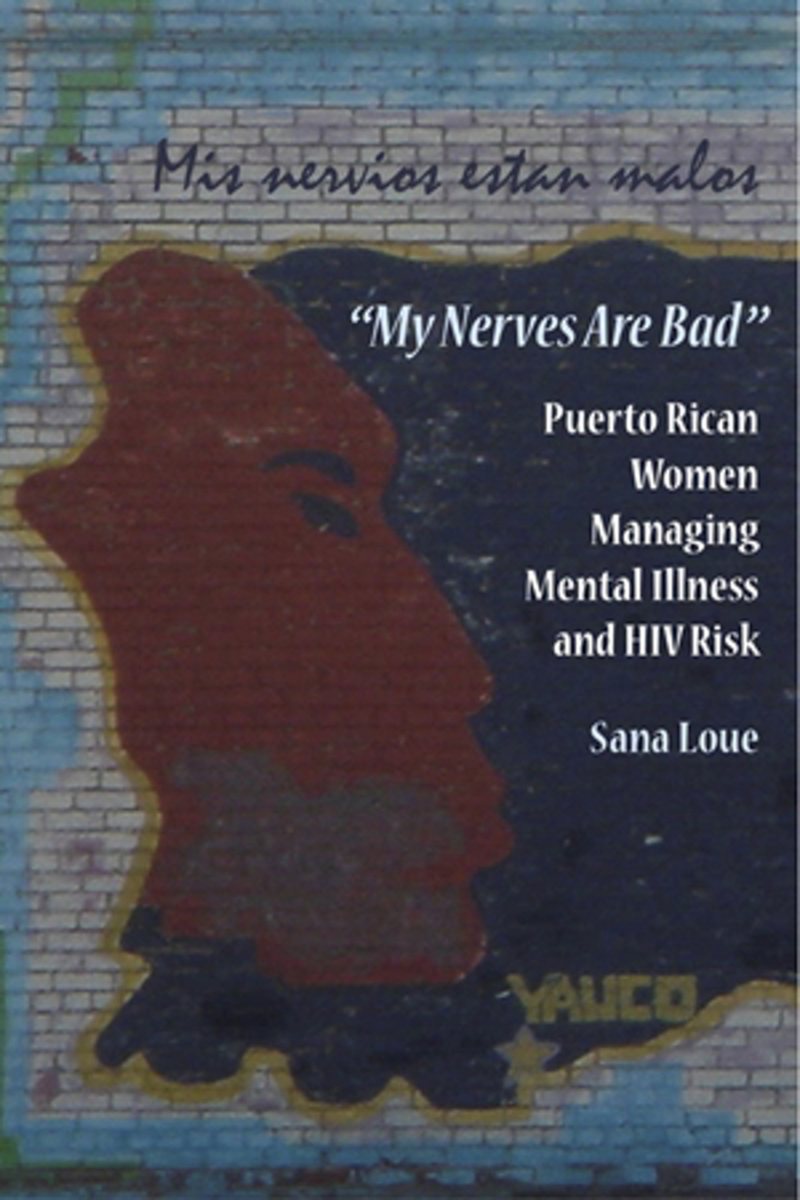
My Nerves Are Bad: Puerto Rican Women Managing Mental Illness and HIV Risk
Vanderbilt University Press, 2011
Cloth: 978-0-8265-1753-1 | Paper: 978-0-8265-1754-8 | eISBN: 978-0-8265-1755-5 (PDF)
Library of Congress Classification RA643.84.O3L68 2011
Dewey Decimal Classification 362.196979200977
Cloth: 978-0-8265-1753-1 | Paper: 978-0-8265-1754-8 | eISBN: 978-0-8265-1755-5 (PDF)
Library of Congress Classification RA643.84.O3L68 2011
Dewey Decimal Classification 362.196979200977
ABOUT THIS BOOK | AUTHOR BIOGRAPHY | REVIEWS | TOC
ABOUT THIS BOOK
Over a two-year period, author Sana Loue and her research team followed the lives of fifty-three Puerto Rican women living with severe mental illness as they coped with daily challenges in the areas of family, romantic relationships, employment, social services, substance use, and health care. The team interviewed the women and shadowed them at their homes, churches, schools, physicians' offices, family events, and other occasions in order to understand how their mental illness, their gender, their language, and their culture affected their relationships with others, their understandings of their own situations, and their hopes for themselves and their families.
Sana Loue lets us see the remarkable strength of many of the women and hear in their own words about their efforts to survive, despite long histories of childhood physical and sexual abuse, partner violence, substance use, poverty, and severe mental illness. We also witness the violence that surrounds them and the HIV risk that becomes a part of their lives in their efforts to survive economically and emotionally.
Sana Loue lets us see the remarkable strength of many of the women and hear in their own words about their efforts to survive, despite long histories of childhood physical and sexual abuse, partner violence, substance use, poverty, and severe mental illness. We also witness the violence that surrounds them and the HIV risk that becomes a part of their lives in their efforts to survive economically and emotionally.
See other books on: AIDS (Disease) | Health and hygiene | Health Policy | Mental Health | Ohio
See other titles from Vanderbilt University Press