Results by title
105 books match the query 'Mind' and 17 start with m
Machines of the Mind
Personification in Medieval LiteratureKatharine Breen
University of Chicago Press, 2021
In Machines of the Mind, Katharine Breen proposes that medieval personifications should be understood neither as failed novelistic characters nor as instruments of heavy-handed didacticism. She argues that personifications are instead powerful tools for thought that help us to remember and manipulate complex ideas, testing them against existing moral and political paradigms. Specifically, different types of medieval personification should be seen as corresponding to positions in the rich and nuanced medieval debate over universals. Breen identifies three different types of personification—Platonic, Aristotelian, and Prudentian—that gave medieval writers a surprisingly varied spectrum with which to paint their characters.
Through a series of new readings of major authors and works, from Plato to Piers Plowman, Breen illuminates how medieval personifications embody the full range of positions between philosophical realism and nominalism, varying according to the convictions of individual authors and the purposes of individual works. Recalling Gregory the Great’s reference to machinae mentis (machines of the mind), Breen demonstrates that medieval writers applied personification with utility and subtlety, employing methods of personification as tools that serve different functions. Machines of the Mind offers insight for medievalists working at the crossroads of religion, philosophy, and literature, as well as for scholars interested in literary character-building and gendered relationships among characters, readers, and texts beyond the Middle Ages.
Making Meaning
"Printers of the Mind" and Other EssaysD. F. McKenzie
University of Massachusetts Press, 2002
The greatest bibliographer of our time, was how historian Robert Darnton described D. F. McKenzie. Yet until now many of McKenzie's major essays, scattered in specialist journals and inaccessible publications, have circulated mainly in tattered photocopies. This volume, edited by two of McKenzie's former students, brings together for the first time a wide range of his writings on bibliography, the book trade, and the “sociology of texts.” Selected by the author himself before his sudden death in 1999, the essays range from the material transmission of Shakespeare's plays in the seventeenth century to the connections among oral, manuscript, and print cultures.
Making Meaning reflects McKenzie's virtuosity as a traditional bibliographer and reveals how his thought-provoking scholarship made him a driving force in the genesis and development of the new interdisciplinary field of book history. His refusal to recognize the traditional boundary between bibliography and literary history re-energized the study of the social, political, economic, and cultural aspects of book production and reception.
The editors' introduction and headnotes situate McKenzie's innovative and controversial thinking in the debates of his time.
Materials of the Mind
Phrenology, Race, and the Global History of Science, 1815-1920James Poskett
University of Chicago Press, 2019
Phrenology was the most popular mental science of the Victorian age. From American senators to Indian social reformers, this new mental science found supporters around the globe. Materials of the Mind tells the story of how phrenology changed the world—and how the world changed phrenology.
This is a story of skulls from the Arctic, plaster casts from Haiti, books from Bengal, and letters from the Pacific. Drawing on far-flung museum and archival collections, and addressing sources in six different languages, Materials of the Mind is an impressively innovative account of science in the nineteenth century as part of global history. It shows how the circulation of material culture underpinned the emergence of a new materialist philosophy of the mind, while also demonstrating how a global approach to history can help us reassess issues such as race, technology, and politics today.
Meaning, Basic Self-Knowledge, and Mind
Essays on Tyler BurgeEdited by María Frápolli and Esther Romero
CSLI, 2003
The authors of the eleven papers here expound their versions of this position and go on to critique Burge's version. Together with Burge's replies, this volume offers a major contribution to contemporary philosophy.
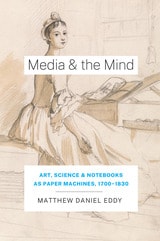
Media and the Mind
Art, Science, and Notebooks as Paper Machines, 1700-1830Matthew Daniel Eddy
University of Chicago Press, 2022
We often think of reason as a fixed entity, as a definitive body of facts that do not change over time. But during the Enlightenment, reason also was seen as a process, as a set of skills enacted on a daily basis. How, why, and where were these skills learned? Concentrating on Scottish students living during the long eighteenth century, this book argues that notebooks were paper machines and that notekeeping was a capability-building exercise that enabled young notekeepers to mobilize everyday handwritten and printed forms of material and visual media in a way that empowered them to judge and enact the enlightened principles they encountered in the classroom. Covering a rich selection of material ranging from simple scribbles to intricate watercolor diagrams, the book reinterprets John Locke’s comparison of the mind to a blank piece of paper, the tabula rasa. Although one of the most recognizable metaphors of the British Enlightenment, scholars seldom consider why it was so successful for those who used it. Each chapter uses one core notekeeping skill to reveal the fascinating world of material culture that enabled students in the arts, sciences, and humanities to transform the tabula rasa metaphor into a dynamic cognitive model. Starting in the home, moving to schools, and ending with universities, the book reconstructs the relationship between media and the mind from the bottom up. It reveals that the cognitive skills required to make and use notebooks were not simply aids to reason; rather, they were part of reason itself.
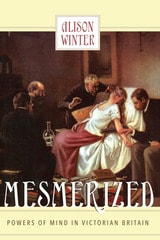
Mesmerized
Powers of Mind in Victorian BritainAlison Winter
University of Chicago Press, 1998
"Dazzling. . . . This splendid book . . . gives us a new form of historical understanding and a model for open and imaginative reading."—James R. Kinkaid, Boston Globe
"A landmark in the history of science scholarship."—John Sutherland, The Independent
"It is difficult to imagine the documentary side of the story being better done than by Winter's well-researched and generously illustrated study. . . . She is a lively and keen observer; and her book is a pleasure to read purely for its range of material and wealth of detail. . . . Fruitful and suggestive."—Daniel Karlin, Times Literary Supplement
"An ambitious, sweeping and fascinating historical study. . . . Beautifully written, thoroughly researched, and well-illustrated."—Bernard Lightman, Washington Times
Metaphysics, Materialism, and the Evolution of Mind
The Early Writings of Charles DarwinCharles Darwin
University of Chicago Press, 1980
First published in 1974 as a companion volume to Darwin on Man by Howard E. Gruber, Paul Barrett’s transcriptions of Darwin’s M and N notebooks served to shed new light on the evolutionist’s methods and motivation.
According to Stephen Jay Gould in the New York Times Book Review, “Darwin kept [these notebooks] primarily in 1838, when he was 29 years old. In them, he recorded his early conviction of evolutionary continuity between humans and all other animals. . . . These notebooks display all the features of humanistic intellect that his detractors denied. We find erudition in his comments on Plato, Locke, Hume, Adam Smith, Whewell, Burke, Montaigne, Lessing and Spencer. . . . We appreciate an artistic bent in his delight with nature and her prophet Wordsworth. . . . We grasp the breadth of his bold attempt to clothe all human thought and behaviour in a new evolutionary garb. . . . Charles Darwin was reconstructing the world and he knew exactly what he was doing.”
Mind Of The Universe
Understanding Science & ReligionMariano Artigas
Templeton Press, 2001

Mind The Gap
The Education Of A Nature WriterJohn Hay
University of Nevada Press, 2006
Mind and Labor on the Farm in Black-Earth Russia, 1861-1914
David Kerans
Central European University Press, 2001
Mind and Philosophers
John Lachs
Vanderbilt University Press, 1987

Mind, Matter, and Method
Essays in Philosophy and Science in Honor of Herbert FeiglPaul K. Feyerabend and Grover Maxwell, Editors
University of Minnesota Press, 1966
Mind, Matter, and Method was first published in 1966. Minnesota Archive Editions uses digital technology to make long-unavailable books once again accessible, and are published unaltered from the original University of Minnesota Press editions.
This volume of twenty-six essays by as many contributors is published in honor of Herbert Feigl, professor of philosophy at the University of Minnesota and director of the Minnesota Center for the Philosophy of Science. Though the majority of the contributors are philosophers, there are also -- as benefits Mr. Feigl's varied intellectual interests -- representatives of psychology, psychoanalysis, and physics.
The first group of ten essays deals with the philosophy of mind, particularly with the mind-body problem, to which Mr. Feigl has devoted much attention. The eleven essays in the second part are concerned with problems of philosophical method, especially with induction and confirmation. The third part is comprised of five essays on the philosophy of the physical sciences. A biographical sketch of Mr. Feigl and a bibliography of his writings are also provided.
Mind, Matter, and Nature
James D. Madden
Catholic University of America Press, 2013
Mind, Motivation, and Meaningful Learning
Melissa L. Miller
Assoc of College & Research Libraries, 2021
Mind, Motivation, and Meaningful Learning: Strategies for Teaching Adult Learners provides a blueprint that academic librarians can apply to their instructional design that facilitates a change in students’ motivation and learning strategies. It provides the tools necessary to teach learners to identify, evaluate, and apply appropriate cognitive, learning, and motivation strategies based on course content and a deeper understanding of the metacognitive component of meaningful learning. Five chapters explore the theories behind adult learning, culminating in a seven-unit curriculum scalable to a variety of learning domains complete with lesson plans, activities, assessments of the learning goals, and student reflections.
Mind, Motivation, and Meaningful Learning can help you identify the components of academic learning that contribute to high achievement; help students learn and practice effective learning and study strategies that lead to improved self-efficacy, self-regulation, and knowledge transfer; and improve instructional design for student, instructor, and academic teaching librarian success.
Mind, Self, and Society
From the Standpoint of a Social BehavioristGeorge Herbert Mead
University of Chicago Press, 1967
"If philosophical eminence be measured by the extent to which a man's writings anticipate the focal problems of a later day and contain a point of view which suggests persuasive solutions to many of them, then George Herbert Mead has justly earned the high praise bestowed upon him by Dewey and Whitehead as a 'seminal mind of the very first order.'"—Sidney Hook, The Nation
Mind, Self, and Society
The Definitive EditionGeorge Herbert Mead
University of Chicago Press, 2015
This collection gets to the heart of Mead’s meditations on social psychology and social philosophy. Its penetrating, conversational tone transports the reader directly into Mead’s classroom as he teases out the genesis of the self and the nature of the mind. The book captures his wry humor and shrewd reasoning, showing a man comfortable quoting Aristotle alongside Alice in Wonderland.
Included in this edition are an insightful foreword from leading Mead scholar Hans Joas, a revealing set of textual notes by Dan Huebner that detail the text’s origins, and a comprehensive bibliography of Mead’s other published writings. While Mead’s lectures inspired hundreds of students, much of his brilliance has been lost to time. This new edition ensures that Mead’s ideas will carry on, inspiring a new generation of thinkers.
Models of the Mind
A Psychoanalytic TheoryJohn E. Gedo and Arnold Goldberg
University of Chicago Press, 1976
Gedo and Goldberg apply their theory to four classic psychoanalytic case studies to demonstrate its effectiveness: Freud's Rat Man, his Wolf Man, the case of Daniel Paul Schreber, and a case of arrested development. For each of these cases the authors show how it would have been both possible and advantageous to apply a variety of different theories as facts about each continued to accumulate.