Results by title
17 books match the query 'Pragmatics'
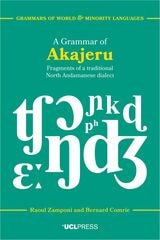
A Grammar of Akajeru
Fragments of a Traditional North Andamanese DialectRaoul Zamponi and Bernard Comrie
University College London, 2021
Originally spoken across the northern Andamanese Islands in the Bay of Bengal, the Akajeru language is spoken today by only three people. A Grammar of Akajeru describes this unique grammatical system as it was reported at the turn of the twentieth century. Based primarily on research conducted by Victorian anthropologists Alfred R. Radcliffe-Brown and Edward Horace Man, this book offers a linguistic analysis of all extant Akajeru material as well as the scant documentation of adjacent dialects Akabo and Akakhora. This volume includes a grammatical sketch of Akajeru, an English-Akajeru lexicon, and a comparison between Akajeru and present-day Andamanese.
Arenas of Language Use
Herbert H. Clark
University of Chicago Press, 1993
According to Clark, in order for one person to understand another, there must be a "common ground" of knowledge between them. He shows how people infer this "common ground" from their past conversations, their immediate surroundings, and their shared cultural background. Clark also discusses the means by which speakers design their utterances for particular audiences and coordinate their use of language with other participants in a language arena. He argues that language use in conversation is a collaborative process, where speaker and listener work together to establish that the listener understands the speaker's meaning. Since people often use words to mean something quite different from the dictionary definitions of those words, Clark offers a realistic perspective on how speakers and listeners coordinate on the meanings of words.
This collection presents outstanding examples of Clark's pioneering work on the pragmatics of language use and it will interest psychologists, linguists, computer scientists, and philosophers.
Critical Environments
Postmodern Theory and the Pragmatics of the “Outside”Cary Wolfe
University of Minnesota Press, 1998
Argues for a pragmatist orientation for postmodern theory.
Taking up the problem that has stalled contemporary theory—its treatment of the object of knowledge, the “outside,” as nothing but what a particular discourse makes of it—this book suggests a solution: a reinvigorated, posthumanist form of pragmatism.
Author Cary Wolfe investigates three of the most significant strains of postmodern theory (pragmatism, systems theory, and poststructuralism) and shows how each confronts the specter of an “outside” not wholly constituted by discourses, language games, and interpretive communities. He then assesses these confrontations in light of an essentially pragmatic view of theory, one that constantly asks what practical and material difference it makes, and to whom, how these issues are negotiated. Wolfe concludes by comparing the pragmatist view of the relation of theory to politics with important work in contemporary post-Marxism. In arguing for a pragmatist orientation for postmodern theory, Wolfe deploys continental critical theory to avoid the nativism and “American exceptionalism” that has traditionally accompanied pragmatist philosophy. Unique in its collation of major theorists rarely considered together, Critical Environments incorporates detailed discussions of the work of Richard Rorty, Walter Benn Michaels, Stanley Cavell, Humberto Maturana, Francisco Varela, Niklas Luhmann, Michel Foucault, Gilles Deleuze, Fredric Jameson, and others, and ranges across fields from feminist philosophy of science to the theory of ideology. Wolfe draws on recent work in systems theory to articulate a properly postmodern pragmatism. In doing so, he offers American readers a detailed introduction to systems theory, which he situates and critiques in the broader context of philosophical pragmatism, the theory of democratic social antagonism, and materialist theories of ideology, knowledge, and power. An answer to the widespread charge of relativism leveled against postmodern theory, his work will enhance and inspire new kinds of critical thought.
Discontinuous NPs in German
A Case Study of the Interaction of Syntax, Semantics, and PragmaticsKordula De Kuthy
CSLI, 2002
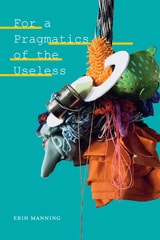
For a Pragmatics of the Useless
Erin Manning
Duke University Press, 2020
Form and Meaning in Language, Volume II
Papers on Discourse and PragmaticsCharles J. Fillmore
CSLI, 2020
Divided into four parts, the papers collected in Volume II explore language in use; semantics and pragmatics; text and discourse; and language in society.
Language and Social Relationship in Brazilian Portuguese
The Pragmatics of PolitenessBy Dale April Koike
University of Texas Press, 1992
"Give me the salt" and "Please pass the salt" make the same request, but in a polite situation the first utterance may give offense, while the second may not. How and why such differences in wording and intonation, in a particular context, produce different effects is the concern of pragmatics, the area of linguistics that deals with how speech is used in interaction. In this innovative study of pragmatics in Brazilian Portuguese, Dale Koike analyzes the politeness phenomenon, specifically in the context of speech acts known as "directives."
As acts intended to get someone to do something, directives bring into play a variety of sociocultural factors, depending on the relationship between the participants. Using empirical data obtained through natural language observation and from questionnaires of over one hundred adult native speakers, Koike identifies factors—such as age, education, and gender—that influence the strategies of politeness a given speaker is likely to use in making a directive. This research clarifies the unwritten language rules and assumptions that native speakers intuitively follow in phrasing their directive utterances.
Koike also includes important material on the acquisition of strategies for politeness by children and adult second-language learners, as well as on gender differences in politeness forms. Her research proposes important additions to the theory of speech acts as conceived by Austin and Searle, particularly in the application of deictic organization to account for a hierarchy of pragmatic forms.
Language and Social Relationship in Brazilian Portuguese will be of interest to a wide audience in diverse fields, including linguistics, anthropology, interaction analysis, communications, semantics, sociology, psychology, and education.
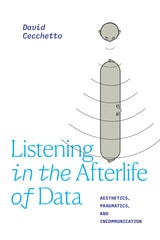
Listening in the Afterlife of Data
Aesthetics, Pragmatics, and IncommunicationDavid Cecchetto
Duke University Press, 2022
Optimal Communication
Edited by Reinhard Blutner, Helen de Hoop and Petra Hendriks
CSLI, 2005

Pragmatic Theory of Rhetoric
Walter H. Beale
Southern Illinois University Press, 1987
Walter H. Beale offersthe most coherent treatment of the aims and modes of discourse to be presented in more than a decade. His development of a semiotic “grammar of motives” that relates the problems of meaning in discourse both to linguistic structure and ways of constructing reality stands as a provocative new theory of rhetoric sharply focused on writing.
He includes a comprehensive treatment of rhetoric, its classes and varieties, modes, and strategies. In addition, he demonstrates the importance of the purpose, substance, and social context of discourse, at a time when scholarly attention has become preoccupied with process. He fortifies and extends the Aristotelian approach to rhetoric and discourse at a time when much theory and pedagogy have yielded to modernist assumptions and methods. And finally, he develops a theoretical framework that illuminates the relationship between rhetoric, the language arts, and the human sciences in general.
Pragmatics of Democracy
A Political Theory of African American Literature Before EmancipationDouglas A. Jones
University of Chicago Press, 2025
Douglas A. Jones’s Pragmatics of Democracy reads African American literature, from its beginnings through the mid-nineteenth century, to theorize how we have come to regard democracy as the most excellent form of political life. Jones notes that the aims of democracy, especially consent of the governed and equality under the law, can seem like tenets of governance that humans desire instinctively. But human nature does not correlate absolutely to politics. Jones argues that political selfhood is formed by “bodily events.” He proposes a typology of such experiences that dispose persons toward democratic subjectivity: ecstasy, impersonality, violence, respectability, and care.
African American literature before Emancipation reveals the democratic features of these categories that conventional political philosophy ignores or obscures. Given their lives as enslaved persons or the descendants of enslaved persons, early black writers crafted narratives about achieving democratic subjectivity that were missing in other Anglo-American canons. Pragmatics of Democracy discusses the works of well-known figures such as Phillis Wheatley, Harriet E. Wilson, and Frederick Douglass as well as those of more neglected writers such as Richard Allen, Peter Paul Simmons, James McCune Smith, and Frank J. Webb.
Someone
The Pragmatics of Misfit Sexualities, from Colette to Hervé GuibertMichael Lucey
University of Chicago Press, 2019
In Someone, Michael Lucey considers characters from twentieth-century French literary texts whose sexual forms prove difficult to conceptualize or represent. The characters expressing these “misfit” sexualities gravitate towards same-sex encounters. Yet they differ in subtle but crucial ways from mainstream gay or lesbian identities—whether because of a discordance between gender identity and sexuality, practices specific to a certain place and time, or the fleetingness or non-exclusivity of desire. Investigating works by Simone de Beauvoir, Colette, Jean Genet, and others, Lucey probes both the range of same-sex sexual forms in twentieth-century France and the innovative literary language authors have used to explore these evanescent forms.
As a portrait of fragile sexualities that involve awkward and delicate maneuvers and modes of articulation, Someone reveals just how messy the ways in which we experience and perceive sexuality remain, even to ourselves.
The Semantics/Pragmatics Distinction
Edited by Claudia Bianchi
CSLI, 2005
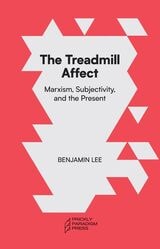
The Treadmill Affect
Marxism, Subjectivity, and the PresentBenjamin Lee
Prickly Paradigm Press, 2025
The Treadmill Affect draws upon the work of three University of Chicago professors, each a former program director at the Center for Transcultural Studies: literary and cultural critic Lauren Berlant, historian and social theorist Moishe Postone, and linguist Michael Silverstein. Through this intellectual synthesis, Benjamin Lee demonstrates the critical possibilities of uniting a revived linguistic turn with Marxist accounts of affect and subjectivity, adding new dimensions to the "treadmill" affective structure of cruel optimism.

Three Demonstrations and a Funeral and Other Essays
Maria de Ponte, Kepa Korta, and John Perry
CSLI, 2024
The result of the collaboration between three distinguished philosophers, this book comprises the best sample of one of the most original theories in contemporary philosophy of language and communication—Critical Pragmatics. They present the development of the theory from its initial sprout, with “Three Demonstrations and a Funeral” (2006) as its first visible result, to a critical clarification of its tenets in “Critical Pragmatics: Nine Misconceptions” (2023). After Korta and Perry’s Critical Pragmatics (2011), this is the most important book on Critical Pragmatics, as it was conceived, developed and applied by its creators. Having de Ponte, Korta and Perry’s most important papers together on one place will be of great value to both philosophers and linguists.
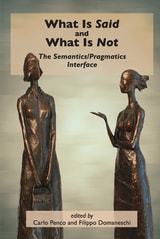
What Is Said and What Is Not
The Semantics/Pragmatics InterfaceEdited by Carlo Penco and Filippo Domaneschi
CSLI, 2013
Words and the Grammar of Context
Paul Kay
CSLI, 1997