Results by title
225 books match the query 'Modernism' and 28 start with m
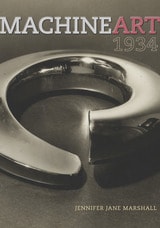
Machine Art, 1934
Jennifer Jane Marshall
University of Chicago Press, 2012
In 1934, New York’s Museum of Modern Art staged a major exhibition of ball bearings, airplane propellers, pots and pans, cocktail tumblers, petri dishes, protractors, and other machine parts and products. The exhibition, titled Machine Art, explored these ordinary objects as works of modern art, teaching museumgoers about the nature of beauty and value in the era of mass production.
Made in Newark
Cultivating Industrial Arts and Civic Identity in the Progressive EraShales, Ezra
Rutgers University Press, 2010
This is the story of experimental exhibitions in the library and the founding of the Newark Museum Associationùa project in which cultural literacy was intertwined with civics and consumption. Local artisans demonstrated crafts, connecting the cultural institution to the department store, school, and factory, all of which invoked the ideal of municipal patriotism. Today, as cultural institutions reappraise their relevance, Made in Newark explores precedents for contemporary debates over the ways the library and museum engage communities, define heritage in a multicultural era, and add value to the economy.
Making Modern Japanese-Style Painting
Kano Hogai and the Search for ImagesChelsea Foxwell
University of Chicago Press, 2015
Chelsea Foxwell sheds light on interlinked trends in Japanese nationalist discourse, government art policy, American and European commentary on Japanese art, and the demands of export. The seminal artist Kano Hogai (1828–88) is one telling example: originally a painter for the shogun, his art eventually evolved into novel, eerie images meant to satisfy both Japanese and Western audiences. Rather than simply absorbing Western approaches, nihonga as practiced by Hogai and others broke with pre-Meiji painting even as it worked to neutralize the rupture.
By arguing that fundamental changes to audience expectations led to the emergence of nihonga—a traditional interpretation of Japanese art for a contemporary, international market—Making Modern Japanese-Style Painting offers a fresh look at an important aspect of Japan’s development into a modern nation.
Making the Past Present
David Jones, the Middle Ages and ModernismPaul Robichaud
Catholic University of America Press, 2007
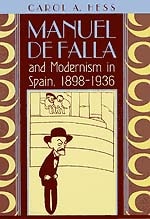
Manuel de Falla and Modernism in Spain, 1898-1936
Carol A. Hess
University of Chicago Press, 2001
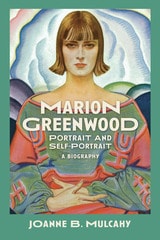
Marion Greenwood
Portrait and Self-Portrait—A BiographyJoanne B. Mulcahy
University of Alabama Press, 2025
This new biography reveals Marion Greenwood's central place in the pantheon of history’s remarkable women artists.
Marion Greenwood: Portrait and Self-Portrait—A Biography brings to life a woman who blazed through the twentieth-century art world. Born in Brooklyn in 1909, Greenwood thrived at storied institutions and arts centers such as the Art Students League, the studio of German modernist Winold Reiss, the Woodstock Colony, and Yaddo. In 1933, she catapulted to international fame as the first woman to paint a public mural in Mexico. Diego Rivera celebrated Greenwood as one of “the world’s greatest living women mural painters.” She traveled the globe to create award-winning portraits of people from diverse backgrounds, crossing racial, cultural, and class lines to reflect her vision for a more just world.
This biography, the first about Greenwood, is based on a decade of research and interviews. Author Joanne B. Mulcahy integrates the artist’s adventuresome personal life with her journey to artistic glory. Greenwood comes alive as a notable and spirited part of the heady art scenes of 1920s and 1930s Mexico, New York City, and Paris, and as one of two women artist-correspondents during World War II. After social realism and portraiture fell from favor, Greenwood doggedly stuck with what she called “the human thing” in art. Her freewheeling romantic life and independent spirit defied expectations for women, and she dismissed sexist critics who mixed acclaim for her work with commentary on her stunning beauty.
A feminist pioneer, Greenwood made a living as an artist in a time when few women could. In following Greenwood’s maverick path and artistic achievements, this book reveals her central place in the pantheon of history’s remarkable women artists.
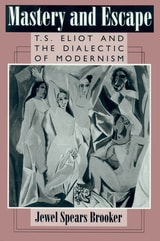
Mastery and Escape
T. S. Eliot and the Dialectic of ModernismJewel Spears Brooker
University of Massachusetts Press, 1994
This seminal scholarly work examines T. S. Eliot's literary development and philosophical outlook through the lens of modernist dialectics, exploring the tension between mastery and escape as central to understanding both his poetry and critical thought. Edited and written by acclaimed Eliot scholar Jewel Spears Brooker, this volume presents expert studies of key intellectual influences on Eliot's modernism—particularly Stéphane Mallarmé, Sir James George Frazer, F. H. Bradley, and T. E. Hulme—yielding fresh and original insights into how these thinkers shaped the poet's artistic vision.
Through careful textual analysis and intellectual history, Brooker investigates how Eliot grappled with fundamental modernist anxieties: the desire for artistic mastery and transcendence alongside the simultaneous impulse toward escape from the constraints of tradition, rationality, and conventional form. She demonstrates how Eliot's poetry and prose reflect a dialectical movement, a constant interplay between opposing forces, that defines both his modernist aesthetics and his philosophical positions.
An essential resource for scholars seeking comprehensive understanding of modernism's philosophical foundations and poetic achievements, Brooker is devoted to tracing both dialectical movements and biographical developments in Eliot's career.
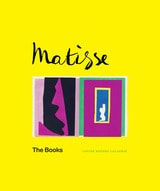
Matisse
The BooksLouise Rogers Lalaurie
University of Chicago Press, 2020
With deftness and sensitivity, Louise Rogers Lalaurie reintroduces us to Matisse by considering how in each volume, Matisse constructed an intriguing dialogue between word and image. Examining this page-by-page interplay, translating key sequences, and discussing the books’ distinct themes and production histories, Lalaurie offers the thoughtful analysis these works deserve. Together Matisse’s artist books reveal his deep engagement with questions of beauty and truth; his faith; his perspectives on aging, loss, and inspiration; and his relationship to his critics, the French art establishment, and the women in his life. In addition, Lalaurie illuminates Matisse’s often misunderstood political affinities—though Matisse was vilified in his time for choosing to live in the collaborationist Vichy zone, his wartime books reveal a body of work that stands as a deeply personal statement of resistance.
Lavishly illustrated, Matisse: The Books showcases a rich group of underappreciated works and brings unprecedented clarity to a controversial period in the artist’s life.
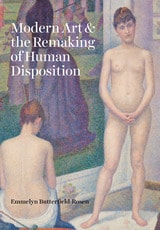
Modern Art and the Remaking of Human Disposition
Emmelyn Butterfield-Rosen
University of Chicago Press, 2021
With this book, Emmelyn Butterfield-Rosen brings a new formal and conceptual rubric to the study of turn-of-the-century modernism, transforming our understanding of the era’s canonical works. Butterfield-Rosen analyzes a hitherto unexamined formal phenomenon in European art: how artists departed from conventions for posing the human figure that had long been standard. In the decades around 1900, artists working in different countries and across different media began to present human figures in strictly frontal, lateral, and dorsal postures. The effect, both archaic and modern, broke with the centuries-old tradition of rendering bodies in torsion, with poses designed to simulate the human being’s physical volume and capacity for autonomous thought and movement. This formal departure destabilized prevailing visual codes for signifying the existence of the inner life of the human subject.
Exploring major works by Georges Seurat, Gustav Klimt, and the dancer and choreographer Vaslav Nijinsky— replete with new archival discoveries—Modern Art and the Remaking of Human Disposition combines intensive formal analysis with inquiries into the history of psychology and evolutionary biology. In doing so, it shows how modern understandings of human consciousness and the relation of mind to body were materialized in art through a new vocabulary of postures and poses.
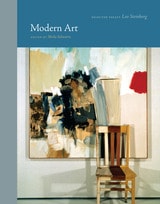
Modern Art
Selected EssaysLeo Steinberg
University of Chicago Press, 2023
Leo Steinberg was one of the most original art historians of the twentieth century, known for taking interpretive risks that challenged the profession by overturning reigning orthodoxies. In essays and lectures ranging from old masters to modern art, he combined scholarly erudition with eloquent prose that illuminated his subject and a credo that privileged the visual evidence of the image over the literature written about it. His writings, sometimes provocative and controversial, remain vital and influential reading. Steinberg’s perceptions evolved from long, hard looking at his objects of study. Almost everything he wrote included passages of formal analysis that were always put into the service of interpretation.
Following the series publication on Pablo Picasso, this volume focuses on other modern artists, including Cézanne, Monet, Matisse, Max Ernst, Jasper Johns, Robert Rauschenberg, Roy Lichtenstein, Hans Haacke, and Jeff Koons. Included are seven unpublished lectures and essays, Steinberg’s landmark essay “Encounters with Rauschenberg,” a survey of twentieth-century sculpture, and an examination of the role of authorial predilections in critical writing. The final chapter presents a collection of Steinberg’s humorous pieces, witty forays penned for his own amusement.
Modern Art is the fifth and final volume in a series that presents Steinberg’s writings, selected and edited by his longtime associate Sheila Schwartz.
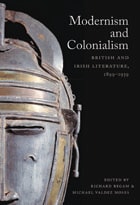
Modernism and Colonialism
British and Irish Literature, 1899–1939Richard Begam and Michael Valdez Moses, eds.
Duke University Press, 2007
Ranging over poetry, fiction, and criticism, the essays provide fresh appraisals of Joseph Conrad, T. S. Eliot, Ezra Pound, Virginia Woolf, D. H. Lawrence, Wyndham Lewis, E. M. Forster, W. B. Yeats, James Joyce, Elizabeth Bowen, Hugh MacDiarmid, and Evelyn Waugh, as well as Robert Louis Stevenson and H. Rider Haggard. The essays that bookend the collection connect the modernists to their Victorian precursors, to postwar literary critics, and to postcolonial poets. The rest treat major works written or published between 1899 and 1939, the boom years of literary modernism and the period during which the British empire reached its greatest geographic expanse. Among the essays are explorations of how primitivism figured in the fiction of Lawrence and Lewis; how, in Ulysses, Joyce used modernist techniques toward anticolonial ends; and how British imperialism inspired Conrad, Woolf, and Eliot to seek new aesthetic forms appropriate to the sense of dislocation they associated with empire.
Contributors. Nicholas Allen, Rita Barnard, Richard Begam, Nicholas Daly, Maria DiBattista, Ian Duncan, Jed Esty, Andrzej Gąsiorek, Declan Kiberd, Brian May, Michael Valdez Moses, Jahan Ramazani, Vincent Sherry

Modernism and Hegemony
A Materialist Critique of Aesthetic AgenciesNeil LarsenForeword by Jaime Concha
University of Minnesota Press, 1990
Modernism and Hegemony was first published in 1990. Minnesota Archive Editions uses digital technology to make long-unavailable books once again accessible, and are published unaltered from the original University of Minnesota Press editions.
In Modernism and Hegemony, Neil Larsen exposes the underlying political narratives of modernist aesthetic theory and practice. Unlike earlier Marxist critics, Larsen insists that modernist ideology be approached as a "displaced politics" and not simply as an aesthetic phenomenon. In this view, modernism is broadly ideological project comprising not only the literary-artist canon but also a wide array of theoretical discourses from aesthetics to philosophy, culture, and politics. Larsen gives postmodernism some credit for the apparent breakup of modernism, and for exposing the philosophical and political nature of its aesthetic stance. But he parts company with its ideological and epistemological notions, proposing to change the terms, and thus the framework, of the debate.
For Larsen, modernism is intimately linked to a crisis of representation that affected all aspects of life in the late nineteenth century - a period when capitalism itself was undergoing transformation from its "classical" free market phase into a more abstract, monopolistic and imperialistic stage. Larsen finds the resultant loosening of ties between individuals and society - the breakdown of social and historical agency - behind the growth of modernism. He employs speculative cross-readings of key texts by Marx and Adorno, an examination of Manet's "The Execution of Maximilian," and an analysis of modernism in a Third World setting to explain why modernism made special claims upon the aesthetic, and how it ultimately ascribed historical agency to "works of art."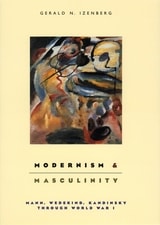
Modernism and Masculinity
Mann, Wedekind, Kandinsky through World War IGerald Izenberg
University of Chicago Press, 2000
But their critique of masculinity created enormous challenges: How could they appropriate a feminine aesthetic while retaining their own masculine idenitites? How did appropiating the feminine affect their personal relationships or their political views? Modernism and Masculinity seeks to answer these questions. In this absorbing combination of biography and formal critique, Izenberg reconsiders the works of Mann, Wedekind, Kandinsky and semonstrates how the cirses of masculinity they endure are found not just within the images and forms of their art, but in the distinct and very personal impulses that inspired it.
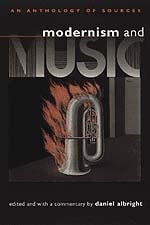
Modernism and Music
An Anthology of SourcesEdited and with Commentary by Daniel Albright
University of Chicago Press, 2004
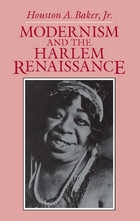
Modernism and the Harlem Renaissance
Houston A. Baker Jr.
University of Chicago Press, 1989
Modernism and the Nativist Resistance
Contemporary Chinese Fiction from TaiwanSung-sheng Yvonne Chang
Duke University Press, 1993
Situating her subject in its historical context, Sung-sheng Yvonne Chang traces the connection between Taiwan's Modernists and the liberal scholars of pre-Communist China. She discusses the Modernists' ambivalent relationship with contemporary Taiwan's conservative culture, and provides a detailed critical survey of the strife between the Modernists and the socialistically inclined, anti-Western Nativists. Chang's approach is comprehensive, combining Chinese and comparative perspectives. Employing the critical insights of Raymond Williams, Peter Burger, M. M. Bahktin, and Fredric Jameson, she investigates the complex issues involved in Chinese writers' appropriation of avant-gardism, aestheticism, and various other Western literary concepts and techniques. Within this framework, Chang offers original, challenging interpretations of major works by the best-known Chinese Modernists from Taiwan.
As an intensive introduction to a literature of considerable quality and impact, and as a case study of the global spread of Western literary Modernism, this book will be of great interest to students of Chinese and comparative literature, and to those who wish to understand the broad patterns of twentieth-century literary history.
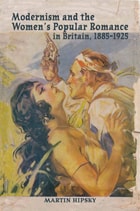
Modernism and the Women’s Popular Romance in Britain, 1885–1925
Martin Hipsky
Ohio University Press, 2011
Today’s mass-market romances have their precursors in late Victorian popular novels written by and for women. In Modernism and the Women’s Popular Romance Martin Hipsky scrutinizes some of the best-selling British fiction from the period 1885 to 1925, the era when romances, especially those by British women, were sold and read more widely than ever before or since.
Recent scholarship has explored the desires and anxieties addressed by both “low modern” and “high modernist” British culture in the decades straddling the turn of the twentieth century. In keeping with these new studies, Hipsky offers a nuanced portrait of an important phenomenon in the history of modern fiction. He puts popular romances by Mrs. Humphry Ward, Marie Corelli, the Baroness Orczy, Florence Barclay, Elinor Glyn, Victoria Cross, Ethel Dell, and E. M. Hull into direct relationship with the fiction of Virginia Woolf, Katherine Mansfield, James Joyce, and D. H. Lawrence, among other modernist greats.
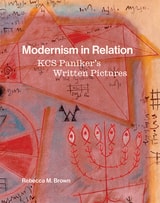
Modernism in Relation
KCS Paniker’s Written PicturesRebecca M. Brown
J. Paul Getty Trust, The, 0
This innovative book reimagines modernism through the illegible scribbles and vibrant colors of southern Indian artist KCS Paniker.
KCS Paniker (1911–1977) is a canonical figure in India’s twentieth-century modernism. He was principal of the Madras School of Art and founder of one of the world’s longest-standing artists’ communities. Yet, even within India, he remains a marginal figure, positioned at the periphery of a dominant art world centered in the north. Paniker’s best-known body of work, the Words and Symbols series (1963–77), calls on us to reconsider how knowledge is produced and disseminated in a postcolonial, decolonizing world. These “written pictures”—paintings filled with symbols, tables, equations, and illegible scribbles—invite decoding, only to undermine the pursuit of wholeness or stable meaning.
Paniker famously called Paul Klee his “guru.” In this book, art historian Rebecca M. Brown explores what that might mean, moving beyond tracing influence and derivation to embrace a fuller sense of artistic relation across geography and time. Featuring over 100 stunning illustrations, Modernism in Relation explores the dynamic, twisting currents of modernism, tracing how Paniker navigated its waters on his own terms—abandoning prescriptions for what modern art should be or what Indian modernism should look like. The book reveals a maker seeking new creative languages, challenging ways of knowing, and exploring the unpredictable, ever-changing nature of relation.
Modernism the Morning After
Bob Perelman
University of Alabama Press, 2017
Modernism the Morning After is a superb, lively, engaging series of essays and talks, dating from 1995 to 2016, by the eminent scholar, critic, and poet Bob Perelman. Throughout his career, Perelman has focused on the persistence of modernist ambition in poetry, with all of its admirable articulations and tragicomic short-circuits. Poetry, it turns out, is not simply “news that stays news,” as Ezra Pound postulated. Instead, as Perelman demonstrates, poetry often gropes toward whatever news can be found in the broader contexts of public speech—the cultural commons, the almost-real or much-too-real language of people and our hyperactive media.
Working in a variety of modes from the poetic to the dramatic to the conversational, and ranging across an expansive historical register from Dickinson, Whitman, and Dunbar in the nineteenth century to Kenneth Goldsmith and Stephen Colbert in the twenty-first, Perelman’s readings are unfailingly illuminating and, in many cases, his witty expositions take us strikingly close to the original intent of the text concerned.
Perelman also places intermittent, yet artful, pressure on some basic questions about the very nature of poetry. What does the transcription of poems tell us about them? How do hoaxes like the Ern Malley affair compel us to reconsider fundamental assumptions about what constitutes “authentic” poetry? How does the bathetic register relate to tones and idiom in recent poetic production? In Modernism the Morning After, Perelman writes as a poet, teacher, and critic, addressing a broad audience of readers and writers without choosing between them, inviting all to consider along with him modernism’s future through a dynamic consideration of its past.

Modernism, Catastrophe, Utopianism
Hal Foster
Prickly Paradigm Press, 2027
In this collection of essays, Hal Foster reflects on how modernism's utopian frameworks can be reactivated in the face of recent political challenges.
In both contemporary art and politics since COVID-19, the discourses of modernism and modernity have been challenged by unexpected developments. The convergences between left-wing indigeneity and right-wing nativism, and the political right's appropriation of transgression—long a strategy of the left—point to essential challenges of the modernist project. The five essays of Modernism, Catastrophe, Utopia reflects on such developments, seeking to parse the elements of modernist discourse that remain valid or can be repurposed, and those which must be jettisoned. Literary and cultural critic Hal Foster shows how the constructive, even utopian dimension of modernism might be remotivated in the face of ecological catastrophe, potentially liberating us from a melancholic fixation on our traumatic past.
Modernism
An Anthology of Sources and DocumentsEdited by Vassiliki Kolocotroni, Jane Goldman, and Olga Taxidou
University of Chicago Press, 1998
By favoring short extracts over lengthier originals, the editors cover a remarkable range and variety of modernist thinking. Included are not just the familiar high modernist landmarks such as Gustave Flaubert, Ezra Pound, and James Joyce, but also a diverse representation from the sciences, politics, philosophy, and the arts, including Charles Darwin, Thorstein Veblen, W. E. B. Du Bois, Isadora Duncan, John Reed, Adolf Hitler, and Sergei Eisenstein. Another welcome feature is a substantial selection of hard-to-find manifestos from the many modernist movements, among them futurism, cubism, Dada, surrealism, and anarchism.
Modernism
Representations of National CultureAhmet Ersoy
Central European University Press, 2010
Modernism
The Creation of Nation-StatesMichal Kopecek
Central European University Press, 2010
Money in the Air
Art Dealers and the Making of a Transatlantic Market, 1880–1930Gail Feigenbaum
J. Paul Getty Trust, The, 2024
“There was money in the air, ever so much money,” wrote Henry James in 1907, reflecting on the American appetite for art acquisitions. Indeed, collectors such as Henry Clay Frick and Andrew W. Mellon are credited with bringing noteworthy European art to the United States, with their collections forming the backbone of major American museums today. But what of the dealers, who possessed the expertise in art and recognized the potential of developing a new market model on both sides of the Atlantic?
Money in the Air investigates the often-overlooked role of these dealers in creating an international art world. Contributors examine the histories of well-known international firms like Duveen Brothers, M. Knoedler & Co., and Goupil & Cie and their relationships with American clients, as well as accounts of other remarkable dealers active in the transatlantic art market. Drawing on dealer archives, scholars reveal compelling findings, including previously unknown partnerships and systems of cooperation. This volume offers new perspectives on the development of art collections that formed the core of American art museums, such as the National Gallery of Art, the Metropolitan Museum of Art, and the Frick Collection.
Monuments Askew
An Elliptical History of the Factory of the Eccentric ActorMaria Corrigan
Rutgers University Press, 2025
Movement and Modernism
Yeats, Eliot, Williams, and Early Twentieth-Century DanceTerri A. Mester
University of Arkansas Press, 1997
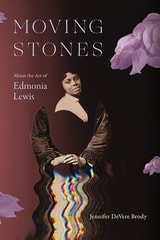
Moving Stones
About the Art of Edmonia LewisJennifer DeVere Brody
Duke University Press, 2026
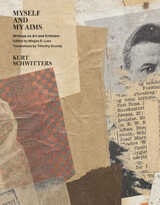
Myself and My Aims
Writings on Art and CriticismKurt Schwitters
University of Chicago Press, 2021
As the first anthology in English of the critical and theoretical writings of this influential artist, Myself and My Aims makes the case for Schwitters as one of the most creative thinkers of his generation. Including material that has never before been published, this volume presents the full range of his prolific writing on the art and attitudes of his time, joining existing translations of his children’s stories, poetry, and fiction to give new readers unprecedented access to his literary imagination. With an accessible introduction by Megan R. Luke and elegant English translations by Timothy Grundy, this book will prove an exceptional resource for artists, scholars, and enthusiasts of his art.