Results by title
99 books match the query 'Muslims' and 22 start with m
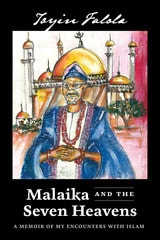
Malaika and the Seven Heavens
A Memoir of My Encounters with IslamToyin Falola
University of Michigan Press, 2025
Although faith is a lifelong journey, Falola identifies key moments in his upbringing that shaped his perception of faith, such as observing Islamic prayers, witnessing the significance of pilgrimage, engaging with spiritual leaders, and interacting with both Muslims and non-Muslims. By blending personal observations and reflections with the broader historical and cultural contexts of Islam, the book provides a unique perspective on the lived experiences of Muslims. In addition, Falola’s comparative perspective on the interaction of Christianity, Islam, and African Traditional Religion illustrates how these faiths influence and coexist with one another. Chapters explore firsthand experiences at madrassas, Islamic education, the influence of Islamic music on Yoruba culture, the historical importance of places like Oja Oba in Ibadan, the role of women in Islam, the intersection of traditional medicine with Islamic healing practices, and the broader social and political implications of Islam in Nigerian cities such as Ilorin and Lagos. Ultimately, Malaika and the Seven Heavens aims to foster a deeper appreciation for our shared humanity, inspire meaningful conversations that bridge cultural divides, and enrich our collective knowledge.
Managing Ethnic Diversity after 9/11
Integration, Security, and Civil Liberties in Transatlantic PerspectiveChebel d'Appollonia, Ariane
Rutgers University Press, 2010
Managing Ethnic Diversity after 9/11 compares these two strategies and considers that both may have engendered greater radicalization--and a greater chance of home-grown terrorism. Essays address how transatlantic countries, including the United Kingdom, the United States, France, Germany, Spain, Italy, and the Netherlands have integrated ethnic minorities, especially Arabs and Muslims, since 9/11. Discussing the "securitization of integration," contributors argue that the neglect of civil integration has challenged the rights of these minorities and has made greater security more remote.
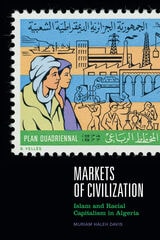
Markets of Civilization
Islam and Racial Capitalism in AlgeriaMuriam Haleh Davis
Duke University Press, 2022
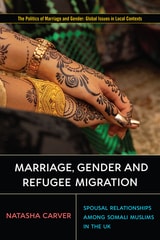
Marriage, Gender and Refugee Migration
Spousal Relationships among Somali Muslims in the United KingdomNatasha Carver
Rutgers University Press, 2021
This ethical and poetic ethnography analyses the upheavals to gender roles and marital relationships brought about by Somali refugee migration to the UK. Unmoored from the socio-cultural norms that made them men and women, being a refugee is described as making "everything" feel "different, mixed up, upside down." Marriage, Gender and Refugee Migration details how Somali gendered identities are contested, negotiated, and (re)produced within a framework of religious and politico-national discourses, finding that the most significant catalysts for challenging and changing harmful gender practices are a combination of the welfare system and Islamic praxis. Described as “an important and urgent monograph," this book will be a key text relevant to scholars of migration, transnational families, personal life, and gender. Written in a beautiful and accessible style, the book voices the participants with respect and compassion, and is also recommended for scholars of qualitative social research methods.
Medina by the Bay
Scenes of Muslim Study and SurvivalMaryam Kashani
Duke University Press, 2023
Money Has No Smell
The Africanization of New York CityPaul Stoller
University of Chicago Press, 2002
Blending fascinating ethnographic description with incisive social analysis, Stoller shows how these savvy West African entrepreneurs have built cohesive and effective multinational trading networks, in part through selling a simulated Africa to African Americans. These and other networks set up by the traders, along with their faith as devout Muslims, help them cope with the formidable state regulations and personal challenges they face in America. As Stoller demonstrates, the stories of these West African traders illustrate and illuminate ongoing debates about globalization, the informal economy, and the changing nature of American communities.
Mosques in the Metropolis
Incivility, Caste, and Contention in EuropeElisabeth Becker
University of Chicago Press, 2021
Muhammad in the Digital Age
Edited by Ruqayya Yasmine Khan, foreword by Randall Nadeau
University of Texas Press, 2015
The early twenty-first century has experienced an unrivaled dissemination of information and misinformation about Islam, its prophet Muhammad, and its followers, largely facilitated by the fact that the tragedy of 9/11 roughly coincided with the advent of the digital age. In the first collection of its kind, Ruqayya Khan has compiled essays that treat Muhammad and the core elements of Islam as focal points in an exploration of how the digital era—including social media and other expressions—have both had an effect on and been affected by Islam.
Scholars from a variety of fields deal with topics such as the 2005 cartoon controversy in Denmark and the infamous 2012 movie trailer “Innocence of Muslims” that some believe sparked the attacks on the US consulate in Benghazi, as well as how the digitization of ancient texts have allowed the origins of Islam to be studied in new ways. Other essays examine how Muhammad’s wives have been represented in various online sources, including a web comic; the contrasting depictions of Muhammad as both a warrior and peacemaker; and how the widespread distribution of “the look” of Islamic terrorists has led to attacks on Sikhs, whose only point of resemblance to them may be a full beard. These findings illuminate the role of the Internet in forms of representation, advocacy, and engagement concerning Islam and Muslims in our world today.
Multicultural Politics
Racism, Ethnicity, and Muslims in BritainTariq Modood
University of Minnesota Press, 2005
Muslim Becoming
Aspiration and Skepticism in PakistanNaveeda Khan
Duke University Press, 2012
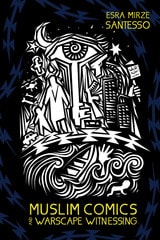
Muslim Comics and Warscape Witnessing
Esra Mirze Santesso
The Ohio State University Press, 2023

Muslim Communities Reemerge
Historical Perspectives on Nationality, Politics, and Opposition in the Former Soviet Union and YugoslaviaAndreas Kappeler, Gerhard Simon, and Georg Brunner, eds.
Duke University Press, 1994
In fourteen chapters and an updated introduction, European and North American specialists examine the recent evolution of Islamic expression and practice in these former Communist regions, as well as its political significance within officially atheistic regimes. Representing a wide range of disciplines and perspectives, the authors detail how the modern ethno-religious situation developed and matured in hostile circumstances, the degree of latitude the local Muslims achieved in religious expression, and what prospect the future seemed to offer just before the breakup of the Soviet Union and the Federal Republic of Yugoslavia. Overall, the book provides a thorough analysis of the coincidence and tension between ethnic and religious identity in two countries officially devoted to the separation of ethnic groups in domestic cultural arrangements but not in the social or political realm.
Contributors. Edward Allworth, Hans Bräker, Marie Broxup, Georg Brunner, Bert G. Fragner, Uwe Halbach, Wolfgang Höpken, Andreas Kappeler, Edward J. Lazzerini, Richard Lorenz, Alexandre Popovi´c, Sabrina Petra Ramet, Azade-Ayse Rorlich, Gerhard Simon, Tadeusz Swietochowski
Muslim Land, Christian Labor
Transforming Ottoman Imperial Subjects into Bulgarian National Citizens, c. 1878-1939Anna M. Mirkova
Central European University Press, 2017
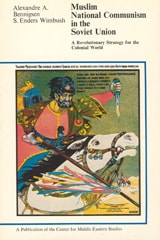
Muslim National Communism in the Soviet Union
A Revolutionary Strategy for the Colonial WorldAlexandre A. Bennigsen and S. Enders Wimbush
University of Chicago Press, 1978
The authors show that the ideas of Muslim national communism persist in the land of their birth and have spread to such developing societies as China, Algeria, and Indonesia. This doctrine is an important factor in the ideological split and increasing tensions between industrial and nonindustrial nations, East and West, and now North and South, which grip the world communist movement.
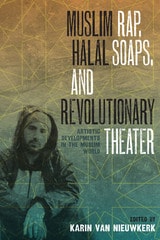
Muslim Rap, Halal Soaps, and Revolutionary Theater
Artistic Developments in the Muslim WorldEdited by Karin van Nieuwkerk
University of Texas Press, 2011
From "green" pop and "clean" cinema to halal songs, Islamic soaps, Muslim rap, Islamist fantasy serials, and Suficized music, the performing arts have become popular and potent avenues for Islamic piety movements, politically engaged Islamists, Islamic states, and moderate believers to propagate their religio-ethical beliefs. Muslim Rap, Halal Soaps, and Revolutionary Theater is the first book that explores this vital intersection between artistic production and Islamic discourse in the Muslim world.
The contributors to this volume investigate the historical and structural conditions that impede or facilitate the emergence of a "post-Islamist" cultural sphere. They discuss the development of religious sensibilities among audiences, which increasingly include the well-to-do and the educated young, as well as the emergence of a local and global religious market. At the heart of these essays is an examination of the intersection between cultural politics, performing art, and religion, addressing such questions as where, how, and why pop culture and performing arts have been turned into a religious mission, and whether it is possible to develop a new Islamic aesthetic that is balanced with religious sensibilities. As we read about young Muslims and their quest for a "cool Islam" in music, their struggle to quell their stigmatized status, or the collision of morals and the marketplace in the arts, a vivid, varied new perspective on Muslim culture emerges.
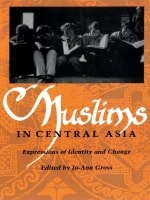
Muslims in Central Asia
Expressions of Identity and ChangeJo-Ann Gross, ed.
Duke University Press, 1992
This study includes several geopolitical regions—Chinese Central Asia, Soviet Central Asia, Afghanistan, Transoxiana and Khurasan—and covers historical periods from the fifteenth century to the present. Drawing on scholarship in anthropology, religion, history, literature, and language studies, Muslims in Central Asia argues for an interdisciplinary, inter-regional dialog in the development of new approaches to understanding the Muslim societies in Central Asia. The authors creatively examine the social construction of identities as expressed through literature, Islamic discourse, historical texts, ethnic labels, and genealogies, and explore how such identities are formed, changed, and adopted through time.
Contributors. Hamid Algar, Muriel Atkin, Walter Feldman, Dru C. Gladney, Edward J. Lazzerini, Beatrice Forbes Manz, Christopher Murphy, Oliver Roy, Isenbike Togan
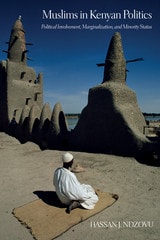
Muslims in Kenyan Politics
Political Involvement, Marginalization, and Minority StatusHassan J. Ndzovu
Northwestern University Press, 2014
Kenya’s Muslim population comprises ethnic Arabs, Indians, and black Africans, and its status has varied historically. Under British rule, an imposed racial hierarchy affected Muslims particularly, thwarting the development of a united political voice. Drawing on a broad range of interviews and historical research, Ndzovu presents a nuanced picture of political associations during the postcolonial period and explores the role of Kenyan Muslims as political actors.
Muslims in Motion
Islam and National Identity in the Bangladeshi DiasporaKibria, Nazli
Rutgers University Press, 2011
In Muslims in Motion, Nazli Kibria provides a comparative look at Bangladeshi Muslims in different global contexts--including Britain, the U.S., the Middle East, and Malaysia. Kibria examines international migrant flows from Bangladesh, and considers how such migrations continue to shape Islamization in these areas. Having conducted more than 200 in-depth interviews, she explores how, in societies as different as these, migrant Muslims, in their everyday lives, strive to achieve economic gains, sustain community and family life, and realize a sense of dignity and honor.
Muslims in Motion offers fresh insights into the prominence of Islam in these communities, especially an Islam defined by fundamentalist movements and ideologies. Kibria also focuses on the complex significance of nationality--with rich analyses of the diaspora, the role of gender and class, and the multiple identities of the migrants, she shows how nationality can be both a critical source of support and also of difficulty for many in their efforts to attain lives of dignity. By bringing to life a vast range of experiences, this book challenges prevailing stereotypes of Muslims.
Muslims in Spain, 1500 to 1614
L. P. Harvey
University of Chicago Press, 2005
Picking up at the end of his earlier classic study, Islamic Spain, 1250 to 1500— which described the courageous efforts of the followers of Islam to preserve their secular, as well as sacred, culture in late medieval Spain—L. P. Harvey chronicles here the struggles of the Moriscos. These forced converts to Christianity lived clandestinely in the sixteenth century as Muslims, communicating in aljamiado— Spanish written in Arabic characters. More broadly, Muslims in Spain, 1500 to 1614, tells the story of an early modern nation struggling to deal with diversity and multiculturalism while torn by the fanaticism of the Counter-Reformation on one side and the threat of Ottoman expansion on the other. Harvey recounts how a century of tolerance degenerated into a vicious cycle of repression and rebellion until the final expulsion in 1614 of all Muslims from the Iberian Peninsula.
Retold in all its complexity and poignancy, this tale of religious intolerance, political maneuvering, and ethnic cleansing resonates with many modern concerns. Eagerly awaited by Islamist and Hispanist scholars since Harvey's first volume appeared in 1990, Muslims in Spain, 1500 to 1614, will be compulsory reading for student and specialist alike.
Muslims in a Post-9/11 America
A Survey of Attitudes and Beliefs and Their Implications for U.S. National Security PolicyRachel M. Gillum
University of Michigan Press, 2018
Muslims in a Post-9/11 America examines how public fears about Muslims in the United States compare with the reality of American Muslims’ attitudes on a range of relevant issues. While most research on Muslim Americans focuses on Arab Muslims, a quarter of the Muslim American population, Rachel Gillum includes perspectives of Muslims from various ethnic and national communities—from African Americans to those of Pakistani, Iranian, or Eastern European descent. Using interviews and one of the largest nationwide surveys of Muslim Americans to date, Gillum examines more than three generations of Muslim American immigrants to assess how segments of the Muslim American community are integrating into the U.S. social fabric, and how they respond to post-9/11 policy changes. Gillum’s findings challenge perceptions of Muslims as a homogeneous, isolated, un-American, and potentially violent segment of the U.S. population.
Despite these realities, negative political rhetoric around Muslim Americans persists. The findings suggest that the policies designed to keep America safe from terrorist attacks may have eroded one of law enforcement’s greatest assets in the fight against violent extremism—a relationship of trust and goodwill between the Muslim American community and the U.S. government. Gillum argues for policies and law enforcement tactics that will bring nuanced understandings of this diverse category of Americans and build trust, rather than alienate Muslim communities.
Muslims in the United States
The State of ResearchKaren Isaksen Leonard
Russell Sage Foundation, 2003
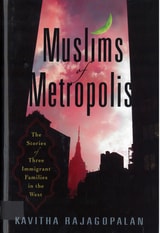
Muslims of Metropolis
The Stories of Three Immigrant Families in the WestRajagopalan, Kavitha
Rutgers University Press, 2008
The Muslim population globally is comprised of hundreds of ethnic, linguistic, and religious sub-communities. Yet, more often than not, the public conflates these diverse and unrelated communities, branding Muslim immigrants as a single, suspicious, and culturally antagonistic group of people. Generalizations like these have compromised many Muslim immigrants' sense of belonging and acceptance in places where they have lived, in some cases, for three or four generations.
In Muslims of Metropolis, Kavitha Rajagopalan takes a much needed step in personalizing and humanizing our understanding of the Muslim diaspora. Tracing the stories of three very different families-a Palestinian family moving to London, a Kurdish family moving to Berlin, and a Bangladeshi family moving to New York-she reveals a level of complexity and nuance that is seldom considered. Through their voices and in their words, Rajagopalan describes what prompted these families to leave home, what challenges they faced in adjusting to their new lives, and how they came to view their place in society. Interviews with community leaders, social justice organizations, and with academics and political experts in each of the countries add additional layers of insight to how broad political issues, like nationalist conflict, immigration reform, and antiterrorism strategies affect the lives of Muslims who have migrated in search of economic stability and personal happiness.
Although recent thinking about immigration policy in the United States and Europe emphasizes the importance of long-term integration, a global attitude that continues to sensationalize divisions between Muslim and other communities thwarts this possibility. Integration cannot occur with policy solutions alone-people must feel that they belong to a larger society. Whether read as simple stories or broader narratives, the voices in this revealing book are among the many speaking against generalization, prejudice, and fear that has so far surrounded Muslims living in the West.