Results by title
209 books match the query 'Mystery & Detective' and 8 start with m

Ministers of Fire
A NovelMark Harril Saunders
Ohio University Press, 2012
Kabul, Afghanistan, 1979: CIA station chief Lucius Burling, an idealistic but flawed product of his nation’s intelligence establishment, barely survives the assassination of the American ambassador. Burling’s reaction to the murder, and his desire to understand its larger meaning, propel him on a journey of intrigue and betrayal that will reach its ultimate end in the streets of Shanghai, months after 9/11. A Chinese dissident physicist may (or may not) be planning to sell his country’s nuclear secrets, and in his story Burling, now living quietly as consul, recognizes the fingerprints of a covert operation, one without the obvious sanction of the Agency. The dissident’s escape draws the violent attention of the Chinese internal security service, and as Burling is drawn inexorably into their path, he must face the ghosts of his past misadventures and a present world of global trafficking, fragile alliances, and the human need for connection above all.
Reminiscent of the best work of Graham Greene and John le Carré, Ministers of Fire extends the spy thriller into new historical, political, and emotional territory.

More Tales of the Defective Detective in the Pulps
Gary Hoppenstand, Garyn G. Roberts, and Ray B. Browne
University of Wisconsin Press, 1985

Murder Most Modern
Detective Fiction and Japanese CultureSari Kawana
University of Minnesota Press, 2008
The quintessential international genre, detective fiction often works under the guise of popular entertainment to expose its extensive readership to complex moral questions and timely ethical dilemmas. The first book-length study of interwar Japanese detective fiction, Murder Most Modern considers the important role of detective fiction in defining the country’s emergence as a modern nation-state.
Kawana explores the interactions between the popular genre and broader discourses of modernity, nation, and ethics that circulated at this pivotal moment in Japanese history. The author contrasts Japanese works by Edogawa Ranpo, Unno Juza, Oguri Mushitaro, and others with English-language works by Edgar Allan Poe, Dashiell Hammett, and Agatha Christie to show how Japanese writers of detective fiction used the genre to disseminate their ideas on some of the most startling aspects of modern life: the growth of urbanization, the protection and violation of privacy, the criminalization of abnormal sexuality, the dehumanization of scientific research, and the horrors of total war.
Kawana’s comparative approach reveals how Japanese authors of the genre emphasized the vital social issues that captured the attention of thrill-seeking readers-while eluding the eyes of government censors.
Sari Kawana is assistant professor of Japanese at the University of Massachusetts, Boston.

Murder in Ancient China
Two Judge Dee MysteriesRobert van Gulik
University of Chicago Press, 2013
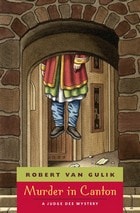
Murder in Canton
A Judge Dee MysteryRobert van Gulik
University of Chicago Press, 1966
Murder in Canton takes place in the year 680, as Judge Dee, recently promoted to lord chief justice, is sent incognito to Canton to investigate the disappearance of a court censor. With the help of his trusted lieutenants Chiao Tai and Tao Gan, and that of a clever blind girl who collects crickets, Dee solves a complex puzzle of political intrigue and murder through the three separate subplots "the vanished censor," "the Smaragdine dancer," and "the Golden Bell."
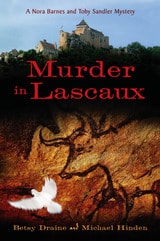
Murder in Lascaux
Betsy Draine and Michael Hinden
University of Wisconsin Press, 2014
The cave of Lascaux may be closed to the public, but five scholars a day are allowed inside, and Nora Barnes has finagled an appointment. True, she may have fudged a bit in her letter to the authorities, but she does teach art history, and she isn’t about to miss her chance to see the world’s most famous prehistoric paintings. Nora and her high-spirited husband, Toby, are visiting the Dordogne, in the southern French region of the Aquitaine. Aware that the Dordogne’s renown for cave art is matched only by its reputation for delicious cuisine, the couple has also signed up for a cooking class at a nearby château, but they soon find that more than food is on their minds.
During their tour of the cave, another visitor is murdered. When the local inspector pegs Nora and Toby as suspects, they embark on a mission to solve the crime, tracing strange links between a Cro-Magnon symbol and a thirteenth-century religious cult. As they match wits with the crusty inspector, Nora finds herself immersed in the notebooks of a forgotten artist who once lived in the château. In sifting through the artist’s papers and uncovering old secrets, she begins to piece together the motives for the murder. But has she cooked up more trouble than she can handle?
Best Books for General Audiences, selected by the Public Library Reviewers
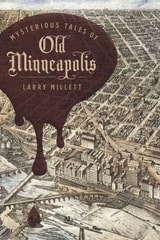
Mysterious Tales of Old Minneapolis
Larry Millett
University of Minnesota Press, 2025
Three novellas of murder and mystery in nineteenth-century Minneapolis
OWNER DIES UNDER STRANGE CIRCUMSTANCES AT MINNEAPOLIS MILL!
HOTEL BELLMAN FOUND DEAD IN OSCAR WILDE’S ROOM!
$10,000 REWARD FOR DISCOVERING MY MURDERER!
These headlines are just the beginning as Larry Millett returns to the scene of the crime in three tales of intrigue and murder in historic Minneapolis. The mind that brought us the intrepid Shadwell Rafferty now introduces three unlikely but talented new detectives—in-laws Sophia Westerly and Annie Nichols, and the incomparable Oscar Wilde—who are thrown into murder investigations amid flour milling, literary culture, and labor organizing in the burgeoning city.
Murder at the Falls takes us to the Perfection Flour Mill at St. Anthony Falls when one owner turns up dead under grotesque circumstances and suspicion lands on the other, plunging the city into a frenzy of dark speculation. In A Wilde Night at the Nicollet House, Oscar Wilde, in the midst of his 1882 North American tour and spouting witticisms as only he can, teams up with the long-time house detective at the Nicollet House Hotel to search for the murderer of the hotel bell captain found dead in his room. In The Death Committee, a champion lawyer of the working class, convinced his own murder is imminent, arranges for three citizens to investigate his death, with a $10,000 reward going to the one who finds the killer.
Shining light on the colorful characters and curious corners of Twin Cities history, Mysterious Tales of Old Minneapolis brings the nineteenth-century city to vibrant life (and dastardly death) in the spellbinding style that Larry Millett’s legion of loyal readers has come to love.
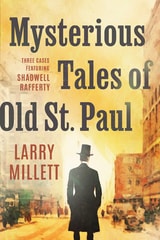
Mysterious Tales of Old St. Paul
Three Cases Featuring Shadwell RaffertyLarry Millett
University of Minnesota Press, 2024
Tales of murder and revenge: the early exploits of detective Shadwell Rafferty
Shadwell Rafferty’s last case may have led to his murder, but naturally—and fortunately, for followers of the indefatigable St. Paul detective—there’s more to the story. Mysterious Tales of Old St. Paul gathers three novellas from Larry Millett, casting back to Rafferty’s beginnings to recount a trio of intriguing cases that honed his skills before he joined forces with Sherlock Holmes.
In “Death in the News,” St. Paul citizens wake one morning to find that the sign on downtown’s tallest building that reads PIONEER PRESS has been altered—at considerable effort—to LIARS. An elaborate prank, yes, but it foreshadows a far worse crime, and Rafferty is on the case. In “The Birdman of Summit Avenue,” cats are turning up dead in the yards of St. Paul’s prominent citizens, and suspicion swiftly falls on the wealthy avian enthusiast Ambrose Harriman, but the case turns darker still when a neighborhood boy is found murdered in Harriman’s yard. In “The Gold King,” an enigmatic stranger arrives in town, calling himself the Gold King and announcing his plans to unearth hidden treasure, which eventually leads to a shocking conclusion.
Steeped in the mystery and history of nineteenth-century St. Paul, these interlocking detective stories feature the characters—and the local character—that have made the Shadwell Rafferty series irresistible. Spellbinding as ever, these stories also afford the curious pleasure of watching Rafferty find his footing on his way to becoming the consummate detective whose exploits have delighted readers again and again.