Results by title
2817 books match the query 'Nature' and 116 start with m
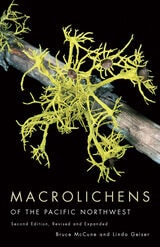
Macrolichens of the Pacific Northwest, Second Ed.
Bruce McCune
Oregon State University Press, 2009
A key component in healthy ecosystems, lichens can be found in almost any natural habitat in the Pacific Northwest. This comprehensive guide to the region’s macrolichens is intended for use by beginners as well as specialists: weekend naturalists will be able to identify specimens and recognize the great diversity of lichens, while lichenologists and mycologists will gain greater knowledge of the distribution and abundance of various species.
This revised and expanded edition of Macrolichens of the Pacific Northwest includes 116 new species and 176 additional illustrations and incorporates an understanding of macrolichens that has advanced tremendously in the past decade.
Macrolichens of the Pacific Northwest includes keys to 113 genera and 586 species of Oregon and Washington macrolichens—all the macrolichens known or expected to occur in the two states. The keys also provide reasonable coverage for lichens of Idaho and Montana, inland to the Continental Divide. Color photographs and detailed descriptions are provided for 246 species, emphasizing lichens prevalent in forested ecosystems.
The illustrated glossary and introductory material cover the terminology needed to identify macrolichens and provide information on collection and handling. The biology, ecology, and air-quality sensitivity of lichens are discussed; regional air-quality sensitivities are provided for 184 species.
Macrolichens of the Pacific Northwest will prove invaluable to anyone seeking to identify lichens or to better understand these organisms and their vital role in the natural world.
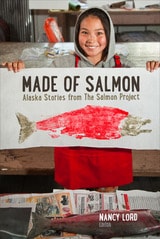
Made of Salmon
Alaska Stories from the Salmon ProjectEdited by Nancy Lord
University of Alaska Press, 2016
Made of Salmon brings together more than fifty diverse Alaska voices to celebrate the salmon and its place in Alaska life. A mix of words and images, the book interweaves longer works by some of Alaska’s finest writers with shorter, more anecdotal accounts and stunning photographs of Alaskans fishing for, catching, preserving, and eating salmon throughout the state. A love letter to a fish that has been central to Alaska life for centuries, Made of Salmon is a reminder of the stakes of this great, ongoing conservation battle.
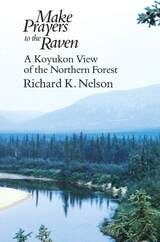
Make Prayers to the Raven
A Koyukon View of the Northern ForestRichard K. Nelson
University of Chicago Press, 1986
A powerful account of the deep connection between the Koyukon people of western Alaska and the natural world that sustains them
A blending of ethnography, personal reflections, and natural history, Make Prayers to the Raven is a moving account of the Koyukon people of western Alaska, who follow a traditional lifeway of hunting, trapping, and fishing in remote villages scattered across the boreal forest. Intimacy with nature is the foundation of their existence, and they have accumulated a masterly knowledge of their environment. The Koyukon hunter moves through a watchful forest, kills with humility and respect, and treats his catch as a being filled with power.
In Make Prayers to the Raven, Nelson describes, from a Koyukon point of view, , elements of the earth, sky, and atmosphere of the boreal forest, as well as the significant plants and animals. He retells their origins in the dreamlike Distant Time, their spirit powers, their behavior and personality, and the rules dictating their proper treatment by men and women. Make Prayers to the Raven leads the reader to an appreciation of the power and substantiality of Koyukon beliefs, and it serves the Koyukon people themselves by educating others about their way of life and by providing the Koyukon with a means of passing on traditional knowledge to their children.
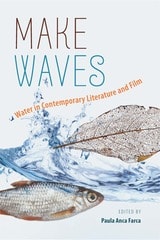
Make Waves
Water in Contemporary Literature and FilmPaula Anca Farca
University of Nevada Press, 2019
In this edited collection, contributors tackle current water issues in the era of climate change using a wide variety of recent literature and film. At its core, this collection demonstrates that water is an immense reservoir of artistic potential and an agent of historical and cultural exchange. Creating familiar and relatable contexts for water dilemmas, authors and directors of contemporary literary texts and films present compelling stories of our relationships to water, water health, ecosystems, and conservation. They also explore how global water problems affect local communities around the world and intersect with social and cultural aspects such as health, citizenship, class, gender, race, and ethnicity.
This transformative work highlights the cultural significance of water—the source of life and a powerful symbol in numerous cultures. It also raises awareness about global water debates and crises.
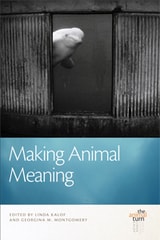
Making Animal Meaning
Linda Kalof
Michigan State University Press, 2012
An elucidating collection of ten original essays, Making Animal Meaning reconceptualizes methods for researching animal histories and rethinks the contingency of the human-animal relationship. The vibrant and diverse field of animal studies is detailed in these interdisciplinary discussions, which include voices from a broad range of scholars and have an extensive chronological and geographical reach. These exciting discourses capture the most compelling theoretical underpinnings of animal significance while exploring meaning-making through the study of specific spaces, species, and human-animal relations. A deeply thoughtful collection — vital to understanding central questions of agency, kinship, and animal consumption — these essays tackle the history and philosophy of constructing animal meaning.
Making Kin not Population
Reconceiving GenerationsEdited by Adele Clarke and Donna Haraway
Prickly Paradigm Press, 2018
Making Kin Not Population ends the silence on these issues with essays from leading anti-racist, ecologically-concerned, feminist scholars. Though not always in accord, these contributors provide bold analyses of complex issues of intimacy and kinship, from reproductive justice to environmental justice, and from human and nonhuman genocides to new practices for making families and kin. This timely work offers vital proposals for forging innovative personal and public connections in the contemporary world.
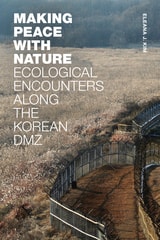
Making Peace with Nature
Ecological Encounters along the Korean DMZEleana J. Kim
Duke University Press, 2022

Making a Green Machine
The Infrastructure of Beverage Container RecyclingJørgensen, Finn Arne
Rutgers University Press, 2011
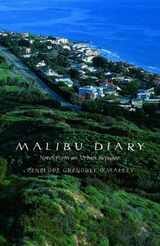
Malibu Diary
Notes From An Urban RefugeePenelope O'Malley
University of Nevada Press, 2004
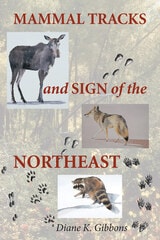
Mammal Tracks and Sign of the Northeast
Diane K. Gibbons
University Press of New England, 2003
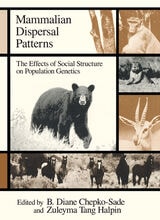
Mammalian Dispersal Patterns
The Effects of Social Structure on Population GeneticsEdited by B. Diane Chepko-Sade and Zuleyma Tang Halpin
University of Chicago Press, 1987
Theoretical work in population genetics indicates that such social factors as skewed sex ratios, restrictive mating patterns, and delayed age of first reproduction will lower the reproductive variability of a population by reducing the number of genotypes passed from one generation to the next. Field studies have shown that many mammalian species do exhibit many such social characteristics. Among horses, elephant seals, and a number of primates, the majority of females are inseminated by only a fraction of the males. In pacts of wolves and mongooses, usually only the highest-ranking male and female breed in a given season. Although socially restricted mating tends to lower genetic variability in isolated populations, it actually tends to increase genetic variability in subdivided populations with low rates of migration between subunits. Among some species there is little dispersal and thus little gene flow between subpopulations; other species travel far afield before mating.
The contributors to this volume examine actual data from populations of mammals, the way patterns of dispersal correlate with the genetic structure of individuals and populations, and mathematical models of population structure. This interdisciplinary approach has an important bearing on work in conservation of both wildlife and zoo populations, for it shows that the home range and the population size needed to maintain genetic variability can differ greatly from one species to the next. The volume also offers a fruitful model for future research.

Mammalian Reproductive Biology
F. H. Bronson
University of Chicago Press, 1990
Each chapter presents a wealth of issues and questions, summarizing the current consensus on interpretations as well as viable alternatives under debate. The book is principally concerned with how environmental factors regulate reproduction. Bronson proposes that a mammal's reproductive performance routinely reflects simultaneous regulation by several environmental factors that interact in fascinatingly complex ways. Environment is defined broadly, and the chapters give equal weight to ecological and physiological factors when considering how variables such as food availability, ambient temperature, photoperiod, and social cues interact to regulate a mammal's reproduction. Particular attention is given to seasonal breeding, and a taxonomically arranged chapter underscores the importance of comparative and evolutionary biology to an understanding of mammalian reproduction.
Mammalian Reproductive Biology is a powerful argument for the value and importance of interdisciplinary approaches to research. Its almost 1,500 references constitute the most comprehensive bibliography to date on this topic. Bronson also gives detailed consideration to promising areas for future research. Well organized, carefully planned, and clearly written, this book will become standard reading for scientists concerned with any aspect of mammalian biology.
Mammals Of Nevada
E. Raymond Hall
University of Nevada Press, 1995
First published in 1946, Mammals of Nevada is a monumental work. Hall and a team of more than sixty scientists, graduate students, and staff members of the Museum of Vertebrate Zoology in Kansas spent innumerable hours trapping, preparing, studying, and documenting thousands of specimens found within the state. This long out-of-print reference contains extensive examinations of the topography, climate, life zones, and floral and faunal areas. Hundreds of illustrations enhance the work. This updated edition features a new foreword and updated taxonomy by Timothy Lawlor.
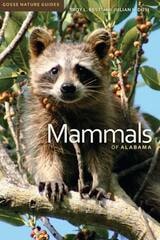
Mammals of Alabama
Troy L. Best and Julian L. Dusi
University of Alabama Press, 2014
Beautifully designed and sturdily bound for rugged field use, Mammals of Alabama is the first and only exhaustive guidebook to Alabama’s diverse and fascinating mammalian fauna.
European and American naturalists visited the territory that would become Alabama as early as the late eighteenth century and marveled at the breadth and variety of its flora and fauna. Yet until today scientists, scholars, and nature enthusiasts had no systematic guide to the state’s mammals. Mammals of Alabama fills the gap.
Naturally occurring in the state are nine orders, twenty-two families, fifty-one genera, and seventy-two species of living mammals. Best and Dusi offer an engaging entry for each as well as additional species that have become extinct through natural processes or human extirpation.
Illustrated with maps and photos, each entry includes:
• Identification notes • Dental formula
• Size and weight • Distribution
• Ecology • Life History
• Behavior • Parasites and Diseases
• Conservation Status • Notes and References
Ideal for backyards, hikes, libraries, and classrooms, Mammals of Alabama includes hundreds of professional, close-up color specimen photographs of both living animals in their natural habitats and skull plates, making identification of animals easy.
Best also offers fascinating and fun facts about Alabama mammals that will delight nature lovers of all ages, such as the surprising and excellent tree-climbing skills of the gray fox, the use in the past of mole skins to apply cosmetics, and the litters of identical quadruplets common to the nine-banded armadillo.
Published in cooperation with the Alabama Wildlife Federation
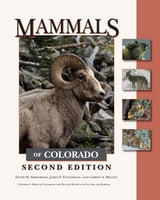
Mammals of Colorado, Second Edition
David M. Armstrong
University Press of Colorado, 2010
An introductory chapter on Colorado's environments, a discussion of the development of the fauna over geologic time, and a brief history of human knowledge of Coloradan mammals provide ecological and evolutionary context. The most recent records of the state's diverse species, rich illustrations (including detailed maps, skull drawings, and photographs), and an extensive bibliography make this book a must-have reference.
Amateur and professional naturalists, students, vertebrate biologists, and ecologists as well as those involved in conservation and wildlife management in Colorado will find value in this comprehensive volume. Co-published with the Denver Museum of Nature & Science
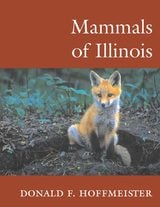
Mammals of Illinois
Donald F. Hoffmeister
University of Illinois Press, 2002
Outlining how human activities such as hunting and farming have altered the state's terrain and affected numerous species, Hoffmeister discusses which species have been wiped out, which are endangered or threatened, which no longer live in Illinois but survive elsewhere, and which might inhabit the region in the future.
In this comprehensive study, now available for the first time in paperback, Hoffmeister briefly characterizes the climate, soils, and vegetation of Illinois, particularly as they affect mammals. In addition to detailing mammals known to be present in the area during the Pleistocene and Holocene eras, Hoffmeister identifies each order and family of mammals present in Illinois since 1900. Within each family, each species is characterized by habit, habitat, food, reproduction, population, and variation. These entries are supplemented by tables, anatomical drawings, photographs, and Illinois and United States distribution maps.
Enhanced by sixty color photographs, more than one hundred line drawings, and a glossary of scientific terms, Mammals of Illinois is an indispensable resource for students, teachers, biologists, and nature enthusiasts.
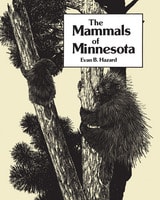
Mammals of Minnesota
Evan Hazard
University of Minnesota Press, 1982
A handbook of classification, identification, distribution, and ecology of 81 species of mammals now or once found wild in Minnesota.
Minnesota has been the home of 81 species of mammals. This book is a comprehensive identification guide, also providing information on classification, distribution and ecology of these species. Each mammal is described in terms of size, color of fur, social and reproductive behavior, and interaction with people.
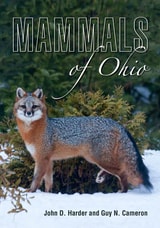
Mammals of Ohio
John D. Harder
Ohio University Press, 2022
An updated, informative review of the status and biology of the fifty-five species of mammals living wild in Ohio, richly illustrated with photographs, maps, drawings, and original artwork.
This comprehensive reference illustrates how species within each of the seven orders of mammals in Ohio share modes of reproduction, locomotion, and nutrition, providing a framework for understanding the fascinating world of mammalian biology. Presentations of natural history in each account of the various species are enhanced with descriptions of intriguing adaptations for avoiding demise from predators, food shortages, and the frigid conditions of Ohio winters. The book is richly illustrated with range maps, exquisite skull drawings, beautiful photography, and engaging artwork.
Challenges to wildlife conservation are considerable in Ohio, with its vast industrialized urban centers distributed across a largely agricultural landscape. With frequent citations of scientific reports and conservation efforts of the Ohio Division of Wildlife and of other public and private entities, this book instills an appreciation for the rich mammalian fauna of Ohio, as well as knowledge on how to join efforts to protect it.
Covering all of the state’s mammals, from tiny, obscure shrews to the magnificent white-tailed deer, Mammals of Ohio is a definitive resource for professional biologists and students. The narrative style throughout the book is accessible, providing the general reader with an appreciation for the full scope of the rich mammalian diversity in the state.
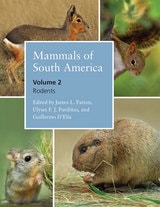
Mammals of South America, Volume 2
RodentsEdited by James L. Patton, Ulyses F. J. Pardiñas, and Guillermo D’Elía
University of Chicago Press, 2015
From spiny mice and guinea pigs to the oversized capybara, this book covers all native rodents of South America, the continental islands of Trinidad and Tobago, and the Caribbean Netherlands off the Venezuelan coast. It includes identification keys and descriptions of all genera and species; comments on distribution; maps of localities; discussions of subspecies; and summaries of natural, taxonomic, and nomenclatural history. Rodents also contains a detailed list of cited literature and a separate gazetteer based on confirmed identifications from museum vouchers and the published literature.
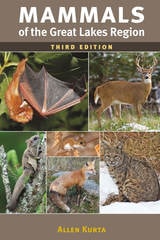
Mammals of the Great Lakes Region, 3rd Ed.
Allen Kurta
University of Michigan Press, 2017
A thorough introduction outlines the environmental factors that affect the distribution and abundance of mammals in Great Lakes ecosystems and discusses the impacts of current human activities, including introduction of diseases and climate change. There is also a section on preparing captured specimens for research or teaching, as well as user-friendly keys and quick reference tables to physical measurements and life history data. Brand new in this edition, the book also features detailed illustrations of the tracks of commonly found mammals to assist with year-round identification. Providing the most up-to-date information on mammals in the Great Lakes basin, this book belongs on the shelves of teachers, students, naturalists, and professional biologists throughout the region.
Mammals of the Neotropics, Volume 2
The Southern Cone: Chile, Argentina, Uruguay, ParaguayKent H. Redford and John F. Eisenberg
University of Chicago Press, 1992
This second of a projected three volumes covers southern South America. The authors discuss the historical biogeography and contemporary habitats of the region and then
provide individual accounts for nearly 360 indigenous species, including information on size, appearance, ecology, behavior, and life history. Range maps, line drawings, and color plates supplement the text. To place the species accounts in a broader context, the authors consider the diversity of animals within each taxonomic group, examine the Neotropical species from a worldwide geographical perspective, and review taxonomic questions and
controversies. Two final chapters deal with the community ecology of mammals and the effects humans have had on the mammalian fauna of the southern cone.
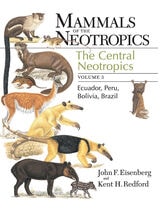
Mammals of the Neotropics, Volume 3
Ecuador, Bolivia, BrazilJohn F. Eisenberg and Kent H. Redford
University of Chicago Press, 2000
Third in a series that reviewers have described as "state of the art" (Journal of Biogeography) and "invaluable to anyone interested in the mammalian fauna of the Neotropics" (Quarterly Review of Biology), this volume follows the format of its acclaimed predecessors. Chapters present not only up-to-date taxonomic information but also ecological and behavioral characteristics, conservation status, and distribution maps for most species. Numerous illustrations are provided to assist in field and laboratory identification, including exquisite color and black-and-white plates by Fiona Reid. New to this volume are chapters contributed by experts on the mammalian fossil record of this region and on its current biodiversity and biogeography. An appendix summarizes changes to the nomenclature that have altered the scientific names used in the first two volumes.
Volumes 1 and 2 of Mammals of the Neotropics, which are also available, describe the mammals of Panama, Colombia, Venezuela, Guyana, Suriname, and French Guiana (volume 1) and Chile, Argentina, Uruguay, and Paraguay (volume 2). The fourth and final volume of this series will cover the mammals of Mexico and Central America.

Mammals of the Pacific Northwest
From the Coast to the High CascadesChis Maser
Oregon State University Press, 1998
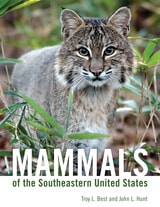
Mammals of the Southeastern United States
Troy L. Best and John L. Hunt
University of Alabama Press, 2020
First comprehensive account of the mammals of the entire southeastern US
The southeastern United States is home to a remarkable and diverse mammalian fauna that is a significant part of the region’s rich natural heritage. Mammals of the Southeastern United States presents accounts of 137 species that currently or previously occurred in the Southeast. Although accessible and useful for the generalist, this book provides an up-to-date compilation of basic knowledge about native and nonnative mammals of the region that is suitable for students of all ages and for professional mammalogists and biologists alike.
This volume profiles common species like the eastern gray squirrel, the white-tailed deer, and the Virginia opossum, but also includes among its accounts many extant species, such as the jaguar and porcupine, that once occurred in the region; native species, like the Caribbean monk seal, that are now extinct; native species that have been extirpated, or wiped out, from all or part of the region, such as the red wolf, cougar, American bison, and elk; and many introduced species, including the Mexican mouse opossum, common squirrel monkey, and capybara.
Each species account includes full-color images of the animal, plates featuring at least three views of its skull, color distribution maps of its approximate geographic range in the Southeast and in North America, and an up-to-date synthesis of several aspects of its biology, including habitat, diet, predators, parasites, diseases, and behaviors. An introductory chapter on conservation summarizes the current status of mammalian populations in the region and provides insight into some of the threats mammals now encounter in the Southeast.
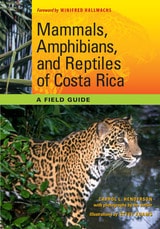
Mammals, Amphibians, and Reptiles of Costa Rica
A Field GuideBy Carrol L. Henderson
University of Texas Press, 2010
To help visitors, as well as local residents, identify and enjoy the wildlife of Costa Rica, Carrol L. Henderson published Field Guide to the Wildlife of Costa Rica in 2002, and it instantly became the indispensable guide. Now Henderson has created a field guide dedicated to the monkeys, sloths, treefrogs, lizards, crocodiles, and other animals that travelers are most likely to see while exploring the wild lands of Costa Rica. He includes fascinating information on their natural history, ecology, identification, and behavior gleaned from his forty years of travels, studies, and wildlife viewing in Costa Rica, as well as details on where to see these remarkable and beautiful creatures. The mammals, amphibians, and reptiles are illustrated by stunning and colorful photographs—most of which were taken in the wild by Henderson. A detailed and invaluable appendix that identifies many of Costa Rica's best wildlife-watching destinations, lodges, and contact information for trip-planning purposes completes the volume.
Man Who Thought He Owned Water
On the Brink with American Farms, Cities, and FoodTershia d'Elgin
University Press of Colorado, 2016
When her father bought his farm—Big Bend Station—he also bought the ample water rights associated with the land and the South Platte River, confident that he had secured the necessary resources for a successful endeavor. Yet water immediately proved fickle, hard to defend, and sometimes dangerous. Eventually those rights were curtailed without compensation. Through her family’s story, d’Elgin dramatically frames the personal-scale implications of water competition, revealing how water deals, infrastructure, transport, and management create economic growth but also sever human connections to Earth’s most vital resource. She shows how water flows to cities at the expense of American-grown food, as rural land turns to desert, wildlife starves, the environment degrades, and climate change intensifies.
Depicting deep love, obsession, and breathtaking landscape, The Man Who Thought He Owned Water is an impassioned call to rebalance our relationship with water. It will be of great interest to anyone seeking to understand the complex forces affecting water resources, food supply, food security, and biodiversity in America.

Managing the Environmental Crisis
Incorporating Competing Values in Natural Resource AdministrationWilliam R. Mangun and Daniel H. Henning
Duke University Press, 1999
With a new foreword by Lynton Keith Caldwell
In Managing the Environmental Crisis William R. Mangun and Daniel H. Henning provide a balanced and comprehensive guide to the management of complex environmental and natural resource policy issues. Taking into account new developments, trends, and issues that have arisen in recent years, the authors begin with the recognition, often overlooked, that it is not the environment that needs to be managed but human action relating to the environment.
The authors review issues associated with a range of environmental policy concerns, including energy considerations, renewable and non renewable resource management, pollution control, wilderness management, and urban and regional policy. The history of these issues, recent actions pertaining to their management, difficulties associated with their continued presence, and the consequences of a failure to address these concerns are explored. Though focused on specific political issues, Mangun and Henning direct their attention to two large-scale trends—globalization and the political polarization of the environmental movement. At the level of the decision-making process, the incorporation of values—specifically addressed from multicultural and cross-disciplinary perspectives—is also discussed. International in scope, the book provides descriptions of the roles of both governmental and nongovernmental organizations in the formulations and implementation of national and global environmental policy.
This thoroughly revised second edition discusses various successes in the arenas of environmental cooperation and management strategy while pointing to the new challenges that have emerged in the last decade.
Managing the River Commons
Fishing and New England's Rural EconomyErik Reardon
University of Massachusetts Press, 2021
Historian Erik Reardon argues that to protect these fish, New England's farmer-fishermen pushed for conservation measures to limit commercial fishing and industrial uses of the river. Beginning in the colonial period and continuing to the mid-nineteenth century, they advocated for fishing regulations to promote sustainable returns, compelled local millers to open their dams during seasonal fish runs, and defeated corporate proposals to erect large-scale dams. As environmentalists work to restore rivers in New England and beyond in the present day, Managing the River Commons offers important lessons about historical conservation efforts that can help guide current campaigns to remove dams and allow anadromous fish to reclaim these waters.
Manatee Lagoon
PoemsJenna Le
Acre Books, 2022
In Manatee Lagoon, sonnets, ghazals, pantoums, villanelles, and a “failed georgic” weave in contemporary subject matter, including social-media comment threads, Pap smears, eclipse glasses, and gun violence. A recurring motif throughout the collection, manatees become a symbol with meanings as wide-ranging as the book itself. Le aligns the genial but vulnerable sea cow with mermaids, neurologists, the month of November, harmful political speech, and even a family photo at the titular lagoon.
In these poems, Le also reflects on the experience of being the daughter of Vietnamese refugees in today’s sometimes tense and hostile America. The morning after the 2016 election, as three women of color wait for the bus, one says, “In this new world, we must protect each other.”
Manatee Lagoon is a treasury of voices, bringing together the personal and the persona, with poems dedicated to Kate Spade, John Ashbery, and Uruguayan poet Delmira Agustini. With this book, Le establishes herself as a talented transcriber of the human condition—and as one of the finest writers of formal verse today.
Manoomin
The Story of Wild Rice in MichiganBarbara J Barton
Michigan State University Press, 2018

Manual for the Identification of the Birds of Minnesota and Neighboring States
Thomas S. Roberts
University of Minnesota Press, 1932
Manual for the Identification of the Birds of Minnesota and Neighboring States was first published in 1932. Minnesota Archive Editions uses digital technology to make long unavailable books once again accessible, and are published unaltered from the original University of Minnesota Press editions.
Manual of Neotropical Birds, Volume 1
Emmet Reid Blake
University of Chicago Press, 1977
Many Skies
Alternative Histories of the Sun, Moon, Planets, and StarsUpgren, Arthur
Rutgers University Press, 2012
These and other imaginative scenarios are the subject of Arthur Upgren's inventive book Many Skies: Alternative Histories of the Sun, Moon, Planets, and Stars. Although the night sky as we know it seems eternal and inevitable, Upgren reminds us that, just as easily, it could have been very different.
Had the solar sytem happened to be in the midst of a star cluster, we might have many more bright stars in the sky. Yet had it been located beyond the edge of the Milky Way galaxy, we might have no stars at all. If Venus or Mars had a moon as large as ours, we would be able to view it easily with the unaided eye. Given these or other alternative skies, what might Ptolemy or Copernicus have concluded about the center of the solar sytem and the Sun?
This book not only examines the changes in science that these alternative solar, stellar, and galactic arrangements would have brought, it also explores the different theologies, astrologies, and methods of tracking time that would have developed to reflect them. Our perception of our surroundings, the number of gods we worship, the symbols we use in art and literature, even the way we form nations and empires are all closely tied to our particular (and accidental) placement in the universe.
Many Skies, however, is not merely a fanciful play on what might have been. Upgren also explores the actual ways that human interferences such as light pollution are changing the night sky. Our atmosphere, he warns, will appear very different if we have belt of debris circling the globe and blotting out the stars, as will happen if advertisers one day pollute space with brilliant satellites displaying their products.
From fanciful to foreboding, the scenarios in Many Skies will both delight and inspire reflection, reminding us that ours is but one of many worldviews based on our experience of a universe that is as much a product of accident as it is of intention.
Mapping And Imagination In The Great Basin
A Cartographic HistoryRichard V. Francaviglia
University of Nevada Press, 2005
The Great Basin was the last region of continental North America to be explored and mapped, and it remained largely a mystery to Euro-Americans until well into the nineteenth century. In Mapping and Imagination in the Great Basin, geographer-historian Richard Francaviglia shows how the Great Basin gradually emerged from its “cartographic silence” as terra incognita and how this fascinating process both paralleled the development of the sciences of surveying, geology, hydrology, and cartography and reflected the changing geopolitical aspirations of the European colonial powers and the United States. Francaviglia’s interdisciplinary account of the mapping of the Great Basin combines a chronicle of the exploration of the region with a history of the art and science of cartography and of the political, economic, and cultural contexts in which maps are created. It also offers a compelling, wide-ranging discussion that combines a description of the daunting physical realities of the Great Basin with a cogent examination of the ways humans, from early Native Americans to nineteenth-century surveyors to twentieth-century highway and air travelers, have understood, defined, and organized this space, psychologically and through the medium of maps. Mapping and Imagination in the Great Basin continues Francaviglia’s insightful, richly nuanced meditation on the Great Basin landscape that began in Believing in Place.
Maria Martin's World
Art and Science, Faith and Family in Audubon’s AmericaDebra J. Lindsay
University of Alabama Press, 2018
Maria Martin (1796–1863) was an evangelical Lutheran from Charleston, South Carolina, who became an accomplished painter within months of meeting John James Audubon. Martin met Audubon through her brother-in-law, Reverend John Bachman, who befriended Audubon while passing through Charleston on route to Florida where he expected to find new avian species. Martin was an amateur artist, but by the time Audubon left, she had familiarized herself with his style of drawing. Six months after their initial meeting, her background botanicals were deemed good enough to embellish Audubon’s exquisite bird paintings.
Martin’s botanicals and insects appeared in volumes two and four of The Birds of America (1830–1838). She painted snakes for John Edwards Holbrook’s North American Herpetology (1842) and assisted in drafting the descriptive taxonomies prepared by John Bachman—who later became her husband in 1848 following the death of her older sister—for The Viviparous Quadrupeds of North America (1846–1854). Until now, her contributions have been unknown to all but the most astute students of natural history and art history and a close circle of family and friends.
Maria Martin’s World is a heavily illustrated volume examining how Maria Martin learned to paint aesthetically beautiful botanicals with exacting accuracy. Drawing on deep research into archival documents and family-held artifacts, Debra Lindsay brings Maria Martin out from behind the curtain of obscurity and disinformation that has previously shrouded her and places her centrally in her own time and milieu. In the telling of Maria Martin’s story, Lindsay also uncovers many nuances of the behavior and actions of the two prominent men in her life that readers interested in Audubon and Bachman will find noteworthy.
Martin was a gifted artist recognized for having contributed beautiful paintings to a natural history. But beyond the natural world this is a biography of an evangelical Lutheran steeped in the faith of her German ancestors and raised to respect the patriarchal norms of her time. Maria Martin pursued her scientific and artistic interests only when they did not conflict with her religious and familial responsibilities.
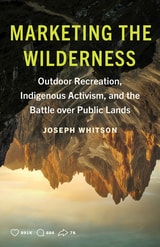
Marketing the Wilderness
Outdoor Recreation, Indigenous Activism, and the Battle over Public LandsJoseph Whitson
University of Minnesota Press, 2025
How outdoor industry marketing promotes an image of “the wilderness” as an unpeopled haven
Marketing the Wilderness analyzes the relationship between the outdoor recreation industry, public lands in the United States, and Indigenous sovereignty and representation in recreational spaces. Combining social media analysis, digital ethnography, and historical research, Joseph Whitson offers nuanced insights into more than a century of the outdoor recreation industry’s marketing strategies, unraveling its complicity in settler colonialism.
Complicating the narrative of outdoor recreation as a universal good, Whitson introduces the concept of “wildernessing” to describe the physical, legal, and rhetorical production of pristine, empty lands that undergirds the outdoor recreation industry, a process that further disenfranchises Indigenous people from whom these lands were stolen. He demonstrates how companies such as Patagonia and REI align with the mining and drilling industries in their need to remove Indigenous peoples and histories from valuable lands. And he describes the ways Indigenous and decolonial activists are subverting and resisting corporate marketing strategies to introduce new narratives of place.
Through the lens of environmental justice activism, Marketing the Wilderness reconsiders the ethics of recreational land use, advocating for engagement with issues of cultural representation and appropriation informed by Indigenous perspectives. As he discusses contemporary public land advocacy around places such as Bears Ears National Monument, Whitson focuses on the deeply fraught relationship between the outdoor recreation industry and Indigenous communities. Emphasizing the power of the corporate system and its treatment of land as a commodity under capitalism, he shows how these tensions shape the American idea of “wilderness” and what it means to fight for its preservation.
Retail e-book files for this title are screen-reader friendly with images accompanied by short alt text and/or extended descriptions.
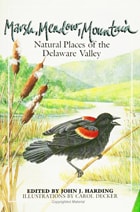
Marsh Meadow Mountain
edited by John J. Harding, illustrated by Carol Decker
Temple University Press, 1986
Stretching from the craggy reaches of the Pocono Mountains to the rolling farmlands of Lancaster County, Pennsylvania, sprawling east across the Delaware River basin and New Jersey’s coastal plain Atlantic beaches—here is a land of rich historical, cultural, and environmental diversity. Few other locales in the United States have as many varied habitats, each with its own distinctive vegetation and wildlife. The nature lover in the Delaware Valley can travel from ocean, across barrier-beaches, salt-water and fresh-water marshes, pine barrens, deciduous woodlands and fields, to mountains, all in a few hours.
Marsh, Meadow, Mountain, a combination tour guide and ecological primer, is written for the thousands of people in the area with an interest in natural history or for those seeking alternative recreational activities. Each chapter, written by an experienced naturalist intimately familiar with one of the seven major ecosystems, introduces the reader to the dynamic interrelationships in nature, the interactions between a particular habitat and its inhabitants, and its plants and wildlife. Over 135 locations are described including the Pocono Mountains, the Pine Barrens, Stone Harbor, Delaware Water Gap National Recreation Area, Ridley Creek State Park, Tyler Arboretum, and Tinicum National Environmental Center, which in any season can provide fascinating viewing opportunities depending upon your interests. Each site also includes addresses, directions, trail maps, artistic drawings, and a suggested reading list.
Marsh, Meadow, Mountain conveys both a sense of fun and learning and, ultimately, will instill in the reader a special intimacy with the Delaware Valley’s precious wild places.
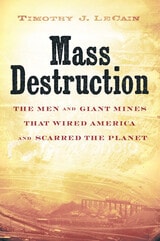
Mass Destruction
The Men and Giant Mines That Wired America and Scarred the PlanetTimothy J. LeCain
Rutgers University Press, 2009
Mass destruction mining soon spread around the nation and the globe, providing raw materials essential to the mass production and mass consumption that increasingly defined the emerging "American way of life." At the dawn of the last century, Jackling's open pit replaced immense but constricted underground mines that probed nearly a mile beneath the earth, to become the ultimate symbol of the modern faith that science and technology could overcome all natural limits. A new culture of mass destruction emerged that promised nearly infinite supplies not only of copper, but also of coal, timber, fish, and other natural resources.
But, what were the consequences? Timothy J. LeCain deftly analyzes how open-pit mining continues to affect the environment in its ongoing devastation of nature and commodification of the physical world. The nation's largest toxic Superfund site would be one effect, as well as other types of environmental dead zones around the globe. Yet today, as the world's population races toward American levels of resource consumption, truly viable alternatives to the technology of mass destruction have not yet emerged.
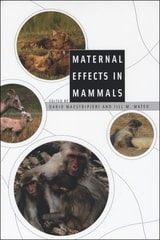
Maternal Effects in Mammals
Edited by Dario Maestripieri and Jill M. Mateo
University of Chicago Press, 2009
Evolutionary maternal effects occur whenever a mother’s phenotypic traits directly affect her offspring’s phenotype, independent of the offspring’s genotype. Some of the phenotypic traits that result in maternal effects have a genetic basis, whereas others are environmentally determined. For example, the size of a litter produced by a mammalian mother—a trait with a strong genetic basis—can affect the growth rate of her offspring, while a mother’s dominance rank—an environmentally determined trait—can affect the dominance rank of her offspring.
The first volume published on the subject in more than a decade, Maternal Effects in Mammals reflects advances in genomic, ecological, and behavioral research, as well new understandings of the evolutionary interplay between mothers and their offspring. Dario Maestripieri and Jill M. Mateo bring together a learned group of contributors to synthesize the vast literature on a range of species, highlight evolutionary processes that were previously overlooked, and propose new avenues of research. Maternal Effects in Mammals will serve as the most comprehensive compendium on and stimulus for interdisciplinary treatments of mammalian maternal effects.

Matter and Mathematics
An Essential Account of Laws of NatureAndrew Younan
Catholic University of America Press, 2022
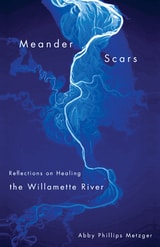
Meander Scars
Reflections on Healing the Willamette RiverAbby Phillips Metzger
Oregon State University Press, 2013
Yet, through canoe trips and intimate explorations of the river, Metzger discovers glints of resiliency: a beaver trolling through a slough, native fish in quiet backwaters, and strong currents that carry undertones of the wild Willamette. Together with tales from farmers and scientists alike, these experiences lead Metzger to ask whether something scarred can fully heal, and whether a disjointed river can be whole again.
A story of re-discovery as told by a learner, Meander Scars will appeal to readers of literary nonfiction, river advocates, naturalists, and outdoor enthusiasts interested in sustaining healthy river systems for themselves, their children, and beyond.
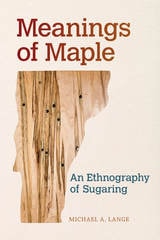
Meanings of Maple
An Ethnography of SugaringMichael Lange
University of Arkansas Press, 2017
Readers will go deep into a Vermont sugar bush and its web of plastic tubes, mainline valves, and collection tanks. They will visit sugarhouses crammed with gas evaporators and reverse-osmosis machines. And they will witness encounters between sugar makers and the tourists eager to invest Vermont with mythological fantasies of rural simplicity.
So much more than a commodity study, Meanings of Maple frames a new approach for evaluating the broader implications of iconic foodways, and it will animate conversations in food studies for years to come.
Measuring and Accounting for Environmental Public Goods
A National Accounts PerspectiveEdited by Nicholas Z. Muller, Eli P. Fenichel, and Mary Bohman
University of Chicago Press, 2025
Provides strategies and approaches for integrating natural capital into environmental statistics.
While the importance of natural resources and the contributions of the environment to welfare are apparent, traditional national income and wealth accounting practices do not measure or value environmental public goods. This volume examines the conceptual and empirical basis for integrating natural capital—forests, oceans, and air—into the economic and environmental statistics that inform public policy. It offers innovative approaches to valuing nonmarket environmental goods and services, including strategies for capturing heterogeneity in measurement across types of capital, geography, and individuals.
The chapters focus on measuring productivity with adjustments for pollution damage, developing a microdata infrastructure to advance our understanding of the distribution of environmental amenities and hazards, and estimating long-run sustainable development indicators. Case studies consider coastal assets, forests, and marine ecosystems, and develop strategies for implementing specific environmental-economic accounts such as environmental activity accounts and natural capital accounts for forests and the marine economy. As national income accounting standards are updated to incorporate expanded guidance on issues related to natural capital, this timely book will help inform decisions on the measurement and treatment of climate, air, water, and other public goods.
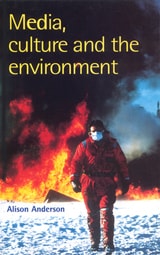
Media, Culture, and the Environment
Anderson, Alison
Rutgers University Press, 1997
Media, Culture and the Environment provides an accessible introduction to key issues and debates surrounding the media politics of risk assessment and the environment. Anderson looks at nature as contested terrain and reveals how news sources use it to compete for our emotions and attention. She shows how framings of risk in relation to the environment are influenced by social, political, and cultural factors, but she also rejects extreme versions of social constructionism.
The book moves beyond traditional disciplinary boundaries by synthesizing recent debates in cultural theory and media studies with key developments in human geography. It offers an in-depth analysis of pressure politics and environmental lobbying groups, while examining the production, transmission and negotiation language of news discourse. The examples, drawn from both Europe and North America, include the tremendous headline controversies over oil spills and killing of baby seals. Difficult issues, clearly surveyed and incisively presented, make this book essential reading for anyone interested in how and why journalists handle environmental news in the ways they do.
Medical Lives and Scientific Medicine at Michigan, 1891-1969
Joel D. Howell, Editor
University of Michigan Press, 1993
Medicine Wheel for the Planet
A Journey Toward Personal and Ecological HealingJennifer Grenz
University of Minnesota Press, 2024
A personal journey of bringing together Western science and Indigenous ecology to transform our understanding of the human role in healing our planet
I used to be an ecologist. . . . Now, I am a community gatherer, working to help bring healing beyond just the land. I am a story-listener. I am a storyteller. I am a shaper of ecosystems. I work on bringing communities together, in circle, to listen to each other.
A farm kid at heart, and a Nlaka’pamux woman of mixed ancestry, Dr. Jennifer Grenz always felt a deep connection to the land. However, after nearly two decades of working as a restoration ecologist in the Pacific Northwest, she became frustrated that despite the best efforts of her colleagues and numerous volunteers, they weren’t making the meaningful change needed for plant, animal, and human communities to adapt to a warming climate. Restoration ecology is grounded in an idea that we must return the natural world to an untouched, pristine state, placing humans in a godlike role—a notion at odds with Indigenous histories of purposeful, reciprocal interaction with the environment. This disconnect sent Dr. Grenz on a personal journey of joining her head (Western science) and her heart (Indigenous worldview) to find a truer path toward ecological healing.
In Medicine Wheel for the Planet, building on sacred stories, field observations, and her own journey, Dr. Grenz invites readers to share in the teachings of the four directions of the medicine wheel: the North, which draws upon the knowledge and wisdom of elders; the East, where we let go of colonial narratives and see with fresh eyes; the South, where we apply new-old worldviews to envision a way forward; and the West, where a relational approach to land reconciliation is realized.
Eloquent, inspiring, and disruptive, Medicine Wheel for the Planet circles around an argument that we need more than a singular worldview to protect the planet and make the significant changes we are running out of time for.
Meetings with Remarkable Mushrooms
Forays with Fungi across HemispheresAlison Pouliot
University of Chicago Press, 2023
A whirlwind journey through fungus frontiers that underscores how appreciating fungi is key to understanding our planet’s power and fragility.
What can we learn from the lives of fungi? Splitting time between the northern and southern hemispheres, ecologist Alison Pouliot ensures that she experiences two autumns per year in the pursuit of fungi—from Australia’s deserts to Iceland’s glaciers to America’s Cascade Mountains. In Meetings with Remarkable Mushrooms, we journey alongside Pouliot, magnifiers in hand, as she travels the world.
With Pouliot as our guide, we smell fire-loving truffles that transform their scent after burning to lure mammals who eat them and, ultimately, spread their spores. We spot the eerie glow of the ghost fungus, a deceptive entity that looks like an edible oyster mushroom but will soon heave back out—along with everything else in your stomach—if you take a bite. And we crawl alongside vegetable caterpillars, which are neither vegetable nor caterpillar but a fungus that devours insects from the inside out.
Featuring stunning color photographs of these mycological miracles, Meetings with Remarkable Mushrooms shows that understanding fungi is fundamental for harmonizing with the natural world.
Mega-Dams in World Literature
Literary Responses to Twentieth-Century Dam BuildingMargaret Ziolkowski
University of Wyoming Press, 2024
Using North American, Native American, Russian, Egyptian, Indian, and Chinese novels and poems, Ziolkowski explores the supposed progress that these structures bring. The book asks how the human urge to exploit and control waterways has affected our relationships to nature and the environment and argues that the high modernism of the twentieth century, along with its preoccupation with development, casts the hydroelectric dam as a central symbol of domination over nature and the power of the nation state.
Beyond examining the exultation of large dams as symbols of progress, Mega-Dams in World Literature takes a broad international and cultural approach that humanizes and personalizes the major issues associated with large dams through nuanced analyses, paying particular attention to issues engendered by high modernism and settler colonialism. Both general and specialist readers interested in human-environment relationships will enjoy this prescient book.
Mekong Delta
Ecology, Economy, and Revolution, 1860-1960Pierre Brocheux
University of Wisconsin Press, 1995
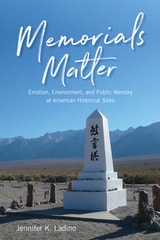
Memorials Matter
Emotion, Environment, and Public Memory at American Historical SitesJennifer K. Ladino
University of Nevada Press, 2019
In Memorials Matter, author Jennifer Ladino investigates the natural and physical environments of seven diverse National Park Service (NPS) sites in the American West and how they influence emotions about historical conflict and national identity. Chapters center around the region’s diverse inhabitants (Mexican, Chinese, Japanese, African, and Native Americans) and the variously traumatic histories these groups endured—histories of oppression, exploitation, incarceration, slavery, and genocide. Drawing on material ecocritical theory, Ladino emphasizes the ideological and political importance of memorials and how they evoke visceral responses that are not always explicitly “storied,” but nevertheless matter in powerful ways.
In this unique blend of narrative scholarship and critical theory, Ladino demonstrates how these memorial sites and their surrounding landscapes, combined with written texts, generate emotion and shape our collective memory of traumatic events. She urges us to consider our everyday environments and to become attuned to features and feelings we might have otherwise overlooked.