Results by title
413 books match the query 'New York' and 28 start with m
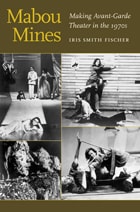
Mabou Mines
Making Avant-Garde Theater in the 1970sIris Smith Fischer
University of Michigan Press, 2012
The theater company Mabou Mines has for the past forty years created pathbreaking new theater by combining the latest concepts in music, visual arts, and technology with traditional forms of creative expression: puppetry, text, movement, theater design. From the beginning, the evanescence of performance and the dynamics of group work attracted the group. Most of their early pieces were never recorded, leaving little documentation of their foundational productions. Mabou Mines: Making Avant-Garde Theater in the 1970s provides this missing history, attempting to capture and describe the explorations of a group who set out to create indescribable performance. Iris Smith Fischer makes visible once again the celebrated company's least documented work, and offers accounts of the decisions and events that defined Mabou Mines' ideas and methods, particularly their creative collaborations with visual artists, musicians, writers, and dancers. Focusing on the heady days of the company's founding and first ten years, the book traces Mabou Mines' intellectual and artistic roots, frames them within the 1970s avant-garde, and outlines their significance in contemporary performance.
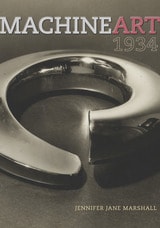
Machine Art, 1934
Jennifer Jane Marshall
University of Chicago Press, 2012
In 1934, New York’s Museum of Modern Art staged a major exhibition of ball bearings, airplane propellers, pots and pans, cocktail tumblers, petri dishes, protractors, and other machine parts and products. The exhibition, titled Machine Art, explored these ordinary objects as works of modern art, teaching museumgoers about the nature of beauty and value in the era of mass production.
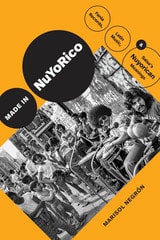
Made in NuYoRico
Fania Records, Latin Music, and Salsa’s Nuyorican MeaningsMarisol Negrón
Duke University Press, 2024

Make a Wish
Judy Soloway Kay
University of Michigan Press, 2005
Genre: Romance
Length: about 15,000 words
Level: 4th grade
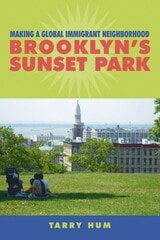
Making a Global Immigrant Neighborhood
Brooklyn's Sunset ParkTarry Hum
Temple University Press, 2014
Based on more than a decade of research, Making a Global Immigrant Neighborhood charts the evolution of Sunset Park--with a densely concentrated working-poor and racially diverse immigrant population--from the late 1960s to its current status as one of New York City's most vibrant neighborhoods.
Tarry Hum shows how processes of globalization, such as shifts in low-wage labor markets and immigration patterns, shaped the neighborhood. She explains why Sunset Park's future now depends on Asian and Latino immigrant collaborations in advancing common interests in community building, civic engagement, entrepreneurialism, and sustainability planning. She shows, too, how residents' responses to urban development policies and projects and the capital represented by local institutions and banks foster community activism.
Hum pays close attention to the complex social, political, and spatial dynamics that forge a community and create new models of leadership as well as coalitions. The evolution of Sunset Park so astutely depicted in this book suggests new avenues for studying urban change and community development.
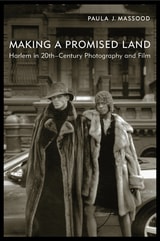
Making a Promised Land
Harlem in Twentieth-Century Photography and FilmMassood, Paula J.
Rutgers University Press, 2013
Making a Promised Land examines the interconnected histories of African American representation, urban life, and citizenship as documented in still and moving images of Harlem over the last century. Paula J. Massood analyzes how photography and film have been used over time to make African American culture visible to itself and to a wider audience and charts the ways in which the “Mecca of the New Negro” became a battleground in the struggle to define American politics, aesthetics, and citizenship. Visual media were first used as tools for uplift and education. With Harlem’s downturn in fortunes through the 1930s, narratives of black urban criminality became common in sociological tracts, photojournalism, and film. These narratives were particularly embodied in the gangster film, which was adapted to include stories of achievement, economic success, and, later in the century, a nostalgic return to the past. Among the films discussed are Fights of Nations (1907), Dark Manhattan (1937), The Cool World (1963), Black Caesar (1974), Malcolm X (1992), and American Gangster (2007). Massood asserts that the history of photography and film in Harlem provides the keys to understanding the neighborhood’s symbolic resonance in African American and American life, especially in light of recent urban redevelopment that has redefined many of its physical and demographic contours.
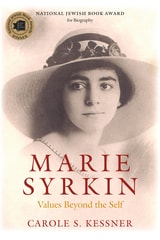
Marie Syrkin
Values Beyond the SelfCarole S. Kessner
Brandeis University Press, 2008
Marie Syrkin’s life spanned ninety years of the twentieth century, 1899–1989. As a polemical journalist, socialist Zionist, poet, educator, literary critic, translator, and idiosyncratic feminist, she was an eyewitness to and reporter on most of the major events in America, Israel, and Europe. Beautiful as well as brilliant, she had a rich personal life as a lover, wife, mother, and friend. During her lifetime Syrkin’s name was widely recognized in the world of Jewish life and letters. Yet, since Syrkin’s death, recognition of her name is no longer quite so immediate. Carole S. Kessner’s biography restores Syrkin’s fascinating life and legacy for a new generation.
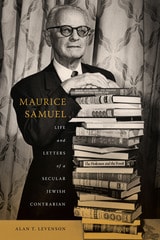
Maurice Samuel
Life and Letters of a Secular Jewish ContrarianAlan T. Levenson
University of Alabama Press, 2022
An intellectual biography that reassesses one of the premier Jewish humanists of the mid-twentieth century
In Maurice Samuel: Life and Letters of a Secular Jewish Contrarian, Alan T. Levenson captures the life, works, and milieu of the Romanian-born, English-educated, American belletrist Maurice Samuel. A diaspora intellectual—or a rooted cosmopolitan, as Levenson describes him—Samuel made an indelible mark on many features of contemporary Jewish thought and culture. A generalist in an age of experts, an independent scholar in an age of rabbis and professors, Samuel was one of the most productive and visible members of the group dubbed the “other” New York Jewish intellectuals.
His fame as a public intellectual and popular speaker were well warranted: no mere popularizer, Samuel contributed significantly to four seemingly unrelated but critical areas of modern Jewish thought. Samuel is characterized by some as principally a Zionist, by others as an accomplished translator and many Americans’ first entrée into the world of Yiddish literature, by still others as a polemicist and campaigner against anti-Semitism, and finally as a media-savvy Biblical critic, essayist, and radio personality. But he was all of these things, since Samuel succeeded in an era when it was possible to be a public intellectual without being an expert.
Drawing on Samuel’s vast literary opus, as well as previously unexplored archival material from three continents, this study writes Samuel back into the history of mid-twentieth-century American letters. Levenson argues that Samuel’s varied and substantive contributions demand reconsideration of our assumptions about the means and ends of cultural transmission, and merit him a place as one of twentieth-century American Jewry’s most significant cultural and intellectual voices.
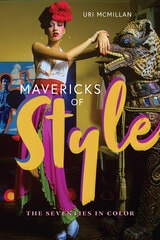
Mavericks of Style
The Seventies in ColorUri McMillan
Duke University Press, 2025
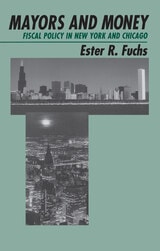
Mayors and Money
Fiscal Policy in New York and ChicagoEster R. Fuchs
University of Chicago Press, 1992
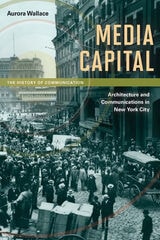
Media Capital
Architecture and Communications in New York CityAurora Wallace
University of Illinois Press, 2012
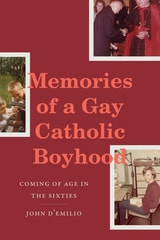
Memories of a Gay Catholic Boyhood
Coming of Age in the SixtiesJohn D'Emilio
Duke University Press, 2022
Memories of a Gay Catholic Boyhood is D’Emilio’s coming-of-age story in which he takes readers from his working-class Bronx neighborhood to an elite Jesuit high school in Manhattan to Columbia University and the political and social upheavals of the late 1960s. He shares his personal experiences of growing up in a conservative, tight-knit, multigenerational family, how he went from considering entering the priesthood to losing his faith and coming to terms with his same-sex desires. Throughout, D’Emilio outlines his complicated relationship with his family while showing how his passion for activism influenced his decision to use research, writing, and teaching to build a strong LGBTQ movement.
This is not just John D’Emilio’s personal story; it opens a window into how the conformist baby boom decade of the 1950s transformed into the tumultuous years of radical social movements and widespread protest during the 1960s. It is the story of what happens when different cultures and values collide and the tensions and possibilities for personal discovery and growth that emerge. Intimate and honest, D’Emilio’s story will resonate with anyone who has had to chart their own path in a world they did not expect to find.
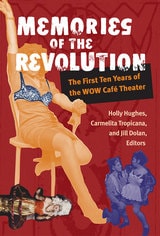
Memories of the Revolution
The First Ten Years of the WOW Café TheaterHolly Hughes, Carmelita Tropicana, and Jill Dolan, Editors
University of Michigan Press, 2015
Mergers of Teaching Hospitals in Boston, New York, and Northern California
John A. Kastor
University of Michigan Press, 2003
If a teaching hospital loses funding, what is the next option?
Mergers of Teaching Hospitals in Boston, New York, and Northern California investigates the recent mergers of six of the nation's most respected teaching hospitals. The author explains the reasons why these institutions decided to change their governance and the factors that have allowed two of them to continue to operate while forcing the third to dissolve after only 23 months of operation.
The case studies contained within this book rely on an impressive amount of research. Notably, instead of citing only published articles and books, the author includes information from numerous, extensive personal interviews with key participants in the various mergers. With this research the author not only presents to the reader a picture of why these mergers came about, but also investigates how the organizations have fared since joining together. The mergers are analyzed and compared in order to identify various methods of merger formation as well as ways in which other newly formed hospitals might accomplish a variety of important goals.
Offering a spectacular account of some of the mergers that occurred in the health care field at the close of the twentieth century, these stories provide insight into academia's relationship with teaching hospitals and the challenges involved in bringing prestigious and powerful medical institutions together. The institutions discussed are Partners, the corporation which includes the Massachusetts General Hospital and the Brigham and Women's Hospital, New York-Presbyterian Hospital, the union of the New York and Presbyterian hospitals in New York City, and the UCSF Stanford, the merged teaching hospitals of the University of California, San Francisco and Stanford. This book will particularly appeal to professionals and academics interested in medicine, business, and organizational studies.
Migration, Transnationalization & Race
In A Changing New YorkHector Cordero-Guzman
Temple University Press, 2001
In this ambitious book, nineteen scholars from a broad range of disciplines bring our understanding of New York's immigrant communities up to date by exploring the interaction between economic globalization and transnationalization, demographic change, and the evolving racial, ethnic, gender dynamics in the City. Urban and suburban, Asian, European, Latin American, and Caribbean, men and women and children—the essays here analyze the complex forces that shape the contemporary immigrant experience in New York City and the links between immigrant communities in New York and their countries of origin.
Modernism and the Harlem Renaissance
Houston A. Baker Jr.
University of Chicago Press, 1989
Money Has No Smell
The Africanization of New York CityPaul Stoller
University of Chicago Press, 2002
Blending fascinating ethnographic description with incisive social analysis, Stoller shows how these savvy West African entrepreneurs have built cohesive and effective multinational trading networks, in part through selling a simulated Africa to African Americans. These and other networks set up by the traders, along with their faith as devout Muslims, help them cope with the formidable state regulations and personal challenges they face in America. As Stoller demonstrates, the stories of these West African traders illustrate and illuminate ongoing debates about globalization, the informal economy, and the changing nature of American communities.
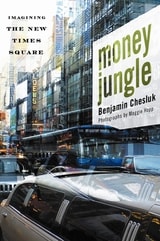
Money Jungle
Imagining the New Times SquareChesluk, Benjamin
Rutgers University Press, 2008
For more than a century, Times Square has mesmerized the world with the spectacle of its dazzling supersigns, its theaters, and its often-seedy nightlife. New York City’s iconic crossroads has drawn crowds of revelers, thrill-seekers, and other urban denizens, not to mention lavish outpourings of advertising and development money.
Many have hotly debated the recent transformation of this legendary intersection, with voices typically falling into two opposing camps. Some applaud a blighted red-light district becoming a big-budget, mainstream destination. Others lament an urban zone of lawless possibility being replaced by a Disneyfied, theme-park version of New York. In Money Jungle, Benjamin Chesluk shows that what is really at stake in Times Square are fundamental questions about city life—questions of power, pleasure, and what it means to be a citizen in contemporary urban space.
Chesluk weaves together surprising stories of everyday life in and around the Times Square redevelopment, tracing the connections between people from every level of this grand project in social and spatial engineering: the developers, architects, and designers responsible for reshaping the urban public spaces of Times Square and Forty-second Street; the experimental Midtown Community Court and its Times Square Ink. job-training program for misdemeanor criminals; encounters between NYPD officers and residents of Hell’s Kitchen; and angry confrontations between city planners and neighborhood activists over the future of the area.
With an eye for offbeat, telling details and a perspective that is at once sympathetic and critical, Chesluk documents how the redevelopment has tried, sometimes successfully and sometimes not, to reshape the people and places of Times Square. The result is a colorful and engaging portrait, illustrated by stunning photographs by long-time local photographer Maggie Hopp, of the street life, politics, economics, and cultural forces that mold America’s urban centers.
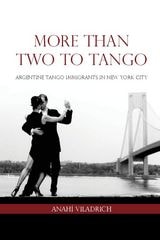
More Than Two to Tango
Argentine Tango Immigrants in New York CityAnahí Viladrich
University of Arizona Press, 2013
Based on a highly visible group of performers within the almost hidden population of Argentines in the United States, More than Two to Tango addresses broader questions on the understudied role of informal webs in the entertainment field. Through the voices of both early generations of immigrants and the latest wave of newcomers, Anahí Viladrich explores how the dancers, musicians, and singers utilize their complex social networks to survive as artists and immigrants. She reveals a diverse community navigating issues of identity, class, and race as they struggle with practical concerns, such as the high cost of living in New York City and affordable health care.
Argentina’s social history serves as the compelling backdrop for understanding the trajectory of tango performers, and Viladrich uses these foundations to explore their current unified front to keep tango as their own “authentic” expression. Yet social ties are no panacea for struggling immigrants. Even as More Than Two to Tango offers the notion that each person is truly conceived and transformed by their journeys around the globe, it challenges rosy portraits of Argentine tango artists by uncovering how their glamorous representations veil their difficulties to make ends meet in the global entertainment industry. In the end, the portrait of Argentine tango performers’ diverse career paths contributes to our larger understanding of who may attain the “American Dream,” and redefines what that means for tango artists.
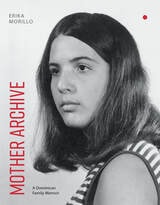
Mother Archive
A Dominican Family MemoirErika Morillo
University of Iowa Press, 2024
2024 NBCC Award Finalist, Autobiography
A family murder kept secret, the mysterious disappearance of her father, the systematic erasing of family photographs, a turbulent relationship with her mother, layers of trauma and abuse. In Mother Archive, Erika Morillo reconciles these demons of her past by searching for and seeking out the roots of her family. Intertwining memories with archival family photographs, news clippings, film stills, and artistic images, Morillo revisits her childhood growing up in the Dominican Republic, a place and time riddled with a history of violence and a tradition of erasure.
Spanning three generations across three different countries, this memoir works as a map in which the author traces incidents in her family history to help her understand herself and her own experience as a mother.
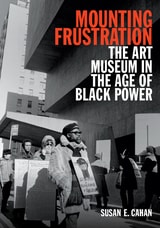
Mounting Frustration
The Art Museum in the Age of Black PowerSusan E. Cahan
Duke University Press, 2015
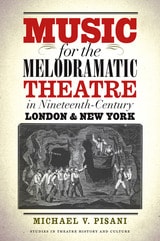
Music for the Melodramatic Theatre in Nineteenth-Century London and New York
Michael V. Pisani
University of Iowa Press, 2014
Mining old manuscripts and newspapers, he finds that starting in the 1790s, theatrical managers in Britain and the United States began to rely on music to play an interpretive role in melodramatic productions. During the nineteenth century, instrumental music—in addition to song—was a common feature in the production of stage plays.
The music played by instrumental ensembles not only enlivened performances but also served other important functions. Many actors and actresses found that accompanimental music helped them sustain the emotional pitch of a monologue or dialogue sequence. Music also helped audiences to identify the motivations of characters. Playwrights used music to hold together the hybrid elements of melodrama, heighten the build toward sensation, and dignify the tragic pathos of villains and other characters. Music also aided manager-directors by providing cues for lighting and other stage effects. Moreover, in a century of seismic social and economic changes, music could provide a moral compass in an uncertain moral universe.
Featuring dozens of musical examples and images of the old theatres, Music for the Melodramatic Theatre charts the progress of the genre from its earliest use in the eighteenth century to the elaborate stage productions of the very early twentieth century.
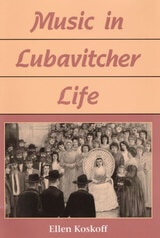
Music in Lubavitcher Life
Ellen Koskoff
University of Illinois Press, 2001
Drawing on twenty years of close study, Ellen Koskoff illuminates the world of the Lubavitcher Hasidim, a community of ultra-orthodox Jews centered in the Crown Heights section of Brooklyn, New York. Her classic ethnography offers an unprecedented look at nigunim, a body of paraliturgical, folk, and popular melodies that Lubavitchers regard as a primary form of spiritual communication with the divine.
Along with vivid descriptions of musical performance in religious contexts and private gatherings, Koskoff details the musical sounds and structures that symbolize Lubavitcher social relations. In particular, she examines the differences between Lubavitcher women's and men's music making and the underlying beliefs and assumptions that give rise to gendered musical behaviors, such as the dictum that prohibits men from hearing a woman sing.
Insightful and distinctive, Music in Lubavitcher Life combines anecdotes with history and musical analysis to reveal music making among the Lubavitchers as a gateway to their ideas about the nature of human spirituality, human social interaction, and God.
Musical Migration and Imperial New York
Early Cold War ScenesBrigid Cohen
University of Chicago Press, 2022
From the urban street level of music clubs and arts institutions to the world-making routes of global migration and exchange, this book redraws the map of experimental art to reveal the imperial dynamics and citizenship struggles that continue to shape music in the United States.
Beginning with the material conditions of power that structured the cityscape of New York in the early Cold War years, Brigid Cohen looks at a wide range of artistic practices (concert music, electronic music, jazz, performance art) and actors (Edgard Varèse, Charles Mingus, Yoko Ono, and Fluxus founder George Maciunas) as they experimented with new modes of creativity. Cohen links them with other migrant creators vital to the city’s postwar culture boom, creators whose stories have seldom been told (Halim El-Dabh, Michiko Toyama, Vladimir Ussachevsky). She also gives sustained and serious treatment to the work of Yoko Ono, something long overdue in music scholarship. Musical Migration and Imperial New York is indispensable reading, offering a new understanding of global avant-gardes and American experimental music as well as the contrasting feelings of belonging and exclusion on which they were built.
Muslims of Metropolis
The Stories of Three Immigrant Families in the WestRajagopalan, Kavitha
Rutgers University Press, 2008
The Muslim population globally is comprised of hundreds of ethnic, linguistic, and religious sub-communities. Yet, more often than not, the public conflates these diverse and unrelated communities, branding Muslim immigrants as a single, suspicious, and culturally antagonistic group of people. Generalizations like these have compromised many Muslim immigrants' sense of belonging and acceptance in places where they have lived, in some cases, for three or four generations.
In Muslims of Metropolis, Kavitha Rajagopalan takes a much needed step in personalizing and humanizing our understanding of the Muslim diaspora. Tracing the stories of three very different families-a Palestinian family moving to London, a Kurdish family moving to Berlin, and a Bangladeshi family moving to New York-she reveals a level of complexity and nuance that is seldom considered. Through their voices and in their words, Rajagopalan describes what prompted these families to leave home, what challenges they faced in adjusting to their new lives, and how they came to view their place in society. Interviews with community leaders, social justice organizations, and with academics and political experts in each of the countries add additional layers of insight to how broad political issues, like nationalist conflict, immigration reform, and antiterrorism strategies affect the lives of Muslims who have migrated in search of economic stability and personal happiness.
Although recent thinking about immigration policy in the United States and Europe emphasizes the importance of long-term integration, a global attitude that continues to sensationalize divisions between Muslim and other communities thwarts this possibility. Integration cannot occur with policy solutions alone-people must feel that they belong to a larger society. Whether read as simple stories or broader narratives, the voices in this revealing book are among the many speaking against generalization, prejudice, and fear that has so far surrounded Muslims living in the West.
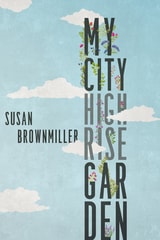
My City Highrise Garden
Kleit,Micah
Rutgers University Press, 2017
She reports the catastrophes: losing daytime access during building-wide renovations; assaults from a mockingbird during his mating season. And the joys: a peach tree fruited for fifteen years; the windswept birches lasted for twenty-five. Butterflies and bees pay annual visits. She pampers a buddleia, a honeysuckle, roses, hydrangeas, and more. Her adventures celebrate the tenacity of nature, inviting readers to marvel at her garden’s resilience, and her own.
Enhanced by over thirty color photographs, this passionate account of green life in a gritty, urban environment will appeal to readers and gardeners wherever they dwell.
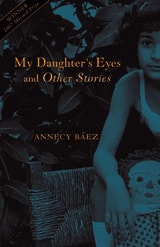
My Daughter's Eyes and Other Stories
StoriesAnnecy Báez
Northwestern University Press, 2007
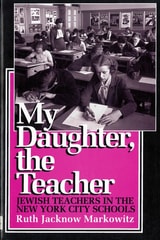
My Daughter, the Teacher
Jewish Teachers in the New York City SchoolsMarkowitz, Ruth Jacknow
Rutgers University Press, 1993