Results by title
51 books match the query 'Nicaragua' and 3 start with m

Margarita, How Beautiful the Sea
Sergio Ramírez
Northwestern University Press, 2007
In 1956 in a cafe in León, a group of literati gather, dedicated, among other things, to the rigorous reconstruction of the legend surrounding Darío—but also to conspire. There will be an attempt against dictator Somoza's life, and that little girl with the fan a half-century before will not be a disinterested party.
In Margarita, How Beautiful the Sea, Sergio Ramírez encompasses, in a complete metaphor of reality and legend, the entire history of his country. The narrative moves along paths fifty years apart, which inevitably converge. The story becomes a fascinating exercise on the power of memory, on the influence of the past, fictitious or not, in the finality of reality.
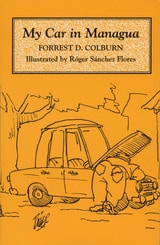
My Car in Managua
By Forrest D. Colburn
University of Texas Press, 1991
Histories of revolutions often focus on military, political, or economic upheavals but sometimes neglect to connect these larger events to the daily lives of "ordinary" people. Yet the peoples' perception that "things are worse than before" can topple revolutionary governments, as shown by the recent defeat of the Sandinista regime in Nicaragua and the governments of Eastern Europe. Providing the kind of prosaic, revealing details that more formal histories have excluded, My Car in Managua offers an objective, often humorous description of the great difficulties and occasional pleasures of life in Nicaragua during the Sandinista revolution.
During a year's work (1985-1986) at the Instituto Centroamericano de Administración de Empresas (INCAE), Forrest Colburn purchased a dilapidated car—and with it an introduction to everyday life in Nicaragua. His discoveries of the length of time required to register the car (approximately six weeks), the impossibility of finding spare parts (except when U.S. dollars were applied to the search), and the fact that "anyone getting into a car in Managua can be charged a small fee [for car watching] by anyone else" all suggest the difficulties most Nicaraguans faced living in a devastated economy.
Drawing on experiences from visits throughout the revolutionary period (1979-1989), Colburn also sheds light on how the Revolution affected social customs and language, gender roles and family relationships, equality and authority, the availability of goods and services, the status of ethnic minorities, and governmental and other institutions. Illustrations by Nicaragua's celebrated political cartoonist Róger Sánchez Flores enliven the lucid text.
Myths of Modernity
Peonage and Patriarchy in NicaraguaElizabeth Dore
Duke University Press, 2006
Dore seamlessly combines archival research, oral history, and an innovative theoretical approach that unites political economy with social history. She recovers the bygone voices of peons, planters, and local officials within documents such as labor contracts, court records, and official correspondence. She juxtaposes these historical perspectives with those of contemporary peasants, landowners, activists, and politicians who share memories passed down to the present. The reconceptualization of the coffee economy that Dore elaborates has far-reaching implications. The Sandinistas mistakenly believed, she contends, that Nicaraguan capitalism was mature and ripe for socialist revolution, and after their victory in 1979 that belief led them to alienate many peasants by ignoring their demands for land. Thus, the Sandinistas’ myths of modernity contributed to their downfall.