Results by title
527 books match the query 'Novel' and 26 start with m
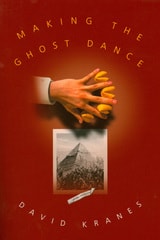
Making the Ghost Dance
A NovelDavid Kranes
Signature Books, 2006
“For the record, I am in this book and you are in this book. When they make the movie, it’s going to feature everybody. David Kranes writes from the marrow, and this novel is fierce and crammed with heart. It’s cerebral and cinematic, and if feels—like all of Kranes’ prose—like something new and something old. A man loves his life in the ways he can, and Peck’s ways are rich. I would say this book is about family and love and time. But it isn’t about something, it is something! If I were with you now, I’d put it in your hand. Wait, fortune, it has already appeared! So, now you’ll see what I mean.” —Ron Carlson, author of A Kind of Flying.
Malvina, or Spoken Word in the Novel
Ewa Szary-Matywiecka
Karolinum Press, 2020
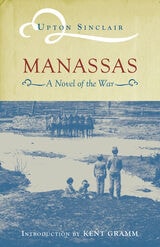
Manassas
A Novel of the WarUpton Sinclair
University of Alabama Press, 2000
Centers on the moral dimension of the conflict as it traces a young Mississippi boy’s conversion from pro-slavery Southerner to abolitionist Union soldier
Allan Montague, born on a Mississippi plantation about twenty years before the Civil War, has grown up with slavery and considers it natural. When his father moves to Boston for business and takes the boy with him, young Allan carries a knife given to him by his cousin to use in killing abolitionists.
The first abolitionist young Allan meets in Boston is Levi Coffin, the reputed founder of the Underground Railroad. In this first of many meetings with historical figures, Allan forms a friendship with Coffin, who eventually takes him to hear a speech by former slave Frederick Douglass. Douglass's powerful words cement Allan's transformation into an abolitionist—a transformation that will lead him back to his Deep South home with the hope of freeing slaves and eventually back to the North and the fateful Battle of Manassas.
Kent Gramm, author of the introduction for this new edition of Manassas, calls the novel “a modern version of the morality play,” with the United States as the central character. “The real story, he writes, is the moral phenomenon of the Civil War.” It is a powerful book that deserves to be revived, read, and studied.

Marimo, Mon Amour
A NovelKaren An-hwei Lee
University of Alabama Press, 2026
WINNER OF THE CATHERINE DOCTOROW INNOVATIVE FICTION PRIZE
A technocratic collapse erases an obscure poet from existence, she and her pet moss ball refuse to disappear
Marimo, Mon Amour is a surreal, contemplative novel set in the quarantined borough of Alphabet City, where a botched data migration leaves obscure poet Zinger Zingiber effectively erased from the record. Furloughed from her jobs as a dumpling-maker and asylum specialist, she withdraws to her apartment with only her pet moss ball, Marimo, for company. As the Bureau of Misidentification bans forbidden words and controls identity, Zinger appoints herself the “Minister of Loneliness,” observing a world suspended in time.
From this quiet refuge, Zinger meditates on solitude, the fragility of memory, and the small, ephemeral moments that become acts of meaning. Her narration drifts between dream and reality, blending whimsy with philosophical inquiry. Lyrical and recursive, the novel draws on the psychological depth of Dostoevsky and the surreal sensibilities of Italo Calvino and Yoko Ogawa as it explores agency a plague of absentia. Marimo, Mon Amour will appeal to readers of literary and speculative fiction, fans of surreal or philosophical narratives, and anyone drawn to meditations on isolation, resistance, and the endurance of the human spirit.
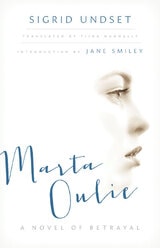
Marta Oulie
A Novel of BetrayalSigrid Undset
University of Minnesota Press, 2014
“I have been unfaithful to my husband.” Marta Oulie’s opening line scandalized Norwegian readers in 1907. And yet, Sigrid Undset had a gift for depicting modern women “sympathetically but with merciless truthfulness,” as the Swedish Academy noted in awarding her the Nobel Prize for Literature in 1928. At the time she was one of the youngest recipients and only the third woman so honored. It was Undset’s honest story of a young woman’s love life—“the immoral kind,” as she herself bluntly put it—that made her first novel an instant sensation in Norway.
Marta Oulie, written in the form of a diary, intimately documents the inner life of a young woman disappointed and constrained by the conventions of marriage as she longs for an all-consuming passion. Set in Kristiania (now Oslo) at the beginning of the twentieth century, Undset’s book is an incomparable psychological portrait of a woman whose destiny is defined by the changing mores of her day—as she descends, inevitably, into an ever-darker reckoning. Remarkably, though Undset’s other works have attracted generations of readers, Marta Oulie has never before appeared in English translation. Tiina Nunnally, whose award-winning translation of Undset’s Kristin Lavransdatter captured the author’s beautifully clear style, conveys the voice of Marta Oulie with all the stark poignancy of the original Norwegian.
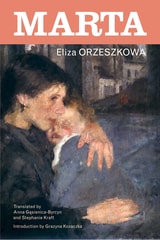
Marta
A NovelEliza Orzeszkowa
Ohio University Press, 2018
Eliza Orzeszkowa was a trailblazing Polish novelist who, alongside Leo Tolstoy and Henryk Sienkiewicz, was a finalist for the 1905 Nobel Prize in Literature. Of her many works of social realism, Marta (1873) is among the best known, but until now it has not been available in English. Easily a peer of The Awakening and A Doll’s House, the novel was well ahead of the English literature of its time in attacking the ways the labor market failed women.
Suddenly widowed, the previously middle-class Marta Świcka is left penniless and launched into a grim battle for her survival and that of her small daughter. As she applies for job after job in Warsaw—portrayed here as an every-city, an unforgiving commercial landscape that could be any European metropolis of the time—she is told time after time that only men will be hired, that men need jobs because they are fathers and heads of families.
Marta burns with Orzeszkowa’s feminist conviction that sexism was not just an annoyance but a threat to the survival of women and children. It anticipated the need for social safety nets whose existence we take for granted today, and could easily read as an indictment of current efforts to dismantle those very programs. Tightly plotted and exquisitely translated by Anna Gąsienica-Byrcyn and Stephanie Kraft, Marta resonates beyond its Polish setting to find its place in women’s studies, labor history, and among other works of nineteenth-century literature and literature of social change.

Masculine Figures
Fashioning Men and the Novel in Nineteenth-Century SpainNicholas Wolters
Vanderbilt University Press, 2022
Fictional masculinity performs a symbolic role in representing and negotiating the contradictions male novelists often encountered in their attempts to professionalize not only as writers, but also as businessmen, professors, lawyers, and politicians. Through specific and recurring figures like the student, the priest, the businessman, and the heir, male novelists portray and represent an increasingly middle-class world at odds with the values and virtues it inherited from an imperial Spanish past, and those it imported from more industrialized nations like England and France. The visual culture of the time and place marks the material turn in middle-class masculinity and sets the stage for discussions of race and sexuality.

Mazaltob
A NovelBlanche Bendahan
Brandeis University Press, 2024
Raised in the Judería or Jewish quarter of Tetouan, Morocco, at the turn of the 20th-century, sixteen-year-old Mazaltob finds herself betrothed to José, an uncouth man from her own community who has returned from Argentina to take a wife. Mazaltob, however, is in love with Jean, who is French, half-Jewish, and a free spirit. In this classic of North African Jewish fiction, Blanche Bendahan evokes the two compelling forces tearing Mazaltob apart in her body and soul: her loyalty to the Judería and her powerful desire to follow her own voice and find true love. Bendahan’s nuanced and moving novel is a masterly exploration of the language, religion, and quotidian customs constraining North African Jewish women on the cusp of emancipation and decolonization. Yaëlle Azagury and Frances Malino provide the first English translation of this modern coming-of-age tale, awarded a prize by the Académie Française in 1930, and analyze the ways in which Mazaltob, with its disconcerting blend of ethnographic details and modernist experimentation, is the first of its genre—that of the feminist Sephardi novel. A historical introduction, a literary analysis, and annotations elucidate historical and cultural terms for readers, supplementing the author’s original notes.
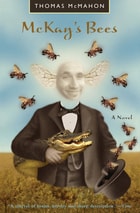
McKay's Bees
A NovelThomas McMahon
University of Chicago Press, 1978
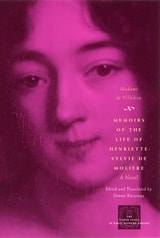
Memoirs of the Life of Henriette-Sylvie de Moliere
A NovelMadame de Villedieu
University of Chicago Press, 2004
Memoirs of the Life of Henriette-Sylvie de Molière, a semi autobiographical novel, portrays an enterprising woman who writes the story of her life, a complex tale that runs counter to social expectations and novelistic conventions. A striking work, the story skillfully mixes real events from the author's life with fictional adventures. At a time when few women published, Villedieu's Memoirs is a significant achievement in creating a voice for the early modern woman writer. Produced while the French novel form was still in its infancy, it should be welcomed by any scholar of women's writing or the early development of the novel.
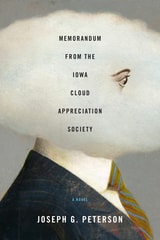
Memorandum from the Iowa Cloud Appreciation Society
A NovelJoseph G. Peterson
University of Iowa Press, 2022
Stuck in an airport because of blizzard conditions, and packed into a crowded terminal with other travelers, Moore has come to believe that his life is not worth reporting about because it has largely been a life lived without incident. However, chance encounters with a yoga instructor, a man traveling to bury his mother, and an enigmatic woodsman reawaken long dormant emotions about his father’s suicide and cause Jim to newly reflect on his own life and on a memorandum that he later discovered in his deceased father’s papers, which lists all the names of the clouds, and which Jim now, from time to time, recants as if it were his own private kaddish to memorialize his lost father.
Like the pilgrims in Chaucer’s The Canterbury Tales who pass the time telling stories while stranded in the Tabard Inn, Memorandum from the Iowa Cloud Appreciation Society tells the tale of a traveling salesman and what really happened over the course of his forty- six years.
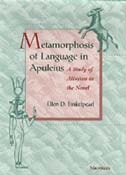
Metamorphosis of Language in Apuleius
A Study of Allusion in the NovelEllen D. Finkelpearl
University of Michigan Press, 1998
When Apuleius wrote his Metamorphoses, the novel--indeed the very concept of fiction in prose--was new. This study argues that Apuleius' repeated allusions to earlier Latin authors such as Vergil, Ovid, and Seneca represent an exploration on his part of the relationship between the novel and more established genres of the era. Apuleius' struggle with this tradition, Finkelpearl maintains, parallels the protagonist's move from an acceptance of the dominance of traditional forms to a sense of arrival and self- discovery.
An introductory chapter includes general discussion of the theory and practice of allusion. Finkelpearl then revisits the issues of parody in Apuleius. She also includes discussion of Apuleius' use of Vergil's Sinon, the Charite episode in relation to Apuleius' African origins, and the stepmother episode. Finally a new reading of Isis is offered, which emphasizes her associations with writing and matches the multiformity of the goddess with the novel's many voices.
This book will be of interest to scholars of literature and the origins of the novel, multiculturalism, and classical literature.
Ellen D. Finkelpearl is Associate Professor of Classics at Scripps College, Claremont, California.

Mickey’s Harvest
A Novel of a Deaf Boy’s Checkered LifeHoward L. Terry
Gallaudet University Press, 2015
Mickey Dunmore’s story begins with the sinking of his father’s merchant sailing ship and ends with a cliffhanger in World War I. In school, after an illness caused his deafness, Mickey finds himself constantly fighting the hearing boys and later competing with the signing students when he attends a residential school for deaf students. In college, he and his best friend Dick Wagner leave early to travel the nation with the hobos, carnies, and grifters. In one town, they outfox a barker who was using a deaf girl to “read” the minds of their marks. Further on, they meet Bunny, the Mighty Mite deaf man who helps expose a hearing woman posing as deaf to scam sympathetic people. Mickey faces his greatest challenge when he falls in love with Marion Carrel, a deaf girl whose hearing father forbids their romance on eugenics grounds.
Terry, who became deaf at the age of 11, states from the outset that he means for his novel to reveal the biases confronting deaf people at the time. As a tonic, he populates Mickey’s Harvest with artistic, talented deaf individuals who engage readers in an earlier, colorful time as they “show their stuff.”
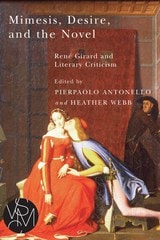
Mimesis, Desire, and the Novel
Rene Girard and Literary CriticismPierpaolo Antonello
Michigan State University Press, 2015
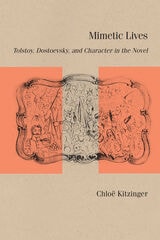
Mimetic Lives
Tolstoy, Dostoevsky, and Character in the NovelChloë Kitzinger
Northwestern University Press, 2021
Through new readings of War and Peace, Anna Karenina, The Brothers Karamazov, and other novels, Kitzinger traces a productive tension between mimetic characterization and the author’s ambition to transform the reader. She shows how Tolstoy and Dostoevsky create lifelike characters and why the dream of carrying the illusion of “life” beyond the novel consistently fails. Mimetic Lives challenges the contemporary truism that novels educate us by providing enduring models for the perspectives of others, with whom we can then better empathize. Seen close, the realist novel’s power to create a world of compelling fictional persons underscores its resources as a form for thought and its limits as a direct source of spiritual, social, or political change.
Drawing on scholarship in Russian literary studies as well as the theory of the novel, Kitzinger’s lucid work of criticism will intrigue and challenge scholars working in both fields.

Ministers of Fire
A NovelMark Harril Saunders
Ohio University Press, 2012
Kabul, Afghanistan, 1979: CIA station chief Lucius Burling, an idealistic but flawed product of his nation’s intelligence establishment, barely survives the assassination of the American ambassador. Burling’s reaction to the murder, and his desire to understand its larger meaning, propel him on a journey of intrigue and betrayal that will reach its ultimate end in the streets of Shanghai, months after 9/11. A Chinese dissident physicist may (or may not) be planning to sell his country’s nuclear secrets, and in his story Burling, now living quietly as consul, recognizes the fingerprints of a covert operation, one without the obvious sanction of the Agency. The dissident’s escape draws the violent attention of the Chinese internal security service, and as Burling is drawn inexorably into their path, he must face the ghosts of his past misadventures and a present world of global trafficking, fragile alliances, and the human need for connection above all.
Reminiscent of the best work of Graham Greene and John le Carré, Ministers of Fire extends the spy thriller into new historical, political, and emotional territory.
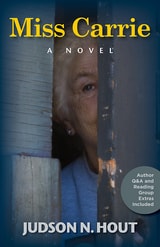
Miss Carrie
A NovelJudson N. Hout
Parkhurst Brothers, Inc., 2013
“Set in Arkansas during World War II, Hout’s touching story of an orphaned boy's relationship with the inhabitant of a small town's "haunted house” will keep you guessing, right up to the satisfying ending. Another endearing novel from Judson Hout."
--Cindy Ward, Dallas, Texas
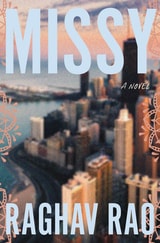
Missy
A NovelRaghav Rao
Northwestern University Press, 2026
A remarkable young woman flees India to chase the dream of self-reinvention in America
The orphaned girls of St. Ursula’s convent are destined to be nuns or servants, but seventeen-year-old Savi dreams of escape. She is chosen to work as a governess for the wealthy Nandiyar family at their country estate in Tamil Nadu, where she falls for a lively and carefree apprentice sculptor. After the violent and horrific events of a single night, they are forced to flee, leaving their homeland forever in the rearview.
Decades later, Savi has become known to all as “Missy” and runs a successful driving school in Chicago. She is a pillar of the South Asian community and the mother of two brilliant, stubborn young women, Mansi and Shilpa. But when Varun, a charming doctor with mysterious connections to her past, enters their lives, a chain of events is set off that puts Missy’s carefully constructed world in jeopardy. Can Missy outrun her secrets? And, if she is forced to face them, what will become of those she loves?

Models of Value
Eighteenth-Century Political Economy and the NovelJames Thompson
Duke University Press, 1996
In this account, political economy and the novel clearly arise as solutions to a crisis in the notion of value. Exploring the ways in which these different genres responded to the crisis—political economy by reconceptualizing wealth as capital, and the novel by refiguring intrinsic or human worth in the form of courtship narratives—Thompson rereads several literary works, including Defoe’s Roxana, Fielding’s Tom Jones, and Burney’s Cecilia, along with influential contemporary economic texts. Models of Value also traces the discursive consequences of this bifurcation of value, and reveals how history and theory participate in the very novelistic and economic processes they describe. In doing so, the book bridges the opposition between the interests of Marxism and feminism, and the distinctions which, newly made in the eighteenth century, continue to inform our discourse today.
An important reformulation of the literary and cultural production of the eighteenth century, Models of Value will attract students of the novel, political economy, and of literary history and theory.

Moon Lily
(a novel)Susan Lang
University of Nevada Press, 2008
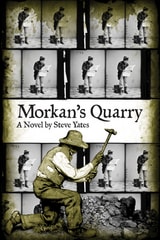
Morkan's Quarry
A NovelSteve Yates
Moon City Press, 2010

Mourner's Bench
A NovelSanderia Faye
University of Arkansas Press, 2015
But first, Sarah would need to navigate the growing tensions of small-town Arkansas in the 1960s. Both smarter and more serious than her years (a “fifty-year-old mind in an eight-year-old body,” according to Esther), Sarah was torn between the traditions, religion, and work ethic of her community and the progressive civil rights and feminist politics of her mother, who had recently returned from art school in Chicago. When organizers from the Student Non-Violent Coordinating Committee (SNCC) came to town just as the revival was beginning, Sarah couldn’t help but be caught up in the turmoil. Most folks just wanted to keep the peace, and Reverend Jefferson called the SNCC organizers “the evil among us.” But her mother, along with local civil rights activist Carrie Dilworth, the SNCC organizers, Daisy Bates, attorney John Walker, and indeed most of the country, seemed determined to push Maeby toward integration.
With characters as vibrant and evocative as their setting, Mourner’s Bench is the story of a young girl coming to terms with religion, racism, and feminism while also navigating the terrain of early adolescence and trying to settle into her place in her family and community.

Mrs. Shaw
A NovelMukoma Wa Ngugi
Ohio University Press, 2015

My Heart Beats Fast
A NovelNadia Chonville; Translated from French by Corine Labridy
Vanderbilt University Press, 2026
Chonville’s novel is at the vanguard of a new Antillean literature that moves beyond créolité (the last identifiable literary movement in the Antillean canon) in several important ways: First, although it does reflect on the past (as indeed prescribed by the créolistes), it is firmly anchored in the present, which Chonville, a trained social scientist, captures unflinchingly. Second, it complexifies the Antilles gender landscape with characters whose intersectional realities are explored with depth and care.
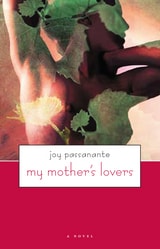
My Mother's Lovers
(A Novel)Joy Passanante
University of Nevada Press, 2002
As a teenager, Lake joins her grandparents in Missouri and spends her youth seeking answers to her questions about the past, trying to understand the complex pattern of betrayals that shaped it. Only when she herself becomes party to a betrayal as devastating as any committed by her mother does Lake begin to understand.
Passanante writes with a keen eye for the details of behavior that reveal the yearnings and fears beneath the surface. She shows us that the path to understanding is never a smooth one, and that love is often far more complex than we can imagine. Western Literature Series.
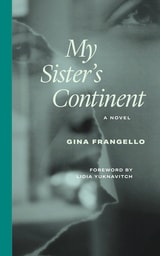
My Sister's Continent
A NovelGina Frangello, Lidia Yuknavitch
Northwestern University Press, 2026
Kirby is a young woman attempting to come to terms with a failed bout of therapy and the truth about her identical twin, Kendra. Since girlhood, Kirby both idolized and envied Kendra, a fearless and charismatic ballet dancer who commanded the attention of everyone in their orbit. In the aftermath of tragedy, Kirby is sent a case study by a former psychiatrist intent on publishing a distorted version of her family’s secrets. She responds by using Kendra’s private and revealing journals to reconstruct their final months together, as well as her own “disastrous” time in therapy, to voice her own truth.
Freud’s “Dora,” a young woman whose mysterious symptoms he contentiously chalked up to “hysteria,” appears at turns in the faces of each twin as they navigate a world of sexuality, familial dysfunction, and possibly-psychosomatic ailments. Reissued with a new foreword by Lidia Yuknavitch, Frangello’s groundbreaking early novel brings “Dora” into a new era.