80 books match the query 'Ontology' and 11 start with m
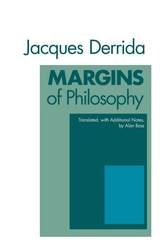
cover of Margins of Philosophy

Margins of Philosophy

Jacques Derrida

University of Chicago Press, 1982
"In this densely imbricated volume Derrida pursues his devoted, relentless dismantling of the philosophical tradition, the tradition of Plato, Kant, Hegel, Nietzsche, Husserl, Heidegger—each dealt with in one or more of the essays. There are essays too on linguistics (Saussure, Benveniste, Austin) and on the nature of metaphor ("White Mythology"), the latter with important implications for literary theory. Derrida is fully in control of a dazzling stylistic register in this book—a source of true illumination for those prepared to follow his arduous path. Bass is a superb translator and annotator. His notes on the multilingual allusions and puns are a great service."—Alexander Gelley, Library Journal
[more]
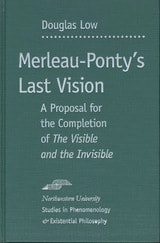
cover of Merleau-Ponty's Last Vision: A Proposal for the Completion of "The Visible and the Invisible"

Merleau-Ponty's Last Vision

A Proposal for the Completion of "The Visible and the Invisible"

Douglas Low

Northwestern University Press, 2000

Few writers' unfinished works are considered among their most important, but such is the case with Merleau-Ponty's The Visible and the Invisible. What exists of it is a mere beginning, yet it bridged modernism and postmodernism in philosophy. Low uses material from some of Merleau-Ponty's later works as the basis for completion. Working from this material and the philosopher's own outline, Low presents how this important work would have looked had Merleau-Ponty lived to complete it.
[more]
cover of Merleau-Ponty's Ontology: Second Edition

Merleau-Ponty's Ontology

Second Edition

M.C. Dillon

Northwestern University Press, 1997

Originally published in 1988, M.C. Dillon's classic study of Merleau-Ponty is now available in a revised second edition containing a new preface and a new chapter on "Truth in Art." Dillon's thesis is that Merleau-Ponty has developed the first genuine alternative to ontological dualism seen in Western philosophy. From his early work on the philosophical significance of the human body to his later ontology of flesh, Merleau-Ponty shows that the perennial problems growing out of dualistic conceptions of mind and body, subject and object, immanence and transcendence can be resolved within the framework of a new way of thinking based on the exemplar of the worldly embodiment of thought.
[more]
cover of Merleau-Ponty’s Developmental Ontology

Merleau-Ponty’s Developmental Ontology

David Morris

Northwestern University Press, 2018

Winner of the 2020 Edward Goodwin Ballard Prize in Phenomenology

Merleau-Ponty's Developmental Ontology
shows how the philosophy of Maurice Merleau-Ponty, from its very beginnings, seeks to find sense or meaning within nature, and how this quest calls for and develops into a radically new ontology. 

David Morris first gives an illuminating analysis of sense, showing how it requires understanding nature as engendering new norms. He then presents innovative studies of Merleau-Ponty's The Structure of Behavior and Phenomenology of Perception, revealing how these early works are oriented by the problem of sense and already lead to difficulties about nature, temporality, and ontology that preoccupy Merleau-Ponty's later work. Morris shows how resolving these difficulties requires seeking sense through its appearance in nature, prior to experience—ultimately leading to radically new concepts of nature, time, and philosophy.

Merleau-Ponty's Developmental Ontology makes key issues in Merleau-Ponty's philosophy clear and accessible to a broad audience while also advancing original philosophical conclusions.
[more]
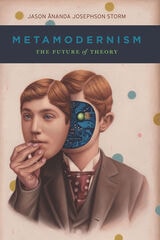
cover of Metamodernism: The Future of Theory

Metamodernism

The Future of Theory

Jason Ananda Josephson Storm

University of Chicago Press, 2021

For decades, scholars have been calling into question the universality of disciplinary objects and categories. The coherence of defined autonomous categories—such as religion, science, and art—has collapsed under the weight of postmodern critiques, calling into question the possibility of progress and even the value of knowledge. Jason Ānanda Josephson Storm aims to radicalize and move beyond these deconstructive projects to offer a path forward for the humanities and social sciences using a new model for theory he calls metamodernism.

Metamodernism works through the postmodern critiques and uncovers the mechanisms that produce and maintain concepts and social categories. In so doing, Storm provides a new, radical account of society’s ever-changing nature—what he calls a “Process Social Ontology”—and its materialization in temporary zones of stability or “social kinds.” Storm then formulates a fresh approach to philosophy of language by looking beyond the typical theorizing that focuses solely on human language production, showing us instead how our own sign-making is actually on a continuum with animal and plant communication.

Storm also considers fundamental issues of the relationship between knowledge and value, promoting a turn toward humble, emancipatory knowledge that recognizes the existence of multiple modes of the real. Metamodernism is a revolutionary manifesto for research in the human sciences that offers a new way through postmodern skepticism to envision a more inclusive future of theory in which new forms of both progress and knowledge can be realized.
[more]
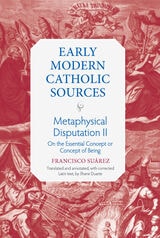
cover of Metaphysical Disputation II: On the Essential Concept or Concept of Being

Metaphysical Disputation II

On the Essential Concept or Concept of Being

Francisco Suarez

Catholic University of America Press, 2022
Francisco Suárez (1548-1617) was one of the most important philosophers and theologians of early modern Aristotelian scholasticism. Although Suárez spent most of his academic career as a professor of theology, he is better known today for his Metaphysical Disputations (Salamanca, 1597). The present volume contains a facing-page English translation of Metaphysical Disputation II, which is devoted to the nature of real being, the subject of metaphysics. In it, Suárez is especially concerned, first, to argue there is a single nature of being common to all real beings, and second, to show what this nature consists in. The Latin text contained in this volume introduces a significant number of corrections to the text of the Vivès edition, the one standardly used by scholars of Suárez, and thus more faithfully reproduces the text of the first edition. The volume also contains a lengthy introduction that provides a detailed survey of the disputation’s principal claims and arguments.
[more]
cover of Metaphysical Disputations III and IV: On Being's Passions in General and Its Principles and On Transcendental Unity in General

Metaphysical Disputations III and IV

On Being's Passions in General and Its Principles and On Transcendental Unity in General

Francisco Suarez

Catholic University of America Press, 2023
Francisco Suárez (1548-1617) was one of the most important philosophers and theologians of Early Modern Scholasticism. Although Suárez spent most of his academic career as a professor of theology, he is better known today for his Metaphysical Disputations (Salamanca, 1597). The present volume contains a facing-page English translation of Metaphysical Disputations III & IV. Metaphysical Disputation III offers a general treatment of the properties of being as such, while Metaphysical Disputation IV deals with one of these properties in particular, transcendental unity. The Latin text contained in this volume introduces a significant number of corrections to the text of the Vivès edition, the one standardly used by scholars of Suárez, and thus more faithfully reproduces the text of the first edition. The volume also contains a lengthy introduction that provides a detailed survey of the disputations’ principal claims and arguments.
[more]
cover of Metaphysics as Mediating Dialogue

Metaphysics as Mediating Dialogue

Olivia Blanchette

Catholic University of America Press, 2023

Metaphysics is not often spoken of as a venue for dialogue about anything, let alone culture or religion, which are more readily associated with phenomenology or hermeneutics in contemporary thinking. This collection of essays, however, by the late Boston College philosopher Oliva Blanchette, maintains the absolute necessity of metaphysics as a prerequisite for examining any particular ‘realm of being,’ in all areas of human inquiry, from the particular sciences to historical cultures and religions. Blanchette proposes metaphysics as a fundamental and necessary level of intelligence presupposed in any exercise of judgment, discourse, or dialogue, among rational beings. At the same time, he defends the idea that dialogue is the first and most fundamental form in which such reasoning takes place in human experience, on a radically intersubjective level through language. Metaphysics is not an abstraction removed from human experience. Rather, it is a science in its own right defining itself in relation to ‘being as being’, its subject matter, as it depends on all the particular sciences and bodies of knowledge. Firmly standing on the ground of human experience, and on the human person as primary analogate of being, it opens up an entire realm of questioning that the particular sciences and bodies of knowledge, operating in functional separation, cannot pose on their own, especially when they take, in a reductionist fashion, their own object to be the prime analogate. Metaphysics, in fact, insinuates itself into each and every particular science in exploring its own subject matter of ‘being as being’ in the analogical sense, advancing to more and more complex stages of analogy through dialogue among different spirits and cultures, and reaching its terminus in the transcendent aspect of spirit and religion. In this sense, metaphysics has much to say to theologians: without metaphysics, theology reduces to mere superstition.
[more]
cover of Myriad Intimacies

Myriad Intimacies

Lata Mani

Duke University Press, 2022

In Myriad Intimacies postcolonial theorist, spiritual practitioner, and filmmaker Lata Mani oscillates between text and video, poetry and prose, genre and form, register and voice, and secular and sacred to offer a transmedia exploration of the interrelatedness of lives, concepts, frameworks, and aspects of self. She draws on concepts from tantra—a philosophy that celebrates matter as alive, embodiment as sacred, and the senses as a form of intelligence—alongside feminist, critical race, and cultural theory to meditate on the ways in which everyone and everything exists in mutually constitutive interrelations. Addressing issues ranging from desire, the body, nature, and love, to otherness, identity politics, social justice, #MeToo, and the COVID-19 pandemic, Mani foregrounds the power and necessity of recognizing relationality as foundational. Throughout, she offers a way of reframing what we think we know and how we come to know it, demonstrating that it is only by acknowledging and embracing the indivisible and interdependent nature of existence that we restore our true intimacy with each other and the world.
[more]
cover of Mystery Of Being Vol 1: Reflection & Mystery

Mystery Of Being Vol 1

Reflection & Mystery

Gabriel Marcel

St. Augustine's Press, 2001

The Mystery of Being contains the most systematic exposition of the philosophical thought of Gabriel Marcel, a convert to Catholicism and the most distinguished twentieth-century exponent of Christian existentialism. Its two volumes are the Gifford lectures which Marcel delivered in Aberdeen, Scotland, in 1949 and 1950. Marcel's work fundamentally challenges most of the major positions of the atheistic existentialists (Sartre, Beauvoir, Camus), especially their belief in an absurd, meaningless, godless universe.
These volumes deal with almost all of the major themes of Marcel's thought: the nature of philosophy, our broken world, man's deep ontological need for being, i.e., for permanent eternal values, our incarnate bodily existence, primary and secondary reflection, participation, being in situation, the identity of the human self, intersubjectivity, mystery and problem, faith, hope, and the reality of God, and immortality.
[more]
cover of Mystery Of Being Vol 2: Faith & Reality

Mystery Of Being Vol 2

Faith & Reality

Gabriel Marcel

St. Augustine's Press, 2001

The Mystery of Being contains the most systematic exposition of the philosophical thought of Gabriel Marcel, a convert to Catholicism and the most distinguished twentieth-century exponent of Christian existentialism. Its two volumes are the Gifford lectures which Marcel delivered in Aberdeen, Scotland, in 1949 and 1950. Marcel's work fundamentally challenges most of the major positions of the atheistic existentialists (Sartre, Beauvoir, Camus), especially their belief in an absurd, meaningless, godless universe.

These volumes deal with almost all of the major themes of Marcel's thought: the nature of philosophy, our broken world, man's deep ontological need for being, i.e., for permanent eternal values, our incarnate bodily existence, primary and secondary reflection, participation, being in situation, the identity of the human self, intersubjectivity, mystery and problem, faith, hope, and the reality of God, and immortality.

[more]