Results by title
572 books match the query 'Photography' and 31 start with m

Madison
Zane Williams
Wisconsin Historical Society Press, 2008
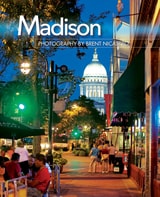
Madison
Brent Nicastro
University of Wisconsin Press, 2011
Brent Nicastro showcases the dynamic power, energy, and sheer beauty of Madison in this book of photography. Since the 1970s, Nicastro has been photographing the splendor of Madison, and his feel for his home is never more evident than in these images of the Dane County Farmers’ Market, the State Capitol building, the University of Wisconsin campus in all seasons, football at Camp Randall Stadium and basketball at the Kohl Center, the Monona Terrace Convention and Community Center designed by Frank Lloyd Wright, the Memorial Union Terrace, Picnic Point, and many more landmarks that evoke Madison’s charm.
Accompanying each image are captions in four languages—English, German, Spanish, and Chinese—making this book a perfect gift volume for all who love Madison. Visitors, students, and lifelong residents will savor this photographic portrait of beautiful Madison, Wisconsin.

Madison
Portraits of Our NeighborsLaura Jo Amaral and Stacie Huckeba; Foreword by Carlene Carter
Vanderbilt University Press, 2025
Madison: Portraits of Our Neighbors, a photography book and living historical document of a unique Tennessee community, is the result of an artistic partnership between internationally recognized photographer Stacie Huckeba and Madison, Tennessee, community volunteer Laura Jo Amaral. This book captures the heart of the people who contribute to the Madison community as it is today, through portraits of a range of its citizens—a world-class bass player, a nonagenarian cattle farmer, a TikTok celebrity, a singer-songwriter, a mariachi band, the personal photographer for Johnny Cash, a beloved gymnastics coach, model airplane enthusiasts, educators, a fashion designer, a puppet enthusiast, a pastor and outreach worker, and an array of artists, small business owners, farmers, and local legends. Beyond a collection of portraits, it is a testament to an enduring urban community, a celebration of the shared human experience, and a reminder to see our neighbors in their best light. Madison: Portraits of Our Neighbors invites readers to celebrate the tapestry of humanity that weaves through this distinctive neighborhood.
This book is the recipient of the 2026 Norman L. and Roselea J. Goldberg Prize from Vanderbilt University Press for the best book in the area of art or medicine.
Madison
The Illustrated History, 1932–1979Stuart D. Levitan
University of Wisconsin Press, 2026
This second volume in the acclaimed illustrated civic history of Madison, Wisconsin, tells the story of this iconic midwestern city in the middle years of the twentieth century. Like the rest of America in this period, Madison was buffeted by a boom-and-bust economy, hot and cold wars abroad, and social and cultural changes on the homefront. Stuart D. Levitan, a mainstay of Madison media and government since 1975, offers a decade-by-decade visual and narrative account of the city’s transformation—as well as that of its major public university. Featuring hundreds of illustrations, this volume also highlights the local legends and luminaries who shaped the city, from bootleggers to world-famous architects to radicals and revolutionaries.
Madison
The Illustrated History, Volume 1, 1856–1931Stuart D. Levitan
University of Wisconsin Press, 2006
This engaging illustrated history, full of photographs, maps, and bird’s-eye views, captures Madison’s early history from its first days as a city to the Great Depression. Biographical vignettes tell the stories of early movers and shakers in the city. The volume includes many archival images of Madison that have never been published or have not been seen for a century or more.
Magical Nominalism
The Historical Event, Aesthetic Reenchantment, and the PhotographMartin Jay
University of Chicago Press, 2025
In this magisterial new book, intellectual historian Martin Jay traces the long-standing competition between two versions of nominalism—the “conventional” and the “magical.” Since at least William of Ockham, according to Jay, the conventional form of nominalism has contributed to the disenchantment of the world, by viewing general terms as nothing more than mere names we use to group particular objects together, rejecting the idea that they refer to a further, “higher” reality. Magical nominalism, instead, performs a reenchanting function, by investing proper names, disruptive events, and singular objects with an auratic power of their own. Drawing in part on Jewish theology, it challenges the elevation of the constitutive subject resulting from Ockham’s reliance on divine will in his critique of real universals.
Starting with the fourteenth-century revolution of nominalism against Scholastic realism, Jay unpacks various “counterrevolutions” against nominalism itself, including a magical alternative to its conventional form. Focusing on fundamental debates over the relationship between language, thought, and reality, Jay illuminates connections across thinkers, disciplines, and vast realms of human experience. Ranging from theology and philosophy of history to aesthetics and political theory, this book engages with a range of artists and thinkers, including Adorno, Ankersmit, Badiou, Barthes, Bataille, Benjamin, Blumenberg, Derrida, Duchamp, Foucault, Kracauer, Kripke, and Lyotard. Ultimately, Magical Nominalism offers a strikingly original way to understand humanity’s intellectual path to modernity.
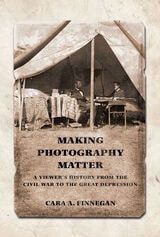
Making Photography Matter
A Viewer's History from the Civil War to the Great DepressionCara Finnegan
University of Illinois Press, 2017
Cara A. Finnegan analyzes a wealth of newspaper and magazine articles, letters to the editor, trial testimony, books, and speeches produced by viewers in response to specific photos they encountered in public. From the portrait of a young Lincoln to images of child laborers and Depression-era hardship, Finnegan treats the photograph as a locus for viewer engagement and constructs a history of photography's viewers that shows how Americans used words about images to participate in the politics of their day. As she shows, encounters with photography helped viewers negotiate the emergent anxieties and crises of U.S. public life through not only persuasion but action, as well.

Malinowski's Kiriwina
Fieldwork Photography 1915-1918Michael W. Young
University of Chicago Press, 1998
Malinowski's Kiriwina presents nearly two hundred of Malinowski's previously unpublished photographs, taken between 1915 and 1918, of the Trobriand Islanders. The images are more than embellishments of his ethnography; they are a recreation in striking detail of a distant world. Michael Young, an anthropologist and Malinowski's authorized biographer, has selected the photographs based on one of Malinowski's unpublished studies of the region, and the plan of that abandoned project has helped structure this book.
Divided into fourteen sections, Malinowski's Kiriwina is a series of linked photo-essays based on Trobriand institutions and cultural themes as described by Malinowski. The introductory essay by Young appraises the founding anthropologist's photographic oeuvre, explains the historical circumstances and technical aspects of the images, and puts them in their colonial context. Young illuminates the photographs with quotations from Malinowski's diaries, letters, and field notes, thereby giving a biographical dimension to the collection. Commentaries on the images by contemporary Trobrianders add a further layer of interpretation. The result is a stunning record not only of a fascinating place, but of the mutual relationship between ethnography and the visual.
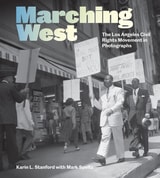
Marching West
The Los Angeles Civil Rights Movement in PhotographsKarin L. Stanford
J. Paul Getty Trust, The, 2026
This volume presents the first visual history of the people and organizations that led the fight for change during the civil rights era in Los Angeles.
During a 1963 speech to a crowd of nearly forty thousand at Wrigley Field in Los Angeles, Dr. Martin Luther King Jr. addressed the question of how Angelenos could contribute to the civil rights movement: “The most important thing that you can do is to set Los Angeles free, because you have segregation and discrimination here, and police brutality.”
Marching West illuminates the dynamic history of civil rights activism in Los Angeles and explores how the medium of photography both witnessed and advanced the fight for Black equality. Over one hundred images, some of which have never been previously published, reveal connections between the local and national movements and document the actions of Western coalitions, religious leaders, Hollywood stars, and concerned citizens. Drawn from the Tom & Ethel Bradley Center at California State University, Northridge (CSUN), the Getty Research Institute, and other Southern California collections—including prints by Harry Adams, Howard Bingham, Charles Brittin, Joe Flowers, Vera Jackson, and Charles Williams—this unprecedented volume presents less familiar but essential stories about American progress toward social justice.
Margaret Mead, Gregory Bateson, and Highland Bali
Fieldwork Photographs of Bayung Gede, 1936-1939Gerald Sullivan
University of Chicago Press, 1999
Margaret Mead, Gregory Bateson, and Highland Bali includes 200 photographs that the couple took between 1936 and 1939, the vast majority of which have never before been published. They vividly capture the everyday lives of the men, women, and children of Bayung Gedé, their homes and their temples, and many other fascinating details of village life not featured in Mead and Bateson's publications.
In a substantial introductory essay, Gerald Sullivan, who selected the photographs, uses excerpts from fieldnotes and correspondence to illuminate Mead and Bateson's ethnographic work. Tracing the project from its inception in their proposals to the publication of their work, Sullivan shows how they used the photographs both as fieldnotes and as elements in their theoretical argument. Finally, he explores what the photographs reveal—independently of Mead and Bateson's project—about the Balinese character to the contemporary viewer.
The result is a both a substantial contribution to visual anthropology and an invaluable supplement to the published works of Margaret Mead and Gregory Bateson.
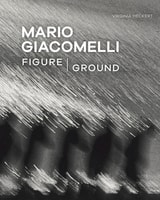
Mario Giacomelli
Figure/GroundVirginia Heckert
J. Paul Getty Trust, The, 2021
Mario Giacomelli (1925–2000) was born into poverty and lived his entire life in Senigallia, a seaside town along the Adriatic coast in Italy’s Marche region. He purchased his first camera in 1953 and quickly gained recognition for the raw expressiveness of his images. His preference for grainy, high-contrast film and paper produced bold, geometric compositions with glowing whites and deep blacks. Giacomelli most frequently focused his camera on the people, landscapes, and seascapes of the Marche, and he often spent several years expanding and reinterpreting a single body of work or repurposing an image made for one series for inclusion in another. By applying titles derived from poetry and literature to his photographs, he transformed ordinary subjects into meditations on time, memory, and existence.
Spanning the photographer’s earliest pictures to those made in the final years of his life, this publication celebrates the J. Paul Getty Museum’s extensive Giacomelli holdings, formed in large part through a significant gift from Daniel Greenberg and Susan Steinhauser.
This volume is published to accompany an exhibition on view at the J. Paul Getty Museum at the Getty Center from June 29 to October 10, 2021.
Marked, Unmarked, Remembered
A Geography of American MemoryAndrew Lichtenstein
West Virginia University Press, 2017
These powerful photographs by award-winning photojournalist Andrew Lichtenstein are interspersed with short essays by some of the leading historians of the United States. The book is introduced with substantive meditations on meaning and landscape by Alex Lichtenstein, editor of the American Historical Review, and Edward T. Linenthal, former editor of the Journal of American History. Individually, these images convey American history in new and sometimes startling ways. Taken as a whole, the volume amounts to a starkly visual reckoning with the challenges of commemorating a violent and conflictual history of subjugation and resistance that we forget at our peril.

Mars
The Pristine Beauty of the Red PlanetAlfred S. McEwen, Candice Hansen-Koharcheck, and Ari Espinoza
University of Arizona Press, 2017
Mars enthusiasts will appreciate these perfect snapshots of our current understanding of Mars, with soon-to-be classic pictures that have come to define our vision of the Red Planet. These images and their interpretations will be held as a yardstick for future exploration as we learn more about the surface and geologic processes of the fourth planet from the Sun.
With tantalizing and artistic glimpses at actively eroding slopes, impact craters, strange polar landscapes, avalanches, and even spectacular descent pictures of probes like the Phoenix Lander and the Mars Science Laboratory, we see what researchers are seeing.
Through vivid and beautiful images, this book underscores the need for such a camera on future orbiters, especially as more landing missions are planned. Mars: The Pristine Beauty of the Red Planet provides a stunning keepsake of one of humanity’s greatest accomplishments in space travel.
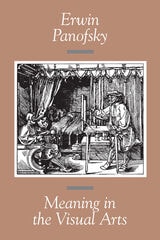
Meaning in the Visual Arts
Erwin Panofsky
University of Chicago Press, 1983
The papers in this volume represent a cross-section of Panofsky's major work. Included are selections from his well-known Studies in Iconology and The Life and Art of Albrecht Dürer, plus an introduction and an epilogue—"The History of Art as a Humanistic Discipline" and "Three Decades of Art History in the United States: Impressions of a Transplanted European"—as well as pieces written especially for this collection. All display Panofsky's vast erudition and deep commitment to a humanistic conception of art and art history.
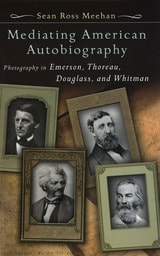
Mediating American Autobiography
Photography in Emerson, Thoreau, Douglass, and WhitmanSean Ross Meehan
University of Missouri Press, 2008
The emergence of photography in the mid-nineteenth century transformed ideas about how the self and nature could be pictured. Although the autobiographical potential of photography seems self-evident today, Sean Meehan takes us back to the birth of the medium when some of America’s preeminent authors began to think about photography’s implications for the representation of identity and the nature of autobiographical writing.
Both photography and autobiography involve a tension between disclosing and concealing their means of production: a chemical process for one, the writing process for the other. Meehan examines how four major authors—Ralph Waldo Emerson, Henry David Thoreau, Frederick Douglass, and Walt Whitman—were well aware of this tension and explored it in their work. By examining the implications of early photography in their writings, he shows how each engaged the new visual medium, how photography mediated their conceptions of self-representation, and how their appropriation of photographic thinking created a new kind of autobiography.
Examining the metonymic nature of photography, Meehan explores how the new medium influenced conceptions of visual and verbal representation. He intertwines these four writers’ reflections on photography—in Emerson’s Representative Men, Thoreau’s journals, Douglass’s narratives of slavery, and Whitman’s Specimen Days—with theories of photography as expounded by its inventors and observers, from Louis Daguerre and William Talbot in Europe to Oliver Wendell Holmes and Marcus Root in America.
As the first book to focus on the emergence of this new visual medium during the American Renaissance, Mediating American Autobiography shows us what photography means for American literature in general and for the genre most closely linked to it in particular. Because the engagement of these writers with photography has been neglected in previous scholarship, Meehan’s work provocatively bridges the study of two media and illuminates an important aspect of American thought and culture at the dawn of the technological era.
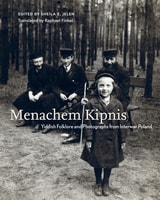
Menachem Kipnis
Yiddish Folklore and Photographs from Interwar PolandSheila E. Jelen
Rutgers University Press, 2026
Menachem Kipnis (1878–1942) was one of the early twentieth-century’s greatest Jewish eastern European ethnomusicologists, folklorists, and photographers. He had a weekly column in the Warsaw Yiddish newspaper Haynt, retelling humorous old folk stories about the fictional Polish town of Chelm, populated exclusively by fools. At the same time, his photographs of Jewish life in eastern Europe regularly appeared in the Forverts (Forward), the most popular Yiddish daily newspaper in the United States. Now, for the first time, Kipnis’s stories and photographs are published together in a single book.
Menachem Kipnis brings these photographs and stories into dialogue with one another, bridging the Jewish communities in Poland and in America during the interwar period. This dialogue, between image and text, between European metropolis and American metropolis, captures a key historical moment when American Jews sought to imagine the lives of their coreligionists in the “Old Country” and eastern European urban Jews sought to distinguish themselves from their Jewish compatriots who were still living in the shtetl. Including an introductory essay, annotations, and an epilogue by Sheila E. Jelen, Menachem Kipnis suggests new ways of understanding both visual and literary depictions of eastern European Jewish culture between the two world wars.
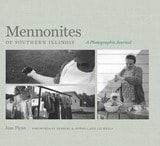
Mennonites of Southern Illinois
A Photographic JournalJane Flynn, with forewords by Herbert K. Russell and Liz Wells
Southern Illinois University Press, 2024
WINNER, Certificate of Excellence in “Publications – Other” from the Illinois State Historical Society’s 2025 Best of Illinois History Awards!
“In the World But Not of It”
Offering a glimpse into a world largely misunderstood by mainstream society, this book documents the period of eight years that Jane Flynn practiced with Mennonites in two different Southern Illinois communities: Stonefort, and Mount Pleasant in Anna. Despite her status as an outsider, Flynn was welcomed and allowed to photograph the Mennonites in their homes, making applesauce, farming, and beekeeping.
Escaping persecution from the Catholic Church in Europe, the Mennonites arrived in America in 1683, settling in what is now Pennsylvania. Today, they live in almost all 50 states, Canada, and South America. To reflect the Mennonites’ manual-labor lifestyle, Flynn processed her black-and-white photographs by hand and hand-printed them in a dark room. The imagery explores the Mennonites’ labors, leisure, and faith by documenting their homes, places of work and worship, and the Illinois Ozark landscape they inhabit.
Similar to the Amish and the Quakers, Mennonites consider the Bible the supreme authority and insist on a separation between church and state. To enact that separation, they distinguish themselves from society in speech, dress, business, recreation, education, pacifism, and by refusing to participate in politics. They believe in nonconformity to the world, discipleship, and being born again through adult baptism. With Mennonites of Southern Illinois, Jane Flynn provides representation for these closed communities and illustrates the Mennonites’ struggle to find and maintain balance between rustic and modern life while remaining faithful to their religious beliefs.
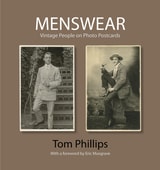
Menswear
Vintage People on Photo PostcardsTom Phillips
Bodleian Library Publishing, 2012
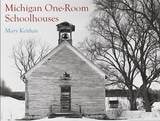
Michigan One-Room Schoolhouses
Mary Keithan
University of Michigan Press, 2008
Nostalgic reminders of a time now past, one-room schoolhouses are deeply embedded in our heritage. Decades after their original purpose and inhabitants have vanished, they dot the rural landscape in all conditions, from neglected and near collapse to handsomely renovated places repurposed into a new existence as living quarters. Today no matter their state they stand as miniature gems of nineteenth-century American history as well as charming examples of rural architecture---above all, things to be treasured and preserved. Mary Keithan's Michigan One-Room Schoolhouses is a beautifully illustrated chronicle that details nearly a hundred of the state's early schoolhouses. Together with information about each schoolhouse's architecture and history, including interviews with former students and teachers, Keithan's photographs bring these structures back to life and assure their place in history.
Mary Keithan is a professional photographer living in Ray, Michigan. Her previous books include Michigan's Heritage Barns and A Time in Michigan: A Photographic Series. New York Times critic Vicki Goldberg selected Keithan's 1995 image "Desert Storm Barn" for the Light Impression Biennial.

Michigan's County Courthouses
John Fedynsky
University of Michigan Press, 2011
John Fedynsky documents in narrative and photos every county courthouse of Michigan's eighty-three counties, as well as the Michigan Hall of Justice. These buildings are symbols: physically they stand, but figuratively they speak. They embody the purposes for which they were created: law, order, justice, and the promise of a better tomorrow.
Fedynsky tells the story of each building. For Michigan, the typical evolution begins in the cabin, tavern, or hotel of a prominent local settler and progresses through incarnations of simple log or wooden clapboard, and then opulent stone or brick, before the structure arrives in modern and utilitarian form. But there are myriad exceptions to this rule, and they add to the diversity of Michigan's county courthouses.
In Fedynsky's descriptions, verifiable facts and local lore weave together in dramatic tales of outrageous crime, courtroom intrigue, backroom dealing, jury determination, and judicial prerogative. Released jail inmates assist with evacuating and extinguishing a courthouse fire, residents during a natural disaster seek and find physical refuge behind the sure walls of the courthouse, and vigilant legions of homebound defenders are stationed in wartime throughout the courthouse towers scanning the skies for signs of foreign aircraft.
Then there are the homey touches that emphasize the "house" half of Michigan's courthouses: local folks dropping off plants in the courthouse atrium to use it as a winter greenhouse, cows grazing on the public square, county fairs in or near the courthouse, and locally made artwork hanging in public hallways. The courthouses bear within their walls a richness of soul endowed by the good people who make each one special.
Cover design by Heidi Dailey
Cover photos: John Fedynsky
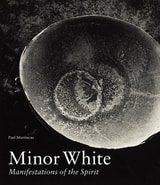
Minor White
Manifestations of the SpiritPaul Martineau
J. Paul Getty Trust, The, 2014
Controversial, misunderstood, and sometimes overlooked, Minor White (1908–1976) is one of the great photographers of the twentieth century, whose ideas exerted a powerful influence on a generation of photographers and still resonate today. His photographic career began in 1938 in Portland, Oregon, with assignments for the WPA (Works Progress Administration). After serving in World War II and studying art history at Columbia University, White’s focus shifted toward the metaphorical. He began creating images charged with symbolism and a critical aspect called equivalency, referring to the invisible spiritual energy present in a photograph made visible to the viewer.
This book brings together White’s key biographical information—his evolution as a photographer, teacher of photography, and editor of Aperture, as well as particularly insightful quotations from his journals, which he kept for more than forty years. The result is an engaging narrative that weaves through the main threads of White’s life, his growth as an artist, as well as his spiritual search and ongoing struggle with his own sexuality and self-doubt. He sought comfort in a variety of religious practices that influenced his continually metamorphosing artistic philosophy.
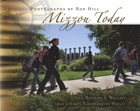
Mizzou Today
Edited by Karen Flandermeyer Worley, Text by Richard L. Wallace, & Photos by RobHill
University of Missouri Press, 2007
Picture the adrenalin-pumping excitement of hoop action on Norm Stewart Court. Now envision the tranquillity of a late summer day, with a half moon rising in a blue sky over the Columns. These photos tell the same story: it’s not two different worlds—it’s Mizzou!
The University of Missouri’s rich record of accomplishment and service to Missouri, the nation, and the world has been captured in this pictorial history—more than 140 full-color photos that provide a visual record of living and learning at the University of Missouri–Columbia. From the beauty of the historic Columns on Francis Quadrangle to the academic prowess of the faculty to gridiron thrills at Memorial Stadium, the book faithfully reflects a place where discovery happens every day.
Rob Hill has been photographing Mizzou’s people, landmarks, and events for nearly twenty years, and his images bring the campus to life. Chancellor Emeritus Richard Wallace, whose service to the University spans four decades, recounts MU’s growth since World War II in his accompanying text. Assembled by MIZZOU magazine editor Karen Worley, Mizzou Today reflects everything that is the University of Missouri.
Wallace provides timelines of key events that span the entire history of the University, tracing major events from its establishment in 1839 to the cancer research of the twenty-first century. Noted along the way are such events as the opening of University Hospital, the creation of new campuses, even the installation of the nation’s first automated library circulation system in Ellis Library, and some of the generous gifts that have made the University’s growth possible. The book also recalls all of the major milestones in sports, from the first intercollegiate football game in 1890 to Ben Askren’s national wrestling championships in 2006 and 2007.
These magnificent photos will bring back memories for alumni as surely as they will preserve them for today’s students—from the dance steps of Truman the Tiger to the avid consumption of Tiger Stripe ice cream, from the solemnity of Tap Day ceremonies to fraternity brothers raising money for Hurricane Katrina relief. You’ll get a glimpse of dorm life in Hatch Hall and a peek into the law library’s rare-book room, a look over the shoulders of a trauma team saving a patient at University Hospital and of a fisheries student studying salamanders in the wild. And of course there are images of some of the heart-stopping action that Mizzou sports fans have come to expect.
People, landmarks, events—it’s all here in a superb volume that, like Jesse Hall, will stand the test of time. Mizzou Today is a keepsake for anyone who loves MU and a lasting record of a great university’s accomplishments.
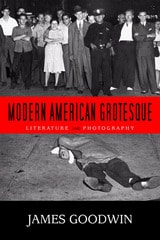
Modern American Grotesque
Literature and PhotographyJames Goodwin
The Ohio State University Press, 2009

Mother Archive
A Dominican Family MemoirErika Morillo
University of Iowa Press, 2024
2024 NBCC Award Finalist, Autobiography
A family murder kept secret, the mysterious disappearance of her father, the systematic erasing of family photographs, a turbulent relationship with her mother, layers of trauma and abuse. In Mother Archive, Erika Morillo reconciles these demons of her past by searching for and seeking out the roots of her family. Intertwining memories with archival family photographs, news clippings, film stills, and artistic images, Morillo revisits her childhood growing up in the Dominican Republic, a place and time riddled with a history of violence and a tradition of erasure.
Spanning three generations across three different countries, this memoir works as a map in which the author traces incidents in her family history to help her understand herself and her own experience as a mother.
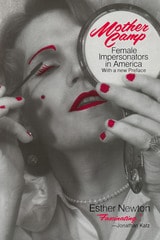
Mother Camp
Female Impersonators in AmericaEsther Newton
University of Chicago Press, 1979
"Newton's fascinating book shows how study of the extraordinary can brilliantly illuminate the ordinary—that social-sexual division of personality, appearance, and activity we usually take for granted."—Jonathan Katz, author of Gay American History
"A trenchant statement of the social force and arbitrary nature of gender roles."—Martin S. Weinberg, Contemporary Sociology
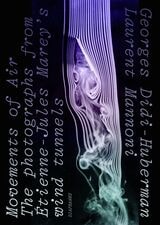
Movements of Air
The Photographs from Étienne-Jules Marey’s Wind TunnelsGeorges Didi-Huberman and Laurent Mannoni
Diaphanes, 2022
Featuring more than one hundred and fifty photographs and images, Movements of Air reprints the breathtaking pictures of Étienne-Jules Marey—images captured between 1899 and 1901 during his scientific experiments with moving air and smoke—and complements them with essays by Georges Didi-Huberman and Laurent Mannoni.
Mannoni begins by reflecting on Marey’s experimental approach. As the founder of the “graphic method,” Marey was also the developer of an aerodynamic wind tunnel. His experiments’ photographs of fluid motion introduced a whole world of movements and turbulences, and fluids, and influenced generations of scientists and artists alike. Didi-Huberman expands on the philosophical debates surrounding these aesthetically and technically instructive images. Even though Marey’s main interest was graphic information, Didi-Huberman shows us how the flow of all things drew this ingenious experimenter to a photographic practice that creates drags, streaks, expansions, and visual dances. Marey’s wind tunnel photographs were also themselves causes of turbulence in the history of images. The artists Dombois and Oeschger explore these “graphical” vortices of the last 120 years, providing at the end of the book a collage from historical and contemporary material interlaced with their own image-making in Dombois’s wind tunnel at the Zurich University of the Arts.
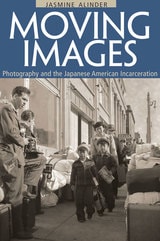
Moving Images
Photography and the Japanese American IncarcerationJasmine Alinder
University of Illinois Press, 2011
Considering such factors as artistic intention, institutional deployment, critical interpretation, and popular reception, Alinder provides calibrated readings of the photographs from this period. She uncovers the tension between Dorothea Lange's moving and critical images of the camps and the War Relocation Authority's blindly positive captions. She also analyzes Ansel Adams's attempt to combat negative war propaganda through humanizing photographs of Japanese Americans and locates the limits of such a counternarrative in the midst of a national mobilization against Japan.
Moving Images examines the work of Japanese American photographers operating both during and after the incarceration, including Manzanar inmate Toyo Miyatake, who constructed his own camera to document the complicated realities of camp life for his fellow inmates. More recently, contemporary artists Patrick Nagatani and Masumi Hayashi have used photography to reckon with the legacy of incarceration by journeying to the camp sites and creating photographs that bridge the intergenerational divides between their parents, themselves, and their children.
Illustrated with more than forty photographs, Moving Images reveals the significance of the camera in the process of incarceration as well as the construction of race, citizenship, and patriotism in this complex historical moment.

My Race Is My Gender
Portraits of Nonbinary People of ColorStephanie Hsu
Rutgers University Press, 2024
Genderqueer and nonbinary people of color often experience increased marginalization, belonging to an ethnic group that seldom recognizes their gender identity and a queer community that subscribes to white norms. Yet for this very reason, they have a lot to teach about how racial, sexual, and gender identities intersect. Their experiences of challenging social boundaries demonstrate how queer communities can become more inclusive and how the recognition of nonbinary genders can be an anti-racist practice.
My Race is My Gender is the first anthology by nonbinary writers of color to include photography and visual portraits, centering their everyday experiences of negotiating intersectional identities. While informed by queer theory and critical race theory, the authors share their personal stories in accessible language. Bringing together Black, Indigenous, Latine, and Asian perspectives, its six contributors present an intergenerational look at what it means to belong to marginalized queer communities in the U.S. and feel solidarity with a global majority at the same time. They also provide useful insights into how genderqueer and nonbinary activism can both energize and be fueled by such racial justice movements as Black Lives Matter.

My Soul's Been Psychedelicized
Electric Factory: Four Decades in Posters and PhotographsLarry Magid
Temple University Press, 2011
On February 2, 1968, the Electric Factory, Philadelphia's first major venue for the era's new music, opened with a show featuring the Chambers Brothers. Performing their neosoul and gospel sounds in a warm and inviting venue, they declared, "My soul's been psychedelicized!"-a feeling that the Factory's cofounder, Larry Magid, has been experiencing ever since.
In My Soul's Been Psychedelicized, Magid presents a spectacular photographic history of the bands and solo acts that have performed at the Electric Factory and at other venues in Factory-produced concerts over the past four decades. The book includes concert posters, photographs, and promotional items featuring both rising stars and established performers, such as Pink Floyd, Jimi Hendrix, Bob Dylan, Bruce Springsteen, Bette Midler, Elvis Presley, Tina Turner, Pearl Jam and many, many more.
The images—candid and celebratory—create a one-of-a-kind history of rock and roll, from the wild 1960s to the Live Aid concert in 1985 and the closing of the Philadelphia Spectrum in 2009. Magid's vivid recollections constitute a who's who of pop music and culture. As one of the great concert producers, he shares his unique perspective on the business, talking about how it has changed and how lasting careers have been carefully developed.
For anyone who has ever attended a concert at the Electric Factory—or for anyone who missed a show—My Soul's Been Psychedelicized will bring back great memories of the music and the musicians.

My Wrangell Mountains
Ruedi Homberger, Jon and Jona Van Zyle
University of Alaska Press, 2011
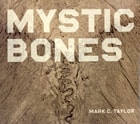
Mystic Bones
Mark C. Taylor
University of Chicago Press, 2007
The desert has long been a theme in Mark C. Taylor’s work, from his inquiries into the religious significance of Las Vegas to his writings on earthworks artist Michael Heizer. At once haunted by absence and loss, the desert, for Taylor, is a place of exile and wandering, of temptation and tribulation. Bones, in turn, speak to his abiding interest in remnants, ruins, ritual, and immanence. Taylor combines his fascination in the detritus of the desert and its philosophical significance with his work in photography in Mystic Bones.
A collection of remarkably elegant close-up images of weathered bones—remains of cattle, elk, and deer skeletons gathered from the desert of the American West—Mystic Bones pairs each photograph with a philosophical aphorism. These images are buttressed by a major essay, “Rubbings of Reality,” in which Taylor explores the use of bones in the religious rituals of native inhabitants of the Western desert and, more broadly, the appearance of bones in myth and religious reality.
Meditating on the way in which bones paradoxically embody both the personal and the impersonal—at one time they are our very substance, but eventually they become our last remnants, anonymous, memorializing oblivion—Taylor here suggests ways in which natural processes can be thought of as art, and bones as art objects. Bones, Taylor writes, “draw us elsewhere.” To follow their traces beyond the edge of the human is to wander into ageless times and open spaces where everything familiar becomes strange.
By revealing beauty hidden in the most unexpected places, these haunting images refigure death in a way that allows life to be seen anew. A bold new work from a respected philosopher of religion, Mystic Bones is Taylor’s his most personal statement of after-God theology.