Results by title
557 books match the query 'Poems' and 23 start with m
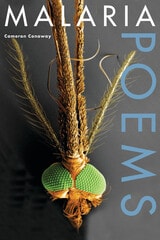
Malaria, Poems
Cameron Conaway
Michigan State University Press, 2014
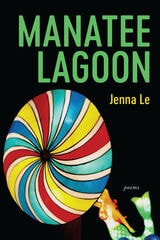
Manatee Lagoon
PoemsJenna Le
Acre Books, 2022
In Manatee Lagoon, sonnets, ghazals, pantoums, villanelles, and a “failed georgic” weave in contemporary subject matter, including social-media comment threads, Pap smears, eclipse glasses, and gun violence. A recurring motif throughout the collection, manatees become a symbol with meanings as wide-ranging as the book itself. Le aligns the genial but vulnerable sea cow with mermaids, neurologists, the month of November, harmful political speech, and even a family photo at the titular lagoon.
In these poems, Le also reflects on the experience of being the daughter of Vietnamese refugees in today’s sometimes tense and hostile America. The morning after the 2016 election, as three women of color wait for the bus, one says, “In this new world, we must protect each other.”
Manatee Lagoon is a treasury of voices, bringing together the personal and the persona, with poems dedicated to Kate Spade, John Ashbery, and Uruguayan poet Delmira Agustini. With this book, Le establishes herself as a talented transcriber of the human condition—and as one of the finest writers of formal verse today.
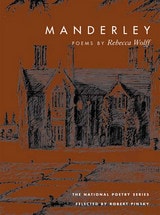
Manderley
POEMSRebecca Wolff
University of Illinois Press, 2001
In the Manderley of Rebecca, Daphne du Maurier's forbidding haven of mocking ghosts and secrets that refuse to remain buried, nothing is as it seems. So in this stunning debut collection by Rebecca Wolff, cities, partners, mothers, sisters, friends, and perfect strangers all disguise their true faces, while they who seek connection are "transported from one great gaping / hole in the fabric / of our knowledge to another."
No passage is too dark, no garden too tangled for the troubled dreamer of Manderley. Wolff turns a quicksilver gaze on a fluid world where both the real and the imaginary are transfigured. Tempering steely candor with a sophisticated delight in wordplay, these poems turn on a dime from the sensual to the eerie, the resigned to the hopeful, the comforting to the shocking. Each poem weaves together layers of dream, remembrance, and fantasy, distilling from romantic excess a gritty, spare language of truth-telling and surprise
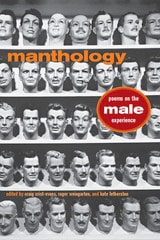
Manthology
Poems on the Male ExperienceCraig Crist-Evans
University of Iowa Press, 2006
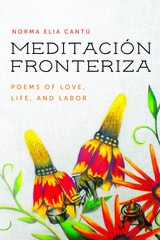
Meditación Fronteriza
Poems of Love, Life, and LaborNorma Elia Cantú
University of Arizona Press, 2019
The poems are a celebration of culture, tradition, and creativity that navigates themes of love, solidarity, and political transformation. Deeply personal yet warmly relatable, these poems flow from Spanish to English gracefully. With Gloria Anzaldúa’s foundational work as an inspiration, Meditación Fronteriza unveils unique images that provide nuance and depth to the narrative of the borderlands.
Poems addressed to talented and influential women such as Gwendolyn Brooks and Adrienne Rich, among others, pour gratitude and recognition into the collection. While many of the poems in Meditación Fronteriza are gentle and inviting, there are also moments that grieve for the state of the borderlands, calling for political resistance.
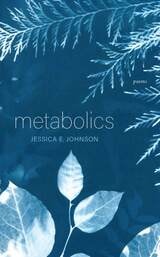
Metabolics
PoemsJessica E. Johnson
Acre Books, 2023
Metabolics, a book-length poem, borrows the movements of metabolic pathways to consider how nature accomplishes both balance and deep transformation. In visual figures and prose blocks that bridge the divide between poetry and nonfiction, Jessica E. Johnson employs scientific idioms to construct an allegory about a family in the Pacific Northwest. The region becomes a character in its own right, with cedars, moss, and heavy cloud knitting the mother, father, boy, and girl into their setting.
This far-reaching volume also serves as a study of the ecologies of contemporary parenting, with adults and children affected by “feeds” both on screen and off as their bodies metabolize food, the environment, and excess feelings such as rage. From climate change to kombucha to smartphones and curated produce, the smallest details of daily life in “Plasticland” catalyze a larger examination of selfhood: “Despite so many attempts to resolve this tension, sometimes you are you and also sometimes mother just as light can be both particle and wave.”
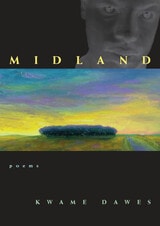
Midland
PoemsKwame Dawes
Ohio University Press, 2000
The winning manuscript of the fourth annual Hollis Summers Poetry Prize is also the exciting American debut by a poet who has already established himself as an important international poetic voice. Midland, the seventh collection by Kwame Dawes, draws deeply on the poet’s travels and experiences in Africa, the Caribbean, England, and the American South. Marked equally by a lushness of imagery, an urgency of tone, and a muscular rhythm, Midland, in the words of the final judge, Eavan Boland, is “a powerful testament of the complexity, pain, and enrichment of inheritance…It is a compelling meditation on what is given and taken away in the acts of generation and influence. Of a father’s example and his oppression. There are different places throughout the book. They come willfully in and out of the poems: Jamaica. London. Africa. America. But all the places become one place in the central theme and undersong here: which is displacement…The achievement of this book is a beautifully crafted voice which follows the painful and vivid theme of homelessness in and out of the mysteries of loss and belonging.”
Midland is the work of a keen and transcendent intellect, a collection of poems that speaks to the landscape from inside, from an emotional and experiential place of risk and commitment.
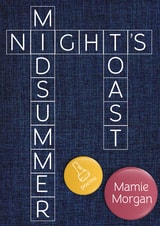
Midsummer Night's Toast
PoemsMamie Morgan
Ohio University Press, 2026
Midsummer Night’s Toast is a collection that answers to no one, a freedom we learn the speaker has finally afforded herself after a half-life spent under the glaring light of tradition, fear, of men, of institutions. She’s answered to her parents, to students, to academia, shame, to the workshop model, to various earlier versions of herself and is ready—in short—to have a good time. The invite list for this particular party belongs entirely to her: friends, street names, Kelly Ripa inside a crossword puzzle, bounced checks, hurricanes and Marilyn Hacker, frat boys and birds, bridal shops, Chaucer, the pictures her husband draws, King Arthur, Adrienne Rich. She’s sad for sure, and angry, but she’s also fierce as fire. At times these poems feel hurried, because they are. The landscape of this book feels like that penultimate moment in When Harry Met Sally when Billy Crystal says, “When you realize you want to spend the rest of your life with somebody, you want the rest of your life to start as soon as possible.” Mamie Morgan is reenacting a half-life of pain utilizing a kaleidoscope she’s crafted from discarded paper, felt, cheap gemstones, crayons worn to nubs, and mixtapes. Lots of mixtapes.
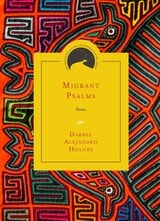
Migrant Psalms
PoemsDarrel Alejandro Holnes
Northwestern University Press, 2021
Migrant Psalms gives us a rare look inside a Panamanian experience of migration, describing the harsh realities of mothers, children, and teens who entered the United States—or tried to do so. Holnes’s poems find the universal through specificity; their exploration of expatriation, assimilation, and naturalization transcends the author’s personal experience to speak to what it means to be “other” anywhere.
The collection begins with “Kyrie,” a coming‑to‑America chronicle that spans three years in Texas, modeled after the liturgical Christian prayer Kyrie Eleison (Lord, have mercy). Other poems experiment with macaronic language and form to parallel shifts in the speaker’s status from immigrant to citizen, ending with “The 21st Century Poem,” which probes what’s “real” in today’s New York City. Through the speaker’s quest to become an American, this collection asks: Who are we becoming as individuals, as a society, as a nation, as a world? And is faith enough to enact change? Or is it just the first step?
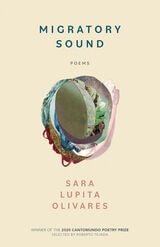
Migratory Sound
PoemsSara Lupita Olivares
University of Arkansas Press, 2020
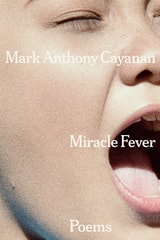
Miracle Fever
PoemsMark Anthony Cayanan
Northwestern University Press, 2027
Poetically delving into the spectacle and incredulity of a real-life religious controversy
In the early 1990s, a small town in the Philippines became the epicenter of religious controversy when a teenager claimed to be visited by the Virgin Mary. News of these visions, broadcast over national media, would prompt over a million to flock to the town, hoping to catch a glimpse of the teenager and witness inexplicable events: a statue of the Virgin weeping blood, the sun dancing and throbbing into various fantastic colors, or a bevy of doves appearing overhead during Mass.
Miracle Fever, chronicling the life of this town, is a poetry sequence revolving around these apparitions. Documentary in its scrutiny and distortion of real-life events, novelistic in its plot trajectory, and lyric in its imagistic intensity, Miracle Fever offers a fabulist model of reality, built through poems delivered in the form of dramaticules, timelines, and photo captions. These fugitive presences, bearing out and unsettling the complex ethics of representation that the sequence cleaves to, foreground the element of spectacle surrounding the apparitions and bring new light to the ever-shifting antecedents bound by shared history.
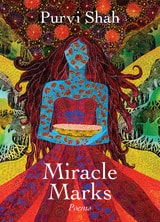
Miracle Marks
PoemsPurvi Shah
Northwestern University Press, 2019
In her second full-length poetry collection, Miracle Marks, activist Purvi Shah charts women’s status through pointed explorations of Hindu iconography and philosophy and powerful critiques of American racism. In these searing, revelatory poems, Shah reminds us that surviving birth as an infant girl and living as a woman is miraculous—as such, every girl is a miracle mark. And because education is often denied to girls, writing by women is a miracle.
In Miracle Marks, Shah probes belonging, devotion, and social inequity, delving into what it means to be a woman, and what it means to be. Through sound energy and white space, these poems chart multiple realities, including the miracles of women’s labors and survivals. This collection spurs dialogue across audiences and communities and lights a way for brown girls and women who relish in spirit, intellect, politics, and justice.
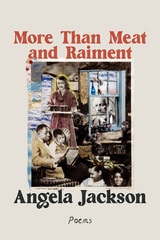
More Than Meat and Raiment
PoemsAngela Jackson
Northwestern University Press, 2022
The speakers of these poems reflect on memory and saga, history and legend. Voices recall evenings spent catching fireflies with a younger sister, the aroma of homemade rolls, the father who squeezes papers into his wallet alongside bills in order to appear wealthy (“a flock of green birds rustling inside / to get out for some extravagance”). A Black girl watches TV and dreams of the perfect partner. A citizen contends with the unrelenting devastation of police violence in a work reminiscent of Gwendolyn Brooks’s “verse journalism.” A mother loses her daughter only to witness her rebirth: “Praise be / the human being / that is being.”
In “For Our People,” an homage to Margaret Walker, Jackson summons the resilience and imagination of African Americans, celebrating “each of us injured or exalted, betrayer or betrayed, muted / and declamatory, all one, each of us all of us, each a private star beloved in the universe.” Lauded as one of American poetry’s most vivid voices, Jackson continues her reign among the country’s foremost wordsmiths. This sublime collection delves deep into the porch stories and folktales that have carried the Black voice through all its histories.
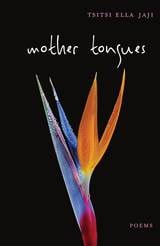
Mother Tongues
PoemsTsitsi Ella Jaji
Northwestern University Press, 2020
Winner of the 2018 Cave Canem Northwestern University Press Poetry Prize
Tsitsi Ella Jaji’s second full-length collection of poems, Mother Tongues, begins at home, with the first words and loves we learn, and the most intimate vows we swear. How deep does your language go back? Jaji’s artful verse is a three-tiered gourd of sustenance, vessel, and folklore. The tongues speak the beginnings and the present; they capture and claim the losses, the ironies, and a poet’s human evolution. Mother Tongues is a collection of language unto itself that translates directly to the heart.
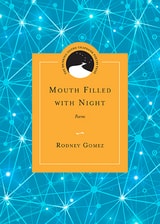
Mouth Filled with Night
PoemsRodney Gomez
Northwestern University Press, 2014
The winner of the Drinking Gourd Chapbook Poetry Prize, Rodney Gomez’s collection Mouth Filled with Night employs familiar emblems of Mexican American identity to repeatedly subvert expectations while intensifying the dilemmas of affiliation. The poems run beyond more conventional ideas of agency, identity, and experience, creating a newly invigorated imaginative space. As a collection, Mouth Filled with Night gains particular momentum—a pitched anxiety that slowly grows throughout the volume—to create a poetic experience unique to the chapbook form.
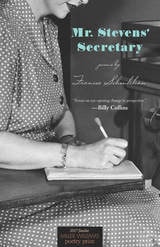
Mr. Stevens' Secretary
PoemsFrances Schenkkan
University of Arkansas Press, 2017
Finalist, 2017 Miller Williams Poetry Prize, edited by Billy Collins
“Forces an eye-opening change in perspective.”
—Billy Collins
In Mr. Stevens’ Secretary, a fictional assistant to Wallace Stevens juggles her roles as a mother, a wife, a believer, and a working woman. Privy at times to the famous poet’s personal life, the secretary must balance her curiosity about Stevens with her commitment to her husband, her faith, and the life she desires.
This vivid and compelling character struggles with fears of mental illness and the challenges of working for a prominent, reserved man, all while adjusting to new environs. She leaves her home, and her job, as she contemplates whether her marriage is worth saving and if she can reconcile the Baptist faith of her upbringing with the questions raised by her new place in the world. Throughout, we are witness to her complex relationship with the famous modernist poet, and with writing itself.
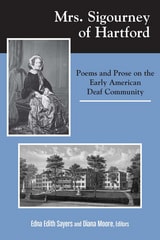
Mrs. Sigourney of Hartford
Poems and Prose on the Early American Deaf CommunityEdna Edith Sayers
Gallaudet University Press, 2013
Lydia Huntley was born in 1791 in Norwich, CT, the only child of a poor Revolutionary war veteran. But her father’s employer, a wealthy widow, gave young Lydia the run of her library and later sent her for visits to Hartford, CT. After teaching at her own school for several years in Norwich, Lydia returned to Hartford to head a class of 15 girls from the best families. Among her students was Alice Cogswell, a deaf girl soon to be famous as a student of Thomas Hopkins Gallaudet and Laurent Clerc.
Lydia’s inspiration came from a deep commitment to the education of girls and also for African American, American Indian, and deaf children. She left teaching to marry Charles Sigourney, then turned to writing to support her family, publishing 56 books, 2,000 magazine articles, and popular poetry. Lydia Sigourney never abandoned her passion for deaf education, remaining a supporter of Gallaudet’s school for the deaf until her death. Yet, her contributions to deaf education and her writing have been forgotten until now.
All of Lydia Sigourney’s of Lydia Sigourney’s work on the nascent Deaf community is presented in this new volume. Her writing intertwines her mastery of the sentimentalism form popular in her day with her sharp insights on the best ways to educate deaf children. In the process, Mrs. Sigourney of Hartford reestablishes her rightful place in history.
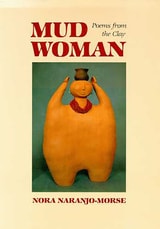
Mud Woman
Poems from the ClayNora Naranjo-Morse
University of Arizona Press, 1992
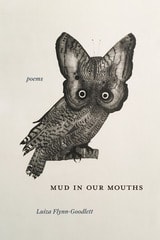
Mud in Our Mouths
PoemsLuiza Flynn-Goodlett
Northwestern University Press, 2025
An award-winning poet writing through violence, solace, and hope
Luiza Flynn-Goodlett’s Mud in Our Mouths illuminates how we are all enmeshed in a web of violence and love. As the speaker of the collection drives cross-country to visit her family of origin in Tennessee, she reckons with the tensions between her current and past selves and the many ways violence—interpersonal, societal, and environmental—has shaped her life. She struggles to find meaning, questioning the ethics of locating faith in a natural world she is unintentionally destroying, and grapples with her complicity in systems of power and oppression as a white Southern woman. Ultimately, she rejects the idea of genetic family as a place of solace; instead, she cleaves to the liberation and joy of connections forged outside those strictures, where intimacy is freely chosen rather than preordained.

My Alexandria
POEMSMark Doty
University of Illinois Press, 1995
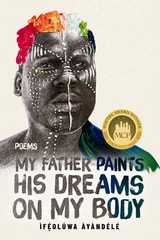
My Father Paints His Dreams on My Body
PoemsÌféolúwa Áyàndélé
Moon City Press, 2026
How do our ancestors inhabit the world that they have abandoned? What is the place of our family in our hearts? In this stunning debut collection, Ìfẹ́olúwa Àyàndélé reveals this interior world in which the past sings its lament in the present moment. The father is Àyàndélé’s connection to the deep past and his ancestors, who move through love and the Nigerian-Biafran war, but also through the luxuriant landscape of rivers and forests. How does one person balance the past and the present? Animals can show us the way of nature. Prayer can form a river of the soul as it chants, praises, and reveres the terrible beauty of this world.
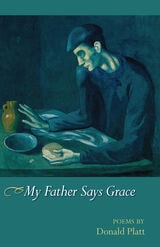
My Father Says Grace
PoemsDonald Platt
University of Arkansas Press, 2007
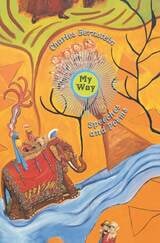
My Way
Speeches and PoemsCharles Bernstein
University of Chicago Press, 1998
In My Way, (in)famous language poet and critic Charles Bernstein deploys a wide variety of interlinked forms—speeches and poems, interviews and essays—to explore the place of poetry in American culture and in the university. Sometimes comic, sometimes dark, Bernstein's writing is irreverent but always relevant, "not structurally challenged, but structurally challenging."
Addressing many interrelated issues, Bernstein moves from the role of the public intellectual to the poetics of scholarly prose, from vernacular modernism to idiosyncratic postmodernism, from identity politics to the resurgence of the aesthetic, from cultural studies to poetry as a performance art, from the small press movement to the Web. Along the way he provides "close listening" to such poets as Charles Reznikoff, Laura Riding, Susan Howe, Ezra Pound, Allen Ginsberg, and Gertrude Stein, as well as a fresh perspective on L=A=N=G=U=A=G=E, the magazine he coedited that became a fulcrum for a new wave of North American writing.
In his passionate defense of an activist, innovative poetry, Bernstein never departs from the culturally engaged, linguistically complex, yet often very funny writing that has characterized his unique approach to poetry for over twenty years. Offering some of his most daring work yet—essays in poetic lines, prose with poetic motifs, interviews miming speech, speeches veering into song—Charles Bernstein's My Way illuminates the newest developments in contemporary poetry with its own contributions to them.
"The result of [Bernstein's] provocative groping is more stimulating than many books of either poetry or criticism have been in recent years."—Molly McQuade, Washington Post Book World
"This book, for all of its centrifugal activity, is a singular yet globally relevant perspective on the literary arts and their institutions, offered in good faith, yet cranky and poignant enough to not be easily ignored."—Publishers Weekly
"Bernstein has emerged as postmodern poetry's sous-chef of insouciance. My Way is another of his rich concoctions, fortified with intellect and seasoned with laughter."—Timothy Gray, American Literature