Results by title
1066 books match the query 'Political' and 46 start with m
Machiavelli on Liberty and Conflict
Edited by David Johnston, Nadia Urbinati, and Camila Vergara
University of Chicago Press, 2017
With Machiavelli on Liberty and Conflict, David Johnston, Nadia Urbinati, and Camila Vergara have brought together the most recent research on The Prince, with contributions from many of the leading scholars of Machiavelli, including Quentin Skinner, Harvey Mansfield, Erica Benner, John McCormick, and Giovanni Giorgini. Organized into four sections, the book focuses first on Machiavelli’s place in the history of political thought: Is he the last of the ancients or the creator of a new, distinctly modern conception of politics? And what might the answer to this question reveal about the impact of these disparate traditions on the founding of modern political philosophy? The second section contrasts current understandings of Machiavelli’s view of virtues in The Prince. The relationship between political leaders, popular power, and liberty is another perennial problem in studies of Machiavelli, and the third section develops several claims about that relationship. Finally, the fourth section explores the legacy of Machiavelli within the republican tradition of political thought and his relevance to enduring political issues.
Machiavelli's New Modes and Orders
A Study of the Discourses on LivyHarvey C. Mansfield
University of Chicago Press, 2001
Mansfield's aim is to discern Machiavelli's intention in writing the book: he argues that Machiavelli wanted to introduce new modes and orders in political philosophy in order to make himself the founder of modern politics. Mansfield maintains that Machiavelli deliberately concealed part of his intentions so that only the most perceptive reader could see beneath the surface of the text and understand the whole of his book. Previously out of print, Mansfield's penetrating study brings to light the hidden thoughts lurking in the details of the Discourses on Livy to inform and challenge its readers at every step along the way.
Machiavelli's Politics
Catherine H. Zuckert
University of Chicago Press, 2017
Starting with Machiavelli’s two major political works, Zuckert persuasively shows that the moral revolution Machiavelli sets out in The Prince lays the foundation for the new form of democratic republic he proposes in the Discourses. Distrusting ambitious politicians to serve the public interest of their own accord, Machiavelli sought to persuade them in The Prince that the best way to achieve their own ambitions was to secure the desires and ambitions of their subjects and fellow citizens. In the Discourses, he then describes the types of laws and institutions that would balance the conflict between the two in a way that would secure the liberty of most, if not all. In the second half of her book, Zuckert places selected later works—La Mandragola, The Art of War, The Life of Castruccio Castracani, Clizia, and Florentine Histories—under scrutiny, showing how Machiavelli further developed certain aspects of his thought in these works. In The Art of War, for example, he explains more concretely how and to what extent the principles of organization he advanced in The Prince and the Discourses ought to be applied in modern circumstances. Because human beings act primarily on passions, Machiavelli attempts to show readers what those passions are and how they can be guided to have productive rather than destructive results.
A stunning and ambitious analysis, Machiavelli’s Politics brilliantly shows how many conflicting perspectives do inform Machiavelli’s teachings, but that one needs to consider all of his works in order to understand how they cohere into a unified political view. This is a magisterial work that cannot be ignored if a comprehensive understanding of the philosopher is to be obtained.
Machiavelli's Virtue
Harvey C. Mansfield
University of Chicago Press, 1996
"The book brings together essays that have mapped [Mansfield's] paths of reflection over the past thirty years. . . . The ground, one would think, is ancient and familiar, but Mansfield manages to draw out some understandings, or recognitions, jarringly new."—Hadley Arkes, New Criterion
"Mansfield's book more than rewards the close reading it demands."—Colin Walters, Washington Times
"[A] masterly new book on the Renaissance courtier, statesman and political philosopher. . . . Mansfield seeks to rescue Machiavelli from liberalism's anodyne rehabilitation."—Roger Kimball, The Wall Street Journal
Machine and Sovereignty
For a Planetary Thinkingyuk
University of Minnesota Press, 2024
Developing a new political thought to address today’s planetary crises
What is “planetary thinking” today? Arguing that a new approach is urgently needed, Yuk Hui develops a future-oriented mode of political thought that encompasses the unprecedented global challenges we are confronting: the rise of artificial intelligence, the ecological crisis, and intensifying geopolitical conflicts.
Machine and Sovereignty starts with three premises. The first affirms the necessity of developing a new language of coexistence that surpasses the limits of nation-states and their variations; the second recognizes that political forms, including the polis, empire, and the state, are technological phenomena, which Lewis Mumford terms “megamachines.” The third suggests that a particular political form is legitimated and rationalized by a corresponding political epistemology. The planetary thinking that this book sketches departs from the opposition between mechanism and organism, which characterized modern thought, to understand the epistemological foundations of Hegel’s political state and Schmitt’s Großraum and their particular ways of conceiving the question of sovereignty. Through this reconstruction, Hui exposes the limits of the state and reflects on a new theoretical matrix based on the interrelated concepts of biodiversity, noodiversity, and technodiversity.
Arguing that we are facing the limit of modernity, of the eschatological view of history, of globalization, and of the human, Hui conceives necessary new epistemological and technological frameworks for understanding and rising to the crises of our present and our future.
Retail e-book files for this title are screen-reader friendly.
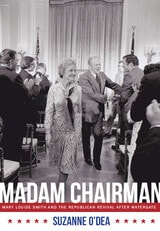
Madam Chairman
Mary Louise Smith and the Republican Revival after WatergateSuzanne O'Dea
University of Missouri Press, 2012
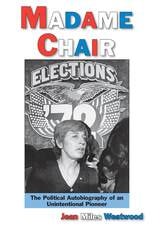
Madame Chair
A Political Autobiography of an Unintentional PioneerJean Miles Westwood
Utah State University Press, 2007
A Utah national committeewoman and member of the reform committee that reorganized the party, Westwood answered George McGovern’s call to lead his presidential campaign. In the dramatic year of 1972, she became “chairman” of the party, McGovern lost in a landslide, Nixon was reelected, and a covert operation burglarized Democratic National Committee headquarters at the Watergate.
Westwood provides an inside account of a period that reshaped national politics. Second-wave feminism—“women’s liberation”—and the civil rights and antiwar movements opened the way. As a major player in political reform, Jean Westwood both helped build that road and traveled it.

Making History / Making Blintzes
How Two Red Diaper Babies Found Each Other and Discovered AmericaFlacks, Mickey
Rutgers University Press, 2018
Throughout this memoir, the couple demonstrates that their lifelong commitment to making history through social activism cannot be understood without returning to the deeply personal context of their family history—of growing up “Red Diaper babies” in 1950s New York City, using folk music as self-expression as adolescents in the 1960s, and of making blintzes for their own family through the 1970s and 1980s. As the children of immigrants and first generation Jews, Dick and Mickey crafted their own religious identity as secular Jews, created a critical space for American progressive activism through SDS, and ultimately, found themselves raising an “American” family.
Making the Weather
Six Politicians Who Changed Modern BritainVernon Bogdanor
Haus Publishing, 2025
Making the Weather is the story of six postwar politicians, all of whom exerted an outsized influence on the political life of the United Kingdom—an influence greater than that of most prime ministers. Vernon Bogdanor’s cast includes three from the political Left—Aneurin “Nye” Bevan, Roy Jenkins, and Tony Benn—and three from the Right—Enoch Powell, Keith Joseph, and Nigel Farage. Each study is a fascinating analysis examining how these men achieved such prominence and influence and how, though very different figures in many ways, they came to dominate the political landscape, often for years.
Each of the six made fundamental contributions to the debate about Britain’s future and to the vibrancy of British democracy. From immigration to Europe, from the National Health Service to devolution, the issues and causes that brought these men to prominence are still relevant.
Malawi's Sisters
Melanie S. Hatter
Four Way Books, 2019

Manifesto Now!
Instructions for Performance, Philosophy, PoliticsEdited by Laura Cull and Will Daddario
Intellect Books, 2013
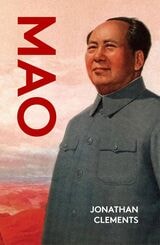
Mao
Jonathan Clements
Haus Publishing, 2026
A concise and comprehensive biography of Mao Zedong, published to coincide with the fiftieth anniversary of his death.
A half-century after his death in September 1976, Mao Zedong remains one of history’s most polarizing figures: a peasant boy who became a revolutionary leader, a general in World War II, and finally the Great Helmsman, the founding father of the People's Republic of China. His legacy is a mix of national liberation and human tragedy. Today, Mao is no static icon on a banknote but the architect of a superpower whose ideas, methods, and personal life are continually reexamined through a modern lens.
This comprehensive biography bridges the gap between the revolutionary and the man without overlooking the events that led to the end of China’s Century of Humiliation, the brutal cost of the Great Leap Forward, and the Cultural Revolution, reevaluating his “mass line” ideology.
Based on new archival information and startling revelations from his inner circle—including his personal physician, Dr. Li Zhisui, and former nurses—Clements offers a clear and accessible portrait of a leader whose persistent influence reminds us why Mao’s story remains essential to understanding the global power dynamics of today.
Marayrasu
StoriesEdgardo Rivera Martínez, Amy Olen
Northwestern University Press, 2026
The stories in Marayrasu stage fantastical, mysterious encounters that belie the characters’ often harsh economic and political realities as they seek belonging in modern Peru through art, music, and relationships. Depicted in poetic prose, these characters are loners, orphans, and outcasts experiencing quiet, tender encounters with other people and animals, the creative arts, and the land they find themselves depending on. Living vibrantly within these stories, the leviathan of Inca lore considers its own form, a young boy moves to a mining town and gets involved with a local union leader’s fight for worker rights while feeling the powerful pull of a large mountain overlooking the town, and a Persian cat captures the attention of a family down on its luck. Amy Olen’s translation smoothly captures Rivera Martínez’s impressive stories, offering a unique lens into the region at the heart of this canonical author’s inimitable work.
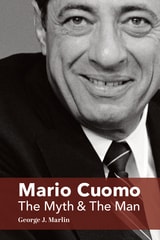
Mario Cuomo
The Myth and the ManGeorge J.
St. Augustine's Press, 2020
As governor, Mario Cuomo is remembered most for his advocacy of the “personally-opposed-but” position on abortion that led to confrontations with Catholic Church hierarchy, and for dithering about his presidential ambitions, that led the media to dub him the “Hamlet on the Hudson.” His political style reminded many of Machiavelli; Cuomo styled himself a successor to St. Thomas More.
In this political profile, George J. Marlin sets the record straight on Mario Cuomo.
Marlin traces Cuomo’s political rise and documents how and why he abandoned his public opposition to abortion to be elected New York’s chief executive.
In great detail, Marlin describes the protracted conflict between Cuomo and his church on abortion and refutes the governor’s claim that his “position on abortion is absolutely theologically sound.”
Marlin critiques Cuomo’s famous 1984 Democratic convention speech as nothing more than the usual high-toned partisan liberal bromides that offered little, if anything, that hadn’t been touted by his party for half a century.
The book also uncovers New York State’s fiscal, economic, and social decline during Cuomo’s 12 years as governor. It explains why voters repudiated Cuomo’s version of a welfare state when he sought a fourth term in 1994 and why, in the words of his son, Governor Andrew Cuomo, his father was “more accomplished as a speech-giver than as a governor.”
Marlin skillfully separates the Cuomo “Public Intellectual” myth from the political man.
Mario Cuomo, three times Governor of New York, an eloquent hard edged Catholic from Queens, dominated not only his home state but national liberal politics in the age of Reagan. Whether the subject was police or theology, Cuomo rhetorically overpowered the reporters who covered him. But he’s finally met his match in George Marlin’s Mario Cuomo The Myth and the Man. Marlin’s extraordinary equipment; a former candidate for Mayor of N.Y.C., former executive director of the New York and New Jersey Port Authority, author of books on Catholic voters and the Archbishops of New York, has made him the ideal author of what’s sure to be seen as the definitive political biography of Mario Cuomo. — Fred Siegel, Author, The Prince of the City: Giuliani, New York, and the Genius of American Life and The Future Once Happened Here: New York, D.C., L.A., and the Fate of America’s Big Cities.
“It’s easy to forget what an important and fascinating figure Mario Cuomo was during New York’s raucous political heyday of the 1970s, 80s and 90s, when the likes of Hugh Carey, Ed Koch, Al D’Amato, and Rudy Giuliani strode the political stage. Thankfully, George Marlin’s wonderful new Cuomo biography will help everyone remember both the good and bad of the remarkable man who served three terms as governor, turned down a seat on the Supreme Court and rejected the chance to run for President. Here are both Cuomo’s successes and failures — and of the latter there were many. An important work that helps restore our collective memory. — Fredric U. Dicker, the New York Post’s longtime state editor and a TV and radio commentator, covered six governors during 40 years at the state Capitol in Albany.
George Marlin is virtually peerless in blending high principle with knowledge of street-level politics and the nuts-and-bolts of otherwise mundane governance to produce readable, yet deeply insightful, social and political portraits. Mario Cuomo: The Myth and the Man, examines in fine detail one of one of New York state’s most consequential, if also deeply flawed, 20th-century gubernatorial incumbencies. Plus, readers get a bonus: Insight into what shaped the career of Mario Cuomo’s Democratic superstar son, Andrew. Marlin has been in the trenches himself and thus can separate blarney from beefsteak – which this fine volume once again demonstrates. —Bob McManus, Contributing Editor, The City Journal, was the New York Post’s Editorial Page Editor (2000-2013), and The Albany Times Union’s Executive City Editor (1975-1981).
“George Marlin not only captures the political life and journey of Mario Cuomo, but details his policy approach that led to the near demise of the Empire State. Fortunately, the Conservative Party of New York was there to carry the torch and provide the margin of victory for George Pataki ending the senior Cuomo’s reign.” —Michael Long, State Chairman, Conservative Party of New York (1988-2019)
“For both better and worse, Mario Cuomo was the quintessential American Catholic politician of an entire postwar generation: ambitious, brilliant, articulate, serious about his faith, and flexible in how and where he applied it. George Marlin is a writer of considerable skill, and he uses here it to produce a provocative, absorbing portrait of the man and his career. —Francis X. Maier, Senior Fellow in Catholic Studies at the Ethics and Public Policy Center
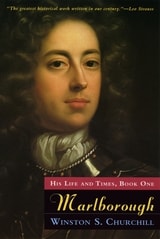
Marlborough
His Life and Times, Book OneWinston S. Churchill
University of Chicago Press, 2002
John Churchill, the Duke of Marlborough (1644-1722), was one of the greatest military commanders and statesmen in the history of England. Victorious in the Battles of Blenheim (1704), Ramillies (1706), and countless other campaigns, Marlborough, whose political intrigues were almost as legendary as his military skill, never fought a battle he didn't win. Although he helped James II crush the rebellion of the Duke of Monmouth, Marlborough later supported William of Orange against James II in the Glorious Revolution of 1688 and brilliantly managed England's diplomatic triumphs during the War of the Spanish Succession. Marlborough also bequeathed the world another great British military strategist and diplomat—his descendant, Winston S. Churchill, who wrote this book to redeem Marlborough's reputation from Macaulay's smears.
One million words long and ten years in the making, Churchill's Marlborough stands as both a literary and historical masterpiece, giving us unique insights into the Churchill of World War II, for just as Churchill's literary skill helps us understand the complexities of Marlborough's life, so too did his writing of Marlborough help Churchill master the arts of military strategy and diplomacy. This two-volume edition includes the entire text and almost all the original maps.
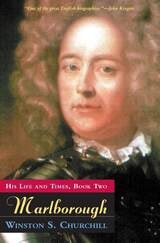
Marlborough
His Life and Times, Book TwoWinston S. Churchill
University of Chicago Press, 2002
John Churchill, the Duke of Marlborough (1644-1722), was one of the greatest military commanders and statesmen in the history of England. Victorious in the Battles of Blenheim (1704), Ramillies (1706), and countless other campaigns, Marlborough, whose political intrigues were almost as legendary as his military skill, never fought a battle he didn't win. Although he helped James II crush the rebellion of the Duke of Monmouth, Marlborough later supported William of Orange against James II in the Glorious Revolution of 1688 and brilliantly managed England's diplomatic triumphs during the War of the Spanish Succession. Marlborough also bequeathed the world another great British military strategist and diplomat—his descendant, Winston S. Churchill, who wrote this book to redeem Marlborough's reputation from Macaulay's smears.
One million words long and ten years in the making, Churchill's Marlborough stands as both a literary and historical masterpiece, giving us unique insights into the Churchill of World War II, for just as Churchill's literary skill helps us understand the complexities of Marlborough's life, so too did his writing of Marlborough help Churchill master the arts of military strategy and diplomacy. This two-volume edition includes the entire text and almost all the original maps.
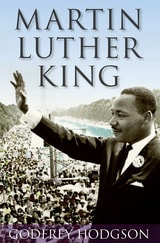
Martin Luther King
Godfrey Hodgson
University of Michigan Press, 2010
Dr. Martin Luther King Jr. is as relevant today as he was when he led civil rights campaigns in the 1950s and 1960s. He was an agent and a prophet of political change in this country, and the election of President Barack Obama is his direct legacy.
Now from one of Britain's most experienced political observers comes a new, accessible biography of the man and his works. The story of King is dramatic, and Godfrey Hodgson presents it with verve, clarity, and acute insight based in part on his own reporting on-scene at the time. He interviewed King half a dozen times or more; heard his speech at the March on Washington; was in Birmingham, Selma and Chicago; and met many of the characters in King's life story. Martin Luther King combines the best of his own reporting, plus the work of other biographers and researchers, to trace the iconic civil rights leader's career from his birth in Atlanta in 1929, through the campaigns that made possible the Civil Rights Act of 1964 and the Voting Rights Act of 1965, to his assassination in Memphis in 1968. Hodgson sheds light on every aspect of an extraordinary life: the Black Baptist culture in which King grew up, his theology and political philosophy, his physical and moral courage, his insistence on the injustice of inequality, his campaigning energy, his repeated sexual infidelities.
Hodgson describes the political minefield in which King operated; follows how he gradually persuaded President Kennedy that he could not stand by and allow the civil rights movement to be frustrated; and describes how, on the verge of success, his career was threatened by President Johnson's anger at King's principled decision to come out against the Vietnam War. He also puts King's career into the context of American history in the crisis of the 1960s. In his life, King was frustrated; but in death, he has been triumphant.
Martin Luther King allows the charisma and power of King's personality to shine through, showing in gripping narrative style exactly how one man helped America to progress toward its truest ideals. Hodgson's extensive research and detail help paint an accurate, complex portrait of one of America's most important leaders.
Godfrey Hodgson has worked in Britain and America as a newspaper and magazine journalist; as a television reporter, documentary maker and anchor; as a university teacher and lecturer; and as the author of a dozen well-received books about U.S. politics and recent history, including America in Our Time, a history of the United States in the 1960s; More Equal than Others, on politics and society in twentieth-century America; and most recently, a biography of Senator Daniel Patrick Moynihan, The Gentleman from New York. Hodgson met King on a number of occasions between 1956 and 1967. He recently retired as director of the Reuters Foundation Programme at Oxford University and is a visiting journalism professor at City University in London.
PRAISE FOR America in Our Time
"A critique so stimulating and compelling that I can only say read it."
---Richard Lingeman, The New York Times
"It simply gets right, without great fuss, the detail and proportion of things like the civil rights movement, student unrest, the stages of our Vietnam engagement."
---Garry Wills, The New York Review of Books
PRAISE FOR More Equal than Others
"The most thoughtful, thorough and sorrowful book imaginable on what has happened in these years."
---Bernard Crick, The Independent
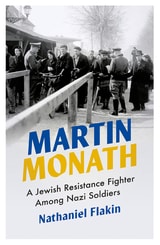
Martin Monath
A Jewish Resistance Fighter Amongst Nazi SoldiersNathaniel Flakin
Pluto Press, 2019
Marx at the Margins
On Nationalism, Ethnicity, and Non-Western SocietiesKevin B. Anderson
University of Chicago Press, 2010
In Marx at the Margins, Kevin Anderson uncovers a variety of extensive but neglected texts by the well-known political economist which cast what we thought we knew about his work in a startlingly different light. Analyzing a variety of Marx’s writings, including journalistic work written for the New York Tribune, Anderson presents us with a Marx quite at odds with our conventional interpretations. Rather than providing us with an account of Marx as an exclusively class-based thinker, Anderson here offers a portrait of Marx for the twenty-first century: a global theorist whose social critique was sensitive to the varieties of human social and historical development, including not just class, but nationalism, race, and ethnicity, as well.
Marx at the Margins ultimately argues that alongside his overarching critique of capital, Marx created a theory of history that was multi-layered and not easily reduced to a single model of development or revolution. Through highly-informed readings on work ranging from Marx’s unpublished 1879–82 notebooks to his passionate writings about the antislavery cause in the United States, this volume delivers a groundbreaking and canon-changing vision of Karl Marx that is sure to provoke lively debate in Marxist scholarship and beyond.
Marx's Dream
From Capitalism to CommunismTom Rockmore
University of Chicago Press, 2018
With Marx’s Dream, Tom Rockmore offers a much-needed alternative view, distinguishing rigorously between Marx and Marxism. Rockmore breaks with the Marxist view of Marx in three key ways. First, he shows that the concern with the relation of theory to practice—reflected in Marx’s famous claim that philosophers only interpret the world, while the point is to change it—arose as early as Socrates, and has been central to philosophy in its best moments. Second, he seeks to free Marx from his unsolicited Marxist embrace in order to consider his theory on its own merits. And, crucially, Rockmore relies on the normal standards of philosophical debate, without the special pleading to which Marxist accounts too often resort. Marx’s failures as a thinker, Rockmore shows, lie less in his diagnosis of industrial capitalism’s problems than in the suggested remedies, which are often unsound.
Only a philosopher of Rockmore’s stature could tackle a project this substantial, and the results are remarkable: a fresh Marx, unencumbered by doctrine and full of insights that remain salient today.
Max Lerner
Pilgrim in the Promised LandSanford Lakoff
University of Chicago Press, 1998
Politically, Lerner went through a series of metamorphoses. During the 1930s, he was an anti-fascist "popular front progressive" writing for the Nation and the New Republic. From the 1940s through the 1970s, he became the country's leading liberal columnist—first with the lively but short-lived PM, then for the New York Post. In the 1980s, however, he was repelled by the New Left and the counterculture and joined the ranks of the neoconservatives, scandalizing some readers but insisting he owed it to them to tell the truth as he saw it.
This riveting biography begins with Lerner's own gripping account of the hardships his family endured in emigrating from Russia and his own boyhood triumphs and frustrations. Sanford Lakoff traces Lerner's American pilgrimage from his education at Yale, where he felt the bitter sting of anti-Semitism, through his years as a radical inspired by Thorstein Veblen, into mellower maturity as a widely read columnist, an inspiring teacher, the author of America as a Civilization, a much-loved father, and—to the end—an unapologetic romantic, who liked to say that he never learned anything worth knowing except from women.
Mayor Harold Washington
Champion of Race and Reform in ChicagoRoger Biles
University of Illinois Press, 2020
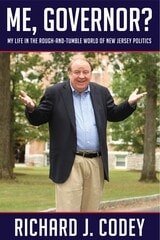
Me, Governor?
My Life in the Rough-and-Tumble World of New Jersey PoliticsRichard J. Codey
Rutgers University Press, 2011
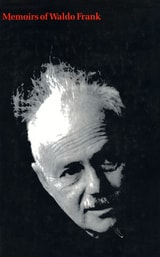
Memoirs of Waldo Frank
Alan Trachtenberg
University of Massachusetts Press, 1973

Memoirs of an Early Arab Feminist
The Life and Activism of Anbara Salam KhalidiAnbara Salam Khalidi
Pluto Press, 2013
Memoirs of an Early Arab Feminist is the first English translation of the memoirs of Anbara Salam Khalidi, the iconic Arab feminist. At a time when women are playing a leading role in the Arab Spring, this book brings to life an earlier period of social turmoil and women's activism through one remarkable life.
Anbara Salam was born in 1897 to a notable Sunni Muslim family of Beirut. She grew up in 'Greater Syria', in which unhindered travel between Beirut, Jerusalem and Damascus was possible, and wrote a series of newspaper articles calling on women to fight for their rights within the Ottoman Empire. In 1927 she caused a public scandal by removing her veil during a lecture at the American University of Beirut.
Later she translated Homer and Virgil into Arabic and fled from Jerusalem to Beirut following the establishment of Israel in 1948. She died in Beirut in 1986. These memoirs have long been acclaimed by Middle East historians as an essential resource for the social history of Beirut and the larger Arab world in the 19th and 20th centuries.
Mexican Political Biographies, 1884–1934
By Roderic Ai Camp
University of Texas Press, 1991
Here is an authoritative reference work that makes biographies of prominent Mexican national politicians from the period 1884–1934 available in English. Like the author's biographical directory for the years 1935–2009, it draws on many years of research in Mexico and the United States and seeks not only to provide accurate biographical information about each entry but also, where possible and appropriate, to connect these politicians to more recent leadership generations. Thus, Mexican Political Biographies, 1884-1934 not only is a useful historical source but also provides additional information on the family backgrounds of many contemporary figures.
The work includes those figures who have held specific posts at the national level or who have served as state governors. Each biographical entry contains the following information: date of birth, birthplace, education, elective political office, political party positions, appointive governmental posts at all levels, group activities, nongovernmental positions and professions, relatives, mentors and important friends, military experience, unusual career activities, and published biographical sources.
Another unique feature of the directory is appendixes with complete lists of the names and dates of cabinet members, supreme court justices, senators, deputies, selected ambassadors, and party leaders.
Mexican Political Biographies, 1935-2009
Fourth EditionBy Roderic Ai Camp
University of Texas Press, 2011
This fourth edition of Roderic Camp's highly respected Mexican Political Biographies is an updated comprehensive biographical directory of leading state and national politicians in Mexico, covering the years 1935–2009. The original edition, published in 1976, was the first and only comprehensive biographical work on contemporary political figures in any language and served as the prototype for the Mexican government's brief foray into its own official biographical directory. The Mexican Supreme Court has cited every biography of justices in the third edition as the basis of its biographies in the late 1980s.
With updates of the existing biographies and appendices, plus almost 1,000 additional biographies, this fourth edition now features close to 3,000 entries and serves as a unique resource list of the chronological occupants of all leading national political posts. The need for such information has become even more pronounced since Mexico's political transformation from a semi-authoritarian to a democratic model.
This latest edition allows readers access to information about Mexican politicians into the new century, and like its earlier versions, will be a valuable tool for government officials, journalists, historians, social scientists, the business community, and students.
Finally, it includes a detailed bibliographic essay that identifies and explains the significance of biographical sources and has been enhanced by numerous up-to-date Internet sources. An added convenience is an accompanying CD that allows readers to search the biographies and appendices, enhancing the longevity, usefulness, and uniqueness of this edition.
Michael Oakeshott on Religion, Aesthetics, and Politics
Elizabeth Campbell Corey
University of Missouri Press, 2006
For much of his career, British political philosopher Michael Oakeshott was identified with Margaret Thatcher’s conservative policies. He has been called by some a guru to the Tories, while others have considered him one of the last proponents of British Idealism. Best known for such books as Experience and Its Modes and Rationalism in Politics, Oakeshott has been the subject of numerous studies, but always with an emphasis on his political thought.
Gnosticism and considers both thinkers’ treatment of Hobbes to delineate their philosophical differences.
Mill on Democracy
From the Athenian Polis to Representative GovernmentNadia Urbinati
University of Chicago Press, 2002
Redirecting attention to Mill as a political thinker, Nadia Urbinati argues that this claim misrepresents Mill's thinking. Although he did not elaborate a theory of democracy, Mill did devise new avenues of democratic participation in government that could absorb the transformation of politics engendered by the institution of representation. More generally, Urbinati assesses Mill's contribution to modern democratic theory by critiquing the dominant "two liberties" narrative that has shaped Mill scholarship over the last several decades. As Urbinati shows, neither Isaiah Berlin's theory of negative and positive freedom nor Quentin Skinner's theory of liberty as freedom from domination adequately captures Mill's notion of political theory.
Drawing on Mill's often overlooked writings on ancient Greece, Urbinati shows that Mill saw the ideal representative government as a "polis of the moderns," a metamorphosis of the unique features of the Athenian polis: the deliberative character of its institutions and politics; the Socratic ethos; and the cooperative implications of political agonism and dissent. The ancient Greeks, Urbinati shows, and Athenians in particular, are the key to understanding Mill's contribution to modern democratic theory and the theory of political liberty.
Urbinati concludes by demonstrating the importance of Mill's deliberative model of politics to the contemporary debate on liberal and republican views of liberty. Her fresh and persuasive approach not only clarifies Mill's political ideas but also illustrates how they can help enrich our contemporary understanding of democracy.
Mimetic Politics
Dyadic Patterns in Global PoliticsRoberto Farneti
Michigan State University Press, 2015
Minds and Hearts
The Story of James Otis Jr. and Mercy Otis WarrenJeffrey H. Hacker
University of Massachusetts Press, 2021
Minds and Hearts is the dual biography of these remarkable siblings, placing James and Mercy in the spotlight together for the first time, amid the rush of events, competing ideologies, and changing social conditions of eighteenth-century America. Jeffrey H. Hacker crafts a compelling narrative that focuses on the Otises' unique and dramatic relationship and traces their impact on the Revolutionary movement in Massachusetts. If the real American Revolution took place "in the minds and hearts of the people," as John Adams claimed, then the Otises were among the nation's true patriots.
Ministers of Fire
A NovelMark Harril Saunders
Ohio University Press, 2012
Kabul, Afghanistan, 1979: CIA station chief Lucius Burling, an idealistic but flawed product of his nation’s intelligence establishment, barely survives the assassination of the American ambassador. Burling’s reaction to the murder, and his desire to understand its larger meaning, propel him on a journey of intrigue and betrayal that will reach its ultimate end in the streets of Shanghai, months after 9/11. A Chinese dissident physicist may (or may not) be planning to sell his country’s nuclear secrets, and in his story Burling, now living quietly as consul, recognizes the fingerprints of a covert operation, one without the obvious sanction of the Agency. The dissident’s escape draws the violent attention of the Chinese internal security service, and as Burling is drawn inexorably into their path, he must face the ghosts of his past misadventures and a present world of global trafficking, fragile alliances, and the human need for connection above all.
Reminiscent of the best work of Graham Greene and John le Carré, Ministers of Fire extends the spy thriller into new historical, political, and emotional territory.
Mo
The Life and Times of Morris K. UdallDonald W. Carson and James W. Johnson
University of Arizona Press, 2001
Mo provides the most complete record of Udall's thirty-year congressional career ever published. It reveals how he challenged the House seniority system and turned the House Interior Committee into a powerful panel that did as much to protect the environment as any organization in the twentieth century. It shows Udall to have been a consensus builder for environmental issues who paved the way for the Alaska Lands Act of 1980, helped set aside 2.4 million acres of wilderness in Arizona, and fought for the Central Arizona Project, one of the most ambitious water projects in U.S. history. Carson and Johnson record Udall's early opposition to the Vietnam War at a time when that conflict was largely perceived as a just cause, as well as his early advocacy of campaign finance reform. They also provide a behind-the-scenes account of his run for the presidency—the first House member to seek the office in nearly a century—which gained him an intensely loyal national following.
Mo explores the paradoxes that beset Udall: He was a man able to accomplish things politically because people genuinely liked and respected him, yet he was a loner and workaholic whose focus on politics overshadowed his personal life. Carson and Johnson devote a chapter to the famous Udall sense of humor. They also look sensitively at his role as a husband and father and at his proud and stubborn bout with Parkinson's disease. Mo Udall will long be remembered for his contributions to environmental legislation, for his unflagging efforts in behalf of Arizona, and for the gentle humor with which he conducted his life. This book secures his legacy.
Mohandas Gandhi
Experiments in Civil DisobedienceTalat Ahmed
Pluto Press, 2016
This biography examines his campaigns from South Africa to India to evaluate the successes and failures of non-violent resistance. Seventy years after his death, his legacy remains contested: was he a saint, revolutionary, class conciliator, or self-obsessed spiritual zealot?
The contradictions of Gandhi’s politics are unpicked through an analysis of the social forces at play in the mass movement around him. Entrusted to liberate the oppressed of India, his key support base were industrialists, landlords and the rich peasantry. Gandhi’s moral imperatives often clashed with these vested material interests, as well as with more radical currents to his left.
Today, our world is scarred by permanent wars, racism and violence, environmental destruction and economic crisis. Can non-violent resistance win against state and corporate power? This book explores Gandhi’s experiments in civil disobedience to assess their relevance for struggles today.
Montesquieu and the Despotic Ideas of Europe
An Interpretation of "The Spirit of the Laws"Vickie B. Sullivan
University of Chicago Press, 2017
Nowhere is Montesquieu’s critique of the despotic ideas of Europe more powerful than in his enormously influential The Spirit of the Laws, and Vickie B. Sullivan guides readers through Montesquieu’s sometimes veiled, yet sharply critical accounts of Machiavelli, Hobbes, Aristotle, and Plato, as well as various Christian thinkers. He finds deleterious consequences, for example, in brutal Machiavellianism, in Hobbes’s justifications for the rule of one, in Plato’s reasoning that denied slaves the right of natural defense, and in the Christian teachings that equated heresy with treason and informed the Inquisition.
In this new reading of Montesquieu’s masterwork, Sullivan corrects the misconception that it offers simple, objective observations, showing it instead to be a powerful critique of European politics that would become remarkably and regrettably prescient after Montesquieu’s death when despotism wound its way through Europe.
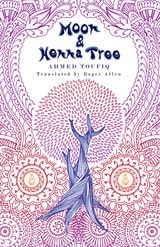
Moon and Henna Tree
By Ahmed Toufiq
University of Texas Press, 2013
Set in the High Atlas in pre-modern Morocco, Moon and Henna Tree chronicles the rise and fall of a local potentate, Hmmu. Not content with the territory left to him upon his father’s death, Hmmu, under the influence of his scheming advisor, Ibn al-Zara, begins a campaign to acquire those lands that adjoin his, either through marriage or physical force.
Ahmed Toufiq’s subtle investigation of the abuse of power and its effects on those who suffer under its tyranny also provides a unique look at Amazigh (Berber) culture. While most of Toufiq’s contemporaries focus on modern urban Morocco, he provides a fascinating, and accurate, account of the customs and traditions of a large, yet often ignored, segment of the population. Moon and Henna Tree (in the original Arabic) won the Moroccan Book Prize in 1989.
Moral Politics
What Conservatives Know That Liberals Don'tGeorge Lakoff
University of Chicago Press, 1996
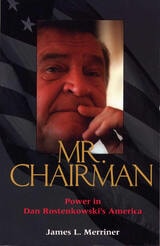
Mr. Chairman
Power in Dan Rostenkowski's AmericaJames L. Merriner
Southern Illinois University Press, 2002
The story of Dan Rostenkowski’s rise and fall provides one of the keys to how power is sought, won, exercised, and distributed in contemporary America, argues political journalist James L. Merriner.
A literal son of the Chicago political machine, Rostenkowski was installed in politics by his father, Alderman Joseph P. Rostenkowski, and by his mentor, Mayor Richard I. Daley. In his thirty-six year congressional career, he served nine presidents, forming close friendships with many of them. His legislative masterpiece was the 1986 tax reform law. Eight years later, he was indicted on federal charges for misusing tax dollars and campaign funds.
In his dealings with the man who tumbled dramatically from his high position as chair of the powerful House Ways and Means Committee all the way down to a cell in a federal prison in Wisconsin, Merriner finds Rostenkowski candid, straightforward, and authentic— "except when it came to his own finances."
Rostenkowski is not a complex man in need of psychoanalysis on the part of his biographer, and Merriner does not indulge in much of that. Purely, simply, and openly, Rostenkowski wanted power. He wanted wealth. He got both, and Merriner shows us how.
Merriner sees mythic qualities in Rostenkowski, characterizing him as the "tall bold slugger" of Carl Sandburg’s 1916 poem about Chicago. Noting that this master politician climbed to fantastic peaks only to fall hard and fast, Merriner points out that "Rostenkowski’s life ascended from power in the political science sense to tragedy in the classical sense." The Justice Department and the electorate sacrificed Rostenkowski as an embodiment of the excesses of big government. Like the Greek chorus of tragedy, major media reported the scandal to the masses.
Yet Merriner does not strain to make his subject fit a classical mold. He tells instead the "story of a great man who was also a little man, a statesman and a crook, an emotional man, an American original." This was also a man unbeaten by his troubles, a man who emerged from prison unabashed.
This illustrated biography is not authorized by Rostenkowski, who declined Merriner’s interview requests after June 1995. His sources are the public record, previous interviews with Rostenkowski and with many other sources before and after 1995, and his own political acumen gained from decades on the political scene.
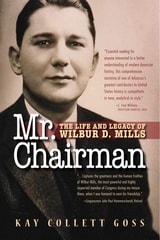
Mr. Chairman
The Life and Legacy of Wilbur D. MillsKay Collett Goss
Parkhurst Brothers, Inc., 2012
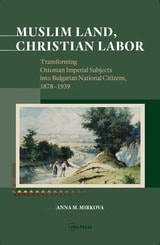
Muslim Land, Christian Labor
Transforming Ottoman Imperial Subjects into Bulgarian National Citizens, c. 1878-1939Anna M. Mirkova
Central European University Press, 2017

Mutual Integration in Immigration Society
An Epistemic ArgumentBodi Wang
Campus Verlag, 2023
The public culture of the receiving society and the dominant understanding of belonging and political membership can influence the social participation of immigrants as much as immigration law. However, current discussions of integration focus primarily on the distribution of rights and neglect the role of tacit knowledge. Through a systematical and philosophical analysis of identity’s role in policymaking, governance, and social practice, Bodi Wang shows how a one-sided understanding of integration resembles “assimilation” and why integration should be expected from locals as well. This argument weaves together extensive findings in sociology, history, critical race theory, and Chinese philosophy with ethics and migration studies.

My Chicago
Jane Byrne
Northwestern University Press, 2003
My Chicago is the story of Jane Byrne's rise from young campaign worker to the mayor's office, all within the bruising arena of Chicago politics. Part sociopolitical history, part memoir, it begins with a history of the city and her early life, before she enters politics as a paid staff member of JFK's presidential campaign and, soon after, begins service in the Chicago Machine, but not of it.
Her view from the inside allows Byrne to sketch portraits of Daley, for whom she eventually worked, members of the Kennedy family, and Presidents Carter and Reagan. And, of course, it provides a fascinating perspective on the battle to succeed Daley, which ended with her own triumph over the Machine and a controversial term as mayor, which saw her begin development across the city and (famously) move into the Cabrini-Green housing project. The first memoir by a Chicago mayor in two generations, My Chicago is a valuable history as well as an entertaining look at no-holds-barred city politics.
My Dearest Angel
A Virginia Family Chronicle 1895–1947Katie Letcher Lyle
Ohio University Press, 2002
She was the daughter of a circuit judge and state senator. He was the youngest son of Virginia’s Civil War governor and was a state legislator himself at the age of nineteen. Their courtship and marriage stands as a portrait of a bygone way of life unique to the American South during the first half of the twentieth century. My Dearest Angel is their story, told through their faithful correspondence over the course of their fifty years together.
Piecing together the voluminous letters, their granddaughter, noted author Katie Letcher Lyle, has succeeded in giving us an intimate panorama of the full and oftentimes wrenching lives led by Greenlee and Katie Letcher. Domestic life, family secrets, and visiting luminaries are part of their story. But the abiding appeal of My Dearest Angel is the maturation of a lifelong relationship built on the crest of a changing world.

My Heart Beats Fast
A NovelNadia Chonville; Translated from French by Corine Labridy
Vanderbilt University Press, 2026
Chonville’s novel is at the vanguard of a new Antillean literature that moves beyond créolité (the last identifiable literary movement in the Antillean canon) in several important ways: First, although it does reflect on the past (as indeed prescribed by the créolistes), it is firmly anchored in the present, which Chonville, a trained social scientist, captures unflinchingly. Second, it complexifies the Antilles gender landscape with characters whose intersectional realities are explored with depth and care.
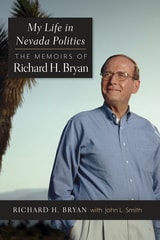
My Life in Nevada Politics
The Memoirs of Senator Richard H. BryanRichard H. Bryan
University of Nevada Press, 2024
Born in Washington, D.C. in 1937, Bryan grew up in Las Vegas. His interest in politics started early, winning school-class elections and expressing a personal goal of one day becoming Governor of Nevada. He was elected student body president at the University of Nevada.
His career in public service began as a deputy district attorney in Clark County. In 1966, he became the first county public defender in state history. Bryan served in the Nevada Legislature in both the Assembly and Senate before winning the statewide office of Attorney General in 1978. He was elected Nevada Governor in 1982, winning re-election in 1986. Bryan was elected to the U.S. Senate in 1988, reelected in 1994, and served on the committees on Commerce, Banking, Taxation, and Intelligence, and chaired the Ethics Committee. He retired from the Senate in 2001 and returned to Nevada.
Bryan’s list of accomplishments is extensive. He was largely responsible for the early call-to-arms in the fight against the Department of Energy’s attempt to create a nuclear waste repository at Yucca Mountain. As governor, he reorganized state economic development programs, improved environmental protections for Lake Tahoe and other threatened areas, and made unprecedented appointments of women. In the Senate, Bryan authored the Southern Nevada Public Lands Management Act and the National Conservation Area for the High Rock Desert country. He had a front-row seat to the historic buildup to the Iraq War and the impeachment of President Bill Clinton. In retirement, Bryan continues to serve the state through his participation on a wide range of committees.
Throughout his political career, Bryan, with wife Bonnie at his side, traversed Nevada from its tiniest hamlets to the metro areas of Reno and Las Vegas with unrivaled zeal in his efforts to represent the state’s citizens. He is famous for knowing thousands of his constituents not only by their first names, but also recalling details of their lives. The simple fact is, while in service to Nevada, Bryan was in his element in the place he loves best.
My Life in the PLO
The Inside Story of the Palestinian StruggleShafiq Al-Hout
Pluto Press, 2011
This is the inside story of the Palestine Liberation Organisation (PLO), from its beginnings in 1964 to the signing of the Oslo agreement in 1993.
For over three decades, the main goal of the PLO was to achieve a just peace in the Arab-Israeli conflict, and to build a democratic state in Palestine for all its citizens. Shafiq Al-Hout, a high ranking PLO official until his resignation in 1993, provides previously unavailable details on the key events in its history such as its recognition by the UN and the Oslo peace negotiations. Taking us right to the heart of the decision making processes, this book explains the personalities and internal politics that shaped the PLO's actions and the Palestinian experience of the twentieth century.
Although he was an insider, Al-Hout's book does not shy from analysing and criticising decisions and individuals, including Yasser Arafat. This book is an essential piece of history that sheds new light on the significance of the PLO in the Palestinian struggle for justice.