Results by title
74 books match the query 'Puerto Rico' and 4 start with m
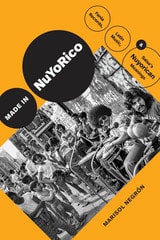
Made in NuYoRico
Fania Records, Latin Music, and Salsa’s Nuyorican MeaningsMarisol Negrón
Duke University Press, 2024
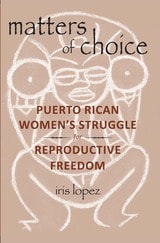
Matters of Choice
Puerto Rican Women's Struggle for Reproductive FreedomLopez, Iris
Rutgers University Press, 2008
In Matters of Choice, Iris Lopez presents a comprehensive analysis of the dichotomous views that have portrayed sterilization either as part of a coercive program of population control or as a means of voluntary, even liberating, fertility control by individual women. Drawing upon her twenty-five years of research on sterilized Puerto Rican women from five different families in Brooklyn, Lopez untangles the interplay between how women make fertility decisions and their social, economic, cultural, and historical constraints. Weaving together the voices of these women, she covers the history of sterilization and eugenics, societal pressures to have fewer children, a lack of adequate health care, patterns of gender inequality, and misinformation provided by doctors and family members.
Lopez makes a stirring case for a model of reproductive freedom, taking readers beyond victim/agent debates to consider a broader definition of reproductive rights within a feminist anthropological context.
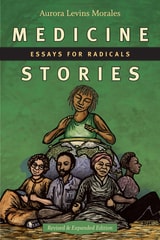
Medicine Stories
Essays for RadicalsAurora Levins Morales
Duke University Press, 2019
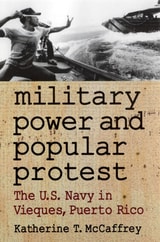
Military Power and Popular Protest
The U.S. Navy in Vieques, Puerto RicoMcCaffrey, Katherine T
Rutgers University Press, 2002
Residents of Vieques, a small island just off the east coast of Puerto Rico, live wedged between an ammunition depot and live bombing range for the U.S. Navy. Since the 1940s when the navy expropriated over two-thirds of the island, residents have struggled to make a life amid the thundering of bombs and rumbling of weaponry fire. Like the armys base in Okinawa, Japan, the facility has drawn vociferous protests from residents who challenged U.S. security interests overseas. In 1999, when a local civilian employee of the base was killed by a stray bomb, Vieques again erupted in protests that have mobilized tens of thousands individuals and transformed this tiny Caribbean Island into the setting for an international cause célèbre.
Katherine T. McCaffrey gives a complete analysis of the troubled relationship between the U.S. Navy and island residents. She explores such topics as the history of U.S. naval involvement in Vieques; a grassroots mobilizationled by fishermenthat began in the 1970s; how the navy promised to improve the lives of the island residentsand failed; and the present-day emergence of a revitalized political activism that has effectively challenged naval hegemony.
The case of Vieques brings to the fore a major concern within U.S. foreign policy that extends well beyond Puerto Rico: military bases overseas act as lightning rods for anti-American sentiment, thus threatening this countrys image and interests abroad. By analyzing this particular, conflicted relationship, the book also explores important lessons about colonialism and postcolonialism and the relationship of the United States to the countries in which it maintains military bases.