Results by title
72 books match the query 'Railroads' and 3 start with m
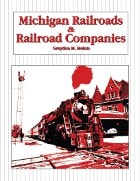
Michigan Railroads & Railroad Companies
Graydon M. Meints
Michigan State University Press, 1992
Michigan Railroads and Railroad Companies is an invaluable reference manual for everyone interested in regional transportation history, the history of railroading, and Michigan history in general. It contains complete, cross-referenced listings for every company formed to operate a railroad in the state of Michigan. In addition to the comprehensive entries for major lines, Graydon Meints has included details about the many small, common-carrier steam and electric companies, logging roads, and numerous other primitive and contemporary rail systems. This encyclopedic reference guide also contains information on the so-called "paper railroads," companies that were projected but which never laid a foot of track.
Michigan Railroads is divided into three parts. One includes alphabetical entries for the actual and intended railroad companies themselves, the date and purpose for their organization, and a brief history from their origins to their dispositions. Included in this portion of the work are a number of railroad "family trees" showing the corporate antecedents of the largest of the rail lines operating in the state today. Another contains a chronology of significant corporate events; it works as a useful finding aid for accessing source data contained in the first section. A third contains a statewide county-by-county listing of railroads, both paper and real.
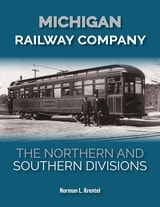
Michigan Railway Company
The Northern and Southern DivisionsNorman L. Krentel
Michigan State University Press, 2024
This also explores how electric railway history is intertwined with the state of Michigan. The interurban electric rail system supported automobile manufacturing, allowing for the shipment of parts supplies, and finished automobiles through Michigan, Indiana, Ohio, and Kentucky. Major auto plants like REO and Oldsmobile had rail sidetracks served by Michigan Railway’s interurban freight trains. Electric railway history is thus an essential, previously overlooked factor in Michigan’s industrial development.
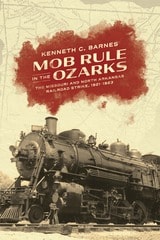
Mob Rule in the Ozarks
The Missouri and North Arkansas Railroad Strike, 1921-1923Kenneth C. Barnes
University of Arkansas Press, 2025
On January 15, 1923, a crowd of more than a thousand angry men assembled in Harrison, Arkansas, near the headquarters of the M&NA Railroad, which ran through the heart of the Ozark Mountains. The mob was prepared to use any measure necessary to end the strike of railroad employees that had dragged on for nearly two years, endangering livelihoods and businesses in an area with few other means of transportation. Supported by local officials, the mob terrorized strikers and sympathizers—many were stripped and beaten, and one man was lynched, hanged from the railroad bridge south of town. Over the next several days, similar riots broke out in other towns along the M&NA line, including Leslie and Heber Springs.
This violence effectively brought to a close one of the longest rail strikes in American history—the only one, in fact, ended by a mob uprising. In Mob Rule in the Ozarks, Kenneth C. Barnes documents how the M&NA Railroad strike reflected some of the major economic concerns that preoccupied the United States in the wake of World War I, and created a rupture within communities of the Ozarks that would take years to heal. The conflict also foreshadowed, for both the region and the country, the pendulum’s swing back to moneyed interests, away from Progressive Era gains for labor. Poignantly for Barnes, who sees parallels between this historic struggle and present-day political tensions, the strike revealed the fragile line between civil order and mob rule.