Results by title
322 books match the query 'Regional' and 14 start with m

Madison
Zane Williams
Wisconsin Historical Society Press, 2008

Madison
The Illustrated History, 1932–1979Stuart D. Levitan
University of Wisconsin Press, 2026
This second volume in the acclaimed illustrated civic history of Madison, Wisconsin, tells the story of this iconic midwestern city in the middle years of the twentieth century. Like the rest of America in this period, Madison was buffeted by a boom-and-bust economy, hot and cold wars abroad, and social and cultural changes on the homefront. Stuart D. Levitan, a mainstay of Madison media and government since 1975, offers a decade-by-decade visual and narrative account of the city’s transformation—as well as that of its major public university. Featuring hundreds of illustrations, this volume also highlights the local legends and luminaries who shaped the city, from bootleggers to world-famous architects to radicals and revolutionaries.
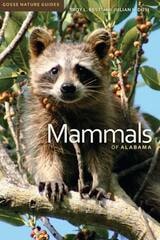
Mammals of Alabama
Troy L. Best and Julian L. Dusi
University of Alabama Press, 2014
Beautifully designed and sturdily bound for rugged field use, Mammals of Alabama is the first and only exhaustive guidebook to Alabama’s diverse and fascinating mammalian fauna.
European and American naturalists visited the territory that would become Alabama as early as the late eighteenth century and marveled at the breadth and variety of its flora and fauna. Yet until today scientists, scholars, and nature enthusiasts had no systematic guide to the state’s mammals. Mammals of Alabama fills the gap.
Naturally occurring in the state are nine orders, twenty-two families, fifty-one genera, and seventy-two species of living mammals. Best and Dusi offer an engaging entry for each as well as additional species that have become extinct through natural processes or human extirpation.
Illustrated with maps and photos, each entry includes:
• Identification notes • Dental formula
• Size and weight • Distribution
• Ecology • Life History
• Behavior • Parasites and Diseases
• Conservation Status • Notes and References
Ideal for backyards, hikes, libraries, and classrooms, Mammals of Alabama includes hundreds of professional, close-up color specimen photographs of both living animals in their natural habitats and skull plates, making identification of animals easy.
Best also offers fascinating and fun facts about Alabama mammals that will delight nature lovers of all ages, such as the surprising and excellent tree-climbing skills of the gray fox, the use in the past of mole skins to apply cosmetics, and the litters of identical quadruplets common to the nine-banded armadillo.
Published in cooperation with the Alabama Wildlife Federation

Mammals of Ohio
John D. Harder
Ohio University Press, 2022
An updated, informative review of the status and biology of the fifty-five species of mammals living wild in Ohio, richly illustrated with photographs, maps, drawings, and original artwork.
This comprehensive reference illustrates how species within each of the seven orders of mammals in Ohio share modes of reproduction, locomotion, and nutrition, providing a framework for understanding the fascinating world of mammalian biology. Presentations of natural history in each account of the various species are enhanced with descriptions of intriguing adaptations for avoiding demise from predators, food shortages, and the frigid conditions of Ohio winters. The book is richly illustrated with range maps, exquisite skull drawings, beautiful photography, and engaging artwork.
Challenges to wildlife conservation are considerable in Ohio, with its vast industrialized urban centers distributed across a largely agricultural landscape. With frequent citations of scientific reports and conservation efforts of the Ohio Division of Wildlife and of other public and private entities, this book instills an appreciation for the rich mammalian fauna of Ohio, as well as knowledge on how to join efforts to protect it.
Covering all of the state’s mammals, from tiny, obscure shrews to the magnificent white-tailed deer, Mammals of Ohio is a definitive resource for professional biologists and students. The narrative style throughout the book is accessible, providing the general reader with an appreciation for the full scope of the rich mammalian diversity in the state.

Mammals of the Southeastern United States
Troy L. Best and John L. Hunt
University of Alabama Press, 2020
First comprehensive account of the mammals of the entire southeastern US
The southeastern United States is home to a remarkable and diverse mammalian fauna that is a significant part of the region’s rich natural heritage. Mammals of the Southeastern United States presents accounts of 137 species that currently or previously occurred in the Southeast. Although accessible and useful for the generalist, this book provides an up-to-date compilation of basic knowledge about native and nonnative mammals of the region that is suitable for students of all ages and for professional mammalogists and biologists alike.
This volume profiles common species like the eastern gray squirrel, the white-tailed deer, and the Virginia opossum, but also includes among its accounts many extant species, such as the jaguar and porcupine, that once occurred in the region; native species, like the Caribbean monk seal, that are now extinct; native species that have been extirpated, or wiped out, from all or part of the region, such as the red wolf, cougar, American bison, and elk; and many introduced species, including the Mexican mouse opossum, common squirrel monkey, and capybara.
Each species account includes full-color images of the animal, plates featuring at least three views of its skull, color distribution maps of its approximate geographic range in the Southeast and in North America, and an up-to-date synthesis of several aspects of its biology, including habitat, diet, predators, parasites, diseases, and behaviors. An introductory chapter on conservation summarizes the current status of mammalian populations in the region and provides insight into some of the threats mammals now encounter in the Southeast.
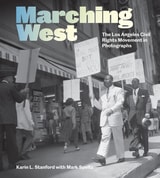
Marching West
The Los Angeles Civil Rights Movement in PhotographsKarin L. Stanford
J. Paul Getty Trust, The, 2026
This volume presents the first visual history of the people and organizations that led the fight for change during the civil rights era in Los Angeles.
During a 1963 speech to a crowd of nearly forty thousand at Wrigley Field in Los Angeles, Dr. Martin Luther King Jr. addressed the question of how Angelenos could contribute to the civil rights movement: “The most important thing that you can do is to set Los Angeles free, because you have segregation and discrimination here, and police brutality.”
Marching West illuminates the dynamic history of civil rights activism in Los Angeles and explores how the medium of photography both witnessed and advanced the fight for Black equality. Over one hundred images, some of which have never been previously published, reveal connections between the local and national movements and document the actions of Western coalitions, religious leaders, Hollywood stars, and concerned citizens. Drawn from the Tom & Ethel Bradley Center at California State University, Northridge (CSUN), the Getty Research Institute, and other Southern California collections—including prints by Harry Adams, Howard Bingham, Charles Brittin, Joe Flowers, Vera Jackson, and Charles Williams—this unprecedented volume presents less familiar but essential stories about American progress toward social justice.

Massachusetts
A Concise HistoryRichard D. Brown
University of Massachusetts Press, 2000
From the moment the first English colonists landed on the shores of Plymouth Bay, the experiences of the people of Massachusetts have been emblematic of larger themes in American history. The story of the first Pilgrim thanksgiving is commemorated as a national holiday, while the Boston Tea Party and Paul Revere's ride have passed into the national mythology. Even the grimmer aspects of the American experience—Indian warfare and the conquest of an ever expanding frontier—were part of the early history of Massachusetts. In this book, Richard D. Brown and Jack Tager survey the rich heritage of this distinctive, and distinctly American, place, showing how it has long exerted an influence disproportionate to its size.
A seedbed of revolt against British colonial rule, Massachusetts has supplied the nation with a long line of political leaders—from Samuel and John Adams to William Lloyd Garrison and Lucy Stone to John, Robert, and Edward Kennedy. Its early textile mills helped shape the industrial revolution, while its experiences with urbanization, immigration, ethnic conflict, and labor strife reflected the growth of the national economy. In the twentieth century, the state continued to lead the country through a series of wrenching economic changes as it moved from the production of goods to the provision of services, eventually becoming a center of the high-tech revolution in telecommunications. If there is one common theme in the Bay State's history, Brown and Tager make clear, it is the capacity to adapt to change. In part this trait can be attributed to the state's unique blend of resources, including its many distinguished colleges and universities. But it can also be credited to the people themselves, who have created a singular sense of place by reconciling claims of tradition with the possibilities of innovation. This book tells their story.
Meanings of Maple
An Ethnography of SugaringMichael Lange
University of Arkansas Press, 2017
Readers will go deep into a Vermont sugar bush and its web of plastic tubes, mainline valves, and collection tanks. They will visit sugarhouses crammed with gas evaporators and reverse-osmosis machines. And they will witness encounters between sugar makers and the tourists eager to invest Vermont with mythological fantasies of rural simplicity.
So much more than a commodity study, Meanings of Maple frames a new approach for evaluating the broader implications of iconic foodways, and it will animate conversations in food studies for years to come.
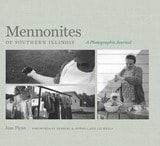
Mennonites of Southern Illinois
A Photographic JournalJane Flynn, with forewords by Herbert K. Russell and Liz Wells
Southern Illinois University Press, 2024
WINNER, Certificate of Excellence in “Publications – Other” from the Illinois State Historical Society’s 2025 Best of Illinois History Awards!
“In the World But Not of It”
Offering a glimpse into a world largely misunderstood by mainstream society, this book documents the period of eight years that Jane Flynn practiced with Mennonites in two different Southern Illinois communities: Stonefort, and Mount Pleasant in Anna. Despite her status as an outsider, Flynn was welcomed and allowed to photograph the Mennonites in their homes, making applesauce, farming, and beekeeping.
Escaping persecution from the Catholic Church in Europe, the Mennonites arrived in America in 1683, settling in what is now Pennsylvania. Today, they live in almost all 50 states, Canada, and South America. To reflect the Mennonites’ manual-labor lifestyle, Flynn processed her black-and-white photographs by hand and hand-printed them in a dark room. The imagery explores the Mennonites’ labors, leisure, and faith by documenting their homes, places of work and worship, and the Illinois Ozark landscape they inhabit.
Similar to the Amish and the Quakers, Mennonites consider the Bible the supreme authority and insist on a separation between church and state. To enact that separation, they distinguish themselves from society in speech, dress, business, recreation, education, pacifism, and by refusing to participate in politics. They believe in nonconformity to the world, discipleship, and being born again through adult baptism. With Mennonites of Southern Illinois, Jane Flynn provides representation for these closed communities and illustrates the Mennonites’ struggle to find and maintain balance between rustic and modern life while remaining faithful to their religious beliefs.

Michigan Salvage
The Fiction of Bonnie Jo CampbellLisa DuRose
Michigan State University Press, 2023
Mizzou Today
Edited by Karen Flandermeyer Worley, Text by Richard L. Wallace, & Photos by RobHill
University of Missouri Press, 2007
Picture the adrenalin-pumping excitement of hoop action on Norm Stewart Court. Now envision the tranquillity of a late summer day, with a half moon rising in a blue sky over the Columns. These photos tell the same story: it’s not two different worlds—it’s Mizzou!
The University of Missouri’s rich record of accomplishment and service to Missouri, the nation, and the world has been captured in this pictorial history—more than 140 full-color photos that provide a visual record of living and learning at the University of Missouri–Columbia. From the beauty of the historic Columns on Francis Quadrangle to the academic prowess of the faculty to gridiron thrills at Memorial Stadium, the book faithfully reflects a place where discovery happens every day.
Rob Hill has been photographing Mizzou’s people, landmarks, and events for nearly twenty years, and his images bring the campus to life. Chancellor Emeritus Richard Wallace, whose service to the University spans four decades, recounts MU’s growth since World War II in his accompanying text. Assembled by MIZZOU magazine editor Karen Worley, Mizzou Today reflects everything that is the University of Missouri.
Wallace provides timelines of key events that span the entire history of the University, tracing major events from its establishment in 1839 to the cancer research of the twenty-first century. Noted along the way are such events as the opening of University Hospital, the creation of new campuses, even the installation of the nation’s first automated library circulation system in Ellis Library, and some of the generous gifts that have made the University’s growth possible. The book also recalls all of the major milestones in sports, from the first intercollegiate football game in 1890 to Ben Askren’s national wrestling championships in 2006 and 2007.
These magnificent photos will bring back memories for alumni as surely as they will preserve them for today’s students—from the dance steps of Truman the Tiger to the avid consumption of Tiger Stripe ice cream, from the solemnity of Tap Day ceremonies to fraternity brothers raising money for Hurricane Katrina relief. You’ll get a glimpse of dorm life in Hatch Hall and a peek into the law library’s rare-book room, a look over the shoulders of a trauma team saving a patient at University Hospital and of a fisheries student studying salamanders in the wild. And of course there are images of some of the heart-stopping action that Mizzou sports fans have come to expect.
People, landmarks, events—it’s all here in a superb volume that, like Jesse Hall, will stand the test of time. Mizzou Today is a keepsake for anyone who loves MU and a lasting record of a great university’s accomplishments.
Montrose
Life in a GardenNancy Goodwin
Duke University Press, 2005
Beautifully written and illustrated, Montrose: Life in a Garden is Goodwin’s affectionate biography of her gardens, recounting how and why each section was developed over the years, including the Dianthus Walk, Nandinaland, Hellebore Slope, Mother-in-Law Walk, Snowdrop Woods, and Jo’s Bed. It is also a meticulous month-by-month chronicle of a specific year in these gardens—a year that saw a punishing drought that threatened Goodwin’s no-irrigation policy, a damaging December ice storm, and the beginnings of a plan to preserve Montrose in the future.
Working on her knees for long days throughout the year, Nancy Goodwin always has a vision of how her gardens will appear in twelve months or in twelve years. She will spend weeks, for instance, planting hundreds of snow drops along a woodsy path in order to enjoy a fleeting week of exquisite beauty in coming years. She never puts anything into the ground without imagining what form, color, and texture it will add to a bed. With tireless patience and unflagging optimism, Goodwin will wait years to see a single plant bloom.
Following Goodwin’s activities throughout the year, readers will learn the fundamentals of maintaining a four-season garden in Zone 7 in the South. Award-winning garden illustrator Ippy Patterson has provided more than 160 lavish illustrations of the gardens at Montrose and these meticulously detailed drawings appear throughout the book.

Mushrooms of the Midwest
Michael Kuo and Andrew S. Methven
University of Illinois Press, 2014
Fusing general interest in mushrooming with serious scholarship, Mushrooms of the Midwest describes and illustrates over five hundred of the region's mushroom species. From the cold conifer bogs of northern Michigan to the steamy oak forests of Missouri, the book offers a broad cross-section of the fungi, edible and not, that can be found growing in the Midwest’s diverse ecosystems.
With hundreds of color illustrations, Mushrooms of the Midwest is ideal for amateur and expert mushroomers alike. Michael Kuo and Andrew Methven provide identification keys and thorough descriptions. The authors discuss the DNA revolution in mycology and its consequences for classification and identification, as well as the need for well-documented contemporary collections of mushrooms.
Unlike most field guides, Mushrooms of the Midwest includes an extensive introduction to the use of a microscope in mushroom identification. In addition, Kuo and Methven give recommendations for scientific mushroom collecting, with special focus on ecological data and guidelines for preserving specimens. Lists of amateur mycological associations and herbaria of the Midwest are also included. A must-have for all mushroom enthusiasts!
My City Highrise Garden
Kleit,Micah
Rutgers University Press, 2017
She reports the catastrophes: losing daytime access during building-wide renovations; assaults from a mockingbird during his mating season. And the joys: a peach tree fruited for fifteen years; the windswept birches lasted for twenty-five. Butterflies and bees pay annual visits. She pampers a buddleia, a honeysuckle, roses, hydrangeas, and more. Her adventures celebrate the tenacity of nature, inviting readers to marvel at her garden’s resilience, and her own.
Enhanced by over thirty color photographs, this passionate account of green life in a gritty, urban environment will appeal to readers and gardeners wherever they dwell.