Results by title
201 books match the query 'Regional Studies' and 15 start with m

Maggie Boylan
Michael Henson
Ohio University Press, 2018
Finalist, 2019 Weatherford Award (Fiction) • A Great Group Reads Selection for National Reading Group Month from The Women’s National Book Association
Set in Appalachian Ohio amid an epidemic of prescription opiate abuse, Michael Henson’s linked collection tells of a woman’s search for her own peculiar kind of redemption, and brings the novel-in-stories form to new heights. Maggie Boylan is an addict, thief, liar, and hustler. But she is also a woman of deep compassion and resilience. The stories follow Maggie as she spirals through her addictive process, through the court system and treatment, and into a shaky new beginning.
In these masterful stories, we rarely occupy Maggie’s perspective, but instead gain a multilayered portrait of a community as we see other people’s lives bump up against hers—and we witness her inserting herself into their spheres, refusing to be rebuffed. The result is a prismatic view of a community fighting to stay upright against the headwinds of a drug epidemic: always on edge, always human.
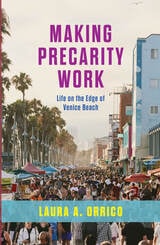
Making Precarity Work
Life on the Edge of Venice BeachLaura A. Orrico
University of Chicago Press, 2025
In Making Precarity Work, sociologist Laura A. Orrico shows how Los Angeles’s Venice Beach boardwalk, which is a magnet for tourists, is also a workplace, one that wouldn’t exist without the motley crew of people selling art, drinking, performing, using drugs, and working odd jobs who gather daily to engage in varied activities, from selling crafts to minding each other’s wares and asking for spare change.
Throughout the book, Orrico lifts up this workplace as a collective accomplishment, demonstrating how it can be a safety net to manage insecurity and inequality for those opting into its flexible and precarious structure, as well as how the LA government’s efforts to stabilize this work often disrupt the success of this collaborative and creative ecosystem. She also presents the ways this work can exacerbate those very inequalities. Sharing the personal stories of boardwalk workers, Orrico considers these juxtaposed realities and asks her audience to question how we can and should respond to a society whose best option for the disadvantaged is precarity.

Marfa
The Transformation of a West Texas TownBy Kathleen Shafer
University of Texas Press, 2019
A small town in the vast desert of West Texas, Marfa attracts visitors from around the world to its art foundations and galleries, film and music festivals, and design and architecture symposiums. While newcomers sometimes see it as “another Santa Fe,” long-time residents often take a bemused, even disapproving attitude toward the changes that Marfa has undergone since artist Donald Judd came to town in the 1970s and began creating spaces for his own and other artists’ work. They remember when ranching and the military formed the basis of the town’s economy, even as they acknowledge that tourist dollars are now essential to Marfa’s sustainability
Marfa tells an engaging story of how this isolated place became a beacon in the art world, like the famous Marfa Lights that draw curious spectators into the West Texas night. As Kathleen Shafer delves into the town’s early history, the impact of Donald Judd, the expansion of arts programming, and the increase in tourism, she unlocks the complex interplay between the particularities of the place, the forces of commerce and growth, the textures of local culture and tradition, and the transformative role of artists and creative work. Bookending her story between two iconic artworks—the whimsical Prada Marfa and the crass Playboy Marfa—Shafer illuminates the shifting cultural landscape of Marfa, showing why this place has become a mecca for so many and how the influx of newcomers has transformed its character.
Mariupol 2013-2022
Stories of Mobilization and ResistanceHana Josticova
Central European University Press, 2024
The chapters in this book represent successive phases of one story – that of Mariupol, formerly Ukraine’s tenth largest city, and the second largest in the Donbas region. The author, a young Slovak academic, conducted her ethnographic fieldwork in this coastal town between November 2018 and August 2021. She was one of the last academics to do research in Mariupol before its invasion and eventual occupation by Russia.
During these years, Hana Jošticová was overwhelmed by acts of mobilization and resistance that went in opposite directions: support for a Western direction of Ukraine’s future, and support for the status quo that the victory of the Euromaidan seemed to threaten.
She noted the sequence of events presented in the media and through the lens of individual frames and narratives. Her book is a collection and interpretation of memories and testimonies from both sides: those who actively resisted Russian influence; and those who sparked their own revolution, the ‘Russian Spring.’ Her focus is on self-mobilized individuals who resorted to action outside of established organizational structures spontaneously, autonomously, without resources and guarantees of safety. Her evidence indicates that popular support for the Russian Spring had less to do with Russia than with the social, economic, or cultural characteristics of the Donetsk region.
Years of immersive research convinced the author that individuals are as important as masses, ideas are as powerful as material resources, and beliefs and emotions are as critical as weapons.
Meanings of Maple
An Ethnography of SugaringMichael Lange
University of Arkansas Press, 2017
Readers will go deep into a Vermont sugar bush and its web of plastic tubes, mainline valves, and collection tanks. They will visit sugarhouses crammed with gas evaporators and reverse-osmosis machines. And they will witness encounters between sugar makers and the tourists eager to invest Vermont with mythological fantasies of rural simplicity.
So much more than a commodity study, Meanings of Maple frames a new approach for evaluating the broader implications of iconic foodways, and it will animate conversations in food studies for years to come.
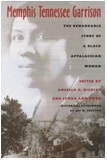
Memphis Tennessee Garrison
The Remarkable Story of a Black Appalachian WomanAncella R. Bickley
Ohio University Press, 2001
As a black Appalachian woman, Memphis Tennessee Garrison belonged to a demographic category triply ignored by historians.
The daughter of former slaves, she moved to McDowell County, West Virginia, at an early age and died at ninety-eight in Huntington. The coalfields of McDowell County were among the richest seams in the nation. As Garrison makes clear, the backbone of the early mining work force—those who laid the railroad tracks, manned the coke ovens, and dug the coal—were black miners. These miners and their families created communities that became the centers of the struggle for unions, better education, and expanded civil rights. Memphis Tennessee Garrison, an innovative teacher, administrative worker at U.S. Steel, and vice president of the National Board of the NAACP at the height of the civil rights struggle (1963-66), was involved with all of these struggles.
In many ways, this oral history, based on interview transcripts, is the untold and multidimensional story of African American life in West Virginia, as seen through the eyes of a remarkable woman. She portrays a courageous people who organize to improve their working conditions, send their children to school and then to college, own land, and support a wide range of cultural and political activities.

Mexico s New Cultural History
¿Una Lucha Libre?, Volume 79Susan Deans-Smith and Gilbert M. Joseph, eds.
Duke University Press, 0
All the contributors to this issue agree on the importance and relevance of a historical study of culture in its most inclusive sense. But there is much less consensus about the promise and potential of a "new cultural history" of Mexico and Latin America. While some of the contributors celebrate new interpretive and methodological advances, others express concern about the dangers of overinterpretation, untoward speculation, and the imposition of postmodernist concepts.
Contributors and topics covered include:
Susan Deans-Smith and Gilbert M. Joseph on the Arena of Dispute
Eric Van Young on the New Cultural History
William E. French on Cultural History of Nineteenth-Century Mexico
Mary Kay Vaughan on Cultural Approaches to Peasant Politics in the Mexican Revolution
Stephen Haber on Mexico’s "New" Cultural History
Florencia E. Mallon on Cycles of Revisionism
Susan Migden Socolow on Putting the "Cult" in Culture
Claudio Lomnitz on the Politics of the "New Cultural History of Mexico"

Middletown Families
Fifty Years of Change and ContinuityTheodore Caplow, Bruce A. Chadwick, Howard M. Bahr, Reuben Hill, and Margaret Holmes Williamson
University of Minnesota Press, 1985
Middletown Families was first published in 1985. Minnesota Archive Editions uses digital technology to make long-unavailable books once again accessible, and are published unaltered from the original University of Minnesota Press editions.
Fifty years after publication of Robert and Helen Lloyd's classic studies, Middletown (1929) and Middletown in Transition (1937), the Middletown III Project picked up and continued their exploration of American values and institutions. By duplicating the original studies - in many cases by using the same questions - this team of social scientists attempted to gauge the changes that had taken place in Muncie, Indiana, since the 1920s. In Middletown Families, the first book to emerge from this project, Theodore Caplow and his colleagues reveal that many widely discussed changes in family life, such as the breakdown of traditional male/female roles, increased conflict between parents and children, and disintegration of extended family ties, are more perceived than actual. Their evidence suggests that the Middletown family seems to be stronger and more tolerant, with closer bonds and greater marital satisfaction than fifty years ago. Instead of breaking it apart, the pressures of modern society may have drawn the family closer together.

Mill and Mansion
A Study of Architecture and Society in Lowell, Massachusetts, 1820-1865John Coolidge
University of Massachusetts Press, 1993

Minnesota Green
The Highs and Lows of Cannabis in the North CountryTanner Berris
University of Minnesota Press, 2027
The socially fraught and surprisingly colorful history of cannabis in Minnesota
In a sweeping narrative, Minnesota Green presents the previously untold story of cannabis and its long and complex history of criminalization, activism, and legislative contention. Seamlessly blending historical research, political analysis, and lived experience, activist and industry insider Tanner Berris traces the highs and lows of the plant’s presence in a state often held up as a beacon of progressive policymaking. Trekking across this fraught history, Berris documents how nineteenth-century hemp cultivation coincided with the federal dispossession of Indigenous lands, how, by the 1930s, moral panic turned cannabis from a common crop into a criminal threat, and how the “Hemp for Victory” campaign during World War II temporarily lifted a federal ban before the postwar decades gave way to renewed policing and punishment.
Paying close attention to school-based antidrug curricula, racialized rhetoric, patient testimonies, eradication campaigns, and widespread propaganda, Berris uncovers the prohibitionist roots of the “marijuana menace” and how reformers worked to reclaim the plant’s maligned reputation throughout the twentieth century. The fight for medical cannabis during the AIDS crisis, the revival of industrial hemp, and Minnesota’s embrace of low-dose hemp-derived products—all are pivotal points in the state’s reshaping of both public opinion and regulatory imagination.
At its core, this story is about Minnesotans: farmers experimenting with commercial hemp, activists staging legalization protests, policymakers wrestling with public caution, entrepreneurs and tribal leaders navigating a complex regulatory landscape, and local communities confronting the unjust racial and social consequences of punitive—and often violently policed—prohibition. At once a regional history and civic memoir, Minnesota Green vividly documents how a once-criminalized plant reemerged as a symbol of renewal and self-determination in Minnesota.
Retail e-book files for this title are screen-reader friendly with images accompanied by short alt text and/or extended descriptions.

Minotaur, Parrot, and the SS Man
Essays on Jorge de SenaGeorge Monteiro
Tagus Press, 2021
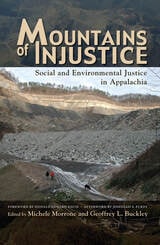
Mountains of Injustice
Social and Environmental Justice in AppalachiaMichele Morrone
Ohio University Press, 2011
Research in environmental justice reveals that low-income and minority neighborhoods in our nation’s cities are often the preferred sites for landfills, power plants, and polluting factories. Those who live in these sacrifice zones are forced to shoulder the burden of harmful environmental effects so that others can prosper. Mountains of Injustice broadens the discussion from the city to the country by focusing on the legacy of disproportionate environmental health impacts on communities in the Appalachian region, where the costs of cheap energy and cheap goods are actually quite high.
Through compelling stories and interviews with people who are fighting for environmental justice, Mountains of Injustice contributes to the ongoing debate over how to equitably distribute the long-term environmental costs and consequences of economic development.
Contributors:
Laura Allen, Brian Black, Geoffrey L. Buckley, Donald Edward Davis, Wren Kruse, Nancy Irwin Maxwell, Chad Montrie, Michele Morrone, Kathryn Newfont, John Nolt, Jedediah S. Purdy, and Stephen J. Scanlan.
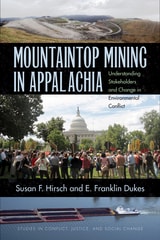
Mountaintop Mining in Appalachia
Understanding Stakeholders and Change in Environmental ConflictSusan F. Hirsch
Ohio University Press, 2014
Residents of the Appalachian coalfields share a history and heritage, deep connections to the land, and pride in their own resilience. These same residents are also profoundly divided over the practice of mountaintop mining—that is, the removal and disposal in nearby valleys of soil and rock in order to reach underlying coal seams. Companies and some miners claim that the practice has reduced energy prices, earned income for shareholders, and provided needed jobs. Opponents of mountaintop mining argue that it poisons Appalachia’s waters and devastates entire communities for the sake of short-term gains.
This conflict is emblematic of many other environmental disputes in the United States and around the world, disputes whose intensity derives not only from economic and environmental stakes but also from competing claims to individual and community identity. Looking beyond the slogans and seemingly irreconcilable differences, however, can reveal deeper causes of conflict, such as flawed institutions, politics, and inequality or the strongly held values of parties for whom compromise is difficult to achieve.
Mountaintop Mining in Appalachia focuses on the people of the region, the people who have the most at stake and have been the most active in trying to shift views and practices. By examining the experiences of these stakeholders and their efforts to effect change, Susan F. Hirsch and E. Franklin Dukes introduce key concepts and theories from the field of conflict analysis and resolution. They provide a compelling case study of how stakeholders challenge governance-as-usual, while offering insight into the causes of conflict over other environmental issues.
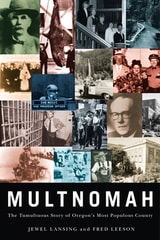
Multnomah
The Tumultuous Story of Oregon's Most Populous CountyJewel Lansing and Fred Leeson
Oregon State University Press, 2012
Covering people and events from 1854 to the present day, this definitive history of Multnomah County provides compelling details about public works triumphs and political scandals.

Myth and Southern History, Volume 1
The Old SouthEdited by Patrick Gerster and Nicholas Cords
University of Illinois Press, 1989