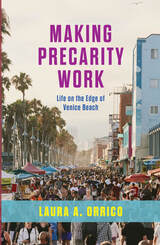
Making Precarity Work: Life on the Edge of Venice Beach
University of Chicago Press, 2025
Cloth: 978-0-226-84024-6 | Paper: 978-0-226-84026-0 | eISBN: 978-0-226-84025-3 (all)
Library of Congress Classification HF5459.U6O77 2025
Dewey Decimal Classification 381.180979493
Cloth: 978-0-226-84024-6 | Paper: 978-0-226-84026-0 | eISBN: 978-0-226-84025-3 (all)
Library of Congress Classification HF5459.U6O77 2025
Dewey Decimal Classification 381.180979493
ABOUT THIS BOOK | AUTHOR BIOGRAPHY | REVIEWS | TOC | REQUEST ACCESSIBLE FILE
ABOUT THIS BOOK
Shows how the precarious workers of Venice Beach—without help from the government—work together to create a safety net for themselves.
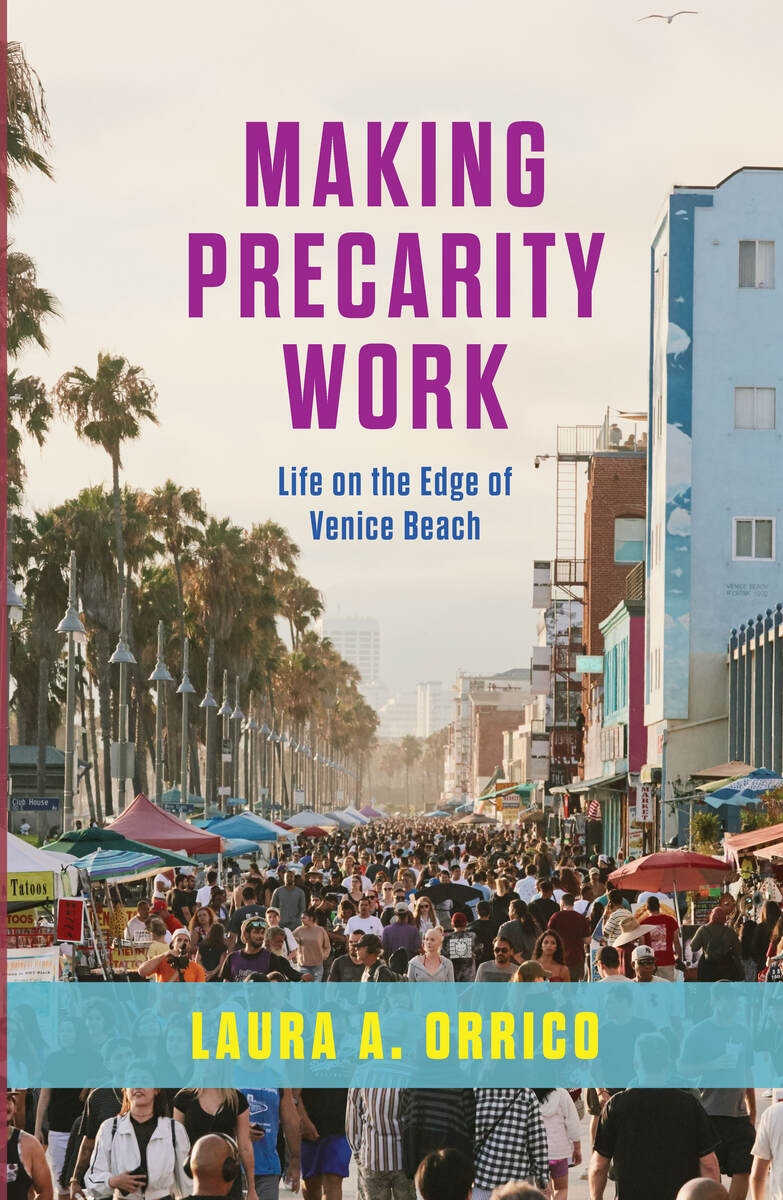
In Making Precarity Work, sociologist Laura A. Orrico shows how Los Angeles’s Venice Beach boardwalk, which is a magnet for tourists, is also a workplace, one that wouldn’t exist without the motley crew of people selling art, drinking, performing, using drugs, and working odd jobs who gather daily to engage in varied activities, from selling crafts to minding each other’s wares and asking for spare change.
Throughout the book, Orrico lifts up this workplace as a collective accomplishment, demonstrating how it can be a safety net to manage insecurity and inequality for those opting into its flexible and precarious structure, as well as how the LA government’s efforts to stabilize this work often disrupt the success of this collaborative and creative ecosystem. She also presents the ways this work can exacerbate those very inequalities. Sharing the personal stories of boardwalk workers, Orrico considers these juxtaposed realities and asks her audience to question how we can and should respond to a society whose best option for the disadvantaged is precarity.
See other books on: Edge | Job security | Los Angeles | Precarious employment | Street vendors
See other titles from University of Chicago Press