Results by title
70 books match the query 'Rehabilitation' and 6 start with m
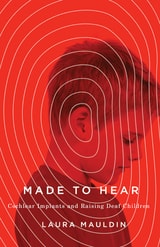
Made to Hear
Cochlear Implants and Raising Deaf ChildrenLaura Mauldin
University of Minnesota Press, 2016
A mother whose child has had a cochlear implant tells Laura Mauldin why enrollment in the sign language program at her daughter’s school is plummeting: “The majority of parents want their kids to talk.” Some parents, however, feel very differently, because “curing” deafness with cochlear implants is uncertain, difficult, and freighted with judgment about what is normal, acceptable, and right. Made to Hear sensitively and thoroughly considers the structure and culture of the systems we have built to make deaf children hear.
Based on accounts of and interviews with families who adopt the cochlear implant for their deaf children, this book describes the experiences of mothers as they navigate the health care system, their interactions with the professionals who work with them, and the influence of neuroscience on the process. Though Mauldin explains the politics surrounding the issue, her focus is not on the controversy of whether to have a cochlear implant but on the long-term, multiyear undertaking of implantation. Her study provides a nuanced view of a social context in which science, technology, and medicine are trusted to vanquish disability—and in which mothers are expected to use these tools. Made to Hear reveals that implantation has the central goal of controlling the development of the deaf child’s brain by boosting synapses for spoken language and inhibiting those for sign language, placing the politics of neuroscience front and center.
Examining the consequences of cochlear implant technology for professionals and parents of deaf children, Made to Hear shows how certain neuroscientific claims about neuroplasticity, deafness, and language are deployed to encourage compliance with medical technology.

Magdalene House
A Place about MercySarah VanHooser Suiter
Vanderbilt University Press, 2012
However, the story of the Magdalene community is not about these statistics, but about the stories the women tell. They say they thrive in the community because it is a place where they are free to be themselves, safe to give and receive love, and free to speak their trutheven to complain sometimes about how their storytelling is exploited "for the good of the community." A Place about Mercy is a participantobservation account of the history of this remarkable community founded in 1997, its structure, its Thistle Farms beauty products operation, and Reverend Becca Stevens's communal and spiritual vision. The book is finally about what it means to walk the path of healing with a group of unlikely women as guide.
Magdalene House was the subject of a multiplepart documentary on National Public Radio.
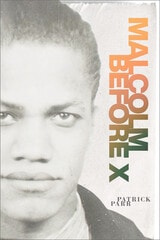
Malcolm Before X
Patrick Parr
University of Massachusetts Press, 2024
A Kirkus Reviews Best Nonfiction Book of 2024
A Spectator Best Book of the Year
Finalist for the 2025 ASALH Book Prize
Drawing upon interviews, correspondence, and nearly 2000 pages of never-before-used prison records, Malcolm Before X is the definitive examination of the prison years of civil rights icon Malcolm X.
In February 1946, when 20-year-old Malcolm Little was sentenced to eight to ten years in a maximum-security prison, he was a petty criminal and street hustler in Boston. By the time he was paroled in August 1952, he had transformed into a voracious reader, joined the Black Muslims, and was poised to become Malcolm X, one of the most prominent and important intellectuals of the civil rights era. While scholars and commentators have exhaustively detailed, analyzed, and debated Malcolm X’s post-prison life, they have not explored these six and a half transformative years in any depth.
Paying particular attention to his time in prison, Patrick Parr’s Malcolm Before X provides a comprehensive and groundbreaking examination of the first twenty-seven years of Malcolm X’s life (1925–1965). Parr traces Malcolm’s African lineage, explores his complicated childhood in the Midwest, and follows him as he moves east to live with his sister Ella in Boston’s Roxbury neighborhood, where he is convicted of burglary and sentenced.
Parr utilizes a trove of previously overlooked documents that include prison files and prison newspapers to immerse the reader into the unique cultures—at times brutal and at times instructional—of Charlestown State Prison, the Concord Reformatory, and the Norfolk Prison Colony. It was at these institutions that Malcolm devoured books, composed poetry, boxed, debated, and joined the Nation of Islam, changing the course of his life and setting the stage for a decade of antiracist activism that would fundamentally reshape American culture.
In this meticulously researched and beautifully written biography, the inspiring story of how Malcolm Little became Malcolm X is finally told.
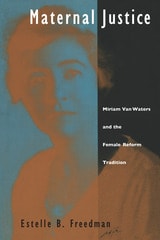
Maternal Justice
Miriam Van Waters and the Female Reform TraditionEstelle B. Freedman
University of Chicago Press, 1996
Estelle B. Freedman draws from Van Waters's diaries, letters, and personal papers to recreate her complex personal life, unveiling the disparity between Van Waters's public persona and her agonized private soul. With the power and elegance of a novel, Maternal Justice illuminates this historical context, casting light on the social welfare tradition, on women's history, on the American feminist movement, and on the history of sexuality.
"Maternal Justice is as much a work of history as it is biography, bringing to life not only a remarkable woman but also the complex political and social milieu within which she worked and lived."—Kelleher Jewett, The Nation
"This sympathetic biography reclaims Van Waters for history."—Publishers Weekly
"The Van Waters legacy, as Freedman gracefully presents, is that she cared about the lives of women behind bars. It is a strikingly unfashionable sentiment today."—Jane Meredith Adams, San Francisco Chronicle Book Review, Editor's Recommended Selection
"This finely crafted biography is both an engrossing read and a richly complicated account of a reformer whose work . . . bridged the eras of voluntarist charitable activism and professional social service."—Sherri Broder, Women's Review of Books
"This is a sympathetic, highly personal biography, revealing of both the author's responses to her subject's life and, in considerable detail, Van Waters's family traumas, illnesses, and love affairs."—Elizabeth Israels Perry, Journal of American History
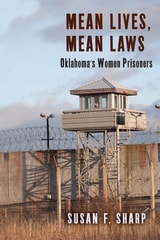
Mean Lives, Mean Laws
Oklahoma's Women PrisonersSharp, Susan F
Rutgers University Press, 2014
The culmination of over a decade of original research, Mean Lives, Mean Laws exposes a Kafkaesque criminal justice system, one that has no problem with treating women as collateral damage in the War on Drugs or with stripping female prisoners of their parental rights. Yet it also reveals the individual histories of women who were jailed in Oklahoma, providing intimate portraits of their lives before, during, and after their imprisonment. We witness the impoverished and abusive conditions in which many of these women were raised; we get a vivid portrait of their everyday lives behind bars; and we glimpse the struggles that lead many ex-convicts to fall back into the penal system.
Through an innovative methodology that combines statistical rigor with extensive personal interviews, Sharp shows how female incarceration affects not only individuals, but also families and communities. Putting a human face on a growing social problem, Mean Lives, Mean Laws raises important questions about both the state of Oklahoma and the state of the nation.
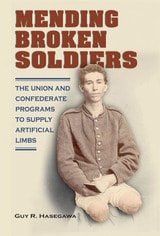
Mending Broken Soldiers
The Union and Confederate Programs to Supply Artificial LimbsGuy R. Hasegawa
Southern Illinois University Press, 2012
Guy R. Hasegawa presents the first volume to explore the wartime provisions made for amputees in need of artificial limbs—programs that were the forebears of modern governmental efforts to assist in the rehabilitation of wounded service members. Hasegawa offers a comprehensive look at the artificial-limb industry, including detailed descriptions of the ingenious designs employed by manufacturers; illustrations and photographs of period prosthetics; accounts of the rapid advancement of medical technology during the Civil War; and in-depth examinations of the companies that manufactured limbs for soldiers and bid for contracts, including at least one still in existence today. An intriguing account of innovation, determination, humanitarianism, and the devastating toll of battle, Mending Broken Soldiers provides a fascinating glimpse into groundbreaking military health programs during the most tumultuous years in American history.