Results by title
346 books match the query 'Relations' and 20 start with m
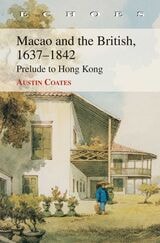
Macao and the British, 1637–1842
Prelude to Hong KongAustin Coates
Hong Kong University Press, 2009
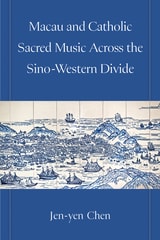
Macau and Catholic Sacred Music Across the Sino-Western Divide
Jen-yen Chen
University of Michigan Press, 2026
Drawing from sound studies and musicological methods, Chen argues that Chinese descriptions of Catholic sounds in Macau, including the ringing of church bells, the playing of the organ, and choral singing, illuminate spatial, sonic, and ideological mobilities that reconfigure Chinese and European identities. Macau and Catholic Music Across the Sino-Western Divide also extends to contemporary times to explore how present day members of Macau’s Catholic community position themselves in relation to the historical narratives often told about their city, cultivating a rich individuality of identity that refuses conformity to fixed notions of Asianness or Westernness.
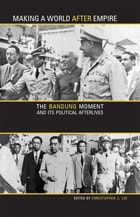
Making a World after Empire
The Bandung Moment and Its Political AfterlivesChristopher J. Lee
Ohio University Press, 2010
In April 1955, twenty-nine countries from Africa, Asia, and the Middle East came together for a diplomatic conference in Bandung, Indonesia, intending to define the direction of the postcolonial world. Representing approximately two-thirds of the world’s population, the Bandung conference occurred during a key moment of transition in the mid-twentieth century—amid the global wave of decolonization that took place after the Second World War and the nascent establishment of a new cold war world order in its wake. Participants such as Jawaharlal Nehru of India, Gamal Abdel Nasser of Egypt, Zhou Enlai of China, and Ahmed Sukarno of Indonesia seized this occasion to attempt the creation of a political alternative to the dual threats of Western neocolonialism and the cold war interventionism of the United States and the Soviet Union.
The essays in this volume explore the diverse repercussions of this event, tracing the diplomatic, intellectual, and sociocultural histories that have emanated from it. Making a World after Empire consequently addresses the complex intersection of postcolonial history and cold war history and speaks to contemporary discussions of Afro-Asianism, empire, and decolonization, thus reestablishing the conference’s importance in twentieth-century global history.
Contributors: Michael Adas, Laura Bier, James R. Brennan, G. Thomas Burgess, Antoinette Burton, Dipesh Chakrabarty, Julian Go, Christopher J. Lee, Jamie Monson, Jeremy Prestholdt, Denis M. Tull
Managing the Counterrevolution
The United States and Guatemala, 1954–1961Stephen M. Streeter
Ohio University Press, 2001
The Eisenhower administration’s intervention in Guatemala is one of the most closely studied covert operations in the history of the Cold War. Yet we know far more about the 1954 coup itself than its aftermath. This book uses the concept of “counterrevolution” to trace the Eisenhower administration’s efforts to restore U.S. hegemony in a nation whose reform governments had antagonized U.S. economic interests and the local elite.
Comparing the Guatemalan case to U.S.-sponsored counterrevolutions in Iran, the Dominican Republic, Brazil, and Chile reveals that Washington’s efforts to roll back “communism” in Latin America and elsewhere during the Cold War represented in reality a short-term strategy to protect core American interests from the rising tide of Third World nationalism.

Manifold Destiny
Arabs at an American Crossroads of Exceptional RuleJohn Tofik Karam
Vanderbilt University Press, 2021
At the border where Brazil, Paraguay, and Argentina meet under the scrutiny of the US and Mercosur (the large South American trade bloc), Arabs have long fulfilled what author John Tofik Karam calls a "manifold destiny." Karam casts Lebanese, Palestinians, and Syrians at this American border as circumstantial protagonists of a hemispheric saga.
For the more than six decades since they started settling at the trinational border between Brazil, Paraguay, and Argentina, Arabs have animated the hemisphere. Their transnational economic and social projects reveal a heretofore unacknowledged venue of exceptional rule in which the community accommodates and abides multiple states' varied suspensions of norms and laws. Arabs set up businesses and community centers at the border under authoritarian military governments between the 1950s and 1980s; thereafter, when denied full democratic enfranchisement, they instead underwent increasing surveillance from the 1990s to today. Karam reveals an unfinished history of exceptional rule that Arabs accommodate from an authoritarian past to a counterterrorist present.
Karam's riveting account draws on anthropological and historical research from each side of this trinational South American border, as well as from the US—where government bureaucrats still suspect Arabs at the border of would-be-terrorist subversion. Offering a fresh understanding of the hemisphere, Manifold Destiny brings the transnational turn of Middle Eastern studies to bear upon the fields of American studies, Brazilian studies, and Latin American studies.
Manufacturing Confucianism
Chinese Traditions and Universal CivilizationLionel M. Jensen
Duke University Press, 1998
Tracing the history of the Jesuits’ invention of Confucius and of themselves as native defenders of Confucius’s teaching, Jensen reconstructs the cultural consequences of the encounter between the West and China. For the West, a principal outcome of this encounter was the reconciliation of empirical investigation and theology on the eve of the scientific revolution. Jensen also explains how Chinese intellectuals in the early twentieth century fashioned a new cosmopolitan Chinese culture through reliance on the Jesuits’ Confucius and Confucianism. Challenging both previous scholarship and widespread belief, Jensen uses European letters and memoirs, Christian histories and catechisms written in Chinese, translations and commentaries on the Sishu, and a Latin summary of Chinese culture known as the Confucius Sinarum Philosophus to argue that the national self-consciousness of Europe and China was bred from a cultural ecumenism wherein both were equal contributors.
Mapping Europe's Borderlands
Russian Cartography in the Age of EmpireSteven Seegel
University of Chicago Press, 2012
Marketing Marianne
French Propaganda in America, 1900-1940Robert J. Young
Rutgers University Press, 2003
Although historians have written extensively on propaganda during Napoleon III’s regime and Vichy, they have virtually ignored the Third Republic. Focusing on Third Republic policies, Marketing Marianne suggests that Americans’ long-lasting love affair with French culture is no accident. Robert J. Young argues that the French used subtle but effective means to influence U.S. policy in Europe. He examines French propaganda efforts and the methods of the French Foreign Ministry, always highlighting the wider cultural and social context of Franco-American relations. French propagandists believed that the steady promotion of their nation as the cultural capital of the world was the best way to foster goodwill among Americans. They slowly recognized the important role the United States played in maintaining the balance of power in Europe. Young argues that the French deliberately exploited America’s sense of cultural inferiority when faced with Europe’s rich heritage, and the rise of new technologies and modern forms of government in France encouraged the development of more sophisticated forms of propaganda.
Marks of Distinctions
Christian Perceptions of Jews in the High Middle AgesIrven M. Resnick
Catholic University of America Press, 2012
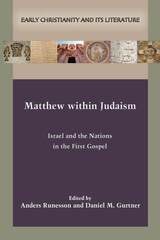
Matthew within Judaism
Israel and the Nations in the First GospelAnders Runesson
SBL Press, 2020
In this collection of essays, leading New Testament scholars reassess the reciprocal relationship between Matthew and Second Temple Judaism. Some contributions focus on the relationship of the Matthean Jesus to torah, temple, and synagogue, while others explore theological issues of Jewish and gentile ethnicity and universalism within and behind the text.
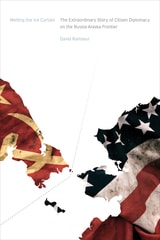
Melting the Ice Curtain
The Extraordinary Story of Citizen Diplomacy on the Russia-Alaska FrontierDavid Ramseur
University of Alaska Press, 2017
Melting the Ice Curtain tells the story of how inspiration, courage, and persistence by citizen-diplomats bridged a widening gap in superpower relations. David Ramseur was a first-hand witness to the danger and political intrigue, having flown on that first Friendship Flight, and having spent thirty years behind the scenes with some of Alaska’s highest officials. As Alaska celebrates the 150th anniversary of its purchase, and as diplomatic ties with Russia become perilous, Melting the Ice Curtain shows that history might hold the best lessons for restoring diplomacy between nuclear neighbors.
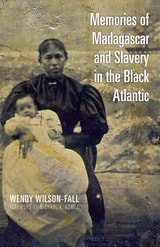
Memories of Madagascar and Slavery in the Black Atlantic
Wendy Wilson-Fall
Ohio University Press, 2015
From the seventeenth century into the nineteenth, thousands of Madagascar’s people were brought to American ports as slaves. In Memories of Madagascar and Slavery in the Black Atlantic, Wendy Wilson-Fall shows that the descendants of these Malagasy slaves in the United States maintained an ethnic identity in ways that those from the areas more commonly feeding the Atlantic slave trade did not. Generations later, hundreds, if not thousands, of African Americans maintain strong identities as Malagasy descendants, yet the histories of Malagasy slaves, sailors, and their descendants have been little explored.
Wilson-Fall examines how and why the stories that underlie this identity have been handed down through families—and what this says about broader issues of ethnicity and meaning-making for those whose family origins, if documented at all, have been willfully obscured by history.
By analyzing contemporary oral histories as well as historical records and examining the conflicts between the two, Wilson-Fall carefully probes the tensions between the official and the personal, the written and the lived. She suggests that historically, the black community has been a melting pot to which generations of immigrants—enslaved and free—have been socially assigned, often in spite of their wish to retain far more complex identities. Innovative in its methodology and poetic in its articulation, this book bridges history and ethnography to take studies of diaspora, ethnicity, and identity into new territory.
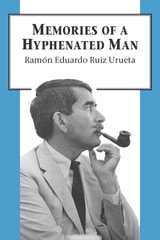
Memories of a Hyphenated Man
Ramón Eduardo Ruiz Urueta
University of Arizona Press, 2003
Historian, author, and intellectual, Ruiz has established himself through such books as Triumphs and Tragedy: A History of the Mexican People and Cuba: The Making of a Revolution, and in 1998 he was awarded the National Humanities Medal by President Clinton. Now he turns his pen on his own life to offer a personal look at what it really means to be American by birth but Mexican by culture.
Little has been written by or about persons of Mexican origin who have achieved the academic stature of Ruiz, and his memoir provides insights not found in the more common biographies of labor leaders and civil rights activists. His early life straddled the social worlds of his parent's Mexico and semi-rural America, where his father's success as an entrepreneur and property owner set his family's experiences apart from those of most other Mexican Americans at the time. His parents reinforced in their children an identity as mexicanos, and that connection with his ancestral roots was for Ruiz a lifejacket in the days of acute bigotry in America.
In making an early, self-conscious commitment to a life of the mind, Ruiz became aware of his unique nature, and while not immune to prejudice he was able to make a name for himself in several endeavors. As a student, he attended college when few Mexican Americans were given that opportunity, and he was one of the first of his generation to earn a Ph.D. As an Army Air Force officer during World War II, he served as a pilot in the Pacific theatre. And as an intellectual, he navigated the currents of the historical profession and charted new directions in Latin American research through his prolific writing.
Ruiz's career teaching took him to Mexico, Massachusetts, Texas, Oregon—often as the lone "Mexican professor," and ultimately back to his native California. While teaching at Smith, he exulted in being "free to interpret Spanish American life and culture to my heart's content," and at the University of California, San Diego, he saw the era of campus racial barrier give way to the birth of affirmative action. While at UCSD, he taught hundreds of Chicanos and trained one of the largest groups of Chicano Ph.D's.
Memories of a Hyphenated Man is the story of a unique individual who, while shaped by his upbringing and drawing on deep cultural roots, steadfastly followed his own compass in life. It tells of a singular man who beat the odds as it poignantly addresses the ambiguities associated with race, class, citizenship, and nationality for Mexicans and Mexican Americans.
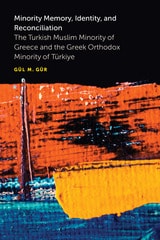
Minority Memory, Identity, and Reconciliation
The Turkish Muslim Minority of Greece and the Greek Orthodox Minority of TürkiyeGül M. Gür
University of Michigan Press, 2025
Drawing from the personal stories of members of these two minority communities regarding their struggle with displacement, discrimination, and cultural assimilation, as well as comprehensive historical analysis, this book examines how historical traumas, national policies, and sociopolitical dynamics have influenced contemporary minority memory and identity formation. By incorporating interviews with community leaders, civil society representatives, and state officials, this book offers a rich, multifaceted perspective on the processes of memory and identity formation that underscores the broader implications of these processes for international relations in the region and minority rights. Gül M. Gür pulls together theories of nationalism, collective memory, and narrative practice to highlight the unique process of minority memory work and its role in sustaining minority identity and their advocacy efforts.
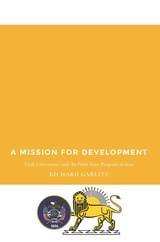
Mission for Development
Utah Universities and the Point Four Program in IranRichard Garlitz
Utah State University Press, 2018
The Point Four Program sponsored American technical assistance for developing countries during the 1950s—an American Cold War strategy to cultivate friendly governments and economic development in countries purportedly susceptible to Communist influence. Between 1951 and 1964, advisors from Brigham Young University sought to modernize Iranian public education, experts from Utah State University worked to improve agricultural production, and doctors and nurses from the University of Utah helped with the Iranian government’s rural health initiatives. In A Mission for Development, author Richard Garlitz offers a critical and clear-eyed assessment of the challenges the Utahns faced and the contributions they made to Iranian development.
The book also reexamines the Iranian political crisis of the early 1950s and the overthrow of Prime Minister Mohammad Mossadegh through the eyes of the Utah advisors. A Mission for Development provides rare insight into the university role in international development and will be of interest to historians and policy makers.
Model-Minority Imperialism
Victor Bascara
University of Minnesota Press, 2006
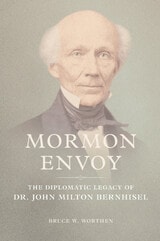
Mormon Envoy
The Diplomatic Legacy of Dr. John Milton BernhiselBruce W. Worthen
University of Illinois Press, 2023
Having risen from a Pennsylvania backcountry upbringing to become a respected member of the upper class, Bernhisel possessed a personal history that allowed him to reach common ground with politicians and other outsiders. He negotiated for Joseph Smith’s life and, after the Church’s relocation to the Utah Territory, took on the task of rehabilitating the public image of the Latter-day Saints. Brigham Young’s defiance of the government undermined Bernhisel’s work, but their close if sometimes turbulent relationship ultimately allowed Bernhisel to make peace with Washington, secure a presidential pardon for Young, and put Utah and the Latter-day Saints on the road to formally joining the United States.
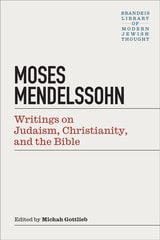
Moses Mendelssohn
Writings on Judaism, Christianity, and the BibleEdited by Michah Gottlieb
Brandeis University Press, 2011
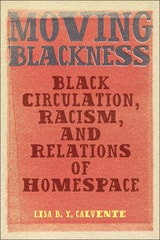
Moving Blackness
Black Circulation, Racism, and Relations of HomespaceLisa B. Y. Calvente
Rutgers University Press, 2025
Engaging with theories of anti-Black racism, modernity, coloniality, and the Black diaspora, the book frames storytelling and the circulation of narratives as performances deeply rooted in the everyday lives of Black people across the diaspora. Starting with an examination of the racial construction of movement during colonialism and slavery, the book traces how this history shapes contemporary interactions. With its exploration of how Black circulation transforms movement and space, the book introduces a forward-thinking approach to the Black diaspora, anchored in a politics of identification rather than being confined to the past or a specific location. Moving Blackness argues that the desire for homespace, a yearning for belonging that transcends any particular physical space, fuels this envisioned future, rooted in the historical and material conditions of racism and marginalization.
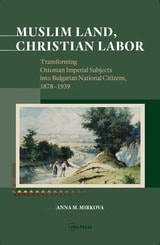
Muslim Land, Christian Labor
Transforming Ottoman Imperial Subjects into Bulgarian National Citizens, c. 1878-1939Anna M. Mirkova
Central European University Press, 2017