Results by title
828 books match the query 'Research' and 46 start with m
Macroanalysis
Digital Methods and Literary HistoryMatthew L. Jockers
University of Illinois Press, 2013
Making Administrative Work Visible
Data-Driven Advocacy for Understanding the Labor of Writing Program AdministrationLeigh Graziano
Utah State University Press, 2023
The collection has three parts, each of which focuses on the most confounding challenges facing WPAs as well as the most compelling sites of their contributions to administration, labor in higher education, and the discipline’s collective obligation to forwarding the goals of social justice and advocacy: Advocating through Representations of WPA Labor, Advocating by Accounting for Time and Labor, and Advocating in and through Complex Institutional Contexts. The chapters use data to share and track the work functions, job titles, grand narratives, program assessments, tenure and promotion, email practices, and more undertaken by WPAs in their administrative capacities. Chapters also surface narratives for future data and studies to be done by other scholars.
By taking up and answering questions about the range of WPA work—and the invisibility of much of that work—Making Administrative Work Visible creates avenues toward accounting for and acknowledging the complex activity systems in which WPAs lead the work of the university and advocate for data-driven strategies needed to sustain this foundational area of higher education.
Contributors: Kamila Albert, Brooke Anderson, Sheila Carter-Tod, Amy Cicchino, Ana Cortés Lagos, Kristi Murray Costello, Jennifer Cunningham, Ryan Dippre, Kimberly Emmons, Genevieve García de Müeller, Jill Gladstein, Caleb González, Michael Healy, Lyra Hilliard, Kristine Johnson, Seth Kahn, Rita Malenczyk, Troy Mikanovich, Lilian Mina, Angela Mitchell, Greer Murphy, Kate Navickas, Michael Neal, Patti Poblete, Jan Rieman, Heather Robinson, Katelyn Stark, Mary Stewart, Natalie Stillman-Webb, Lizbett Tinoco, Lisa Tremain, Martha Wilson Schaffer
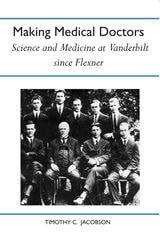
Making Medical Doctors
Science and Medicine at Vanderbilt since FlexnerTimothy C. Jacobson
University of Alabama Press, 1987
Making Medical Doctors is not a conventional institutional history, but rather a study of the union of science and medicine in a particularly illustrative institutional setting. Its general subject is the institution where science and medicine most dramatically came together: the modern medical school and medical center. Its particular subject is the medical school and center of Vanderbilt University, which was rebuilt in the 1920s as a model for medical education and research. Making Medical Doctors also explores the intellectual and financial sources of institutional development: the worlds of Abraham Flexner, Frederick T. Gates, and Henry S. Pritchett, three foundation masters of the early 20th century. It examines closely the vanished medical world of that generation of doctors who reached the height of their influence in the period between the two world wars and describes how they actually did medicine, surgery, and science.
The convergence of science and medicine in the 19th and 20th centuries produced what we know today as modern medicine. The balance of power and interdependence between science and medicine have changed vastly from the 1920s and 1930s, as Vanderbilt’s story clearly illustrates.

Making Physics
A Biography of Brookhaven National Laboratory, 1946-1972Robert P. Crease
University of Chicago Press, 1999
"[A] very readable, well illustrated and sometimes even racy, recounting of Brookhaven's history, politics and personalities."—Denys Wilkinson, Physics World

Making Sense of the Census Revisited
Census Records for England and Wales,1801-1901. A Handbook for Historical ResearchersEdward Higgs
University of London Press, 2005
Making the News Popular
Mobilizing U.S. News AudiencesAnthony Nadler
University of Illinois Press, 2016
Anthony Nadler charts a paradigm shift, from market research's reach into the editorial suite in the 1970s through contemporary experiments in collaborative filtering and social news sites like Reddit and Digg. As Nadler shows, the transition was and is a rocky one. It also goes back much further than many experts suppose. Idealized visions of demand-driven news face obstacles with each iteration. Furthermore, the post-professional philosophy fails to recognize how organizations mobilize interest in news and public life. Nadler argues that this civic function of news organizations has been neglected in debates on the future of journalism. Only with a critical grasp of news outlets' role in stirring broad interest in democratic life, he says, might journalism's digital crisis push us toward building a more robust and democratic news media.
Wide-ranging and original, Making the News Popular offers a critical examination of an important, and still evolving, media phenomenon.
Malignant Growth
Creating the Modern Cancer Research Establishment, 1875–1915Alan I Marcus
University of Alabama Press, 2018
In Malignant Growth: Creating the Modern Cancer Research Establishment, 1875–1915, Alan I Marcus explores a relatively understudied period in the history of cancer by providing a careful investigation of the first public crusade to determine the cause of cancer. The search for cancer’s cause during the heady era of bacteriology was colored by the Germ Theory of Disease. Researchers had demonstrated in malady after malady that each disease was the result of a singular and specific pathogenic agent. That model led investigators to optimistically conclude that they would soon find the cause of what was termed the “emperor of all maladies,” cases of which were apparently increasing at a prodigious rate worldwide.
In this accessible history of science and medicine, Marcus exposes the complex story of the efforts made from 1875 through 1915 to first conquer and, failing that, to control cancer—a dual approach that remains in force to this day. He reveals the messiness of real-time scientific research, tracing the repeated lurches of promise, discoveries of hope, and the inevitable despair that always followed. Other barriers existed to the research, such as inconsistency in test standards and inter-laboratory competition and mistrust. Researchers approached cancer from such disparate specialties as clinical medicine, zoology, botany, chemistry, nutrition, bacteriology, pathology, and microbiology. Although they came from diverse fields, each steadfastly maintained that cancer operated in an analogous fashion to other bacteriological diseases.
Virtually every country and a slew of various clinicians and investigators waged this first war on cancer, operating in remarkably diverse scientific venues. Cancer laboratories and hospitals, as well as organizations like the American Cancer Society, were born out of this first offensive on cancer. Even as cancer continues to proliferate today, these institutions that initially formed to defeat cancer more than a hundred years ago persist and continue to expand.

Mammals of Alabama
Troy L. Best and Julian L. Dusi
University of Alabama Press, 2014
Beautifully designed and sturdily bound for rugged field use, Mammals of Alabama is the first and only exhaustive guidebook to Alabama’s diverse and fascinating mammalian fauna.
European and American naturalists visited the territory that would become Alabama as early as the late eighteenth century and marveled at the breadth and variety of its flora and fauna. Yet until today scientists, scholars, and nature enthusiasts had no systematic guide to the state’s mammals. Mammals of Alabama fills the gap.
Naturally occurring in the state are nine orders, twenty-two families, fifty-one genera, and seventy-two species of living mammals. Best and Dusi offer an engaging entry for each as well as additional species that have become extinct through natural processes or human extirpation.
Illustrated with maps and photos, each entry includes:
• Identification notes • Dental formula
• Size and weight • Distribution
• Ecology • Life History
• Behavior • Parasites and Diseases
• Conservation Status • Notes and References
Ideal for backyards, hikes, libraries, and classrooms, Mammals of Alabama includes hundreds of professional, close-up color specimen photographs of both living animals in their natural habitats and skull plates, making identification of animals easy.
Best also offers fascinating and fun facts about Alabama mammals that will delight nature lovers of all ages, such as the surprising and excellent tree-climbing skills of the gray fox, the use in the past of mole skins to apply cosmetics, and the litters of identical quadruplets common to the nine-banded armadillo.
Published in cooperation with the Alabama Wildlife Federation

Meaningful Metrics
A 21St Century Librarian's Guide ToRobin Chin Roemer
Assoc of College & Research Libraries, 2015
Meaningful Metrics
A 21St Century Librarian's Guide to Bibliometrics, Altmetrics, and Research ImpactRobin Chin Roemer
Assoc of College & Research Libraries, 2015
Measuring the Gains from Medical Research
An Economic ApproachEdited by Kevin M. Murphy and Robert H. Topel
University of Chicago Press, 2003
From an economic perspective, they find, the answer is a resounding "yes": in fact, considering the extraordinary value of improvements to health, we may even be spending too little on medical research. The evidence these papers present and the conclusions they reach are both surprising and convincing: that growth in longevity since 1950 has been as valuable as growth in all other forms of consumption combined; that medical advances producing 10% reductions in mortality from cancer and heart disease alone would add roughly $10 trillion-a year's GDP-to the national wealth; or that the average new drug approved by the FDA yields benefits worth many times its cost of development.
The papers in this book are packed with these and many other surprising revelations, their sophisticated analysis persuasively demonstrating the massive economic benefits we can gain from investments in medical research. For anyone concerned about the cost and the value of such research-from policy makers to health care professionals and economists-this will be a landmark book.
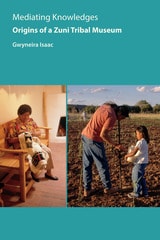
Mediating Knowledges
Origins of a Zuni Tribal MuseumGwyneira Isaac
University of Arizona Press, 2007
These personal narratives provide insight into the diversity of perspectives found within the community, as well as tracing the ongoing negotiation of the relationship between Zuni and Anglo-American cultures. In particular, Isaac examines how Zunis, who transmit knowledge about their history through oral tradition and initiation into religious societies, must navigate the challenge of utilizing Anglo-American museum practices, which privilege technology that aids the circulation of knowledge beyond its original narrators.
This book provides a much-needed contemporary ethnography of a Pueblo community recognized for its restrictive approach to outside observers. The complex interactions between Zunis and anthropologists explored here, however, reveal not only Puebloan but also Anglo-American attitudes toward secrecy and the control of knowledge.
Medical Anthropology at the Intersections
Histories, Activisms, and FuturesMarcia C. Inhorn and Emily A. Wentzell, eds.
Duke University Press, 2012
Contributors. Lawrence Cohen, Didier Fassin, Faye Ginsburg, Marcia C. Inhorn, Arthur Kleinman, Margaret Lock, Emily Martin, Lynn M. Morgan, Richard Parker, Rayna Rapp, Merrill Singer, Emily A. Wentzell
Medical Editing
A Guide to Learning the Craft and Building Your CareerBarbara Gastel
University of Chicago Press, 2025
Medical editing is a thriving and wide-ranging specialty within the editorial profession. Its practitioners occupy a unique ecosystem that involves its own style manuals and the ability to work with highly technical medical terminology and issues, and its work helps ensure that health practitioners, researchers, and the public receive sound, understandable medical information. Today, opportunities abound for medical editors—who come from many backgrounds and work in many settings, such as medical journals, medical institutions, and the freelance realm.
Written by an experienced and award-winning editor, Medical Editing: A Guide to Learning the Craft and Building Your Career provides a thorough introduction to the profession. At levels ranging from the punctuation mark to the publication, Barbara Gastel provides accessible and concrete instruction in editing medical writing. Distinctively, the book also explores ethical issues encountered in medical editing and other topics such as working effectively with medical authors, editing medical writing by and for nonnative users of English, and editing medical conference presentations.
For those considering entering medical editing or transitioning from other employment, the book also provides helpful career guidance. Readers will learn about the range of medical editing positions, receive advice on taking medical editing tests for employment, learn about certificates and certifications in the field, and more.
Enhanced by examples, exercises, and humor, Medical Editing will benefit both prospective and beginning medical editors while serving as a useful resource for experienced editors, teachers of courses in related fields, and supervisors mentoring interns or new hires.
Medical Lives and Scientific Medicine at Michigan, 1891-1969
Joel D. Howell, Editor
University of Michigan Press, 1993
Medicine in the Meantime
The Work of Care in MozambiqueRamah McKay
Duke University Press, 2018
Membranes to Molecular Machines
Active Matter and the Remaking of LifeMathias Grote
University of Chicago Press, 2019
Membranes to Molecular Machines explores just how late twentieth-century science came to think of our cells and bodies this way. This story is told through the lens of membrane research, an unwritten history at the crossroads of molecular biology, biochemistry, physiology, and the neurosciences, that directly feeds into today's synthetic biology as well as nano- and biotechnology. Mathias Grote shows how these sciences not only have made us think differently about life, they have, by reworking what membranes and proteins represent in laboratories, allowed us to manipulate life as "active matter" in new ways. Covering the science of biological membranes in the United States and Europe from the mid-1960s to the 1990s, this book connects that history to contemporary work with optogenetics, a method for stimulating individual neurons using light, and will enlighten and provoke anyone interested in the intersection of chemical research and the life sciences—from practitioner to historian to philosopher.
The research described in the book and its central actor, Dieter Oesterhelt, were honored with the 2021 Albert Lasker Basic Medical Research Award for his contribution to the development of optogenetics. The 2026 Nobel Prize in Physiology or Medicine was awarded to three scientists for discoveries leading to optogenetics. Membranes to Molecular Machines can be read as a prehistory of this research.

Memory
Fragments of a Modern HistoryAlison Winter
University of Chicago Press, 2011
Picture your twenty-first birthday. Did you have a party? If so, do you remember who was there? Now step back: how clear are those memories? Should we trust them to be accurate, or is there a chance that you’re remembering incorrectly? And where have the many details you can no longer recall gone? Are they hidden somewhere in your brain, or are they gone forever?
Such questions have fascinated scientists for hundreds of years, and, as Alison Winter shows in Memory: Fragments of a Modern History, the answers have changed dramatically in just the past century. Tracing the cultural and scientific history of our understanding of memory, Winter explores early metaphors that likened memory to a filing cabinet; later, she shows, that cabinet was replaced by the image of a reel of film, ever available for playback. That model, too, was eventually superseded, replaced by the current understanding of memory as the result of an extremely complicated, brain-wide web of cells and systems that together assemble our pasts. Winter introduces us to innovative scientists and sensationalistic seekers, and, drawing on evidence ranging from scientific papers to diaries to movies, explores the way that new understandings from the laboratory have seeped out into psychiatrists' offices, courtrooms, and the culture at large. Along the way, she investigates the sensational battles over the validity of repressed memories that raged through the 1980s and shows us how changes in technology—such as the emergence of recording devices and computers—have again and again altered the way we conceptualize, and even try to study, the ways we remember.
Packed with fascinating details and curious episodes from the convoluted history of memory science, Memory is a book you'll remember long after you close its cover.
Meta-Analysis for Explanation
A CasebookThomas D. Cook
Russell Sage Foundation, 1992
Metatheory in Social Science
Pluralisms and SubjectivitiesEdited by Donald W. Fiske and Richard A. Shweder
University of Chicago Press, 1986
While various points of view are expressed in these nineteen essays, they have in common several themes, including the comparison of social and natural science, the role of knowledge in meeting the demands of society and its pressing problems, and the nature and role of subjectivity in science. Some authors hold that subjectivity cannot be studied scientifically; others argue that it can and must be if progress in knowledge is to be made. The essays demonstrate the philosophical pluralism they discuss and give a wide range of alternative positions on the future of the social and behavioral sciences in a postpositivist intellectual world.

Methodological Matters
Narratives for Emerging Researchers in Rhetoric and CompositionErin Kathleen Bahl
Utah State University Press, 2026
Methodological Matters offers a series of investigative reflections from experienced and emerging researchers to provide guidance for researchers who are navigating important complexities early in their careers. Each chapter explores a larger research-related question by narrating how one researcher negotiated a unique methodological challenge while working on a dissertation in the field of rhetoric and composition.
Given the constraints placed on new researchers’ time and resources, one way to navigate research-related precarities is to learn from others who have successfully traversed the same investigative terrain. This volume curates investigative reflections from researchers who, at the time of writing, were in the process of completing (or had just completed) their dissertations. Three parts explore issues of identity, craft, and practice in conducting research as an emerging scholar in rhetoric and composition, and the collection concludes with critical reflections on the role of precarity in conducting research.
Both a curated series of investigative reflections from emerging researchers and a resource guide with tangible tools for use in graduate seminars and fieldwork, Methodological Matters amplifies voices of those who learned how to do research in precarious contexts while simultaneously situated within the sometimes frustrating developmental phase located between “student” and “practitioner.”
Methodology and Epistemology for Social Sciences
Selected PapersDonald T. Campbell
University of Chicago Press, 1988
Methods Of Social Movement
Bert Klandermans
University of Minnesota Press, 2002
The definitive guide to conducting research in this dynamic field.
Citing the critical importance of empirical work to social movement research, the editors of this volume have put together the first systematic overview of the major methods used by social movement theorists. Original chapters cover the range of techniques: surveys, formal models, discourse analysis, in-depth interviews, participant observation, case studies, network analysis, historical methods, protest event analysis, macro-organizational analysis, and comparative politics. Each chapter includes a methodological discussion, examples of studies employing the method, an examination of its strengths and weaknesses, and practical guidelines for its application.
Contributors: Kathleen M. Blee, U of Pittsburgh; Elisabeth S. Clemens, U of Arizona; Donatella della Porta, U of Florence; Mario Diani, U of Trento, Italy; Martin D. Hughes; Hank Johnston, San Diego State U; Ruud Koopmans, Social Science Research Center, Berlin; Paul Lichterman, U of Wisconsin; Debra C. Minkoff, U of Washington; Daniel J. Myers, Notre Dame; Pamela E. Oliver, U of Wisconsin; Dieter Rucht, Social Science Research Center, Berlin; Jackie Smith, SUNY, Stony Brook; David A. Snow, U of California, Irvine; Sidney Tarrow, Cornell U; Verta Taylor, U of California, Santa Barbara; Danny Trom, École des Hautes Études en Sciences Sociales, Paris.
Methods That Matter
Integrating Mixed Methods for More Effective Social Science ResearchEdited by M. Cameron Hay
University of Chicago Press, 2016
Historically, the largest division between social science methods has been that between quantitative and qualitative measures. For people trained in psychology or sociology, the bias has been toward the former, using surveys and experiments that yield readily comparable numerical results. For people trained in anthropology, it has been toward the latter, using ethnographic observations and interviews that offer richer nuances of meaning but are difficult to compare across societies. Discussing their own endeavors to combine the quantitative with the qualitative, the authors invite readers into a conversation about the best designs and practices of mixed methodologies to stimulate creative ideas and find new pathways of insight. The result is an engaging exploration of a promising new approach to the social sciences.
Methods and Methodologies for Research in Digital Writing and Rhetoric, Volume 1
Centering Positionality in Computers and Writing ScholarshipCrystal VanKooten
University Press of Colorado, 2023
Methods and Methodologies for Research in Digital Writing and Rhetoric, Volume 2
Centering Positionality in Computers and Writing ScholarshipVictor Del Hierro
University Press of Colorado, 2023
Methods and Methodologies explores how researchers theorize, design, enact, reflect on, and revise digital writing research. The contributors to the two volumes of this edited collection explore how digital technologies can be used to solve problems, challenge the status quo, and address inequities. In some cases, they do so by using familiar digital technologies in novel ways. In other cases, they explain the use of relatively new or less familiar technologies such as digital mapping apps, Twitter bots, audio-visual captions, and computer programming code. By reflecting on the lessons that emerged from their work—and in particular on their own positionality—the authors provide methodological narratives that are personal, professional, and individual yet foundational. By combining attention to human positionality and digital technology, Methods and Methodologies addresses important social issues and questions related to writing and rhetoric.
Methods and Methodologies in Heritage Studies
Edited by Rachel King and Trinidad Rico
University College London, 2024
Methods and Methodologies in Heritage Studies offers succinct and accessible analyses of the current debates, intellectual legacies, and practical innovations on heritage value today. Using archaeology, anthropology, history, and geography, this multidisciplinary textbook is designed to support students, researchers, and practitioners, inviting them to review discussions of key problems and argumentative interventions in heritage studies.

Methods and Methodology in Composition Research
Gesa Kirsch and Patricia A. Sullivan
Southern Illinois University Press, 1992
In original essays, fourteen nationally known scholars examine the practical, philosophical, and epistemological implications of a variety of research traditions. Included are discussions of historical, theoretical, and feminist scholarship; case-study and ethnographic research; text and conversation analysis; and cognitive, experimental, and descriptive research. Issues that cross methodological boundaries, such as the nature of collaborative research and writing, methodological pluralism, the classification and coding of research data, and the politics of composition research, are also examined. Contributors reflect on their own research practices, and so reflect the current state of composition research itself.
Metrics
What Counts in Global HealthVincanne Adams, editor
Duke University Press, 2016
Michigan State University
The Rise of a Research University and the New Millennium, 1970-2005Douglas A. Noverr
Michigan State University Press, 2015
Through the vicissitudes of government funding and other challenges, the university has established itself as a renowned research and educational institution with a remarkably rich array of facilities, scientists, and researchers who continue to make landmark contributions to their fields. At the same time it has strived to be known for its accessibility, diversity, equality of opportunity, and antidiscrimination policies and practices. Michigan State University sheds new light on the growth of this dynamic and multifaceted institution.
Microbial Resolution
Visualization and Security in the War against Emerging MicrobesGloria Chan-Sook Kim
University of Minnesota Press, 2024
An interdisciplinary study charting the war against microbial futures leads to a new theory of contemporary vision and visuality
In 1989, a group of U.S. government scientists met to discuss some surprising findings: new diseases were appearing around the world, and viruses that they thought long vanquished were resurfacing. Their appearance heralded a future perpetually threatened by unforeseeable biological risks, sparking a new concept of disease: the “emerging microbe.” With the Cold War nearing its end, American scientists and security experts turned to confront this new “enemy,” redirecting national security against its risky horizons. In order to be fought, emerging microbes first needed to be made perceptible; but how could something immaterial, unknowable, and ever mutating be coaxed into visibility, knowability, and operability?
Microbial Resolution charts the U.S.-led war on the emerging microbe to show how their uncertain futures were transformed into objects of global science and security. Moving beyond familiar accounts that link scientific knowledge production to optical practices of visualizing the invisible, Gloria Chan-Sook Kim develops a theory of “microbial resolution” to analyze the complex problematic that arises when dealing with these entities: what can be seen when there is nothing to see? Through a syncretic analysis of data mining, animal-tracking technologies, media networks, computer-modeled futures, and global ecologies and infrastructures, she shows how a visual impasse—the impossibility of seeing microbial futures—forms the basis for new modes of perceiving, knowing, and governing in the present.
Timely and thought provoking, Microbial Resolution opens up the rich paradoxes, irreconcilabilities, and failures inherent in this project and demonstrates how these tensions profoundly animate twenty-first-century epistemologies, aesthetics, affects, and ecologies.

Microgrids for Rural Areas
Research and case studiesRajeev Kumar Chauhan
The Institution of Engineering and Technology, 2020
Miracle Road
The Story of Research Triangle ParkAllen Paul and Mack Paul
Duke University Press, 2026
Research Triangle Park in North Carolina (RTP) emerged under the unique circumstances of a poor Southern state that needed to find a way to offset the declining industries of tobacco, furniture, and textiles in the 1950s. Through the sustained commitment of nearby universities, business leaders, and local and state officials, state leaders established the largest science and research park in the United States in an area that was nothing but “possums and pines.” Miracle Road tells this story through the eyes of those at the center of it, like the local black leaders who convinced white officials to desegregate public schools with the justification that it would make the area more appealing to tech companies, or how a chance meeting between the governor and a Danish executive led to North Carolina becoming an epicenter for weight loss drugmakers decades later. Allen Paul and Mack Paul organize the story around major periods in RTP’s growth, showing how RTP came to define the region and the state by the 1990s as well as the major setbacks it encountered in the early 2000s. Breaking down the strategies that led to RTP’s success, like creating new institutions in targeted tech areas to spur activity and factoring quality of life into the regional planning of the area, Miracle Road demonstrates how the story of Research Triangle Park is a fascinating and important case study of urban development in the twenty-first century.
Mixed Methods Research
Exploring the Interactive ContinuumCarolyn S. Ridenour and Isadore Newman
Southern Illinois University Press, 2008
In Mixed Methods Research: Exploring the Interactive Continuum, the second edition of Qualitative-Quantitative Research Methodology, authors Carolyn S. Ridenour and Isadore Newman reject the artificial dichotomy between qualitative and quantitative research strategies in the social and behavioral sciences and argue that the two approaches are neither mutually exclusive nor interchangeable; rather, the actual relationship between the two paradigms is one of isolated events on a continuum of scientific inquiry.
In their original model for research—the “interactive continuum”—Ridenour and Newman emphasize four major points: that the research question dictates the selection of research methods; that consistency between question and design can lead to a method of critiquing research studies in journals; that the interactive continuum model is built around the place of theory; and that the assurance of validity of research is central to all studies. With this edition, the authors incorporate the concept of research purpose into their analysis.
To contextualize their new argument and to propose strategies for enhancement, Ridenour and Newman review the historical and contemporary debates around research frameworks and define the nature of scientific validity. Establishing five criteria that render a study “scientific,” they propose ways to strengthen validity in research design. They argue that by employing multiple methods, researchers may enhance the quality of their research outcomes. By integrating the quantitative research standards of internal and external validity and the qualitative research standards of trustworthiness, Ridenour and Newman suggest a principle for mixed methods research.
Ridenour and Newman apply this theoretical concept to a systematic analysis of four published research studies, with special emphasis on the consistency among research purpose, question, and design.
Ridenour and Newman have completely rewritten their conclusions in light of their evolving analyses. They incorporate their most recent ideas into the qualitative-quantitative continuum and emphasize the “model of consistency” as key for research to meet the standard of “scientific.”
This book occupies a vital place at the junction of methodological theory and scientific practice and makes connections between the traditionally separate realms of quantitative and qualitative research.
Model Behavior
Animal Experiments, Complexity, and the Genetics of Psychiatric DisordersNicole C. Nelson
University of Chicago Press, 2018
Behavior genetics is a particularly challenging field for making a clear-cut case that mouse experiments work, because researchers believe that both the phenomena they are studying and the animal models they are using are complex. These assumptions of complexity change the nature of what laboratory work produces. Whereas historical and ethnographic studies traditionally portray the laboratory as a place where scientists control, simplify, and stabilize nature in the service of producing durable facts, the laboratory that emerges from Nelson’s extensive interviews and fieldwork is a place where stable findings are always just out of reach. The ongoing work of managing precarious experimental systems means that researchers learn as much—if not more—about the impact of the environment on behavior as they do about genetics. Model Behavior offers a compelling portrait of life in a twenty-first-century laboratory, where partial, provisional answers to complex scientific questions are increasingly the norm.
Model Cases
On Canonical Research Objects and SitesMonika Krause
University of Chicago Press, 2021
In Model Cases, Monika Krause asks about the concrete material research objects behind shared conversations about classes of objects, periods, and regions in the social sciences and humanities. It is well known that biologists focus on particular organisms, such as mice, fruit flies, or particular viruses when they study general questions about life, development, and disease. Krause shows that scholars in the social sciences and humanities also draw on some cases more than others, selecting research objects influenced by a range of ideological but also mundane factors, such as convenience, historicist ideas about development over time, schemas in the general population, and schemas particular to specific scholarly communities.
Some research objects are studied repeatedly and shape our understanding of more general ideas in disproportionate ways: The French Revolution has profoundly influenced our concepts of revolution, of citizenship, and of political modernity, just like studies of doctors have set the agenda for research on the professions. Based on an extensive analysis of the role of model cases in different fields, Krause argues that they can be useful for scholarly communities if they are acknowledged and reflected as particular objects; she also highlights the importance of research strategies based on neglected research objects and neglected combinations of research objects and scholarly concerns.

Modelling and Parameter Estimation of Dynamic Systems
J.R. Raol
The Institution of Engineering and Technology, 2004
Models, Numbers, and Cases
Methods for Studying International RelationsDetlef F. Sprinz and Yael Wolinsky-Nahmias, Editors
University of Michigan Press, 2004
Detlef Sprinz is a Senior Fellow at the Department of Global Change and Social Systems of the Potsdam Institute for Climate Impact Research and teaches on the Faculty of Social Science at the University of Potsdam, Germany.
Yael Wolinsky-Nahmias is Senior Lecturer and Associate Chair in the Department of Political Science at Northwestern University.
Modern Pathfinders
Creating B Etter Research GuidesJason Puckett
Assoc of College & Research Libraries, 2015
Modern Pathfinders
Creating Better Research GuidesJason Puckett
Assoc of College & Research Libraries, 2015
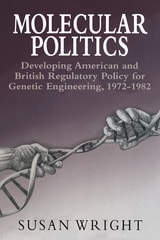
Molecular Politics
Developing American and British Regulatory Policy for Genetic Engineering, 1972-1982Susan Wright
University of Chicago Press, 1994
In this comparative study of the development of regulatory policy for genetic engineering in the United States and the United Kingdom, Susan Wright analyzes government responses to the struggles among corporations, scientists, universities, trade unions, and public interest groups over regulating this new field. Drawing on archival materials, government records, and interviews with industry executives, politicians, scientists, trade unionists, and others on both sides of the Atlantic, Molecular Politics provides a comprehensive account of a crucial set of policy decisions and explores their implications for the political economy of science.
By combining methods from political science and the history of science, Wright advances a provocative interpretation of the evolution of genetic engineering policy and makes a major contribution to science and public policy studies.
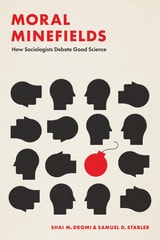
Moral Minefields
How Sociologists Debate Good ScienceShai M. Dromi and Samuel D. Stabler
University of Chicago Press, 2023
Few academic disciplines are as contentious as sociology. Sociologists routinely turn on their peers with fierce criticisms not only of their empirical rigor and theoretical clarity but of their character as well. Yet despite the controversy, scholars manage to engage in thorny debates without being censured. How?
In Moral Minefields, Shai M. Dromi and Samuel D. Stabler consider five recent controversial topics in sociology—race and genetics, secularization theory, methodological nationalism, the culture of poverty, and parenting practices—to reveal how moral debates affect the field. Sociologists, they show, tend to respond to moral criticism of scholarly work in one of three ways. While some accept and endorse the criticism, others work out new ways to address these topics that can transcend the criticism, while still others build on the debates to form new, more morally acceptable research.
Moral Minefields addresses one of the most prominent questions in contemporary sociological theory: how can sociology contribute to the development of a virtuous society? Rather than suggesting that sociologists adopt a clear paradigm that can guide their research toward neatly defined moral aims, Dromi and Stabler argue that sociologists already largely possess and employ the repertoires to address questions of moral virtue in their research. The conversation thus is moved away from attempts to theorize the moral goods sociologists should support and toward questions about how sociologists manage the plurality of moral positions that present themselves in their studies. Moral diversity within sociology, they show, fosters disciplinary progress.
More-than-Human Aging
Animals, Robots, and Care in Later LifeCristina Douglas
Rutgers University Press, 2025
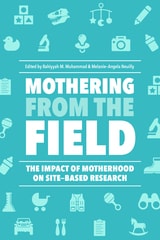
Mothering from the Field
The Impact of Motherhood on Site-Based ResearchEdited by Bahiyyah Miallah Muhammad and Mélanie-Angela Neuilly
Rutgers University Press, 2019
Mothering from the Field offers both a mosaic of perspectives from current women scientists’ experiences of conducting field research across a variety of sub-disciplines while raising children, and an analytical framework to understand how we can redefine methodological and theoretical contributions based on mothers’ experiences in order not just to promote healthier, more inclusive, nurturing, and supportive environments in physical, life, and social sciences, but also to revolutionize how we conceptualize research.

Music, Research, and Activism
Prospects and Projects in Northern EuropeEdited by Kim Ramstedt, Susanna Välimäki, Sini Mononen, and Kaj Ahlsved
Intellect Books, 2025
Can music research drive social and ecological change? Music, Research, and Activism: Prospects and Projects in Northern Europe argues that it can—and must. This bold collection studies the emerging activist turn in music studies, where researchers and artists engage directly in public debates and cultural movements.
By questioning systemic inequalities in the music industry and exploring the role of music education in an era of climate crisis, the contributors to this volume reflect on how their work can serve eco-social justice. Drawing on their diverse experiences as educators, critics, DJs, producers, and community organizers, they offer a compelling vision of music research as an agent of transformation.
Rooted in the independent research network Suoni, this volume speaks to music scholars and students eager to rethink the role of music in shaping a more equitable world. Engaging and accessible, it challenges us to ask: What does social responsibility look like in music research today?

Muslims in the United States
The State of ResearchKaren Isaksen Leonard
Russell Sage Foundation, 2003