Results by title
95 books match the query 'Rivers' and 5 start with m
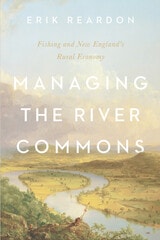
Managing the River Commons
Fishing and New England's Rural EconomyErik Reardon
University of Massachusetts Press, 2021
New England once hosted large numbers of anadromous fish, which migrate between rivers and the sea. Salmon, shad, and alewives served a variety of functions within the region's preindustrial landscape, furnishing not only maritime areas but also agricultural communities with an important source of nutrition and a valued article of rural exchange.
Historian Erik Reardon argues that to protect these fish, New England's farmer-fishermen pushed for conservation measures to limit commercial fishing and industrial uses of the river. Beginning in the colonial period and continuing to the mid-nineteenth century, they advocated for fishing regulations to promote sustainable returns, compelled local millers to open their dams during seasonal fish runs, and defeated corporate proposals to erect large-scale dams. As environmentalists work to restore rivers in New England and beyond in the present day, Managing the River Commons offers important lessons about historical conservation efforts that can help guide current campaigns to remove dams and allow anadromous fish to reclaim these waters.
Historian Erik Reardon argues that to protect these fish, New England's farmer-fishermen pushed for conservation measures to limit commercial fishing and industrial uses of the river. Beginning in the colonial period and continuing to the mid-nineteenth century, they advocated for fishing regulations to promote sustainable returns, compelled local millers to open their dams during seasonal fish runs, and defeated corporate proposals to erect large-scale dams. As environmentalists work to restore rivers in New England and beyond in the present day, Managing the River Commons offers important lessons about historical conservation efforts that can help guide current campaigns to remove dams and allow anadromous fish to reclaim these waters.
[more]
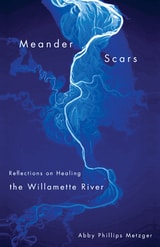
Meander Scars
Reflections on Healing the Willamette RiverAbby Phillips Metzger
Oregon State University Press, 2013
Abby Phillips Metzger’s book of personal stories recounts a forgotten Oregon river, the Willamette, as it was before white settlement. Once a rich network of channels and sloughs, the Willamette today bears the scars of development and degradation.
Yet, through canoe trips and intimate explorations of the river, Metzger discovers glints of resiliency: a beaver trolling through a slough, native fish in quiet backwaters, and strong currents that carry undertones of the wild Willamette. Together with tales from farmers and scientists alike, these experiences lead Metzger to ask whether something scarred can fully heal, and whether a disjointed river can be whole again.
A story of re-discovery as told by a learner, Meander Scars will appeal to readers of literary nonfiction, river advocates, naturalists, and outdoor enthusiasts interested in sustaining healthy river systems for themselves, their children, and beyond.
[more]
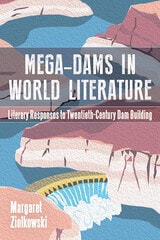
Mega-Dams in World Literature
Literary Responses to Twentieth-Century Dam BuildingMargaret Ziolkowski
University of Wyoming Press, 2024
Mega-Dams in World Literature reveals the varied effects of large dams on people and their environments as expressed in literary works, focusing on the shifting attitudes toward large dams that emerged over the course of the twentieth century. Margaret Ziolkowski covers the enthusiasm for large-dam construction that took place during the mid-twentieth-century heyday of mega-dams, the increasing number of people displaced by dams, the troubling environmental effects they incur, and the types of destruction and protest to which they may be subject.
Using North American, Native American, Russian, Egyptian, Indian, and Chinese novels and poems, Ziolkowski explores the supposed progress that these structures bring. The book asks how the human urge to exploit and control waterways has affected our relationships to nature and the environment and argues that the high modernism of the twentieth century, along with its preoccupation with development, casts the hydroelectric dam as a central symbol of domination over nature and the power of the nation state.
Beyond examining the exultation of large dams as symbols of progress, Mega-Dams in World Literature takes a broad international and cultural approach that humanizes and personalizes the major issues associated with large dams through nuanced analyses, paying particular attention to issues engendered by high modernism and settler colonialism. Both general and specialist readers interested in human-environment relationships will enjoy this prescient book.
[more]
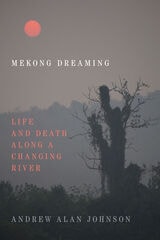
Mekong Dreaming
Life and Death along a Changing RiverAndrew Alan Johnson
Duke University Press, 2020
The Mekong River has undergone vast infrastructural changes in recent years, including the construction of dams across its main stream. These projects, along with the introduction of new fish species, changing political fortunes, and international migrant labor, have all made a profound impact upon the lives of those residing on the great river. It also impacts how they dream. In Mekong Dreaming, Andrew Alan Johnson explores the changing relationship between the river and the residents of Ban Beuk, a village on the Thailand-Laos border, by focusing on the effect that construction has had on human and inhuman elements of the villagers' world. Johnson shows how inhabitants come to terms with the profound impact that remote, intangible, and yet powerful forces—from global markets and remote bureaucrats to ghosts, spirits, and gods—have on their livelihoods. Through dreams, migration, new religious practices, and new ways of dwelling on a changed river, inhabitants struggle to understand and affect the distant, the inassimilable, and the occult, which offer both sources of power and potential disaster.
[more]
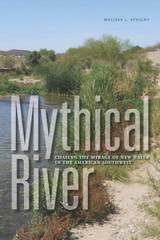
Mythical River
Chasing the Mirage of New Water in the American SouthwestMelissa L. Sevigny
University of Iowa Press, 2016
In a lyrical mix of natural science, history, and memoir, Melissa L. Sevigny ponders what it means to make a home in the American Southwest at a time when its most essential resource, water, is overexploited and undervalued. Mythical River takes the reader on a historical sojourn into the story of the Buenaventura, an imaginary river that led eighteenth- and nineteenth-century explorers, fur trappers, and emigrants astray for seventy-five years. This mythical river becomes a metaphor for our modern-day attempts to supply water to a growing population in the Colorado River Basin. Readers encounter a landscape literally remapped by the search for “new” water, where rivers flow uphill, dams and deep wells reshape geography, trees become intolerable competitors for water, and new technologies tap into clouds and oceans.
In contrast to this fantasy of abundance, Sevigny explores acts of restoration. From a dismantled dam in Arizona to an accidental wetland in Mexico, she examines how ecologists, engineers, politicians, and citizens have attempted to secure water for desert ecosystems. In a place scarred by conflict, she shows how recognizing the rights of rivers is a path toward water security. Ultimately, Sevigny writes a new map for the future of the American Southwest, a vision of a society that accepts the desert’s limits in exchange for an intimate relationship with the natural world.
In contrast to this fantasy of abundance, Sevigny explores acts of restoration. From a dismantled dam in Arizona to an accidental wetland in Mexico, she examines how ecologists, engineers, politicians, and citizens have attempted to secure water for desert ecosystems. In a place scarred by conflict, she shows how recognizing the rights of rivers is a path toward water security. Ultimately, Sevigny writes a new map for the future of the American Southwest, a vision of a society that accepts the desert’s limits in exchange for an intimate relationship with the natural world.
[more]