Results by title
67 books match the query 'Sea' and 4 start with m
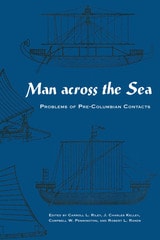
Man Across the Sea
Problems of Pre-Columbian ContactsEdited by Carroll L. Riley, J. Charles Kelley, Campbell W. Pennington, and Robert L. Rands
University of Texas Press, 1971
Whether humans crossed the seas between the Old World and the New in the times before Columbus is a tantalizing question that has long excited scholarly interest and tempted imaginations the world over. From the myths of Atlantis and Mu to the more credible, perhaps, but hardly less romantic tales of Viking ships and Buddhist missionaries, people have speculated upon what is, after all, not simply a question of contact, but of the nature and growth of civilization itself.
To the specialist, it is an important question indeed. If people in the Western Hemisphere and in the Eastern Hemisphere developed their cultures more or less independently from the end of the last Ice Age until the voyages of Columbus, the remarkable similarities between New World and Old World cultures reveal something important about the evolution of culture. If, on the other hand, there were widespread or sustained contacts between the hemispheres in pre-Columbian times, these contacts represent events of vast significance to the prehistory and history of humanity.
Originally delivered at a symposium held in May 1968, during the national meeting of the Society for American Archaeology, the papers presented here, by scholars eminent in the field, offer differing points of view and considerable evidence on the pros and cons of pre-Columbian contact between the Old World and the New. Various kinds of data—archaeological, botanical, geographical, and historical—are brought to bear on the problem, with provocative and original results. Introductory and concluding remarks by the editors pull together and evaluate the evidence and suggest ground rules for future studies of this sort.
Man across the Sea provides no final answers as to whether people from Asia, Africa, or Europe visited the American Indian before Columbus. It does, however, present new evidence, suggested lines of approach, and a fresh attempt to delineate the problems involved and to establish acceptable canons of evidence for the future.

Margarita, How Beautiful the Sea
Sergio Ramírez
Northwestern University Press, 2007
In 1956 in a cafe in León, a group of literati gather, dedicated, among other things, to the rigorous reconstruction of the legend surrounding Darío—but also to conspire. There will be an attempt against dictator Somoza's life, and that little girl with the fan a half-century before will not be a disinterested party.
In Margarita, How Beautiful the Sea, Sergio Ramírez encompasses, in a complete metaphor of reality and legend, the entire history of his country. The narrative moves along paths fifty years apart, which inevitably converge. The story becomes a fascinating exercise on the power of memory, on the influence of the past, fictitious or not, in the finality of reality.
Marriage to the Sea
Linked NovellasSarah Stone
Four Way Books, 2026
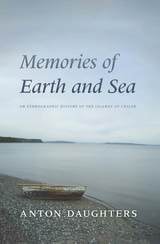
Memories of Earth and Sea
An Ethnographic History of the Islands of ChiloéAnton Daughters
University of Arizona Press, 2019
Staring in the 1980s, Chiloé was thrust into the global economy when major companies moved into the region to extract wild stocks of fish and to grow salmon and shellfish for export. The archipelago’s economy shifted abruptly from one of subsistence farming and fishing to wage labor in export industries. Local knowledge, traditions, memories, and identities similarly shifted, with young islanders expressing a more critical view of the rural past than their elders.
This book highlights the region’s unique past, emphasizing the generational tensions, disconnects, and continuities of the last half century. Drawing on interviews, field observations, and historical documents, Anton Daughters brings to life one of South America’s most culturally distinct regions.