Results by title
584 books match the query 'Short Stories (single author)' and 31 start with m
MEXICO IS MISSING
AND OTHER STORIESJ. David Stevens
The Ohio State University Press, 2006
Make Me Do Things
Victoria Redel
Four Way Books, 2013
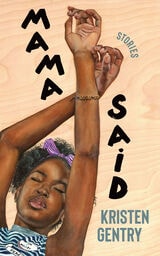
Mama Said
StoriesKristen Gentry
West Virginia University Press, 2023
The linked stories in Mama Said are set in Louisville, Kentucky, a city with a rich history steeped in tobacco, bourbon, and gambling, indulgences that can quickly become gripping and destructive vices. Set amid the tail end of the crack epidemic and the rise of the opioid crisis, Mama Said evokes Black family life in all its complexity, following JayLynn, along with her cousins Zaria and Angel, as they come of age struggling against their mothers’ drug addictions.
JayLynn heads to college intent on gaining distance from her depressed mother, only to learn that her mother’s illness has reached a terrifying peak. She fears the chaos and instability of her extended family will prove too much for her boyfriend, whose idyllic family feels worlds, not miles, apart from her own. When bats invade Zaria’s new home, she is forced to determine how much she is willing to sacrifice to be a good mother. Angel rebels on Derby night, risking her safety to connect with her absent mother and the wild ways that consumed her.
Mama Said separates from stereotypes of Black families, presenting instead the joy, humor, and love that coexist with the trauma of drug abuse within communities. Kristen Gentry’s stories showcase the wide-reaching repercussions of addiction and the ties that forever bind daughters to their mothers, flaws and all.
Man-Making Words
Selected Poems of Nicolas GuillenNicolas Guillen
University of Massachusetts Press, 2003
The Cuban poet Nicolás Guillén, who was born in the eastern province of Camagüey in 1902, died in 1989. This new edition of his selected poems, reissued thirty years after its original publication, includes an extensive, new introductory essay by Roberto Márquez, one of the original translators and a leading authority on Caribbean and Latin American literature and culture.
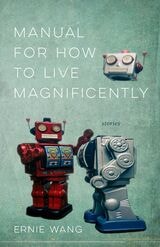
Manual for How to Live Magnificently
StoriesErnie Wang
Acre Books, 2026
This debut collection turns the ordinary into sweeping tragicomedy, probing the small, daily confrontations that shape a life well lived.
In a debut collection at once deeply felt and delightfully playful, Ernie Wang presents ordinary people struggling with challenges that confront many today: how to find steady, meaningful work; how to manage when our healthcare system fails us; how to navigate thorny relationships with lovers, with friends, with children; how to keep one’s dreams alive, and how to let them go. The thirteen stories in Manual for How to Live Magnificently are intriguingly linked, with narrators becoming players and players becoming narrators. Several stories feature cameos by the irrepressible seventy-something Mabel Rogerson, who serves by turns as catalyst, comic relief, and means to catharsis. The book toggles among dramatically different locales—Dayton, Ohio; Las Vegas; Disneyland; Kamisoshigaya, Japan—drawing them thematically into a shared orbit.
Though each of Wang’s offerings has heft and poignancy, the stories also serve up superb comic set pieces. A fake fortuneteller forgoes his crystal ball in favor of a snow globe; a priest moonlights as a professional wrestler named the Grim Preacher; a troubled lawyer who reluctantly cat-sits for a friend winds up finding solace with Killer and Hoedaddy. Revelations are reached at the male strip club Dayton Dix, or during a ritual spanking at Hofbräuhaus just off the Las Vegas Strip, or on Captain Hook’s flying galleon during a theme park ride. And almost everyone eventually ends up at Applebee’s. When storylines converge in a terrifying tragedy, Wang takes the opportunity to explore the complexity of family, to deepen our understanding of sacrifice and the many ways people demonstrate love for one another.
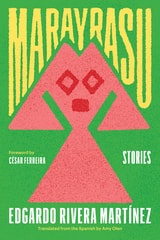
Marayrasu
StoriesEdgardo Rivera Martínez, Amy Olen
Northwestern University Press, 2026
The stories in Marayrasu stage fantastical, mysterious encounters that belie the characters’ often harsh economic and political realities as they seek belonging in modern Peru through art, music, and relationships. Depicted in poetic prose, these characters are loners, orphans, and outcasts experiencing quiet, tender encounters with other people and animals, the creative arts, and the land they find themselves depending on. Living vibrantly within these stories, the leviathan of Inca lore considers its own form, a young boy moves to a mining town and gets involved with a local union leader’s fight for worker rights while feeling the powerful pull of a large mountain overlooking the town, and a Persian cat captures the attention of a family down on its luck. Amy Olen’s translation smoothly captures Rivera Martínez’s impressive stories, offering a unique lens into the region at the heart of this canonical author’s inimitable work.
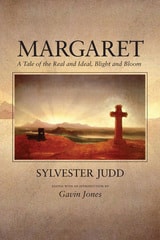
Margaret
A Tale of the Real and Ideal, Blight and BloomSylvester Judd
University of Massachusetts Press, 2009
Praised at the time as the most emphatically “American” book ever written, Margaret is a breathtaking combination of female bildungsroman, utopian novel, and historical romance. First published in 1845, Sylvester Judd's novel centers on the fictional New England village of Livingston, where the young Margaret Hart strives to escape the poverty and vice of her surroundings by learning from a mysterious teacher, the “Master,” and by entwining herself with the powers of nature. But when Margaret's brother is tried and hanged for murder, this rural community collapses, forcing Margaret to face the temptations of an urban underworld and to confront the intrigue of her family history. Margaret is the story of a young woman's attempt to create a new social order, founded on beauty and truth, in a land plagued by violence, debauchery, and political instability.
As Gavin Jones points out in his new introduction, Margaret perhaps stands alone in its creation of a female character who grows in social rather than domestic power. The novel also remains unique in its exploration of transcendental philosophy in novelistic form. Part eco-criticism, part seduction novel, part temperance tract, and part social history, Margaret is a virtual handbook for understanding the literary culture of mid-nineteenth-century America, the missing piece in puzzling out connections between writers such as Hawthorne, Melville, Whitman, and Thoreau.
Margaret was widely read and deeply influential on both British and American writers throughout the nineteenth century but controversial for its representations of alcoholism and capital punishment. Judd's novel remains resonant for today's readers as it overturns conventional views of the literary representation of women and the origins of the American Renaissance.
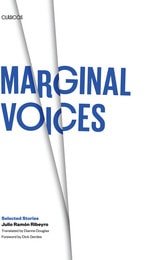
Marginal Voices
Selected StoriesBy Julio Ramón Ribeyro
University of Texas Press, 1993
Julio Ramón Ribeyro has been widely acclaimed Peru's master storyteller. Until now, however, few of his stories have been translated into English. This volume brings together fifteen stories written during the period 1952-1975, which were collected in the three volumes of La palabra del mudo.
Ribeyro's stories treat the social problems brought about by urban expansion, including poverty, racial and sexual discrimination, class struggles, alienation, and violence. At the same time, elements of the fantastic playfully interrupt some of the stories. As Ribeyro's characters become swept up in circumstances beyond their understanding, we see that the only freedom or dignity left them comes from their own imaginations.
The fifteen stories included here are "Terra Incognita," "Barbara," "The Featherless Buzzards," "Of Modest Color," "The Substitute Teacher," "The Insignia," "The Banquet," "Alienation (An Instructive Story with a Footnote)," "The Little Laid Cow," "The Jacaranda Trees," "Bottles and Men," "Nothing to Do, Monsieur Baruch," "The Captives," "The Spanish," and "Painted Papers."
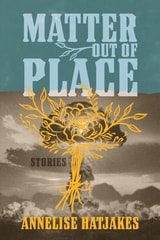
Matter Out of Place
StoriesAnnElise Hatjakes
University of Nevada Press, 2026
Experimental in its approach and unflinching in its execution, Matter Out of Place is an exploration of bright spots of humanity in dark underbellies, a feminist reckoning with “sin,” and a love letter to the strange mirage that is northern Nevada. It inhabits physical and digital spaces with equal wariness, and its characters—filled with grit—navigate the fraught divide between appearances and reality, approval and judgment, gambling everything despite knowing that the house always wins.
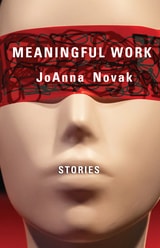
Meaningful Work
StoriesJoAnna Novak
University of Alabama Press, 2021
WINNER OF FC2's RONALD SUKENICK INNOVATIVE FICTION PRIZE
A stunning look at the labor of obsession and the industry of self-destruction
In her lush, lyrical, and unflinching short fiction debut, JoAnna Novak examines the restless throb of desire amid the rote work of jobs and obligations, from the walk-ins of a New York banquet kitchen to the pier of Venice Beach. Fueled by jellyfish pad Thai and Necco wafers, Mountain Dew and Xiaolongbao, the characters in these stories defy boundaries and mores: In “MEMO 19,” a former anorectic, bored of recovery and her clerical job, invites an unparalleled act of sexual defilement and in “Rio Grande, Wisconsin,” a fleshly preteen fantasizes about Bill Murray on a family vacation to Wisconsin. Celebrating the grueling beauty of the shift and the ticking virtues of self-restraint, Meaningful Work is a pageant of formal experimentation, in fearless, glittering prose.
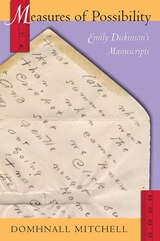
Measures of Possibility
Emily Dickinson's ManuscriptsDomhnall Mitchell
University of Massachusetts Press, 2005
In Measures of Possibility, Domhnall Mitchell sets out to test the hypothesis of Dickinson's textual radicalism, and its consequences for readers, students, and teachers, by looking closely at features such as spacing, the physical direction of the writing, and letter-shapes in handwritten lyric and epistolary texts. Through systematic contextualization and cross-referencing, Mitchell provides the reader with a critical apparatus by which to measure the extent to which contemporary approaches to Dickinson's autograph procedures can reasonably be formulated as corresponding to the poet's own purposes.
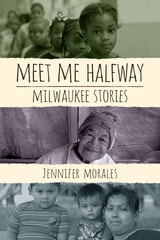
Meet Me Halfway
Milwaukee StoriesJennifer Morales
University of Wisconsin Press, 2015
Morales gives life to multifaceted characters—white schoolteachers and senior citizens, Latino landlords, black and Puerto Rican teens, political activists, and Vietnam vets. As their lives unfold in these stories, we learn about Johnquell’s family—his grandparents’ involvement in the local Black Panther Party, his sister’s on-again, off-again friendship with a white classmate, and his aunt’s identity crisis as she finds herself falling in love with a woman. We also meet Johnquell’s mother, Gloria, and his school friend Taquan, who is struggling to chart his own future.
As an activist mother in the thick of Milwaukee politics, Morales developed a keen ear and a tender heart for the kids who have inherited the city’s troubled racial legacy. With a critical eye on promises unfulfilled, Meet Me Halfway raises questions about the notion of a “postracial” society and, with humor and compassion, lifts up the day-to-day work needed to get there.
Runner-up, Short Story/Anthology, Midwest Book Awards
Best books for public & secondary school libraries from university presses, American Library Association
Wisconsin representative for “Great Lakes Reads,” Library of Congress Center for the Book and its affiliated Midwest centers
Outstanding Achievement Award, Wisconsin Library Association (one of ten 2015 books chosen)
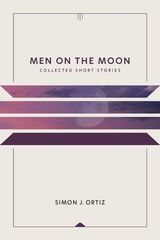
Men on the Moon
Collected Short StoriesSimon J. Ortiz
University of Arizona Press, 1999
Best known for his poetry, Ortiz also has authored 26 short stories that have won the hearts of readers through the years. Men on the Moon brings these stories together—stories filled with memorable characters, written with love by a keen observer and interpreter of his people's community and culture. True to Native American tradition, these tales possess the immediacy—and intimacy—of stories conveyed orally. They are drawn from Ortiz's Acoma Pueblo experience but focus on situations common to Native people, whether living on the land or in cities, and on the issues that affect their lives. We meet Jimmo, a young boy learning that his father is being hunted for murder, and Kaiser, the draft refuser who always wears the suit he was given when he left prison. We also meet some curious Anglos: radicals supporting Indian causes, scholars studying Indian ways, and San Francisco hippies who want to become Indians too.
Whether telling of migrants working potato fields in Idaho and pining for their Arizona home or of a father teaching his son to fly a kite, Ortiz takes readers to the heart of storytelling. Men on the Moon shows that stories told by a poet especially resound with beauty and depth.
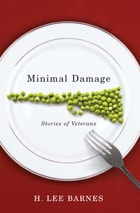
Minimal Damage
Stories of VeteransH. Lee Barnes
University of Nevada Press, 2013
In the seven stories and novella of Minimal Damage, veterans search for dignity in a civilian life that has no need for men who were soldiers. Finding themselves psychically scarred, in crisis, on the fringes of society, or in battle with their memories, these men are living "like warts on America's ass." The characters range from the enigmatic Mr. K, who runs a reality television show and once led an escape from a Korean pow camp, to the doomed Billy Debecki, who regains his dignity in the last minutes of his life by remembering that he once willingly risked his life to save an enemy soldier. In one story, a man who was never a soldier finds a path toward reconciliation with his brother, a former Marine. In another, a man recalls becoming a soldier by watching the humanity of a fellow recruit disintegrate in basic training. In the novella "Snake Boy," a homeless Vietnam vet is kidnapped by a snake-handling evangelist. In proper, upstanding lives and lost, drifting ones, the depth of damage is never immediately apparent for these men. In war, chance, luck, and arbitrary timing conspire to determine a soldier's fate. As civilians, the same uncontrollable forces influence who finds a place in society and who is doomed to keep searching. With emotion, humor, and clarity, Barnes creates characters who show us what it is to live with the trauma of having experienced combat. The fractured souls and lives of these men remind us that the damage doesn't remain on the battlefield. Western Literature Series.
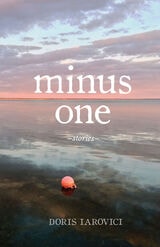
Minus One
Doris Iarovici
University of Wisconsin Press, 2020
Woven through this slim and powerful volume are astute observations on how pain and grief can be inherited from one generation to the next. With tenderness and honesty, Doris Iarovici explores the plunging depths of the human experience, lingering on moments of familial warmth and joy but never shying away from conflict and tension. These stories reveal glimmers of hope and possibility, even in our darkest times.
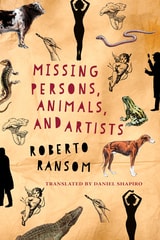
Missing Persons, Animals, and Artists
Roberto Ransom
Swan Isle Press, 2017
Missing Persons, Animals, and Artists is the follow-up to Ransom’s highly acclaimed A Tale of Two Lions, praised by Ignacio Padilla as “the best Mexican literary work I have read in recent years. . . . [It] heralds a pen capable of that rarest of privileges in our letters: attaining the comic and profoundly human through a perfect simplicity.” This collection of short stories has been translated with great care by Daniel Shapiro.
Modern American Poetry, 1865-1950
Alan Shucard
University of Massachusetts Press, 1990
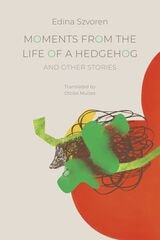
Moments from the Life of a Hedgehog
and Other StoriesEdina Szvoren
Seagull Books, 2026
Available for the first time in English, Hungarian writer Edina Szvoren's short story collection gives voice to lives shaped by repression, cruelty, and silence.
Moments from the Life of a Hedgehog and Other Stories introduces English-language readers to the unsettling, exacting fiction of Hungarian author Edina Szvoren. Disturbing yet deliberately modest, these stories evoke a claustrophobic world of compromise and quiet desperation: fractured families warped by history and habit, boarding schools and workplaces ruled by cruelty, and domestic interiors heavy with unspoken dread. Set in the final decades of Hungarian socialism and its immediate aftermath, Szvoren’s sharply observed miniatures are animated by ever-shifting perspectives—outsiders, misfits, refusers—struggling to make sense of lives largely beyond their control. Grotesque without excess, absurd without relief, Szvoren’s narrative voices overlap and collide in ways that recall Franz Kafka and István Örkény. Yet her work remains firmly grounded in the body: queasy, intimate, and insistently physical, with a feminist and existential charge. Among polyester ornaments and unbearable family encounters, these stories offer a powerful, understated testimony to the unheard—and the nearly unhearable.

Monkey Secret
Diane Glancy
Northwestern University Press, 1995
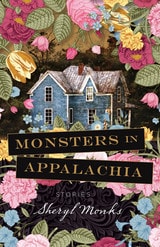
Monsters in Appalachia
StoriesSheryl Monks
West Virginia University Press, 2016
We come upon them in the mountains of West Virginia, in the backyards of rural North Carolina, and at tourist traps along Route 66, where they smolder with hidden desires and struggle to resist the temptations that plague them.
A Melungeon woman has killed her abusive husband and drives by the home of her son’s new foster family, hoping to lure the boy back. An elderly couple witnesses the end-times and is forced to hunt monsters if they hope to survive. A young girl “tanning and manning” with her mother and aunt resists being indoctrinated by their ideas about men. A preacher’s daughter follows in the footsteps of her backsliding mother as she seduces a man who looks a lot like the devil.
A master of Appalachian dialect and colloquial speech, Monks writes prose that is dark, taut, and muscular, but also beguiling and playful. Monsters in Appalachia is a powerful work of fiction.
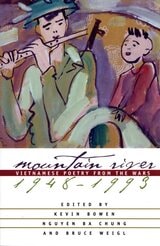
Mountain River
Vietnamese Poetry from the Wars, 1948-1993Kevin Bowen
University of Massachusetts Press, 1998
This landmark bilingual collection presents a comprehensive selection of Vietnamese poetry spanning nearly fifty years of warfare and its aftermath, from the Indochinese War (1946-1954) through the Vietnam War (1961-1975) and into the post-war period. Edited and translated by renowned Vietnam War scholars and poets Kevin Bowen and Bruce Weigl, in collaboration with Vietnamese poet and editor Nguyen Ba Chung, this volume captures the voices of Vietnamese writers who experienced, witnessed, or processed the transformative conflicts that shaped modern Vietnam.
Encompassing poetry from multiple generations, these poems reflect on the diverse responses to conflict: some express patriotic commitment, others grapple with loss and trauma, while many explore the intimate human experiences of war. Mountain River demonstrates how Vietnamese poets drew upon a rich literary tradition while creating new forms of expression to address the unprecedented scale of modern warfare. The result is a collaborative effort that represents a significant achievement in postwar Vietnamese-American literary relations and cross-cultural translation.
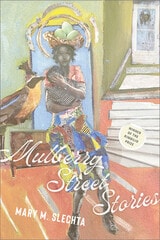
Mulberry Street Stories
Mary Slechta
Four Way Books, 0
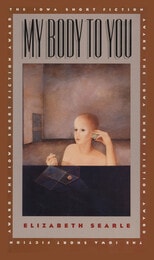
My Body To You
Elizabeth Searle
University of Iowa Press, 1993
A woman in love with a gay man she calls Sister Kin attempts to escape the bonds of her own body. An eighteen-year-old virgin enters into a passionate affair with an older man who turns out to be a virgin of a different sort. A special education teacher in a school for aggressive teenagers finds herself attracted to another teacher, also female. An intelligent outcast girl bonds with her mindlessly seductive mother to form “one person.”
Searle reveals other characters through inventive and often comic feats of narrative daring. A girl grows into womanhood during a single family dinner that spans twenty years. A middle-aged wife, once dubbed “The First Most Beautiful Woman in the World,” watches her former selves parade before her family in a lively evening of home movies. Two women—one recently divorced, the other a group home resident in love with The Who—join forces as they figure out “What to Do in an Emergency.” An old woman experiences both physical breakdown and spiritual breakdown in a supermarket's vegetable department. A young woman is drawn into the emotional and sexual life of an autistic boy obsessed with the number 8.
Each of these stories is written in a language that strives to match the intensity of Searle's characters; each gives the reader an exceptionally intimate portrait of a unique female and the central, sensual mystery of her body.
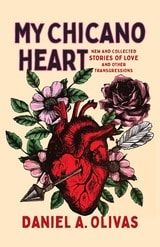
My Chicano Heart
New and Collected Stories of Love and Other TransgressionsDaniel A. Olivas
University of Nevada Press, 2024
Each story is drawn from Olivas’s nearly twenty-five years of experience writing fiction deeply steeped in Chicano and Mexican culture. Some of the stories are fanciful and full of magic, while others are more realistic, and still others border on noir. All touch upon that most ephemeral and confounding of human emotions: love in all its wondrous forms.
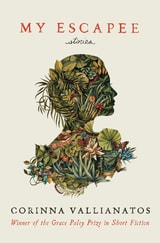
My Escapee
StoriesCorinna Vallianatos
University of Massachusetts Press, 2012
ANew York Times Book Review Editor's Choice
Delicate and assured, the stories in My Escapee illuminate unseen forces in women's lives: the shameful thought, the stifled hope, the subterranean stresses of marriage, friendship, and family. Grappling with lost memories, escaped time, the longing to be loved, and the instinct for autonomy, the stories peer inside their characters' minds to their benign delusions, their triumphs and defeats.
A girl taking a test for admittance to a selective school finds that what she loves most of all is the ordinary. A lonely young woman, sick of being sick, swaps places with her nurse. A college student deploys her more charming roommate to discover the secret rituals of an all-male club on campus. And in the title story, a woman in a nursing home receives mysterious missives from her longtime lover recalling fragments of their old life together.
My Family's Role in the World Revolution
and Other ProseBora Cosic
Northwestern University Press, 1997
During the German occupation of Belgrade, a family—including an alarmist mother, an eternally drunk father, two young aunts who swoon over American movie stars, and a playboy uncle—attempt to find any kind of work they can do at home. When the postwar Socialist society is being ushered in after the war, the narrator becomes the slogan-spouting ideological leader of the household, while his family tries—and often fails miserably—to take part in the "great change."
This volume also includes several Ćosić short stories, and recent essays on the war in the former Yugoslavia.
My Father’s War
Stories of Midwestern MenBarton Sutter
University of Minnesota Press, 2000
Poignant and revealing stories from one of the Midwest’s leading authors.
Poignant and revealing stories from one of the Midwest’s leading authors.
"A compelling debut. These stories offer leisurely exposition and character development. . . . Their honesty and sensitivity will resonate." Publishers Weekly"These are wonderful stories-images of personal and societal growth that are at once hopeful and skeptical, loving and shrewd." New Orleans Times-Picayune"These magnificent stories are big-hearted and loving in a way I don’t think I’ve ever encountered. With a calm and compassionate hand, Barton Sutter reveals to us the true dignity of humankind, the necessity of heroes and history, and the unerring aim of hope. My Father’s War is a beautiful book." Bret LottIn this collection of stories, Barton Sutter shows us all the ways in which we are shaped by our surroundings. With an unswerving gaze, he portrays the rituals of growing up that we all experience, no matter how old we think we are.
My Haunted Home
StoriesVictoria Hood
University of Alabama Press, 2022
WINNER OF FC2’s RONALD SUKENICK INNOVATIVE FICTION PRIZE
Meditations on the ways grief is felt and harvested—the funny, the sorrowful, the surreal, and the unmentionable
The stories in My Haunted Home delve in startling ways into the lives of the obsessed, the grieving, and the truly haunted. Victoria Hood conjures a shifting range of narrators through an unstable range of worlds where mothers might be dead, girls compulsively shove peanuts inside their ears, agoraphobia traps people inside their houses, and cats won’t eat your soup. In “The Teeth, the Way I Smile,” a daughter who looks like her dead mother manifests grief both in her house and her body. In “Smelly Smelly,” a woman slowly comes to realize her boyfriend has been dead for weeks. In “You, Your Fault,” we explore the unfolding love of two women who love every part of each other—including the parts that fixate on arson and murder.
Each story is a bite-size piece of haunting candy on a necklace of obsession holding them together. Hood probes the worlds of what can be haunted, unpacking the ways in which hauntings can be manifested in physical forms, mentally harvested and lived through, and even a change in what is haunting.
My Old Faithful
StoriesYang Huang
University of Massachusetts Press, 2018
Showing both the drama of familial intimacy and the ups and downs of the everyday, My Old Faithful introduces readers to a close-knit Chinese family. These ten interconnected short stories, which take place in China and the United States over a thirty-year period, merge to paint a nuanced portrait of family life, full of pain, surprises, and subtle acts of courage. Richly textured narratives from the mother, the father, the son, and the daughters play out against the backdrop of China's social and economic change.
With quiet humor and sharp insight into the ordinary, Yang Huang writes of a father who spanks his son out of love, a brother who betrays his sister, and a woman who returns to China after many years to find her country changed in ways both expected and startling.
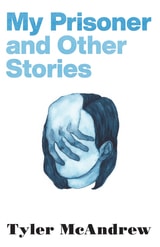
My Prisoner and Other Stories
Tyler McAndrew
The Ohio State University Press, 2025
Set largely in the Rust Belt of the 1990s and early 2000s, My Prisoner and Other Stories gives us protagonists who repeatedly confront helplessness in the face of others’ suffering. A teenage girl tries to help an elderly woman who has locked herself out of her house only to be shaken by the trauma and loneliness that the woman—a Holocaust survivor and recent widow—eventually shares with her. A schoolteacher writes letters to his cousin, who has schizophrenia and is serving a life sentence for the murder of three of their relatives. A middle school student makes a complicated gesture of charity after befriending the poor kid at his lunch table. Siblings seed the ground for an eccentric treasure hunter only to find that their prank leads them into unexpected emotional peril. The structural forces that stain life in late-capitalist America—the prison system, economic desperation—lurk throughout these muscular and empathetic tales, but in the face of endemic adversity, shrewd and loving characters strive for and sometimes achieve hope and tenderness. Tyler McAndrew shows us an unadorned America that can still tap its capacity for human kindness.
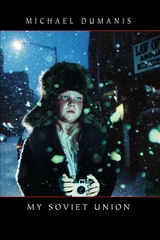
My Soviet Union
Michael Dumanis
University of Massachusetts Press, 2007
The speaker of the simultaneously funny and devastating poems in this remarkable first collection comes from a country that, like the Soviet Union, no longer exists, a place he treats with a mixture of nostalgia, disdain, and bewilderment as he strives to achieve a sense of order in his current disordered environment, a post-apocalyptic landscape with striking similarities to our own. He takes the reader through haunting and disjunctive childhood memories, on visits to Azerbaijan and West Des Moines, through the ravages of physical and spiritual illness, into and out of wars and ill-fated romantic escapades, as he carefully pieces together a complex narrative of self. This is a book of location and dis-location, intent and inaction, struggle and failure, restraint and mania, love and anger, savagery and healing, grief and merriment, elegy and ode. Technically, the poems-often litanies-are marked by syntactical variation, recurring imagery, paradoxical statement, cultural idioms, shifts between high and low diction, a carnivalesque sense of humor, and an elliptical approach to exposition. The speaker also takes on the identities of various personae in the book, including Joseph Cornell, Vladimir Mayakovsky, Pol Pot, a vaudevillian, a movie extra, minor dictators, vagrants, ambigendered lovers, and a lighthouse keeper on an uninhabited island.