139 books match the query 'Social archaeology' and 5 start with m
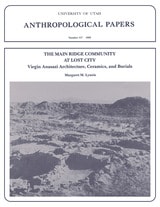
cover of Main Ridge Community At Lost City: Virgin Anazazi Architecture, Ceramics, and Burials

Main Ridge Community At Lost City

Virgin Anazazi Architecture, Ceramics, and Burials

Margaret Lyneis

University of Utah Press, 1992
[more]
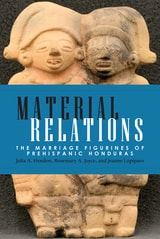
cover of Material Relations: The Marriage Figurines of Prehispanic Honduras

Material Relations

The Marriage Figurines of Prehispanic Honduras

Julia A. Hendon

University Press of Colorado, 2014

Focusing on marriage figurines—double human figurines that represent relations formed through social alliances—Hendon, Joyce, and Lopiparo examine the material relations created in Honduras between AD 500 and 1000, a period of time when a network of social houses linked settlements of a variety of sizes in the region. The authors analyze these small, seemingly insignificant artifacts using the theory of materiality to understand broader social processes.

They examine the production, use, and disposal of marriage figurines from six sites—Campo Dos, Cerro Palenque, Copán, Currusté, Tenampua, and Travesia—and explore their role in rituals and ceremonies, as well as in the forming of social bonds and the celebration of relationships among communities. They find evidence of historical traditions reproduced over generations through material media in social relations among individuals, families, and communities, as well as social differences within this network of connected yet independent settlements.

Material Relations provides a new and dynamic understanding of how social houses functioned via networks of production and reciprocal exchange of material objects and will be of interest to Mesoamerican archaeologists, anthropologists, and art historians.
[more]
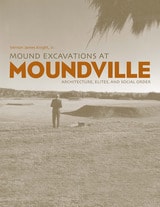
cover of Mound Excavations at Moundville: Architecture, Elites and Social Order

Mound Excavations at Moundville

Architecture, Elites and Social Order

Vernon James Knight, Jr.

University of Alabama Press, 2010

How social and political power was wielded in order to build Moundville
This work is a state-of-the-art, data-rich study of excavations undertaken at the Moundville site in west central Alabama, one of the largest and most complex of the mound sites of pre-contact North America. Despite the site's importance and sustained attention by researchers, until now it has lacked a comprehensive analysis of its modern excavations. Richly documented by maps, artifact photo-graphs, profiles of strata, and inventories of materials found, the present work explores one expression of social complexity; the significance of Moundville’s monumental architecture, including its earthen mounds; the pole-frame architecture that once occupied the summits of these mounds; and the associated middens that reveal the culture of Moundville’s elites.
 
This book supplies a survey of important materials recovered in more than a decade of recent excavations of seven mounds and related areas under the author’s direction, as part of a long-term archaeological project consisting of new field work at the Mississippian political and ceremonial center of Moundville.
 
Visitors to Moundville are immediately impressed with its monumentality. The expansiveness and grandness of that landscape are, of course, deliberate features that have a story to tell and this archaeological project reveals Moundville’s monumentality and its significance to the people whose capital town it was.
 
Exactly how the social and political power symbolized by mound building was distributed is a question central to this work. It seems critical to ask to what extent this monumental landscape was the product of a chief’s ability to recruit and direct the labor of large groups of political subordinates, most of whom were presumably non-kin. At the onset of the present project, speculations regarding the paired orders of mounds and the timing of the formal structuring of space at Moundville were already suggested but were in need of further testing, confirmation, and refinement. The work reported in this volume is largely devoted to filling in such evidence and refining those initial insights. An excellent chapter by H. Edwin Jackson and Susan L. Scott, "Zooarchaeology of Mounds Q, G, E, F, and R," compliments this research.
 
A Dan Josselyn Memorial Publication
[more]
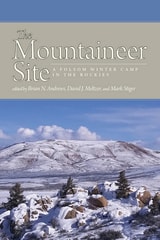
cover of Mountaineer Site: A Folsom Winter Camp in the Rockies

Mountaineer Site

A Folsom Winter Camp in the Rockies

Brian N. Andrews

University Press of Colorado, 2022

The Mountaineer Site presents over a decade’s worth of archaeological research conducted at Mountaineer, a Paleoindian campsite in Colorado’s Upper Gunnison Basin. Mountaineer is one of the very few extensively excavated, long-term Folsom occupations with evidence of built structures. The site provides a rich record of stone tool manufacture and use, as well as architectural features, and offers insight into Folsom period adaptive strategies from a time when the region was still in the grip of a waning Ice Age.
 
Contributors examine data concerning the structures, the duration and repetition of occupations, and the nature of the site’s artifact assemblages to offer a valuable new perspective on human activity in the Rocky Mountains in the Late Pleistocene. Chapters survey the history of fieldwork at the site and compare and explain the various excavation procedures used; discuss the geology, taphonomic history, and geochronology of the site; analyze artifacts and other recovered materials; examine architectural elements; and compare the present and past environments of the Upper Gunnison Basin to gain insight into the setting in which Folsom groups were operating and the resources that were available to them.
 
The Folsom archaeological record indicates far greater variability in adaptive behavior than previously recognized in traditional models. The Mountaineer Site shows how accounting for reduced mobility, more generalized subsistence patterns, and variability in tool manufacture and use allows for a richer and more accurate understanding of Folsom lifeways. It will be of great interest to graduate students and archaeologists focusing on Paleoindian archaeology, hunter-gatherer mobility, lithic technological organization, and prehistoric households, as well as prehistorians, anthropologists, and social scientists.
 
Contributors: Richard J. Anderson, Andrew R. Boehm, Christy E. Briles, Katherine A. Cross, Steven D. Emslie, Metin I. Eren, Richard Gunst, Kalanka Jayalath, Brooke M. Morgan, Cathy Whitlock
 
[more]
cover of Movement, Connectivity, and Landscape Change in the Ancient Southwest

Movement, Connectivity, and Landscape Change in the Ancient Southwest

Margaret C. Nelson

University Press of Colorado, 2026

A collection of the papers presented at the Twentieth Anniversary Southwest Symposium Movement, Connectivity, and Landscape Change in the Ancient Southwest looks back at the issues raised in the first symposium in 1988 and tackles three contemporary domains in archaeology: landscape use and ecological change, movement and ethnogenesis, and connectivity among social groups through time and space. Across these sections the authors address the relevance of archaeology in the modern world; new approaches and concerns about collaboration across disciplines, communities, and subgroups; and the importance of multiple perspectives.

Particular attention is paid to the various ways that archaeology can and should contribute to contemporary social and environmental issues. Contributors come together to provide a synthetic volume on current research and possibilities for future explorations. Moving forward, they argue that archaeologists must continue to include researchers from across political and disciplinary boundaries and enhance collaboration with Native American groups.

This book will be of interest to professional and academic archaeologists, as well as students working in the field of the American Southwest.
[more]