323 books match the query 'Southeast Asia' and 19 start with m

cover of Macau in an Age of War and Revolution

Macau in an Age of War and Revolution

Geoffrey C. Gunn

National University of Singapore Press, 2027

A new interpretation of the modern history of Macau that investigates the territory's political economy, Indigenous capitalism, and regional networks. 

How did Macau, a small Portuguese-administered territory in the Pearl River delta, navigate the tumultuous waves of the twentieth century? Chinese comprador and "red capitalist" elites are at the heart of its transformation, evolving from intermediaries to influential architects of Macau's economic landscape. Their ventures in gambling, opium, banking, and shipping forged powerful networks that linked Macau closely with South China and Hong Kong.

Amidst global upheavals—from revolutions and invasions to civil wars and the Cold War—Macau's resilience lay in its ability to adapt to shifting political and economic realities. Macau in an Age of War and Revolution highlights the pivotal roles of refugees, Macanese intermediaries, and local governance in shaping Macau's unique path. By spotlighting the rise of local capital and agency, this book offers a compelling explanation for Macau's distinct trajectory under China's "one country, two systems" framework, setting it apart from its neighbor Hong Kong.
[more]
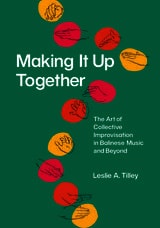
cover of Making It Up Together: The Art of Collective Improvisation in Balinese Music and Beyond

Making It Up Together

The Art of Collective Improvisation in Balinese Music and Beyond

Leslie A. Tilley

University of Chicago Press, 2019

Most studies of musical improvisation focus on individual musicians. But that is not the whole story. From jazz to flamenco, Shona mbira to Javanese gamelan, improvised practices thrive on group creativity, relying on the close interaction of multiple simultaneously improvising performers. In Making It Up Together, Leslie A. Tilley explores the practice of collective musical improvisation cross-culturally, making a case for placing collectivity at the center of improvisation discourse and advocating ethnographically informed music analysis as a powerful tool for investigating improvisational processes.

Through two contrasting Balinese case studies—of the reyong gong chime’s melodic norot practice and the interlocking drumming tradition kendang arja—Tilley proposes and tests analytical frameworks for examining collectively improvised performance. At the micro-level, Tilley’s analyses offer insight into the note-by-note decisions of improvising performers; at the macro-level, they illuminate larger musical, discursive, structural, and cultural factors shaping those decisions. This multi-tiered inquiry reveals that unpacking how performers play and imagine as a collective is crucial to understanding improvisation and demonstrates how music analysis can elucidate these complex musical and interactional relationships.

Highlighting connections with diverse genres from various music cultures, Tilley’s examinations of collective improvisation also suggest rich potential for cross-genre exploration. The surrounding discussions point to larger theories of communication and interaction, creativity and cognition that will be of interest to a range of readers—from ethnomusicologists and music theorists to cognitive psychologists, jazz studies scholars, and improvising performers. Setting new parameters for the study of improvisation, Making It Up Together opens up fresh possibilities for understanding the creative process, in music and beyond.
[more]
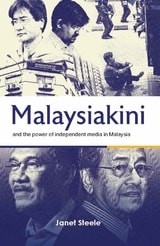
cover of Malaysiakini and the Power of Independent Media in Malaysia

Malaysiakini and the Power of Independent Media in Malaysia

Janet Steele

National University of Singapore Press, 2023

Chronicles the success of Malaysia’s only truly independent media outlet. 

Founded in 1999 by Steven Gan and Premesh Chandran, Malaysiakini was one of many online portals that sprung up in the wake of Reformasi, a period of public protests sparked by Prime Minister Mahathir Mohammad’s 1998 firing of his deputy Anwar Ibrahim. At first, there was no reason to think that Malaysiakini would be anything momentous. However, Malaysiakini wanted to do something much more important than just reporting on Reformasi—its founders intended to bring independent journalism to Malaysia in hopes of changing the country for the better.

Based on more than fifteen years of observation of Malaysiakini's newsroom practices, Malaysiakini and the Power of Independent Media in Malaysia is an intimate portrait of the people and issues behind Malaysia’s only truly independent media outlet. The author illustrates Malaysiakini’s unique mix of idealism in action, studying how sensitive issues such as race, religion, politics, and citizenship are discussed in the newsroom. This attention to the inner workings of one of the most important media institutions in the region yields not only a deep newsroom ethnography but a nuanced, rich history of modern Malaysia.
[more]
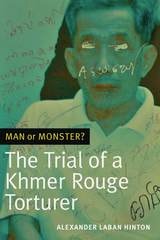
cover of Man or Monster?: The Trial of a Khmer Rouge Torturer

Man or Monster?

The Trial of a Khmer Rouge Torturer

Alexander Laban Hinton

Duke University Press, 2016

During the Khmer Rouge's brutal reign in Cambodia during the mid-to-late 1970s, a former math teacher named Duch served as the commandant of the S-21 security center, where as many as 20,000 victims were interrogated, tortured, and executed. In 2009 Duch stood trial for these crimes against humanity. While the prosecution painted Duch as evil, his defense lawyers claimed he simply followed orders. In Man or Monster? Alexander Hinton uses creative ethnographic writing, extensive fieldwork, hundreds of interviews, and his experience attending Duch's trial to create a nuanced analysis of Duch, the tribunal, the Khmer Rouge, and the after-effects of Cambodia's genocide. Interested in how a person becomes a torturer and executioner as well as the law's ability to grapple with crimes against humanity, Hinton adapts Hannah Arendt's notion of the "banality of evil" to consider how the potential for violence is embedded in the everyday ways people articulate meaning and comprehend the world. Man or Monster? provides novel ways to consider justice, terror, genocide, memory, truth, and humanity.
[more]
cover of Masked: The Life of Anna Leonowens, Schoolmistress at the Court of Siam

Masked

The Life of Anna Leonowens, Schoolmistress at the Court of Siam

Alfred Habegger

University of Wisconsin Press, 2014

A brave British widow goes to Siam and—by dint of her principled and indomitable character—inspires that despotic nation to abolish slavery and absolute rule: this appealing legend first took shape after the Civil War when Anna Leonowens came to America from Bangkok and succeeded in becoming a celebrity author and lecturer. Three decades after her death, in the 1940s and 1950s, the story would be transformed into a powerful Western myth by Margaret Landon’s best-selling book Anna and the King of Siam and Rodgers and Hammerstein’s musical The King and I.
            But who was Leonowens and why did her story take hold? Although it has been known for some time that she was of Anglo-Indian parentage and that her tales about the Siamese court are unreliable, not until now, with the publication of Masked, has there been a deeply researched account of her extraordinary life. Alfred Habegger, an award-winning biographer, draws on the archives of five continents and recent Thai-language scholarship to disclose the complex person behind the mask and the troubling facts behind the myth. He also ponders the curious fit between Leonowens’s compelling fabrications and the New World’s innocent dreams—in particular the dream that democracy can be spread through quick and easy interventions.
Exploring the full historic complexity of what it once meant to pass as white, Masked pays close attention to Leonowens’s midlevel origins in British India, her education at a Bombay charity school for Eurasian children, her material and social milieu in Australia and Singapore, the stresses she endured in Bangkok as a working widow, the latent melancholy that often afflicted her, the problematic aspects of her self-invention, and the welcome she found in America, where a circle of elite New England abolitionists who knew nothing about Southeast Asia gave her their uncritical support. Her embellished story would again capture America’s imagination as World War II ended and a newly interventionist United States looked toward Asia.

Best Books for General Audiences, selected by the American Association of School Librarians

Best Regional Special Interest Boosk, selected by the Public Library Reviewers
[more]
cover of Mekong Delta: Ecology, Economy, and Revolution, 1860-1960

Mekong Delta

Ecology, Economy, and Revolution, 1860-1960

Pierre Brocheux

University of Wisconsin Press, 1995
Mining a wealth of archival sources in France and Vietnam, Pierre Brocheux constructs a fascinating picture of how French capital and technology transformed the Mekong Delta. By draining the swamps and encouraging a particular pattern of Vietnamese settlement, the French cultivated a volatile society, bound together by lines of credit and poised at the brink of social revolution. From the cutting of the first canals in the 1880s to the eruption of the Viet Cong’s insurgency in the 1950s, this book illuminates the subtle interactions between ecology and social change in a tropical delta. The Mekong Delta is valuable for students of the Vietnamese Revolution and for scholars of peasant movements around the globe. It fills a major gap in our knowledge of the social change that swept the great deltas of Southeast Asia.
[more]
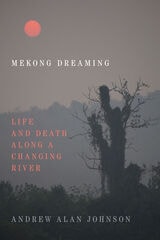
cover of Mekong Dreaming: Life and Death along a Changing River

Mekong Dreaming

Life and Death along a Changing River

Andrew Alan Johnson

Duke University Press, 2020
The Mekong River has undergone vast infrastructural changes in recent years, including the construction of dams across its main stream. These projects, along with the introduction of new fish species, changing political fortunes, and international migrant labor, have all made a profound impact upon the lives of those residing on the great river. It also impacts how they dream. In Mekong Dreaming, Andrew Alan Johnson explores the changing relationship between the river and the residents of Ban Beuk, a village on the Thailand-Laos border, by focusing on the effect that construction has had on human and inhuman elements of the villagers' world. Johnson shows how inhabitants come to terms with the profound impact that remote, intangible, and yet powerful forces—from global markets and remote bureaucrats to ghosts, spirits, and gods—have on their livelihoods. Through dreams, migration, new religious practices, and new ways of dwelling on a changed river, inhabitants struggle to understand and affect the distant, the inassimilable, and the occult, which offer both sources of power and potential disaster.
[more]
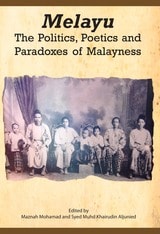
cover of Melayu: The Politics, Poetics and Paradoxes of Malayness

Melayu

The Politics, Poetics and Paradoxes of Malayness

Edited by Maznah Mohamad and Syed Muhd Khairudin Aljunied

National University of Singapore Press, 2012

People within the Malay world hold strong but diverse opinions about the meaning of the word Melayu, which can be loosely translated as Malayness. Questions of whether the Filipinos are properly called "Malay", or the Mon-Khmer speaking Orang Asli in Malaysia, can generate heated debates. So too can the question of whether it is appropriate to speak of a kebangsaan Melayu (Malay as nationality) as the basis of membership within an aspiring postcolonial nation-state, a political rather than a cultural community embracing all residents of the Malay states, including the immigrant Chinese and Indian population.


In Melayu: The Politics, Poetics and Paradoxes of Malayness, the contributors examine the checkered, wavering and changeable understanding of the word Melayu by considering hitherto unexplored case studies dealing with use of the term in connection with origins, nations, minority-majority politics, Filipino Malays, Riau Malays, Orang Asli, Straits Chinese literature, women's veiling, vernacular television, social dissent, literary women, and modern Sufism. Taken as a whole, this volume offers a creative approach to the study of Malayness while providing new perspectives to the studies of identity formation and politics of ethnicity that have wider implications beyond the Southeast Asian region.
[more]
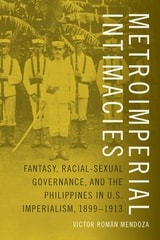
cover of Metroimperial Intimacies: Fantasy, Racial-Sexual Governance, and the Philippines in U.S. Imperialism, 1899-1913

Metroimperial Intimacies

Fantasy, Racial-Sexual Governance, and the Philippines in U.S. Imperialism, 1899-1913

Victor Román Mendoza

Duke University Press, 2015
In Metroimperial Intimacies Victor Román Mendoza combines historical, literary, and archival analysis with queer-of-color critique to show how U.S. imperial incursions into the Philippines enabled the growth of unprecedented social and sexual intimacies between native Philippine and U.S. subjects. The real and imagined intimacies—whether expressed through friendship, love, or eroticism—threatened U.S. gender and sexuality norms. To codify U.S. heteronormative behavior, the colonial government prohibited anything loosely defined as perverse, which along with popular representations of Filipinos, regulated colonial subjects and depicted them as sexually available, diseased, and degenerate. Mendoza analyzes laws, military records, the writing of Philippine students in the United States, and popular representations of Philippine colonial subjects to show how their lives, bodies, and desires became the very battleground for the consolidation of repressive legal, economic, and political institutions and practices of the U.S. colonial state. By highlighting the importance of racial and gendered violence in maintaining control at home and abroad, Mendoza demonstrates that studies of U.S. sexuality must take into account the reach and impact of U.S. imperialism.
 
[more]
cover of Migrants for Export: How the Philippine State Brokers Labor to the World

Migrants for Export

How the Philippine State Brokers Labor to the World

Robyn Magalit Rodriguez

University of Minnesota Press, 2010

Migrant workers from the Philippines are ubiquitous to global capitalism, with nearly 10 percent of the population employed in almost two hundred countries. In a visit to the United States in 2003, Philippine president Gloria Macapagal Arroyo even referred to herself as not only the head of state but also “the CEO of a global Philippine enterprise of eight million Filipinos who live and work abroad.”
 
Robyn Magalit Rodriguez investigates how and why the Philippine government transformed itself into what she calls a labor brokerage state, which actively prepares, mobilizes, and regulates its citizens for migrant work abroad. Filipino men and women fill a range of jobs around the globe, including domestic work, construction, and engineering, and they have even worked in the Middle East to support U.S. military operations. At the same time, the state redefines nationalism to normalize its citizens to migration while fostering their ties to the Philippines. Those who leave the country to work and send their wages to their families at home are treated as new national heroes.
 
Drawing on ethnographic research of the Philippine government’s migration bureaucracy, interviews, and archival work, Rodriguez presents a new analysis of neoliberal globalization and its consequences for nation-state formation.
[more]
cover of Military Ascendancy and Political Culture: A Study of Indonesia's Golkar

Military Ascendancy and Political Culture

A Study of Indonesia's Golkar

Leo Suryadinata

Ohio University Press, 1989

Most of the earlier studies on the Indonesian political party, Golkar, tend to view the organization solely as an electoral machine used by the military to legitimize its power. However, this study is different in that it considers Golkar less an electoral machine and more as a political organization which inherited the political traditions of the nominal Muslim parties and the Javanese governing elite pre-1965, before the inauguration of Indonesia’s New Order. Golkar, then, is seen in this book as nominal Islam with a military element that tends to differentiate it from previous political parties in the country.

Leo Suryadinata traces the birth, struggle, and emergence of this party so closely identified with Indonesia’s President Suharto. Yet, to claim that Suharto and the military dominate the party is to view Golkar superficially, for the party is also composed of factions of civil servants and the Minister of Security and Defense, as well as several other governmental agencies. A complex and well-detailed cultural history of Indonesia’s most powerful political party, this case study should have wider implications for the study of military behavior in the Third World.
[more]
cover of Mixed Medicines: Health and Culture in French Colonial Cambodia

Mixed Medicines

Health and Culture in French Colonial Cambodia

Sokhieng Au

University of Chicago Press, 2011

During the first half of the twentieth century, representatives of the French colonial health services actively strove to expand the practice of Western medicine in the frontier colony of Cambodia. But as the French physicians ventured beyond their colonial enclaves, they found themselves negotiating with the plurality of Cambodian cultural practices relating to health and disease. These negotiations were marked by some success, a great deal of misunderstanding, and much failure.


Bringing together colorful historical vignettes, social and anthropological theory, and quantitative analyses, Mixed Medicines examines these interactions between the Khmer, Cham, and Vietnamese of Cambodia and the French, documenting the differences in their understandings of medicine and revealing the unexpected transformations that occurred during this period—for both the French and the indigenous population.
[more]
cover of Modern Jungles: A Hmong Refugee's Childhood Story of Survival

Modern Jungles

A Hmong Refugee's Childhood Story of Survival

Pao Lor

Wisconsin Historical Society Press, 2023

As a five-year-old boy, Pao Lor joined thousands of Hmong who fled for their lives through the jungles of Laos in the aftermath of war. After a difficult and perilous journey that neither of his parents survived, he reached the safety of Thailand, but the young refugee boy’s challenges were only just beginning.

Born in a small farming village, Pao was destined to be a Hmong clan leader, wedding negotiator, or shaman. But the course of his life changed dramatically in the 1970s, when the Hmong faced persecution for their role in helping US forces fighting communism in the region. After more than two years in Thai refugee camps, Pao and his surviving family members boarded the belly of an “iron eagle” bound for the United States, where he pictured a new life of comfort and happiness. Instead, Pao found himself navigating a frightening and unfamiliar world, adjusting to a string of new schools and living situations while struggling to fulfill the hopes his parents had once held for his future. Now in Modern Jungles, Pao Lor shares his inspiring coming-of-age tale about perseverance, grit, and hope. 

Included are discussion questions for use by book clubs, in classrooms, or around the dinner table.
[more]
cover of Modern Jungles: A Hmong Refugee’s Childhood Story of Survival

Modern Jungles

A Hmong Refugee’s Childhood Story of Survival

Pao Lor

Wisconsin Historical Society Press, 2021

As a five-year-old boy, Pao Lor joined thousands of Hmong who fled for their lives through the jungles of Laos in the aftermath of war. After a difficult and perilous journey that neither of his parents survived, he reached the safety of Thailand, but the young refugee boy’s challenges were only just beginning.

Born in a small farming village, Pao was destined to be a Hmong clan leader, wedding negotiator, or shaman. But the course of his life changed dramatically in the 1970s, when the Hmong faced persecution for their role in helping US forces fighting communism in the region. After more than two years in Thai refugee camps, Pao and his surviving family members boarded the belly of an “iron eagle” bound for the United States, where he pictured a new life of comfort and happiness. Instead, Pao found himself navigating a frightening and unfamiliar world, adjusting to a string of new schools and living situations while struggling to fulfill the hopes his parents had once held for his future. Now in Modern Jungles, Pao Lor shares his inspiring coming-of-age tale about perseverance, grit, and hope. 

Included are discussion questions for use by book clubs, in classrooms, or around the dinner table.

[more]
cover of Modern Noise, Fluid Genres: Popular Music in Indonesia, 1997–2001

Modern Noise, Fluid Genres

Popular Music in Indonesia, 1997–2001

Jeremy Wallach

University of Wisconsin Press, 2008
What happens to “local” sound when globalization exposes musicians and audiences to cultural influences from around the world? Jeremy Wallach explores this question as it plays out in the eclectic, evolving world of Indonesian music after the fall of the repressive Soeharto regime. Against the backdrop of Indonesia’s chaotic and momentous transition to democracy, Wallach takes us to recording studios, music stores, concert venues, university campuses, video shoots, and urban neighborhoods.
Integrating ground-level ethnographic research with insights drawn from contemporary cultural theory, he shows that access to globally circulating music and technologies has neither extinguished nor homogenized local music-making in Indonesia. Instead, it has provided young Indonesians with creative possibilities for exploring their identity in a diverse nation undergoing dramatic changes in an increasingly interconnected world. Ultimately, he finds, the unofficial, multicultural nationalism of Indonesian popular music provides a viable alternative to the religious, ethnic, regional, and class-based extremism that continues to threaten unity and democracy in that country.
[more]
cover of Monetary Authorities: Capitalism and Decolonization in the American Colonial Philippines

Monetary Authorities

Capitalism and Decolonization in the American Colonial Philippines

Allan E. S. Lumba

Duke University Press, 2022
In Monetary Authorities Allan E. S. Lumba explores how the United States used monetary policy and banking systems to justify racial and class hierarchies, enforce capitalist exploitation, and counter movements for decolonization in the American colonial Philippines. Lumba shows that colonial economic experts justified American imperial authority by claiming that Filipinos did not possess the racial capacities to properly manage money. Financial independence, then, became a key metric of racial capitalism by which Filipinos had to prove their ability to self-govern. At the same time, the colonial state used its monetary authority to police the economic activities of colonized subjects and to curb movements for decolonization. It later offered a conditional form of decolonization that left the Philippines reliant on U.S. financial institutions. By showing how imperial governance was entwined with the racialization and regulation of monetary systems in the Philippines, Lumba illuminates a key mechanism through which the United States securitized the imperial world order.
[more]
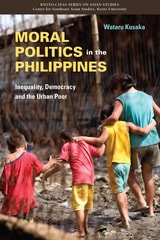
cover of Moral Politics in the Philippines: Inequality, Democracy and the Urban Poor

Moral Politics in the Philippines

Inequality, Democracy and the Urban Poor

Wataru Kusaka

National University of Singapore Press, 2017
Moral Politics in the Philippines offers an in-depth examination of the political participation and discourse of the urban poor in Manila. After the ousting of Ferdinando Marcos in 1986, society in the Philippines fractured along socioeconomic lines. The educated middle class began to recognize themselves as moral citizens and political participants while condemning the poor as immoral “masses” who earn money illegally and support corrupt leaders. Conversely, the poor believe themselves to be morally upright and criticize the rich as arrogant oppressors. Wataru Kusaka looks at the dangers of this moralization of politics during the last several decades, and he analyzes the damaging effects it has had on democracy by excluding much of society and marginalizing the interests of those most in need of resources.
 
 
[more]
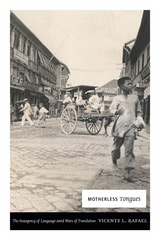
cover of Motherless Tongues: The Insurgency of Language amid Wars of Translation

Motherless Tongues

The Insurgency of Language amid Wars of Translation

Vicente L. Rafael

Duke University Press, 2016

In Motherless Tongues, Vicente L. Rafael examines the vexed relationship between language and history gleaned from the workings of translation in the Philippines, the United States, and beyond. Moving across a range of colonial and postcolonial settings, he demonstrates translation's agency in the making and understanding of events. These include nationalist efforts to vernacularize politics, U.S. projects to weaponize languages in wartime, and autobiographical attempts by area studies scholars to translate the otherness of their lives amid the Cold War. In all cases, translation is at war with itself, generating divergent effects. It deploys as well as distorts American English in counterinsurgency and colonial education, for example, just as it re-articulates European notions of sovereignty among Filipino revolutionaries in the nineteenth century and spurs the circulation of text messages in a civilian-driven coup in the twenty-first. Along the way, Rafael delineates the untranslatable that inheres in every act of translation, asking about the politics and ethics of uneven linguistic and semiotic exchanges. Mapping those moments where translation and historical imagination give rise to one another, Motherless Tongues shows how translation, in unleashing the insurgency of language, simultaneously sustains and subverts regimes of knowledge and relations of power. 


[more]
cover of Myth and History in the Historiography of Early Burma: Paradigms, Primary Sources, and Prejudices

Myth and History in the Historiography of Early Burma

Paradigms, Primary Sources, and Prejudices

Michael A. Aung-Thwin

Ohio University Press, 1998

After careful re-reading and analysis of original Old Burmese and other primary sources, the author discovered that four out of the five events considered to be the most important in the history of early Burma, and believed to have been historically accurate, are actually late-nineteenth and twentieth-century inventions of colonial historians caught in their own intellectual and political world.

Only one of these is a genuine indigenous Burmese myth, but it too has been embellished by modern historians.

The author discusses each of these five myths and concludes with an assessment of the current situation in Burma in the context of the new myths springing up today, thereby bringing the thirteenth century into the twentieth.

[more]