Results by title
428 books match the query 'Stories' and 23 start with m
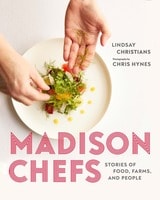
Madison Chefs
Stories of Food, Farms, and PeopleLindsay Christians and Chris Hynes
University of Wisconsin Press, 2021
Farm-to-table is a cliché, but its roots among the farmers and chefs of south-central Wisconsin are deep, vibrant, and resilient. From brats and burgers to bibimbap, Madison’s food scene looks substantially different than it did just a decade ago. Though the city has always been ahead of the locavore movement, a restaurant boom in the 2010s radically changed the dining landscape. Even when individual eateries close or chefs move on, their ideas, connections, and creativity have lasting power. Much larger cities have been unable to match the culinary variety, innovation, and depth of talent found in Wisconsin’s state capital.
Lindsay Christians’s in-depth look at nine creative, intense, and dedicated chefs captures the reason why Madison’s food culture remains a gem in America’s Upper Midwest. This beautifully illustrated book will leave you salivating—or making reservations.
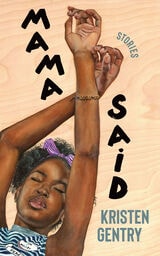
Mama Said
StoriesKristen Gentry
West Virginia University Press, 2023
The linked stories in Mama Said are set in Louisville, Kentucky, a city with a rich history steeped in tobacco, bourbon, and gambling, indulgences that can quickly become gripping and destructive vices. Set amid the tail end of the crack epidemic and the rise of the opioid crisis, Mama Said evokes Black family life in all its complexity, following JayLynn, along with her cousins Zaria and Angel, as they come of age struggling against their mothers’ drug addictions.
JayLynn heads to college intent on gaining distance from her depressed mother, only to learn that her mother’s illness has reached a terrifying peak. She fears the chaos and instability of her extended family will prove too much for her boyfriend, whose idyllic family feels worlds, not miles, apart from her own. When bats invade Zaria’s new home, she is forced to determine how much she is willing to sacrifice to be a good mother. Angel rebels on Derby night, risking her safety to connect with her absent mother and the wild ways that consumed her.
Mama Said separates from stereotypes of Black families, presenting instead the joy, humor, and love that coexist with the trauma of drug abuse within communities. Kristen Gentry’s stories showcase the wide-reaching repercussions of addiction and the ties that forever bind daughters to their mothers, flaws and all.
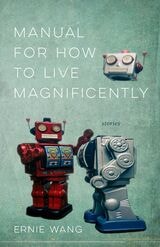
Manual for How to Live Magnificently
StoriesErnie Wang
Acre Books, 2026
This debut collection turns the ordinary into sweeping tragicomedy, probing the small, daily confrontations that shape a life well lived.
In a debut collection at once deeply felt and delightfully playful, Ernie Wang presents ordinary people struggling with challenges that confront many today: how to find steady, meaningful work; how to manage when our healthcare system fails us; how to navigate thorny relationships with lovers, with friends, with children; how to keep one’s dreams alive, and how to let them go. The thirteen stories in Manual for How to Live Magnificently are intriguingly linked, with narrators becoming players and players becoming narrators. Several stories feature cameos by the irrepressible seventy-something Mabel Rogerson, who serves by turns as catalyst, comic relief, and means to catharsis. The book toggles among dramatically different locales—Dayton, Ohio; Las Vegas; Disneyland; Kamisoshigaya, Japan—drawing them thematically into a shared orbit.
Though each of Wang’s offerings has heft and poignancy, the stories also serve up superb comic set pieces. A fake fortuneteller forgoes his crystal ball in favor of a snow globe; a priest moonlights as a professional wrestler named the Grim Preacher; a troubled lawyer who reluctantly cat-sits for a friend winds up finding solace with Killer and Hoedaddy. Revelations are reached at the male strip club Dayton Dix, or during a ritual spanking at Hofbräuhaus just off the Las Vegas Strip, or on Captain Hook’s flying galleon during a theme park ride. And almost everyone eventually ends up at Applebee’s. When storylines converge in a terrifying tragedy, Wang takes the opportunity to explore the complexity of family, to deepen our understanding of sacrifice and the many ways people demonstrate love for one another.
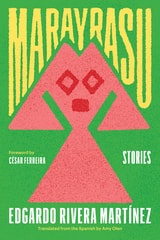
Marayrasu
StoriesEdgardo Rivera Martínez, Amy Olen
Northwestern University Press, 2026
The stories in Marayrasu stage fantastical, mysterious encounters that belie the characters’ often harsh economic and political realities as they seek belonging in modern Peru through art, music, and relationships. Depicted in poetic prose, these characters are loners, orphans, and outcasts experiencing quiet, tender encounters with other people and animals, the creative arts, and the land they find themselves depending on. Living vibrantly within these stories, the leviathan of Inca lore considers its own form, a young boy moves to a mining town and gets involved with a local union leader’s fight for worker rights while feeling the powerful pull of a large mountain overlooking the town, and a Persian cat captures the attention of a family down on its luck. Amy Olen’s translation smoothly captures Rivera Martínez’s impressive stories, offering a unique lens into the region at the heart of this canonical author’s inimitable work.
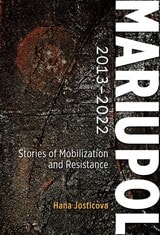
Mariupol 2013-2022
Stories of Mobilization and ResistanceHana Josticova
Central European University Press, 2024
The chapters in this book represent successive phases of one story – that of Mariupol, formerly Ukraine’s tenth largest city, and the second largest in the Donbas region. The author, a young Slovak academic, conducted her ethnographic fieldwork in this coastal town between November 2018 and August 2021. She was one of the last academics to do research in Mariupol before its invasion and eventual occupation by Russia.
During these years, Hana Jošticová was overwhelmed by acts of mobilization and resistance that went in opposite directions: support for a Western direction of Ukraine’s future, and support for the status quo that the victory of the Euromaidan seemed to threaten.
She noted the sequence of events presented in the media and through the lens of individual frames and narratives. Her book is a collection and interpretation of memories and testimonies from both sides: those who actively resisted Russian influence; and those who sparked their own revolution, the ‘Russian Spring.’ Her focus is on self-mobilized individuals who resorted to action outside of established organizational structures spontaneously, autonomously, without resources and guarantees of safety. Her evidence indicates that popular support for the Russian Spring had less to do with Russia than with the social, economic, or cultural characteristics of the Donetsk region.
Years of immersive research convinced the author that individuals are as important as masses, ideas are as powerful as material resources, and beliefs and emotions are as critical as weapons.
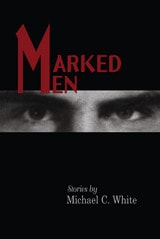
Marked Men
StoriesStories by Michael C. White
University of Missouri Press, 2000
From Michael C. White, the author of the critically acclaimed novels A Brother's Blood and The Blind Side of the Heart, comes a new book, Marked Men. It is a gripping collection of twelve wide-ranging stories about those unexpected moments in our lives when the layers of our defenses are peeled away, one by one, and we are left with the harsh inevitability of our fates. Touching on themes of loneliness and isolation, Marked Men deals with characters who have been alienated from society, from family and friends, from their past, and sometimes from their own feelings.
In "Heights," we meet a young woman whose husband is paralyzed and who must come to grips with the life she now finds herself inhabiting; in "Disturbances," a doctor is called to the scene of a brutal murder, only to discover he will be asked to do much more than pronounce the man dead; in "Burn Patterns," an arson investigator traveling to the scene of a fire picks up a young runaway drifter, an event that causes him to reflect on his own failed marriage; in "The Crossing," a recent widow learns to deal with her fears regarding her alien new life; and in "The Cardiologist's House," the narrator builds model houses at night when he can't sleep and at the same time keeps watch on a neighbor who is having an affair.
These are powerful and moving stories told in White's distinctive style. His earlier prose has been hailed by the New York Times as "stunningly well written" and by Booklist as "remarkable." Engaging the reader from the first line, White provides a suspenseful and surprise-filled journey as his characters face and resolve their conflicts.
Maryam
Keeper of StoriesAlawiya Sobh
Seagull Books, 2016
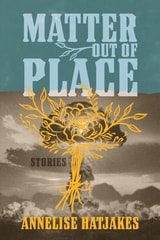
Matter Out of Place
StoriesAnnElise Hatjakes
University of Nevada Press, 2026
Experimental in its approach and unflinching in its execution, Matter Out of Place is an exploration of bright spots of humanity in dark underbellies, a feminist reckoning with “sin,” and a love letter to the strange mirage that is northern Nevada. It inhabits physical and digital spaces with equal wariness, and its characters—filled with grit—navigate the fraught divide between appearances and reality, approval and judgment, gambling everything despite knowing that the house always wins.
Meaningful Work
StoriesJoAnna Novak
University of Alabama Press, 2021
WINNER OF FC2's RONALD SUKENICK INNOVATIVE FICTION PRIZE
A stunning look at the labor of obsession and the industry of self-destruction
In her lush, lyrical, and unflinching short fiction debut, JoAnna Novak examines the restless throb of desire amid the rote work of jobs and obligations, from the walk-ins of a New York banquet kitchen to the pier of Venice Beach. Fueled by jellyfish pad Thai and Necco wafers, Mountain Dew and Xiaolongbao, the characters in these stories defy boundaries and mores: In “MEMO 19,” a former anorectic, bored of recovery and her clerical job, invites an unparalleled act of sexual defilement and in “Rio Grande, Wisconsin,” a fleshly preteen fantasizes about Bill Murray on a family vacation to Wisconsin. Celebrating the grueling beauty of the shift and the ticking virtues of self-restraint, Meaningful Work is a pageant of formal experimentation, in fearless, glittering prose.
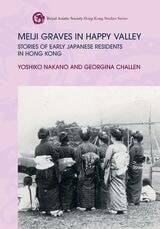
Meiji Graves in Happy Valley
Stories of Early Japanese Residents in Hong KongYoshiko Nakano and Georgina Challen
Hong Kong University Press, 2024
The Hong Kong Cemetery in Happy Valley is home to over 470 graves connected to the city’s Japanese population. Most of these graves belong to individuals who died during the Meiji era (1868–1912), a remarkable period of modernization and opening up of Japan that saw thousands of its inhabitants travel to other parts of the world to study, work, and settle. Who were these people? What were they doing in Hong Kong? And why were unbaptized Japanese buried in what was called at one time the "Protestant Cemetery"?
Hong Kong’s Meiji-era Japanese community was one of two halves. Company executives sat atop the social ladder and karayuki-san, or prostitutes, occupied the lower echelons, with tradespeople and professionals somewhere in between. By revealing the personal journeys of these mostly forgotten Japanese, the authors aim to add to transnational perspectives on Hong Kong and Japan during the late nineteenth and early twentieth centuries, as well as increase recognition of this fragmented community’s place in the development of this diverse city.
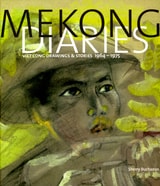
Mekong Diaries
Viet Cong Drawings and Stories, 1964-1975Sherry Buchanan
University of Chicago Press, 2008
These guerrilla artists—some military officers and some civilians—lived clandestinely with the fighters, moving camp alongside them, going on reconnaissance missions, and carrying their sketchbooks, ink, and watercolors into combat. Trained by professors from the Hanoi Institute of Fine Arts who journeyed down the perilous Ho Chi Minh Trail to ensure a pictorial history of the war, they recorded battles and events from Operation Junction City to Khe Sanh to the Tet Offensive. They also sketched as the spirit moved them, rendering breathtaking landscapes, hut and bunker interiors, activities at base camps, troops on the move, portraits for the families of fallen soldiers, and the unimaginable devastation that the conflict left in its wake.
Their collective record—which Sherry Buchanan skillfully compiles here—is an extraordinary historical and artistic document of people at war. As such, it serves as a powerful response to the self-centeredness of American accounts of Vietnam, filling a profound gap in our national memory by taking us into the misunderstood worlds of those whom we once counted among our worst enemies.
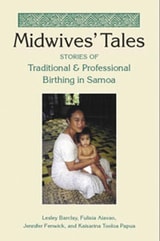
Midwives' Tales
Stories of Traditional and Professional Birthing in SamoaLesley Barclay
Vanderbilt University Press, 2005
The overall picture of changing birthing practices is complex and sometimes tinged with ironies. As the introduction says, "These Samoan nurses and midwives did not immediately attempt to mediate new and old ways of birthing after the colonial leadership of their profession left. They themselves became cultural agents for change as they continued the role of 'colonizing' their own birth tradition and taught the fa'atosaga [Samoan for midwife] Western techniques, at the same time trying to provide a professional midwife for all women. Paradoxically they often chose a social midwife for their own births and supported or at least condoned the social midwives close to them. . . . Kaisarina, while working as the leading professional midwife in the country, and working almost totally in hospital practice herself, simultaneously assisted her mother-in-law with her social practice of midwifery. Vipulo's story shows how a professional midwife preferred to have her mother, a social midwife, deliver her at home."
A particular objective of the authors is to encourage a reconception of maternity care in countries where professional services are rare and not available to all women. The book challenges common assumptions, still held in many postcolonial countries, that a simple migration of Western-style, hospital-focused care is necessarily always an achievable or desirable goal. It also demonstrates the considerable progress that one group has made in rethinking and developing a model of maternity care that works within their society and culture. As these midwives' stories suggest, solutions to some of the problems caused by gaps in the kinds of resources that Westerners take for granted can be found in partnerships and cultural wisdom that already exist in Samoa and, by extension, other developing countries.

Miles of Smiles, Years of Struggle
STORIES OF BLACK PULLMAN PORTERSJack Santino
University of Illinois Press, 1989
Jack Santino's interviews with retired porters provide extensive firsthand accounts of their work, the job inequities they faced, the formation of the Brotherhood of Sleeping Car Porters, and the aborted Pullman porter strike of 1928. Through the testimony of ran-and-file workers as well as key figures such as E. D. Nixon, the porter who initiated the Montgomery bus boycott and helped launch the career of Martin Luther King, Jr. and C.L. Dellums, the only surviving founding member of the BSCP, Miles of Smiles, Years of Struggle illuminates the Pullman porters' struggle for dignity.

Mind’s Eye
Stories from WhapmagoostuiPublished by the Aanischaaukamikw Cree Cultural Institute. Distributed by University of Manitoba Press.
University of Manitoba Press, 2013
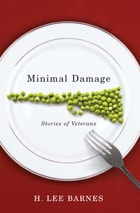
Minimal Damage
Stories of VeteransH. Lee Barnes
University of Nevada Press, 2013
In the seven stories and novella of Minimal Damage, veterans search for dignity in a civilian life that has no need for men who were soldiers. Finding themselves psychically scarred, in crisis, on the fringes of society, or in battle with their memories, these men are living "like warts on America's ass." The characters range from the enigmatic Mr. K, who runs a reality television show and once led an escape from a Korean pow camp, to the doomed Billy Debecki, who regains his dignity in the last minutes of his life by remembering that he once willingly risked his life to save an enemy soldier. In one story, a man who was never a soldier finds a path toward reconciliation with his brother, a former Marine. In another, a man recalls becoming a soldier by watching the humanity of a fellow recruit disintegrate in basic training. In the novella "Snake Boy," a homeless Vietnam vet is kidnapped by a snake-handling evangelist. In proper, upstanding lives and lost, drifting ones, the depth of damage is never immediately apparent for these men. In war, chance, luck, and arbitrary timing conspire to determine a soldier's fate. As civilians, the same uncontrollable forces influence who finds a place in society and who is doomed to keep searching. With emotion, humor, and clarity, Barnes creates characters who show us what it is to live with the trauma of having experienced combat. The fractured souls and lives of these men remind us that the damage doesn't remain on the battlefield. Western Literature Series.
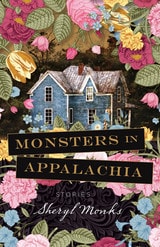
Monsters in Appalachia
StoriesSheryl Monks
West Virginia University Press, 2016
We come upon them in the mountains of West Virginia, in the backyards of rural North Carolina, and at tourist traps along Route 66, where they smolder with hidden desires and struggle to resist the temptations that plague them.
A Melungeon woman has killed her abusive husband and drives by the home of her son’s new foster family, hoping to lure the boy back. An elderly couple witnesses the end-times and is forced to hunt monsters if they hope to survive. A young girl “tanning and manning” with her mother and aunt resists being indoctrinated by their ideas about men. A preacher’s daughter follows in the footsteps of her backsliding mother as she seduces a man who looks a lot like the devil.
A master of Appalachian dialect and colloquial speech, Monks writes prose that is dark, taut, and muscular, but also beguiling and playful. Monsters in Appalachia is a powerful work of fiction.
Mormonisms in Asia
Stories of Global Faith and Local LivesEdited by Melissa Wei-Tsing Inouye and Laurie F. Maffly-Kipp
University of Illinois Press, 2026
This volume focuses on Asia, a region that includes more than half the world's population, but where Restoration traditions specifically and Christianity broadly are minority faiths. It uses a combination of focused case studies and theoretical analysis to highlight broader trends and themes that those studies suggest about the meaning of a globalized faith in the twenty-first century. The first section of this book lays out ways of thinking about Mormonism’s global presence in terms of the nation-state, and the essays explore where and how Restoration traditions as institutional actors have made their way into new political and social contexts. The second section studies the tensions created by the encounters of LDS norms with preexisting cultural and political values in local settings. These essays burrow more deeply into political and religious realities and explore the variations in Mormon cultural assumptions about politics and society, as well as the relationship between local congregants and the Mormon administrative center. The final section presents fine-grained
studies that focus attention on one of the central features of LDS lived religion: the role of gender and the family in the religious community. In each case, divine dictates necessarily bump up against traditional societal norms that converts must navigate.
Contributors: John-Charles Duffy, Stacilee Ford, Taunalyn Ford, Conan Grames, David J. Howlett, Melissa Wei-Tsing Inouye, Keisha Lai, Laurie Maffly-Kipp, Matthew Martinich, Meagan Rainock, Shinji Takagi, Pierre Vendassi
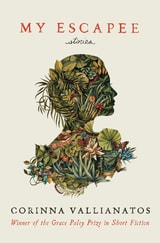
My Escapee
StoriesCorinna Vallianatos
University of Massachusetts Press, 2012
ANew York Times Book Review Editor's Choice
Delicate and assured, the stories in My Escapee illuminate unseen forces in women's lives: the shameful thought, the stifled hope, the subterranean stresses of marriage, friendship, and family. Grappling with lost memories, escaped time, the longing to be loved, and the instinct for autonomy, the stories peer inside their characters' minds to their benign delusions, their triumphs and defeats.
A girl taking a test for admittance to a selective school finds that what she loves most of all is the ordinary. A lonely young woman, sick of being sick, swaps places with her nurse. A college student deploys her more charming roommate to discover the secret rituals of an all-male club on campus. And in the title story, a woman in a nursing home receives mysterious missives from her longtime lover recalling fragments of their old life together.
My Eyes Feel They Need to Cry
Stories from the Formerly HomelessMartha Aladjem Bloomfield
Michigan State University Press, 2013
My Father’s War
Stories of Midwestern MenBarton Sutter
University of Minnesota Press, 2000
Poignant and revealing stories from one of the Midwest’s leading authors.
Poignant and revealing stories from one of the Midwest’s leading authors.
"A compelling debut. These stories offer leisurely exposition and character development. . . . Their honesty and sensitivity will resonate." Publishers Weekly"These are wonderful stories-images of personal and societal growth that are at once hopeful and skeptical, loving and shrewd." New Orleans Times-Picayune"These magnificent stories are big-hearted and loving in a way I don’t think I’ve ever encountered. With a calm and compassionate hand, Barton Sutter reveals to us the true dignity of humankind, the necessity of heroes and history, and the unerring aim of hope. My Father’s War is a beautiful book." Bret LottIn this collection of stories, Barton Sutter shows us all the ways in which we are shaped by our surroundings. With an unswerving gaze, he portrays the rituals of growing up that we all experience, no matter how old we think we are.
My Haunted Home
StoriesVictoria Hood
University of Alabama Press, 2022
WINNER OF FC2’s RONALD SUKENICK INNOVATIVE FICTION PRIZE
Meditations on the ways grief is felt and harvested—the funny, the sorrowful, the surreal, and the unmentionable
The stories in My Haunted Home delve in startling ways into the lives of the obsessed, the grieving, and the truly haunted. Victoria Hood conjures a shifting range of narrators through an unstable range of worlds where mothers might be dead, girls compulsively shove peanuts inside their ears, agoraphobia traps people inside their houses, and cats won’t eat your soup. In “The Teeth, the Way I Smile,” a daughter who looks like her dead mother manifests grief both in her house and her body. In “Smelly Smelly,” a woman slowly comes to realize her boyfriend has been dead for weeks. In “You, Your Fault,” we explore the unfolding love of two women who love every part of each other—including the parts that fixate on arson and murder.
Each story is a bite-size piece of haunting candy on a necklace of obsession holding them together. Hood probes the worlds of what can be haunted, unpacking the ways in which hauntings can be manifested in physical forms, mentally harvested and lived through, and even a change in what is haunting.
My Life as an Animal
StoriesLaurie Stone
Northwestern University Press, 2017
A woman meets a man and falls in love. She is sixty, a writer and lifelong New Yorker raised by garmentos. She thought this kind of thing wouldn’t happen again. He is English, so who knows what he thinks. He is fifty-six, a professor now living in Arizona, the son of a bespoke tailor. As the first of Laurie Stone’s linked stories begins, the writer contemplates what life would be like in the desert with the professor. As we learn how she became the person she is, we also come to know the artists and politics of the downtown scene of the ’70s, ’80s, and ’90s, a cultural milieu that remains alive in her. In sharply etched prose, Stone presents a woman constantly seduced by strangers, language, the streets— even a wildlife trail. Her characters realize that they feel at home in dislocation—in always living in two places at the same time: east and west, past and present, the bed and the grave (or copper urn). Love may not last, the writer knows. Then again, when has anything you thought about the future turned out right?
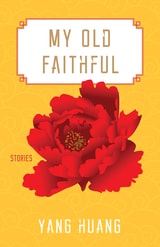
My Old Faithful
StoriesYang Huang
University of Massachusetts Press, 2018
Showing both the drama of familial intimacy and the ups and downs of the everyday, My Old Faithful introduces readers to a close-knit Chinese family. These ten interconnected short stories, which take place in China and the United States over a thirty-year period, merge to paint a nuanced portrait of family life, full of pain, surprises, and subtle acts of courage. Richly textured narratives from the mother, the father, the son, and the daughters play out against the backdrop of China's social and economic change.
With quiet humor and sharp insight into the ordinary, Yang Huang writes of a father who spanks his son out of love, a brother who betrays his sister, and a woman who returns to China after many years to find her country changed in ways both expected and startling.