Results by title
1927 books match the query 'Technology & Engineering' and 125 start with m
MEMS Packaging
Tai-Ran Hsu
The Institution of Engineering and Technology, 2004
MEMS Resonator Filters
Rajendra M. Patrikar
The Institution of Engineering and Technology, 2020
Machine Learning for Healthcare Technologies
David A. Clifton
The Institution of Engineering and Technology, 2017
Machine Learning in Medical Imaging and Computer Vision
Amita Nandal
The Institution of Engineering and Technology, 2024
Machine and Sovereignty
For a Planetary Thinkingyuk
University of Minnesota Press, 2024
Developing a new political thought to address today’s planetary crises
What is “planetary thinking” today? Arguing that a new approach is urgently needed, Yuk Hui develops a future-oriented mode of political thought that encompasses the unprecedented global challenges we are confronting: the rise of artificial intelligence, the ecological crisis, and intensifying geopolitical conflicts.
Machine and Sovereignty starts with three premises. The first affirms the necessity of developing a new language of coexistence that surpasses the limits of nation-states and their variations; the second recognizes that political forms, including the polis, empire, and the state, are technological phenomena, which Lewis Mumford terms “megamachines.” The third suggests that a particular political form is legitimated and rationalized by a corresponding political epistemology. The planetary thinking that this book sketches departs from the opposition between mechanism and organism, which characterized modern thought, to understand the epistemological foundations of Hegel’s political state and Schmitt’s Großraum and their particular ways of conceiving the question of sovereignty. Through this reconstruction, Hui exposes the limits of the state and reflects on a new theoretical matrix based on the interrelated concepts of biodiversity, noodiversity, and technodiversity.
Arguing that we are facing the limit of modernity, of the eschatological view of history, of globalization, and of the human, Hui conceives necessary new epistemological and technological frameworks for understanding and rising to the crises of our present and our future.
Retail e-book files for this title are screen-reader friendly.

Magnetorheological Materials and their Applications
Seung-Bok Choi
The Institution of Engineering and Technology, 2019

Maintaining Effective Engineering Leadership
A new dependence on effective processRaymond Morrison
The Institution of Engineering and Technology, 2013
Make It Rain
State Control of the Atmosphere in Twentieth-Century AmericaKristine C. Harper
University of Chicago Press, 2017
In Make It Rain, Kristine C. Harper tells the long and somewhat ludicrous history of state-funded attempts to manage, manipulate, and deploy the weather in America. Harper shows that governments from the federal to the local became helplessly captivated by the idea that weather control could promote agriculture, health, industrial output, and economic growth at home, or even be used as a military weapon and diplomatic tool abroad. Clear fog for landing aircraft? There’s a project for that. Gentle rain for strawberries? Let’s do it! Enhanced snowpacks for hydroelectric utilities? Check. The heyday of these weather control programs came during the Cold War, as the atmosphere came to be seen as something to be defended, weaponized, and manipulated. Yet Harper demonstrates that today there are clear implications for our attempts to solve the problems of climate change.
Making Believe
Screen Performance and Special Effects in Popular CinemaBode, Lisa
Rutgers University Press, 2017
Making Believe incorporates North American film reviews and editorials, actor and crew interviews, trade and fan magazine commentary, actor training manuals, and film production publicity materials to discuss the shifts in screen acting practice and philosophy around transfiguring makeup, doubles, motion capture, and acting to absent places or characters. Along the way it considers how performers and visual and special effects crew work together, and struggle with the industry, critics, and each other to define the aesthetic value of their work, in an industrial system of technological reproduction. Bode opens our eyes to the performing illusions we love and the tensions we experience in wanting to believe in spite of our knowledge that it is all make believe in the end.

Making Jet Engines in World War II
Britain, Germany, and the United StatesHermione Giffard
University of Chicago Press, 2016
Giffard compares the approaches of Britain, Germany, and the United States. Each approached jet engines in different ways because of its own war aims and industrial expertise. Germany, which produced more jet engines than the others, did so largely as replacements for more expensive piston engines. Britain, on the other hand, produced relatively few engines—but, by shifting emphasis to design rather than production, found itself at war's end holding an unrivaled range of designs. The US emphasis on development, meanwhile, built an institutional basis for postwar production. Taken together, Giffard's work makes a powerful case for a more nuanced understanding of technological innovation, one that takes into account the influence of the many organizational factors that play a part in the journey from idea to finished product.
Making Movement Modern
Science, Politics, and the Body in MotionWhitney E. Laemmli
University of Chicago Press, 2026
In the early twentieth century, human bodily movement garnered interest among researchers who were convinced that understanding and controlling it could help govern an increasingly frazzled, fragmented world. Making Movement Modern traces one movement visualization technique, Labanotation, from its origins in expressionist dance, Austro-Hungarian military discipline, and contemporary physiology to its employment in factories and offices a half-century later. Frustrated by societies that seemed plagued by regimentation and alienation, the users of Laban-inspired systems—from artists and scientists to factory owners, politicians, lawyers, anthropologists, psychiatrists, and computer scientists—hoped to provide opportunities for individual expression while simultaneously harnessing movement to serve the needs of larger communities, businesses, and states.
Making Movement Modern reveals how Labanotation’s creator, choreographer Rudolf Laban, and his acolytes offered this system to a surprising variety of individuals and groups. It was a technique that promised liberation through expressive movement; it was also a means of organizing fascist displays of pure “Aryan” culture. The book explores these political ambiguities as Laban-based systems entered postwar society in the United States and the United Kingdom, where they were used to document disappearing folk cultures, treat Holocaust survivors, and make even the dullest, most repetitive work feel spiritually meaningful. Central to these efforts were vast programs to collect and store new kinds of personal movement data, and this history also has much to tell us about mass data collection today. This is a book for anyone interested in the relationship between art, science, data, and the human body across the tumultuous twentieth century.
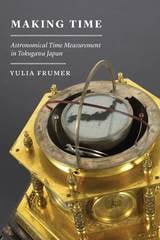
Making Time
Astronomical Time Measurement in Tokugawa JapanYulia Frumer
University of Chicago Press, 2017
In the mid-sixteenth century, when the first mechanical clocks arrived in Japan from Europe, the Japanese found them interesting but useless, because they failed to display time in units that changed their length with the seasons, as was customary in Japan at the time. In 1873, however, the Japanese government adopted the Western equal-hour system as well as Western clocks. Given that Japan carried out this reform during a period of rapid industrial development, it would be easy to assume that time consciousness is inherent to the equal-hour system and a modern lifestyle, but Making Time suggests that punctuality and time-consciousness are equally possible in a society regulated by a variable-hour system, arguing that this reform occurred because the equal-hour system better reflected a new conception of time — as abstract and universal—which had been developed in Japan by a narrow circle of astronomers, who began seeing time differently as a result of their measurement and calculation practices. Over the course of a few short decades this new way of conceptualizing time spread, gradually becoming the only recognized way of treating time.

Making a Green Machine
The Infrastructure of Beverage Container RecyclingJørgensen, Finn Arne
Rutgers University Press, 2011

Management Guide to Condition Monitoring in Manufacture
A. Davies
The Institution of Engineering and Technology, 1990

Managing the Internet of Things
Architectures, theories and applicationsJun Huang
The Institution of Engineering and Technology, 2017
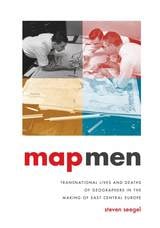
Map Men
Transnational Lives and Deaths of Geographers in the Making of East Central EuropeSteven Seegel
University of Chicago Press, 2018
Taking us deep into cartographical archives, Seegel re-creates the public and private worlds of these five mapmakers, who interacted with and influenced one another even as they played key roles in defining and redefining borders, territories, nations—and, ultimately, the interconnection of the world through two world wars. Throughout, he examines the transnational nature of these processes and addresses weighty questions about the causes and consequences of the world wars, the rise of Nazism and Stalinism, and the reasons East Central Europe became the fault line of these world-changing developments.
At a time when East Central Europe has surged back into geopolitical consciousness, Map Men offers a timely and important look at the historical origins of how the region was defined—and the key people who helped define it.
Mapping Crisis
Participation, Datafication and Humanitarianism in the Age of Digital MappingEdited by Doug Specht
University of London Press, 2020
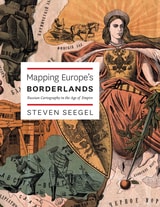
Mapping Europe's Borderlands
Russian Cartography in the Age of EmpireSteven Seegel
University of Chicago Press, 2012
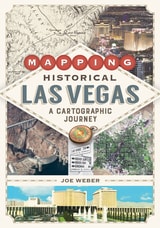
Mapping Historical Las Vegas
A Cartographic JourneyJoe Weber
University of Nevada Press, 2022
Reaching past the city limits, Mapping Historical Las Vegas also examines the development of public lands, military bases, and the canyons and valleys of the Colorado River before the Hoover Dam was built and Lake Mead was created. Weber also includes information on dams, highways, railroads, and other projects that were planned but never constructed— showing what might have been in one of the nation’s largest cities.
With 137 color maps generated using Geographic Information Systems, along with extensive mapping by Weber that draws on his decades of experience in the region, Mapping Historical Las Vegas offers a unique perspective on one of the world’s most famous desert cities.
Mapping It Out
Expository Cartography for the Humanities and Social SciencesMark Monmonier
University of Chicago Press, 1993
In his acclaimed How to Lie with Maps, Mark Monmonier showed how maps can distort facts. In Mapping it Out: Expository Cartography for the Humanities and Social Sciences, he shows authors and scholars how they can use expository cartography—the visual, two-dimensional organization of information—to heighten the impact of their books and articles.
This concise, practical book is an introduction to the fundamental principles of graphic logic and design, from the basics of scale to the complex mapping of movement or change. Monmonier helps writers and researchers decide when maps are most useful and what formats work best in a wide range of subject areas, from literary criticism to sociology. He demonstrates, for example, various techniques for representing changes and patterns; different typefaces and how they can either clarify or confuse information; and the effectiveness of less traditional map forms, such as visibility base maps, frame-rectangle symbols, and complementary scatterplot designs for conveying complex spatial relationships.
There is also a wealth of practical information on map compilation, cartobibliographies, copyright and permissions, facsimile reproduction, and the evaluation of source materials. Appendixes discuss the benefits and limitations of electronic graphics and pen-and-ink drafting, and how to work with a cartographic illustrator.
Clearly written, and filled with real-world examples, Mapping it Out demystifies mapmaking for anyone writing in the humanities and social sciences.
"A useful guide to a subject most people probably take too much for granted. It shows how map makers translate abstract data into eye-catching cartograms, as they are called. It combats cartographic illiteracy. It fights cartophobia. It may even teach you to find your way."—Christopher Lehmann-Haupt, The New York Times
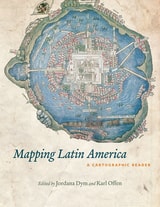
Mapping Latin America
A Cartographic ReaderEdited by Jordana Dym and Karl Offen
University of Chicago Press, 2011
For many, a map is nothing more than a tool used to determine the location or distribution of something—a country, a city, or a natural resource. But maps reveal much more: to really read a map means to examine what it shows and what it doesn’t, and to ask who made it, why, and for whom. The contributors to this new volume ask these sorts of questions about maps of Latin America, and in doing so illuminate the ways cartography has helped to shape this region from the Rio Grande to Patagonia.
In Mapping Latin America,Jordana Dym and Karl Offen bring together scholars from a wide range of disciplines to examine and interpret more than five centuries of Latin American maps.Individual chapters take on maps of every size and scale and from a wide variety of mapmakers—from the hand-drawn maps of Native Americans, to those by famed explorers such as Alexander von Humboldt, to those produced in today’s newspapers and magazines for the general public. The maps collected here, and the interpretations that accompany them, provide an excellent source to help readers better understand how Latin American countries, regions, provinces, and municipalities came to be defined, measured, organized, occupied, settled, disputed, and understood—that is, how they came to have specific meanings to specific people at specific moments in time.
The first book to deal with the broad sweep of mapping activities across Latin America, this lavishly illustrated volume will be required reading for students and scholars of geography and Latin American history, and anyone interested in understanding the significance of maps in human cultures and societies.
Mapping Nature across the Americas
Edited by Kathleen A. Brosnan & James R. Akerman
University of Chicago Press, 2021

Mapping Shakespeare's World
Peter Whitfield
Bodleian Library Publishing, 2015
Mapping Shakespeare’s World explores these questions with surprising results. It has often been said that setting is irrelevant to Shakespeare’s plays—that, wherever they are set, their enduring appeal lies in their ability to speak to broad questions of human nature. Peter Whitfield shows that, on the contrary, many of Shakespeare’s locations were carefully chosen for their ability to convey subtle meanings an Elizabethan audience would have picked up on and understood. Through the use of paintings, drawings, contemporary maps and geographical texts, Whitfield suggests answers to such questions as where Illyria was located, why The Merry Wives of Windsor could only have taken place in Windsor, and how two utterly different comedies—The Comedy of Errors and Pericles, Prince of Tyre—both came to take place in ancient Ephesus.
Just when one might think there was nothing more to be said about Shakespeare, with Mapping Shakespeare’s World, Whitfield offers a fascinating new point of view.
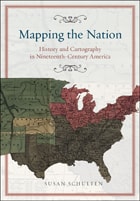
Mapping the Nation
History and Cartography in Nineteenth-Century AmericaSusan Schulten
University of Chicago Press, 2012
In the nineteenth century, Americans began to use maps in radically new ways. For the first time, medical men mapped diseases to understand and prevent epidemics, natural scientists mapped climate and rainfall to uncover weather patterns, educators mapped the past to foster national loyalty among students, and Northerners mapped slavery to assess the power of the South. After the Civil War, federal agencies embraced statistical and thematic mapping in order to profile the ethnic, racial, economic, moral, and physical attributes of a reunified nation. By the end of the century, Congress had authorized a national archive of maps, an explicit recognition that old maps were not relics to be discarded but unique records of the nation’s past.
All of these experiments involved the realization that maps were not just illustrations of data, but visual tools that were uniquely equipped to convey complex ideas and information. In Mapping the Nation, Susan Schulten charts how maps of epidemic disease, slavery, census statistics, the environment, and the past demonstrated the analytical potential of cartography, and in the process transformed the very meaning of a map.
Today, statistical and thematic maps are so ubiquitous that we take for granted that data will be arranged cartographically. Whether for urban planning, public health, marketing, or political strategy, maps have become everyday tools of social organization, governance, and economics. The world we inhabit—saturated with maps and graphic information—grew out of this sea change in spatial thought and representation in the nineteenth century, when Americans learned to see themselves and their nation in new dimensions.
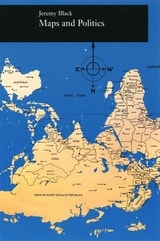
Maps and Politics
Jeremy Black
University of Chicago Press, 1997
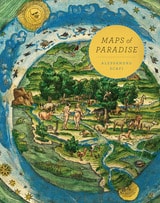
Maps of Paradise
Alessandro Scafi
University of Chicago Press, 2013
Maps of Paradise charts the diverse ways in which scholars and mapmakers from the eighth to the twenty-first century rose to the challenge of identifying the location of paradise on a map, despite the certain knowledge that it was beyond human reach. Over one hundred illustrations celebrate this history of a paradox: the mapping of the unmappable. It is also a mirror to the universal dream of perfection and happiness, and the yearning to discover heaven on earth.
Maps with the News
The Development of American Journalistic CartographyMark Monmonier
University of Chicago Press, 1989
"A most welcome and thorough investigation of a neglected aspect of both the history of cartography and modern cartographic practice."—Mapline
"A well-written, scholarly treatment of journalistic cartography. . . . It is well researched, thoroughly indexed and referenced . . . amply illustrated."—Judith A. Tyner, Imago Mundi
"There is little doubt that Maps with the News should be part of the training and on the desks of all those concerned with producing maps for mass consumption, and also on the bookshelves of all journalists, graphic artists, historians of cartography, and geographic educators."—W. G. V. Balchin, Geographical Journal
"A definitive work on journalistic cartography."—Virginia Chipperfield, Society of University Cartographers Bulletin
Maps
Finding Our Place in the WorldEdited by James R. Akerman and Robert W. Karrow Jr.
University of Chicago Press, 2007
The book begins by examining the use of maps for wayfinding, revealing that even maps as common and widely used as these are the product of historical circumstances and cultural differences. The second chapter considers maps whose makers employed the smallest of scales to envision the broadest of human stages—the world, the heavens, even the act of creation itself. The next chapter looks at maps that are, literally, at the opposite end of the scale from cosmological and world maps—maps that represent specific parts of the world and provide a close-up view of areas in which their makers lived, worked, and moved.
Having shown how maps help us get around and make sense of our greater and lesser worlds, Maps then turns to the ways in which certain maps can be linked to particular events in history, exploring how they have helped Americans, for instance, to understand their past, cope with current events, and plan their national future. The fifth chapter considers maps that represent data from scientific instruments, population censuses, and historical records. These maps illustrate, for example, how diseases spread, what the ocean floor looks like, and how the weather is tracked and predicted. Next comes a turn to the imaginary, featuring maps that depict entire fictional worlds, from Hell to Utopia and from Middle Earth to the fantasy game World of Warcraft. The final chapter traces the origins of map consumption throughout history and ponders the impact of cartography on modern society.
A companion volume to the most ambitious exhibition on the history of maps ever mounted in North America, Maps will challenge readers to stretch conventional thought about what constitutes a map and how many different ways we can understand graphically the environment in which we live. Collectors, historians, mapmakers and users, and anyone who has ever “gotten lost” in the lines and symbols of a map will find much to love and learn from in this book.

Maritime Autonomous Vehicles
Methods and measurementsFrank Ehlers
The Institution of Engineering and Technology, 2025

Maritime Surveillance with Synthetic Aperture Radar
Gerardo Di Martino
The Institution of Engineering and Technology, 2021
Marking Modern Times
A History of Clocks, Watches, and Other Timekeepers in American LifeAlexis McCrossen
University of Chicago Press, 2013
In Marking Modern Times, Alexis McCrossen relates how the American preoccupation with time led people from across social classes to acquire watches and clocks. While noting the difficulties in regulating and synchronizing so many timepieces, McCrossen expands our understanding of the development of modern time discipline, delving into the ways we have standardized time and describing how timekeepers have served as political, social, and cultural tools in a society that doesn’t merely value time but regards access to time as a natural-born right, a privilege of being an American.

Martin Mariner
Nico Braas
Amsterdam University Press, 2023
Mass Destruction
The Men and Giant Mines That Wired America and Scarred the PlanetTimothy J. LeCain
Rutgers University Press, 2009
Mass destruction mining soon spread around the nation and the globe, providing raw materials essential to the mass production and mass consumption that increasingly defined the emerging "American way of life." At the dawn of the last century, Jackling's open pit replaced immense but constricted underground mines that probed nearly a mile beneath the earth, to become the ultimate symbol of the modern faith that science and technology could overcome all natural limits. A new culture of mass destruction emerged that promised nearly infinite supplies not only of copper, but also of coal, timber, fish, and other natural resources.
But, what were the consequences? Timothy J. LeCain deftly analyzes how open-pit mining continues to affect the environment in its ongoing devastation of nature and commodification of the physical world. The nation's largest toxic Superfund site would be one effect, as well as other types of environmental dead zones around the globe. Yet today, as the world's population races toward American levels of resource consumption, truly viable alternatives to the technology of mass destruction have not yet emerged.

Mastering the Niger
James MacQueen's African Geography and the Struggle over Atlantic SlaveryDavid Lambert
University of Chicago Press, 2013
Matterphorics
On the Laws of TheoryDaniela Gandorfer
Duke University Press, 2026
Measurement Science for Modern Physics
Masatoshi Kajita
The Institution of Engineering and Technology, 2026
Mechanical Vibration
Theory and ApplicationHaym Benaroya
Rutgers University Press, 2022
Mechanical Vibration: Theory and Application presents comprehensive coverage of the fundamental principles of mechanical vibration, including the theory of vibration, as well as discussions and examples of the applications of these principles to practical engineering problems. The book also addresses the effects of uncertainties in vibration analysis and design and develops passive and active methods for the control of vibration. Many example problems with solutions are provided. These examples as well as compelling case studies and stories of real-world applications of mechanical vibration have been carefully chosen and presented to help the reader gain a thorough understanding of the subject.
Mechatronic Hands
Prosthetic and robotic designPaul H. Chappell
The Institution of Engineering and Technology, 2016

Medical Equipment Engineering
Design, manufacture and applicationsWai Yie Leong
The Institution of Engineering and Technology, 2023
Medical Imaging Informatics
Machine learning, deep learning and big data analyticsMamoon Rashid
The Institution of Engineering and Technology, 2024
Medical Monopoly
Intellectual Property Rights and the Origins of the Modern Pharmaceutical IndustryJoseph M. Gabriel
University of Chicago Press, 2014
Drawing on a wealth of previously unused archival material, Medical Monopoly combines legal, medical, and business history to offer a sweeping new interpretation of the origins of the complex and often troubling relationship between the pharmaceutical industry and medical practice today. Joseph M. Gabriel provides the first detailed history of patent and trademark law as it relates to the nineteenth-century pharmaceutical industry as well as a unique interpretation of medical ethics, therapeutic reform, and the efforts to regulate the market in pharmaceuticals before World War I. His book will be of interest not only to historians of medicine and science and intellectual property scholars but also to anyone following contemporary debates about the pharmaceutical industry, the patenting of scientific discoveries, and the role of advertising in the marketplace.
Medieval Islamic Maps
An ExplorationKaren C. Pinto
University of Chicago Press, 2016
Pinto focuses on the distinct tradition of maps known collectively as the Book of Roads and Kingdoms (Kitab al-Masalik wa al-Mamalik, or KMMS), examining them from three distinct angles—iconography, context, and patronage. She untangles the history of the KMMS maps, traces their inception and evolution, and analyzes them to reveal the identities of their creators, painters, and patrons, as well as the vivid realities of the social and physical world they depicted. In doing so, Pinto develops innovative techniques for approaching the visual record of Islamic history, explores how medieval Muslims perceived themselves and their world, and brings Middle Eastern maps into the forefront of the study of the history of cartography.
Medieval Views of the Cosmos
E. Edson and E. Savage-Smith
Bodleian Library Publishing, 2004
In the medieval world system—inherited by Christians and Muslims from the Greeks and Romans, and modified by their own religious tenets—spheres bearing the planets and stars wheeled around the earth, and at every level there was a moral lesson for humanity and a satisfying metaphor for the nature of God. The authors of this volume explain how the medieval view of the universe was harmonious on theological and practical levels, providing answers to the most puzzling of questions.
Medieval Views of the Cosmos is an engaging and beautifully illustrated introduction to a world where every moment was a theater of human drama directed by the hand of God.

Medium Voltage DC System Architectures
Brandon Grainger
The Institution of Engineering and Technology, 2022

Mega-Dams in World Literature
Literary Responses to Twentieth-Century Dam BuildingMargaret Ziolkowski
University of Wyoming Press, 2024
Using North American, Native American, Russian, Egyptian, Indian, and Chinese novels and poems, Ziolkowski explores the supposed progress that these structures bring. The book asks how the human urge to exploit and control waterways has affected our relationships to nature and the environment and argues that the high modernism of the twentieth century, along with its preoccupation with development, casts the hydroelectric dam as a central symbol of domination over nature and the power of the nation state.
Beyond examining the exultation of large dams as symbols of progress, Mega-Dams in World Literature takes a broad international and cultural approach that humanizes and personalizes the major issues associated with large dams through nuanced analyses, paying particular attention to issues engendered by high modernism and settler colonialism. Both general and specialist readers interested in human-environment relationships will enjoy this prescient book.
Megawatts and Megatons
The Future of Nuclear Power and Nuclear WeaponsRichard L. Garwin and Georges Charpak
University of Chicago Press, 2002
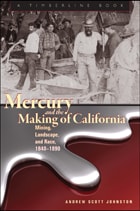
Mercury and the Making of California
Mining, Landscape, and Race, 1840–1890Andrew Scott Johnston
University Press of Colorado, 2015
Gold and silver could not be refined without mercury; therefore, its production and use were vital to securing power and wealth in the West. The first industrialized mining in California, mercury mining had its own particular organization, structure, and built environments. These were formed within the Spanish Empire, subsequently transformed by British imperial ambitions, and eventually manipulated by American bankers and investors. In California, mercury mining also depended on a workforce differentiated by race and ethnicity. The landscapes of work and camp and the relations among the many groups involved in the industry—Mexicans, Chileans, Spanish, English, Irish, Cornish, American, and Chinese—form a crucial chapter in the complex history of race and ethnicity in the American West.
This pioneering study explicates the mutual structuring of the built environments of the mercury-mining industry and the emergence of California’s ethnic communities. Combining rich documentary sources with a close examination of the existing physical landscape, Johnston explores both the detail of everyday work and life in the mines and the larger economic and social structures in which mercury mining was enmeshed, revealing the significance of mercury mining for Western history.
Metaheuristic Optimization in Power Engineering
Jordan Radosavljević
The Institution of Engineering and Technology, 2018
Metaheuristic Optimization in Power Engineering
Algorithms and power dispatch using MATLAB®-based software, Volume 1Jordan Radosavljević
The Institution of Engineering and Technology, 2024
Metaheuristic Optimization in Power Engineering
Distribution systems using MATLAB®-based software, Volume 2Jordan Radosavljević
The Institution of Engineering and Technology, 2024