Results by title
146 books match the query 'Terrorism' and 7 start with m
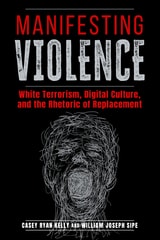
Manifesting Violence
White Terrorism, Digital Culture, and the Rhetoric of ReplacementCasey Ryan Kelly and William Joseph Sipe
University of Alabama Press, 2025
When communication becomes the engine of white supremacist violence.
Manifesting Violence: White Terrorism, Digital Culture, and the Rhetoric of Replacement by Casey Ryan Kelly and William Joseph Sipe is a compelling exploration of how the digital world has become a fertile ground for white supremacist ideology. Through an in-depth analysis of white supremacist manifestos, online rhetoric, and the myth of “white genocide,” Kelly and Sipe uncover the disturbing ways in which digital culture facilitates the spread of racist ideology and the radicalization of individuals. By examining the language of white nationalism—calls to defend the white race, family, and children—Kelly and Sipe reveal how these messages, often disguised as entertainment or humor, gradually transform passive consumers into active participants in a dangerous ideology.
Manifesting Violence sheds light on the alarming shift from organized white supremacist groups to a decentralized digital arena where hate speech is disguised as humor and online conversations foster a culture of violence. Kelly and Sipe’s thorough investigation of this growing digital ecosystem offers a chilling glimpse into the dark underbelly of online extremism. A must-read for anyone seeking to understand the growing threat of hate-motivated violence and the urgent need to address its roots in digital culture, Kelly and Sipe offer rich insights to readers, researchers, academics, and policymakers concerned about extremism, online radicalization, and white supremacy.
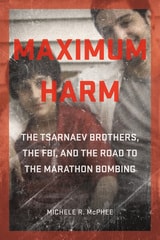
Maximum Harm
The Tsarnaev Brothers, the FBI, and the Road to the Marathon BombingMichele R. McPhee
University Press of New England, 2017
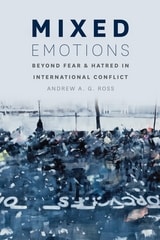
Mixed Emotions
Beyond Fear and Hatred in International ConflictAndrew A. G. Ross
University of Chicago Press, 2013
From passionate protests to poignant speeches, Andrew A. G. Ross analyzes high-emotion events with an eye to how they shape public sentiment and finds that there is no single answer. The politically powerful play to the public’s emotions to advance their political aims, and such appeals to emotion also often serve to sustain existing values and institutions. But the affective dimension can produce profound change, particularly when a struggle in the present can be shown to line up with emotionally resonant events from the past. Extending his findings to well-studied conflicts, including the War on Terror and the violence in Rwanda and the Balkans, Ross identifies important sites of emotional impact missed by earlier research focused on identities and interests.
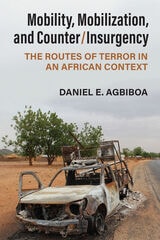
Mobility, Mobilization, and Counter/Insurgency
The Routes of Terror in an African ContextDaniel E. Agbiboa
University of Michigan Press, 2022
In Mobility, Mobilization, and Counter/Insurgency, Daniel Agbiboa takes African insurgencies back to their routes by providing a transdisciplinary perspective on the centrality of mobility to the strategies of insurgents, state security forces, and civilian populations caught in conflict. Drawing on one of the world’s deadliest insurgencies, the Boko Haram insurgency in northeast Nigeria and the Lake Chad region, this well-crafted and richly nuanced intervention offers fresh insights into how violent extremist organizations exploit forms of local immobility and border porosity to mobilize new recruits, how the state’s “war on terror” mobilizes against so-called subversive mobilities, and how civilian populations in transit are treated as could-be terrorists and subjected to extortion and state-sanctioned violence en route. The multiple and intersecting flows analyzed here upend Eurocentric representations of movement in Africa as one-sided, anarchic, and dangerous. Instead, this book underscores the contradictions of mobility in conflict zones as simultaneously a resource and a burden. Intellectually rigorous yet clear, engaging, and accessible, Mobility, Mobilization, and Counter/Insurgency is a seminal contribution that lays bare the neglected linkages between conflict and mobility.
More Secure, Less Free?
Antiterrorism Policy & Civil Liberties after September 11Mark Sidel
University of Michigan Press, 2010
Unlike earlier books published shortly after the September 11 attacks that focus on the Patriot Act, More Secure, Less Free? covers the Patriot Act but goes well beyond, analyzing Total Information Awareness, Terrorist Information and Prevention System (TIPS), Computer Assisted Passenger Prescreening System II (CAPPS II), and a number of other "second wave" antiterror initiatives.
It's also the first book of its kind to go beyond federal measures to explain the devolution of antiterror policies to the states, and now to the military as well. Author Mark Sidel discusses the continuing debates on antiterror law at the state level, with a focus on the important states of New York, California, and Michigan, and explains how the military-through an informant program known as "Eagle Eyes"-is now taking a direct hand in domestic antiterror efforts.
The volume also discusses and analyzes crucially important aspects of American antiterror policy that have been largely ignored in other volumes and discusses the effects of antiterror policy on the American academic world and the American nonprofit sector, for example. And it provides the first comparative perspectives on U.S. antiterror policy yet published in an American volume, discussing antiterror initiatives in Great Britain, Australia, and India and contrasting those to the American experience.
More Secure, Less Free? is important and essential reading for anyone interested in an analytical perspective on American antiterror policy since September 11 that goes well beyond the Patriot Act.
Mark Sidel is Associate Professor of Law at the University of Iowa and a research scholar at the University's Obermann Center for Advanced Studies.

Mrs. Shipley's Ghost
The Right to Travel and Terrorist WatchlistsJeffrey Kahn
University of Michigan Press, 2014
Today, when a single person can turn an airplane into a guided missile, no one objects to rigorous security before flying. But can the state simply declare some people too dangerous to travel, ever and anywhere? Does the Constitution protect a fundamental right to travel? Should the mode of travel (car, plane, or boat) or itinerary (domestic or international) make a constitutional difference? This book explores the legal and policy questions raised by government travel restrictions, from passports and rubber stamps to computerized terrorist watchlists.
In tracing the history and scope of U.S. travel regulations, Jeffrey Kahn begins with the fascinating story of Mrs. Ruth Shipley, a federal employee who almost single-handedly controlled access to passports during the Cold War. Kahn questions how far national security policies should go and whether the government should be able to declare some individuals simply too dangerous to travel. An expert on constitutional law, Kahn argues that U.S. citizens’ freedom to leave the country and return is a fundamental right, protected by the Constitution.
Multiculturalism and its Discontents
Rethinking Diversity after 9/11Kenan Malik
Seagull Books, 2013
In the wake of September 11, 2001 and the many terrorist attacks that have occurred since then, there has been much debate about the degree of diversity that Western nations can tolerate. In Multiculturalism and its Discontents, Kenan Malik looks closely at the role of multiculturalism within terrorism and societal discontent. He examines whether it is possible—or desirable—to try to build a cohesive society bound by common values and he delves into the increasing anxiety about the presence of the Other within our borders.
Multiculturalism and its Discontents not only explores the relationship between multiculturalism and terrorism, but it analyzes the history of the idea of multiculturalism alongside its political roots and social consequences.