Results by title
660 books match the query 'Texas' and 22 start with m
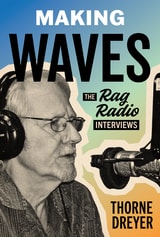
Making Waves
The Rag Radio InterviewsThorne Dreyer
University of Texas Press, 2022
Journalist and activist Thorne Dreyer has interviewed hundreds of people for Rag Radio since it went on the air in 2009. Making Waves features transcripts from twenty-one of those interviews, with everyone from TV anchor Dan Rather to Senator Bernie Sanders to monumental sculptor Bob “Daddy-O” Wade. The Rag Radio archive is now part of the collections at the Briscoe Center for American History at the University of Texas.
As a student at the University of Texas in the 1960s, Dreyer joined the Students for a Democratic Society (SDS) and became heavily involved in civil rights and the movement to end the war in Vietnam. He also helped create and edit two underground newspapers—The Rag in Austin and Space City! in Houston—and later ran a public relations business with a diverse list of clients, including progressive political campaigns. Dreyer credits the influence of his artist mother and writer father and their lively salons plus his journalism career, his political and social activism, and his stage acting experience for his interviewing success—“Put it all in a blender and Rag Radio was bound to whip up.”
Making Waves holds a wealth of information, but Dreyer makes it read like conversations among friends. “I always tell my guests that I want the discussion to be informal,” Dreyer says. “We’re going to record some important history here, but we also want to have fun.”

Man with the Killer Smile
The Life and Crimes of a Serial Mass MurdererMitchel P. Roth
University of North Texas Press, 2022
Managed Migrations
Growers, Farmworkers, and Border Enforcement in the Twentieth CenturyBy Cristina Salinas
University of Texas Press, 2018
2020 National Association for Chicana and Chicano Studies (NACCS) Book Award Winner
Honorable Mention, Ramirez Family Award for Most Significant Scholarly Book, Texas Institute of Letters, 2019
Managed Migrations examines the concurrent development of a border agricultural industry and changing methods of border enforcement in the Rio Grande Valley of Texas during the past century.
Needed at one moment, scorned at others, Mexican agricultural workers have moved back and forth across the US–Mexico border for the past century. In South Texas, Anglo growers’ dreams of creating a modern agricultural empire depended on continuous access to Mexican workers. While this access was officially regulated by immigration laws and policy promulgated in Washington, DC, in practice the migration of Mexican labor involved daily, on-the-ground negotiations among growers, workers, and the US Border Patrol. In a very real sense, these groups set the parameters of border enforcement policy.
Managed Migrations examines the relationship between immigration laws and policy and the agricultural labor relations of growers and workers in South Texas and El Paso during the 1940s and 1950s. Cristina Salinas argues that immigration law was mainly enacted not in embassies or the halls of Congress but on the ground, as a result of daily decisions by the Border Patrol that growers and workers negotiated and contested. She describes how the INS devised techniques to facilitate high-volume yearly deportations and shows how the agency used these enforcement practices to manage the seasonal agricultural labor migration across the border. Her pioneering research reveals the great extent to which immigration policy was made at the local level, as well as the agency of Mexican farmworkers who managed to maintain their mobility and kinship networks despite the constraints of grower paternalism and enforcement actions by the Border Patrol.
Marfa, Marfa
Rasquachismo and Minimalism in Far West TexasJosh T Franco
Duke University Press, 2026
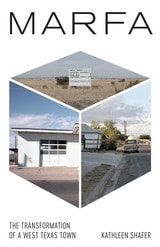
Marfa
The Transformation of a West Texas TownBy Kathleen Shafer
University of Texas Press, 2019
A small town in the vast desert of West Texas, Marfa attracts visitors from around the world to its art foundations and galleries, film and music festivals, and design and architecture symposiums. While newcomers sometimes see it as “another Santa Fe,” long-time residents often take a bemused, even disapproving attitude toward the changes that Marfa has undergone since artist Donald Judd came to town in the 1970s and began creating spaces for his own and other artists’ work. They remember when ranching and the military formed the basis of the town’s economy, even as they acknowledge that tourist dollars are now essential to Marfa’s sustainability
Marfa tells an engaging story of how this isolated place became a beacon in the art world, like the famous Marfa Lights that draw curious spectators into the West Texas night. As Kathleen Shafer delves into the town’s early history, the impact of Donald Judd, the expansion of arts programming, and the increase in tourism, she unlocks the complex interplay between the particularities of the place, the forces of commerce and growth, the textures of local culture and tradition, and the transformative role of artists and creative work. Bookending her story between two iconic artworks—the whimsical Prada Marfa and the crass Playboy Marfa—Shafer illuminates the shifting cultural landscape of Marfa, showing why this place has become a mecca for so many and how the influx of newcomers has transformed its character.
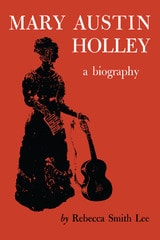
Mary Austin Holley
A BiographyBy Rebecca Smith Lee
University of Texas Press, 1962
Mary Austin Holley found life challenging and made it interesting for others. As wife and widow of Horace Holley, eminent orator, clergyman, and educator, and as cousin and friend of Stephen F. Austin, founder of the first Texas colony, she formed friendships among important people. From New Haven to New Orleans and Brazoria, Texas, she was beloved.
The panorama of her life, described in vivid detail by a former head of the English Department at Texas Christian University, transports the reader to the tempestuous early years of the American Republic and, finally, to Texas during its colonization and early Republic years. Throughout this charming book Mrs. Holley's "intuition for important people" brings the reader into the company of many of America's great and accomplished: Noah Webster, John Quincy Adams, President and Mrs. Monroe, Andrew Jackson, Sam Houston, and many others.
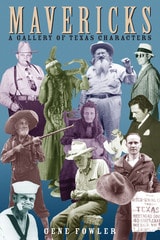
Mavericks
A Gallery of Texas CharactersBy Gene Fowler
University of Texas Press, 2008
Texas has been home to so many colorful characters, out-of-staters might wonder if any normal people live here. And it's true that the "Texian" desire to act out sometimes overcomes even the most sober citizens—which makes it a real challenge for the genuine eccentrics to distinguish themselves from the rest of us. Fortunately, though, many maverick Texans have risen to the test, and in this book, Gene Fowler introduces us to a gallery of Texas eccentrics from the worlds of oil, ranching, real estate, politics, rodeo, metaphysics, showbiz, art, and folklore.
Mavericks rounds up dozens of Fowler's favorite Texas characters, folks like the Trinity River prophet Commodore Basil Muse Hatfield; the colorful poet-politician Cyclone Davis Jr.; Big Bend tourist attraction Bobcat Carter; and the dynamic chief executive of the East Texas Oil Field Governor Willie. Fowler persuasively argues that many of these characters should be viewed as folk performance artists who created "happenings" long before the modern art world took up that practice in the 1960s. Other featured mavericks run the demographic gamut from inspirational connoisseurs of the region's native quirkiness to creative con artists and carnival oddities. But, artist or poser, all of the eccentrics in Mavericks completely embody the style and spirit that makes Texas so interesting, entertaining, and culturally unique.
Meditación Fronteriza
Poems of Love, Life, and LaborNorma Elia Cantú
University of Arizona Press, 2019
The poems are a celebration of culture, tradition, and creativity that navigates themes of love, solidarity, and political transformation. Deeply personal yet warmly relatable, these poems flow from Spanish to English gracefully. With Gloria Anzaldúa’s foundational work as an inspiration, Meditación Fronteriza unveils unique images that provide nuance and depth to the narrative of the borderlands.
Poems addressed to talented and influential women such as Gwendolyn Brooks and Adrienne Rich, among others, pour gratitude and recognition into the collection. While many of the poems in Meditación Fronteriza are gentle and inviting, there are also moments that grieve for the state of the borderlands, calling for political resistance.

Memories of Two Generations
A Yiddish Life in Russia and TexasAlexander Z. Gurwitz, Edited and Introduced by Bryan Edward Stone
University of Alabama Press, 2022
The 1935 autobiography of Alexander Ziskind Gurwitz, an Orthodox Jew whose lively recounting of his life in Tsarist Russia and his immigration to San Antonio, Texas, in 1910 captures turbulent changes in early twentieth-century Jewish history
In 1910, at the age of fifty-one, Alexander Ziskind Gurwitz made the bold decision to emigrate with his wife and four children from southeastern Ukraine in Tsarist Russia to begin a new life in Texas. In 1935, in his seventies, Gurwitz composed a retrospective autobiography, Memories of Two Generations, that recounts his personal story both of the rich history of the lost Jewish world of Eastern Europe and of the rambunctious development of frontier Jewish communities in the United States.
In both Europe and America, Gurwitz inhabited an almost exclusively Jewish world. As a boy, he studied in traditional yeshivas and earned a living as a Hebrew language teacher and kosher butcher. Widely travelled, Gurwitz recalls with wit and insight daily life in European shtetls, providing perceptive and informative comments about Jewish religion, history, politics, and social customs. Among the book’s most notable features is his first-hand, insider’s account of the yearly Jewish holiday cycle as it was observed in the nineteenth century, described as he experienced it as a child.
Gurwitz’s account of his arrival in Texas forms a cornerstone record of the Galveston Immigration Movement; this memoir represents the only complete narrative of that migration from an immigrant’s point of view. Gurwitz’s descriptions about the development of a thriving Orthodox community in San Antonio provide an important and unique primary source about a facet of American Jewish life that is not widely known.
Gurwitz wrote his memoir in his preferred Yiddish, and this translation into English by Rabbi Amram Prero captures the lyrical style of the original. Scholar and author Bryan Edward Stone’s special introduction and illuminating footnotes round out a superb edition that offers much to experts and general readers alike.
Memory Fever
Ray Gonzalez
University of Arizona Press, 1999
Through 29 storylike essays, Gonzalez takes readers into the heart of the desert and the soul of a developing poet. He introduces us to the people who shaped his life. We learn of his father's difficulties with running a pool hall and of his grandmother's steadfast religious faith. We meet sinister Texas Rangers, hallucinatory poets, illegal aliens, and racist high school jocks. His vivid recollections embrace lizard hunts and rattlesnake dreams, rock music and menudo making—all in stories that convey the pains and joys of growing up on the border. As Gonzalez leads us through his desert of hope and vision, we come to recognize the humor and sadness that permeate this special place.
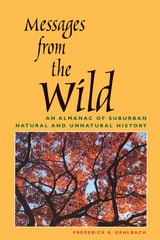
Messages from the Wild
An Almanac of Suburban Natural and Unnatural HistoryBy Frederick R. Gehlbach
University of Texas Press, 2002
Seeking a closer connection with nature than the manicured lawns of suburbia, naturalist Fred Gehlbach and his family built a house on the edge of a wooded ravine in Central Texas in the mid-1960s. On daily walks over the hills, creek hollows, and fields of the ravine, Gehlbach has observed the cycles of weather and seasons, the annual migrations of birds, and the life cycles of animals and plants that also live in the ravine.
In this book, Gehlbach draws on thirty-five years of journal entries to present a composite, day-by-day almanac of the life cycles of this semiwild natural island in the midst of urban Texas. Recording such events as the hatching of Eastern screech owl chicks, the emergence of June bugs, and the first freeze of November, he reminds us of nature's daily, monthly, and annual cycles, from which humans are becoming ever more detached in our unnatural urban environments. The long span of the almanac also allows Gehlbach to track how local and even global developments have affected the ravine, from scars left by sewer construction to an increase in frost-free days probably linked to global warming.
This long-term record of natural cycles provides one of only two such baseline data sets for North America. At the same time, the book is an eloquent account of one keen observer's daily interactions with his wild and human neighbors and of the lessons in connectedness and the "play of life" that they teach.
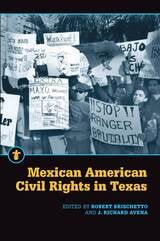
Mexican American Civil Rights in Texas
Robert Brischetto
Michigan State University Press, 2022
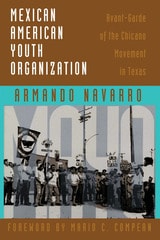
Mexican American Youth Organization
Avant-Garde of the Chicano Movement in TexasBy Armando Navarro
University of Texas Press, 1995
Among the protest movements of the 1960s, the Mexican American Youth Organization (MAYO) emerged as one of the principal Chicano organizations seeking social change. By the time MAYO evolved into the Raza Unida Party (RUP) in 1972, its influence had spread far beyond its Crystal City, Texas, origins. Its members precipitated some thirty-nine school walkouts, demonstrated against the Vietnam War, and confronted church and governmental bodies on numerous occasions.
Armando Navarro here offers the first comprehensive assessment of MAYO's history, politics, leadership, ideology, strategies and tactics, and activist program. Interviews with many MAYO and RUP organizers and members, as well as first-hand knowledge drawn from his own participation in meetings, presentations, and rallies, enrich the text.
This wealth of material yields the first reliable history of this extremely vocal and visible catalyst of the Chicano Movement. The book will add significantly to our understanding of Sixties protest movements and the social and political conditions that gave them birth.
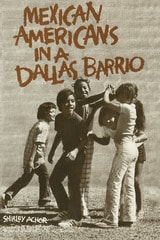
Mexican Americans in a Dallas Barrio
Shirley Achor
University of Arizona Press, 1978
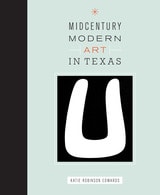
Midcentury Modern Art in Texas
By Katie Robinson Edwards
University of Texas Press, 2014
Winner, Award of Merit for Non-Fiction, The Philosophical Society of Texas, 2015
Before Abstract Expressionism of New York City was canonized as American postwar modernism, the United States was filled with localized manifestations of modern art. One such place where considerable modernist activity occurred was Texas, where artists absorbed and interpreted the latest, most radical formal lessons from Mexico, the East Coast, and Europe, while still responding to the state’s dramatic history and geography. This barely known chapter in the story of American art is the focus of Midcentury Modern Art in Texas.
Presenting new research and artwork that has never before been published, Katie Robinson Edwards examines the contributions of many modernist painters and sculptors in Texas, with an emphasis on the era’s most abstract and compelling artists. Edwards looks first at the Dallas Nine and the 1936 Texas Centennial, which offered local artists a chance to take stock of who they were and where they stood within the national artistic setting. She then traces the modernist impulse through various manifestations, including the foundations of early Texas modernism in Houston; early practitioners of abstraction and non-objectivity; the Fort Worth Circle; artists at the University of Texas at Austin; Houston artists in the 1950s; sculpture in and around an influential Fort Worth studio; and, to see how some Texas artists fared on a national scale, the Museum of Modern Art’s “Americans” exhibitions.
The first full-length treatment of abstract art in Texas during this vital and canon-defining period, Midcentury Modern Art in Texas gives these artists their due place in American art, while also valuing the quality of Texan-ness that subtly undergirds much of their production.
More City than Water
A Houston Flood AtlasEdited by Lacy M. Johnson and Cheryl Beckett
University of Texas Press, 2022
2022 Art in Service to the Environment Award, Sierra Club Lone Star Chapter
Honorable Mention, 2022 Nonfiction Prize, Writers' League of Texas
Writers explore a city’s relationship with chronic catastrophic flooding.
Shortly after Hurricane Harvey dumped a record 61 inches of rain on Houston in 2017, celebrated writer and Bayou City resident Lacy M. Johnson began collecting flood stories. Although these stories attested to the infinite variety of experience in America’s most diverse city, they also pointed to a consistent question: What does catastrophic flooding reveal about this city, and what does it obscure?
More City than Water brings together essays, conversations, and personal narratives from climate scientists, marine ecologists, housing activists, urban planners, artists, poets, and historians as they reflect on the human geography of a region increasingly defined by flooding. Both a literary and a cartographic anthology, More City than Water features striking maps of Houston’s floodplains, waterways, drainage systems, reservoirs, and inundated neighborhoods. Designed by University of Houston seniors from the Graphic Design program, each map, imaginative and precise, shifts our understanding of the flooding, the public’s relationship to it, and the fraught reality of rebuilding. Evocative and unique, this is an atlas that uncovers the changing nature of living where the waters rise.
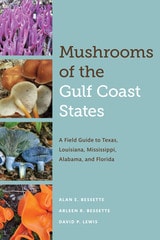
Mushrooms of the Gulf Coast States
A Field Guide to Texas, Louisiana, Mississippi, Alabama, and FloridaBy Alan E. Bessette, Arleen F. Bessette, and David P. Lewis
University of Texas Press, 2019
The weather patterns and topography of America's Gulf Coast create favorable growing conditions for thousands of species of mushrooms, but the complete region has generally gone uncharted when it comes to mycology. Mushrooms of the Gulf Coast States at last delivers an in-depth, high-quality, user-friendly field guide, featuring more than 1,000 common and lesser-known species—some of which are being illustrated in color for the first time.
Using easily identifiable characteristics and a color key, the authors enable anyone, whether amateur mushroom hunter or professional mycologist, to discern and learn about the numerous species of mushrooms encountered in Texas, Louisiana, Mississippi, Alabama, and Florida. Wild-food enthusiasts will appreciate the information on edibility or toxicity that accompanies each description, and they will also find the book’s detailed instructions for collecting, cleaning, testing, preserving, and cooking wild mushrooms to be of great interest. Providing encyclopedic knowledge in a handy format that fits in a backpack, Mushrooms of the Gulf Coast States is a must-have for any mushroom lover.

Music from the Hilltop
Organs and Organists at Southern Methodist UniversityBenjamin A. Kolodziej
University of North Texas Press, 2023

My Eighty Years in Texas
By William Physick Zuber
University of Texas Press, 1971
Almost a century and a half went into the making of My Eighty Years in Texas. It began as a diary, kept by fifteen-year-old William Physick Zuber after he joined Sam Houston’s Texas army in 1836, hoping he could emulate the heroism of American Revolutionary patriots. Although his hopes were never realized, Zuber recorded the privations, victories, and defeats of armies on the move during the Texas Revolution, the Indian campaigns, and, as he styled it, the Confederate War.
In 1910, at the age of ninety, Zuber began the enormous task of transcribing his diaries and his memories for publication. After his death in 1913, the handwritten manuscript, 1, was placed in the Texas State Archives, where it was used as a reference source by students and scholars of Texas history. Over a half century after Zuber’s death, Janis Boyle Mayfield finally brought his publication plans to fruition.
Zuber details his early zest for learning and his laborious methods of self-education. He tells of the trials of organizing and teaching schools in the sparsely populated plains. He recalls the day-by-day happenings of a private soldier in the Texas army of 1836, the Texas Militia, and the Confederate army—including the mishaps of army life and the encounters with enemies from San Jacinto to Cape Girardeau. After the Civil War, his interest turns to the politics of Reconstruction, the veterans’ pension, and the founding of the Texas Veterans Association.
This is the story of and by an outspoken Texian, complete with his attitudes, principles, and moralizings, and the nineteenth-century style and flavor of his writing.
Included as an appendix is “An Escape from the Alamo,” the account of Moses Rose for which Zuber, who was a prolific writer, was best known. A historiography of the Rose story, a bibliography of Zuber’s published and unpublished writings, annotation, and an introduction are provided by Llerena Friend.
My Girlhood Among Outlaws
Lily Klasner
University of Arizona Press, 1972
In My Girlhood Among Outlaws, Lily recalls her experiences with Billy the Kid and other desperadoes, and sets the record straight on popular misrepresentations of events. Of particular interest to historians is her preservation of the diary of famous cattleman and family friend John Chisum.

My Remembers
A Black Sharecropper's Recollections of the DepressionEddie Stimpson Jr.
University of North Texas Press, 1996
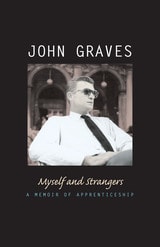
Myself and Strangers
A Memoir of ApprenticeshipBy John Graves
University of Texas Press, 2005
In Myself and Strangers, John Graves, the highly regarded author of Goodbye to a River and other classic works, recalls the decade-long apprenticeship in which he found his voice as a writer. He recounts his wanderings from Texas to Mexico, New York, and Spain, where, like Hemingway, he hoped to find the material with which to write books that mattered. With characteristic honesty, Graves admits the false starts and dead ends that dogged much of his writing, along with the exhilaration he felt when the words finally flowed. He frankly describes both the pleasures and the restlessness of expatriate life in Europe after World War II—as well as his surprising discovery, when family obligations eventually called him home to Texas, that the years away had prepared him to embrace his native land as the fit subject matter for his writing. For anyone seeking the springs that fed John Graves' best-loved books, this memoir of apprenticeship will be genuinely rewarding.