Results by title
967 books match the query 'Theater' and 52 start with m
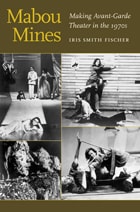
Mabou Mines
Making Avant-Garde Theater in the 1970sIris Smith Fischer
University of Michigan Press, 2012
The theater company Mabou Mines has for the past forty years created pathbreaking new theater by combining the latest concepts in music, visual arts, and technology with traditional forms of creative expression: puppetry, text, movement, theater design. From the beginning, the evanescence of performance and the dynamics of group work attracted the group. Most of their early pieces were never recorded, leaving little documentation of their foundational productions. Mabou Mines: Making Avant-Garde Theater in the 1970s provides this missing history, attempting to capture and describe the explorations of a group who set out to create indescribable performance. Iris Smith Fischer makes visible once again the celebrated company's least documented work, and offers accounts of the decisions and events that defined Mabou Mines' ideas and methods, particularly their creative collaborations with visual artists, musicians, writers, and dancers. Focusing on the heady days of the company's founding and first ten years, the book traces Mabou Mines' intellectual and artistic roots, frames them within the 1970s avant-garde, and outlines their significance in contemporary performance.
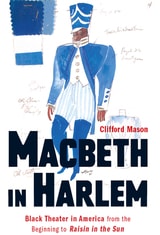
Macbeth in Harlem
Black Theater in America from the Beginning to Raisin in the SunClifford Mason
Rutgers University Press, 2020
2021 PROSE Awards Finalist, Music & the Performing Arts
In 1936 Orson Welles directed a celebrated all-black production of Macbeth that was hailed as a breakthrough for African Americans in the theater. For over a century, black performers had fought for the right to perform on the American stage, going all the way back to an 1820s Shakespearean troupe that performed Richard III, Othello, and Macbeth, without relying on white patronage.
"Macbeth" in Harlem tells the story of these actors and their fellow black theatrical artists, from the early nineteenth century to the dawn of the civil rights era. For the first time we see how African American performers fought to carve out a space for authentic black voices onstage, at a time when blockbuster plays like Uncle Tom’s Cabin and The Octoroon trafficked in cheap stereotypes. Though the Harlem Renaissance brought an influx of talented black writers and directors to the forefront of the American stage, they still struggled to gain recognition from an indifferent critical press.
Above all, "Macbeth" in Harlem is a testament to black artistry thriving in the face of adversity. It chronicles how even as the endemic racism in American society and its theatrical establishment forced black performers to abase themselves for white audiences’ amusement, African Americans overcame those obstacles to enrich the nation’s theater in countless ways.
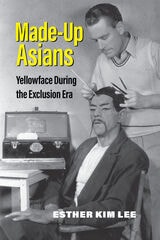
Made-Up Asians
Yellowface During the Exclusion EraEsther Kim Lee
University of Michigan Press, 2022
Makeshift Chicago Stages
A Century of Theater and PerformanceEdited by Megan E. Geigner, Stuart J. Hecht, and Jasmine Jamillah Mahmoud
Northwestern University Press, 2021
This book examines the rise and proliferation of Chicago’s performance spaces, which have rooted the city’s dynamic, thriving theater community. Chapters cover well‑known, groundbreaking, and understudied theatrical sites, ensembles, and artists, including the 1893 Columbian Exposition Midway Plaisance, the 57th Street Artist Colony, the Fine Arts Building, the Goodman Theatre, the Federal Theatre Project, the Kingston Mines and Body Politic Theaters, ImprovOlympics (later iO), Teatro Vista, Theaster Gates, and the Chicago Home Theater Festival. By putting space at the center of the city’s theater history, the authors in Makeshift Chicago Stages spotlight the roles of neighborhoods, racial dynamics, atypical venues, and borders as integral to understanding the work and aesthetics of Chicago’s artists, ensembles, and repertoires, which have influenced theater practices worldwide. Featuring rich archival work and oral histories, this anthology will prove a valuable resource for theater historians, as well as anyone interested in Chicago’s cultural heritage.
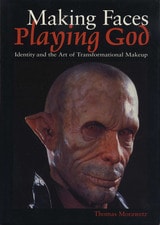
Making Faces, Playing God
Identity and the Art of Transformational MakeupBy Thomas Morawetz
University of Texas Press, 2001
Wearing a mask—putting on another face—embodies a fundamental human fantasy of inhabiting other bodies and experiencing other lives. In this extensively illustrated book, Thomas Morawetz explores how the creation of transformational makeup for theatre, movies, and television fulfills this fantasy of self-transformation and satisfies the human desire to become "the other."
Morawetz begins by discussing the cultural role of fantasies of transformation and what these fantasies reveal about questions of personal identity. He next turns to professional makeup artists and describes their background, training, careers, and especially the techniques they use to create their art. Then, with numerous before-during-and-after photos of transformational makeups from popular and little-known shows and movies, ads, and artist's demos and portfolios, he reveals the art and imagination that go into six kinds of mask-making—representing demons, depicting aliens, inventing disguises, transforming actors into different (older, heavier, disfigured) versions of themselves, and creating historical or mythological characters.
Margaret Webster
A Life in the TheaterMilly S. Barranger
University of Michigan Press, 2004
-Marian Seldes
"Margaret Webster is a highly welcome addition to our knowledge of the first important female director in American theater. Remembered now especially for her staging of Othello with Paul Robeson, Uta Hagen, and Jose Ferrer, Margaret Webster was probably the best-known, in-demand, and admired director of Shakespeare in America in the 1940s and 1950s. Fascinating throughout, the book's discussions of working with Robeson, and of HUAC, which targeted her just as her career was reaching a peak, make for especially engrossing reading."
-Oscar Brockett
Margaret Webster: A Life in the Theater is an engrossing backstage account of the life of pioneering director Margaret Webster (1905-72).
This is the first book-length biography of Webster, a groundbreaking stage and opera director whose career challenged not only stage tradition but also mainstream attitudes toward professional women.
Often credited with first having brought Shakespeare to Broadway, and renowned for her bold casting of an African American (Paul Robeson) in the role of Othello, Webster was a creative force in modern American and British theater.
Her story reveals the independent-minded artist undeterred by stage tradition and unmindful of rules about a woman's place in the professional theater. In addition to providing fascinating glimpses into Webster's personal and family life, Margaret Webster: A Life in the Theater also offers a who's-who list of the biggest names in New York and London theater of the time, as well as Hollywood: John Gielgud, Noël Coward, George Bernard Shaw, Uta Hagen, Sybil Thorndike, Eva LeGallienne, and John Barrymore, among others, all of whom crossed paths with Webster. Capping Webster's amazing story is her investigation by Senator Joseph McCarthy and HUAC, which left her unable to work for a year, and from which she never fully recovered.
Marginal Sights
Staging the Chinese in AmericaJames S. Moy
University of Iowa Press, 1994

Maryat Lee's EcoTheater
A Theater for the Twenty-first CenturyWILLIAM W. FRENCH
West Virginia University Press, 1998
Maryat Lee : a life in the theater, Dope!, and salt -- EcoTheater : the one thing willed -- EcoTheater's significance to the twenty-first century -- The EcoTheater process -- Sample EcoTheater scenes -- Some sayings and writings of Maryat Lee -- Maryat Lee : personal reminiscences -- Chronology
Masked
The Life of Anna Leonowens, Schoolmistress at the Court of SiamAlfred Habegger
University of Wisconsin Press, 2014
But who was Leonowens and why did her story take hold? Although it has been known for some time that she was of Anglo-Indian parentage and that her tales about the Siamese court are unreliable, not until now, with the publication of Masked, has there been a deeply researched account of her extraordinary life. Alfred Habegger, an award-winning biographer, draws on the archives of five continents and recent Thai-language scholarship to disclose the complex person behind the mask and the troubling facts behind the myth. He also ponders the curious fit between Leonowens’s compelling fabrications and the New World’s innocent dreams—in particular the dream that democracy can be spread through quick and easy interventions.
Exploring the full historic complexity of what it once meant to pass as white, Masked pays close attention to Leonowens’s midlevel origins in British India, her education at a Bombay charity school for Eurasian children, her material and social milieu in Australia and Singapore, the stresses she endured in Bangkok as a working widow, the latent melancholy that often afflicted her, the problematic aspects of her self-invention, and the welcome she found in America, where a circle of elite New England abolitionists who knew nothing about Southeast Asia gave her their uncritical support. Her embellished story would again capture America’s imagination as World War II ended and a newly interventionist United States looked toward Asia.
Best Books for General Audiences, selected by the American Association of School Librarians
Best Regional Special Interest Boosk, selected by the Public Library Reviewers

Master Teachers of Theatre
Observations on Teaching Theatre by Nine American MastersEdited by Burnet M. Hobgood
Southern Illinois University Press, 1988
Claribel Baird reviews the interpretation of classical texts for theatrical performance. Howard Bay interrupted his stage design career of more than 150 Broadway productions to help students. BernardBeckerman asks if there are approaches to the teaching of dramatic literature that particularly suit drama-as-theatre. Robert Benedetti offers suggestions on the teaching of acting. OscarBrockett treats the problems of the theatre teacher and the processes of learning.
AgnesHaaga shows that the essential quality in heading up child drama programs is a sense of joyous delight. Wallace Smith discusses methods for teaching secondary schooltheatre. Jewel Walker offers a rare written statement about his work as a theatre teacher. Carl Weber conveys the principles and methodology of his mentor, Bertolt Brecht, to beginning directors.
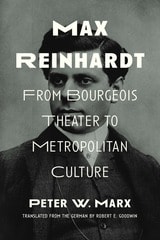
Max Reinhardt
From Bourgeois Theater to Metropolitan CulturePeter W. Marx, translated from the German by Robert E. Goodwin
Northwestern University Press, 2024
At the same time, Reinhardt soon longed for an international range: guest performances throughout Europe and to the US soon made him into a global star – and even a brand. He represents a metropolitan culture that roots in the late nineteenth century but comes to an end when Fasicsm in Europe ended any hopes for an international culture. As a Jew, Reinhardt himself had to flee the Nazis but when he eventually arrived in the US, he could not follow up with his earlier successes. Marx provides a broad panorama of Reinhardt's work, portraying not only his work method and some of his best known productions, but also the cultural conditions of his visionary enterprise.
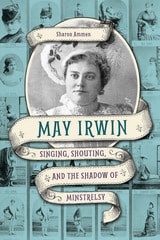
May Irwin
Singing, Shouting, and the Shadow of MinstrelsySharon Ammen
University of Illinois Press, 2017
Sharon Ammen's in-depth study traces Irwin's hurly-burly life. Irwin gained fame when, layering aspects of minstrelsy over ragtime, she popularized a racist "Negro song" genre. Ammen examines this forgotten music, the society it both reflected and entertained, and the ways white and black audiences received Irwin's performances. She also delves into Irwin's hands-on management of her image and career, revealing how Irwin carefully built a public persona as a nurturing housewife whose maternal skills and performing acumen reinforced one another. Irwin's act, soaked in racist song and humor, built a fortune she never relinquished. Yet her career's legacy led to a posthumous obscurity as the nation that once adored her evolved and changed.
Melodrama as Provocateur
Linda Williams. Edited by Christine Gledhill, Laura Horak, and Elisabeth R. Anker
Duke University Press, 2026
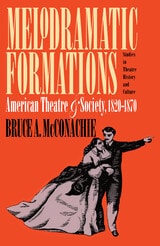
Melodramatic Formations
American Theatre and Society, 1820-1870Bruce A. Mcconachie
University of Iowa Press, 1992
Memories of the Revolution
The First Ten Years of the WOW Café TheaterHolly Hughes, Carmelita Tropicana, and Jill Dolan, Editors
University of Michigan Press, 2015
Memory of the Body
Essays on Theater and DeathJan Kott
Northwestern University Press, 1992
Memory, Transitional Justice, and Theatre in Postdictatorship Argentina
Noe Montez
Southern Illinois University Press, 2018
Montez explores how the sociohistorical phenomenon of the Teatroxlaidentidad—an annual showcase staged with the support of Argentina’s Grandmothers of the Plaza de Mayo—acted as a vehicle for drawing attention to the hundreds of children kidnapped from their families during the dictatorship and looks at why the memory narratives regarding the Malvinas Islands (also known as the Falklands) range from ideological appropriations of the islands, to absurdist commentaries about the failed war that signaled the dictatorship’s end, to the islands’ heavily contested status today.
Memory, Transitional Justice, and Theatre in Postdictatorship Argentina explores the vibrant role of theatrical engagement in postdictatorship Argentina, analyzes plays by artists long neglected in English-language articles and books, and explores the practicalities of staging performances in Latin America.
Menander and the Birth of Domestic Drama
Mitch Brown
University of Wisconsin Press, 2024
The design of the Greek stage was such that the interiors of houses were almost never shown, which posed difficulties for a playwright interested in staging the domestic lives of ordinary people. Here, Mitch Brown dissects how Menander responded to this challenge. As Brown demonstrates, Menander successfully conjured offstage action and even characters in the audiences’ imaginations; these offstage universes, Brown argues, are fundamental to understanding Menander’s dramaturgy and its reception in later centuries. Menander’s offstage methods and the new type of play (domestic drama) that he inaugurated directly influenced Western theater into the early modern period—and the impact of his innovations can still be seen indirectly today.
Messiah of the New Technique
John Howard Lawson, Communism, and American Theatre, 1923-1937Jonathan L. Chambers
Southern Illinois University Press, 2006
Messiah of the New Technique: John Howard Lawson, Communism, and American Theatre, 1923–1937 is a critical and political biography and a cultural and social history that focuses on Lawson’s career in the theatre. Using a materialist methodology, Jonathan L. Chambers emphasizes the evolution and interplay of the playwright’s artistic vision and political ideology, considering his art as both a documentation of this evolution and a product of the socio-political and cultural matrix in which he was immersed.
Spanning the playwright’s career, the volume details Lawson’s early indoctrination in and commitment to the avant-garde, his use and development of various nonrealistic playwriting techniques, his subtle though unfocused attacks on bourgeois society, and the varied critical responses he received. Chambers addresses Lawson’s involvement with the New Playwrights’ Theatre and his participation in the protests surrounding the case of Nicola Sacco and Bartolomeo Vanzetti, which stimulated his growing commitment to left-wing politics and radical causes.
Chambers also analyzes the social and cultural factors that shaped Lawson’s growing interest in revolutionary politics, his tutelage in Marxism under Edmund Wilson, and his tenure as president of the Screen Writers Guild. He also covers the final phase of Lawson’s playwriting career, which reveals the playwright’s internal struggle. That struggle, suggests Chambers, pitted Lawson’s view of aesthetics against his political ideology and is reflected in his scripts and theoretical writings.
Messiah of the New Technique provides a wealth of new material about both the playwright and the period, offering a critical synopsis of the artist’s career, addressing his often vehement rebuttals to his critics, and summarizing both his political activism and his creative and critical endeavors in the last forty years of his life.
Messiahs of 1933
How American Yiddish Theatre Survived Adversity through SatireJoel Schechter
Temple University Press, 2008
Joel Schechter has rediscovered the funny and often politically-charged plays of the American Yiddish theatre of the 1930s. In Messiahs of 1933 he celebrates their satire, their radical imagination, and their commitment to social change. He introduces readers to the once-famous writers and actors—Moishe Nadir, David Pinski, Yosl Cutler, and others—who brought into artistic form their visions of peace, social justice, and satire for all.
Messiahs of 1933 greatly enlarges our understanding of Yiddish theatre and culture in the United States. It examines the innovative stage performances created by the Artef collective, the Modicut puppeteers, and the Yiddish Unit of the Federal Theatre Project. And it introduces to contemporary readers some of the most popular theatre actors of the 30s, including Leo Fuchs, Menasha Skulnik, and Yetta Zwerling. Throughout, it includes relevant photographs and contemporary comic strips, along with the first English-language publication of excerpts from the featured plays.
Method Acting and Its Discontents
On American Psycho-DramaShonni Enelow
Northwestern University Press, 2015
Method Acting and Its Discontents: On American Psycho-Drama provides a new understanding of a crucial chapter in American theater history. Enelow’s consideration of the broader cultural climate of the late 1950s and early 1960s, specifically the debates within psychology and psychoanalysis, the period’s racial and sexual politics, and the rise of mass media, gives us a nuanced, complex picture of Lee Strasberg and the Actors Studio and contemporaneous works of drama. Combining cultural analysis, dramaturgical criticism, and performance theory, Enelow shows how Method acting’s contradictions reveal powerful tensions inside mid-century notions of individual and collective identity.
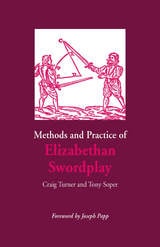
Methods and Practice of Elizabethan Swordplay
Craig Turner and Tony Soper. Foreword by Joseph Papp
Southern Illinois University Press, 1990
Featuring period drawings and prints of swordplay, this book examines and compares three Elizabethan fencing manuals written in English before 1600: Giacomo Di Grassi’s His True Arte of Defense (1594), Vincentio Saviolo’s His Practice in Two Bookes (1595), and George Silver’s Paradoxes of Defence and Bref Instructions upon My Paradoxes of Defence (1599).
More than a technical manual on swordplay, this book explores the influence of a new form of violence introduced into Elizabethan culture by the invention of the rapier. The authors examine the rapier’s influence on the various social classes, the clash between the traditional English fencing masters and those embracing the new style, the growing concern with unregulated dueling, and the frequent references to rapier play in the works of Shakespeare and his contemporaries.
As producer Joseph Papp notes in his foreword, this is a book that "makes a difference in performance."
Meyerhold at Work
Edited by Paul Schmidt; translations by Paul Schmidt, Ilya Levin, and Vern McGee
University of Texas Press, 1980
“Not a mirror but a magnifying glass”—such, in the poet Mayakovsky’s words, was the theater of Vsevolod Meyerhold. The first to insist on the primacy of the director’s role, indeed the first to conceive of it as a role, this passionately dedicated Russian director tore down the fourth wall and forced the actors and audience together into one inescapable community of experience.
Yet Meyerhold recorded few of his theories in writing, and the intensity and brilliance of his work must be recaptured through the actors and artists who helped create the performances. Focusing on Meyerhold’s postrevolutionary career, Paul Schmidt has assembled in this book journals, letters, reminiscences, and, of special interest, actual rehearsal notes that build a fascinating, intimate picture of Meyerhold as a theorist and as a man.
Included are Meyerhold’s frantic notes to his teacher, friend, and bête noire Stanislavsky; detailed descriptions of how he trained his actors in “biomechanics”; and memories by such students as Eisenstein and such friends as Pasternak and Ehrenburg. One chapter deals with Meyerhold’s never-realized conception of Boris Godunov, while another describes his direction of Camille, which starred Zinaida Raikh, his wife, and which played its 725th and last performance on the day Stalin’s government liquidated Meyerhold’s theater. Paul Schmidt’s introduction and headnotes enhance our understanding of Meyerhold as a pioneer of modern theater.
Microdramas
Crucibles for Theater and TimeJohn H. Muse
University of Michigan Press, 2017
Subjecting short plays to extended scrutiny upends assumptions about brief or minimal art, and about theatrical experience. The book shows that short performances often demand greater attention from audiences than plays that unfold more predictably. Microdramas put pressure on preconceptions about which aspects of theater might be fundamental and about what might qualify as an event. In the process, they suggest answers to crucial questions about time, spectatorship, and significance.
Mimesis, Masochism, and Mime
The Politics of Theatricality in Contemporary French ThoughtTimothy Murray, Editor
University of Michigan Press, 1997

Mimetic Disillusion
Eugene O'Neill, Tennessee Williams, and U.S. Dramatic RealismAnne Fleche
University of Alabama Press, 1997
Reimagining American dramatic realism through the lenses of mimesis, theory, and theatrical innovation.
This volume focuses on two major writers of the 1930s and 1940s—Eugene O'Neill and Tennessee Williams—one whose writing career was just ending and the other whose career was just beginning. In new readings of their major works from this period, Long Day's Journey into Night, The Iceman Cometh, The Glass Menagerie, and A Streetcar Named Desire, Fleche develops connections to the writings of Jacques Derrida, Paul de Man, and Michel Foucault, among others, and discusses poststructuralism in the light of modern writers such as Bertolt Brecht, Antonin Artaud, and Walter Benjamin. Fleche also extends this discussion to the work of two contemporary playwrights, Adrienne Kennedy and Tony Kushner. The aim of Mimetic Disillusion is not to reject "mimetic" and "realistic" readings but to explore the rich complexities of these two ideas and the fruit of their ongoing relevance to U.S. theatre.
Modern Czech Theatre
Reflector and Conscience of a NationJarka M. Burian
University of Iowa Press, 2000
The story of Czech theatre in the twentieth century involves generations of mesmerizing players and memorable productions. Beyond these artistic considerations, however, lies a larger story: a theatre that has resonated with the intense concerns of its audiences acquires a significance and a force beyond anything created by striking individual talents or random stage hits. Amid the variety of performances during the past hundred years, that basic and provocative reality has been repeatedly demonstrated, as Jarka Burian reveals in his extraordinary history of the dramatic world of Czech theatre.
Following a brief historical background, Burian provides a chronological series of perspectives and observations on the evolving nature of Czech theatre productions during this century in relation to their similarly evolving social and political contexts. Once Czechoslovak independence was achieved in 1918, a repeated interplay of theatre with political realities became the norm, sometimes stifling the creative urge but often producing even greater artistry. When playwright Václav Havel became president in 1990, this was but the latest and most celebrated example of the vital engagement between stage and society that has been a repeated condition of Czech theatre for the past two hundred years. In Jarka Burian's skillful hands, Modern Czech Theatre becomes an extremely important touchstone for understanding the history of modern theatre within western culture.
Modern Hamlets & Soliloquies
An Expanded EditionMary Z. Maher
University of Iowa Press, 2003
In Modern Hamlets and Their Soliloquies (Iowa, 1992), Mary Maher examined how modern actors have chosen to perform Hamlet’s soliloquies, and why they made the choices they made, within the context of their specific productions of the play.
Adding to original interviews with, among others, Derek Jacobi, David Warner, Kevin Kline, and Ben Kingsley, Modern Hamlets and Their Soliloquies: An Expanded Edition offers two new and insightful interviews, one with Kenneth Branagh, focusing on his 1997 film production of the play, and one with Simon Russell Beale, discussing his 2000-2001 run as Hamlet at the Royal National Theatre.
Modern Tragedy and the End of Worlds
Lillo, Leopardi, IbsenLeonardo F. Lisi
Northwestern University Press, 2026
The emergence of a distinctly modern form of tragedy is often associated with the introduction of middle-class characters and settings to high drama during the early eighteenth century. What has not been explored previously, however, is how such tragedy uses modernity’s social circumstances to stage metaphysical conditions that are destructive to human worlds. Leonardo F. Lisi pursues this argument by focusing on three central yet distinct figures in the history of modern thought and theater: eighteenth-century English dramatist George Lillo, early nineteenth-century Italian poet Giacomo Leopardi, and late nineteenth-century Norwegian iconoclast Henrik Ibsen. Modern Tragedy and the End of Worlds: Lillo, Leopardi, Ibsen shows that their works share a critical theme: the impossibility of sustaining human forms of meaning in the face of modern materialism, finance, and reason. Viewed in this light, Lisi argues that modern tragedy requires thinking together the incommensurable scales of human existence and the inhuman processes on which it rests—a task that continues to have profound relevance for imagining the end of worlds in the Anthropocene.
Modes of Play in Eighteenth-Century France
Fayçal Falaky
Bucknell University Press, 2022

Modes of Spectating
Edited by Alison Oddey and Christine White
Intellect Books, 2009
Modes of Spectating investigates the questions posed by new artistic and technological mediums on the viewer experience. These new visual tools influence not only how spectators view, but also how what they view determines what artists create. Alison Oddey and Christine White analyze how gaming and televisual media and entertainment are used by young people, and the resulting psychological challenges of understanding how viewers navigate these virtual worlds and surroundings. This multidisciplinary approach brings together ideas and examples from gaming art, photography, sculpture, and performance; it will be a valuable text for scholars of both media and art.
Molière, the French Revolution, and the Theatrical Afterlife
Leon, Mechele
University of Iowa Press, 2009
Leon begins by analyzing the performance of Molière’s plays during the Revolution, showing how his privileged position as royal servant was disrupted by the practical conditions of the revolutionary theatre. Next she explores Molière’s relationship to Louis XIV, Tartuffe, and the social function of his comedy, using Rousseau’s famous critique of Molière as well as appropriations of George Dandin in revolutionary iconography to discuss how Moliérean laughter was retooled to serve republican interests. After examining the profusion of plays dealing with his life in the latter years of the Revolution, she looks at the exhumation of his remains and their reentombment as the tangible manifestation of his passage from Ancien Régime favorite to new national icon.
The great Molière is appreciated by theatre artists and audiences worldwide, but for the French people it is no exaggeration to say that the Father of French Comedy is part of their national soul. By showing how he was represented, reborn, and reburied in the new France—how the revolutionaries asserted his relevance for their tumultuous time in ways that were audacious, irreverent, imaginative, and extreme—Leon clarifies the important role of theatrical figures in preserving and portraying a nation’s history.
Monkey Business Theatre
By Robert M. Laughlin and Sna Jtz'ibajom
University of Texas Press, 2008
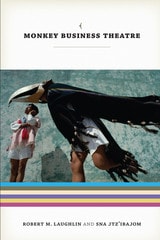
In 1983, a group of citizens in San Cristóbal de las Casas, Chiapas, formed Sna Jtz'ibajom, the Tzotzil-Tzeltal Maya writers' cooperative. In the two decades since, this group has evolved from writing and publishing bilingual booklets to writing and performing plays that have earned them national and international renown.
Anthropologist Robert M. Laughlin has been a part of the group since its beginnings, and he offers a unique perspective on its development as a Mayan cultural force. The Monkey Business Theatre, or Teatro Lo'il Maxil, as this branch of Sna Jtz'ibajom calls itself, has presented plays in virtually every corner of the state of Chiapas, as well as in Mexico City, Guatemala, Honduras, Canada, and in many museums and universities in the United States. It has presented to the world, for the first time in drama, a view of the culture of the Mayas of Chiapas.
In this work, Laughlin presents a translation of twelve of the plays created by Sna Jtz'ibajom, along with an introduction for each. Half of the plays are based on myths and half on the social, political, and economic problems that have confronted—and continue to confront—the Mayas of Chiapas.
Monuments Askew
An Elliptical History of the Factory of the Eccentric ActorMaria Corrigan
Rutgers University Press, 2025
More Art in the Public Eye
Micaela Martegani, Jeff Kaspar, and Emma Drew, editors
Duke University Press, 2019
Contributors. Rebecca Amato, Michael Birchall, Ofri Cnaani, Michelle Coffey, Jennifer Dalton, Emma Drew, Pablo Helguera, Mary Jane Jacob, Jessica Lynne, Jeff Kasper, Kimsooja, Micaela Martegani, Andrea Mastrovito, Tony Oursler, William Powhida, Ernesto Pujol, Michael Rakowitz, Kirk Savage, Dread Scott, Andres Serrano, Gregory Sholette, Xaviera Simmons, Krzysztof Wodiczko
Mormons in Paris
Polygamy on the French Stage, 1874-1892Corry Cropper
Bucknell University Press, 2021
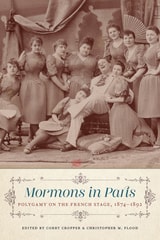
In the late nineteenth century, numerous French plays, novels, cartoons, and works of art focused on Mormons. Unlike American authors who portrayed Mormons as malevolent “others,” however, French dramatists used Mormonism to point out hypocrisy in their own culture. Aren't Mormon women, because of their numbers in a household, more liberated than French women who can't divorce? What is polygamy but another name for multiple mistresses? This new critical edition presents translations of four musical comedies staged or published in France in the late 1800s: Mormons in Paris (1874), Berthelier Meets the Mormons (1875), Japheth’s Twelve Wives (1890), and Stephana’s Jewel (1892). Each is accompanied by a short contextualizing introduction with details about the music, playwrights, and staging. Humorous and largely unknown, these plays use Mormonism to explore and mock changing French mentalities during the Third Republic, lampooning shifting attitudes and evolving laws about marriage, divorce, and gender roles.
Published by Bucknell University Press. Distributed worldwide by Rutgers University Press.
Mormons, Musical Theater, and Belonging in America
Jake Johnson
University of Illinois Press, 2019
Movable Londons
Performance and the Modern CityJulia H Fawcett
University of Michigan Press, 2025
Moving Islands
Contemporary Performance and the Global PacificDiana Looser
University of Michigan Press, 2021
Moving Islands reveals the international and intercultural connections within contemporary performance from Oceania, focusing on theater, performance art, art installations, dance, film, and activist performance in sites throughout Oceania and in Australia, Asia, North America, and Europe. Diana Looser’s study moves beyond a predictable country-specific or island-specific focus to encompass an entire region defined by diversity and global exchange, showing how performance operates to frame social, artistic, and political relationships across widely dispersed locations. The study also demonstrates how Oceanian performance contributes to international debates about diaspora, indigeneity, urbanization, and environmental sustainability. The author considers the region’s unique cultural and geographic dynamics as she brings forth the paradigm of transpasifika to suggest a way of understanding these intercultural exchanges and connections, with the aim to “rework the cartographic and disciplinary priorities of transpacific studies to privilege the activities of Islander peoples.”
Moving Performances
Divas, Iconicity, and Remembering the Modern StageScheper, Jeanne
Rutgers University Press, 2017
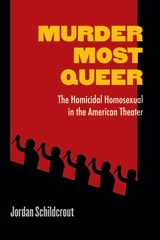
Murder Most Queer
The Homicidal Homosexual in the American TheaterJordan Schildcrout
University of Michigan Press, 2014

Murder Most Queer
The Homicidal Homosexual in the American TheaterJordan Schildcrout
University of Michigan Press, 2014
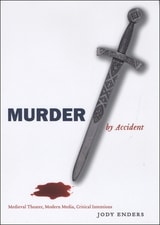
Murder by Accident
Medieval Theater, Modern Media, Critical IntentionsJody Enders
University of Chicago Press, 2009
Over fifty years ago, it became unfashionable—even forbidden—for students of literature to talk about an author’s intentions for a given work. In Murder by Accident, Jody Enders boldly resurrects the long-disgraced concept of intentionality, especially as it relates to the theater.
Drawing on four fascinating medieval events in which a theatrical performance precipitated deadly consequences, Enders contends that the marginalization of intention in critical discourse is a mirror for the marginalization—and misunderstanding—of theater. Murder by Accident revisits the legal, moral, ethical, and aesthetic limits of the living arts of the past, pairing them with examples from the present, whether they be reality television, snuff films, the “accidental” live broadcast of a suicide on a Los Angeles freeway, or an actor who jokingly fired a stage revolver at his temple, causing his eventual death. This book will force scholars and students to rethink their assumptions about theory, intention, and performance, both past and present.
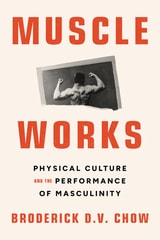
Muscle Works
Physical Culture and the Performance of MasculinityBroderick D. V. Chow
Northwestern University Press, 2024
This book recounts the story of fitness culture from its beginnings as spectacles of strongmen, weightlifters, acrobats, and wrestlers to its legitimization in the twentieth-century in the form of competitive sports and health and wellness practices. Broderick D. V. Chow shows how these modes of display contribute to the construction and deconstruction of definitions of masculinity.
Attending to its theatrical origins, Chow argues for a more nuanced understanding of fitness culture, one informed by the legacies of self-described Strongest Man in the World Eugen Sandow and the history of fakery in strongman performance; the philosophy of weightlifter George Hackenschmidt and the performances of martial artist Bruce Lee; and the intersections of fatigue, resistance training, and whiteness. Muscle Works: Physical Culture and the Performance of Masculinity moves beyond the gym and across the archive, working out techniques, poses, and performances to consider how, as gendered subjects, we inhabit and make worlds through our bodies.

Music and Theater in Minnesota History
John K. Sherman
University of Minnesota Press, 1958
Music and Theater in Minnesota History was first published in 1958. Minnesota Archive Editions uses digital technology to make long-unavailable books once again accessible, and are published unaltered from the original University of Minnesota Press editions.
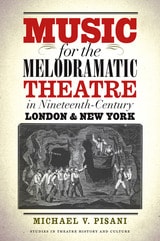
Music for the Melodramatic Theatre in Nineteenth-Century London and New York
Michael V. Pisani
University of Iowa Press, 2014
Mining old manuscripts and newspapers, he finds that starting in the 1790s, theatrical managers in Britain and the United States began to rely on music to play an interpretive role in melodramatic productions. During the nineteenth century, instrumental music—in addition to song—was a common feature in the production of stage plays.
The music played by instrumental ensembles not only enlivened performances but also served other important functions. Many actors and actresses found that accompanimental music helped them sustain the emotional pitch of a monologue or dialogue sequence. Music also helped audiences to identify the motivations of characters. Playwrights used music to hold together the hybrid elements of melodrama, heighten the build toward sensation, and dignify the tragic pathos of villains and other characters. Music also aided manager-directors by providing cues for lighting and other stage effects. Moreover, in a century of seismic social and economic changes, music could provide a moral compass in an uncertain moral universe.
Featuring dozens of musical examples and images of the old theatres, Music for the Melodramatic Theatre charts the progress of the genre from its earliest use in the eighteenth century to the elaborate stage productions of the very early twentieth century.
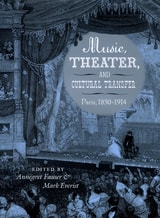
Music, Theater, and Cultural Transfer
Paris, 1830-1914Edited by Annegret Fauser and Mark Everist
University of Chicago Press, 2009
Opera and musical theater dominated French culture in the 1800s, and the influential stage music that emerged from this period helped make Paris, as Walter Benjamin put it, the “capital of the nineteenth century.” The fullest account available of this artistic ferment and its international impact, Music, Theater, and Cultural Transfer explores the diverse institutions that shaped Parisian music and extended its influence across Europe, the Americas, and Australia.
The contributors to this volume, who work in fields ranging from literature to theater to musicology, focus on the city’s musical theater scene as a whole rather than on individual theaters or repertories. Their broad range enables their collective examination of the ways in which all aspects of performance and reception were affected by the transfer of works, performers, and management models from one environment to another. By focusing on this interplay between institutions and individuals, the authors illuminate the tension between institutional conventions and artistic creation during the heady period when Parisian stage music reached its zenith.
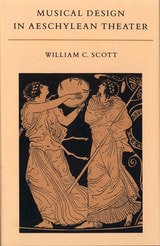
Musical Design in Aeschylean Theater
William C. Scott
Dartmouth College Press, 2000
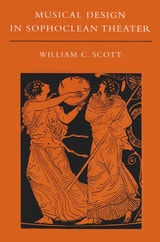
Musical Design in Sophoclean Theater
William C. Scott
Dartmouth College Press, 2000
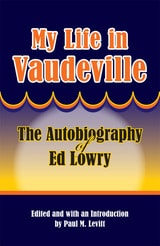
My Life in Vaudeville
The Autobiography of Ed LowryEd Lowry, Edited by Paul M. Levitt
Southern Illinois University Press, 2011
Normal0falsefalsefalseEN-USX-NONEX-NONE
An entertaining record of a life and a time
Ed Lowry joined the vaudeville circuit in 1910 at the age of fourteen. He never achieved stardom equal to the likes of Fred Allen, Jack Benny, George Burns, Buster Keaton, or Eddie Cantor, and he never considered himself an “artiste.” Instead, he saw himself as a hoofer and comic simply trying to make a living on the vaude scene. My Life in Vaudeville recounts Lowry’s long career in entertainment from the viewpoint of a foot soldier with a big dream.
Lowry’s story begins in the heyday of vaudeville in the early twentieth century and follows its gradual decline. Unlike many of his associates, he recognized that movies and other forms of entertainment were the future, and thus branched out into other venues. He took gigs in radio in Philadelphia, Newark, New York, and Los Angeles; explored revues, cabarets, burlesque, and film; and organized USO road shows. With wit and perception, he reveals his stage roots as an entertainer playing to his audience, and editor Paul M. Levitt’s introduction beautifully sets the stage for Lowry’s gags-to-riches tale, providing much-needed historical perspective.
My Life in Vaudeville is an unpretentious record of a time when thousands of young people went into show business to escape the boredom of daily life, and Lowry’s story is a view of vaudeville not often encountered. Lowry does much more than recall the daily life of a working actor, musician, and comedian. His story brings vaudeville to life and places it within the larger narratives of popular culture and popular entertainment of the twentieth century.