Results by title
104 books match the query 'Times' and 7 start with m
Marlborough
His Life and Times, Book OneWinston S. Churchill
University of Chicago Press, 2002
John Churchill, the Duke of Marlborough (1644-1722), was one of the greatest military commanders and statesmen in the history of England. Victorious in the Battles of Blenheim (1704), Ramillies (1706), and countless other campaigns, Marlborough, whose political intrigues were almost as legendary as his military skill, never fought a battle he didn't win. Although he helped James II crush the rebellion of the Duke of Monmouth, Marlborough later supported William of Orange against James II in the Glorious Revolution of 1688 and brilliantly managed England's diplomatic triumphs during the War of the Spanish Succession. Marlborough also bequeathed the world another great British military strategist and diplomat—his descendant, Winston S. Churchill, who wrote this book to redeem Marlborough's reputation from Macaulay's smears.
One million words long and ten years in the making, Churchill's Marlborough stands as both a literary and historical masterpiece, giving us unique insights into the Churchill of World War II, for just as Churchill's literary skill helps us understand the complexities of Marlborough's life, so too did his writing of Marlborough help Churchill master the arts of military strategy and diplomacy. This two-volume edition includes the entire text and almost all the original maps.
Marlborough
His Life and Times, Book TwoWinston S. Churchill
University of Chicago Press, 2002
John Churchill, the Duke of Marlborough (1644-1722), was one of the greatest military commanders and statesmen in the history of England. Victorious in the Battles of Blenheim (1704), Ramillies (1706), and countless other campaigns, Marlborough, whose political intrigues were almost as legendary as his military skill, never fought a battle he didn't win. Although he helped James II crush the rebellion of the Duke of Monmouth, Marlborough later supported William of Orange against James II in the Glorious Revolution of 1688 and brilliantly managed England's diplomatic triumphs during the War of the Spanish Succession. Marlborough also bequeathed the world another great British military strategist and diplomat—his descendant, Winston S. Churchill, who wrote this book to redeem Marlborough's reputation from Macaulay's smears.
One million words long and ten years in the making, Churchill's Marlborough stands as both a literary and historical masterpiece, giving us unique insights into the Churchill of World War II, for just as Churchill's literary skill helps us understand the complexities of Marlborough's life, so too did his writing of Marlborough help Churchill master the arts of military strategy and diplomacy. This two-volume edition includes the entire text and almost all the original maps.

Max Brand
Western Giant: The Life and Times of Frederick Schiller FaustWilliam F. Nolan
University of Wisconsin Press, 1985
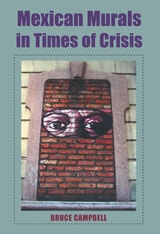
Mexican Murals in Times of Crisis
Bruce Campbell
University of Arizona Press, 2003
This book traces the ongoing critical contributions of mural arts to public life in Mexico to show how postrevolutionary murals have been overshadowed both by the Mexican School and by the exclusionary nature of official public arts. By documenting a range of mural practices—from fixed-site murals to mantas (banner murals) to graffiti—Bruce Campbell evaluates the ways in which the practical and aesthetic components of revolutionary Mexican muralism have been appropriated and redeployed within the context of Mexico's ongoing economic and political crisis. Four dozen photographs illustrate the text. Blending ethnography, political science, and sociology with art history, Campbell traces the emergence of modern Mexican mural art as a composite of aesthetic, discursive, and performative elements through which collective interests and identities are shaped.
He focuses on mural activists engaged combatively with the state—in barrios, unions, and street protests—to show that mural arts that are neither connected to the elite art world nor supported by the government have made significant contributions to Mexican culture. Campbell brings all previous studies of Mexican muralism up to date by revealing the wealth of art that has flourished in the shadows of official recognition. His work shows that interpretations by art historians preoccupied with contemporary high art have been incomplete—and that a rich mural tradition still survives, and thrives, in Mexico.
Mo
The Life and Times of Morris K. UdallDonald W. Carson and James W. Johnson
University of Arizona Press, 2001
Mo provides the most complete record of Udall's thirty-year congressional career ever published. It reveals how he challenged the House seniority system and turned the House Interior Committee into a powerful panel that did as much to protect the environment as any organization in the twentieth century. It shows Udall to have been a consensus builder for environmental issues who paved the way for the Alaska Lands Act of 1980, helped set aside 2.4 million acres of wilderness in Arizona, and fought for the Central Arizona Project, one of the most ambitious water projects in U.S. history. Carson and Johnson record Udall's early opposition to the Vietnam War at a time when that conflict was largely perceived as a just cause, as well as his early advocacy of campaign finance reform. They also provide a behind-the-scenes account of his run for the presidency—the first House member to seek the office in nearly a century—which gained him an intensely loyal national following.
Mo explores the paradoxes that beset Udall: He was a man able to accomplish things politically because people genuinely liked and respected him, yet he was a loner and workaholic whose focus on politics overshadowed his personal life. Carson and Johnson devote a chapter to the famous Udall sense of humor. They also look sensitively at his role as a husband and father and at his proud and stubborn bout with Parkinson's disease. Mo Udall will long be remembered for his contributions to environmental legislation, for his unflagging efforts in behalf of Arizona, and for the gentle humor with which he conducted his life. This book secures his legacy.

Mormonism's Last Colonizer
The Life and Times of William H. SmartWilliam B. Smart
Utah State University Press, 2008
Winner of the Evans Handcart Prize 2009
Winner of the Mormon History Assn Best Biography Award 2009
By the early twentieth century, the era of organized Mormon colonization of the West from a base in Salt Lake City was all but over. One significant region of Utah had not been colonized because it remained in Native American hands--the Uinta Basin, site of a reservation for the Northern Utes. When the federal government decided to open the reservation to white settlement, William H. Smart--a nineteenth-century Mormon traditionalist living in the twentieth century, a polygamist in an era when it was banned, a fervently moral stake president who as a youth had struggled mightily with his own sense of sinfulness, and an entrepreneurial businessman with theocratic, communal instincts--set out to ensure that the Uinta Basin also would be part of the Mormon kingdom.
Included with the biography is a searchable CD containing William H. Smart's extensive journals, a monumental personal record of Mormondom and its transitional period from nineteenth-century cultural isolation into twentieth-century national integration.
Movements in Times of Democratic Transition
Bert Klandermans
Temple University Press, 2015
The editors and contributors to Movements in Times of Democratic Transition examine in comparative detail how social movements act within the context of the democratic transitions they have been fighting for, and how they are affected by the changes they helped bring about. Offering insights into the nature of how social movements decline, radicalize, revitalize, or spark new cycles of activism, Movements in Times of Democratic Transition provides a comprehensive analysis of these key questions of mobilization research.
Contributors include: Paul Almeida, Christopher J. Colvin, Stephen Ellis, Grzegorz Ekiert, Grzegorz Forys, Krzysztof Gorlach, Camila Penna, Sebastián Pereyra, Steven Robbins, Ton Salman, Mate Szabo, Ineke van Kessel, Michal Wenzel, and the editors.