141 books match the query 'Turkey' and 10 start with m
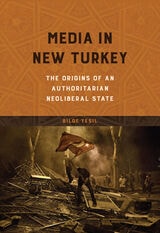
cover of Media in New Turkey: The Origins of an Authoritarian Neoliberal State

Media in New Turkey

The Origins of an Authoritarian Neoliberal State

Bilge Yesil

University of Illinois Press, 2016

In Media in New Turkey, Bilge Yesil unlocks the complexities surrounding and penetrating today's Turkish media. Yesil focuses on a convergence of global and domestic forces that range from the 1980 military coup to globalization's inroads and the recent resurgence of political Islam. Her analysis foregrounds how these and other forces become intertwined, and she uses Turkey's media to unpack the ever-more-complex relationships.
 
Yesil confronts essential questions regarding: the role of the state and military in building the structures that shaped Turkey's media system; media adaptations to ever-shifting contours of political and economic power; how the far-flung economic interests of media conglomerates leave them vulnerable to state pressure; and the ways Turkey's politicized judiciary criminalizes certain speech.
 
Drawing on local knowledge and a wealth of Turkish sources, Yesil provides an engrossing look at the fault lines carved by authoritarianism, tradition, neoliberal reform, and globalization within Turkey's increasingly far-reaching media.
 
[more]
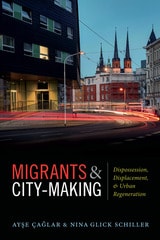
cover of Migrants and City-Making: Dispossession, Displacement, and Urban Regeneration

Migrants and City-Making

Dispossession, Displacement, and Urban Regeneration

Ayse Caglar and Nina Glick Schiller

Duke University Press, 2018
In Migrants and City-Making Ayşe Çağlar and Nina Glick Schiller trace the participation of migrants in the unequal networks of power that connect their lives to regional, national, and global institutions. Grounding their work in comparative ethnographies of three cities struggling to regain their former standing—Mardin, Turkey; Manchester, New Hampshire; and Halle/Saale, Germany—Çağlar and Glick Schiller challenge common assumptions that migrants exist on society’s periphery, threaten social cohesion, and require integration. Instead Çağlar and Glick Schiller explore their multifaceted role as city-makers, including their relationships to municipal officials, urban developers, political leaders, business owners, community organizers, and social justice movements. In each city Çağlar and Glick Schiller met with migrants from around the world; attended cultural events, meetings, and religious services; and patronized migrant-owned businesses, allowing them to gain insights into the ways in which migrants build social relationships with non-migrants and participate in urban restoration and development. In exploring the changing historical contingencies within which migrants live and work, Çağlar and Glick Schiller highlight how city-making invariably involves engaging with the far-reaching forces that dispossess people of their land, jobs, resources, neighborhoods, and hope. 
[more]
cover of Minority Memory, Identity, and Reconciliation: The Turkish Muslim Minority of Greece and the Greek Orthodox Minority of Türkiye

Minority Memory, Identity, and Reconciliation

The Turkish Muslim Minority of Greece and the Greek Orthodox Minority of Türkiye

Gül M. Gür

University of Michigan Press, 2025

Migration and minority rights are increasingly at the forefront of global discourse. Minority Memory, Identity, and Reconciliation explores the lives of two often overlooked minority communities: the Greek Orthodox minority in Istanbul, Türkiye, and the Turkish Muslim minority in Western Thrace, Greece. As empires dissolved, the leaders and political elites of new, smaller nations that emerged embarked on population exchanges to increase the ethnic and religious homogeneity of their nation-states. Although these two minority communities differ in religious, ethnic, and socioeconomic terms, they both offer unique perspectives on what happens to people who live on what is perceived as the wrong side of an arbitrarily drawn border. 

Drawing from the personal stories of members of these two minority communities regarding their struggle with displacement, discrimination, and cultural assimilation, as well as comprehensive historical analysis, this book examines how historical traumas, national policies, and sociopolitical dynamics have influenced contemporary minority memory and identity formation. By incorporating interviews with community leaders, civil society representatives, and state officials, this book offers a rich, multifaceted perspective on the processes of memory and identity formation that underscores the broader implications of these processes for international relations in the region and minority rights. Gül M. Gür pulls together theories of nationalism, collective memory, and narrative practice to highlight the unique process of minority memory work and its role in sustaining minority identity and their advocacy efforts.
[more]
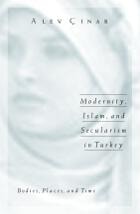
cover of Modernity, Islam, and Secularism in Turkey: Bodies, Places, and Time

Modernity, Islam, and Secularism in Turkey

Bodies, Places, and Time

Alev Cinar

University of Minnesota Press, 2005

What would an Islamic modernism look like? The question is a pressing one, as cultures rebel against modernity in its almost exclusively European forms. Alev Cinar's groundbreaking examination of contemporary Turkey, which stands at the threshold of East and West, of religious and secular nationalism, explores modernity through daily practices and the social construction of identity and political agency in relation to nationalism, secularism, and Islam. Focusing on developments of the 1990s, Modernity, Islam, and Secularism in Turkey argues that Islamist ideology generated an alternative modernization project, which applied the same strategies and techniques as that of the modernizing state to produce and institutionalize its own version of an equally thorough nationalist program. Using local details and debates - including a fascinating discussion of veiling as symbolic of both the "liberation" of Western appearance and the Islamists' struggle to rescue their nation's culture - Cinar reveals modernity as a transformative intervention in bodies, places, and times.Bringing a much-needed critical theory approach to bear on the politics of an Islamic nation, Cinar's work introduces a new way of conceptualizing modernity based on the analysis of a non-Western context.
[more]
cover of Mountain and Plain: From the Lycian Coast to the Phrygian Plateau in the Late Roman and Early Byzantine Period

Mountain and Plain

From the Lycian Coast to the Phrygian Plateau in the Late Roman and Early Byzantine Period

Martin Harrison

University of Michigan Press, 2001

Martin Harrison traveled widely in Asia Minor from his youth onward, and he was always fascinated by the questions of how and why the great and elegant cities of classical antiquity declined, and what happened to the descendants of the people who lived in them. Over nearly forty years he returned again and again to remote Lycia, where the ruins of monasteries and churches, villages, hamlets, and towns remained largely inaccessible and unexplored. His interest eventually led him to undertake the excavation of the Phrygian city of Amorium, whose importance became greater as the classical cities declined. At its peak it was considered second only to Byzantium, until it fell to the Arab invasions.
The present study is the fruit of years of excavation and research by the author. The manuscript was largely sketched out when Martin Harrison unexpectedly passed away, and the volume has been finished and prepared for press by his long-time assistant Wendy Young, with further guidance from friends and colleagues with whom he had discussed the project.
The resulting volume explores Martin Harrison's belief that the coastal cities of Lycia declined after the fifth century C.E., and that smaller settlements (monasteries, villages, and towns) appeared in the mountains and further inland. In addition he considered that there was a demographic shift of masons and sculptors from the cities to serve these new settlements. This beautifully illustrated study provides convincing evidence from architecture, sculpture, and inscriptional sources to support this theory. It also contains a description of Amorium in Phrygia, as revealed in survey and excavation seasons from 1987 until the author's untimely death half a dozen years later. The volume includes a preface by Stephen Hill and an appendix by Michael Ballance and Charlotte Roueché on three special inscriptions from Ovacik.
The volume will be of interest to historians of the Near East and classical antiquity, to archaeologists, and to students of architectural history.
Martin Harrison was Professor of Archaeology, University of Oxford. Wendy Young was Research Assistant to the author until his death.
[more]
cover of Musical Ethics and Islam: The Art of Playing the Ney

Musical Ethics and Islam

The Art of Playing the Ney

Banu Senay

University of Illinois Press, 2020

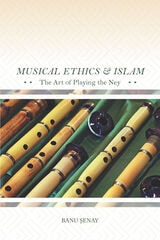
After the establishment of the Turkish Republic, Turkey's secularized society disdained the ney, the Sufi reed flute long associated with Islam. The instrument's remarkable revival in today's cities has inspired the creation of teaching and learning sites that range from private ney studios to cultural and religious associations and from university clubs to mosque organizations.

Banu Şenay documents the years-long training required to become a neyzen—a player of the ney. The process holds a transformative power that invites students to create a new way of living that involves alternative relationships with the self and others, changing perceptions of the city, and a dedication to craftsmanship. Şenay visits reed harvesters and travels from studios to workshops to explore the practical processes of teaching and learning. She also becomes an apprentice ney-player herself, exploring the desire for spirituality that encourages apprentices and masters alike to pursue ney music and its scaffolding of Islamic ethics and belief.
[more]
cover of Muslim Fashion: Contemporary Style Cultures

Muslim Fashion

Contemporary Style Cultures

Reina Lewis

Duke University Press, 2015
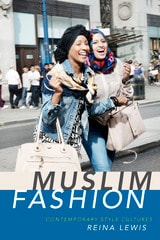
In the shops of London's Oxford Street, girls wear patterned scarves over their hair as they cluster around makeup counters. Alongside them, hip twenty-somethings style their head-wraps in high black topknots to match their black boot-cut trousers. Participating in the world of popular mainstream fashion—often thought to be the domain of the West—these young Muslim women are part of an emergent cross-faith transnational youth subculture of modest fashion. In treating hijab and other forms of modest clothing as fashion, Reina Lewis counters the overuse of images of veiled women as "evidence" in the prevalent suggestion that Muslims and Islam are incompatible with Western modernity. Muslim Fashion contextualizes modest wardrobe styling within Islamic and global consumer cultures, interviewing key players including designers, bloggers, shoppers, store clerks, and shop owners. Focusing on Britain, North America, and Turkey, Lewis provides insights into the ways young Muslim women use multiple fashion systems to negotiate religion, identity, and ethnicity.
 
[more]
cover of Muslim Land, Christian Labor: Transforming Ottoman Imperial Subjects into Bulgarian National Citizens, c. 1878-1939

Muslim Land, Christian Labor

Transforming Ottoman Imperial Subjects into Bulgarian National Citizens, c. 1878-1939

Anna M. Mirkova

Central European University Press, 2017
Focusing upon a region in Southern Bulgaria, a region that has been the crossroads between Europe and Asia for many centuries, this book describes how former Ottoman Empire Muslims were transformed into citizens of Balkan nation-states. This is a region marked by shifting borders, competing Turkish and Bulgarian sovereignties, rival nationalisms, and migration. Problems such as these were ultimately responsible for the disintegration of the dynastic empires into nation-states. Land that had traditionally belonged to Muslims—individually or communally—became a symbolic and material resource for Bulgarian state building and was the terrain upon which rival Bulgarian and Turkish nationalisms developed in the wake of the dissolution of the late Ottoman Empire and the birth of early republican Turkey and the introduction of capitalism. By the outbreak of World War II, Turkish Muslims had become a polarized national minority. Their conflicting efforts to adapt to post-Ottoman Bulgaria brought attention to the increasingly limited availability of citizenship rights, not only to Turkish Muslims, but to Bulgarian Christians as well.
[more]
cover of Muslim Reformers in Iran and Turkey: The Paradox of Moderation

Muslim Reformers in Iran and Turkey

The Paradox of Moderation

By Güneş Murat Tezcür

University of Texas Press, 2010

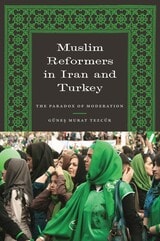
Moderation theory describes the process through which radical political actors develop commitments to electoral competition, political pluralism, human rights, and rule of law and come to prefer negotiation, reconciliation, and electoral politics over provocation, confrontation, and contentious action. Revisiting this theory through an examination of two of the most prominent moderate Islamic political forces in recent history, Muslim Reformers in Iran and Turkey analyzes the gains made and methods implemented by the Reform Front in the Islamic Republic of Iran and the Justice and Development Party in Turkey.

Both of these groups represent Muslim reformers who came into continual conflict with unelected adversaries who attempted to block their reformist agendas. Based on extensive field research in both locales, Muslim Reformers in Iran and Turkey argues that behavioral moderation as practiced by these groups may actually inhibit democratic progress. Political scientist Güneş Murat Tezcür observes that the ability to implement conciliatory tactics, organize electoral parties, and make political compromises impeded democracy when pursued by the Reform Front and the Justice and Development Party. Challenging conventional wisdom, Tezcür's findings have broad implications for the dynamics of democratic progress.

[more]
cover of My Life's Travels and Adventures: An Eighteenth-Century Oculist in the Ottoman Empire and the European Hinterland

My Life's Travels and Adventures

An Eighteenth-Century Oculist in the Ottoman Empire and the European Hinterland

Regina Salomea Pilsztynowa

Iter Press, 2020

In her never-finished My Life’s Travels and Adventures, the eighteenth-century Polish doctor Regina Salomea Pilsztynowa plays a myriad of roles, including child bride, wife, mother, lover, adventuress, slave trader, writer, and home-taught physician. She successfully carved out a viable niche for herself, navigating the multicultural, multiethnic, and varied religious environment of Europe’s eastern periphery. Despite limited expectations for female professionals, she became a highly sought after and well-respected practitioner of the medical arts and rose to the position of court physician to Turkish pashas and Hungarian princes, and even to Sultan Mustafa III. My Life’s Travels and Adventures—part memoir, part autobiography, and part travelogue—provides a view into eighteenth-century social, professional, and gender interactions and weaves a rich narrative replete with vignettes of love, travel, and popular superstitions important to our historical, ethnographic, and religious understanding of the era.

This edition brings the entirety of this personal and idiosyncratic memoir to English for the first time.
 
[more]