Results by title
91 books match the query 'West Virginia' and 6 start with m

Maryat Lee's EcoTheater
A Theater for the Twenty-first CenturyWILLIAM W. FRENCH
West Virginia University Press, 1998
Maryat Lee : a life in the theater, Dope!, and salt -- EcoTheater : the one thing willed -- EcoTheater's significance to the twenty-first century -- The EcoTheater process -- Sample EcoTheater scenes -- Some sayings and writings of Maryat Lee -- Maryat Lee : personal reminiscences -- Chronology
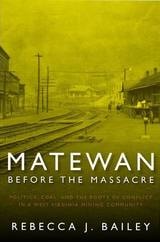
Matewan Before the Massacre
Politics, Coal, and the Roots of Conflict in a West Virginia Mining CommunityRebecca J. Bailey
West Virginia University Press, 2008
On May 19, 1920, gunshots rang through the streets of Matewan, West Virginia, in an event soon known as the “Matewan Massacre.” Most historians of West Virginia and Appalachia see this event as the beginning of a long series of tribulations known as the second Mine Wars. But was it instead the culmination of an even longer series of proceedings that unfolded in Mingo County, dating back at least to the Civil War? Matewan Before the Massacre provides the first comprehensive history of the area, beginning in the late eighteenth century continuing up to the Massacre. It covers the relevant economic history, including the development of the coal mine industry and the struggles over land ownership; labor history, including early efforts of unionization; transportation history, including the role of the N&W Railroad; political history, including the role of political factions in the county’s two major communities—Matewan and Williamson; and the impact of the state’s governors and legislatures on Mingo County.
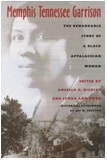
Memphis Tennessee Garrison
The Remarkable Story of a Black Appalachian WomanAncella R. Bickley
Ohio University Press, 2001
As a black Appalachian woman, Memphis Tennessee Garrison belonged to a demographic category triply ignored by historians.
The daughter of former slaves, she moved to McDowell County, West Virginia, at an early age and died at ninety-eight in Huntington. The coalfields of McDowell County were among the richest seams in the nation. As Garrison makes clear, the backbone of the early mining work force—those who laid the railroad tracks, manned the coke ovens, and dug the coal—were black miners. These miners and their families created communities that became the centers of the struggle for unions, better education, and expanded civil rights. Memphis Tennessee Garrison, an innovative teacher, administrative worker at U.S. Steel, and vice president of the National Board of the NAACP at the height of the civil rights struggle (1963-66), was involved with all of these struggles.
In many ways, this oral history, based on interview transcripts, is the untold and multidimensional story of African American life in West Virginia, as seen through the eyes of a remarkable woman. She portrays a courageous people who organize to improve their working conditions, send their children to school and then to college, own land, and support a wide range of cultural and political activities.
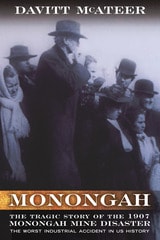
Monongah
The Tragic Story of the 1907 Monongah Mine DisasterDAVITT MCATEER
West Virginia University Press, 2014
New paperback edition with an introduction by Robert B. Reich
Monongah: The Tragic Story of the 1907 Monongah Mine Disaster documents the events and conditions that led to the worst industrial accident in the history of the United States. This mining accident claimed hundreds of lives on the morning of December 6, 1907 and McAteer, an expert on mine and workplace health and safety, delves deeply into the economic forces and social-political landscape of the mining communities of north central West Virginia to expose the truth behind this tragedy. After nearly thirty years of exhaustive research, McAteer determines that close to 500 men and boys—many of them immigrants—lost their lives that day, leaving hundreds of women widowed and more than one thousand children orphaned.
The tragedy at Monongah led to a greater awareness of industrial working conditions, and ultimately to the Federal Coal Mine Health and Safety Act of 1969, which McAteer helped to enact. This new paperback edition includes an introduction by Robert B. Reich, Chancellor’s Professor of Public Policy at the University of California at Berkeley and Secretary of Labor during the Clinton administration.
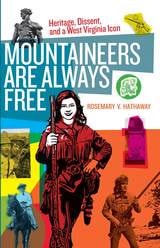
Mountaineers Are Always Free
Heritage, Dissent, and a West Virginia IconRosemary V. Hathaway
West Virginia University Press, 2020
The West Virginia University Mountaineer is not just a mascot: it is a symbol of West Virginia history and identity embraced throughout the state. In this deeply informed but accessible study, folklorist Rosemary Hathaway explores the figure’s early history as a backwoods trickster, its deployment in emerging mass media, and finally its long and sometimes conflicted career—beginning officially in 1937—as the symbol of West Virginia University.
Alternately a rabble-rouser and a romantic embodiment of the state’s history, the Mountaineer has been subject to ongoing reinterpretation while consistently conveying the value of independence. Hathaway’s account draws on multiple sources, including archival research, personal history, and interviews with former students who have portrayed the mascot, to explore the complex forces and tensions animating the Mountaineer figure. Often serving as a focus for white, masculinist, and Appalachian identities in particular, the Mountaineer that emerges from this study is something distinct from the hillbilly. Frontiersman and rebel both, the Mountaineer figure traditionally and energetically resists attempts (even those by the university) to tame or contain it.

Mountains of Music
West Virginia Traditional Music from GoldensealJohn Lilly
University of Illinois Press, 1999
The most complete survey to date of the vibrant strands of this music and its colorful practitioners, Mountains of Music delineates a unique culture where music and music making are part of an ancient and treasured heritage. The sly humor, strong faith, clear regional identity, and musical convictions of these performers draw the reader into families and communities bound by music from one generation to another. For devotees as well as newcomers to this infectiously joyous and heartfelt music, Mountains of Music captures the strength of tradition and the spontaneous power of living artistry.