Results by title
8113 books match the query 'Literary Criticism' and 516 start with m

Moorings and Metaphors
Figures of Culture and Gender in Black Women's LiteratureKarla F. Holloway
Rutgers University Press, 1991
Proceeding from a consideration of the imaginative textual languages of contemporary African-American and West African writers, Holloway asserts the intertextuality of black women's literature across two continents. She argues the subtext of culture as the source of metaphor and language, analyzes narrative structures and linguistic processes, and develops a combined theoretical/critical apparatus and vocabulary for interpreting these writers' works. The cultural sources and spiritual considerations that inhere in these textual languages are discussed within the framework Holloway employs of patterns of revision, (re)membrance, and recursion--all of which are vehicles for expressive modes inscribed at the narrative level. Her critical reading of contemporary black women's writing in the United States and West Africa is unique, radical, and sure to be controversial.
Moorings
Portuguese Expansion and the Writing of AfricaJosiah Blackmore
University of Minnesota Press, 2008
How Africa was perceived in the early modern imaginary
In this first book to study Portuguese texts about Africa, Moorings brings an important but little-known body of European writings to bear on contemporary colonial thought. Images of Africa as monstrous, dangerous, and lush were created in early Portuguese imperial writings and dominated its representation in European literature. Moorings establishes these key works in their proper place: foundational to Western imperial discourse.
Attentive to history as well as the nuances of language, Josiah Blackmore leads readers from the formation of the “Moor” in medieval Iberia to the construction of a full colonial imaginary, as found in the works of two writers: the royal chronicler Gomes Eanes de Zurara and the epic poet Luís de Camões. Blackmore’s original work helps to explain how concepts and myths—such as the “otherness” of Africa and Africans—originated, functioned, and were perpetuated.Delving into the Portuguese imperial experience, Moorings enriches our understanding of historical and literary imagination during a significant period of Western expansion.
Moot Plays of Corneille
Lacy Lockert
Vanderbilt University Press, 1959
In an earlier book, The Chief Plays of Corneille, Dr. Lockert translated the six most famous (but not necessarily the best) tragedies of that dramatist. The present volume makes available to English readers all his other plays, comedies aside, for which high claims have been or could be made. Some recent critics have pronounced some of them superior to everything else of Corneille but the Cid and Polyeucte.
A brief introduction is prefixed to each play, giving examples of the diverse opinions held by representative critics in the last eighty-five years.
Moral Enterprise
Literature and Education in Antebellum AmericaDerek Pacheco
The Ohio State University Press, 2013
Morals Of History
Tzvetan Todorov
University of Minnesota Press, 1995
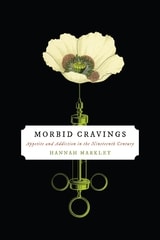
Morbid Cravings
Appetite and Addiction in the Nineteenth CenturyHannah Markley
The Ohio State University Press, 2027
Morbid Cravings is the first book toexamine how eating disorders and drug addiction developed in the nineteenth century as entwined psychosocial responses to imperial-driven cultural demands that Britons regulate their appetites. Through close readings of Jane Austen, Thomas De Quincey, Sydney Whiting, and Arthur Conan Doyle, Hannah Markley explores the comorbidity of these disorders in relation to imperial trade and colonial conquest, applying a postcolonial lens to show us how emerging, separate diagnostic categories were in fact structured by the same social and economic systems.
During the seventeenth and eighteenth centuries, the influx of sugar, tea, coffee, opium, chocolate, and tobacco began to transform British diets and nervous systems, creating dependence on not only these substances but on the colonial systems that delivered them. In turn, medicine attempted to curtail these appetites by promoting restrictive dietary practices. By focusing on how anorexia nervosa, opium-eating, dyspepsia, and compulsive injection emerged in relation to attempts to regulate British appetites for colonial substances, Markley argues that the medico-ideological imperative to restrict appetites produced interrelated representations of eating disorders and addictions that ultimately enacted the voracious logic of British racial capitalism.
More Day to Dawn
Thoreau's Walden for the Twenty-first CenturySandra Harbert Petrulionis
University of Massachusetts Press, 2007
Thoreau asserted that the leaves of the earth's strata were not page upon page to be studied by geologists and antiquaries chiefly, "but living poetry like the leaves of a tree." The continuing vitality of Walden shows that it, too, is not a fossil but a living book, still putting out green leaves of insight.
Each decade since Walden was published in 1854 has seen the world grow more crowded and less "simple." What, in our consumerist, speed-of-light, hypermediated world would Thoreau have found worth pursuing? How would he structure his life so as to shut out the phones ringing, the cars honking, the litter trashing his beloved haunts? Readers still seek answers to such questions by picking up their dog-eared copy of Walden and immersing themselves yet again in its pages. Students convince us that this book still holds the power to change lives. These essays are written with the expectation that Thoreau in the new century can help us realize that there are more lives to live and more day to dawn—that "the sun is but a morning star."
Contributors include Nina Baym, Robert Cummings, Robert Oscar López, Lance Newman, H. Daniel Peck, Dana Phillips, Larry J. Reynolds, David M. Robinson, William Rossi, Robert Sattelmeyer, Sarah Ann Wider, and Michael G. Ziser.
More Plays by Rivals of Corneille and Racine
Lacy Lockert
Vanderbilt University Press, 0

More Tales of the Defective Detective in the Pulps
Gary Hoppenstand, Garyn G. Roberts, and Ray B. Browne
University of Wisconsin Press, 1985
More Than Life
Georg Simmel and Walter Benjamin on ArtStéphane Symons
Northwestern University Press, 2017
Reading Simmel’s work, particularly his essays on Michelangelo, Rembrandt, and Rodin, alongside Benjamin’s concept of Unscheinbarkeit (inconspicuousness) and his writings on Charlie Chaplin, More Than Life demonstrates that both Simmel and Benjamin conceive of art as the creation of something entirely new rather than as a mimetic reproduction of a given. The two thinkers diverge in that Simmel emphasizes the presence of a continuous movement of life, whereas Benjamin highlights the priority of discontinuous, interruptive moments.
With the aim of further elucidating Simmel and Benjamin’s ideas on art, Stéphane Symons presents a number of in-depth analyses of specific artworks that were not discussed by these authors. Through an insightful examination of both the conceptual affinities and the philosophical differences between Simmel and Benjamin , Symons reconstructs a crucial episode in twentieth-century debates on art and aesthetics.

More Than an Ocean
Reflections of a Diasporic DaughterAlexis Pauline Gumbs
Duke University Press, 2027
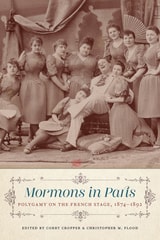
Mormons in Paris
Polygamy on the French Stage, 1874-1892Corry Cropper
Bucknell University Press, 2021
In the late nineteenth century, numerous French plays, novels, cartoons, and works of art focused on Mormons. Unlike American authors who portrayed Mormons as malevolent “others,” however, French dramatists used Mormonism to point out hypocrisy in their own culture. Aren't Mormon women, because of their numbers in a household, more liberated than French women who can't divorce? What is polygamy but another name for multiple mistresses? This new critical edition presents translations of four musical comedies staged or published in France in the late 1800s: Mormons in Paris (1874), Berthelier Meets the Mormons (1875), Japheth’s Twelve Wives (1890), and Stephana’s Jewel (1892). Each is accompanied by a short contextualizing introduction with details about the music, playwrights, and staging. Humorous and largely unknown, these plays use Mormonism to explore and mock changing French mentalities during the Third Republic, lampooning shifting attitudes and evolving laws about marriage, divorce, and gender roles.
Published by Bucknell University Press. Distributed worldwide by Rutgers University Press.
Morning Star
surrealism, marxism, anarchism, situationism, utopiaBy Michael Löwy
University of Texas Press, 2009
An expanded edition of revered theorist Michael Löwy's Morning Star: Marxism and Surrealism (previously published in French, Portuguese, Spanish, Italian, and Greek), this masterwork collects the author's essays on the ways in which surrealism intersected with a variety of revolutionary political approaches, ranging from utopian ideals to Marxism and situationism. Taking its title from André Breton's essay "Arcane 17," which casts the star as the searing firebrand of rebellion, Löwy's provocative work spans many perspectives. These include surrealist artists who were deeply interested in Marxism and anarchism (Breton among them), as well as Marxists who were deeply interested in surrealism (Walter Benjamin in particular).
Probing the dialectics of innovation, diversity, continuity, and unity throughout surrealism's international presence, Morning Star also incorporates analyses of Claude Cahun, Guy Debord, Pierre Naville, José Carlos Mariátegui and others, accompanied by numerous reproductions of surrealist art. An extraordinarily rich collection, Morning Star promises to ignite new dialogues regarding the very nature of dissent.
Morocco Bound
Disorienting America's Maghreb, from Casablanca to the Marrakech ExpressBrian T. Edwards
Duke University Press, 2005
Edwards reads a broad range of texts to recuperate the disorienting possibilities for rethinking American empire. Examining work by William Burroughs, Jane Bowles, Ernie Pyle, A. J. Liebling, Jane Kramer, Alfred Hitchcock, Clifford Geertz, James Michener, Ornette Coleman, General George S. Patton, and others, he puts American texts in conversation with an archive of Maghrebi responses. Whether considering Warner Brothers’ marketing of the movie Casablanca in 1942, journalistic representations of Tangier as a city of excess and queerness, Paul Bowles’s collaboration with the Moroccan artist Mohammed Mrabet, the hippie communities in and around Marrakech in the 1960s and early 1970s, or the writings of young American anthropologists working nearby at the same time, Edwards illuminates the circulation of American texts, their relationship to Maghrebi history, and the ways they might be read so as to reimagine the role of American culture in the world.
Mortal Forms
Affect and Temporality in Early English PoetryEvelyn Reynolds
The Ohio State University Press, 2026
Mother Imagery in the Novels of Afro-Caribbean Women
Simone A. James Alexander
University of Missouri Press, 2000
Focusing on specific texts by Jamaica Kincaid, Maryse Condé, and Paule Marshall, this fascinating study explores the intricate trichotomous relationship between the mother (biological or surrogate), the motherlands Africa and the Caribbean, and the mothercountry represented by England, France, and/or North America. The mother-daughter relationships in the works discussed address the complex, conflicting notions of motherhood that exist within this trichotomy. Although mothering is usually socialized as a welcoming, nurturing notion, Alexander argues that alongside this nurturing notion there exists much conflict. Specifically, she argues that the mother-daughter relationship, plagued with ambivalence, is often further conflicted by colonialism or colonial intervention from the "other," the colonial mothercountry.
Mother Imagery in the Novels of Afro-Caribbean Women offers an overview of Caribbean women's writings from the 1990s, focusing on the personal relationships these three authors have had with their mothers and/or motherlands to highlight links, despite social, cultural, geographical, and political differences, among Afro-Caribbean women and their writings. Alexander traces acts of resistance, which facilitate the (re)writing/righting of the literary canon and the conception of a "newly created genre" and a "womanist" tradition through fictional narratives with autobiographical components.
Exploring the complex and ambiguous mother-daughter relationship, she examines the connection between the mother and the mother's land. In addition, Alexander addresses the ways in which the absence of a mother can send an individual on a desperate quest for selfhood and a home space. This quest forces and forges the creation of an imagined homeland and the re-validation of "old ways and cultures" preserved by the mother. Creating such an imagined homeland enables the individual to acquire "wholeness," which permits a spiritual return to the motherland, Africa via the Caribbean. This spiritual return or homecoming, through the living and practicing of the old culture, makes possible the acceptance and celebration of the mother's land.
Alexander concludes that the mothers created by these authors are the source of diasporic connections and continuities. Writing/righting black women's histories as Kincaid, Condé, and Marshall have done provides a clearing, a space, a mother's land, for black women. Mother Imagery in the Novels of Afro-Caribbean Women will be of great interest to all teachers and students of women's studies, African American studies, Caribbean literature, and diasporic literatures.
Mother Juana de la Cruz, 1481–1534
Visionary SermonsJuana de la Cruz
Iter Press, 2016
Juana de la Cruz (1481–1534) is a unique figure in the history of the Catholic Church, thanks to her public visionary experiences during which she lost consciousness, while a deep voice, identifying itself as Christ, issued from her, narrating the feasts and pageants taking place in heaven. Juana’s so called “sermons,” collected in a manuscript called Libro del Conorte, form a fascinating window into Castilian religiosity in the early sixteenth century. There is much to reap from these sermons concerning Spanish Renaissance culture, theology, mysticism, gender roles, and interreligious interactions.

Mothers and Daughters
Women of the Intelligentsia in Nineteenth-Century RussiaBarbara Alpern Engel
Northwestern University Press, 2000
Mountain Witches
YamaubaNoriko T. Reider
Utah State University Press, 2021
Situating the yamauba within the construct of yōkai and archetypes, Noriko T. Reider investigates the yamauba attributes through the examination of narratives including folktales, literary works, legends, modern fiction, manga, and anime. She traces the lineage of a yamauba image from the seventh-century text Kojiki to the streets of Shibuya, Tokyo, and explores its emergence as well as its various, often conflicting, characteristics. Reider also examines the adaptation and re-creation of the prototype in diverse media such as modern fiction, film, manga, anime, and fashion in relation to the changing status of women in Japanese society.
Offering a comprehensive overview of the development of the yamauba as a literary and mythic trope, Mountain Witches is a study of an archetype that endures in Japanese media and folklore. It will be valuable to students, scholars, and the general reader interested in folklore, Japanese literature, demonology, history, anthropology, cultural studies, gender studies, and the visual and performing arts.
Moving Blackness
Black Circulation, Racism, and Relations of HomespaceLisa B. Y. Calvente
Rutgers University Press, 2025
Engaging with theories of anti-Black racism, modernity, coloniality, and the Black diaspora, the book frames storytelling and the circulation of narratives as performances deeply rooted in the everyday lives of Black people across the diaspora. Starting with an examination of the racial construction of movement during colonialism and slavery, the book traces how this history shapes contemporary interactions. With its exploration of how Black circulation transforms movement and space, the book introduces a forward-thinking approach to the Black diaspora, anchored in a politics of identification rather than being confined to the past or a specific location. Moving Blackness argues that the desire for homespace, a yearning for belonging that transcends any particular physical space, fuels this envisioned future, rooted in the historical and material conditions of racism and marginalization.
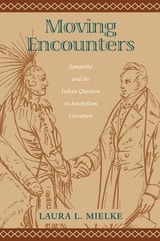
Moving Encounters
Sympathy and the Indian Question in Antebellum LiteratureLaura L. Mielke
University of Massachusetts Press, 2008
An old Indian woman comforts two young white children she finds lost in the woods and lovingly carries them back to their eager parents. A frontiersman sheds tears over the grave of a Mohican youth, holding hands with the mourning father. According to Laura L. Mielke, such emotionally charged scenes between whites and Indians paradoxically flourished in American literature from 1820 to 1850, a time when the United States government developed and applied a policy of Indian removal.
Although these “moving encounters,” as Mielke terms them, often promoted the possibility of mutual sympathy between Native Americans and Euro-Americans, they also suggested that these emotional links were inherently unstable, potentially dangerous, and ultimately doomed. At the same time, the emphasis on Indian-white sympathy provided an opportunity for Indians and non-Native activists to voice an alternative to removal and acculturation, turning the language of a sentimental U.S. culture against its own imperial impulse. Mielke details not only how such writers as James Fenimore Cooper and Henry Rowe Schoolcraft forecast the inevitable demise of Indian-white sympathy, but also how authors like Lydia Maria Child and William Apess insisted that a language of feeling could be used to create shared community or defend American Indian sovereignty. In this way, Moving Encounters sheds new light on a wide range of texts concerning the “Indian Question” by emphasizing their engagement with popular sentimental forms and by challenging the commonly held belief that all Euro-American expressions of sympathy for American Indians in this period were fundamentally insincere. While portraits of Indian-white sympathy often prompted cynical rejoinders from parodists, many never lost faith in the power of emotion to overcome the greed and prejudice fueling the dispossession of American Indians.
Moving Home
Gender, Place, and Travel Writing in the Early Black AtlanticSandra Gunning
Duke University Press, 2021
Moving Performances
Divas, Iconicity, and Remembering the Modern StageScheper, Jeanne
Rutgers University Press, 2017
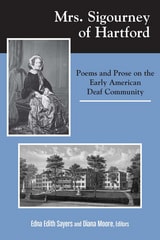
Mrs. Sigourney of Hartford
Poems and Prose on the Early American Deaf CommunityEdna Edith Sayers
Gallaudet University Press, 2013
Lydia Huntley was born in 1791 in Norwich, CT, the only child of a poor Revolutionary war veteran. But her father’s employer, a wealthy widow, gave young Lydia the run of her library and later sent her for visits to Hartford, CT. After teaching at her own school for several years in Norwich, Lydia returned to Hartford to head a class of 15 girls from the best families. Among her students was Alice Cogswell, a deaf girl soon to be famous as a student of Thomas Hopkins Gallaudet and Laurent Clerc.
Lydia’s inspiration came from a deep commitment to the education of girls and also for African American, American Indian, and deaf children. She left teaching to marry Charles Sigourney, then turned to writing to support her family, publishing 56 books, 2,000 magazine articles, and popular poetry. Lydia Sigourney never abandoned her passion for deaf education, remaining a supporter of Gallaudet’s school for the deaf until her death. Yet, her contributions to deaf education and her writing have been forgotten until now.
All of Lydia Sigourney’s of Lydia Sigourney’s work on the nascent Deaf community is presented in this new volume. Her writing intertwines her mastery of the sentimentalism form popular in her day with her sharp insights on the best ways to educate deaf children. In the process, Mrs. Sigourney of Hartford reestablishes her rightful place in history.
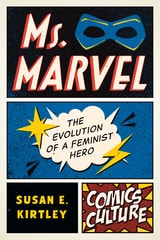
Ms. Marvel
The Evolution of a Feminist HeroSusan E. Kirtley
Rutgers University Press, 2027
Since her first appearance as a superhero in 1977, Ms. Marvel’s most frequent foe has, unfortunately, been herself. In the character’s earliest years, Carol Danvers struggled with two personalities that could not coexist. Later, Sharon Ventura wrestled with choosing between two bodies, one her preferred form and one deemed acceptable by society. Then Carol Danvers returned to the title and fought with a bevy of alternative versions of herself from various dimensions before battling the Dark Avenger version of Ms. Marvel, Karla Sofen. Upon assuming the title after Danvers took on the mantle of Captain Marvel, Kamala Khan inherited this seemingly endless ordeal: clashing with alternate versions of herself, as well as the doppelgänger Stormranger, and even with her own reanimated corpse.
In every iteration, the iconic hero associated with the honorific of women’s liberation continues to act as her own archnemesis, and the self remains the ultimate foe, suggesting that in every universe, women are their own worst enemy.
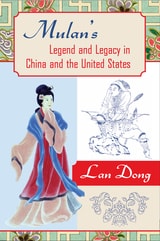
Mulan's Legend and Legacy in China and the United States
Authored by Lan Dong
Temple University Press, 2010
Mulan, the warrior maiden who performed heroic deeds in battle while dressed as a male soldier, has had many incarnations from her first appearance as a heroine in an ancient Chinese folk ballad. Mulan’s story was retold for centuries, extolling the filial virtue of the young woman who placed her father's honor and well-being above her own. With the publication of Maxine Hong Kingston’s The Woman Warrior in the late 1970s, Mulan first became familiar to American audiences who were fascinated with the extraordinary Asian American character. Mulan’s story was recast yet again in the popular 1998 animated Disney film and its sequel.
In Mulan’s Legend and Legacy in China and the United States, Lan Dong traces the development of this popular icon and asks, "Who is the real Mulan?" and "What does authenticity mean for the critic looking at this story?" Dong charts this character’s literary voyage across historical and geographical borders, discussing the narratives and images of Mulan over a long time span—from premodern China to the contemporary United States to Mulan’s counter-migration back to her homeland.
As Dong shows, Mulan has been reinvented repeatedly in both China and the United States so that her character represents different agendas in each retelling—especially after she reached the western hemisphere. The dutiful and loyal daughter, the fierce, pregnant warrior, and the feisty teenaged heroine—each is Mulan representing an idea about female virtue at a particular time and place.
Multi-Mediated Dostoevsky
Transposing Novels into Opera, Film, and DramaAlexander Burry
Northwestern University Press, 2011

Multicultural Comics
From Zap to Blue BeetleEdited by Frederick Luis Aldama
University of Texas Press, 2010
Multicultural Comics: From Zap to Blue Beetle is the first comprehensive look at comic books by and about race and ethnicity. The thirteen essays tease out for the general reader the nuances of how such multicultural comics skillfully combine visual and verbal elements to tell richly compelling stories that gravitate around issues of race, ethnicity, gender, and sexuality within and outside the U.S. comic book industry. Among the explorations of mainstream and independent comic books are discussions of the work of Adrian Tomine, Grant Morrison, and Jessica Abel as well as Marv Wolfman and Gene Colan's The Tomb of Dracula; Native American Anishinaabe-related comics; mixed-media forms such as Kerry James Marshall's comic-book/community performance; DJ Spooky's visual remix of classic film; the role of comics in India; and race in the early Underground Comix movement. The collection includes a "one-stop shop" for multicultural comic book resources, such as archives, websites, and scholarly books. Each of the essays shows in a systematic, clear, and precise way how multicultural comic books work in and of themselves and also how they are interconnected with a worldwide tradition of comic-book storytelling.
Mundus Imaginalis
World Literatures After Phantom EmpiresHamid Dabashi
Duke University Press, 2027

Murder Most Modern
Detective Fiction and Japanese CultureSari Kawana
University of Minnesota Press, 2008
The quintessential international genre, detective fiction often works under the guise of popular entertainment to expose its extensive readership to complex moral questions and timely ethical dilemmas. The first book-length study of interwar Japanese detective fiction, Murder Most Modern considers the important role of detective fiction in defining the country’s emergence as a modern nation-state.
Kawana explores the interactions between the popular genre and broader discourses of modernity, nation, and ethics that circulated at this pivotal moment in Japanese history. The author contrasts Japanese works by Edogawa Ranpo, Unno Juza, Oguri Mushitaro, and others with English-language works by Edgar Allan Poe, Dashiell Hammett, and Agatha Christie to show how Japanese writers of detective fiction used the genre to disseminate their ideas on some of the most startling aspects of modern life: the growth of urbanization, the protection and violation of privacy, the criminalization of abnormal sexuality, the dehumanization of scientific research, and the horrors of total war.
Kawana’s comparative approach reveals how Japanese authors of the genre emphasized the vital social issues that captured the attention of thrill-seeking readers-while eluding the eyes of government censors.
Sari Kawana is assistant professor of Japanese at the University of Massachusetts, Boston.
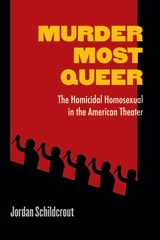
Murder Most Queer
The Homicidal Homosexual in the American TheaterJordan Schildcrout
University of Michigan Press, 2014

Murder and Masculinity
Violent Fictions of Twentieth-Century Latin AmericaRebecca E. Biron
Vanderbilt University Press, 2000
The introduction to this study deftly situates Biron's work in relation to previous theoretical arguments on the social and political dimensions of Latin American writing. The five subsequent chapters offer superb analyses of the individual texts. Like their male protagonists who experiment with the psychological and legal extremes of gender division, these narratives risk nonconformity to the laws of genre in their quest for liberation from violent social and literary conventions. In combining elements of detective stories, crime narratives, psychological case studies, and magical or grotesque realism, they offer metafictional commentary on a network of discourses that confuses images of masculinity, national identity, and political autonomy in postcolonial Latin America.

Murder by Accident
Medieval Theater, Modern Media, Critical IntentionsJody Enders
University of Chicago Press, 2009
Over fifty years ago, it became unfashionable—even forbidden—for students of literature to talk about an author’s intentions for a given work. In Murder by Accident, Jody Enders boldly resurrects the long-disgraced concept of intentionality, especially as it relates to the theater.
Drawing on four fascinating medieval events in which a theatrical performance precipitated deadly consequences, Enders contends that the marginalization of intention in critical discourse is a mirror for the marginalization—and misunderstanding—of theater. Murder by Accident revisits the legal, moral, ethical, and aesthetic limits of the living arts of the past, pairing them with examples from the present, whether they be reality television, snuff films, the “accidental” live broadcast of a suicide on a Los Angeles freeway, or an actor who jokingly fired a stage revolver at his temple, causing his eventual death. This book will force scholars and students to rethink their assumptions about theory, intention, and performance, both past and present.

Murder on the Reservation
American Indian Crime FictionRay B. Browne
University of Wisconsin Press, 2004
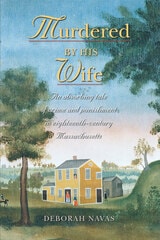
Murdered by His Wife
Deborah Navas
University of Massachusetts Press, 1999
In March 1778, Joshua Spooner, a wealthy gentleman farmer in Brookfield, Massachusetts, was beaten to death and his body stuffed down a well. Four people were hanged for the crime: two British soldiers, a young Continental soldier, and Spooner's wife, Bathsheba, who was charged with instigating the murder. She was thirty-two years old and five months pregnant when executed. Newspapers described the case as “the most extraordinary crime ever perpetrated in New England.”
Murdered by His Wife provides a vivid reconstruction of this dramatic but little-known episode. Beautiful, intelligent, high-spirited, and witty, Bathsheba was the mother of three young children and in her own words felt “an utter aversion” for her husband, who was known to be an abusive drunk.
A year before the murder, she took in and nursed a sixteen-year-old Continental soldier who was returning from a year's enlistment under George Washington. The two became lovers and conceived a child. Divorces were all but impossible for women at that time and adulteresses were stripped to the waist and publicly whipped. Bathsheba's pregnancy occasioned a series of desperate plots to murder her husband, finally brought to fruition with the aid of two British deserters from General Burgoyne's defeated army.
The plots, the crime, the trial, and the aftermath are presented against a backdrop of revolutionary turmoil in Massachusetts. As the daughter of the state's most prominent and despised Loyalist, Bathsheba bore the brunt of the political, cultural, and gender prejudices of her day. When she sought a stay of execution to deliver her baby, the Massachusetts Council rejected her petition and she was promptly hanged before a crowd of 5,000 spectators.
Murderous Feeling
Gender and Retribution in Black and Indigenous LiteratureChad Benito Infante
University of Minnesota Press, 2026
Examining revenge narratives as a feminist response to slavery and settler colonialism
From Octavia Butler’s Kindred to The Round House by Louise Erdrich, themes of retribution resound throughout the work of renowned Black and Indigenous women and queer authors. Revealing how the Black Power Movement and the American Indian Movement influenced literature from the 1960s onward, Murderous Feeling explores how these writers have employed revenge narratives as a response to white supremacy and colonialism.
Chad Benito Infante shows how, rather than using retributive violence to cultivate a heroic, masculine ideal, Black and Native women and queer writers use revenge as a way to raise philosophical questions about justice and the reclamation of power in the face of white supremacy. Pairing canonical texts—including work by James Baldwin, Leslie Marmon Silko, Craig Womack, Toni Morrison, and others—he demonstrates how this uniquely queer and feminist literary tradition, the “grammar of interrogation,” allows for generative ambivalence and curiosity about the possibilities and failures of violence.
In highlighting these narratives’ potential to steer anticolonial efforts, Murderous Feeling reconceptualizes literary violence not as an individualized act of cleansing but as a tool for revolutionary inquiry.
Retail e-book files for this title are screen-reader friendly.
Muriel Rukeyser's the Book of the Dead
Tim Dayton
University of Missouri Press, 2003
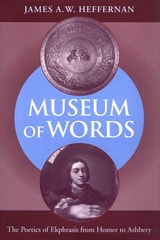
Museum of Words
The Poetics of Ekphrasis from Homer to AshberyJames A. W. Heffernan
University of Chicago Press, 1993
In the first book ever to explore this museum, James Heffernan argues that ekphrasis stages a battle for mastery between the image and the word. Moving from the epics of Homer, Virgil, and Dante to contemporary American poetry, this book treats the history of struggle between rival systems of representation. Readable and well illustrated, this study of how poets have represented painting and sculpture is a major contribution to our understanding of the relation between the arts.
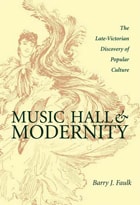
Music Hall and Modernity
The Late-Victorian Discovery of Popular CultureBarry J. Faulk
Ohio University Press, 2004
The late-Victorian discovery of the music hall by English intellectuals marks a crucial moment in the history of popular culture. Music Hall and Modernity demonstrates how such pioneering cultural critics as Arthur Symons and Elizabeth Robins Pennell used the music hall to secure and promote their professional identity as guardians of taste and national welfare. These social arbiters were, at the same time, devotees of the spontaneous culture of “the people.”
In examining fiction from Walter Besant, Hall Caine, and Henry Nevinson, performance criticism from William Archer and Max Beerbohm, and late-Victorian controversies over philanthropy and moral reform, scholar Barry Faulk argues that discourse on music-hall entertainment helped consolidate the identity and tastes of an emergent professional class. Critics and writers legitimized and cleaned up the music hall, at the same time allowing issues of class, respect, and empowerment to be negotiated.
Music Hall and Modernity offers a complex view of the new middle-class, middlebrow mass culture of late-Victorian London and contributes to a body of scholarship on nineteenth-century urbanism. The book will also interest scholars concerned with the emergence of a professional managerial class and the genealogy of cultural studies.

Music at Midnight
The Life and Poetry of George HerbertJohn Drury
University of Chicago Press, 2014
As Drury writes in his preface, Herbert lived “a quiet life with a crisis in the middle of it.” Drury follows Herbert from his academic success as a young man, seemingly destined for a career at court, through his abandonment of those hopes, his devotion to the restoration of a church in Huntingdonshire, and his final years as a country parson. Because Herbert’s work was only published posthumously, it has always been difficult to know when or in what context Herbert wrote his poems. But Drury skillfully places readings of the poems into his narrative at biographically credible moments, allowing us to appreciate not only Herbert’s frame of mind while writing, but also the society that produced it. A sensitive critic of Herbert’s poems as well as a theologian, Drury does full justice to the spiritual dimension of Herbert’s work. In addition, he reveals the occasions of sorrow, happiness, regret, and hope that Herbert captured in his poetry and that led T. S. Eliot to write, “What we can confidently believe is that every poem . . . is true to the poet’s experience.”
Painting a picture of a man torn between worldly ambition and spiritual life, Music at Midnight is an eloquent biography that breathes new life into some of the greatest English poems ever written.
Music's Monisms
Disarticulating ModernismDaniel Albright
University of Chicago Press, 2021
Daniel Albright was one of the preeminent scholars of musical and literary modernism, leaving behind a rich body of work before his untimely passing. In Music’s Monisms, he shows how musical and literary phenomena alike can be fruitfully investigated through the lens of monism, a philosophical conviction that does away with the binary structures we use to make sense of reality. Albright shows that despite music’s many binaries—diatonic vs. chromatic, major vs. minor, tonal vs. atonal—there is always a larger system at work that aims to reconcile tension and resolve conflict.
Albright identifies a “radical monism” in the work of modernist poets such as T. S. Eliot and musical works by Wagner, Debussy, Britten, Schoenberg, and Stravinsky. Radical monism insists on the interchangeability, even the sameness, of the basic dichotomies that govern our thinking and modes of organizing the universe. Through a series of close readings of musical and literary works, Albright advances powerful philosophical arguments that not only shed light on these specific figures but also on aesthetic experience in general. Music’s Monisms is a revelatory work by one of modernist studies’ most distinguished figures.
Musings on Mortality
From Tolstoy to Primo LeviVictor Brombert
University of Chicago Press, 2013
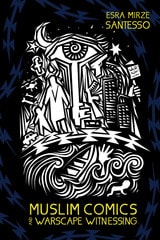
Muslim Comics and Warscape Witnessing
Esra Mirze Santesso
The Ohio State University Press, 2023
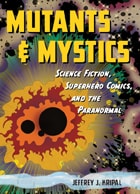
Mutants and Mystics
Science Fiction, Superhero Comics, and the ParanormalJeffrey J. Kripal
University of Chicago Press, 2011
But that's just scratching the surface, says Jeffrey Kripal. In Mutants and Mystics, Kripal offers a brilliantly insightful account of how comic book heroes have helped their creators and fans alike explore and express a wealth of paranormal experiences ignored by mainstream science. Delving deeply into the work of major figures in the field—from Jack Kirby’s cosmic superhero sagas and Philip K. Dick’s futuristic head-trips to Alan Moore’s sex magic and Whitley Strieber’s communion with visitors—Kripal shows how creators turned to science fiction to convey the reality of the inexplicable and the paranormal they experienced in their lives. Expanded consciousness found its language in the metaphors of sci-fi—incredible powers, unprecedented mutations, time-loops and vast intergalactic intelligences—and the deeper influences of mythology and religion that these in turn drew from; the wildly creative work that followed caught the imaginations of millions. Moving deftly from Cold War science and Fredric Wertham's anticomics crusade to gnostic revelation and alien abduction, Kripal spins out a hidden history of American culture, rich with mythical themes and shot through with an awareness that there are other realities far beyond our everyday understanding.
A bravura performance, beautifully illustrated in full color throughout and brimming over with incredible personal stories, Mutants and Mystics is that rarest of things: a book that is guaranteed to broaden—and maybe even blow—your mind.
Mutants
Selected EssaysToby Litt
Seagull Books, 2016
Praise for Toby Litt
“A genuinely individual talent with a positive relish for dealing with the contemporary aspects of the modern world.”—Scotsman
“Toby Litt is awfully good—he gives something new every time he writes.”—Muriel Spark
“He has invented a fresh, contemporary style—it will sing in the ears of this generation.”—Malcolm Bradbury
Mutual Impressions
Writers from the Americas Reading One AnotherIlan Stavans, ed.
Duke University Press, 1999
Divided into symmetrical halves—South reading North and North reading South—the book presents essays by leading novelists, poets, and other writers that focus on the work of another literary figure from across the divide. Borges, for example, finds in Hawthorne the perfect precursor to his own interest in allegories; Katherine Anne Porter examines José Joaquín Fernández de Lizardi as a rascal whose picaresque views of life in The Itching Parrot served to launch the Latin American novel; Cortázar’s study of the plots and style of Poe shows an affinity that left an indelible mark on the Argentine’s short fiction; Susan Sontag views Machado de Assis as the ultimate mirror, a proto–postmodernist.
With other essays by Thomas Pynchon, William H. Gass, John Updike, Gabriel García Márquez, Alejo Carpentier, John Barth, Robert Coover, Pedro Henríquez Ureña, Grace Paley, Juan Carlos Onetti, and Mark Strand, among others, Mutual Impressions offers a remarkable view of the connections that comprise a literary tradition of the Americas. It is a book that will surprise and enliven its readers as it informs and awakens in them a sense of wonder.
Contributors. John Barth, José Bianco, Robert Bly, Jorge Luis Borges, Alejo Carpentier, Hiber Conteris, Robert Coover, Julio Cortázar, Ezequiel Martínez Estrada, Waldo Frank, Carlos Fuentes, William H. Gass, Nicolás Guillén, William Kennedy, Mario Vargas Llosa, Gabriel García Márquez, José Martí, Pablo Neruda, Victoria Ocampo, Juan Carlos Onetti, Grace Paley, Octavio Paz, Katherine Anne Porter, Thomas Pynchon, Kenneth Rexroth, Antonio Benítez Rojo, Barbara Probst Solomon, Susan Sontag, Ilan Stavans, Mark Strand, John Updike, Pedro Henríque Ureña, Derek Walcott, Paul West
Mutual Misunderstanding
Scepticism and the Theorizing of Language and InterpretationTalbot J. Taylor
Duke University Press, 1992
Mutual Misundertanding thus presents a strikingly original analysis of the rhetorical patterns underlying Western linguistic thought, as exemplified in the works of John Locke, Jacques Derrida, Gottlob Frege, Jonathan Culler, Noam Chomsky, Ferdinand de Saussure, H. Paul Grice, Michael Dummet, Stanley Fish, Alfred Schutz, Barbara Herrnstein Smith, Harold Garfinkel, and others.
This analysis reveals how, by the combined effect of appeals to "commonsense" and anxieties about implications of relativism, scepticism has a determining role in the discursive development of a number of the intellectual disciplines making up the "human sciences" today, including critical theory, literary hermeneutics, philosophy of language and logic, communication theory, discourse and conversation analysis, pragmatics, stylistics, and linguistics. Consequently, this provocative study will be of value to readers from a wide variety of disciplinary backgrounds.
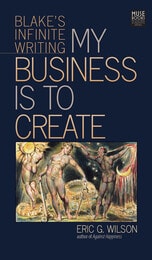
My Business Is to Create
Blake's Infinite WritingEric G. Wilson
University of Iowa Press, 2011
p.MsoNormal, li.MsoNormal, div.MsoNormal { margin: 0in 0in 0.0001pt; font-size: 12pt; font-family: "Times New Roman"; }div.Section1 { page: Section1; }
For William Blake, living is creating, conforming is death, and “the imagination . . . is the Human Existence itself.” But why are imagination and creation—so vital for Blake—essential for becoming human? And what is imagination? What is creation? How do we create? Blake had answers for these questions, both in word and in deed, answers that serve as potent teachings for aspiring writers and accomplished ones alike. Eric G. Wilson’s My Business Is to Create emulates Blake, presenting the great figure’s theory of creativity as well as the practices it implies.
In both his life and his art, Blake provided a powerful example of creativity at any cost—in the face of misunderstanding, neglect, loneliness, poverty, even accusations of insanity. Just as Los cries out in Jerusalem: The Emanation of the Giant Albion, “I must Create a System, or be enslav'd by another Man's; / I will not Reason and Compare: my business is to Create,” generations of writers and artists as diverse as John Ruskin, William Butler Yeats, Allen Ginsberg, Philip K. Dick, songwriter Patti Smith, the avant-garde filmmaker Jim Jarmusch, and the underground comic-book artist R. Crumb have taken Blake’s creed as inspiration.
Unwilling to cede his vision, Blake did more than simply produce iconoclastic poems and paintings; he also cleared a path toward spiritual and ethical enlightenment. To fashion powerful art is to realize the God within and thus to feel connected with enduring vitality and abundant generosity. This is Blake’s everlasting gospel, distilled here in an artist’s handbook of interest to scholars, writing teachers, and those who have made writing their way of life. My Business Is to Create is indispensable for all serious artists who want to transform their lives into art and make their art more alive.
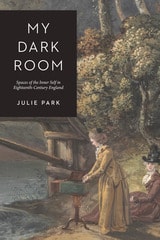
My Dark Room
Spaces of the Inner Self in Eighteenth-Century EnglandJulie Park
University of Chicago Press, 2023
In what kinds of spaces do we become most aware of the thoughts in our own heads? In My Dark Room, Julie Park explores places of solitude and enclosure that gave eighteenth-century subjects closer access to their inner worlds: grottos, writing closets, landscape follies, and the camera obscura, that beguiling “dark room” inside which the outside world in all its motion and color is projected. The camera obscura and its dreamlike projections within it served as a paradigm for the everyday spaces, whether in built environments or in imaginative writing, that generated the fleeting states of interiority eighteenth-century subjects were compelled to experience and inhabit.
My Dark Room illuminates the spatial and physical dimensions of inner life in the long eighteenth century by synthesizing material analyses of diverse media, from optical devices and landscape architecture to women’s intimate dress, with close readings of literary texts not traditionally considered together, among them Andrew Marvell’s country house poem Upon Appleton House, Margaret Cavendish’s experimental epistolary work Sociable Letters, Alexander Pope’s heroic verse epistle Eloisa to Abelard, and Samuel Richardson’s novel Pamela. Park also analyzes letters and diaries, architectural plans, prints, drawings, paintings, and more, drawing our attention to the lively interactions between spaces and psyches in private environments. Park’s innovative method of “spatial formalism” reveals how physical settings enable psychic interiors to achieve vitality in lives both real and imagined.
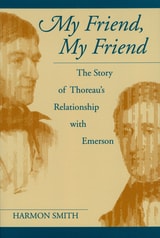
My Friend, My Friend
The Story of Thoreau's Relationship with EmersonHarmon Smith
University of Massachusetts Press, 1999
Henry David Thoreau was a twenty-year-old scholarship student at Harvard when he met Ralph Waldo Emerson in 1837. Emerson, fourteen years Thoreau's senior and independently wealthy, had recently shaken the intellectual world of New England with the publication of Nature. Despite the disparity in their circumstances, Thoreau and Emerson quickly formed a close relationship that lasted until Thoreau's death at the age of forty-four. This book tells the story of their friendship. Harmon Smith emphasizes their personal bond, but also shows how their relationship affected their thought and writing, and was in turn influenced by their careers.
Without Emerson's interest and support, it is unlikely that Thoreau could have expended the energy on writing that enabled him to achieve greatness. By inviting Thoreau into his home to live during two different periods in the 1840s, Emerson effectively made Thoreau “one of the family.” He provided him with work, lent him money, and allowed him to build a cabin on the shore of Walden Pond. Emerson also broadened Thoreau's horizon immeasurably by introducing him to an ever-widening circle of friends and colleagues.
Although the bond between Thoreau and Emerson was strong, their needs were often greatly at variance. While this led to a prolonged period of estrangement between them, they were ultimately able to reconcile their differences. Many years after Thoreau died, Emerson could look back over his long life and say that Henry had been his best friend. Since the thoughts and feelings of the two men are so well documented in their journals and letters, Smith is able to trace the pattern of their emotional involvement in great detail. What emerges is both a remarkable portrait of their relationship and an intimate look at the nature of friendship itself.