Results by title
8113 books match the query 'Literary Criticism' and 516 start with m
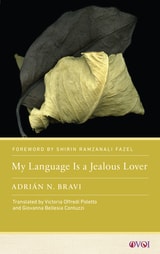
My Language Is a Jealous Lover
Adrián N. Bravi
Rutgers University Press, 2023
My Language Is a Jealous Lover explores the plights and successes of authors who lived and wrote in languages other than their mother tongue, from Samuel Beckett and Vladimir Nabokov to Ágota Kristóf and Joseph Brodsky. Author Adrián N. Bravi weaves their stories in with his own experiences as an Argentinian-Italian, thinking and writing in the language of his new life while recalling that of his childhood. Bravi bears witness to the frustrations, the soul-searching, the pain, and the joys of embracing another language.
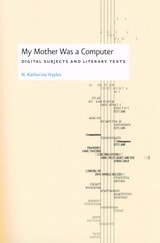
My Mother Was a Computer
Digital Subjects and Literary TextsN. Katherine Hayles
University of Chicago Press, 2005
My Mother Was a Computer explores how the impact of code on everyday life has become comparable to that of speech and writing: language and code have grown more entangled, the lines that once separated humans from machines, analog from digital, and old technologies from new ones have become blurred. My Mother Was a Computer gives us the tools necessary to make sense of these complex relationships. Hayles argues that we live in an age of intermediation that challenges our ideas about language, subjectivity, literary objects, and textuality. This process of intermediation takes place where digital media interact with cultural practices associated with older media, and here Hayles sharply portrays such interactions: how code differs from speech; how electronic text differs from print; the effects of digital media on the idea of the self; the effects of digitality on printed books; our conceptions of computers as living beings; the possibility that human consciousness itself might be computational; and the subjective cosmology wherein humans see the universe through the lens of their own digital age.
We are the children of computers in more than one sense, and no critic has done more than N. Katherine Hayles to explain how these technologies define us and our culture. Heady and provocative, My Mother Was a Computer will be judged as her best work yet.
My Poetics
Maureen N. McLane
University of Chicago Press, 2024
In My Poetics, Maureen N. McLane writes as a poet, critic, theorist, and scholar—but above all as an impassioned reader. Written in an innovative, conversable style, McLane’s essays illuminate her own poetics and suggest more generally all that poetics can encompass. Ranging widely from romantic-era odes and hymns to anonymous ballads to haikus and haibuns to modernist and contemporary poetries in English, My Poetics explores poems as speculative instruments and as ways of registering our very sense of being alive. McLane pursues a number of open questions: How do poems generate modes for thinking? How does rhyme help us measure out thought? What is the relation of poetry to its surroundings, and how do specific poems activate that relation?
If, as Wallace Stevens wrote, “poetry is the scholar’s art,” My Poetics flies under a slightly different banner: study and criticism are also the poet’s art. Punctuated with McLane’s poems and drawing variously on Hannah Arendt, Percy Bysshe Shelley, Roland Barthes, Bruno Latour, and other writers and poets, My Poetics is a formally as well as intellectually adventurous work. Its artful arrangement of readings and divagations shows us a way to be with poems and poetics.
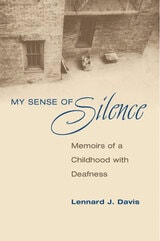
My Sense of Silence
Memoirs of a Childhood with DeafnessLennard J. Davis
University of Illinois Press, 1999
Selected as an "Editors Choice" by the Chicago Tribune
Lennard J. Davis grew up as the hearing child of deaf parents. In this candid, affecting, and often funny memoir, he recalls the joys and confusions of this special world, especially his complex and sometimes difficult relationships with his working-class Jewish immigrant parents. Gracefully slipping through memory, regret, longing, and redemption, My Sense of Silence is an eloquent remembrance of human ties and human failings.
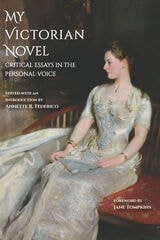
My Victorian Novel
Critical Essays in the Personal VoiceAnnette R. Federico
University of Missouri Press, 2020
These are essays in the original sense of the word, attempts: individual and experiential approaches to literary works that have subjective meanings beyond social facts. By reflecting on their own histories with novels taught, studied, researched, and re-experienced in different contexts over many years, the contributors reveal how an aesthetic object comes to inhabit our critical, pedagogical, and personal lives.
By inviting scholars to share their experiences with a favorite novel without the pressure of an analytical agenda, the sociable essays in My Victorian Novel seek to restore some vitality to the act of literary criticism, and encourage other scholars to talk about the importance of reading in their lives and the stories that have enchanted and transformed them.
The novels in this collection include:
Jane Eyre by Charlotte Brontë
The Duke’s Children by Anthony Trollope
The Adventures of Sherlock Holmes by Arthur Conan Doyle
The Newcomes by William Makepeace Thackeray
Middlemarch by George Eliot
Daniel Deronda by George Eliot
The Return of the Native by Thomas Hardy
Vanity Fair by William Makepeace Thackeray
North and South by Elizabeth Gaskell
Bleak House by Charles Dickens
David Copperfield by Charles Dickens
New Grub Street by George Gissing
The Pickwick Papers by Charles Dickens
Dracula by Bram Stoker
Wuthering Heights by Emily Brontë
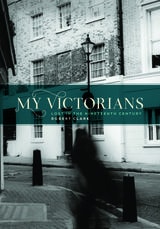
My Victorians
Lost in the Nineteenth CenturyRobert Clark
University of Iowa Press, 2019
As Clark delves deeper into the Victorian world, he wonders: What can its artists offer a twenty-first century writer by way of insight into his own life and work? His obsession with Victoriana bleeds into all aspects of his life, even the seemingly incongruous world of online dating. My Victorians is in the spirit of Geoff Dyer’s Out of Sheer Rage and Rebecca Mead’s My Life in Middlemarch. This book considers what happens when heartbreak, eros, faith, and doubt drive us to take refuge in the past.
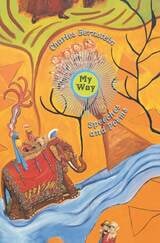
My Way
Speeches and PoemsCharles Bernstein
University of Chicago Press, 1998
In My Way, (in)famous language poet and critic Charles Bernstein deploys a wide variety of interlinked forms—speeches and poems, interviews and essays—to explore the place of poetry in American culture and in the university. Sometimes comic, sometimes dark, Bernstein's writing is irreverent but always relevant, "not structurally challenged, but structurally challenging."
Addressing many interrelated issues, Bernstein moves from the role of the public intellectual to the poetics of scholarly prose, from vernacular modernism to idiosyncratic postmodernism, from identity politics to the resurgence of the aesthetic, from cultural studies to poetry as a performance art, from the small press movement to the Web. Along the way he provides "close listening" to such poets as Charles Reznikoff, Laura Riding, Susan Howe, Ezra Pound, Allen Ginsberg, and Gertrude Stein, as well as a fresh perspective on L=A=N=G=U=A=G=E, the magazine he coedited that became a fulcrum for a new wave of North American writing.
In his passionate defense of an activist, innovative poetry, Bernstein never departs from the culturally engaged, linguistically complex, yet often very funny writing that has characterized his unique approach to poetry for over twenty years. Offering some of his most daring work yet—essays in poetic lines, prose with poetic motifs, interviews miming speech, speeches veering into song—Charles Bernstein's My Way illuminates the newest developments in contemporary poetry with its own contributions to them.
"The result of [Bernstein's] provocative groping is more stimulating than many books of either poetry or criticism have been in recent years."—Molly McQuade, Washington Post Book World
"This book, for all of its centrifugal activity, is a singular yet globally relevant perspective on the literary arts and their institutions, offered in good faith, yet cranky and poignant enough to not be easily ignored."—Publishers Weekly
"Bernstein has emerged as postmodern poetry's sous-chef of insouciance. My Way is another of his rich concoctions, fortified with intellect and seasoned with laughter."—Timothy Gray, American Literature
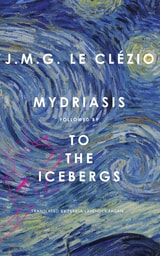
Mydriasis
Followed by ‘To the Icebergs’J.M.G. Le Clezio
Seagull Books, 2019
Michaux is, in fact, at the heart of To the Icebergs. Fascinated by his writing, Le Clézio includes Michaux’s "poem of the poem," "Iniji," thereby allowing the poet’s voice to emerge by itself. What follows is much more than a simple analysis of the poem; rather, it is an act of complete insight and understanding, a personal appropriation and elevation of the work. Written originally in the 1970s and now translated into English for the first time, these two brief, incisive and haunting texts will further strengthen the reputation of one of the world’s greatest and most visionary living writers.
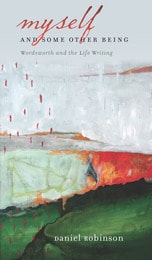
Myself and Some Other Being
Wordsworth and the Life WritingDaniel Robinson
University of Iowa Press, 2014
Myself and Some Other Being is the story of Wordsworth becoming Wordsworth by writing the fragments and drafts of what would eventually become The Prelude, an autobiographical epic poem addressed to Coleridge that he hid from the public and was only published after his death in 1850. Feeling pressured to write the greatest epic poem of all time, a task set for him by Coleridge, Wordsworth feared that he was not up to the challenge and instead looked inside himself for memories and materials that he might make into poetry using the power of his imagination. What he found there was another Wordsworth—not exactly the memory of his younger self but rather “some other being” that he could adapt for an innovative kind of life-writing that he hoped would justify his writing life. By writing about himself and that other being, Wordsworth created an innovative autobiographical epic of becoming that is the masterpiece he believed he had failed to write.
In focusing on this young, ambitious, yet insecure Wordsworth struggling to find his place among other writers, Robinson ably demonstrates how The Prelude may serve as a provocative, instructive, and inspirational rumination on the writing of one’s own life. Concentrating on the process of Wordsworth’s endless revisions, the real literary business of creativity, Robinson puts Wordsworth forward as a model and inspiration for the next generation of writers.
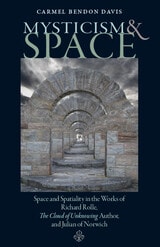
Mysticism and Space
Space and Spatiality in the Works of Richard Rolle, The Cloud of Unknowing Author, and Julian of NorwichCarmel Bendon Davis
Catholic University of America Press, 2008

Myth and Archive
A Theory of Latin American NarrativeRoberto González-Echevarría
Duke University Press, 1998
Providing ways to link literary and nonliterary narratives, González Echevarría examines a variety of archival writings—from the chronicles of the discovery and conquest of the New World to scientific travel narratives and records of criminal confessions—and explores the relationship of these writings to novels by authors such as García Márquez, Borges, Barnet, Sarmiento, Carpentier, and Garcilaso de la Vega. Moving beyond demonstrating that early forms of creative narrative had their geneses in the sixteenth-century authoritative discourse of the Spanish Empire, González Echevarría shows how this same originating process has been repeated in other key moments in the history of the Latin American narrative. He shows how the discourse of scientific discovery was the model for much nineteenth-century literature, as well as how anthropological writings on the nature of language and myth have come to shape the ideology and form of literature in the twentieth century. This most recent form of Latin American narrative creates its own mythic form through an atavistic return to its legal origins—the archive.
This acclaimed book—originally published in 1990—will be of continuing interest to historians, anthropologists, literary theorists, and students of Latin American culture.
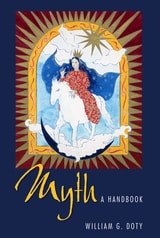
Myth
A HandbookWilliam G. Doty
University of Alabama Press, 2007
An accessible introduction to the role of myth historically and in popular culture.
Myth: A Handbook by William G. Doty is a foundational and wide-ranging exploration of myth as one of humanity’s most enduring and powerful forms of expression. Designed for students and scholars across the humanities and social sciences, this authoritative volume offers both a comprehensive introduction to myth studies and a sophisticated framework for interpreting myth in diverse cultural contexts.
Doty approaches myth not as a static body of ancient stories, but as a dynamic and evolving system of meaning—one that reflects the values, beliefs, and psychological structures of the societies that produce and preserve it. Drawing from a rich interdisciplinary base that includes anthropology, literary criticism, psychology, religious studies, and cultural theory, the book examines how myths operate symbolically, structurally, and socially. Readers are guided through major theoretical approaches to myth, from classical interpretations to modern critical frameworks, enabling them to engage thoughtfully with myth as both narrative and cultural artifact.
One of the book’s central strengths is its emphasis on methodology. Rather than presenting myth as a fixed subject, Doty equips readers with analytical tools to interpret myths across different traditions and historical periods. He explores how myths encode meaning through symbols and archetypes, how they reinforce or challenge cultural norms, and how they adapt over time to address shifting social realities. By emphasizing interpretation over simple retelling, Doty transforms myth from a collection of stories into a living field of inquiry.
The handbook also addresses key questions that continue to resonate in contemporary scholarship: What distinguishes myth from legend or folklore? How do myths shape identity—individual, communal, and national? In what ways do myths persist in modern literature, film, and popular culture? Through clear explanations and carefully structured discussions, Doty demonstrates that myth remains deeply relevant, not only in understanding ancient civilizations but also in analyzing modern narratives and cultural expressions.
Accessible yet intellectually rigorous, Myth: A Handbook has become a widely respected resource in university classrooms, providing students with the conceptual grounding needed to engage critically with mythological material. At the same time, its clarity and breadth make it valuable for general readers interested in the deeper meanings behind the stories that have shaped human thought across time and place.
Ultimately, Doty’s work reveals that myth is not confined to the past—it is an essential framework through which humans interpret experience, construct meaning, and understand their place in the world. This handbook stands as an indispensable guide to that process, illuminating the enduring significance of myth in both ancient traditions and contemporary life.

Mythic Patterns in Ibsen’s Last Plays
Orley I. Holtan
University of Minnesota Press, 1970
Mythic Patterns in Ibsen's Last Plays was first published in 1970. Minnesota Archive Editions uses digital technology to make long-unavailable books once again accessible, and are published unaltered from the original University of Minnesota Press editions.
Until recently critics have tended to regard Ibsen principally as a social dramatist, one who was concerned primarily with the political, social, and moral questions of his time. Radical though he was in the Victorian era, his ideas, with the passage o time, ceased to be avant garde,and for this reason many critics have dismissed him as outdated. Professor Holtan examines a major portion of Ibsen's work, his last eight plays, in a new perspective, however, and finds much that is of lasting significance and interest.
Ibsen's initial impact came with the publication in 1879 of A Doll's House,the play which seemingly advocates a woman's right to leave her husband and children. His reputation as a social dramatist was only furthered by the appearance of his next two plays, Ghosts and An Enemy of the People. But Professor Holtan's study of the plays which came after these identifies in the later plays values which transcend the social problems of their time, penetrating questions of the human spirit itself.
The eight last plays which Professor Holtan examines in this study are The Wild Duck, Rosmersholm, The Lady from the Sea, Hedda Gabler, The Master Builder, Little Eyolf, John Gabriel Borkman, and When We Dead Awaken. In these plays he identifies a mythic pattern and unity based in elements of symbolism and mysticism which have puzzled or annoyed readers and critics for years. In his mythic vision Ibsen's lasting contribution far exceeds that of his invention of the social-problem drama, Professor Holtan concludes.
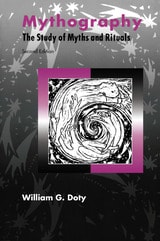
Mythography
The Study of Myths and RitualsWilliam G. Doty
University of Alabama Press, 2000
This new edition of William Doty's critically acclaimed study provides a comprehensive guidebook to the many schools of interpretation in this burgeoning field
William Doty's popular text has been hailed as the most comprehensive work of its kind. Extensively rewritten and completely restructured, the new edition provides further depth and perspective and is even more accessible to students of myth. It includes expanded coverage of postmodern and poststructuralist perspectives, the Gernet Center, mythic iconography, neo-Jungian approaches, and cultural studies, and it summarizes what is new in the study of Greek myth, iconography, French classical scholarship, and ritual studies. It also features a comprehensive index of names and topics, a glossary, an up-to-date annotated bibliography, and a guide to myth on the Internet.
Presenting all major myth theorists from antiquity to the present, Mythography is an encyclopedic work that offers a cross-disciplinary approach to the study of myth. By reflecting the dramatic increase in interest in myth among both scholars and general readers since publication of the first edition, it remains a key study of modern approaches to myth and
an essential guide to the wealth of mythographic research available today.
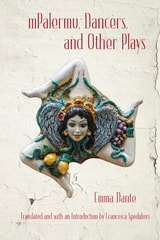
mPalermu, Dancers, and Other Plays
Emma Dante
Swan Isle Press, 2019
This exquisite first English translation of Emma Dante’s work enables English-speaking readers, theatre scholars, and directors alike to encounter character-driven “civic theatre” with its portraits of individuals existing at the fringes of Italy. Ultimately, it allows us to “listen” to those who are not given a voice anywhere else.

mit worten lûter unde glanz
Metapoetics in Konrad von Würzburg’s TrojanerkriegEsther Laufer
University of London Press, 2016