Results by title
22279 books match the query 'Social Science' and 1258 start with m
Mehinaku
The Drama of Daily Life in a Brazilian Indian VillageThomas Gregor
University of Chicago Press, 1980
Mekong Dreaming
Life and Death along a Changing RiverAndrew Alan Johnson
Duke University Press, 2020
Melancholy Drift
Marking Time in Chinese CinemaJean Ma
Hong Kong University Press, 2010
Melancholy, Love, and Time
Boundaries of the Self in Ancient LiteraturePeter Toohey
University of Michigan Press, 2004
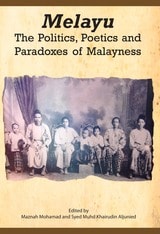
Melayu
The Politics, Poetics and Paradoxes of MalaynessEdited by Maznah Mohamad and Syed Muhd Khairudin Aljunied
National University of Singapore Press, 2012
In Melayu: The Politics, Poetics and Paradoxes of Malayness, the contributors examine the checkered, wavering and changeable understanding of the word Melayu by considering hitherto unexplored case studies dealing with use of the term in connection with origins, nations, minority-majority politics, Filipino Malays, Riau Malays, Orang Asli, Straits Chinese literature, women's veiling, vernacular television, social dissent, literary women, and modern Sufism. Taken as a whole, this volume offers a creative approach to the study of Malayness while providing new perspectives to the studies of identity formation and politics of ethnicity that have wider implications beyond the Southeast Asian region.
Melodrama as Provocateur
Linda Williams. Edited by Christine Gledhill, Laura Horak, and Elisabeth R. Anker
Duke University Press, 2026
Meltdown Expected
Crisis, Disorder, and Upheaval at the end of the 1970sAaron J. Leonard
Rutgers University Press, 2024
Meltdown Expected tells the story of the power shifts from late 1978 through 1979 whose repercussions are still being felt. Iran’s revolution led to a hostage crisis while neighbouring Afghanistan became the site of a proxy war between the USSR and the US, who supplied aid to Islamic mujahideen fighters that would later form the Taliban. Meanwhile, as tragedies like the Jonestown mass suicide and the assassination of Harvey Milk captured the nation’s attention, the government quietly reasserted and expanded the FBI’s intelligence powers. Drawing from recently declassified government documents and covering everything from Three Mile Island to the rise of punk rock, Aaron J. Leonard paints a vivid portrait of a tumultuous yet pivotal time in American history.
Melting Pots and Rainbow Nations
Conversations about Difference in the United States and South AfricaJacklyn Cock and Alison Bernstein
University of Illinois Press, 2002
This passionate, intelligent commentary is an invigorating look at the implications of difference and diversity in two contrasting but similar societies: the United States and South Africa. Melting Pots and Rainbow Nations addresses how differences--of gender, race, culture, biology, and sexual orientation--are variously understood and acted on in both countries.
The authors argue that the concepts of difference and diversity, although valuable, are hollow if disconnected from specific social and historical contexts in which power relations create and perpetuate disadvantage. Their thoughtful exploration includes accounts of their own experiences of difference and their perspectives on such pioneering women as Elizabeth Bishop, Frene Ginwala, Audre Lorde, Ruth First, Jane Goodall, and Mamphela Ramphele.
Mema's House, Mexico City
On Transvestites, Queens, and MachosAnnick Prieur
University of Chicago Press, 1998
Mema, an AIDS educator and the leader of this gang of homosexual men, invited Annick Prieur, a European sociologist, to meet the community and to conduct her fieldwork at his house. Prieur lived there for six months between 1988 and 1991, and she has kept in touch for more than eight years. As Prieur follows the transvestites in their daily activities—at their work as prostitutes or as hairdressers, at night having fun in the streets and in discos—on visits with their families and even in prisons, a fascinating story unfolds of love, violence, and deceit.
She analyzes the complicated relations between the effeminate homosexuals, most of them transvestites, and their partners, the masculine-looking bisexual men, ultimately asking why these particular gender constructions exist in the Mexican working classes and how they can be so widespread in a male-dominated society—the very society from which the term machismo stems. Expertly weaving empirical research with theory, Prieur presents new analytical angles on several concepts: family, class, domination, the role of the body, and the production of differences among men.
A riveting account of heroes and moral dilemmas, community gossip and intrigue, Mema's House, Mexico's City offers a rich story of a hitherto unfamiliar culture and lifestyle.
Memoirs
Marie Mancini and Hortense Mancini
University of Chicago Press, 2008
Through their writings, the Mancinis sought to rehabilitate their reputations and reclaim the right to define their public images themselves, rather than leave the stories of their lives to the intrigues of the court—and to their disgruntled ex-husbands. First translated in 1676 and 1678 and credited largely to male redactors, the two memoirs reemerge here in an accessible English translation that chronicles the beginnings of women’s rights to personal independence within the confines of an otherwise circumscribed early modern aristocratic society.
Memoirs of Waldo Frank
Alan Trachtenberg
University of Massachusetts Press, 1973
Memorable Singularity
Crafting Unique Individuals in an Amazonian SocietyAnne-Christine Taylor
HAU, 2018
In Memorable Singularity, anthropologist Anne-Christine Taylor describes how Jivaroans strive for uniqueness of being and destiny, unconstrained by the claims of any institutionalized form authority beyond the individual. Taylor covers a wide range of subjects: feuding and intertribal warfare, Jivaroan notions of personhood, corporeality, reflexive consciousness, thought and affect, memory, and visual culture. An essential collection of one of the foremost Amazonian specialists, Memorable Singularity is at once a richly literary work and an illuminating meditation on the process of crafting and imagining the human self.
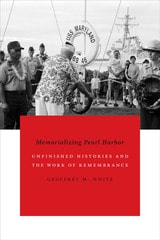
Memorializing Pearl Harbor
Unfinished Histories and the Work of RemembranceGeoffrey M. White
Duke University Press, 2016
Memorializing Violence
Transnational Feminist ReflectionsAlison Crosby
Rutgers University Press, 2025
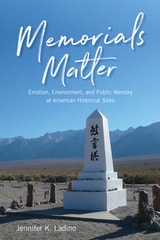
Memorials Matter
Emotion, Environment, and Public Memory at American Historical SitesJennifer K. Ladino
University of Nevada Press, 2019
In Memorials Matter, author Jennifer Ladino investigates the natural and physical environments of seven diverse National Park Service (NPS) sites in the American West and how they influence emotions about historical conflict and national identity. Chapters center around the region’s diverse inhabitants (Mexican, Chinese, Japanese, African, and Native Americans) and the variously traumatic histories these groups endured—histories of oppression, exploitation, incarceration, slavery, and genocide. Drawing on material ecocritical theory, Ladino emphasizes the ideological and political importance of memorials and how they evoke visceral responses that are not always explicitly “storied,” but nevertheless matter in powerful ways.
In this unique blend of narrative scholarship and critical theory, Ladino demonstrates how these memorial sites and their surrounding landscapes, combined with written texts, generate emotion and shape our collective memory of traumatic events. She urges us to consider our everyday environments and to become attuned to features and feelings we might have otherwise overlooked.
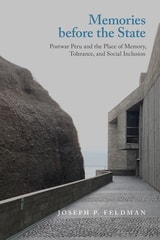
Memories before the State
Postwar Peru and the Place of Memory, Tolerance, and Social InclusionJoseph P. Feldman
Rutgers University Press, 2021
Memories before the State examines the discussions and debates surrounding the creation of the Place of Memory, Tolerance, and Social Inclusion (LUM), a national museum in Peru that memorializes the country’s internal armed conflict of the 1980s and 1990s. Emerging from a German donation that the Peruvian government initially rejected, the Lima-based museum project experienced delays, leadership changes, and limited institutional support as planners and staff devised strategies that aligned the LUM with a new class of globalized memorial museums and responded to political realities of the country’s postwar landscape. The book analyzes forms of authority that emerge as an official institution seeks to incorporate and manage diverse perspectives on recent violence.

Memories of Earth and Sea
An Ethnographic History of the Islands of ChiloéAnton Daughters
University of Arizona Press, 2019
Staring in the 1980s, Chiloé was thrust into the global economy when major companies moved into the region to extract wild stocks of fish and to grow salmon and shellfish for export. The archipelago’s economy shifted abruptly from one of subsistence farming and fishing to wage labor in export industries. Local knowledge, traditions, memories, and identities similarly shifted, with young islanders expressing a more critical view of the rural past than their elders.
This book highlights the region’s unique past, emphasizing the generational tensions, disconnects, and continuities of the last half century. Drawing on interviews, field observations, and historical documents, Anton Daughters brings to life one of South America’s most culturally distinct regions.
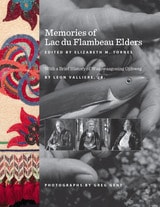
Memories of Lac du Flambeau Elders
Edited by Elizabeth M. Tornes
University of Wisconsin Press, 2004
Most historical accounts of the Ojibwe have been written by Americans of European descent. This book tells the history of the Lac du Flambeau Ojibwe in their own words. It also includes a historical introduction, by Leon Valliere, Jr., going back four hundred years to Lac du Flambeau’s original settlement. A black-and-white photographic portrait of each elder prefaces each interview, and historical photos from the George W. Brown Jr. Ojibwe Museum Cultural Center and collection illustrate the text.
Distributed for the Center for the Study of Upper Midwestern Cultures.
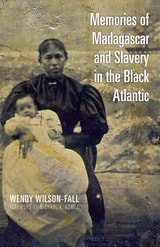
Memories of Madagascar and Slavery in the Black Atlantic
Wendy Wilson-Fall
Ohio University Press, 2015
From the seventeenth century into the nineteenth, thousands of Madagascar’s people were brought to American ports as slaves. In Memories of Madagascar and Slavery in the Black Atlantic, Wendy Wilson-Fall shows that the descendants of these Malagasy slaves in the United States maintained an ethnic identity in ways that those from the areas more commonly feeding the Atlantic slave trade did not. Generations later, hundreds, if not thousands, of African Americans maintain strong identities as Malagasy descendants, yet the histories of Malagasy slaves, sailors, and their descendants have been little explored.
Wilson-Fall examines how and why the stories that underlie this identity have been handed down through families—and what this says about broader issues of ethnicity and meaning-making for those whose family origins, if documented at all, have been willfully obscured by history.
By analyzing contemporary oral histories as well as historical records and examining the conflicts between the two, Wilson-Fall carefully probes the tensions between the official and the personal, the written and the lived. She suggests that historically, the black community has been a melting pot to which generations of immigrants—enslaved and free—have been socially assigned, often in spite of their wish to retain far more complex identities. Innovative in its methodology and poetic in its articulation, this book bridges history and ethnography to take studies of diaspora, ethnicity, and identity into new territory.
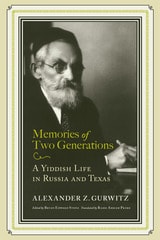
Memories of Two Generations
A Yiddish Life in Russia and TexasAlexander Z. Gurwitz, Edited and Introduced by Bryan Edward Stone
University of Alabama Press, 2022
The 1935 autobiography of Alexander Ziskind Gurwitz, an Orthodox Jew whose lively recounting of his life in Tsarist Russia and his immigration to San Antonio, Texas, in 1910 captures turbulent changes in early twentieth-century Jewish history
In 1910, at the age of fifty-one, Alexander Ziskind Gurwitz made the bold decision to emigrate with his wife and four children from southeastern Ukraine in Tsarist Russia to begin a new life in Texas. In 1935, in his seventies, Gurwitz composed a retrospective autobiography, Memories of Two Generations, that recounts his personal story both of the rich history of the lost Jewish world of Eastern Europe and of the rambunctious development of frontier Jewish communities in the United States.
In both Europe and America, Gurwitz inhabited an almost exclusively Jewish world. As a boy, he studied in traditional yeshivas and earned a living as a Hebrew language teacher and kosher butcher. Widely travelled, Gurwitz recalls with wit and insight daily life in European shtetls, providing perceptive and informative comments about Jewish religion, history, politics, and social customs. Among the book’s most notable features is his first-hand, insider’s account of the yearly Jewish holiday cycle as it was observed in the nineteenth century, described as he experienced it as a child.
Gurwitz’s account of his arrival in Texas forms a cornerstone record of the Galveston Immigration Movement; this memoir represents the only complete narrative of that migration from an immigrant’s point of view. Gurwitz’s descriptions about the development of a thriving Orthodox community in San Antonio provide an important and unique primary source about a facet of American Jewish life that is not widely known.
Gurwitz wrote his memoir in his preferred Yiddish, and this translation into English by Rabbi Amram Prero captures the lyrical style of the original. Scholar and author Bryan Edward Stone’s special introduction and illuminating footnotes round out a superb edition that offers much to experts and general readers alike.

Memories of a Gay Catholic Boyhood
Coming of Age in the SixtiesJohn D'Emilio
Duke University Press, 2022
Memories of a Gay Catholic Boyhood is D’Emilio’s coming-of-age story in which he takes readers from his working-class Bronx neighborhood to an elite Jesuit high school in Manhattan to Columbia University and the political and social upheavals of the late 1960s. He shares his personal experiences of growing up in a conservative, tight-knit, multigenerational family, how he went from considering entering the priesthood to losing his faith and coming to terms with his same-sex desires. Throughout, D’Emilio outlines his complicated relationship with his family while showing how his passion for activism influenced his decision to use research, writing, and teaching to build a strong LGBTQ movement.
This is not just John D’Emilio’s personal story; it opens a window into how the conformist baby boom decade of the 1950s transformed into the tumultuous years of radical social movements and widespread protest during the 1960s. It is the story of what happens when different cultures and values collide and the tensions and possibilities for personal discovery and growth that emerge. Intimate and honest, D’Emilio’s story will resonate with anyone who has had to chart their own path in a world they did not expect to find.
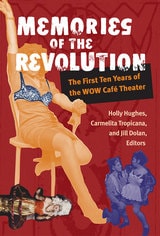
Memories of the Revolution
The First Ten Years of the WOW Café TheaterHolly Hughes, Carmelita Tropicana, and Jill Dolan, Editors
University of Michigan Press, 2015
Memories of the Slave Trade
Ritual and the Historical Imagination in Sierra LeoneRosalind Shaw
University of Chicago Press, 2002
Drawing on extensive fieldwork and archival research, Shaw argues that memories of the slave trade have shaped (and been reshaped by) experiences of colonialism, postcolonialism, and the country's ten-year rebel war. Thus money and commodities, for instance, are often linked to an invisible city of witches whose affluence was built on the theft of human lives. These ritual and visionary memories make hitherto invisible realities manifest, forming a prism through which past and present mutually configure each other.
Memory Activism
Reimagining the Past for the Future in Israel-PalestineYifat Gutman
Vanderbilt University Press, 2017
Set in Israel in the first decade of the twenty-first century and based on long-term fieldwork, this rich ethnographic study offers an innovative analysis of the Israeli-Palestinian conflict. It explores practices of "memory activism" by three groups of Jewish-Israeli and Arab-Palestinian citizens--Zochrot, Autobiography of a City, and Baladna--showing how they appropriated the global model of truth and reconciliation while utilizing local cultural practices such as tours and testimonies.
These activist efforts gave visibility to a silenced Palestinian history in order to come to terms with the conflict's origins and envision a new resolution for the future. This unique focus on memory as a weapon of the weak reveals a surprising shift in awareness of Palestinian suffering among the Jewish majority of Israeli society in a decade of escalating violence and polarization--albeit not without a backlash.
Contested memories saturate this society. The 1948 war is remembered as both Independence Day by Israelis and al-Nakba ("the catastrophe") by Palestinians. The walking tour and survivor testimonies originally deployed by the state for national Zionist education that marginalized Palestinian citizens are now being appropriated by activists for tours of pre-state Palestinian villages and testimonies by refugees.
Memory And Representation
Constructed Truths & Competing RealitiesElisabeth Dena Eber
University of Wisconsin Press, 2001
These case studies present a new and creative synthesis of the multiple meanings of memory and representation within the context of contemporary perceptions of truth.
Memory Bytes
History, Technology, and Digital CultureLauren Rabinovitz and Abraham Geil, eds.
Duke University Press, 2004
These essays from scholars in the social sciences and humanities cover topics related to science and medicine, politics and war, mass communication, philosophy, film, photography, and art. Whether describing how the cultural and legal conflicts over player piano rolls prefigured controversies over the intellectual property status of digital technologies such as mp3 files; comparing the experiences of watching QuickTime movies to Joseph Cornell’s “boxed relic” sculptures of the 1930s and 1940s; or calling for a critical history of electricity from the Enlightenment to the present, Memory Bytes investigates the interplay of technology and culture. It relates the Information Age to larger and older political and cultural phenomena, analyzes how sensory effects have been technologically produced over time, considers how human subjectivity has been shaped by machines, and emphasizes the dependence of particular technologies on the material circumstances within which they were developed and used.
Contributors. Judith Babbitts, Scott Curtis, Ronald E. Day, David Depew, Abraham Geil, Sharon Ghamari-Tabrizi, Lisa Gitelman, N. Katherine Hayles, John Durham Peters, Lauren Rabinovitz, Laura Rigal, Vivian Sobchack, Thomas Swiss

Memory Care
Essays on ForgettingJennifer C. Nash
Duke University Press, 2027

Memory Effects
The Holocaust and the Art of Secondary WitnessingDora Apel
Rutgers University Press, 2002
Drawing on projects that employ a variety of unorthodox artistic strategies, the author provides a unique understanding of contemporary representations of the Holocaust. She demonstrates how these artists frame the past within the conditions of the present, the subversive use of documentary and the archive, the effects of the Jewish genocide on issues of difference and identity, and the use of representation as a form of resistance to historical closure.
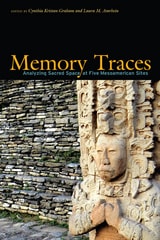
Memory Traces
Analyzing Sacred Space at Five Mesoamerican SitesCynthia Kristan-Graham
University Press of Colorado, 2015
In Memory Traces, art historians and archaeologists come together to examine the nature of sacred space in Mesoamerica. Through five well-known and important centers of political power and artistic invention in Mesoamerica—Tetitla at Teotihuacan, Tula Grande, the Mound of the Building Columns at El Tajín, the House of the Phalli at Chichén Itzá, and Tonina—contributors explore the process of recognizing and defining sacred space, how sacred spaces were viewed and used both physically and symbolically, and what theoretical approaches are most useful for art historians and archaeologists seeking to understand these places.
Memory Traces acknowledges that the creation, use, abandonment, and reuse of sacred space have a strongly recursive relation to collective memory and meanings linked to the places in question and reconciles issues of continuity and discontinuity of memory in ancient Mesoamerican sacred spaces. It will be of interest to students and scholars of Mesoamerican studies and material culture, art historians, architectural historians, and cultural anthropologists.
Contributors: Laura M. Amrhein, Nicholas P. Dunning, Rex Koontz, Cynthia Kristan-Graham, Matthew G. Looper, Travis Nygard, Keith M. Prufer, Matthew H. Robb, Patricia J. Sarro, Kaylee Spencer, Eric Weaver, Linnea Wren
Memory against Culture
Arguments and RemindersJohannes Fabian
Duke University Press, 2007
Fabian returns to his landmark book Time and the Other to consider how the role of the other in anthropological inquiry has been transformed over the past two decades. He explores the place of linguistics in contemporary language-centered anthropology, and he ponders how studies of material culture imbue objects with “otherness.” Meditating on the place of memory and forgetting in ethnography, he draws from his own ethnographic work in the Congo to ask why Africa, the site of so much early anthropological study, continues to be forgotten in the wake of colonization. Arguing for the importance of remembering Africa, Fabian focuses on the relationship between thought and memory in the Swahili language. In so doing, he suggests new methods for investigating memory practices across cultures. Turning to the practice of ethnography, he examines the role of the Internet and the place of field notes and other memoranda in ethnographic writing. At once wide-ranging and incisive, Memory against Culture is a significant reflection on the state of the field by one of its most thoughtful and engaged practitioners.
Memory and Identity in Ancient Judaism and Early Christianity
A Conversation with Barry SchwartzTom Thatcher
SBL Press, 2014
Essential reading for scholars and students interested in sociology and biblical studies
In this collection scholars of biblical texts and rabbinics engage the work of Barry Schwartz, Professor Emeritus in the Department of Sociology at the University of Georgia. Schwartz provides an introductory essay on the study of collective memory. Articles that follow integrate his work into the study of early Jewish and Christian texts. The volume concludes with a response from Schwartz that continues this warm and fruitful dialogue between fields.
Features:
- Articles that integrate the study of collective memory and social psychology into religious studies
- Essays from Barry Schwartz
- Theories applied rather than left as abstract principles
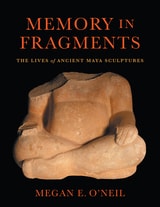
Memory in Fragments
The Lives of Ancient Maya SculpturesMegan E. O'Neil
University of Texas Press, 2024
An exploration of how the ancient Maya engaged with their history by using, altering, and burying stone sculptures.
For the ancient Maya, monumental stone sculptures were infused with agency. As they were used, reused, altered, and buried, such sculptures retained ceremonial meaning. In Memory in Fragments, Megan E. O'Neil explores how ancient Maya people engaged with history through these sculptures, as well as how they interacted with the stones themselves over the course of the sculptures’ long “lives.” Considering Maya religious practices, historiography, and conceptions of materials and things, O’Neil explores how Maya viewers perceived sculptures that were fragmented, scarred, burned, damaged by enemies, or set in unusual locations. In each case, she demonstrates how different human interactions, amid dynamic religious, political, and historical contexts, led to new episodes in the sculptures' lives.
A rare example of cross-temporal and geographical work in this field, Memory in Fragments both compares sculptures within ancient Maya culture across Honduras, Guatemala, Mexico, and Belize over hundreds of years and reveals how memory may accrue around and be evoked in material remains.
Memory, Meaning, and Resistance
Reflecting on Oral History and Women at the MarginsFran Leeper Buss
University of Michigan Press, 2017
Memory, migration and (de)colonisation in the Caribbean and beyond
Edited by Jack Daniel Webb, Roderick Westmaas, Maria del Pilar Kaladeen, and William Tantam
University of London Press, 2019
Memphis Tennessee Garrison
The Remarkable Story of a Black Appalachian WomanAncella R. Bickley
Ohio University Press, 2001
As a black Appalachian woman, Memphis Tennessee Garrison belonged to a demographic category triply ignored by historians.
The daughter of former slaves, she moved to McDowell County, West Virginia, at an early age and died at ninety-eight in Huntington. The coalfields of McDowell County were among the richest seams in the nation. As Garrison makes clear, the backbone of the early mining work force—those who laid the railroad tracks, manned the coke ovens, and dug the coal—were black miners. These miners and their families created communities that became the centers of the struggle for unions, better education, and expanded civil rights. Memphis Tennessee Garrison, an innovative teacher, administrative worker at U.S. Steel, and vice president of the National Board of the NAACP at the height of the civil rights struggle (1963-66), was involved with all of these struggles.
In many ways, this oral history, based on interview transcripts, is the untold and multidimensional story of African American life in West Virginia, as seen through the eyes of a remarkable woman. She portrays a courageous people who organize to improve their working conditions, send their children to school and then to college, own land, and support a wide range of cultural and political activities.
Men Can
The Changing Image and Reality of Fatherhood in AmericaDonald N.S. Unger
Temple University Press, 2010
Fatherhood is evolving in America. Stay at home dads are becoming more commonplace; men are becoming more visible in domestic, caregiving activities. In Men Can, writer, teacher, and father Donald Unger uses his personal experiences, stories of real-life families, as well as representations of fathers in film, on television, and in advertising, to illuminate the role of men in the increasingly fluid domestic sphere.
In thoughtful interviews, Don Unger tells the stories of a half dozen families—of varied ethnicities, geographical locations, and philosophical orientations—in which fathers are either primary or equally sharing parents, personalizing what is changing in how Americans care for their children. These stories are complemented by a discussion of how the language of parenting has evolved and how media representations of fathers have shifted over several decades.
Men Can shows how real change can take place when families divide up domestic labor on a gender-neutral basis. The families whose stories he tells offer insights into the struggles of—and opportunities for—men caring for children. When it comes to taking up the responsibility of parenting, his argument, ultimately, is in favor of respecting personal choices and individual differences, crediting and supporting functional families, rather than trying to force every household into a one-size-fits-all mold.
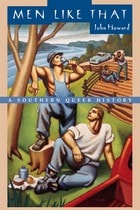
Men Like That
A Southern Queer HistoryJohn Howard
University of Chicago Press, 1999
Spanning four decades, Men Like That complicates traditional notions of a post-WWII conformist wave in America. Howard argues that the 1950s, for example, were a period of vibrant queer networking in Mississippi, while during the so-called "free love" 1960s homosexuals faced aggressive oppression. When queer sex was linked to racial agitation and when key civil rights leaders were implicated in homosexual acts, authorities cracked down and literally ran the accused out of town.
In addition to firsthand accounts, Men Like That finds representations of homosexuality in regional pulp fiction and artwork, as well as in the number one pop song about a suicidal youth who jumps off the Tallahatchie Bridge. And Howard offers frank, unprecedented assessments of outrageous public scandals: a conservative U.S. congressman caught in the act in Washington, and a white candidate for governor accused of patronizing black transgender sex workers.
The first book-length history of the queer South, Men Like That completely reorients our presuppositions about gay identity and about the dynamics of country life.
"Men Like That goes a long way towards redressing the urban bias in American lesbian and gay-history writing. . . . Howard's rigorous scholarship, which is based both on oral history and traditional historical documents . . . is enhanced by a disarmingly personal touch. . . . His insights into queerness and the mentality of the American South should be of great interest both to the professional gay historian and the general reader."—Madeleine Minson, Times Higher Education Supplement
"Howard creates a history remarkable in its complexity yet intimate in its portraiture. At long last an intimate and full vision of queer lives in America that did not unfold in San Francisco's discos."—Kirkus Reviews
"In this groundbreaking and engrossing analysis of gay male life in postwar Mississippi, Howard . . . boldly demonstrates that gay culture and sex not only existed but flourished in small towns."—Publishers Weekly, starred review
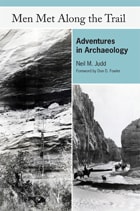
Men Met Along the Trail
Adventures in ArchaeologyNeil M Judd
University of Utah Press, 2009
Written at the request of young associates who felt Judd’s lifetime of experiences in the field could be both instructive and amusing, Men Met Along the Trail provides a glimpse of archaeology when it was an emerging field of study, evolving from simple curio collecting to technologically advanced radiocarbon dating and pollen analysis. Featuring more than thirty original photographs and a new foreword by Don D. Fowler, this book is entertaining and informative, offering readers a vibrant and colorful picture of the adventures to be found in early Southwestern archaeology.
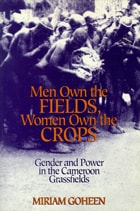
Men Own The Fields, Women Own The Crops
Gender And Power In The Cameroon GrassfieldsMiriam Goheen
University of Wisconsin Press, 1996
Based on a decade of fieldwork, this work tracks the negotiations between chiefs and subchiefs and women and men over ritual power, economic power, and administrative power. Though Nso men obviously dominate their society at both the local level and nationally, women have had power of their own by virtue of their status as women. Men may own the land, for example, but women control the crops through their labor . Goheen explains clearly the place of gender in very complex historical processes, such as land tenure systems, title societies, chieftancy, marriage systems, changing ideas of symbolic capital, and internal and external politics.
In examining women’s resistance to traditional patterns of marriage, Goheen raises the question of whether such actions truly change the balance of power between the sexes, or whether resistance to marriage is instead fostering the formation of a new elite class, since it is only the better-educated women of wealthier families who can change the dynamic of power and labor within the household.
The issues raised in this book are not unique to Nso but apply throughout the African subcontinent. Written in a straightforward way with much of the theoretical argument in footnotes, Men Own the Fields, Women Own the Crops marshals important arguments of wide relevance in present-day Africa.
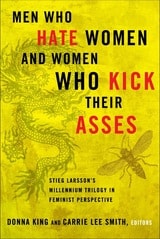
Men Who Hate Women and Women Who Kick Their Asses
Stieg Larsson's Millennium Trilogy in Feminist PerspectiveDonna King
Vanderbilt University Press, 2012
These lively and accessible essays expand the conversation in the blogosphere about the novels and films by connecting the controversies about gender roles to social trends in the real world.

Men Who Sell Sex
International Perspectives on Male Prostitution and AIDSPeter Aggleton
Temple University Press, 1999
Each chapter, written by a national expert, is based on months and even years of interviews with male sex workers, including young boys and elderly men in some countries. The workers discuss why they do the work, what it is like, and what their behavior means to them. For example, those who have regular sex with men often strenuously affirm their heterosexuality, though there is considerable variety in their attitudes.
Each chapter relates the experiences of the male sex workers to the political economy of their neighborhood and assesses the implications of their work for HIV transmission and the AIDS epidemic. The researchers and the sex workers discuss the value of different kinds of health promotion interventions.
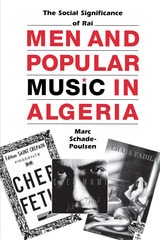
Men and Popular Music in Algeria
The Social Significance of RaïBy Marc Schade-Poulsen
University of Texas Press, 1999
Raï music is often called the voice of the voiceless in Algeria, a society currently swept by tragic conflict. Raï is the voice of Algerian men, young men caught between generations and classes, in political strife, and in economic inequality. In a ground-breaking study, anthropologist Marc Schade-Poulsen uses this popular music genre as a lens through which he views Algerian society, particularly male society. He situates raï within Algerian family life, moral codes, and broader power relations.
Schade-Poulsen did his research in the 1990s, in clubs, recording studios, at weddings, and with street musicians. He describes the history of raï, which emerged in the late 1970s and spread throughout North Africa at the same time the Islamist movement was growing to become the most potent socio-political movement in Algeria.
Outsiders consider raï to be Western in origin, but Schade-Poulsen shows its Islamic roots as well. The musicians do use Western instruments, but the music itself mixes Algerian popular songs and rhythms with the beat of American disco, Egyptian modalities, Moroccan wedding tunes, and the songs of Julio Iglesias. The lyrics deal with male-female relationships but also with generational relationships and the problems of youth, as they struggle to find a place in a conflicted society.
The study, in its innovative approach to music as a template of society, helps the reader understand the two major movements among today's Algerian youth: one toward the mosque and the other toward the West.
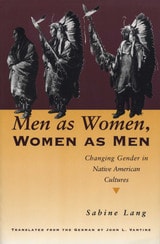
Men as Women, Women as Men
Changing Gender in Native American CulturesBy Sabine Lang
University of Texas Press, 1998
As contemporary Native and non-Native Americans explore various forms of "gender bending" and gay and lesbian identities, interest has grown in "berdaches," the womanly men and manly women who existed in many Native American tribal cultures. Yet attempts to find current role models in these historical figures sometimes distort and oversimplify the historical realities.
This book provides an objective, comprehensive study of Native American women-men and men-women across many tribal cultures and an extended time span. Sabine Lang explores such topics as their religious and secular roles; the relation of the roles of women-men and men-women to the roles of women and men in their respective societies; the ways in which gender-role change was carried out, legitimized, and explained in Native American cultures; the widely differing attitudes toward women-men and men-women in tribal cultures; and the role of these figures in Native mythology. Lang's findings challenge the apparent gender equality of the "berdache" institution, as well as the supposed universality of concepts such as homosexuality.
Men at Home
Imagining Liberation in Colonial and Postcolonial IndiaGyanendra Pandey
Duke University Press, 2025
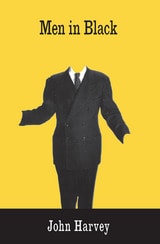
Men in Black
John Harvey
University of Chicago Press, 1995
"Why can't we pick out our own color?"
Joe:
"I tried that once, it don't work. You get four guys fighting over who's gonna be Mr. Black."
—Quentin Tarantino, Reservoir Dogs
Men's clothes went black in the nineteenth century. Dickens, Ruskin and Baudelaire all asked why it was, in an age of supreme wealth and power, that men wanted to dress as if going to a funeral. The answer is in this history of the color black. Over the last 1000 years there have been successive expansions in the wearing of black—from the Church to the Court, from the Court to the merchant class. Though black as fashion was often smart and elegant, its growth as a cultural marker was fed by several currents in Europe's history—in politics, asceticism, religious warfare. Only in the nineteenth century, however, did black fully come into its own as fashion, the most telling witnesses constantly saw connections between the taste for black and the forms of constraint with which European society regimented itself.
Concentrating on the general shift away from color that began around 1800, Harvey traces the transition to black from the court of Burgundy in the 15th century, through 16th-century Venice, 17th-century Spain and the Netherlands. He uses paintings from Van Eyck and Degas to Francis Bacon, religious art, period lithographs, wood engravings, costume books, newsphotos, movie stills and related sources in his compelling study of the meaning of color and clothes.
Although in the twentieth century tastes have moved toward new colors, black has retained its authority as well as its associations with strength and cruelty. At the same time black is still smart, and fashion keeps returning to black. It is, perhaps, the color that has come to acquire the greatest, most significant range of meaning in history.
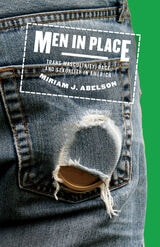
Men in Place
Trans Masculinity, Race, and Sexuality in AmericaMiriam J. Abelson
University of Minnesota Press, 2019
Daring new theories of masculinity, built from a large and geographically diverse interview study of transgender men
American masculinity is being critiqued, questioned, and reinterpreted for a new era. In Men in Place Miriam J. Abelson makes an original contribution to this conversation through in-depth interviews with trans men in the U.S. West, Southeast, and Midwest, showing how the places and spaces men inhabit are fundamental to their experiences of race, sexuality, and gender.
Men in Place explores the shifting meanings of being a man across cities and in rural areas. Here Abelson develops the insight that individual men do not have one way to be masculine—rather, their ways of being men shift between different spaces and places. She reveals a widespread version of masculinity that might be summed up as “strong when I need to be, soft when I need to be,” using the experiences of trans men to highlight the fundamental construction of manhood for all men.
With an eye to how societal institutions promote homophobia, transphobia, and racism, Men in Place argues that race and sexuality fundamentally shape safety for men, particularly in rural spaces, and helps us to better understand the ways that gender is created and enforced.
Men in a Developing Society
Geographic and Social Mobility in Monterrey, MexicoBy Jorge Balán, Harley L. Browning, and Elizabeth Jelin
University of Texas Press, 1973
The central objective of Men in a Developing Society is to show, as concretely as possible, how men experience a period of rapid economic development, particularly in the areas of migration, occupational mobility, and status attainment. It is based mainly on a sample of 1,640 men in Monterrey, Mexico, a large and rapidly growing manufacturing metropolis in northern Mexico with much in-migration, and a sample of 380 men in Cedral, San Luis Potosí, a small, economically depressed community with high rates of out-migration, much of it to Monterrey.
The study of men in Monterrey is perhaps the most thorough one yet conducted of geographic and social mobility in a Latin American city. In part, this was possible because of the innovation of collecting complete life histories that record what each man was doing for any given year in the lay areas of residence, education, family formation, and work. These data permit the effective use of the concepts of life cycle and cohort analysis in the interpretation of the men's geographic and occupational mobility.
The experience of the Monterrey men in adapting to the varied changes required by their mobility was not found to be as difficult as is often indicated in the social science literature on the consequences of economic development. In part this may be because Monterrey, in comparison with most other Latin American cities, has been unusually successful in its economic growth. The impact of migration also was lessened because most of the men had visited the city prior to moving there and many had friends or relatives in the city.
The age of the migrants upon arrival in Monterrey made a significant difference in subsequent occupational mobility; those of nonfarm background who arrived before age 25 fared better than natives of the city. Although it appears that status inheritance in Monterrey is somewhat higher than in industrialized countries, a considerable proportion of men do move up the occupational ladder. And perhaps as important, the Monterrey men, whether or not they themselves are moving up, perceive the society as an open one.
The very success of Monterrey's development created conditions that would bring about changes in the educational, economic, and cultural expectations of its inhabitants. Thus, paradoxically, the general satisfaction and the lack of group and class conflict in Monterrey over the previous decades may well have given rise to future dissatisfaction and conflict.
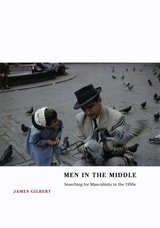
Men in the Middle
Searching for Masculinity in the 1950sJames Gilbert
University of Chicago Press, 2005
In Men in the Middle, James Gilbert uncovers a fascinating and extensive body of literature that confronts the problems and possibilities of expressing masculinity in the 1950s. Drawing on the biographies of men who explored manhood either in their writings or in their public personas, Gilbert examines the stories of several of the most important figures of the day-revivalist Billy Graham, playwright Tennessee Williams, sociologist David Riesman, sex researcher Alfred Kinsey, Playboy literary editor Auguste Comte Spectorsky, and TV-sitcom dad Ozzie Nelson-and allows us to see beyond the inherited stereotypes of the time. Each of these stories, in Gilbert's hands, adds crucial dimensions to our understanding of masculinity the 1950s. No longer will this era be seen solely in terms of the conformist man in the gray flannel suit or the Marlboro Man.
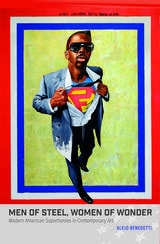
Men of Steel, Women of Wonder
Modern American Superheroes in Contemporary ArtAlejo Benedetti
University of Arkansas Press, 2019
Saturated in patriotic colors, Superman and Wonder Woman are about as American as baseball and apple pie. Superman, created in 1938, materialized as the brawny answer to the Great Depression, and when Wonder Woman arrived three years later, she supported her adopted country by fighting alongside Allied troops in World War II. As the proverbial mother and father of the superhero genre, these icons appeared to a society in crisis as unwavering beacons of national morality, a quality that lent them success on the battlefield—and on the newsstand.
As new crises arise our comic-book champions continue to be called into action. They adapt and evolve but remain the same potent, if flawed, symbols of the American way. The artists in Men of Steel, Women of Wonder, an exhibition organized by Crystal Bridges Museum of American Art, wrestle with Wonder Woman’s standing as a feminist icon, position Superman as a Soviet-era weapon, and question the immigration status of both characters. Featuring more than seventy artworks that range from loving endorsements to brutal critiques of American culture, this exhibition catalog reveals the enduring presence of these characters and the diverse ways artists employ them.
Men of Terror
A Comprehensive Analysis of Viking CombatWilliam R. Short and Reynir A. Óskarson
Westholme Publishing, 2027
Sometime near the end of the tenth century, a man named Fraði died in Sweden. His kinsmen raised a granite runestone to his memory in Denmark. The carved message appears to tell us that Fraði was “first among all Vikings” and that he was the “terror of men.” Known sources about the Vikings revolve around the constant threat of violence: literary and artistic sources from both inside and outside Viking lands, including poetry, myths, stories, and artwork; law codes; burial practices; weapons; even their ship and house architecture.
Based on nearly two decades of research, Men of Terror: A Comprehensive Analysis of Viking Combat is a richly illustrated interdisciplinary study of the heart of Viking society: weapons and combat. Relying on a vast array of sources from a wide range of fields, research scientist William R. Short and independent scholar and martial arts instructor Reynir A. Óskarson dig deep into the culture of men like Fraði to better understand the mindset and performance of Viking warriors that led them to venerate and praise acts of violence and aggression. In the process they have painstakingly reverse-engineered Viking combat to account for the archaeology we have. Along the way, they answer questions such as: Were there women warriors? Why were acts such as raiding held in such high esteem? What mundane object was the king of Viking weapons and how was it used? Could bowstrings of human hair really work? Through their comprehensive research, the authors present a holistic picture of this society from what previously had only been disparate and intriguing parts. By the end of the book, the reader will understand the importance of combat to Viking society, the nature of that combat, and the code of these “men of terror.”