Results by title
28167 books match the query 'History' and 1583 start with m

Medicine and Slavery
The Diseases and Health Care of Blacks in Antebellum VirginiaTodd L. Savitt
University of Illinois Press, 2002
In Medicine and Slavery, Todd L. Savitt evaluates the diet, hygiene, clothing, and living and working conditions of antebellum African Americans, slave and free, and analyzes the diseases and health conditions that afflicted them in urban areas, at industrial sites, and on plantations.
Medicine and Western Civilization
Edited by David J Rothman, Steven Marcus, and Stephanie A. Kiceluk
Rutgers University Press, 1995
Medicine and the Saints
Science, Islam, and the Colonial Encounter in Morocco, 1877-1956By Ellen J. Amster
University of Texas Press, 2013
The colonial encounter between France and Morocco took place not only in the political realm but also in the realm of medicine. Because the body politic and the physical body are intimately linked, French efforts to colonize Morocco took place in and through the body. Starting from this original premise, Medicine and the Saints traces a history of colonial embodiment in Morocco through a series of medical encounters between the Islamic sultanate of Morocco and the Republic of France from 1877 to 1956.
Drawing on a wealth of primary sources in both French and Arabic, Ellen Amster investigates the positivist ambitions of French colonial doctors, sociologists, philologists, and historians; the social history of the encounters and transformations occasioned by French medical interventions; and the ways in which Moroccan nationalists ultimately appropriated a French model of modernity to invent the independent nation-state. Each chapter of the book addresses a different problem in the history of medicine: international espionage and a doctor’s murder; disease and revolt in Moroccan cities; a battle for authority between doctors and Muslim midwives; and the search for national identity in the welfare state. This research reveals how Moroccans ingested and digested French science and used it to create a nationalist movement and Islamist politics, and to understand disease and health. In the colonial encounter, the Muslim body became a seat of subjectivity, the place from which individuals contested and redefined the political.
Medicine at Michigan
A History of the University of Michigan Medical School at the BicentennialDea H. Boster and Joel D. Howell
University of Michigan Press, 2017

Medicine by Design
The Architect and the Modern Hospital, 1893–1943Annmarie Adams
University of Minnesota Press, 2008
In the history of medicine, hospitals are usually seen as passive reflections of advances in medical knowledge and technology. In Medicine by Design, Annmarie Adams challenges these assumptions, examining how hospital design influenced the development of twentieth-century medicine and demonstrating the importance of these specialized buildings in the history of architecture.
At the center of this work is Montreal’s landmark Royal Victoria Hospital, built in 1893. Drawing on a wide range of visual and textual sources, Adams uses the “Royal Vic”—along with other hospitals built or modified over the next fifty years—to explore critical issues in architecture and medicine: the role of gender and class in both fields, the transformation of patients into consumers, the introduction of new medical concepts and technologies, and the use of domestic architecture and regionally inspired imagery to soften the jarring impact of high-tech medicine.
Identifying the roles played by architects in medical history and those played by patients, doctors, nurses, and other medical professionals in the design of hospitals, Adams also links architectural spaces to everyday hospital activities, from meal preparation to the ways in which patients entered the hospital and awaited treatment.
Methodologically and conceptually innovative, Medicine by Design makes a significant contribution to the histories of both architectural and medical practices in the twentieth century.
Annmarie Adams is William C. Macdonald Professor of Architecture at McGill University and the author of Architecture in the Family Way: Doctors, Houses, and Women, 1870–1900 and coauthor of Designing Women: Gender and the Architectural Profession.

Medicine in Mexico
From Aztec Herbs to BetatronsBy Gordon Schendel
University of Texas Press, 1968
A witch doctor casting an evil spell in a steaming jungle village; a young medical-school graduate cleaning a machete wound in a rat-infested thatched hut; a world-renowned scientist doing research in Mexico City—all were part of the mid-twentieth century medical scene in Mexico, a country of great cultural, socioeconomic, and geographical contrasts.
Gordon Schendel, in collaboration with Dr. José Alvarez Amézquita and Dr. Miguel E. Bustamante, relates the history of medicine and public health and welfare in Mexico. This absorbing story begins with a great indigenous culture; continues with Spanish Colonial rule, the unproductive first century of independence from Spain, and the years of revolution; then concentrates on the modern nation.
The Aztec civilization evidenced a knowledge of pharmacology and the fundamentals of health far in advance of contemporary European societies. And almost one hundred years before the Pilgrims landed on Plymouth Rock, New Spain boasted a comprehensive "Public Health Administration" and a hospital system that served all classes. However, throughout Mexico's three centuries as a Spanish colony and its first century of independence, millions of its citizens suffered abysmal poverty. Thus when the Republic of Mexico entered its post-Revolutionary era, the majority of its citizens were plagued by superstition, illiteracy, malnutrition, and the other "diseases of the poor."
The principal part of this story tells how Mexico attacked these problems, and how in a few short years it became a leader and a model for all Latin America in the fields of medicine and public health and welfare. The book is based on Mr. Schendel's research and observations and on his many interviews with doctors and govemment officials. It will be of interest to the medical profession and to concerned laymen of all nationalities, for it illustrates how a dynamic nation met challenges that all countries of the world, developed and underdeveloped, must face.
Medicine in the Meantime
The Work of Care in MozambiqueRamah McKay
Duke University Press, 2018

Medicine, Law, and the State in Imperial Russia
Elisa M. Becker
Central European University Press, 2011
Medicine’s Labyrinth
The Challenges of Our Treatment-Saturated LivesRobert Aronowitz
University of Chicago Press, 2027
A physician diagnoses why doctors and patients face so many uncertainties as they navigate a dizzying array of medical treatments and technologies—and lays out a treatment plan for better health care.
Americans now depend on ever more potent drugs, devices, and procedures. While many of these interventions can improve our health and extend our lives, their widespread availability has created a medical landscape where patients make increasingly complex choices about their care.
In Medicine’s Labyrinth, physician historian Robert Aronowitz examines the challenging decisions posed by the widespread use of so many medical interventions. Drawing on medical literature, patient accounts, and historical case studies, he shows how medical progress can erode certainty, transform the illness experience, and deepen dependence on technology. To understand how these challenges have played out over the past century, Aronowitz explores medicine’s attempts to safely resuscitate premature infants, treat prostate cancer, and deal with too many disease diagnoses. He concludes with a call for physicians to pay renewed attention to patients’ lived experiences and to offer clinical judgments grounded in observations rather than algorithms.
Medicine’s Labyrinth is a clear-eyed exploration of how the very successes of modern medicine have made care harder, and why the fragile trust that sustains its institutions, policies, and practices must be rebuilt.
Medieval Callings
Edited by Jacques Le Goff
University of Chicago Press, 1990
The contributors focus on attitudes of medieval men and women toward their own society. Through a variety of techniques, from a reading of the Song of Roland to a reading of administrative records, they identify characteristic viewpoints of members of the fighting class, the clergy, and the peasantry. Along with vivid descriptions of what life was like for warrior knights, monks, high churchmen, criminals, lepers, shepherds, and prostitutes, this innovative approach offers a valuable new perspective on the complex social dynamics of feudal Europe.
"Very useful discussions of texts, both learned and literary."—Christopher Dyer, Times Literary Supplement
Contributors: Mariateresa Fumagalli Beonio Brocchieri, Franco Cardini, Enrico Castelnuovo, Giovanni Cherubini, Bronislaw Geremek, Aron Ja. Gurevich, Christiane Klapisch-Zuber, Jacques Le Goff, Giovanni Miccoli, Jacques Rossiaud, and André Vauchez.
Medieval Church Law and the Origins of the Western Legal Tradition
A Tribute to Kenneth PenningtonWolfgang P. Müller
Catholic University of America Press, 2006
Medieval Cosmology
Theories of Infinity, Place, Time, Void, and the Plurality of WorldsPierre Duhem
University of Chicago Press, 1987
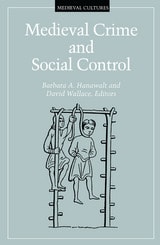
Medieval Crime and Social Control
Barbara A. Hanawalt
University of Minnesota Press, 1998
Uses historical and literary insights to consider crime and punishment in the Middle Ages.
Crime is a matter of interpretation, and never was this truer than in the Middle Ages, when societies faced with new ideas and pressures were continually forced to rethink what a crime was-and what was a crime. This collection undertakes a thorough exploration of shifting definitions of crime and changing attitudes toward social control in medieval Europe.
These essays-by leading specialists in European history and literature-reveal how various forces in medieval society interacted and competed in interpreting and influencing mechanisms for social control. They also demonstrate how well the different methods of history and literature combine to illuminate these developments.The essays show how the play with boundaries between legitimate and illegitimate actions took place not only in laws and courts, but also in the writing of social commentators such as John Fortescue and Jean Gerson, in the works of authors such as William Langland and Geoffrey Chaucer, and in popular literature such as sagas and romances. Drawing on a wide range of historical and literary sources-legal treatises, court cases, statutes, poems, romances, and comic tales-the contributors consider topics including fear of crime, rape and violence against women, revenge and condemnations of crime, learned dispute about crime and social control, and legal and political struggles over hunting rights. Their work shows how medieval society also defined its boundaries in contested spaces such as taverns and forests and in the different rules applying to the behavior and treatment of men and women.Contributors: Christopher Cannon, Oxford U; Elizabeth Fowler, Yale U; Louise O. Fradenburg, U of California, Santa Barbara; Claude Gauvard, Sorbonne; James H. Landman, U of North Texas; William Perry Marvin, Colorado State U; William Ian Miller, U of Michigan; Louise Mirrer, CUNY; Walter Prevenier, U of Ghent.ISBN 0-8166-3168-9 Cloth $49.95xxISBN 0-8166-3169-7 Paper $19.95x268 pages 5 7/8 x 9 JanuaryMedieval Cultures Series, volume 16Translation inquiries: University of Minnesota Press
Medieval Essays (The Works of Christopher Dawson)
Christopher Dawson
Catholic University of America Press, 2002
Medieval Identity Machines
Jeffrey J. Cohen
University of Minnesota Press, 2003
A provocative new approach to medieval culture
In Medieval Identity Machines, Jeffrey J. Cohen examines the messiness, permeability, and perversity of medieval bodies, arguing that human identity always exceeds the limits of the flesh. Combining critical theory with a rigorous reading of medieval texts, Cohen asks if the category “human” isn’t too small to contain the multiplicity of identities. As such, this book is the first to argue for a “posthuman” Middle Ages and to make extensive use of the philosophical writings of Gilles Deleuze to rethink the medieval.
Among the topics that Cohen covers are the passionate bond between men and horses in chivalric training; the interrelation of demons, celibacy, and colonialism in an Anglo-Saxon saint’s life; Lancelot’s masochism as envisioned by Chrétien de Troyes; the voice of thunder echoing from Margery Kempe; and the fantasies that sustained some dominant conceptions of race. This tour of identity—in all its fragility and diffusion—illustrates the centrality of the Middle Ages to theory as it enhances our understanding of self, embodiment, and temporality in the medieval world.
Medieval Islam
A Study in Cultural OrientationGustave E. von Grunebaum
University of Chicago Press, 1946
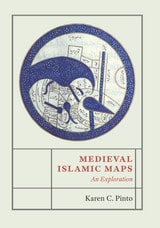
Medieval Islamic Maps
An ExplorationKaren C. Pinto
University of Chicago Press, 2016
Pinto focuses on the distinct tradition of maps known collectively as the Book of Roads and Kingdoms (Kitab al-Masalik wa al-Mamalik, or KMMS), examining them from three distinct angles—iconography, context, and patronage. She untangles the history of the KMMS maps, traces their inception and evolution, and analyzes them to reveal the identities of their creators, painters, and patrons, as well as the vivid realities of the social and physical world they depicted. In doing so, Pinto develops innovative techniques for approaching the visual record of Islamic history, explores how medieval Muslims perceived themselves and their world, and brings Middle Eastern maps into the forefront of the study of the history of cartography.
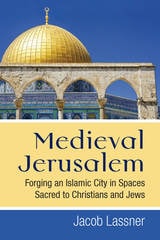
Medieval Jerusalem
Forging an Islamic City in Spaces Sacred to Christians and JewsJacob Lassner
University of Michigan Press, 2017
Examining Muslim historiography and religious lore in light of Jewish traditions about the city, Jacob Lassner points out how these reworked Jewish traditions and the imposing monumental Islamic architecture of the city were meant to demonstrate that Islam had superseded Judaism and Christianity as the religion for all monotheists. He interrogates the literary sources of medieval Islamic historiography and their modern interpreters as if they were witnesses in a court of law, and applies the same method for the arguments about the monuments of the city’s material culture, including the great archaeological discoveries along the south wall of the ancient Temple Mount.
This book will be of interest to a broad range of readers given the significance of the city in the current politics of the Near East. It will in part serve as a corrective to narratives of Jerusalem’s past that are currently popular for scholarly and political reasons.
Medieval Londoners
essays to mark the eightieth birthday of Caroline M. BarronEdited by Christian Steer and Elizabeth New
University of London Press, 2019
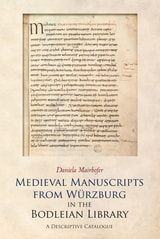
Medieval Manuscripts from Würzburg in the Bodleian Library
A Descriptive CatalogueDaniela Mairhofer
Bodleian Library Publishing, 2015
Presenting detailed descriptions of more than fifty of manuscripts, Medieval Manuscripts from Würzburg in the Bodleian Library, Oxford provides an authoritative catalog, including many important early copies of the manuscripts of church fathers during the Carolingian period. Daniela Mairhofer examines each from both a textual and paleographic point of view, paying careful attention to the provenance of the manuscript, as well as to physical characteristics like decoration and binding. Entries are accompanied by copious color plates.
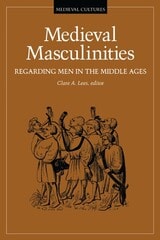
Medieval Masculinities
Regarding Men in the Middle AgesClare A. Lees
University of Minnesota Press, 1994
"Ranging from questions of epic violence and heroic embodiments of manhood to constructions of bachelorhood, husbandry, and sainthood, Medieval Masculinities is the first synthesis of medieval and gender studies to focus on masculinities."
Harry Brod, editor of The Making of Masculinities"We should not be working [exclusively] on the subjected sex any more than a historian of class can focus exclusively on peasants."-Natalie Zemon Davis, 1975 In the years since Natalie Davis made this remark, men's studies, and gender studies along with it, has earned its place in scholarship. What is often missing from such studies, however, is the insight that the concept of gender in general, and that of masculinity in particular, can be understood only in relation to individual societies, examined at specific historical and cultural moments. A brilliant application of this insight, Medieval Masculinities is the first full-length collection to explore the issues of men's studies and contemporary theories of gender within the context of the Middle Ages. Interdisciplinary and multicultural, the essays range from matrimony in medieval Italy to bachelorhood in Renaissance Venice, from friars and saints to the male animal in the fables of Marie de France, from manhood in Sir Gawain and the Green Knight, Beowulf, and the Roman d'Eneas to men as "other," whether Muslim or Jew, in medieval Castilian epic and ballad. The authors are especially concerned with cultural manifestations of masculinity that transcend this particular historical period-idealized gender roles, political and economic factors in structuring social institutions, and the impact of masculinist ideology in fostering and maintaining power. Together, their essays constitute an important reassessment of traditional assumptions within medieval studies as well as a major contribution to the evolving study of gender.ContributorsChristopher Baswell, Barnard CollegeVern L. Bullough, SUNY, BuffaloStanley Chojnacki, Michigan State UniversityJohn Coakley, New Brunswick Theological SeminaryThelma Fenster, Fordham UniversityClare Kinney, University of VirginiaClare A. Lees, University of PennsylvaniaJo Ann McNamara, Hunter CollegeLouise Mirrer, Fordham UniversityHarriet Spiegel, California State University, ChicoSusan Mosher Stuard, Haverford College
Medieval Merchants and Money
Essays in Honour of James L. BoltonEdited by Matthew Davies
University of London Press, 2016
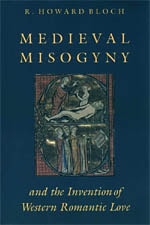
Medieval Misogyny and the Invention of Western Romantic Love
R. Howard Bloch
University of Chicago Press, 1991
Through analyses of a broad range of patristic and medieval texts, Bloch explores the Christian construction of gender in which the flesh is feminized, the feminine is aestheticized, and aesthetics are condemned in theological terms. Tracing the underlying theme of virginity from the Church Fathers to the courtly poets, Bloch establishes the continuity between early Christian antifeminism and the idealization of woman that emerged in the twelfth and thirteenth centuries. In conclusion he explains the likely social, economic, and legal causes for the seeming inversion of the terms of misogyny into those of an idealizing tradition of love that exists alongside its earlier avatar until the current era.
This startling study will be of great value to students of medieval literature as well as to historians of culture and gender.
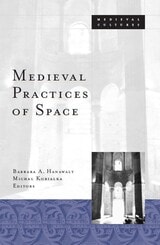
Medieval Practices Of Space
Barbara A. Hanawalt
University of Minnesota Press, 2000
Interprets space and place in the medieval era.
Interprets space and place in the medieval era.
A glance at medieval maps tells us that cartographers of the Middle Ages divided space differently than we do today. In the great mappae mundi, for instance, Jerusalem takes center stage, with an image of the crucified Christ separating one place from another. The architects of medieval cathedrals manipulated space to clarify the roles and status of all who entered. Even in the most everyday context, space was allotted according to gender and class and was freighted with infinitely subtle meanings. The contributors to this volume cross disciplinary and theoretical boundaries to read the words, metaphors, images, signs, poetic illusions, and identities with which medieval men and women used space and place to add meaning to the world.Contributors: Kathleen Biddick, U of Notre Dame; Charles Burroughs, SUNY, Binghamton; Michael Camille, U of Chicago; Tom Conley, Harvard U; Donnalee Dox, U of Arizona; Jody Enders, U of California, Santa Barbara; Valerie K. J. Flint, U of Hull, UK; Andrzej Piotrowski, U of Minnesota; Daniel Lord Smail, Fordham U.Barbara A. Hanawalt is King George III Professor of British History at Ohio State University. Michal Kobialka is associate professor of theatre at University of Minnesota.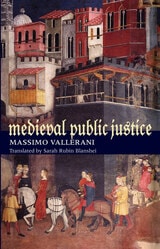
Medieval Public Justice
Massimo Vallerani
Catholic University of America Press, 2012
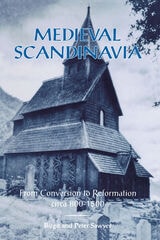
Medieval Scandinavia
From Conversion to Reformation, circa 800-1500Birgit Sawyer
University of Minnesota Press, 1993
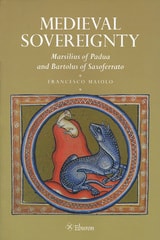
Medieval Sovereignty
Marsilius of Padua and Bartolous of SaxoferratoFrancesco Maiolo
Eburon Academic Publishers, 2007
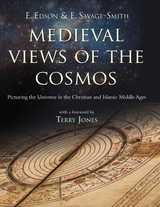
Medieval Views of the Cosmos
E. Edson and E. Savage-Smith
Bodleian Library Publishing, 2004
In the medieval world system—inherited by Christians and Muslims from the Greeks and Romans, and modified by their own religious tenets—spheres bearing the planets and stars wheeled around the earth, and at every level there was a moral lesson for humanity and a satisfying metaphor for the nature of God. The authors of this volume explain how the medieval view of the universe was harmonious on theological and practical levels, providing answers to the most puzzling of questions.
Medieval Views of the Cosmos is an engaging and beautifully illustrated introduction to a world where every moment was a theater of human drama directed by the hand of God.
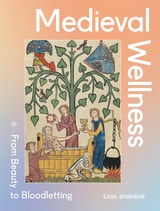
Medieval Wellness
From Beauty to BloodlettingLarisa Grollemond
J. Paul Getty Trust, The, 0
Dispelling myths of a dirty, superstitious Middle Ages, this entertaining volume explores medieval approaches to health and wellness.
Often maligned as an era of darkness and superstition, the Middle Ages in Europe have been stereotyped as lacking standards for basic hygiene, or, at the very least, for having a laughably simplistic approach to self-care and medicine. With wit and expert analysis, medievalist Larisa Grollemond explores everyday practices and beliefs of medieval life. She uncovers a world as nuanced and self-aware as our own while playfully connecting traditions from the Middle Ages to modern wellness culture.
- Challenges misconceptions of medieval Europe with engaging, evidence-based insights into hygiene and healthcare practices.
- Answers popular questions about daily life, including bathing, cosmetics, contraception, and the realities of medieval medical treatments.
- Features over 130 illustrations of illuminated manuscripts, medieval artifacts, and other art works that bring the past vividly to life.
- Connects medieval wellness practices to contemporary self-care trends, offering surprising parallels and fresh perspective.
If you think the Middle Ages were primitive and unsophisticated, this book will change your mind. With Medieval Wellness, you’ll discover a world of care, curiosity, and complexity that will feel familiar to your own.
Medieval Women and Their Objects
Jenny Adams and Nancy Mason Bradbury, editors
University of Michigan Press, 2016
The opening section looks at how medieval authors imagined fictional and legendary women using particular objects in ways that reinforce or challenge gender roles. These women bring objects into the orbit of gender identity, employing and relating to them in a literal sense, while also taking advantage of their symbolic meanings. The second section focuses on the use of texts both as objects in their own right and as mechanisms by which other objects are defined. The possessors of objects in these essays lived in the world, their lives documented by historical records, yet like their fictional and legendary counterparts, they too used objects for instrumental ends and with symbolic resonances. The final section considers the objectification of medieval women’s bodies as well as its limits. While this at times seems to allow for a trade in women, authorial attempts to give definitive shapes and boundaries to women’s bodies either complicate the gender boundaries they try to contain or reduce gender to an ideological abstraction. This volume contributes to the ongoing effort to calibrate female agency in the late Middle Ages, honoring the groundbreaking work of Carolyn P. Collette.
Medieval Worlds
Barbarians, Heretics and Artists in the Middle AgesArno Borst
University of Chicago Press, 1992
Clearly interested in the forms of medieval behavior which gave rise to the seeds of modern society, Borst focuses on three in particular that gave momentum to medieval religious, social, and intellectual movements: the barbaric, heretical, and artistic. Borst concludes by reflecting on his own life as a scholar and draws out lessons for us from the turbulence of the Middle Ages.
Medieval and Early Renaissance Medicine
An Introduction to Knowledge and PracticeNancy G. Siraisi
University of Chicago Press, 1990

Medievalism, Popular Culture and Politics in Metal Music
The Case of Hispanic Epic ThemesAmaranta Saguar García
Intellect Books, 2026
Challenging the common view of metal music as just a form of Western pop culture, this innovative book draws attention to medievalizing epicism, a distinctive strand within metal that evokes the medieval and the epic in both aesthetics and sensibility. While often shaped by fantasy literature, cinema, and more recently, video games, this fascination with the medieval has deeper roots in nationalist ideologies. Through a rich exploration of Spain and Portugal’s transitions after their period of authoritarian rule, this book reveals how medievalizing epicism plays a key role in shaping nationalist and ethnocentric discourses, fascist narratives, and official efforts to foster patriotic sentiment, and how metal bands confront these origins.
Drawing on an impressive breadth of scholarship and a deep knowledge of metal music culture, Amaranta Saguar García skillfully weaves together diverse reference points without losing focus or clarity. This book invites both scholars and music fans to reflect more broadly on how metal music imagines and reuses medieval heritage.
Meditations on the Incarnation, Passion, and Death of Jesus Christ
Catharina Regina von Greiffenberg
University of Chicago Press, 2009
Read by Protestants and Catholics alike, Catharina Regina von Greiffenberg (1633–94) was the foremost German woman poet and writer in the seventeenth-century German-speaking world. Privileged by her social station and education, she published a large body of religious writings under her own name to a reception unequaled by any other German woman during her lifetime. But once the popularity of devotional writings as a genre waned, Catharina’s works went largely unread until scholars devoted renewed attention to them in the twentieth century.
For this volume, Lynne Tatlock translates for the first time into English three of the thirty-six meditations, restoring Catharina to her rightful place in print. These meditations foreground women in the life of Jesus Christ—including accounts of women at the Incarnation and the Tomb—and in Scripture in general. Tatlock’s selections give the modern reader a sense of the structure and nature of Catharina’s devotional writings, highlighting the alternative they offer to the male-centered view of early modern literary and cultural production during her day, and redefining the role of women in Christian history.
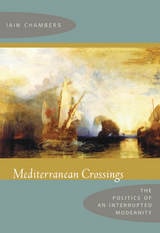
Mediterranean Crossings
The Politics of an Interrupted ModernityIain Chambers
Duke University Press, 2008
In evocative and erudite prose, Chambers renders the Mediterranean a mutable space, profoundly marked by the linguistic, literary, culinary, musical, and intellectual dissemination of Arab, Jewish, Turkish, and Latin cultures. He brings to light histories of Mediterranean crossings—of people, goods, melodies, thought—that are rarely part of orthodox understandings. Chambers writes in a style that reflects the fluidity of the exchanges that have formed the region; he segues between major historical events and local daily routines, backwards and forwards in time, and from one part of the Mediterranean to another. A sea of endlessly overlapping cultural and historical currents, the Mediterranean exceeds the immediate constraints of nationalism and inflexible identity. It offers scholars an opportunity to rethink the past and present and to imagine a future beyond the confines of Western humanistic thought.
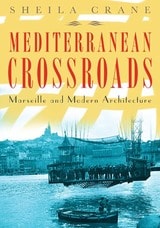
Mediterranean Crossroads
Marseille and Modern ArchitectureSheila Crane
University of Minnesota Press, 2010
Drawing together a cast of both world-renowned and less familiar architects, photographers, and cultural theorists, including Le Corbusier, Sigfried Giedion, Walter Benjamin, and László Moholy-Nagy, Mediterranean Crossroads examines how mythic ideas about Marseille helped to shape its urban landscape. Tracing successive planning proposals in tandem with shifting representations of the city in photographs, film, guidebooks, and postcards, Sheila Crane reconstructs the history and politics of architecture in Marseille from the 1920s through the years of rebuilding after World War II.
By exploring how architects and planners negotiated highly localized pressures, evolving imperial visions, and transnational aspirations at the borders of Europe and the Mediterranean region, Mediterranean Crossroads brings to life a lost chapter in the history of modern architecture.
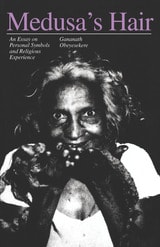
Medusa's Hair
An Essay on Personal Symbols and Religious ExperienceGananath Obeyesekere
University of Chicago Press, 1981
The increasing popularity of these ecstatics poses a challenge not only to orthodox Sinhala Buddhism (the official religion of Sri Lanka) but also, as Gananath Obeyesekere shows, to the traditional anthropological and psychoanalytic theories of symbolism. Focusing initially on one symbol, matted hair, Obeyesekere demonstrates that the conventional distinction between personal and cultural symbols is inadequate and naive. His detailed case studies of ecstatics show that there is always a reciprocity between the personal-psychological dimension of the symbol and its public, culturally sanctioned role. Medusa's Hair thus makes an important theoretical contribution both to the anthropology of individual experience and to the psychoanalytic understanding of culture. In its analyses of the symbolism of guilt, the adaptational and integrative significance of belief in spirits, and a host of related issues concerning possession states and religiosity, this book marks a provocative advance in psychological anthropology.
Meearmeear Traditions
C. C. Trowbridge
University of Michigan Press, 1938

Meet Joe Copper
Masculinity and Race on Montana's World War II Home FrontMatthew L. Basso
University of Chicago Press, 2013
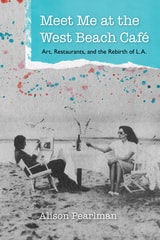
Meet Me at the West Beach Café
Art, Restaurants, and the Rebirth of L.A.Alison Pearlman
University of Nevada Press, 2027
When fine dining met fine art, a new Los Angeles was born.
Between 1979 and 1987, the city witnessed two cultural breakthroughs that may seem unrelated. A wave of bold, design‑forward restaurants helped launch the nationwide “New American” movement, serving innovative cuisine in sleek, modern spaces adorned with contemporary art. At the same time, Los Angeles celebrated a milestone: the opening of the Museum of Contemporary Art (MOCA), its first major museum devoted solely to contemporary art—an institution long missing from a city with global ambitions.
Though often told separately, these stories are deeply intertwined. In this lively, revelatory book, Alison Pearlman uncovers how restaurants became galleries as well as vital crossroads for the chefs, artists, collectors, architects, and civic leaders who reshaped L.A.’s cultural identity. Together, they revived hopes that L.A. could reclaim the creative energy of its 1960s heyday and join the ranks of the world’s cultural capitals.
Drawing on extensive interviews with those who built this transformative era, Pearlman shows how L.A.—through distinctive architecture, daring personalities, and unconventional collaborations—created a cultural moment with national impact. Vivid, engaging, and richly researched, this book brings to life a heady period in the city’s history.
A must‑read for lovers of art, food, and the vibrant alchemy that emerges when creative worlds collide.

Meet Me on the Midway
A History of Wisconsin FairsJerry Apps
Wisconsin Historical Society Press, 2022
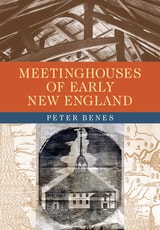
Meetinghouses of Early New England
Peter Benes
University of Massachusetts Press, 2012
Today few of these once ubiquitous buildings survive. Based on site visits and meticulous documentary research, Meetinghouses of Early New England identifies more than 2,200 houses of worship in the region during the period from 1622 to 1830, bringing many of them to light for the first time.
Within this framework Peter Benes addresses the stunning but ultimately impermanent blossoming of a New England "vernacular" tradition of ecclesiastical/ municipal architecture. He pinpoints the specific European antecedents of the seventeenth-century New England meetinghouse and traces their evolution through the eighteenth and early nineteenth centuries into Congregational, Presbyterian, and Baptist churches heavily influenced by an Anglican precedent that made a place of worship a "house of God." Undertaking a parish-by-parish examination, Benes draws on primary sources—original records, diaries, and contemporary commentators—to determine which religious societies in the region advocated (or resisted) this evolution, tying key shifts in meetinghouse architecture to the region's shifting liturgical and devotional practices.
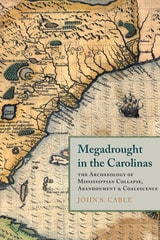
Megadrought in the Carolinas
The Archaeology of Mississippian Collapse, Abandonment, and CoalescenceJohn S. Cable
University of Alabama Press, 2020
A prevailing enigma in American archaeology is why vast swaths of land in the Southeast and Southwest were abandoned between AD 1200 and 1500. The most well-known abandonments occurred in the Four Corners and Mimbres areas of the Southwest and the central Mississippi valley in the twelfth and thirteenth centuries and in southern Arizona and the Ohio Valley during the fifteenth century. In Megadrought in the Carolinas: The Archaeology of Mississippian Collapse, Abandonment, and Coalescence, John S. Cable demonstrates through the application of innovative ceramic analysis that yet another fifteenth-century abandonment event took place across an area of some 34.5 million acres centered on the South Carolina coast.
Most would agree that these sweeping changes were at least in part the consequence of prolonged droughts associated with a period of global warming known as the Medieval Climatic Anomaly. Cable strengthens this inference by showing that these events correspond exactly with the timing of two different geographic patterns of megadrought as defined by modern climate models.
Cable extends his study by testing the proposition that the former residents of the coastal zone migrated to surrounding interior regions where the effects of drought were less severe. Abundant support for this expectation is found in the archaeology of these regions, including evidence of accelerated population growth, crowding, and increased regional hostilities. Another important implication of immigration is the eventual coalescence of ethnic and/or culturally different social groups and the ultimate transformation of societies into new cultural syntheses. Evidence for this process is not yet well documented in the Southeast, but Cable draws on his familiarity with the drought-related Puebloan intrusions into the Hohokam Core Area of southern Arizona during the thirteenth and fourteenth centuries to suggest strategies for examining coalescence in the Southeast. The narrative concludes by addressing the broad implications of late prehistoric societal collapse for today’s human-propelled global warming era that portends similar but much more long-lasting consequences.

Megawatts and Megatons
The Future of Nuclear Power and Nuclear WeaponsRichard L. Garwin and Georges Charpak
University of Chicago Press, 2002
Mehinaku
The Drama of Daily Life in a Brazilian Indian VillageThomas Gregor
University of Chicago Press, 1980
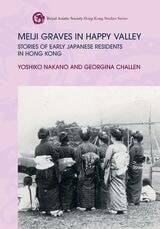
Meiji Graves in Happy Valley
Stories of Early Japanese Residents in Hong KongYoshiko Nakano and Georgina Challen
Hong Kong University Press, 2024
The Hong Kong Cemetery in Happy Valley is home to over 470 graves connected to the city’s Japanese population. Most of these graves belong to individuals who died during the Meiji era (1868–1912), a remarkable period of modernization and opening up of Japan that saw thousands of its inhabitants travel to other parts of the world to study, work, and settle. Who were these people? What were they doing in Hong Kong? And why were unbaptized Japanese buried in what was called at one time the "Protestant Cemetery"?
Hong Kong’s Meiji-era Japanese community was one of two halves. Company executives sat atop the social ladder and karayuki-san, or prostitutes, occupied the lower echelons, with tradespeople and professionals somewhere in between. By revealing the personal journeys of these mostly forgotten Japanese, the authors aim to add to transnational perspectives on Hong Kong and Japan during the late nineteenth and early twentieth centuries, as well as increase recognition of this fragmented community’s place in the development of this diverse city.
Mekong Delta
Ecology, Economy, and Revolution, 1860-1960Pierre Brocheux
University of Wisconsin Press, 1995
Mekong Diaries
Viet Cong Drawings and Stories, 1964-1975Sherry Buchanan
University of Chicago Press, 2008
These guerrilla artists—some military officers and some civilians—lived clandestinely with the fighters, moving camp alongside them, going on reconnaissance missions, and carrying their sketchbooks, ink, and watercolors into combat. Trained by professors from the Hanoi Institute of Fine Arts who journeyed down the perilous Ho Chi Minh Trail to ensure a pictorial history of the war, they recorded battles and events from Operation Junction City to Khe Sanh to the Tet Offensive. They also sketched as the spirit moved them, rendering breathtaking landscapes, hut and bunker interiors, activities at base camps, troops on the move, portraits for the families of fallen soldiers, and the unimaginable devastation that the conflict left in its wake.
Their collective record—which Sherry Buchanan skillfully compiles here—is an extraordinary historical and artistic document of people at war. As such, it serves as a powerful response to the self-centeredness of American accounts of Vietnam, filling a profound gap in our national memory by taking us into the misunderstood worlds of those whom we once counted among our worst enemies.

Mekong Dreaming
Life and Death along a Changing RiverAndrew Alan Johnson
Duke University Press, 2020
Melancholy Drift
Marking Time in Chinese CinemaJean Ma
Hong Kong University Press, 2010