Results by title
18284 books match the query 'United States' and 949 start with m

Mugwumps, Morals and Politics 1884-1920
Gerald W. McFarland
University of Massachusetts Press, 1975
The conventional approach has been to concentrate on only a dozen or so of the best known Mugwumps and to trace their careers no further than 1900. In contrast, McFarland greatly extends the number of individuals whose activities must be considered reflections of the movement, discussing a sample of hundreds of active Mugwumps, and traces their careers well into the twentieth century.
Mugwump orthodoxy is demonstrated by an examination of their largely negative goals in the anti-Blaine bolt of 1884, their narrow political program during the late 1880s, and their politically disastrous loyalty to Grover Cleveland. But their innovative side is also highlighted by a searching analysis of their successes, including their participation in the movement to professionalize such occupations as law, medicine, and higher education, and their contributions to urban, political, and social reform.
Mugwumps
Public Moralists of the Gilded AgeDavid M. Tucker
University of Missouri Press, 1998
A spirited reevaluation of the public moralists who shaped public policy in nineteenth-century America, Mugwumps: Public Moralists of the Gilded Age provides a refreshing look at a group of Americans whose importance to the history of our country has commonly been dismissed.
A public interest group that labeled the generation following the American Civil War as the "Gilded Age," Mugwumps were college-educated individuals who lived the lessons of their moral philosophy—Christian values, republican virtue, and classical liberalism. Tracing Mugwump values back before the term was commonly used, Tucker defines these liberals as benevolent and altruistic, active campaigners against slavery and imperialism, and for sound money, lower tariffs, and civil service reform. The earliest Mugwumps took on the self-assigned task of advocating public principles over private interests.
Evaluations of these public moralists during the 1950s and 1960s, however, did not paint the Mugwumps in so positive a light. Awash in the popular New Deal public policies that advocated positive government intervention and regulation in the economy, these studies dismissed Mugwump liberalism as outdated. More specifically, the reformers were criticized as being self-interested failures.
Tucker obliges readers to look beyond such dismissals to the history and accomplishments of Mugwumps as a whole. Unlike previous historians, Tucker examines the antebellum roots of the Mugwumps and follows their ever-increasing participation in American government throughout the nineteenth century. Tucker portrays Mugwumps not as selfish agents of the middle class but as fascinating practitioners of eighteenth-century public virtue and nineteenth-century social science.
This book forcefully challenges previous studies on the Mugwumps and restores these public moralists to the mainstream of nineteenth-century American history. Their concerns for morality and free-market economics are again fashionable in contemporary politics and deserving of fresh attention from both the general reader and the scholar.

Muhammad Ali, the People's Champ
Edited by Elliott J. Gorn
University of Illinois Press, 1995
Muhammad Ali
The Making of an IconMichael Ezra
Temple University Press, 2009
Muhammad Ali (born Cassius Clay) has always engendered an emotional reaction from the public. From his appearance as an Olympic champion to his iconic status as a national hero, his carefully constructed image and controversial persona has always been intensely scrutinized. In Muhammad Ali, Michael Ezra considers the boxer who calls himself “The Greatest” from a new perspective. He writes about Ali’s pre-championship bouts, the management of his career and his current legacy, exploring the promotional aspects of Ali and how they were wrapped up in political, economic, and cultural “ownership.”
Ezra’s incisive study examines the relationships between Ali’s cultural appeal and its commercial manifestations. Citing examples of the boxer’s relationship to the Vietnam War and the Nation of Islam—which serve as barometers of his “public moral authority”—Muhammad Ali analyzes the difficulties of creating and maintaining these cultural images, as well as the impact these themes have on Ali’s meaning to the public.

Muhammad in the Digital Age
Edited by Ruqayya Yasmine Khan, foreword by Randall Nadeau
University of Texas Press, 2015
The early twenty-first century has experienced an unrivaled dissemination of information and misinformation about Islam, its prophet Muhammad, and its followers, largely facilitated by the fact that the tragedy of 9/11 roughly coincided with the advent of the digital age. In the first collection of its kind, Ruqayya Khan has compiled essays that treat Muhammad and the core elements of Islam as focal points in an exploration of how the digital era—including social media and other expressions—have both had an effect on and been affected by Islam.
Scholars from a variety of fields deal with topics such as the 2005 cartoon controversy in Denmark and the infamous 2012 movie trailer “Innocence of Muslims” that some believe sparked the attacks on the US consulate in Benghazi, as well as how the digitization of ancient texts have allowed the origins of Islam to be studied in new ways. Other essays examine how Muhammad’s wives have been represented in various online sources, including a web comic; the contrasting depictions of Muhammad as both a warrior and peacemaker; and how the widespread distribution of “the look” of Islamic terrorists has led to attacks on Sikhs, whose only point of resemblance to them may be a full beard. These findings illuminate the role of the Internet in forms of representation, advocacy, and engagement concerning Islam and Muslims in our world today.
Mulan's Legend and Legacy in China and the United States
Authored by Lan Dong
Temple University Press, 2010
Mulan, the warrior maiden who performed heroic deeds in battle while dressed as a male soldier, has had many incarnations from her first appearance as a heroine in an ancient Chinese folk ballad. Mulan’s story was retold for centuries, extolling the filial virtue of the young woman who placed her father's honor and well-being above her own. With the publication of Maxine Hong Kingston’s The Woman Warrior in the late 1970s, Mulan first became familiar to American audiences who were fascinated with the extraordinary Asian American character. Mulan’s story was recast yet again in the popular 1998 animated Disney film and its sequel.
In Mulan’s Legend and Legacy in China and the United States, Lan Dong traces the development of this popular icon and asks, "Who is the real Mulan?" and "What does authenticity mean for the critic looking at this story?" Dong charts this character’s literary voyage across historical and geographical borders, discussing the narratives and images of Mulan over a long time span—from premodern China to the contemporary United States to Mulan’s counter-migration back to her homeland.
As Dong shows, Mulan has been reinvented repeatedly in both China and the United States so that her character represents different agendas in each retelling—especially after she reached the western hemisphere. The dutiful and loyal daughter, the fierce, pregnant warrior, and the feisty teenaged heroine—each is Mulan representing an idea about female virtue at a particular time and place.
Mule South to Tractor South
Mules, Machines, and the Transformation of the Cotton SouthGeorge B. Ellenberg
University of Alabama Press, 2013
The adoption of the mule as the major agricultural resource in the American South and its later displacement by the mechanical tractor.
The author describes the adoption of the mule as the major agricultural resource in the American South and its later displacement by the mechanical tractor. After describing the surprising slowness of southern farmers to realize the superiority of the mule over the horse for agricultural labor, Ellenberg strives to capture the symbiosis that emerged between animal and man to illuminate why and how the mule became a standard feature in Southern folk culture.
Having been slow to adopt the mule, southern farmers were then reluctant to set it aside in favor of the tractor. Ellenberg describes the transformation as the tractor gradually displaced the mule and the role of the U.S. Department of Agriculture in this process.
The work not only becomes a survey of the development of southern agriculture as revealed through an examination of this premier work animal but also follows the emergence of the animal as a cultural icon, as it figures in southern literature, folklore, and music.
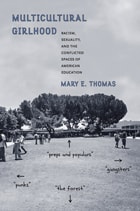
Multicultural Girlhood
Racism, Sexuality, and the Conflicted Spaces of American EducationMary E. Thomas
Temple University Press, 2011
High school turf wars are often a teenage rite of passage, but there are extremes—as when a race riot at a Los Angeles campus in the spring of 2005 resulted in a police lockdown. In her fascinating book,Multicultural Girlhood, Mary Thomas interviewed 26 Latina, Armenian, Filipina, African-American, and Anglo girls at this high school to gauge their responses to the campus violence. They all denounced the outbreak, calling for multicultural understanding and peaceful coexistence.
However, as much as the girls want everyone to just “get along,” they also exhibit strong racist beliefs and validate segregated social spaces on campus and beyond. How can teenagers and “girl power” work together to empower instead of alienate multicultural groups? In her perceptive book, Thomas foregrounds the spaces of teen girlhood and the role that space plays in girls' practices that perpetuate social difference, and she explains the ways we navigate the intellectual terrain between scholarship and school yard.

Multicultural Programs for Tweens and Teens
Linda B. Alexander
American Library Association, 2010
Multicultural Storytime Magic
Kathy MacMillan
American Library Association, 2012
Multiethnic Books for the Middle-School Curriculum
Cherri Jones
American Library Association, 2013
Multiethnic Moments
The Politics of Urban Education ReformSusan E. Clarke, Rodney E. Hero, Mara S. Sidney, Luis Fraga and Bari Anhalt Erlichson, foreword by Clarence N. Stone
Temple University Press, 2006
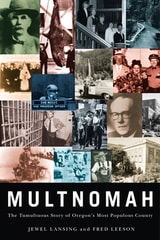
Multnomah
The Tumultuous Story of Oregon's Most Populous CountyJewel Lansing and Fred Leeson
Oregon State University Press, 2012
Covering people and events from 1854 to the present day, this definitive history of Multnomah County provides compelling details about public works triumphs and political scandals.
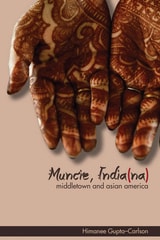
Muncie, India(na)
Middletown and Asian AmericaHimanee Gupta-Carlson
University of Illinois Press, 2018
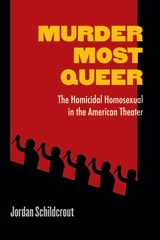
Murder Most Queer
The Homicidal Homosexual in the American TheaterJordan Schildcrout
University of Michigan Press, 2014
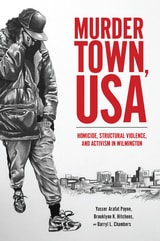
Murder Town, USA
Homicide, Structural Violence, and Activism in WilmingtonYasser Arafat Payne
Rutgers University Press, 2023
Far too many poor Black communities struggle with gun violence and homicide. The result has been the unnatural contortion of Black families and the inter-generational perpetuation of social chaos and untimely death. Young people are repeatedly ripped away from life by violence, while many men are locked away in prisons. In neighborhoods like those of Wilmington, Delaware, residents routinely face the pressures of violence, death, and incarceration. Murder Town, USA is thus a timely ethnography with an innovative structure: the authors helped organize fifteen residents formerly involved with the streets and/or the criminal justice system to document the relationship between structural opportunity and experiences with violence in Wilmington's Eastside and Southbridge neighborhoods.
Earlier scholars offered rich cultural analysis of violence in low-income Black communities, and yet this literature has mostly conceptualized violence through frameworks of personal responsibility or individual accountability. And even if acknowledging the pressure of structural inequality, most earlier researchers describe violence as the ultimate result of some moral failing, a propensity for crime, and the notion of helplessness. Instead, in Murder Town USA, Payne, Hitchens, and Chamber, along with their collaborative team of street ethnographers, instead offer a radical re-conceptualization of violence in low-income Black communities by describing the penchant for violence and involvement in crime overall to be a logical, "resilient" response to the perverse context of structural inequality.
Murder and Its Consequences
Essays on Capital Punishment in AmericaLeigh B Bienen
Northwestern University Press, 2010
The essays in Murder and Its Consequences span several periods in the history of capital punishment in America and the professional career of Leigh Bienen, a leading researcher on the death penalty. “A Good Murder” describes the subtle relationship between high-profile murders and the death penalty, while “The Proportionality Review of Capital Cases” places the well-known study of proportionality in New Jersey within a nationwide context.
“Anomalies” suggests that the arcane protocols written for lethal injection have little to do with insuring humane executions, but rather are concerned with protecting the sensibilities of witnesses and the liability of corrections officials. Other essays address the groundbreaking developments surrounding the death penalty in Illinois, and take a retrospective look at the evolution of her own and the country’s thinking about this complex, divisive topic.
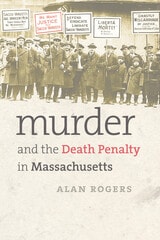
Murder and the Death Penalty in Massachusetts
Alan Rogers
University of Massachusetts Press, 2008
For more than 300 years Massachusetts executed men and women convicted of murder, but with a sharp eye on “due proceeding” and against the backdrop of popular ambivalence about the death penalty's morality, cruelty, efficacy, and constitutionality. In this authoritative book, Alan Rogers offers a comprehensive account of how the efforts of reformers and abolitionists and the Supreme Judicial Court's commitment to the rule of law ultimately converged to end the death penalty in Massachusetts.
In the seventeenth century, Governor John Winthrop and the Massachusetts General Court understood murder to be a sin and a threat to the colony's well-being, but the Puritans also drastically reduced the crimes for which death was the prescribed penalty and expanded a capital defendant's rights. Following the Revolution, Americans denounced the death penalty as “British and brutish” and the state's Supreme Judicial Court embraced its role as protector of the rights extended to all men by the Massachusetts Constitution. In the 1830s popular opposition nearly stopped the machinery of death and a vote in the Massachusetts House fell just short of abolishing capital punishment.
A post–Civil War effort extending civil rights to all men also stimulated significant changes in criminal procedure. A “monster petition” begging the governor to spare the life of a murderer convicted on slight circumstantial evidence and the grim prospect of executing nine Chinese men found guilty of murder fueled a passionate debate about the death penalty in the decade before World War I.
The trials and executions of Sacco and Vanzetti focused unwanted international and national attention on Massachusetts. This was a turning point. Sara Ehrmann took charge of the newly formed Massachusetts Council Against the Death Penalty, relentlessly lobbied the legislature, and convinced a string of governors not to sign death warrants. In the 1970s the focus shifted to the courts, and eventually, in 1980, the Supreme Judicial Court abolished the death penalty on the grounds that it violated the Massachusetts Constitution.
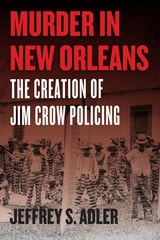
Murder in New Orleans
The Creation of Jim Crow PolicingJeffrey S. Adler
University of Chicago Press, 2019
New Orleans in the 1920s and 1930s was a deadly place. In 1925, the city’s homicide rate was six times that of New York City and twelve times that of Boston. Jeffrey S. Adler has explored every homicide recorded in New Orleans between 1925 and 1940—over two thousand in all—scouring police and autopsy reports, old interviews, and crumbling newspapers. More than simply quantifying these cases, Adler places them in larger contexts—legal, political, cultural, and demographic—and emerges with a tale of racism, urban violence, and vicious policing that has startling relevance for today.
Murder in New Orleans shows that whites were convicted of homicide at far higher rates than blacks leading up to the mid-1920s. But by the end of the following decade, this pattern had reversed completely, despite an overall drop in municipal crime rates. The injustice of this sharp rise in arrests was compounded by increasingly brutal treatment of black subjects by the New Orleans police department. Adler explores other counterintuitive trends in violence, particularly how murder soared during the flush times of the Roaring Twenties, how it plummeted during the Great Depression, and how the vicious response to African American crime occurred even as such violence plunged in frequency—revealing that the city’s cycle of racial policing and punishment was connected less to actual patterns of wrongdoing than to the national enshrinement of Jim Crow. Rather than some hyperviolent outlier, this Louisiana city was a harbinger of the endemic racism at the center of today’s criminal justice state. Murder in New Orleans lays bare how decades-old crimes, and the racially motivated cruelty of the official response, have baleful resonance in the age of Black Lives Matter.
Murder in Their Hearts
The Fall Creek MassacreDavid Thomas Murphy
Indiana Historical Society Press, 2010
Murder on Shades Mountain
The Legal Lynching of Willie Peterson and the Struggle for Justice in Jim Crow BirminghamMelanie S. Morrison
Duke University Press, 2018
In Murder on Shades Mountain Melanie S. Morrison tells the gripping and tragic story of the attack and its aftermath—events that shook Birmingham to its core. Having first heard the story from her father—who dated Nell's youngest sister when he was a teenager—Morrison scoured the historical archives and documented the black-led campaigns that sought to overturn Peterson's unjust conviction, spearheaded by the NAACP and the Communist Party. The travesty of justice suffered by Peterson reveals how the judicial system could function as a lynch mob in the Jim Crow South. Murder on Shades Mountain also sheds new light on the struggle for justice in Depression-era Birmingham. This riveting narrative is a testament to the courageous predecessors of present-day movements that demand an end to racial profiling, police brutality, and the criminalization of black men.
Murder on the Mountain
Crime, Passion, and Punishment in Gilded Age New JerseyPeter J. Wosh
Rutgers University Press, 2022
Was Margaret the calculating murderess and adulteress portrayed by the press? Or was she a battered wife pushed to the edge? Or was she, as she claimed to the end, innocent? Murder on the Mountain considers all sides of this fascinating and mysterious true crime story. In turn, it examines why this murder trial became front-page news, as it resonated with public discussions about capital punishment, mental health, anti-immigrant sentiment, domestic violence, and women’s independence. This is a gripping and thought-provoking study of a murder that shocked the nation.

Murder, Courts, and the Press
Issues in Free Press/Fair TrialPeter E. Kane. Foreword by Franklyn S. Haiman
Southern Illinois University Press, 1992
When murder is the crime, the clash in the courts is likely to be between two constitutionally enshrined rights—freedom of speech and the right to a fair trial.
Peter E. Kane shows what happened in seven famous court cases when First Amendment rights (concerning freedom of speech) conflicted with Sixth Amendment rights (concerning fair trial). He reports the circumstances of each crime, the court proceedings, and the conduct of the press in the trials of Sam Sheppard, Charles Manson and his followers, John Paul Stevenson, Claus von Bülow, and Arthur Shawcross and the cases involving the Kellie family and the Wayne Clapp murders. Kane’s narrative and analytical approach illuminates legal principles and shows the roles of actual human beings underlying the abstractions of court opinions.
In this revised and expanded edition, Kane considers two new topics stemming from recent court cases: cameras in the courtroom and a code of ethics for crime reporting. Kane explores the issue of cameras through the famous Claus von Bülow retrial, which featured live television broadcasts; regarding a journalistic code, Kane examines the massive pretrial reporting of the serial murders of Arthur Shawcross. Kane notes that sensational crime stories serve the interests of many people: the public wants to read them; journalists want to write them because they can make a reporter’s fortune and reputation; and editors and publishers want to sell papers. The sensational crime story serves everyone’s purpose except that of the accused.
In addition to exploring journalistic ethics and the proper procedures for trial judges in guaranteeing a fair trial, these cases also provide an introduction to the operation of the courts in criminal justice. "The trial court is the arena in which the conflicts between a free press and a fair trial are played out," Kane writes. "This play is described here as are the subsequent evaluations of that play by the appellate courts. Thus the legal process is considered from its beginning with the original crime to the final resolution of the case in the United States Supreme Court."
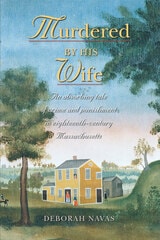
Murdered by His Wife
Deborah Navas
University of Massachusetts Press, 1999
In March 1778, Joshua Spooner, a wealthy gentleman farmer in Brookfield, Massachusetts, was beaten to death and his body stuffed down a well. Four people were hanged for the crime: two British soldiers, a young Continental soldier, and Spooner's wife, Bathsheba, who was charged with instigating the murder. She was thirty-two years old and five months pregnant when executed. Newspapers described the case as “the most extraordinary crime ever perpetrated in New England.”
Murdered by His Wife provides a vivid reconstruction of this dramatic but little-known episode. Beautiful, intelligent, high-spirited, and witty, Bathsheba was the mother of three young children and in her own words felt “an utter aversion” for her husband, who was known to be an abusive drunk.
A year before the murder, she took in and nursed a sixteen-year-old Continental soldier who was returning from a year's enlistment under George Washington. The two became lovers and conceived a child. Divorces were all but impossible for women at that time and adulteresses were stripped to the waist and publicly whipped. Bathsheba's pregnancy occasioned a series of desperate plots to murder her husband, finally brought to fruition with the aid of two British deserters from General Burgoyne's defeated army.
The plots, the crime, the trial, and the aftermath are presented against a backdrop of revolutionary turmoil in Massachusetts. As the daughter of the state's most prominent and despised Loyalist, Bathsheba bore the brunt of the political, cultural, and gender prejudices of her day. When she sought a stay of execution to deliver her baby, the Massachusetts Council rejected her petition and she was promptly hanged before a crowd of 5,000 spectators.
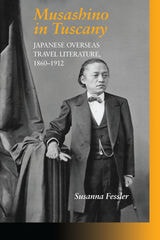
Musashino in Tuscany
Japanese Overseas Travel Literature, 1860–1912Susanna Fessler
University of Michigan Press, 2004
Museum Diplomacy
Transnational Public History and the U.S. Department of StateRichard J. W. Harker
University of Massachusetts Press, 2020
As more historic sites and museums seek to surmount social, cultural, and economic barriers between themselves and their communities in their exhibitions and programming, the Museums Connect program provides important lessons on how to overcome entrenched hierarchies of power in public history.

Museum Pieces
Collectors and CollectionNeil Harris
University of Chicago Press, 0
An eminent historian assembles a career-long group of essays about art collecting and the leadership, strategies, and shifting cultural power of American art museums as they have emerged over the past 150 years.
Museums and their cultural power, and the vagaries of collecting in the United States have fascinated University of Chicago historian Neil Harris for more than sixty years. In this collection of eighteen lively essays from across his distinguished career, Harris addresses period rooms, visitor research, museum education, museum branding and merchandising, and the persistent influence of individual collectors and patrons such as J. Pierpont Morgan, among other important topics. Harris’s geographical range is broad, too, with considerations of museums in Boston, New York, Washington, D.C., Toledo, Chicago, Denver, and elsewhere.
Harris remains one of a very small number of art-minded scholars whose work on museums, taste, and collecting not only can be read by other historians of the United States but can be read with real profit. In a rich and reflective introduction, Harris connects his deep interest in recurring subjects to both his own intellectual biography and broader trends in American scholarship.
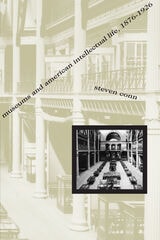
Museums and American Intellectual Life, 1876-1926
Steven Conn
University of Chicago Press, 1998
"Conn is an enthusiastic advocate for his subject, an appealing thinker, an imaginative researcher, a scholar at ease with theory and with empirical evidence." —Ann Fabian, Reviews in American History
"Steven Conn's masterly study of late-nineteenth century American museums transports the reader to a strange and wonderful intellectual universe. . . . At the end of the day, Conn reminds us, objects still have the power to fascinate, attract, evoke, and, in the right context, explain." —Christopher Clarke-Hazlett, Journal of American History
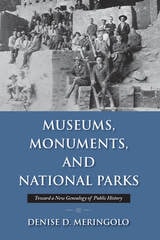
Museums, Monuments, and National Parks
Toward a New Genealogy of Public HistoryDenise D. Meringolo
University of Massachusetts Press, 2012
All of these developments included interpretive activities that shaped public understanding of the past. Yet it was not until the emergence of the education-oriented National Park Service history program in the 1920s and 1930s that public history found an institutional home that grounded professional practice simultaneously in the values of the emerging discipline and in government service. Even thereafter, tensions between administrators in Washington and practitioners on the ground at National Parks, monuments, and museums continued to define and redefine the scope and substance of the field. The process of definition persists to this day, according to Meringolo, as public historians establish a growing presence in major universities throughout the United States and abroad.
Musial
From Stash to Stan the ManJames N. Giglio
University of Missouri Press, 2001
Music Education in the United States
Contemporary IssuesJ. Terry Gates
University of Alabama Press, 1988
Exploring the ideas, innovations, and challenges shaping the future of music education.
This solid collection of essays, written by outstanding American music educators, reflects the current issues in music education and the ongoing attempt to overcome obstacles to excellence in teaching music. It stands as the most important and far-ranging professional overview of the discipline since the publication of the landmark Basic Concepts in Music Education in 1958, and early reviews indicate that it will generate both critical discussion and acclaim.
Several themes recur:(1) that music and, therefore, music education exist in a variety of social and cultural contexts, even when examined in controlled situations; (2) that music teaching has not yet freed itself from its traditional over-reliance on technical training, in spite of attention to aesthetic education; and (3) that there is a remarkable undercurrent of agreement among this diverse group of authors concerning the profession’s basic obligation to expand and refine the musical sensitivity of all age group of Americans. This book reflects some advanced thinking about these themes, which establishes new foundations for next generation theorizing and research.
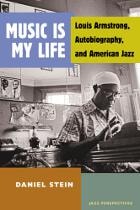
Music Is My Life
Louis Armstrong, Autobiography, and American JazzDaniel Stein
University of Michigan Press, 2012
Music Is My Life is the first comprehensive analysis of Louis Armstrong's autobiographical writings (including his books, essays, and letters) and their relation to his musical and visual performances. Combining approaches from autobiography theory, literary criticism, intermedia studies, cultural history, and musicology, Daniel Stein reconstructs Armstrong's performances of his life story across various media and for different audiences, complicating the monolithic and hagiographic views of the musician.
The book will appeal to academic readers with an interest in African American studies, jazz studies, musicology, and popular culture, as well as general readers interested in Armstrong's life and music, jazz, and twentieth-century entertainment. While not a biography, it provides a key to understanding Armstrong's oeuvre as well as his complicated place in American history and twentieth-century media culture.

Music and Theater in Minnesota History
John K. Sherman
University of Minnesota Press, 1958
Music and Theater in Minnesota History was first published in 1958. Minnesota Archive Editions uses digital technology to make long-unavailable books once again accessible, and are published unaltered from the original University of Minnesota Press editions.
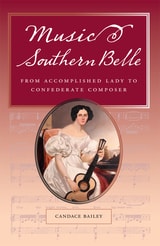
Music and the Southern Belle
From Accomplished Lady to Confederate ComposerCandace Bailey
Southern Illinois University Press, 2010
Candace Bailey’s exploration of the intertwining worlds of music and gender shows how young southern women pushed the boundaries of respectability to leave their unique mark on a patriarchal society. Before 1861, a strictly defined code of behavior allowed a southern woman to identify herself as a “lady” through her accomplishments in music, drawing, and writing, among other factors. Music permeated the lives of southern women, and they learned appropriate participation through instruction at home and at female training institutions. A belle’s primary venue was the parlor, where she could demonstrate her usefulness in the domestic circle by providing comfort and serving to enhance social gatherings through her musical performances, often by playing the piano or singing. The southern lady performed in public only on the rarest of occasions, though she might attend public performances by women. An especially talented lady who composed music for a broader audience would do so anonymously so that her reputation would remain unsullied.
The tumultuous Civil War years provided an opportunity for southern women to envision and attempt new ways to make themselves useful to the broader, public society. While continuing their domestic responsibilities and taking on new ones, young women also tested the boundaries of propriety in a variety of ways. In a broad break with the past, musical ladies began giving public performances to raise money for the war effort, some women published patriotic Confederate music under their own names, supporting their cause and claiming public ownership for their creations. Bailey explores these women’s lives and analyzes their music. Through their move from private to public performance and publication, southern ladies not only expanded concepts of social acceptability but also gained a valued sense of purpose.
Music and the Southern Belle places these remarkable women in their social context, providing compelling insight into southern culture and the intricate ties between a lady’s identity and the world of music. Augmented by incisive analysis of musical compositions and vibrant profiles of composers, this volume is the first of its kind, making it an essential read for devotees of Civil War and southern history, gender studies, and music.
Music and the Wesleys
Edited by Nicholas Temperley and Stephen Banfield
University of Illinois Press, 2010

Music in American Crime Prevention and Punishment
Lily E. Hirsch
University of Michigan Press, 2014
Although the use of music for extramusical purposes has been a part of American culture for some time, the phenomenon remained largely unknown to the general public until revelations became widespread of startling military practices during the second Iraq War. In Music in American Crime Prevention and Punishment, Lily E. Hirsch explores the related terrain at the intersection of music and law, demonstrating the ways in which music has become a tool of law enforcement and justice through: police and community leaders’ use of classical music in crime deterrence and punishment; the use of rap lyrics as prosecutorial evidence; allegations of music as incitement to violence; and the role of music in U.S. prisons and in detention centers in Guantanamo, Iraq, and Afghanistan.
In the course of her study, Hirsch asks several questions: How does the law treat music? When and why does music participate in the law? How does music influence the legal process? How does the legal process influence music? And how do these appropriations affect the Romantic ideals underlying our view of music?
Music in Black American Life, 1600-1945
A University of Illinois Press AnthologyCompiled by Laurie Matheson. Introduction by Sandra Jean Graham
University of Illinois Press, 2022
Eclectic and essential, Music in Black American Life, 1600–1945 offers specialists and students alike a gateway to the history and impact of Black music in the United States.
Contributors: R. Reid Badger, Rae Linda Brown, Samuel A. Floyd Jr., Sandra Jean Graham, Jeffrey Magee, Robert M. Marovich, Harriet Ottenheimer, Eileen Southern, Katrina Dyonne Thompson, Stephen Wade, and Charles Wolfe
Music in Black American Life, 1945-2020
A University of Illinois Press AnthologyCompiled by Laurie Matheson. Introduction by Tammy L. Kernodle
University of Illinois Press, 2022
Part sourcebook and part survey of historic music scholarship, Music in Black American Life, 1945–2020 collects groundbreaking work that redefines our view of Black music and its place in American music history.
Contributors: Nelson George, Wayne Everett Goins, Claudrena N. Harold, Eileen M. Hayes, Loren Kajikawa, Robin D. G. Kelley, Tammy L. Kernodle, Cheryl L. Keyes, Gwendolyn Pough, Bernice Johnson Reagon, Mark Tucker, and Sherrie Tucker

Music in the Age of Anxiety
American Music in the FiftiesJames Wierzbicki
University of Illinois Press, 2016
Music historian James Wierzbicki sheds light on how the Fifties' pervasive moods affected its sounds. Moving across genres established--pop, country, opera--and transfigured--experimental, rock, jazz--Wierzbicki delves into the social dynamics that caused forms to emerge or recede, thrive or fade away. Red scares and white flight, sexual politics and racial tensions, technological progress and demographic upheaval--the influence of each rooted the music of this volatile period to its specific place and time. Yet Wierzbicki also reveals the host of underlying connections linking that most apprehensive of times to our own uneasy present.
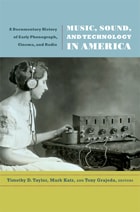
Music, Sound, and Technology in America
A Documentary History of Early Phonograph, Cinema, and RadioTimothy D. Taylor, Mark Katz, and Tony Grajeda, eds.
Duke University Press, 2012
Music/City
American Festivals and Placemaking in Austin, Nashville, and NewportJonathan R. Wynn
University of Chicago Press, 2015
Wynn tracks the history of festivals in Newport, Nashville, and Austin, taking readers on-site to consider different festival agendas and styles of organization. It’s all here: from the musician looking to build her career to the mayor who wants to exploit a local cultural scene, from a resident’s frustration over corporate branding of his city to the music executive hoping to sell records. Music/City offers a sharp perspective on cities and cultural institutions in action and analyzes how governments mobilize massive organizational resources to become promotional machines. Wynn’s analysis culminates with an impassioned argument for temporary events, claiming that when done right, temporary occasions like festivals can serve as responsive, flexible, and adaptable products attuned to local places and communities.
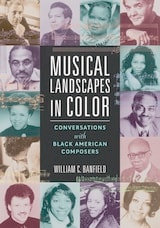
Musical Landscapes in Color
Conversations with Black American ComposersWilliam C. Banfield
University of Illinois Press, 2023
Composers featured: Michael Abels, H. Leslie Adams, Lettie Beckon Alston, Thomas J. Anderson, Dwight Andrews, Regina Harris Baiocchi, David Baker, William C. Banfield, Ysaye Maria Barnwell, Billy Childs, Noel DaCosta, Anthony Davis, George Duke, Leslie Dunner, Donal Fox, Adolphus Hailstork, Jester Hairston, Herbie Hancock, Jonathan Holland, Anthony Kelley, Wendell Logan, Bobby McFerrin, Dorothy Rudd Moore, Jeffrey Mumford, Gary Powell Nash, Stephen Newby, Coleridge-Taylor Perkinson, Michael Powell, Patrice Rushen, George Russell, Kevin Scott, Evelyn Simpson-Curenton, Hale Smith, Billy Taylor, Frederick C. Tillis, George Walker, James Kimo Williams, Julius Williams, Tony Williams, Olly Wilson, and Michael Woods
Musical Migration and Imperial New York
Early Cold War ScenesBrigid Cohen
University of Chicago Press, 2022
From the urban street level of music clubs and arts institutions to the world-making routes of global migration and exchange, this book redraws the map of experimental art to reveal the imperial dynamics and citizenship struggles that continue to shape music in the United States.
Beginning with the material conditions of power that structured the cityscape of New York in the early Cold War years, Brigid Cohen looks at a wide range of artistic practices (concert music, electronic music, jazz, performance art) and actors (Edgard Varèse, Charles Mingus, Yoko Ono, and Fluxus founder George Maciunas) as they experimented with new modes of creativity. Cohen links them with other migrant creators vital to the city’s postwar culture boom, creators whose stories have seldom been told (Halim El-Dabh, Michiko Toyama, Vladimir Ussachevsky). She also gives sustained and serious treatment to the work of Yoko Ono, something long overdue in music scholarship. Musical Migration and Imperial New York is indispensable reading, offering a new understanding of global avant-gardes and American experimental music as well as the contrasting feelings of belonging and exclusion on which they were built.

Musicians from a Different Shore
Asians and Asian Americans in Classical MusicMari Yoshihara
Temple University Press, 2008
Musicians of Asian descent enjoy unprecedented prominence in concert halls, conservatories, and classical music performance competitions. In the first book on the subject, Mari Yoshihara looks into the reasons for this phenomenon, starting with her own experience of learning to play piano in Japan at the age of three. Yoshihara shows how a confluence of culture, politics and commerce after the war made classical music a staple in middle-class households, established Yamaha as the world's largest producer of pianos and gave the Suzuki method of music training an international clientele. Soon, talented musicians from Japan, China and South Korea were flocking to the United States to study and establish careers, and Asian American families were enrolling toddlers in music classes.
Against this historical backdrop, Yoshihara interviews Asian and Asian American musicians, such as Cho-Liang Lin, Margaret Leng Tan, Kent Nagano, who have taken various routes into classical music careers. They offer their views about the connections of race and culture and discuss whether the music is really as universal as many claim it to be. Their personal histories and Yoshihara's observations present a snapshot of today's dynamic and revived classical music scene.
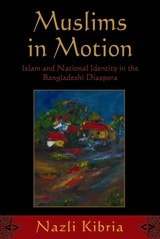
Muslims in Motion
Islam and National Identity in the Bangladeshi DiasporaKibria, Nazli
Rutgers University Press, 2011
In Muslims in Motion, Nazli Kibria provides a comparative look at Bangladeshi Muslims in different global contexts--including Britain, the U.S., the Middle East, and Malaysia. Kibria examines international migrant flows from Bangladesh, and considers how such migrations continue to shape Islamization in these areas. Having conducted more than 200 in-depth interviews, she explores how, in societies as different as these, migrant Muslims, in their everyday lives, strive to achieve economic gains, sustain community and family life, and realize a sense of dignity and honor.
Muslims in Motion offers fresh insights into the prominence of Islam in these communities, especially an Islam defined by fundamentalist movements and ideologies. Kibria also focuses on the complex significance of nationality--with rich analyses of the diaspora, the role of gender and class, and the multiple identities of the migrants, she shows how nationality can be both a critical source of support and also of difficulty for many in their efforts to attain lives of dignity. By bringing to life a vast range of experiences, this book challenges prevailing stereotypes of Muslims.
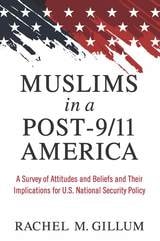
Muslims in a Post-9/11 America
A Survey of Attitudes and Beliefs and Their Implications for U.S. National Security PolicyRachel M. Gillum
University of Michigan Press, 2018
Muslims in a Post-9/11 America examines how public fears about Muslims in the United States compare with the reality of American Muslims’ attitudes on a range of relevant issues. While most research on Muslim Americans focuses on Arab Muslims, a quarter of the Muslim American population, Rachel Gillum includes perspectives of Muslims from various ethnic and national communities—from African Americans to those of Pakistani, Iranian, or Eastern European descent. Using interviews and one of the largest nationwide surveys of Muslim Americans to date, Gillum examines more than three generations of Muslim American immigrants to assess how segments of the Muslim American community are integrating into the U.S. social fabric, and how they respond to post-9/11 policy changes. Gillum’s findings challenge perceptions of Muslims as a homogeneous, isolated, un-American, and potentially violent segment of the U.S. population.
Despite these realities, negative political rhetoric around Muslim Americans persists. The findings suggest that the policies designed to keep America safe from terrorist attacks may have eroded one of law enforcement’s greatest assets in the fight against violent extremism—a relationship of trust and goodwill between the Muslim American community and the U.S. government. Gillum argues for policies and law enforcement tactics that will bring nuanced understandings of this diverse category of Americans and build trust, rather than alienate Muslim communities.
Muslims in the United States
The State of ResearchKaren Isaksen Leonard
Russell Sage Foundation, 2003
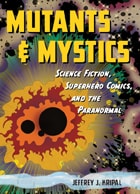
Mutants and Mystics
Science Fiction, Superhero Comics, and the ParanormalJeffrey J. Kripal
University of Chicago Press, 2011
But that's just scratching the surface, says Jeffrey Kripal. In Mutants and Mystics, Kripal offers a brilliantly insightful account of how comic book heroes have helped their creators and fans alike explore and express a wealth of paranormal experiences ignored by mainstream science. Delving deeply into the work of major figures in the field—from Jack Kirby’s cosmic superhero sagas and Philip K. Dick’s futuristic head-trips to Alan Moore’s sex magic and Whitley Strieber’s communion with visitors—Kripal shows how creators turned to science fiction to convey the reality of the inexplicable and the paranormal they experienced in their lives. Expanded consciousness found its language in the metaphors of sci-fi—incredible powers, unprecedented mutations, time-loops and vast intergalactic intelligences—and the deeper influences of mythology and religion that these in turn drew from; the wildly creative work that followed caught the imaginations of millions. Moving deftly from Cold War science and Fredric Wertham's anticomics crusade to gnostic revelation and alien abduction, Kripal spins out a hidden history of American culture, rich with mythical themes and shot through with an awareness that there are other realities far beyond our everyday understanding.
A bravura performance, beautifully illustrated in full color throughout and brimming over with incredible personal stories, Mutants and Mystics is that rarest of things: a book that is guaranteed to broaden—and maybe even blow—your mind.
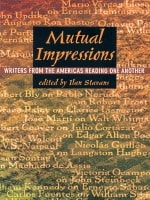
Mutual Impressions
Writers from the Americas Reading One AnotherIlan Stavans, ed.
Duke University Press, 1999
Divided into symmetrical halves—South reading North and North reading South—the book presents essays by leading novelists, poets, and other writers that focus on the work of another literary figure from across the divide. Borges, for example, finds in Hawthorne the perfect precursor to his own interest in allegories; Katherine Anne Porter examines José Joaquín Fernández de Lizardi as a rascal whose picaresque views of life in The Itching Parrot served to launch the Latin American novel; Cortázar’s study of the plots and style of Poe shows an affinity that left an indelible mark on the Argentine’s short fiction; Susan Sontag views Machado de Assis as the ultimate mirror, a proto–postmodernist.
With other essays by Thomas Pynchon, William H. Gass, John Updike, Gabriel García Márquez, Alejo Carpentier, John Barth, Robert Coover, Pedro Henríquez Ureña, Grace Paley, Juan Carlos Onetti, and Mark Strand, among others, Mutual Impressions offers a remarkable view of the connections that comprise a literary tradition of the Americas. It is a book that will surprise and enliven its readers as it informs and awakens in them a sense of wonder.
Contributors. John Barth, José Bianco, Robert Bly, Jorge Luis Borges, Alejo Carpentier, Hiber Conteris, Robert Coover, Julio Cortázar, Ezequiel Martínez Estrada, Waldo Frank, Carlos Fuentes, William H. Gass, Nicolás Guillén, William Kennedy, Mario Vargas Llosa, Gabriel García Márquez, José Martí, Pablo Neruda, Victoria Ocampo, Juan Carlos Onetti, Grace Paley, Octavio Paz, Katherine Anne Porter, Thomas Pynchon, Kenneth Rexroth, Antonio Benítez Rojo, Barbara Probst Solomon, Susan Sontag, Ilan Stavans, Mark Strand, John Updike, Pedro Henríque Ureña, Derek Walcott, Paul West

Muzzled Oxen
Reaping Cotton and Sowing Hope in 1920s ArkansasGenevieve Grant Sadler
Butler Center for Arkansas Studies, 2014