Results by title
18284 books match the query 'United States' and 949 start with m
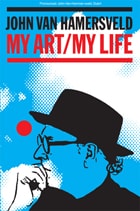
My Art, My Life
John Van Hamersveld
St. Augustine's Press, 2010
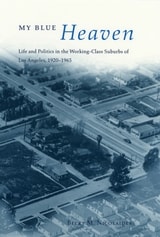
My Blue Heaven
Life and Politics in the Working-Class Suburbs of Los Angeles, 1920-1965Becky M. Nicolaides
University of Chicago Press, 2002
As Becky M. Nicolaides shows in My Blue Heaven, this ethic of self-reliance and homeownership formed the core of South Gate's identity. With post-World War II economic prosperity, the community's emphasis shifted from building homes to protecting them as residents tried to maintain their standard of living against outside threats—including the growing civil rights movement—through grassroots conservative politics based on an ideal of white homeowner rights. As the citizens of South Gate struggled to defend their segregated American Dream of suburban community, they fanned the flames of racial inequality that erupted in the 1965 Watts riots.
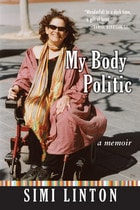
My Body Politic
A MemoirSimi Linton
University of Michigan Press, 2005
-Daniel Berrigan, S.J.
"The struggles, joys, and political awakening of a firecracker of a narrator. . . . Linton has succeeded in creating a life both rich and enviable. With her crackle, irreverence, and intelligence, it's clear that the author would never be willing to settle. . . . Wholly enjoyable."
-Kirkus Reviews
"Linton is a passionate guide to a world many outsiders, and even insiders, find difficult to navigate. . . . In this volume, she recounts her personal odyssey, from flower child . . . to disability-rights/human rights activist."
-Publishers Weekly
"Witty, original, and political without being politically correct, introducing us to a cast of funny, brave, remarkable characters (including the professional dancer with one leg) who have changed the way that 'walkies' understand disability. By the time Linton tells you about the first time she was dancing in her wheelchair, you will feel like dancing, too."
---Carol Tavris, author of Anger: The Misunderstood Emotion
"This astonishing book has perfect pitch. It is filled with wit and passion. Linton shows us how she learned to 'absorb disability,' and to pilot a new and interesting body. With verve and wonder, she discovers her body's pleasures, hungers, surprises, hurts, strengths, limits, and uses."
-Rosemarie Garland-Thomson, author of Extraordinary Bodies: Figuring Physical Disability in American Culture and Literature
"An extraordinarily readable account of life in the fast lane... a brilliant autobiography and a great read."
-Sander L. Gilman, author of Fat Boys: A Slim Book
While hitchhiking from Boston to Washington, D.C., in 1971 to protest the war in Vietnam, Simi Linton was involved in a car accident that paralyzed her legs and took the lives of her young husband and her best friend. Her memoir begins with her struggle to regain physical and emotional strength and to resume her life in the world. Then Linton takes us on the road she traveled (with stops in Berkeley, Paris, Havana) and back to her home in Manhattan, as she learns what it means to be a disabled person in America.
Linton eventually completed a Ph.D., remarried, and began teaching at Hunter College. Along the way she became deeply committed to the disability rights movement and to the people she joined forces with. The stories in My Body Politic are populated with richly drawn portraits of Linton's disabled comrades, people of conviction and lusty exuberance who dance, play-and organize--with passion and commitment.
My Body Politic begins in the midst of the turmoil over Vietnam and concludes with a meditation on the U.S. involvement in the current war in Iraq and the war's wounded veterans. While a memoir of the author's gradual political awakening, My Body Politic is filled with adventure, celebration, and rock and roll-Salvador Dali, James Brown, and Jimi Hendrix all make cameo appearances. Linton weaves a tale that shows disability to be an ordinary part of the twists and turns of life and, simultaneously, a unique vantage point on the world.
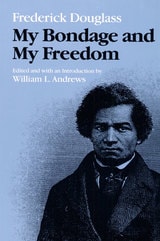
My Bondage and My Freedom
Frederick Douglass
University of Illinois Press, 1988
My Brother's Keeper
George McGovern and Progressive ChristianityMark A. Lempke
University of Massachusetts Press, 2017
George McGovern is chiefly remembered for his landslide loss to Richard Nixon in 1972. Yet at the time, his candidacy raised eyebrows by invoking the prophetic tradition, an element of his legacy that is little studied. In My Brother's Keeper, Mark A. Lempke explores the influence of McGovern's evangelical childhood, Social Gospel worldview, and conscientious Methodism on a campaign that brought antiwar activism into the mainstream.
McGovern's candidacy signified a passing of the torch within Christian social justice. He initially allied with the ecumenical movement and the mainline Protestant churches during a time when these institutions worked easily with liberal statesmen. But the senator also galvanized a dynamic movement of evangelicals rooted in the New Left, who would dominate subsequent progressive religious activism as the mainline entered a period of decline. My Brother's Keeper argues for the influential, and often unwitting, role McGovern played in fomenting a “Religious Left” in 1970s America, a movement that continues to this day. It joins a growing body of scholarship that complicates the dominant narrative of that era's conservative Christianity.
My Butch Career
A MemoirEsther Newton
Duke University Press, 2018
My Dangerous Desires
A Queer Girl Dreaming Her Way HomeAmber L. Hollibaugh
Duke University Press, 2000
In looking at themes such as the relationship between activism and desire or how sexuality can be intimately tied to one’s class identity, Hollibaugh fiercely and fearlessly analyzes her own political development as a response to her unique personal history. She explores the concept of labeling and the associated issues of categories such as butch or femme, transgender, bisexual, top or bottom, drag queen, b-girl, or drag king. The volume includes conversations with other writers, such as Deirdre English, Gayle Rubin, Jewelle Gomez, and Cherríe Moraga. From the groundbreaking article “What We’re Rollin’ Around in Bed With” to the radical “Sex Work Notes: Some Tensions of a Former Whore and a Practicing Feminist,” Hollibaugh charges ahead to describe her reality, never flinching from the truth. Dorothy Allison’s moving foreword pays tribute to a life lived in struggle by a working-class lesbian who, like herself, refuses to suppress her dangerous desires.
Having informed many of the debates that have become central to gay and lesbian activism, Hollibaugh’s work challenges her readers to speak, write, and record their desires—especially, perhaps, the most dangerous of them—“in order for us all to survive.”

My Darling Boys
A Family at War, 1941-1947Fred H. Allison
University of North Texas Press, 2023
My Dearest Angel
A Virginia Family Chronicle 1895–1947Katie Letcher Lyle
Ohio University Press, 2002
She was the daughter of a circuit judge and state senator. He was the youngest son of Virginia’s Civil War governor and was a state legislator himself at the age of nineteen. Their courtship and marriage stands as a portrait of a bygone way of life unique to the American South during the first half of the twentieth century. My Dearest Angel is their story, told through their faithful correspondence over the course of their fifty years together.
Piecing together the voluminous letters, their granddaughter, noted author Katie Letcher Lyle, has succeeded in giving us an intimate panorama of the full and oftentimes wrenching lives led by Greenlee and Katie Letcher. Domestic life, family secrets, and visiting luminaries are part of their story. But the abiding appeal of My Dearest Angel is the maturation of a lifelong relationship built on the crest of a changing world.
My Diary
August 30th to November 5th, 1874By Cornelia Adair. Introduction by Montagu K. Brown, Illustrations by Malcolm Thurgood
University of Texas Press, 1965
Cornelia Wadsworth Adair’s ancestors had pioneered in western New York, where they opened and developed large, palatial estates; and the life they lived was elegant and aristocratic. Adair too was discreetly cultured; yet she took great personal pleasure in the rough and primitive land of her famed JA Ranch in north Texas. Because of physical discomfort and noisy passengers, she detested traveling by railroad coach; yet she could ride all day on horseback and lie down to sleep on a makeshift cot by a waterhole or on an Indian’s flea-infested buffalo rug. She was a lady of interesting contradictions.
This little Diary is her lively account of a two-month trip which she and her husband made into the western part of the United States in 1874. The ostensible purpose of the trip was to hunt buffalo; however, these large beasts actually play a very small part in the journal. Rather, the book is an interesting and often amusing account, by an observant woman, of the long journey from her husband’s estate in Ireland to New York, to Chicago and on into upper Michigan, across Lake Superior to Minnesota, down the Mississippi for several days, out to the buffalo-hunting grounds in Nebraska, then to Denver and the wonders of the Rocky Mountains, and finally back to New York and the Europe-bound ship.
Adair writes with an easy fluency; and her eye for picturesque detail, her taste for amusing incongruities, her romanticist’s delight in Nature, and her instinct for a “good tale” combine to make her Diary pleasant and entertaining reading, while her powers of keen observation provide valuable insight into life as it was then in the West. First printed for private circulation in 1918, the original book is now a rare collector’s item of Western Americana. Mrs. Adair said that she was allowing its publication for two reasons. First, she was afraid that her grandchildren and young friends would remember her only as “an old lady who sat in an armchair, and whose stick had to be looked for”; she wanted them to know that she had once been “a very lively person . . . [who] did all sorts of exciting things.” Second, she felt it worthwhile to record her experiences because “the world is changing so quickly, ways of travelling especially so . . . and I think it may be interesting to compare what was done in 1874 with what will be done by the time the children are able to travel. No doubt they will do their journeys by air, and do many, many things that I have not been able to do; but they can never see the prairies of America in their wild uncivilised state, or hunt buffalo over them, nor can they pow-wow with the Red Indians in a camp on the Platte River. So every time has its own special joys, and the great thing is to miss as little as possible, and to share as much.”

My Eighty Years in Texas
By William Physick Zuber
University of Texas Press, 1971
Almost a century and a half went into the making of My Eighty Years in Texas. It began as a diary, kept by fifteen-year-old William Physick Zuber after he joined Sam Houston’s Texas army in 1836, hoping he could emulate the heroism of American Revolutionary patriots. Although his hopes were never realized, Zuber recorded the privations, victories, and defeats of armies on the move during the Texas Revolution, the Indian campaigns, and, as he styled it, the Confederate War.
In 1910, at the age of ninety, Zuber began the enormous task of transcribing his diaries and his memories for publication. After his death in 1913, the handwritten manuscript, 1, was placed in the Texas State Archives, where it was used as a reference source by students and scholars of Texas history. Over a half century after Zuber’s death, Janis Boyle Mayfield finally brought his publication plans to fruition.
Zuber details his early zest for learning and his laborious methods of self-education. He tells of the trials of organizing and teaching schools in the sparsely populated plains. He recalls the day-by-day happenings of a private soldier in the Texas army of 1836, the Texas Militia, and the Confederate army—including the mishaps of army life and the encounters with enemies from San Jacinto to Cape Girardeau. After the Civil War, his interest turns to the politics of Reconstruction, the veterans’ pension, and the founding of the Texas Veterans Association.
This is the story of and by an outspoken Texian, complete with his attitudes, principles, and moralizings, and the nineteenth-century style and flavor of his writing.
Included as an appendix is “An Escape from the Alamo,” the account of Moses Rose for which Zuber, who was a prolific writer, was best known. A historiography of the Rose story, a bibliography of Zuber’s published and unpublished writings, annotation, and an introduction are provided by Llerena Friend.

My Ever Dear Daughter, My Own Dear Mother
The Correspondence of Julia Sonte Towne and Mary Julia Towne, 1868-1882Katherine R. Morgan
University of Iowa Press, 1996
My Eyes Feel They Need to Cry
Stories from the Formerly HomelessMartha Aladjem Bloomfield
Michigan State University Press, 2013

My Father Said Yes
A White Pastor in Little Rock School IntegrationDunbar H. Ogden
Vanderbilt University Press, 2008
My Father Said Yes is the untold story of the Reverend Dunbar Ogden, who became the pro-integration leader in Little Rock's white community. He responded to a call for support from Daisy Bates, co-owner of the town's black newspaper. Both faced fierce opposition from within as well as from outside. Reverend Ogden lost his church and Daisy Bates lost her newspaper.
This memoir is also a moving father-son story. In this frank account, the author discusses the depression his father battled for most of his life, as well as the family tragedy of his brother's suicide.
My Father's Name
A Black Virginia Family after the Civil WarLawrence P. Jackson
University of Chicago Press, 2012
My Father’s Name is a family story full of twists and turns—and one of haunting familiarity to many Americans, who may question whether the promises of emancipation have ever truly been fulfilled. It is also a resolute look at the duties that come with reclaiming and honoring Americans who survived slavery and a thoughtful meditation on its painful and enduring history.
My Father's War
Fighting with the Buffalo Soldiers in World War IICarolyn Ross Johnston
University of Alabama Press, 2012
A compelling story of a unit of Buffalo Soldiers and their white commander fighting on the Italian front during World War II.
The 92nd Division of the Fifth Army was the only African American infantry division to see combat in Europe during 1944 and 1945, suffering more than 3,200 casualties. Members of this unit, known as Buffalo Soldiers, endured racial violence on the home front and experienced racism abroad. Engaged in combat for nine months, they were under the command of southern white infantry officers like their captain, Eugene E. Johnston.
Carolyn Ross Johnston draws on her father’s account of the war and her extensive interviews with other veterans of the 92nd Division to describe the experiences of a naïve southern white officer and his segregated unit on an intimate level. During the war, the protocol that required the assignment of southern white officers to command black units, both in Europe and in the Pacific theater, was often problematic, but Johnston seemed more successful than most, earning the trust and respect of his men at the same time that he learned to trust and respect them. Gene Johnston and the African American soldiers were transformed by the war and upon their return helped transform the nation.
My Father, the Messiah
A MemoirGil Z. Hochberg
Duke University Press, 2026
My Father’s Closet
Karen McClintock
The Ohio State University Press, 2017
“Karen McClintock reconstructs the details of her father’s double life with novelistic flair, keen psychological insight, and graceful compassion.” —Alison Bechdel
Thirty years after her father’s death, Karen McClintock sets out to find the gay father she never really knew. As we follow the unraveling family secret, we find ourselves drawn into her story as they stumble into infidelity, grieve heartbreaking losses, and remain loyal in love.
Set in Columbus, Ohio, My Father’s Closet tells the story of how just before the war, McClintock’s parents fell in love and married, while overseas in Germany the man whom she believes became her father’s lover was concealing his Jewish and gay identities in order to escape to America. A set of her father’s journals, letters her parents sent to each other during the Second World War, and a mysterious painting all lead her toward the truth about her gay father. McClintock weaves a complex secret into the fabric of lives we truly care about. And in the process, she leads us out of her father’s closet.
This gripping memoir captures the longing children feel for a distant or hidden parent and taps into the complexity of human connection and abandonment. The characters are resilient and vibrant. The hidden lovers, the nosey neighbors, and surprise lovers all show up. In the end, this extraordinary family finds ways to connect and freedom to love. Anyone who grew up with a family secret will appreciate the dynamics afoot in this fast-paced and compelling story.

My Friend, Julia Lathrop
Jane Addams
University of Illinois Press, 1935
The memoir reveals a great deal about the influence of Hull-House on the social and political history of the early twentieth century. An introduction by long-time Addams scholar Anne Firor Scott provides a broader account of women's work in voluntary associations.

My Germany
A Jewish Writer Returns to the World His Parents EscapedLev Raphael
University of Wisconsin Press, 2009
Haunted by his parents’ horrific suffering and traumatic losses under Nazi rule, Lev Raphael grew up loathing everything German. Those feelings shaped his Jewish identity, his life, and his career. While researching his mother’s war years after her death, he discovers a distant relative living in the very city where she had worked in a slave labor camp, found freedom, and met his father. Soon after, Raphael is launched on book tours in Germany and, in the process, redefines himself as someone unafraid to face the past and let it go.
Bookmarks, “Top Ten Nonfiction Titles of 2009”
My Girlhood Among Outlaws
Lily Klasner
University of Arizona Press, 1972
In My Girlhood Among Outlaws, Lily recalls her experiences with Billy the Kid and other desperadoes, and sets the record straight on popular misrepresentations of events. Of particular interest to historians is her preservation of the diary of famous cattleman and family friend John Chisum.
My Grandfather's Prison
A Story of Death and Deceit in 1940s Kansas CityRichard A. Serrano
University of Missouri Press, 2009
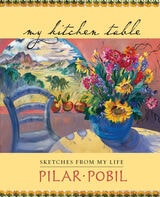
My Kitchen Table
Sketches from My LifePilar Pobil
University of Utah Press, 2007
Other stories describe her meeting in Mallorca with the Utah man who would become her husband, her journey to a faraway country, the birth of her children, and her discovery of her artistic impulses and abilities. All are woven with the threads of color and culture of her two homes. Filled with wit and insight, My Kitchen Table reveals foremost the voice of a woman determined to be true to herself and to her art.
Accompanying the narrative are some fifty color reproductions of the paintings and sculptures for which Pilar Pobil has become known. This is a volume that art lovers everywhere will treasure.
"Like her paintings, Pilar’s stories overflow their pages. They fold us into their embrace, so we feel and see her dancing in and out of our minds, a curious and mischievous child, a young woman in love coming to a foreign land with a foreign culture and tongue, the heartbreak of her losses, and the continual renewals that have ripened her art. Pilar’s book, like her house, is a magic kingdom and she is the fairy princess who presides. She paints her shoes for social engagements. The seats of her chairs beam faces. Her electrical wiring metamorphoses into fantastic snakes. The garden that leads to her studio is Salt Lake City’s Giverny. Paintings are everywhere and talk to each other with glittering non sequiturs. At the center of it all is her kitchen table, the place from which she serves the voices and visions of her life. The subtleties of her telling, like the bold clarity of her judgments, are those of an artist whose inspirations are a feast she graciously invites us to share."
— from the Foreword by Robert D. Newman, Dean of the College of Humanities, University of Utah
A finalist for the Utah Book Award in Nonfiction.
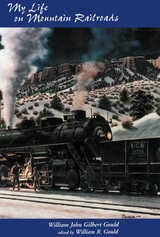
My Life On Mountain Railroads
William Gould
Utah State University Press, 1995
In 1917, Gilbert Gould achieved his dream to be an engineer, and began running engines for the Denver & Rio Grande and later for the Utah Railway. He was a natural storyteller, and his recollections are entertaining and historically rewarding.
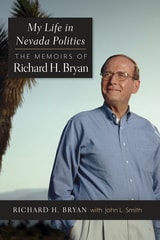
My Life in Nevada Politics
The Memoirs of Senator Richard H. BryanRichard H. Bryan
University of Nevada Press, 2024
Born in Washington, D.C. in 1937, Bryan grew up in Las Vegas. His interest in politics started early, winning school-class elections and expressing a personal goal of one day becoming Governor of Nevada. He was elected student body president at the University of Nevada.
His career in public service began as a deputy district attorney in Clark County. In 1966, he became the first county public defender in state history. Bryan served in the Nevada Legislature in both the Assembly and Senate before winning the statewide office of Attorney General in 1978. He was elected Nevada Governor in 1982, winning re-election in 1986. Bryan was elected to the U.S. Senate in 1988, reelected in 1994, and served on the committees on Commerce, Banking, Taxation, and Intelligence, and chaired the Ethics Committee. He retired from the Senate in 2001 and returned to Nevada.
Bryan’s list of accomplishments is extensive. He was largely responsible for the early call-to-arms in the fight against the Department of Energy’s attempt to create a nuclear waste repository at Yucca Mountain. As governor, he reorganized state economic development programs, improved environmental protections for Lake Tahoe and other threatened areas, and made unprecedented appointments of women. In the Senate, Bryan authored the Southern Nevada Public Lands Management Act and the National Conservation Area for the High Rock Desert country. He had a front-row seat to the historic buildup to the Iraq War and the impeachment of President Bill Clinton. In retirement, Bryan continues to serve the state through his participation on a wide range of committees.
Throughout his political career, Bryan, with wife Bonnie at his side, traversed Nevada from its tiniest hamlets to the metro areas of Reno and Las Vegas with unrivaled zeal in his efforts to represent the state’s citizens. He is famous for knowing thousands of his constituents not only by their first names, but also recalling details of their lives. The simple fact is, while in service to Nevada, Bryan was in his element in the place he loves best.
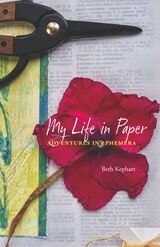
My Life in Paper
Adventures in EphemeraBeth Kephart
Temple University Press, 2023
Kephart’s obsession with paper began in the wake of her father’s death, when she began to handcraft books and make and marble paper in his memory. But it was when she read My Life with Paper, an autobiography by the late renowned paper hunter and historian Dard Hunter, that she felt she had found a kindred spirit, someone to whom she might address a series of one-sided letters about life and how we live it. Remembering and crafting, wanting and loving, doubting and forgetting—the spine and weave of My Life in Paper came into view.
Paper, for Kephart, provides proof of our yearning, proof of our failure, proof of the people who loved us and the people we have lost. It offers, too, a counterweight to the fickle state of memory.
My Life in Paper, illustrated by the author herself, is an intimate and poignant meditation on life’s most pressing questions.
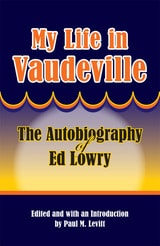
My Life in Vaudeville
The Autobiography of Ed LowryEd Lowry, Edited by Paul M. Levitt
Southern Illinois University Press, 2011
Normal0falsefalsefalseEN-USX-NONEX-NONE
An entertaining record of a life and a time
Ed Lowry joined the vaudeville circuit in 1910 at the age of fourteen. He never achieved stardom equal to the likes of Fred Allen, Jack Benny, George Burns, Buster Keaton, or Eddie Cantor, and he never considered himself an “artiste.” Instead, he saw himself as a hoofer and comic simply trying to make a living on the vaude scene. My Life in Vaudeville recounts Lowry’s long career in entertainment from the viewpoint of a foot soldier with a big dream.
Lowry’s story begins in the heyday of vaudeville in the early twentieth century and follows its gradual decline. Unlike many of his associates, he recognized that movies and other forms of entertainment were the future, and thus branched out into other venues. He took gigs in radio in Philadelphia, Newark, New York, and Los Angeles; explored revues, cabarets, burlesque, and film; and organized USO road shows. With wit and perception, he reveals his stage roots as an entertainer playing to his audience, and editor Paul M. Levitt’s introduction beautifully sets the stage for Lowry’s gags-to-riches tale, providing much-needed historical perspective.
My Life in Vaudeville is an unpretentious record of a time when thousands of young people went into show business to escape the boredom of daily life, and Lowry’s story is a view of vaudeville not often encountered. Lowry does much more than recall the daily life of a working actor, musician, and comedian. His story brings vaudeville to life and places it within the larger narratives of popular culture and popular entertainment of the twentieth century.
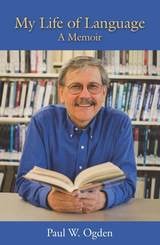
My Life of Language
A Memoirogden
Gallaudet University Press, 2017
Paul W. Ogden has dedicated his life to educating young deaf and hard of hearing people and raising awareness of what it means to be deaf in a hearing world. He has taught and mentored a generation of teachers, and his classic volume, The Silent Garden, has served as a guide for parents and educators for over thirty years. Now he tells his personal story of challenges faced and lessons learned, revealing that the critical, guiding factors for him have always been language and successful communication.
Born in a time when many deaf children had no access to language, Paul learned spoken and written language skills at a young age through the painstaking efforts of his mother. His tight-knit family, which included one deaf and two hearing older brothers, facilitated open and constant communication using a variety of methods. His father was a pastor who was involved in the civil rights movement. He struggled with depression, an illness that would take the life of one of Paul’s brothers. As a student at a residential deaf school where the use of American Sign Language (ASL) was suppressed, Paul continued to build on the speech and lipreading skills he had learned at home. He returned home for high school and graduated as co-valedictorian—unaware of the standing ovation he received as he walked to the podium.
Following a rewarding experience as an undergraduate at Antioch College, Paul went on to earn a PhD from the University of Illinois, a rare accomplishment for a deaf person at that time. During his graduate studies, he finally had the opportunity to learn ASL. As an award-winning professor of Deaf Studies at California State University, Fresno, he successfully petitioned for the university to recognize ASL as a language, and he established the Silent Garden program, which has grown into a flourishing provider of training and resources to support the Deaf community. In My Life of Language, Paul offers eloquent reflections on both the joyful and difficult periods of his life as he navigated relationships, faced discrimination, questioned his faith, and found great happiness in his marriage.

My Life with Literacy
The Continuing Education of a HistorianHarvey J. Graff
University Press of Colorado, 2025
My Life with President Kennedy
Christopher Clausen
University of Iowa Press, 1994
As its title implies, this book reflects in varying ways the experiences and attitudes of one who came of age in the first half of that now mythical decade, the 1960s. In an unusual combination of history, criticism, and autobiography, one of our best literary and cultural critics explores life and death in the late twentieth century and some of the older worlds that made American culture what it is today.
Sixties survivors, as Christopher Clausen points out, do not necessarily hold more beliefs or tastes in common than any other group. Nevertheless they may be more likely than most people born earlier or later to consider the relations between public and private life—the political and the personal—a problem, sometimes even an unresolvable problem. While this is not primarily a book about the 1960s, most of it occupies the noisy crossroads where public worlds intersect the private, mysterious lives of individuals and families, where ordinary people pursue their own destinies and desires while submitting consciously or unconsciously to the pressures of the public sphere—a set of demands or aspirations common to people in a particular time and place.
In modern America, where most of these essays are set, any individual is likely to live in several worlds at any given moment, as well as to pass through several more over a lifetime. Because of rapid transitions in public life and culture while they were still at an impressionable age, members of the “Kennedy generation” became almost morbidly conscious of the persistence of the past in the present. The often unpredictable effect on individual lives of historical forces is the main subject of Clausen's fascinating account.
My Lord, What a Morning
An AutobiographyMarian Anderson
University of Illinois Press, 2002
My Lord, What a Morning is a gentle and engrossing memoir, abounding with the tender and inspiring stories of Marian Anderson's life in her own modest words. From her humble but proud beginnings in south Philadelphia to international vocal renown, the legendary contralto writes of triumph and adversity, of being grounded in faith and surrounded by family, and of the music that shaped her career.
Anderson published My Lord, What a Morning in 1956 on the heels of her groundbreaking role as the first African American to perform at the Metropolitan Opera. In it are bittersweet reminiscences of a working-class childhood, from her first job scrubbing the neighbors' steps to the sorrow and upheaval of her father's untimely death. Here are the stories of a young girl with prodigious talent and her warm remembrances of the teachers, managers, friends, accompanists, and fans who worked to foster it. In addition, she provides a veritable travelogue of her concerts across the globe and rare glimpses at the personal life of a woman more concerned with family than celebrity.
With eleven photographs and a touching new foreword by Anderson's nephew, famed conductor and poet James DePreist, this edition of My Lord, What a Morning revives the classic portrait of a musical legend who was resilient in the bullying face of bigotry and gracious in the unfaltering glow of fame.
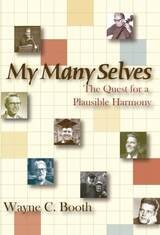
My Many Selves
The Quest for a Plausible HarmonyWayne C. Booth
Utah State University Press, 2006
His memoir, My Many Selves, is both an incisive self-examination and a creative approach to retelling his life. Writing his autobiography became a quest to harmonize the diverse, discordant parts of his identity and resolve the conflicts in what he thought and believed. To see himself clearly and whole, he broke his self down, personified the fragments, uncovered their roots in his life, and engaged his multiple identities and experiences in dialogue. Basic to his story and to its lifelong concerns with ethics and rhetoric was his youth in rural Utah. He valued that background, while acknowledging its ambiguous influence on him, and continued to identify himself as Mormon, though he renounced most Latter-day Saint doctrines.
Wayne Booth died in October 2005, soon after completing work on his autobiography.
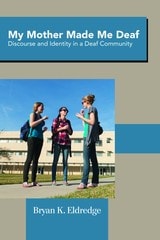
My Mother Made Me Deaf
Discourse and Identity in a Deaf CommunityBryan K. Eldredge
Gallaudet University Press, 2017
Bryan K. Eldredge seeks to more precisely understand the relationship between ASL use and Deaf identity using the tools of linguistic anthropology. In this work, he presents research resulting from fieldwork with the Deaf community of Utah Valley. Through informal interactions and formal interviews, he explores the role of discourse in the projection and construction of Deaf identities and, conversely, considers how ideas about language affect the discourse that shapes identities. He finds that specific linguistic ideologies exist that valorize some forms of language over others and that certain forms of ASL serve to establish a culturally Deaf identity. My Mother Made Me Deaf demonstrates that the DEAF-WORLD consists of a multitude of experiences and ways of being even as it is bound together by certain essential elements that are common to Deaf people.
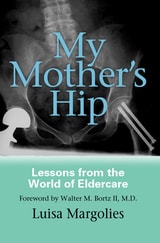
My Mother's Hip
Lessons From The World Of EldercareLuisa Margolies
Temple University Press, 2004
My Odyssey Through the Underground Press
Michael Kindman
Michigan State University Press, 2011
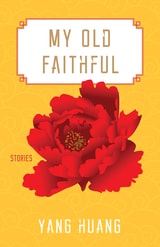
My Old Faithful
StoriesYang Huang
University of Massachusetts Press, 2018
Showing both the drama of familial intimacy and the ups and downs of the everyday, My Old Faithful introduces readers to a close-knit Chinese family. These ten interconnected short stories, which take place in China and the United States over a thirty-year period, merge to paint a nuanced portrait of family life, full of pain, surprises, and subtle acts of courage. Richly textured narratives from the mother, the father, the son, and the daughters play out against the backdrop of China's social and economic change.
With quiet humor and sharp insight into the ordinary, Yang Huang writes of a father who spanks his son out of love, a brother who betrays his sister, and a woman who returns to China after many years to find her country changed in ways both expected and startling.
My Parents
Memoirs of New World IcelandersBirna Bjarnadottir
University of Manitoba Press, 2007

My Race Is My Gender
Portraits of Nonbinary People of ColorStephanie Hsu
Rutgers University Press, 2024
Genderqueer and nonbinary people of color often experience increased marginalization, belonging to an ethnic group that seldom recognizes their gender identity and a queer community that subscribes to white norms. Yet for this very reason, they have a lot to teach about how racial, sexual, and gender identities intersect. Their experiences of challenging social boundaries demonstrate how queer communities can become more inclusive and how the recognition of nonbinary genders can be an anti-racist practice.
My Race is My Gender is the first anthology by nonbinary writers of color to include photography and visual portraits, centering their everyday experiences of negotiating intersectional identities. While informed by queer theory and critical race theory, the authors share their personal stories in accessible language. Bringing together Black, Indigenous, Latine, and Asian perspectives, its six contributors present an intergenerational look at what it means to belong to marginalized queer communities in the U.S. and feel solidarity with a global majority at the same time. They also provide useful insights into how genderqueer and nonbinary activism can both energize and be fueled by such racial justice movements as Black Lives Matter.
My Sense of Silence
Memoirs of a Childhood with DeafnessLennard J. Davis
University of Illinois Press, 1999
Selected as an "Editors Choice" by the Chicago Tribune
Lennard J. Davis grew up as the hearing child of deaf parents. In this candid, affecting, and often funny memoir, he recalls the joys and confusions of this special world, especially his complex and sometimes difficult relationships with his working-class Jewish immigrant parents. Gracefully slipping through memory, regret, longing, and redemption, My Sense of Silence is an eloquent remembrance of human ties and human failings.
My Shadow Is My Skin
Voices from the Iranian DiasporaEdited by Katherine Whitney and Leila Emery
University of Texas Press, 2020
The Iranian revolution of 1979 launched a vast, global diaspora, with many Iranians establishing new lives in the United States. In the four decades since, the diaspora has expanded to include not only those who emigrated immediately after the revolution but also their American-born children, more recent immigrants, and people who married into Iranian families, all of whom carry their own stories of trauma, triumph, adversity, and belonging that reflect varied and nuanced perspectives on what it means to be Iranian or Iranian American. The essays in My Shadow Is My Skin are these stories.
This collection brings together thirty-two authors, both established and emerging, whose writing captures the diversity of Iranian diasporic experiences. Reflecting on the Iranian American experience over the past forty years and shedding new light on themes of identity, duality, and alienation in twenty-first-century America, the authors present personal narratives of immigration, sexuality, marginalization, marriage, and religion that offer an antidote to the news media’s often superficial portrayals of Iran and the people who have a connection to it. My Shadow Is My Skin illuminates a community that rarely gets to tell its own story.
My Sisters Telegraphic
Women in the Telegraph Office, 1846–1950Thomas C. Jepsen
Ohio University Press, 2000
The role of the telegraph operator in the mid-nineteenth century was like that of today’s software programmer/analyst, according to independent scholar Tom Jepsen, who notes that in the “cyberspace” of long ago, male operators were often surprised to learn that the “first-class man” on the other end of the wire was a woman.
Like the computer, the telegraph caused a technological revolution. The telegraph soon worked synergistically with the era’s other mass-scale technology, the railroad, to share facilities as well as provide communications to help trains run on time.
The strategic nature of the telegraph in the Civil War opened opportunities for women, but tension arose as men began to return from military service. However, women telegraphers did not affect male employment or wage levels. Women kept their jobs after the war with support from industry—Western Union in particular—and because they defended and justified their role.
“Although women were predominantly employed in lower-paying positions and in rural offices, women who persisted and made a career of the profession could work up to managerial or senior technical positions that, except for wage discrimination, were identical to those of their male counterparts,” writes Jepsen. “Telegraphy as an occupation became gendered, in the sense that we understand today, only after the introduction of the teletype and the creation of a separate role for women teletype operators.”
My Sisters Telegraphic is a fresh introduction to this pivotal communications technology and its unsung women workers, long neglected by labor and social historians.
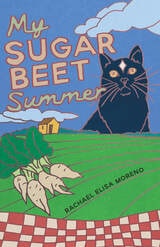
My Sugar Beet Summer
Rachael Elisa Moreno
Michigan State University Press, 2026
In 1928, nine-year-old Teresa leaves everything she knows in San Antonio—including her beloved cat Diamante—and boards a train bound for Michigan, where her parents have found work in the vast sugar beet fields of Saginaw. The long train north is a source of fascination, but stepping into Michigan feels like entering a different world—the cold wind, the strange houses, and the long days helping on the farm instead of going to school. Teresa cares for her little sisters while her parents tend to the sugar beets. She learns to navigate a life shaped by hard work, migration, and constant change. After the harvest, a new season begins, and the whole family must pack up and make the long trip back to Texas, to plant new roots. Based on the stories the author’s grandparents told her about their lives as Texas migrants in Michigan’s Thumb, My Sugar Beet Summer pulls the reader into Teresa and her family’s life in a new land, on a sugar beet farm on the eve of the Great Depression.
My Three Dads
Patriarchy on the Great PlainsJessa Crispin
University of Chicago Press, 2022
For many Americans, Kansas represents a vision of Midwestern life that is good and wholesome and evokes the American ideals of god, home, and country. But for those like Jessa Crispin who have grown up in Kansas, the realities are much harsher. She argues that the Midwestern values we cling to cover up a long history of oppression and control over Native Americans, women, and the economically disadvantaged.
Blending personal narrative with social commentary, Crispin meditates on why the American Midwest still enjoys an esteemed position in our country's mythic self-image. Ranging from The Wizard of Oz to race, from chastity to rape, from radical militias and recent terrorist plots to Utopian communities, My Three Dads opens on a comic scene in a Kansas rent house the author shares with a (masculine) ghost. This prompts Crispin to think about her intellectual fathers, her spiritual fathers, and her literal fathers. She is curious to understand what she has learned from them and what she needs to unlearn about how a person should be in a family, as a citizen, and as a child of god—ideals, Crispin argues, that have been established and reproduced in service to hierarchy, oppression, and wealth.
Written in Crispin’s well-honed voice—smart, assured, comfortable with darkness—My Three Dads offers a kind of bleak redemption, the insight that no matter where you go, no matter how far from home you roam, the place you came from is always with you, “like it or not.”

Mystery Reader's Advisory
The Librarian's Clues to Murder and MayhemAmerican Library Association, 2002

Myth and Southern History, Volume 1
The Old SouthEdited by Patrick Gerster and Nicholas Cords
University of Illinois Press, 1989
Mythohistorical Interventions
The Chicano Movement and Its LegaciesLee Bebout
University of Minnesota Press, 2010
Examining the deployment of the Aztec eagle by the United Farm Workers union, the poem Yo Soy Joaquín, the document El Plan de Santa Barbara, and icons like La Malinche and La Virgen de Guadalupe, Bebout reveals the centrality of culture to the Chicano movement. For Bebout, the active implementation of cultural narrative was strategically significant in several ways. First, it allowed disparate movement participants to imagine themselves as part of a national, and nationalist, community of resistance. Second, Chicano use of these narratives contested the images that fostered Anglo-American hegemony.
Bringing his analysis up to the present, Bebout delineates how demographic changes have, on the one hand, encouraged the possibility of a panethnic Latino community, while, on the other hand, anti-Mexican nativists attempt to resurrect Chicano myths as a foil to restrict immigration from Mexico.
Myths America Lives By
White Supremacy and the Stories That Give Us MeaningRichard T. Hughes
University of Illinois Press, 2018

Myths about the Powerless
Contesting Social InequalitiesM. Brinton Lykes
Temple University Press, 1996
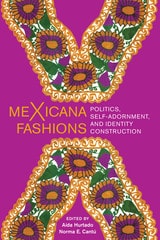
meXicana Fashions
Politics, Self-Adornment, and Identity ConstructionEdited by Aída Hurtado and Norma E. Cantú
University of Texas Press, 2020
2020 Second Place, Best Nonfiction Multi Author, International Latino Book Awards
Collecting the perspectives of scholars who reflect on their own relationships to particular garments, analyze the politics of dress, and examine the role of consumerism and entrepreneurialism in the production of creating and selling a style, meXicana Fashions examines and searches for meaning in these visible, performative aspects of identity.
Focusing primarily on Chicanas but also considering trends connected to other Latin American communities, the authors highlight specific constituencies that are defined by region (“Tejana style,” “L.A. style”), age group (“homie,” “chola”), and social class (marked by haute couture labels such as Carolina Herrera and Oscar de la Renta). The essays acknowledge the complex layers of these styles, which are not mutually exclusive but instead reflect a range of intersections in occupation, origin, personality, sexuality, and fads. Other elements include urban indigenous fashion shows, the shifting quinceañera market, “walking altars” on the Days of the Dead, plus-size clothing, huipiles in the workplace, and dressing in drag. Together, these chapters illuminate the full array of messages woven into a vibrant social fabric.