Results by title
1038 books match the query 'Antiquities' and 54 start with m
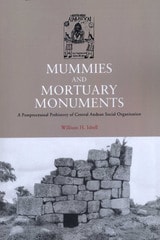
Mummies and Mortuary Monuments
A Postprocessual Prehistory of Central Andean Social OrganizationBy William H. Isbell
University of Texas Press, 1997
Since prehistoric times, Andean societies have been organized around the ayllu, a grouping of real or ceremonial kinspeople who share labor, resources, and ritual obligations. Many Andean scholars believe that the ayllu is as ancient as Andean culture itself, possibly dating back as far as 6000 B.C., and that it arose to alleviate the hardships of farming in the mountainous Andean environment.
In this boldly revisionist book, however, William Isbell persuasively argues that the ayllu developed during the latter half of the Early Intermediate Period (around A.D. 200) as a means of resistance to the process of state formation. Drawing on archaeological evidence, as well as records of Inca life taken from the chroniclers, Isbell asserts that prehistoric ayllus were organized around the veneration of deceased ancestors, whose mummified bodies were housed in open sepulchers, or challups, where they could be visited by descendants seeking approval and favors. By charting the temporal and spatial distribution of chullpa ruins, Isbell offers a convincing new explanation of where, when, and why the ayllu developed.
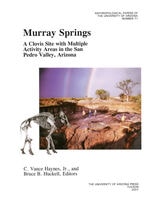
Murray Springs
A Clovis Site with Multiple Activity Areas in the San Pedro Valley, ArizonaEdited by C. Vance Haynes, Jr., and Bruce B. Huckell
University of Arizona Press, 2007
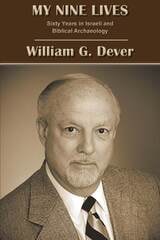
My Nine Lives
Sixty Years in Israeli and Biblical ArchaeologyWilliam G. Dever
SBL Press, 2020
Experience a lifetime of adventure
This autobiography of prominent American archaeologist William G. Dever is unabashedly his story, in which he offers candid, often brutally honest, reflections on his life and sixty-five-year career. Dever places himself in the midst of a remarkable generation of giants in archaeology in Israel during a period when the fields of biblical and Israeli archaeology were evolving. With technical expertise developed over a lifetime of working alongside four generations of Israeli and foreign excavators, he recalls their exploits and shares numerous personal stories that few others would know. His memoir concludes with a postscript on the likely future of biblical archaeology and an annotated bibliography for serious readers who wish to explore some of the scholarly literature to flesh out Dever’s narrative.
Myths of the Popol Vuh in Cosmology, Art, and Ritual
Holley Moyes
University Press of Colorado, 2021
The chapters are grouped into four sections. The first section interprets the Highland Maya worldview through examination of the text, analyzing interdependence between deities and human beings as well as the textual and cosmological coherence of the Popol Vuh as a source. The second section analyzes the Precolumbian Maya archaeological record as it relates to the myths of the Popol Vuh, providing new interpretations of the use of space, architecture, burials, artifacts, and human remains found in Classic Maya caves. The third explores ancient Maya iconographic motifs, including those found in Classic Maya ceramic art; the nature of predatory birds; and the Hero Twins’ deeds in the Popol Vuh. The final chapters address mythological continuities and change, reexamining past methodological approaches using the Popol Vuh as a resource for the interpretation of Classic Maya iconography and ancient Maya religion and mythology, connecting the myths of the Popol Vuh to iconography from Preclassic Izapa, and demonstrating how narratives from the Popol Vuh can illuminate mythologies from other parts of Mesoamerica.
The Myths of the Popol Vuh in Cosmology, Art, and Ritual is the first volume to bring together multiple perspectives and original interpretations of the Popol Vuh myths. It will be of interest not only to Mesoamericanists but also to art historians, archaeologists, ethnohistorians, iconographers, linguists, anthropologists, and scholars working in ritual studies, the history of religion, historic and Precolumbian literature and historic linguistics.
Contributors: Jaime J. Awe, Karen Bassie-Sweet, Oswaldo Chinchilla Mazariegos, Michael D. Coe, Iyaxel Cojtí Ren, Héctor Escobedo, Thomas H. Guderjan, Julia Guernsey, Christophe Helmke, Nicholas A. Hopkins, Barbara MacLeod, Jesper Nielsen, Colin Snider, Karl A. Taube