Results by title
1038 books match the query 'Economic conditions' and 68 start with m

Mieres Reborn
The Reinvention of a Catalan CommunityA. F. Robertson
University of Alabama Press, 2012
Mieres Reborn reveals how patient observation and an analysis of one small community have much to tell us about human progress more generally.
Not long ago Mieres, a village in the eastern foothills of the Pyrenees, seemed destined to die. As in countless thousands of rural communities around the world, young people in Mieres over the years have moved to the towns and cities, leaving behind abandoned fields and meadows, derelict houses, and their aging and disconsolate parents and grandparents.
Close observation of this social microcosm over two decades reveals the capacity of ordinary people in a locality to reinvent themselves, reconstruct relationships with the wider world, and confront new threats to their collective survival. A. F. Robertson describes how the determination that Mieres should survive is most evident in a vigorous round of fiestas, fairs, and other public events in which natives, exiles, and newcomers work to create a lively sense of belonging. Since the 1980s, Mieres has been enlivened by a reverse flow of migrants from the cities, new settlers who have brought an infusion of youth to the community, devised new livelihoods, revitalized the village school, energized the native ”Mierencs,” and provided the impetus for a rediscovery of historical roots and political identity.
The regeneration of life in the countryside, in part a reaction to urban expansion and decay, is a global phenomenon of increasing political, economic, and social significance.
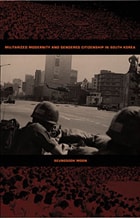
Militarized Modernity and Gendered Citizenship in South Korea
Seungsook Moon
Duke University Press, 2005
Moon situates militarized modernity in the historical context of colonialism and nationalism in the twentieth century. She follows the course of militarized modernity in South Korea from its development in the early 1960s through its peak in the 1970s and its decline after rule by military dictatorship ceased in 1987. She highlights the crucial role of the Cold War in South Korea’s militarization and the continuities in the disciplinary tactics used by the Japanese colonial rulers and the postcolonial military regimes. Moon reveals how, in the years since 1987, various social movements—particularly the women’s and labor movements—began the still-ongoing process of revitalizing South Korean civil society and forging citizenship as a new form of membership in the democratizing nation.
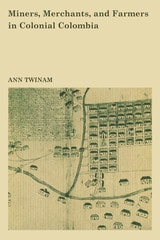
Miners, Merchants, and Farmers in Colonial Colombia
By Ann Twinam
University of Texas Press, 1982
The inhabitants of the department of Antioquía in north-central Colombia have played a unique role in that country’s economic history. During the colonial period Antioqueño placer miners supplied a substantial portion of New Granada’s gold exports. Their nineteenth-century descendants pioneered investments in lode mining, colonization, international commerce, banking, stock raising, tobacco, and coffee. In the twentieth century, Antioqueños initiated the industrialization of the regional capital, Medellín.
Many theories have been set forth to account for the special energy and initiative of Antioqueños. They range from ethnic and psychological interpretations (Antioqueños are descended from Jews or Basques; they are driven to succeed because of status deprivation) to historical explanations that emphasize their geographic isolation, mining heritage, or the coffee-export economy. In Miners, Merchants, and Farmers in Colonial Colombia, Ann Twinam critiques these theories and sets forth her own revisionist interpretation of Antioqueño enterprise. Rather than emphasize the alien or deviant in Antioqueño psychology or culture, Twinam re-creates the region’s late colonial economic and social structure and attributes the origins of Antioqueño enterprise to a particular mix of human and natural resources that directed the region’s development toward capital accumulation and reinvestment.
Although the existing limitations of their colonial environment may have forced Antioqueños along enterprising pathways initially, the continuation of Antioqueño investments to the present day suggests that their adaptation to a specific economic reality became a way of life transcending the historical conditions that created it.
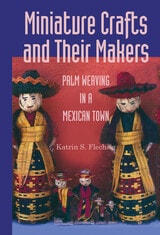
Miniature Crafts and Their Makers
Palm Weaving in a Mexican TownKatrin Flechsig
University of Arizona Press, 2004

Models of Value
Eighteenth-Century Political Economy and the NovelJames Thompson
Duke University Press, 1996
In this account, political economy and the novel clearly arise as solutions to a crisis in the notion of value. Exploring the ways in which these different genres responded to the crisis—political economy by reconceptualizing wealth as capital, and the novel by refiguring intrinsic or human worth in the form of courtship narratives—Thompson rereads several literary works, including Defoe’s Roxana, Fielding’s Tom Jones, and Burney’s Cecilia, along with influential contemporary economic texts. Models of Value also traces the discursive consequences of this bifurcation of value, and reveals how history and theory participate in the very novelistic and economic processes they describe. In doing so, the book bridges the opposition between the interests of Marxism and feminism, and the distinctions which, newly made in the eighteenth century, continue to inform our discourse today.
An important reformulation of the literary and cultural production of the eighteenth century, Models of Value will attract students of the novel, political economy, and of literary history and theory.
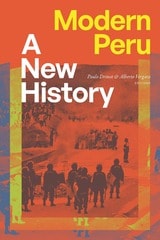
Modern Peru
A New HistoryPaulo Drinot and Alberto Vergara, editors
Duke University Press, 2025
Contributors. Eduardo Dargent, Paulo Drinot, Cynthia McClintock, José Luis Rénique, Natalia Sobrevilla Perea, Alberto Vergara, Charles Walker

Monetarism and Liberalization
The Chilean ExperimentSebastian Edwards and Alejandra Cox Edwards
University of Chicago Press, 1991
"The Edwards's book is an indispensable guide to the policy reforms and mistakes that have taken the [Chilean] economy to its present state."—Philip L. Brock, Money, Credit, and Banking
"This book is a 'must' for anybody interested in development economies and the problems of liberalization."—Hansjorg Blochliger, Journal of International Economics
Monetary Authorities
Capitalism and Decolonization in the American Colonial PhilippinesAllan E. S. Lumba
Duke University Press, 2022
Monetary Interpretations of the Great Depression
Frank G. Steindl
University of Michigan Press, 1996
Monetary Trends in the United States and the United Kingdom
Their Relations to Income, Prices, and Interest RatesMilton Friedman and Anna J. Schwartz
University of Chicago Press, 1982
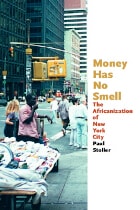
Money Has No Smell
The Africanization of New York CityPaul Stoller
University of Chicago Press, 2002
Blending fascinating ethnographic description with incisive social analysis, Stoller shows how these savvy West African entrepreneurs have built cohesive and effective multinational trading networks, in part through selling a simulated Africa to African Americans. These and other networks set up by the traders, along with their faith as devout Muslims, help them cope with the formidable state regulations and personal challenges they face in America. As Stoller demonstrates, the stories of these West African traders illustrate and illuminate ongoing debates about globalization, the informal economy, and the changing nature of American communities.

Money and Power
Great Predators in the Political Economy of DevelopmentSarah Bracking
Pluto Press, 2009
Sarah Bracking explores the role of governments and development finance institutions in managing the markets in which the poorest countries operate. These institutions -- the 'Great Predators' -- are trapping the populations of the south in a permanent cycle of austerity.
Bracking examines the political economy relations between states. She shows how pseudo-public 'development' institutions retain complete economic control over Southern markets, yet the international system is itself unregulated. Operating in the interests of North America and the European Union, they have a political purpose, and yet serve to cloud the brute power relations between states.
This book will be of interest to anyone studying debt and development, global financial institutions, and the way the world economy is regulated and governed.
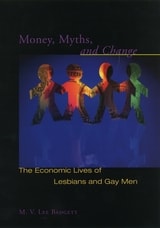
Money, Myths, and Change
The Economic Lives of Lesbians and Gay MenM.V. Lee Badgett
University of Chicago Press, 2001
Money, Myths, and Change provides new answers to these complex questions. This is the first comprehensive work to explore the economic lives of gays and lesbians in the United States. M. V. Lee Badgett weaves through and debunks common stereotypes about gay privilege, income, and consumer behavior. Studying the ends and means of gay life from an economic perspective, she disproves the assumption that gay men and lesbians are more affluent than heterosexuals, that they inspire discrimination when they come out of the closet, that they consume more conspicuously, that they enjoy a more self-indulgent, even hedonistic lifestyle. Badgett gets to the heart of these misconceptions through an analysis of the crucial issues that affect the livelihood of gay men and lesbians: discrimination in the workplace, denial of health care benefits to domestic partners and children, lack of access to legal institutions such as marriage, the corporate wooing of gay consumer dollars, and the use of gay economic clout to inspire social and political change.
Both timely and readable, Money, Myths, and Change stands as a much-needed corrective to the assumptions that inhibit gay economic equality. It is a definitive work that sheds new light on just what it means to be gay or lesbian in the United States.

Moral Philosophy and Development
The Human Condition in AfricaTedros Kiros
Ohio University Press, 1992
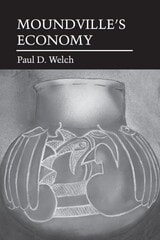
Moundville's Economy
Paul D. Welch
University of Alabama Press, 1991
A Dan Josselyn Memorial Publication
Anthropologists have long talked about chiefdoms as a form of sociopolitical organization, and for several decades Elman Service's description of chiefdoms has been widely accepted as definitive. Nevertheless, in the 1970s, scholars began to question whether all, or any, chiefdoms had the entire range of characteristics described by Service. Most of the questions focused on the (nonmarket) economic organization of these polities, and several contrasting economic models were suggested. None of the models, however, was comprehensively tested against actual chiefdom economies.
This study examines the economic organization of the late prehistoric (A.D. 1000 to 1540) chiefdom centered at Moundville, Alabama. Rather than attempting to show that this case fits one or another model, the economic organization is determined empirically using archaeological data. The pattern of production and distribution of subsistence goods, domestic nonutilitarian goods, and imported prestige goods does not fit precisely any of the extant models. Because Moundville's economy was organized in a way that promoted stability, it may be no accident that Moundville was the dominant regional polity for several hundred years. This research opens a new field of archaeological investigation: the relationship between fine details of economic organization and large-scale political fortunes.
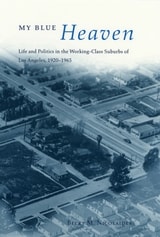
My Blue Heaven
Life and Politics in the Working-Class Suburbs of Los Angeles, 1920-1965Becky M. Nicolaides
University of Chicago Press, 2002
As Becky M. Nicolaides shows in My Blue Heaven, this ethic of self-reliance and homeownership formed the core of South Gate's identity. With post-World War II economic prosperity, the community's emphasis shifted from building homes to protecting them as residents tried to maintain their standard of living against outside threats—including the growing civil rights movement—through grassroots conservative politics based on an ideal of white homeowner rights. As the citizens of South Gate struggled to defend their segregated American Dream of suburban community, they fanned the flames of racial inequality that erupted in the 1965 Watts riots.

My Cocaine Museum
Michael Taussig
University of Chicago Press, 2004
Combining natural history with political history in a filmic, montage style, Taussig deploys the show-and-tell modality of a museum to engage with the inner life of heat, rain, stone, and swamp, no less than with the life of gold and cocaine.
This effort to find a poetry of words becoming things is brought to a head by the explosive qualities of those sublime fetishes of evil beauty, gold and cocaine. At its core, Taussig's museum is about the lure of forbidden things, charged substances that transgress moral codes, the distinctions we use to make sense of the world, and above all the conventional way we write stories.
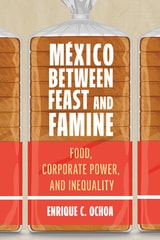
México Between Feast and Famine
Food, Corporate Power, and InequalityEnrique C. Ochoa
University of Arizona Press, 2025
As the birthplace of maize and a celebrated culinary destination, Mexico stands at the crossroads of gastronomic richness and stark social disparities. In México Between Feast and Famine Enrique C. Ochoa unveils the historical and contemporary forces behind Mexico’s polarized food systems.
México Between Feast and Famine provides one of the first comprehensive analyses of Mexico’s food systems and how they reflect the contradictions and inequalities at the heart of Mexico. Ochoa examines the historical roots and contemporary manifestations of neoliberal policies that have reshaped food production, distribution, and consumption in Mexico. Ochoa analyzes the histories of Mexico’s mega food companies, including GRUMA, Bimbo, Oxxo, Aurrera/Walmex, and reveals how corporations have captured the food system at the same time that diet-related diseases have soared. The author not only examines the economic and political dimensions of food production but also interrogates the social and cultural impacts.
As debates around food sovereignty, globalization, and sustainable development intensify globally, México Between Feast and Famine provides a timely analysis that counters conventional narratives about Mexican cuisine. Even as it looks back, this work looks to the future, where more equitable and sustainable food systems prioritize social justice and community well-being.